
Every rider who books a Nepal motorcycle expedition has a version of the same mental image. A high-altitude pass. A ribbon of dirt road disappearing into mountains. A horizon that makes everything feel both enormous and possible.
They come for the terrain. They come for the altitude. They come for the specific kind of riding that only exists when the road is loose, the air is thin, and the landscape is so overwhelming that the ordinary world back home begins to feel like a distant rumour.
And then they get there. They ride the passes. They navigate the riverbeds, the cliffside tracks, the dust, and the wind. They reach Lo Manthang or Manang or wherever the expedition was always pointing toward and they stand there in the thin mountain air, genuinely moved by where they have arrived.
Then they come home. And when someone asks them what the trip was like, they do not talk about the terrain first.
They talk about the people.
The Moment It Shifts - Every Rider Knows It
There is a specific moment on almost every Nepal motorcycle tour where the trip changes character. It is rarely dramatic. It does not announce itself.
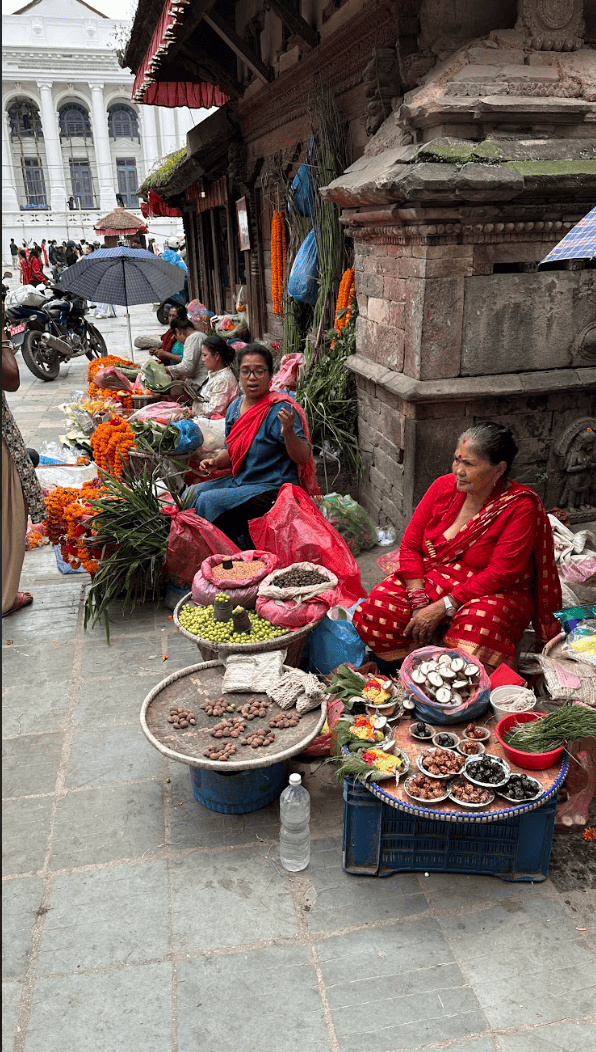
It might be a teahouse owner in a small village above Tatopani who sees a group of tired, dusty riders pull up at dusk, well past the hour anyone would expect guests and immediately puts water on for tea without being asked. Who asks about the route, listens carefully, and offers specific advice about a river crossing ahead that is not in any guidebook. Who charges less than the cost of a coffee back home for a meal that takes thirty minutes to prepare.
It might be a child in a mountain village who appears from nowhere, walks alongside a stopped bike with enormous seriousness, and then breaks into a grin so complete and unguarded that every rider in the group instinctively reaches for their camera and then realises the camera would miss the point.
It might be a farmer crossing the trail above Chame with a yak laden with firewood who steps aside, gestures the riders through with a natural courtesy that no traffic regulation ever taught, and goes back to his morning as if the arrival of a group of foreign motorcyclists in his high-altitude mountain life is simply one of the day's unremarkable occurrences.
These moments do not make the itinerary. They are not in the brochure. And they are, without exception, what riders talk about when they come home.
Hospitality That Has No Performance in It
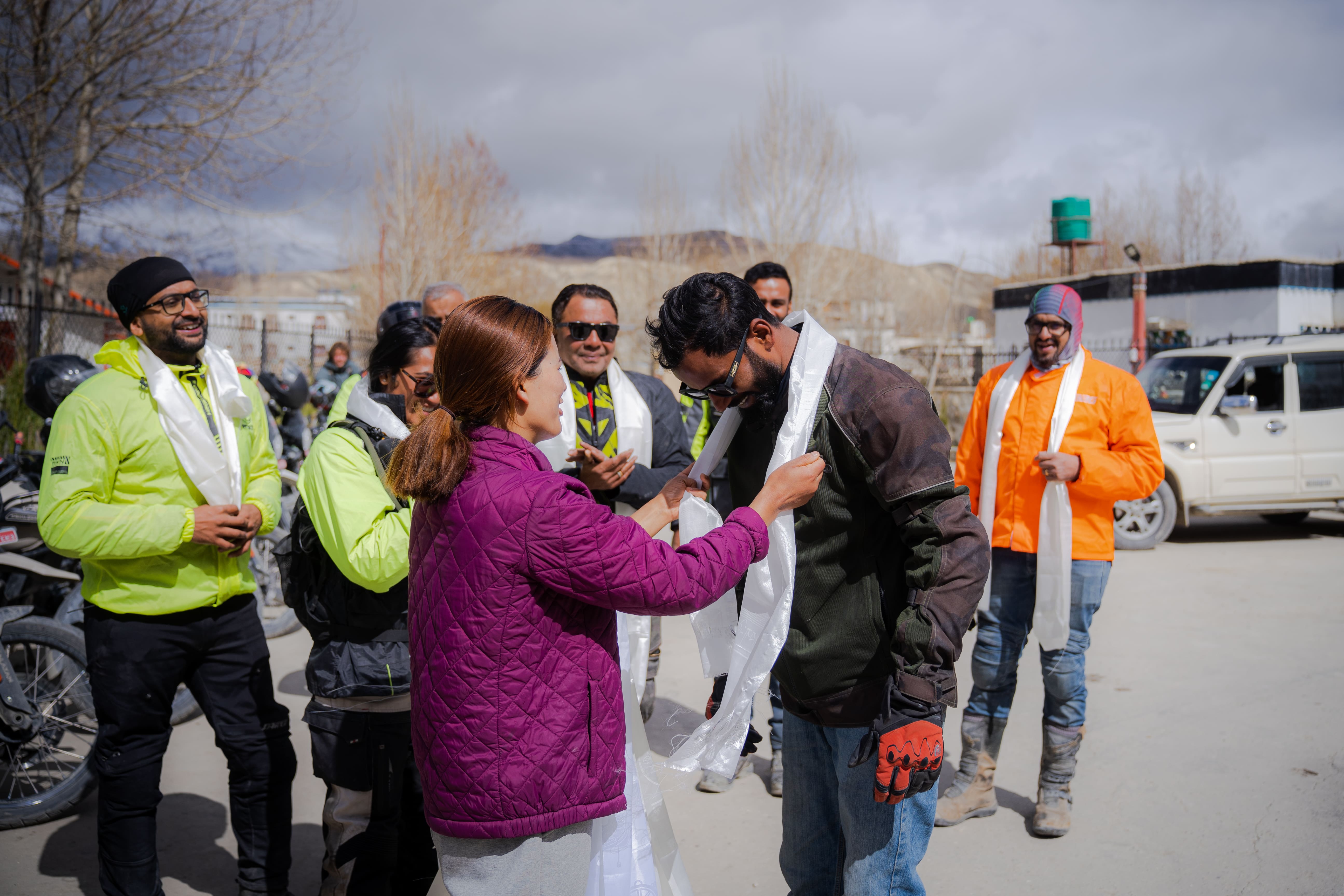
Nepal has one of the most genuine hospitality cultures in the world — and the distinction that matters is the word genuine.
Hospitality as a performance exists everywhere. It is the scripted greeting, the industry-trained warmth, the service culture that is friendliness shaped by expectation of transaction. Riders who have travelled widely recognise it immediately and are not particularly moved by it.
What exists in Nepal's mountain communities is something structurally different. It is hospitality as a cultural value rather than a commercial strategy, extended not because of what the visitor represents economically but because the visitor is a guest, and a guest in a Himalayan community carries a specific kind of moral weight that predates the tourism industry by centuries.
The Manangi trading communities of the upper Marsyangdi valley, the Thakali people of the Kali Gandaki corridor, the Gurung villages of the lower Annapurna region — each has its own distinct cultural identity, its own language, its own relationship to the landscape they inhabit. What they share is a pattern of engagement with visitors that is warm, direct, and completely without agenda.
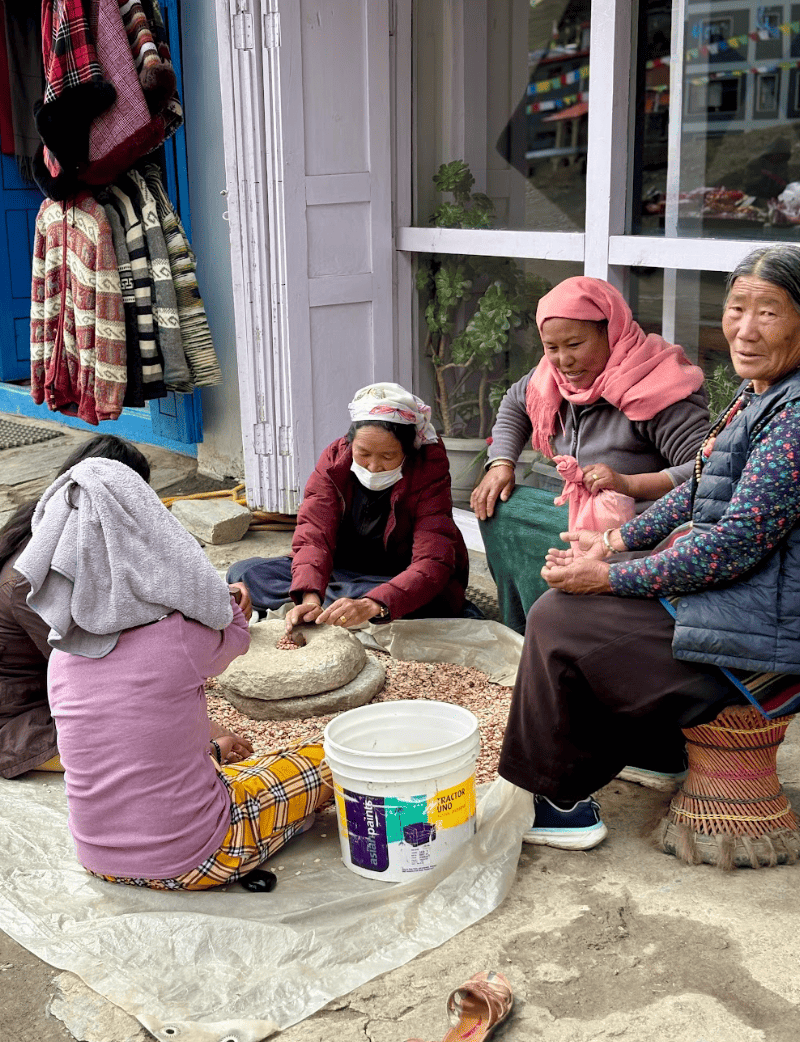
Riders on expedition in Nepal eat meals in family kitchens. They sleep in guesthouses where the owner's children do their homework at the same table where breakfast will be served in the morning. They receive directions not through a mapping app but from a local who draws a line in the dust with a stick and describes landmarks in a mix of Nepali, English, and hand gestures that somehow conveys exactly the right information.
None of this is manufactured. That is what makes it stay.
The Children Are the Ones Riders Never Forget
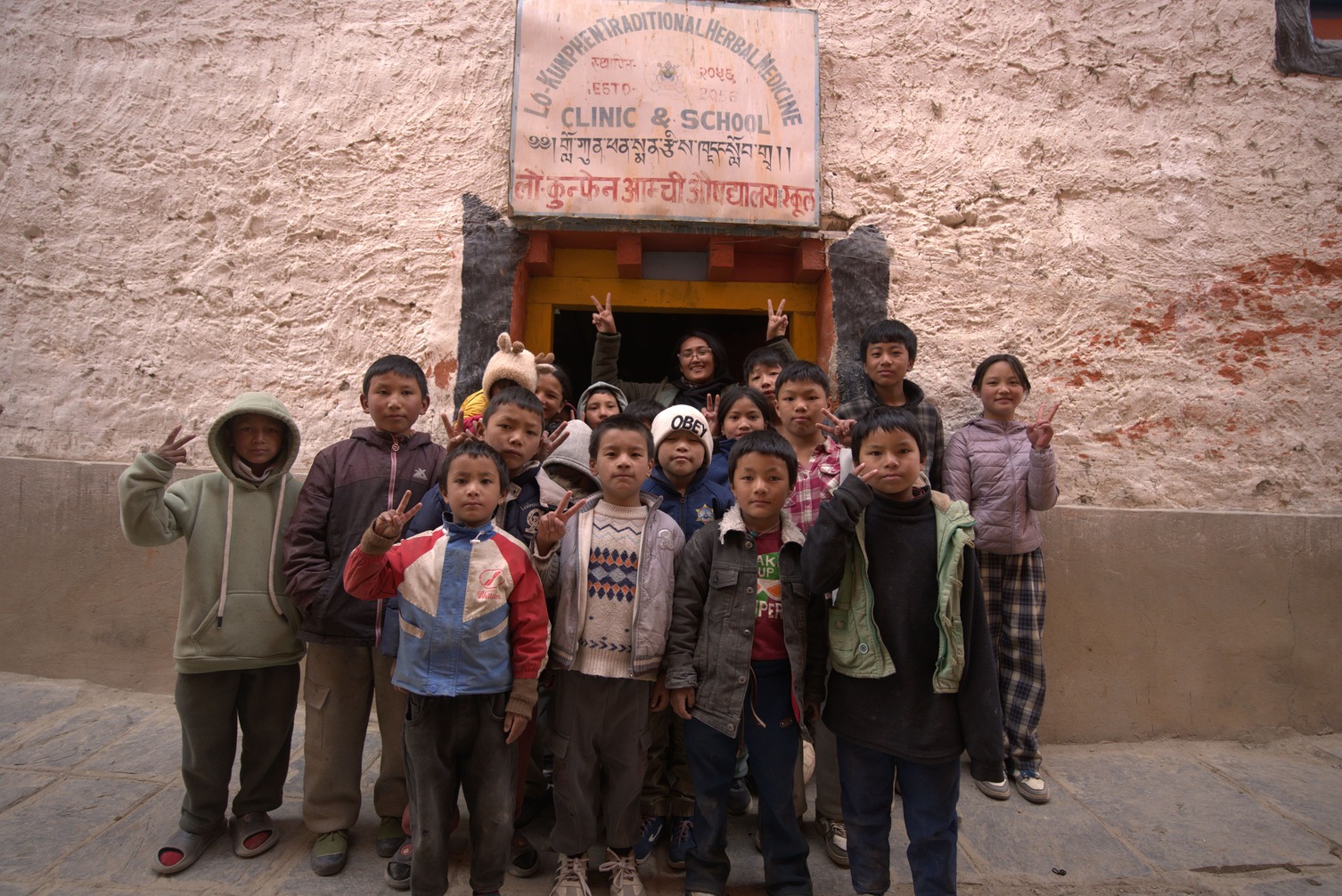
Ask any experienced Nepal motorcycle expedition rider to describe a moment from their trip in detail, not the route, not the scenery, but a specific memory and a disproportionate number of those memories involve children.
Children in Nepal's mountain villages occupy a specific role in the rider experience that no one quite prepares for and everyone subsequently tries to articulate. They are curious without being intrusive. They appear beside stopped bikes and examine them with the focused attention of engineers rather than the grabbing enthusiasm of novelty-seekers. They wave at passing riders from hillsides, from doorways, from schoolyards, with a completeness of enthusiasm that is entirely unself-conscious.
In Kagbeni, a group of schoolchildren on their way home in late afternoon will stop, stare, consult each other in rapid Nepali, and then arrange themselves in a line to wave with the gravity and precision of an official welcoming committee. In villages above Chame, children who cannot be older than six carry loads that would give an adult pause, walking the same trails with the same matter-of-fact confidence that their grandparents did before them.
What moves riders about these encounters is something they often struggle to name. It is partly the contrast between the difficulty of the environment these children inhabit and the uncomplicated happiness that characterises their engagement with the world. It is partly the absence of the specific kind of childhood anxiety that riders from urban Western backgrounds recognise from their own experience and their own children's experience.
It is partly, perhaps, that a child waving from a hillside above 3,000 metres with complete and unqualified joy simply cannot be interpreted as anything other than exactly what it is.
The Guides Who Carry More Than the Route
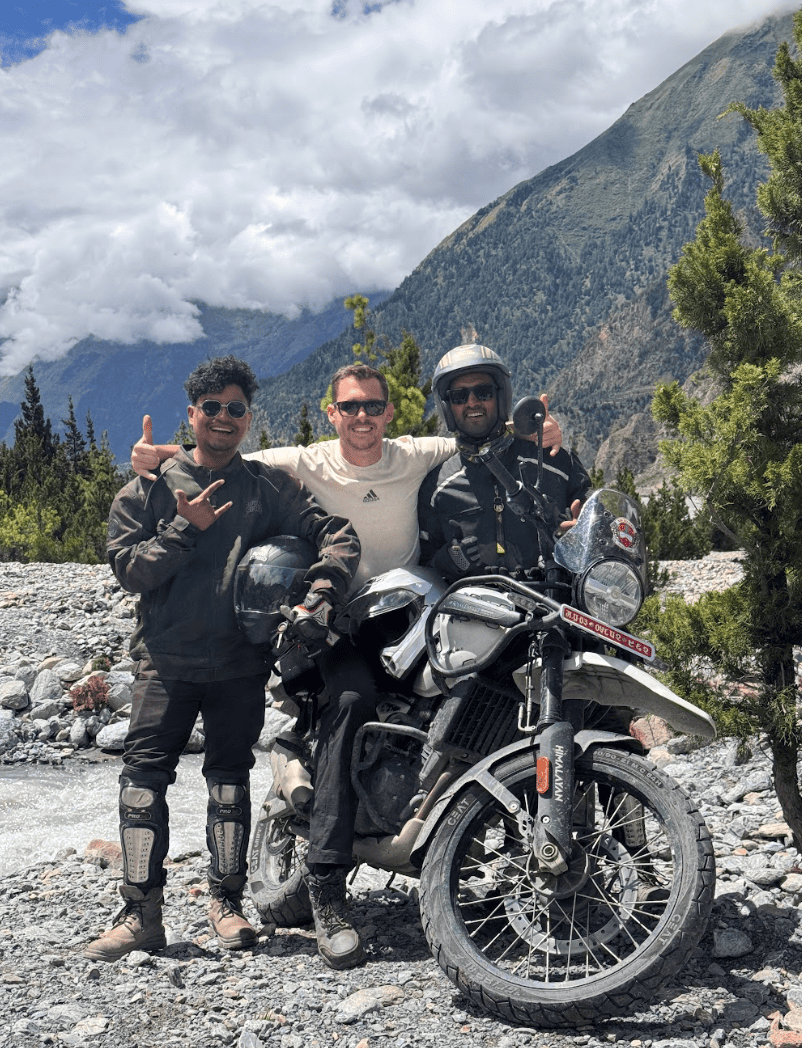
No discussion of Nepal's people and their effect on visiting riders is complete without the guides and specifically without naming what makes a great Nepali motorcycle guide different from what riders might expect before they have experienced one.
The practical value is obvious. A licensed guide during the Upper Mustang motorbike tour restricted zone knows the daily wind patterns well enough to adjust the day's route plan before the wind arrives. They know which river crossing is passable in the morning and impassable by early afternoon. They know the guesthouse owner in Ghami who keeps spare parts no one would think to ask about, and the family in Tsarang who will open their kitchen for a group that arrives later than expected.
But the practical value is not what riders talk about when they describe their guides.
What they describe is the quality of presence. A person who has grown up in or around the Himalayan environment who carries that knowledge lightly, shares it without performance, and navigates not just the route but the entire human texture of the expedition with a warmth and competence that most riders have simply not encountered in a professional context before.
They describe guides who sit with a rider experiencing altitude sickness at 2 AM not because it is professionally required but because leaving someone alone in that condition is not something that occurs to them. Guides who translate not just language but cultural context — who explain why a particular monastery's entrance faces the direction it does, why the prayer flags are replaced on a specific date, what the mani wall inscription says and why it has been repeated by different hands over several hundred years.
Riders come to Nepal and hire a guide because the permit requires it. They leave Nepal and wish they had scheduled more time to spend with that person.
The Buddhist Culture That Slows Riders Down
Nepal's dominant mountain culture is Tibetan Buddhist in its orientation and Tibetan Buddhism, encountered in its natural environment rather than in a museum or a documentary, has a specific effect on motorcycle riders that is worth naming directly.
It slows them down. Not by creating obstacles. By offering a different relationship to time and attention that quietly challenges the pace that most riders from urban backgrounds carry into the expedition without noticing it.
The mani walls, long rows of stones carved with the Buddhist mantra Om Mani Padme Hum, accumulated over generations by the hands of countless individuals who paused in exactly the spot where a rider is now stopped, exist in almost every upper valley village. The prayer wheels that line the entrances to settlements spin with the touch of a passing hand, each rotation an act of accumulated intention by everyone who has passed before.
The monasteries that define the Upper Mustang landscape, some of them, like the Braga Gompa near Manang, among the oldest in the region, contain murals painted by hands that have been dust for five centuries. The cultural continuity that these places represent is not abstract in Nepal. It is present, maintained, alive in the communities that have stewarded it across generations of political upheaval, natural disaster, and the pressure of a rapidly changing world around them.
Riders who pause long enough to engage with those who accept a cup of butter tea from a monastery caretaker, who sit for a moment in a courtyard that has been used for meditation practice longer than most European nations have existed, leave Nepal with something they did not expect to take home. Not souvenirs. A recalibrated sense of what patience looks like. What continuity feels like. What it means to be deeply at home in a landscape.
Resilience That Reframes Everything
Nepal is not a wealthy country by any standard economic measure. The infrastructure that riders from Western Europe or North America regard as basic, consistent electricity, clean piped water, reliable telecommunications is present inconsistently in the mountain regions and absent entirely in the most remote sections of the major riding routes.
The people who live and work in these conditions are not defined by what they lack. This is not a sentimental assertion, it is a specific observation that virtually every rider who spends meaningful time in Nepal's mountain communities makes independently and consistently.
The guesthouse owner who runs a functioning kitchen, clean rooms, and genuine hospitality at 3,500 metres above sea level with intermittent electricity and no supply chain more reliable than a weekly jeep from Jomsom is not persevering despite difficult conditions. They have built a dignified, purposeful, community-embedded life within those conditions in a way that reflects a different — and in many respects more sophisticated — relationship to sufficiency than most of their guests have encountered before.
Riders who arrive carrying the unexamined assumption that remoteness equals hardship leave Nepal having quietly revised that assumption. The revision is not romantic. It is practical. It is based on direct observation of people who have organised meaningful lives around values — community, continuity, hospitality, spiritual practice — that do not require the material conditions that riders have always assumed were prerequisites.
That recalibration is not comfortable. But it is one of the most genuinely useful things a motorcycle expedition has ever delivered to the people who make the journey.
Why Nepal's People Make the Terrain Feel Different
Here is the thing that experienced Nepal expedition riders understand and struggle to communicate to those who have not yet been: the people do not simply add to the experience of riding in Nepal. They change the character of the terrain itself.
The same mountain road that would feel like a physical challenge to be overcome in isolation feels like a shared landscape when it is also someone's daily commute, someone's trading route, the path that connects a child's home to their school and a farmer's field to their village. The landscape is not a backdrop — it is inhabited, maintained, and given meaning by the communities that have lived within it for centuries.
When a rider crests a pass in the Kali Gandaki and sees a string of prayer flags stretching across the high point — placed there by hands that understood the specific weight of arrival at this elevation, the specific gratitude that belongs to having made it through — the pass is no longer just a topographical feature. It is a human statement about a landscape that has been significant to people for longer than the rider can fully comprehend.
That is what Nepal does to riders who pay attention. It turns riding into something more than riding. It turns a destination into a relationship — with the landscape, with the culture, and with the specific quality of human presence that makes both of them mean something.
The terrain will bring riders to Nepal. It always has. The people are why they come back.
Conclusion
Every Nepal motorcycle expedition has a beginning in itinerary and logistics — permits, bikes, seasonal timing, route sections. That is the architecture of the experience.
But the experience itself is built from the tea handed across a wooden counter by someone who will remember your face when you return. From the child who waves from the hillside with their whole body. From the guide who sits with you at altitude in the dark and does not make it a professional transaction. From the monastery courtyard that has been exactly as quiet as it is right now for five hundred years.
Riders come to Nepal for the roads. They leave changed by the people. And the ones who understand what happened to them come back, not to repeat the expedition, but to go further into something they have only just begun to understand.
FAQ: Nepal Motorcycle Adventure and Culture
Q1: How important is cultural awareness for motorcycle riders visiting Nepal?
Cultural awareness is not just respectful on a Nepal motorcycle expedition — it is practically valuable. Understanding local customs around greetings, monastery visits, mani wall etiquette (always pass to the left), and guesthouse hospitality norms makes every interaction more genuine and more rewarding. Riders who engage with cultural context rather than treating it as background scenery consistently have more meaningful expedition experiences and build the kind of relationships with local guides and communities that bring them back for second and third trips.
Q2: Do Nepal motorcycle guides genuinely enhance the cultural experience or just navigate the route?
A qualified local guide in Nepal — particularly on restricted routes like Upper Mustang — does both simultaneously, and the cultural dimension is often more valuable than the navigation. Great guides translate not just language but context: the significance of landscape features, the history of villages and monasteries, the social dynamics of mountain communities. Riders who have done Nepal routes independently and then subsequently with a local guide consistently report that the guided experience was richer in ways that had nothing to do with the roads.
Q3: Is it appropriate to photograph people and communities encountered on Nepal motorcycle routes?
The generally accepted approach is to ask before photographing individuals — a gesture and a questioning expression communicates the request effectively across language barriers — and to accept refusals gracefully. Children should not be photographed without the implicit or explicit consent of nearby adults. Monastery interiors often have specific photography rules posted at entrances. The broader principle is to treat photography as an engagement with people rather than a documentation of objects — an approach that tends to produce both more respectful encounters and more genuinely interesting photographs.
Q4: What is the best way to show appreciation to guesthouse owners and local communities along Nepal riding routes?
Eating at local guesthouses rather than cooking independently, buying locally produced items rather than imported goods, and paying fairly rather than negotiating aggressively for the lowest possible price all contribute more meaningfully to mountain community economies than tips alone. Learning a few words of Nepali — namaste (hello/greeting), dhanyabad (thank you), ramro (good/nice) — is received with genuine warmth across all communities and signals a basic respect that opens interactions differently than arriving only in English.
Q5: Does Nepal's cultural experience differ significantly between routes like Manang and Upper Mustang?
Yes, meaningfully so. The route of the Manang motorbike tour passes through communities with Gurung and Manangi cultural identities, reflecting a history of lowland-highland trade and a particular relationship to the Annapurna region. Upper Mustang's communities are ethnically and culturally Tibetan, the language, the religious practice, the architecture, and the social structure reflect centuries of near-complete independence from lowland Nepal. Both are extraordinary cultural environments, but they are distinct from each other in character and require different context to fully appreciate. Riders who do both routes in sequence experience Nepal's cultural depth rather than a single dimension of it.