
Every rider heading into the Upper Mustang motorcycle tour thinks about it at some point, usually somewhere between Kagbeni and the first long stretch of empty track with no village in sight.
What happens if the bike stops here?
The honest answer is: it depends on where you are, what broke, who your guide is, and how prepared your operator was before you left Pokhara. In some cases it means a 45-minute field fix and you're moving again. In others it means a 24-hour wait while a part travels from Jomsom on a jeep that may or may not make it through in one day.
What it never means, the thing most foreign riders assume will save them — is a quick rescue. There is no formal roadside recovery service in Upper Mustang. No mechanic network on call. No spare bike fleet waiting in a village halfway up the restricted corridor. What exists instead is a guide with local contacts, a communication chain back to your agency's base, and a logistics problem that gets solved at the pace the terrain allows.
This guide explains what that actually looks like — step by step, zone by zone — so you understand what you're riding into and how to reduce the probability of being the rider who finds out the hard way.
The First Reality: Upper Mustang Operates on Expedition Logistics, Not Highway Recovery
In most developed riding environments, a breakdown triggers a familiar sequence: phone a recovery service, wait 45 minutes, watch a professional arrive and sort it out. The system exists because it's needed and because the road infrastructure supports it.
Upper Mustang's restricted corridor — from Kagbeni northward through Chele, Ghami, Tsarang, and Lo Manthang — is separated from the nearest meaningful mechanical support by hours of rough terrain. Jomsom, the last town with a workshop capable of handling anything beyond basic field repairs, sits roughly 18 kilometres south of Kagbeni. Once you're north of the checkpoint, that 18 kilometres becomes considerably longer in operational terms, because the road between them is the same terrain that might have caused your problem.
The practical implications:
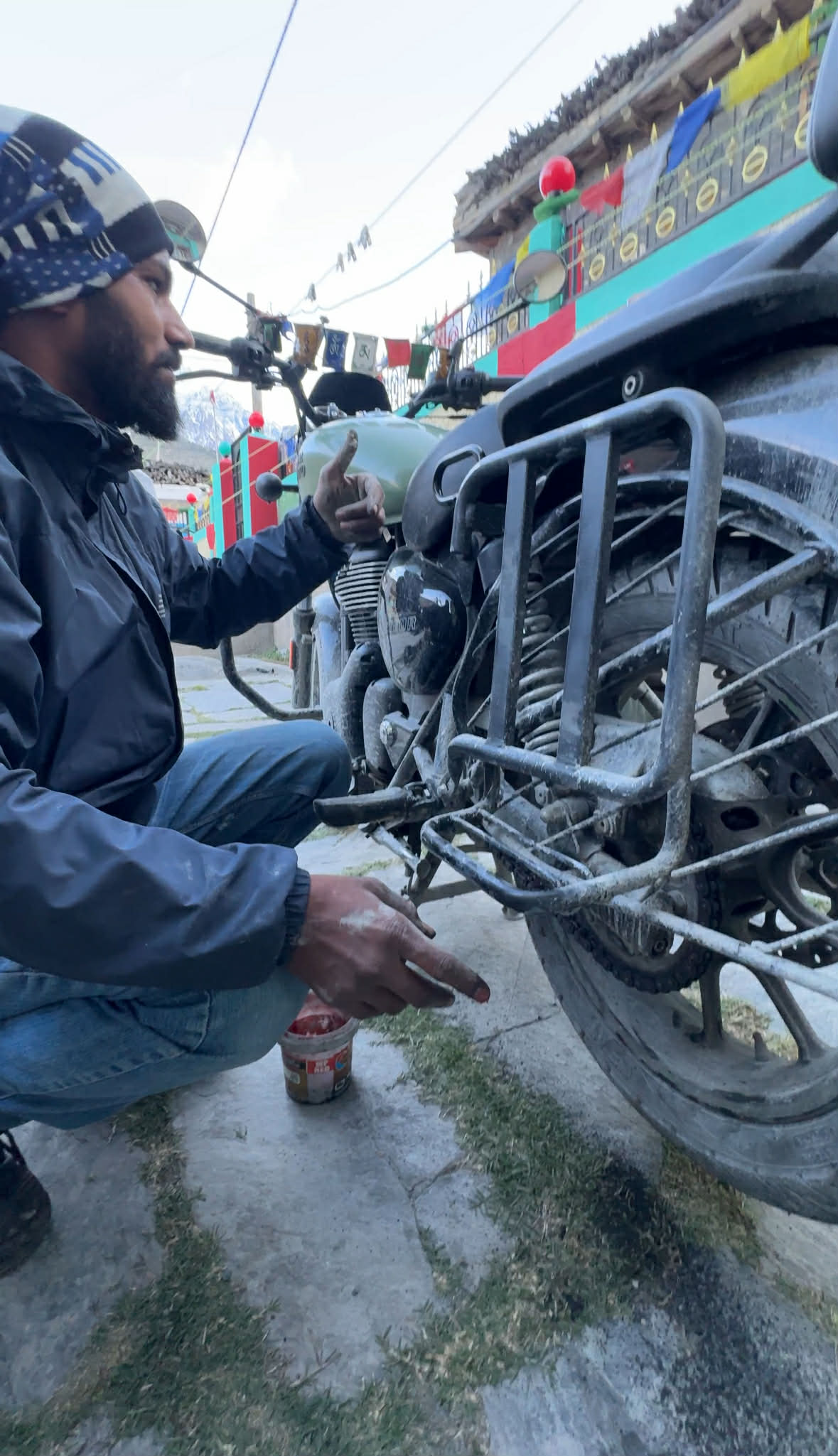
- Minor breakdown (puncture, chain issue, loose electrical connection): Resolved on the spot by your guide and the bike's field repair kit, usually within an hour. The group may need to wait, but the day continues.
- Moderate breakdown (bent rim, clutch cable, brake issue): May require parts from Jomsom. Wait time: half a day to a full day depending on logistics and weather.
- Major breakdown (engine failure, seized components, serious suspension damage): Bike comes out via jeep transport. Rider continues as passenger or waits for a replacement — which, realistically, comes from Pokhara, not from within the restricted zone.
The difference between a manageable situation and a serious disruption is rarely the mechanical problem itself. It is almost always the preparation that preceded it — the state of the bike when it entered Kagbeni, the quality of the operator's support network, and whether the guide has the experience and relationships to activate help efficiently from inside a remote restricted area.
Zone by Zone: Where Breakdowns Are Manageable and Where They Aren't
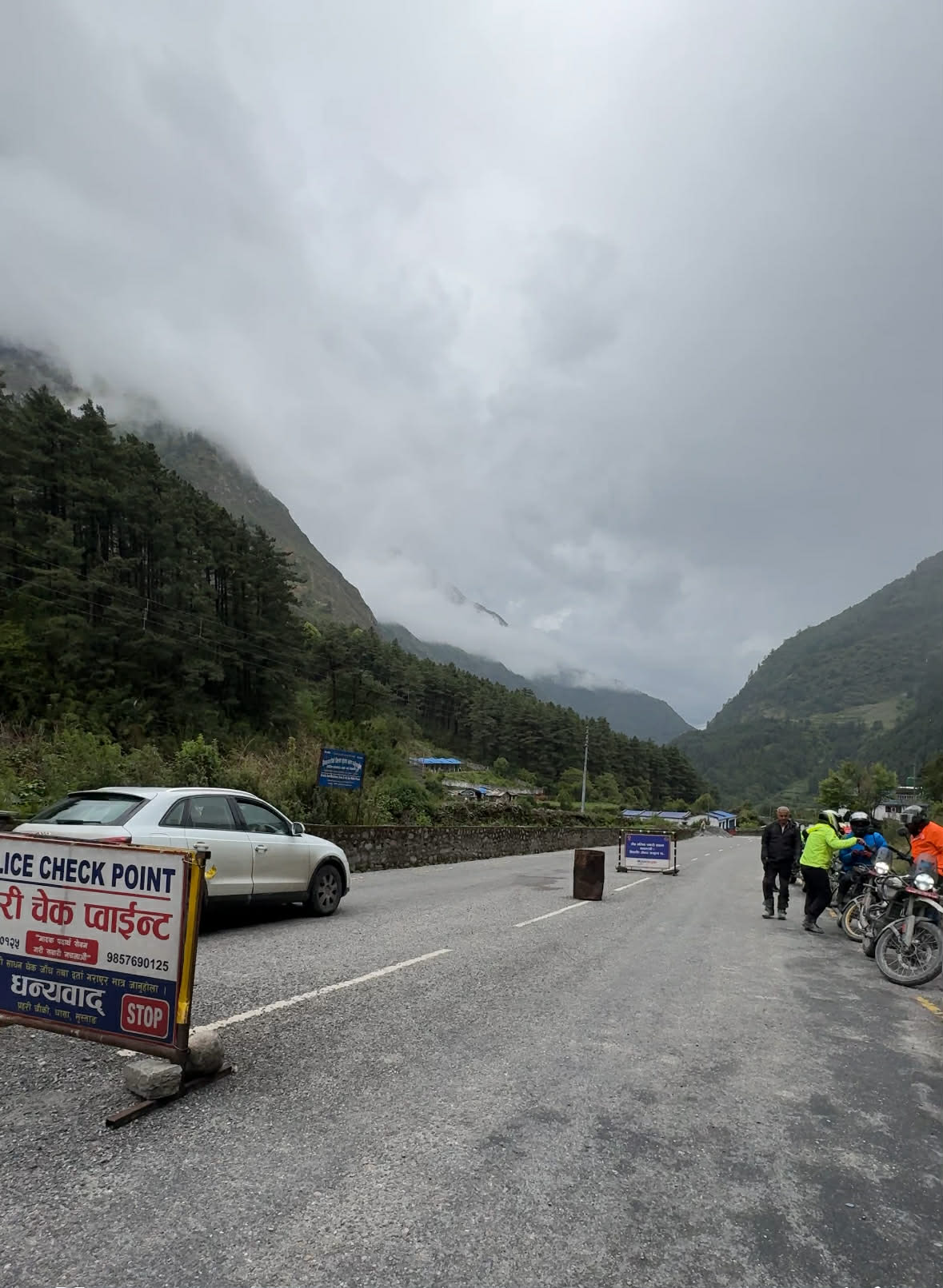
Not all breakdown locations carry the same consequences. Understanding the logistics landscape of the route helps calibrate both preparation and psychological response.
Pokhara to Jomsom — Manageable
This section has functioning workshops in Jomsom, and smaller mechanical support in Beni and Tatopani. A breakdown here is an inconvenience — a delay measured in hours, not days. Recovery is accessible and relatively routine. This is the section where any pre-existing mechanical issues will be identified by the terrain, which is useful information if it happens — it means you find out before the restricted zone rather than inside it.
Jomsom to Kagbeni — Transitional
Limited mechanical support, but Kagbeni is close enough to Jomsom that a recovery vehicle can reach you within a few hours under reasonable conditions. This section is the final opportunity to identify and address any bike issues before committing fully to the restricted corridor. Any guide worth the title will do a thorough bike check here.
Kagbeni to Samar — Increasing Complexity
This is where the breakdown equation changes. There are no workshops in this section. Help, if it comes, comes from your guide's network — local contacts, passing jeep drivers, or a call back to the agency's Jomsom or Pokhara base. Minor issues can often be resolved with field tools. Moderate issues begin creating multi-hour delays. The psychological shift of realising the safety net is thinner here is real, and experienced guides manage this expectation deliberately.
Samar to Lo Manthang — Remote Zone
This is the critical zone. Beyond Samar, you are in the deepest part of the restricted corridor. Settlements are sparse. Mechanical assistance from within the region is limited to whatever a village can offer — sometimes a welder, sometimes basic tools, sometimes nothing relevant to motorcycle repair. Communication with your agency base depends on intermittent signal and can require reaching elevated ground to get a usable connection.
A breakdown here is a genuine logistics operation. Response time is measured in hours to days. The decisions made in the first 30 minutes — field fix or wait for help, stay put or move the rider — directly affect how much of the remaining expedition is recoverable.
Lo Manthang — Endpoint Isolation
Ironically, Lo Manthang is both the most isolated from conventional support and the most logistically manageable destination on the route, because it is a functioning village hub within the restricted zone. Your guide and agency will have established contacts here. Basic mechanical assistance — welding, improvised parts, local knowledge — is more available than the empty plateau sections between villages. But "more available than nothing" is still a long way from a workshop, and serious mechanical failures here mean the bike comes out the same way you came in — on a jeep, over the same terrain.
Step-by-Step Reality of a Breakdown Response
When a bike stops in Upper Mustang, the sequence that follows is fairly consistent across operators, guides, and breakdown types.
Step 1: Stop and Assess (First 10–15 Minutes)
Your guide's first move is diagnosis, not panic. The majority of Upper Mustang breakdowns — based on the actual mechanical failure patterns guides encounter repeatedly — are in a short list of manageable categories:
- Punctures: By far the most common issue. Sharp gravel, rocky surfaces, and the sustained vibration of off-road riding create tyre failures regularly. A tube replacement or plug repair takes 20–40 minutes.
- Chain problems: Chain stretch, loosening, and occasional derailment from rocky impacts. A chain tool and adjustment takes under 30 minutes.
- Electrical faults: Vibration loosens connections. Switches, lighting circuits, and sensor connectors all shake loose on rough terrain. Often a 10-minute fix once identified.
- Overheating: Sustained low-speed climbing at altitude in hot conditions can push temperatures into concerning territory. A 20-minute rest with engine off solves the immediate issue; the cause needs investigation.
- Brake issues: Lever adjustment, pad wear assessment, and fluid checks. Usually manageable in the field.
The assessment stage determines whether you're back on the road in under an hour or entering a longer resolution process.
Step 2: Field Repair Attempt (30–90 Minutes)
If the issue is in the manageable category, your guide — and the mechanic rider that well-organised expeditions include in the group — attempts a field fix using the repair kit that should be standard equipment on any properly prepared Upper Mustang bike.
A minimum field repair kit for this route includes: tyre levers and a puncture repair kit with spare tubes, a chain tool with a spare master link, basic spanners (8mm, 10mm, 12mm), cable ties and wire for temporary fixes, electrical tape, and a multimeter for basic electrical diagnosis. Operators who cut corners on field kit specification are operators who create avoidable overnight delays for their riders.
Step 3: Guide Contacts Support Network (If Field Fix Fails)
If the breakdown requires parts or expertise beyond field repair capability, your guide initiates contact with the agency base. This typically means Jomsom or Pokhara, depending on the agency's logistics setup. The guide communicates the bike's problem, the current location, and the group's situation.
The response options available from the base:
- Parts transported by jeep from Jomsom (fastest for issues with available parts)
- A mechanic transported from Jomsom with tools and parts
- A replacement bike arranged from Pokhara (longest lead time — typically 1.5–2 days under good conditions)
- Rider continues as passenger on a support vehicle while bike is recovered separately
Step 4: The Group Decision
This is where group dynamics and individual expectations need to be managed carefully. A single bike breakdown in a group expedition affects everyone's timing — accommodation plans, permit durations, and the logistics of sections where the group needs to arrive before certain conditions (afternoon wind, daylight) make riding inadvisable.
A well-prepared guide manages this proactively: the group continues to the nearest safe village where accommodation is available, the guide stays with the affected rider, and the group reunites at a pre-agreed point once the situation is resolved. Riders who insist on waiting as a group at a roadside breakdown site in exposed terrain are making a decision that adds risk and discomfort without adding useful support.
Most Common Upper Mustang Breakdowns (Based on Guide Experience)
Understanding what actually breaks down most frequently — rather than what theoretically could — helps calibrate preparation.
Punctures are the single most common Upper Mustang mechanical issue, by a significant margin. The combination of sharp gravel, rocky riverbeds, and the extended distance of each riding day creates tyre failure with a frequency that surprises riders used to sealed roads. Carrying two spare tubes and a proper repair kit is not excessive — it is the minimum.
Chain wear accelerates dramatically on this terrain compared to road riding. The combination of dust (which acts as an abrasive compound in the chain links), rough surface impacts, and extended riding distances means chain stretch and occasional derailment occur more frequently than any other drivetrain issue. Daily chain tension checks — a two-minute habit — prevent most chain problems from becoming breakdowns.
Brake wear at altitude has a specific additional factor: engine braking is reduced on altitude-affected engines, which shifts more load to the mechanical brakes on descents. Combined with the extended downhill sections on the return route, brake pad wear is faster than riders accustomed to lower-altitude riding expect.
Vibration-loosened components — mirrors, luggage mounts, instrument panels, electrical connections — are not breakdowns in the serious sense but are a consistent source of minor delays and occasional cascading issues if unaddressed. A daily five-minute walkaround check of mounts and connections prevents most of these.
Why the Guide Is Your Most Important Breakdown Resource
This deserves an explicit statement: in a breakdown situation inside Upper Mustang, your guide is more valuable than any tool you're carrying.
A guide with genuine Upper Mustang experience has:
- Local contacts throughout the restricted corridor — village contacts, jeep drivers, and local fixers who can provide basic parts, tools, and transport that no outside recovery service can match for speed.
- Agency logistics coordination — a direct line to the support base in Jomsom or Pokhara, with established protocols for sending help into the restricted zone.
- Terrain-specific mechanical knowledge — understanding of which issues affect which bikes on which sections, and experience diagnosing the failure modes that this terrain specifically creates.
- Decision-making authority — the ability to make the group-management and recovery-logistics decisions that determine whether a breakdown costs an hour or a day.
Riders who attempt Upper Mustang through underqualified or underresourced operators often discover the guide's limitations precisely in breakdown situations. An inexperienced guide without local network relationships and without clear agency backing cannot effectively coordinate help from inside a remote restricted zone. This is not a theoretical risk — it is a documented failure mode in Nepal's motorcycle tour market.
If you're selecting an operator specifically for their breakdown management capability — which is a completely rational selection criterion for this route — Nepal Moto Tours operates their Upper Mustang expeditions with experienced guides who have established local networks throughout the restricted corridor, pre-trip bike preparation protocols, and agency logistics support based in Jomsom. The infrastructure behind a well-run guided tour is exactly what converts a potential multi-day breakdown crisis into a manageable afternoon delay.
Prevention: What Experienced Operators Do Before Kagbeni
The most effective breakdown management strategy in Upper Mustang is making sure you don't have one. This is not a platitude — it is a specific set of preparation practices that dramatically reduce the probability of the mechanical failures that this terrain creates.
Full bike service before departure from Kathmandu or Pokhara. This means new or near-new tyres (not worn tyres that might survive normal roads but will fail on repeated sharp gravel impact), fresh brake pads, chain inspection and replacement if wear is advanced, and a full fluid check including brake fluid and engine oil.
Daily mechanical checks throughout the expedition. Every morning before riding: chain tension, tyre pressure and visual inspection for damage, brake lever feel, fluid levels, and a five-minute walkaround for loose components. This is not paranoia — it is the maintenance rhythm that prevents manageable wear from becoming breakdown-level failure.
Controlled riding technique on the breakdown-prone sections. Aggressive throttle on rocky climbs overheats engines and stresses chains. Late braking on descents accelerates pad wear and overheats rotors. Sand sections ridden too fast create the front-wheel instability that leads to drops and rim damage. The riding style that prevents breakdowns and the riding style that makes Upper Mustang enjoyable are identical — patient, surface-reading, controlled.
Kagbeni as the final checkpoint. Before crossing into the restricted zone, your guide should conduct — or at minimum supervise — a full bike check. Tyres, chain, brakes, fluid levels, lights, and luggage security. Any issue identified at Kagbeni is fixed at Kagbeni, not discovered on a cliffside track at 3,500 metres. The Kagbeni stop is operationally important beyond the permit process.
The Psychological Dimension: How Breakdowns Feel in Isolation
This section exists because the psychological experience of a breakdown in Upper Mustang is meaningfully different from a breakdown anywhere else, and preparation for it matters.
The isolation of the restricted corridor creates a perceptual amplification effect: minor problems feel more serious than they are because the environmental context removes the normal visual and social signals of support. No traffic. No buildings with lights. No sound of other vehicles. A chain issue in a quiet suburban street is a mild inconvenience. The same chain issue on a wind-scoured plateau at 3,600 metres with the next village an hour's walk away feels considerably more significant.
Experienced riders and guides describe this consistently: the mechanical problem is rarely the issue. The psychological management of the situation — staying methodical, following the established response process, and trusting the guide's coordination — is what determines whether the group handles a breakdown efficiently or spends an unproductive hour in varying degrees of stress while the same mechanical fix happens at the same pace regardless.
Pre-trip awareness of this effect is useful. A breakdown in Upper Mustang is a logistics problem inside a system that has dealt with logistics problems before. The guide has a process. The agency has a support chain. The situation will be resolved. The pace of resolution is determined by terrain and logistics, not by anxiety.
Frequently Asked Questions
Can I get a replacement bike quickly if mine fails completely?
No. Replacement bikes must come from Pokhara, and transport time into the restricted zone depends on road conditions, weather, and vehicle availability. Realistically: 1.5–2 days minimum. Planning your operator selection around this reality — choosing an operator with Pokhara-based logistics support and a clear replacement protocol — is the appropriate response to this constraint.
What if the breakdown happens in a section with no mobile signal?
Your guide will either move to elevated ground to find signal, use a satellite communicator if the operator has provided one, or utilise the jeep network that operates through the corridor as a message relay system. Communication is slower without reliable signal but not impossible. This is another area where guide experience and operator infrastructure make a material difference.
Does travel insurance cover bike breakdown costs?
Standard travel insurance does not cover mechanical breakdown costs. Travel insurance for this expedition should cover personal medical emergencies and helicopter evacuation — the financial protection for your safety, not the bike's repair. Bike damage and breakdown costs are typically covered separately through the operator's terms or a specific motorcycle insurance policy. Clarify this with your operator before departure.
Is it safe to wait alone with a broken-down bike while the guide gets help?
In most sections of the Upper Mustang corridor, waiting alone is manageable but not ideal. The guide should never leave a solo rider in a remote section without a clear plan and timeline. Standard practice is for one group member and the guide to stay with the affected rider while others proceed to the nearest village. Riders should carry water, food, and adequate layers for an outdoor wait regardless of the season.
How do operators differ in their breakdown support capability?
The primary differentiators are: the quality of pre-trip bike preparation, the guide's experience and local network relationships, the agency's Jomsom or Pokhara logistics infrastructure, and whether the expedition includes a dedicated mechanic rider. Operators who meet all four criteria resolve breakdowns with significantly less disruption than those who don't. Ask your operator directly about each of these before booking.
Conclusion
A bike breakdown in Upper Mustang is not a catastrophe. It is a logistics event inside a system that has its own pace, its own resources, and its own resolution process.
The riders who handle it best are those who arrived with well-prepared bikes, experienced guides, and realistic expectations about what remote expedition riding involves. The riders who find it most disruptive are those who expected the safety net of accessible touring to exist somewhere they deliberately chose to travel beyond.
Prepare the bike properly. Choose the operator and guide carefully. Carry the field tools. And then ride knowing that if something does stop — as things occasionally do in 10 days of off-road riding at altitude — the situation will be managed, the route will continue, and the breakdown will become, as it always does for riders who come through it, one of the better stories from the trip.