
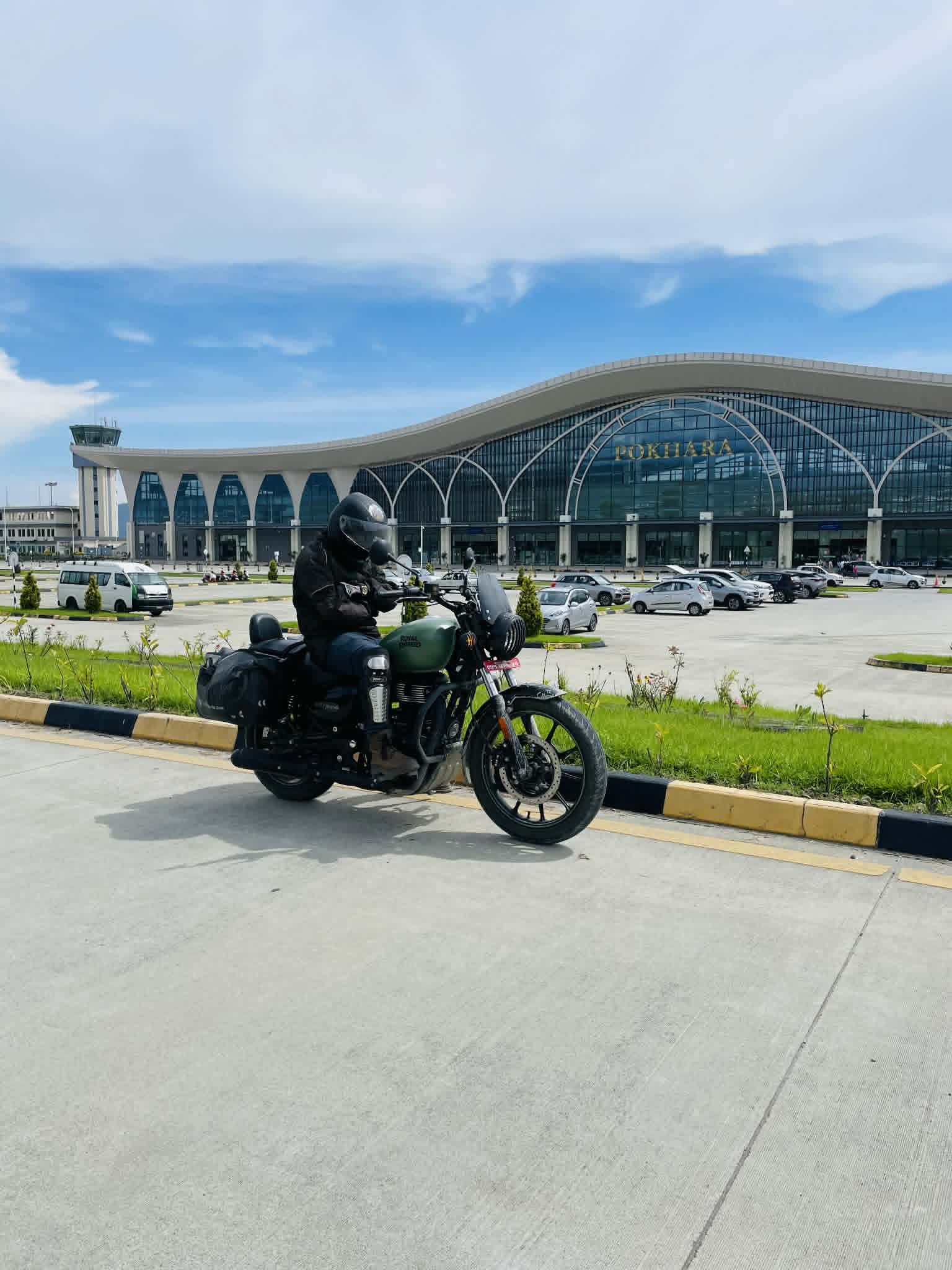
The road between Kathmandu and Pokhara is the most ridden stretch of tarmac in Nepal. Every serious motorcycle journey through the country either begins or ends on it, passes through it, or uses it as a logistical spine connecting everything else. It is also, depending on which road you take and how you approach it, either the most forgettable stretch of riding in Nepal or one of the most rewarding.
That distinction, forgettable versus rewarding is almost entirely a function of route choice and preparation. Riders who take the Prithvi Highway straight through, push hard for the 200-kilometre distance, and arrive in Pokhara in five hours having seen a lot of roadside development and truck exhaust have done the geography but missed the riding. Riders who choose the Siddhartha Highway alternative, or who build a two-day route through Mugling, Bandipur, and the Marsyangdi valley, arrive in Pokhara having done what Nepal's roads are actually for.
This guide covers both options in full, with everything you need to make the right choice for your timeline, skill level, and what kind of riding you came to Nepal for.
Understanding the Two Main Route Options
Before distances, timings, and waypoints, the most important decision is which road you are actually riding.
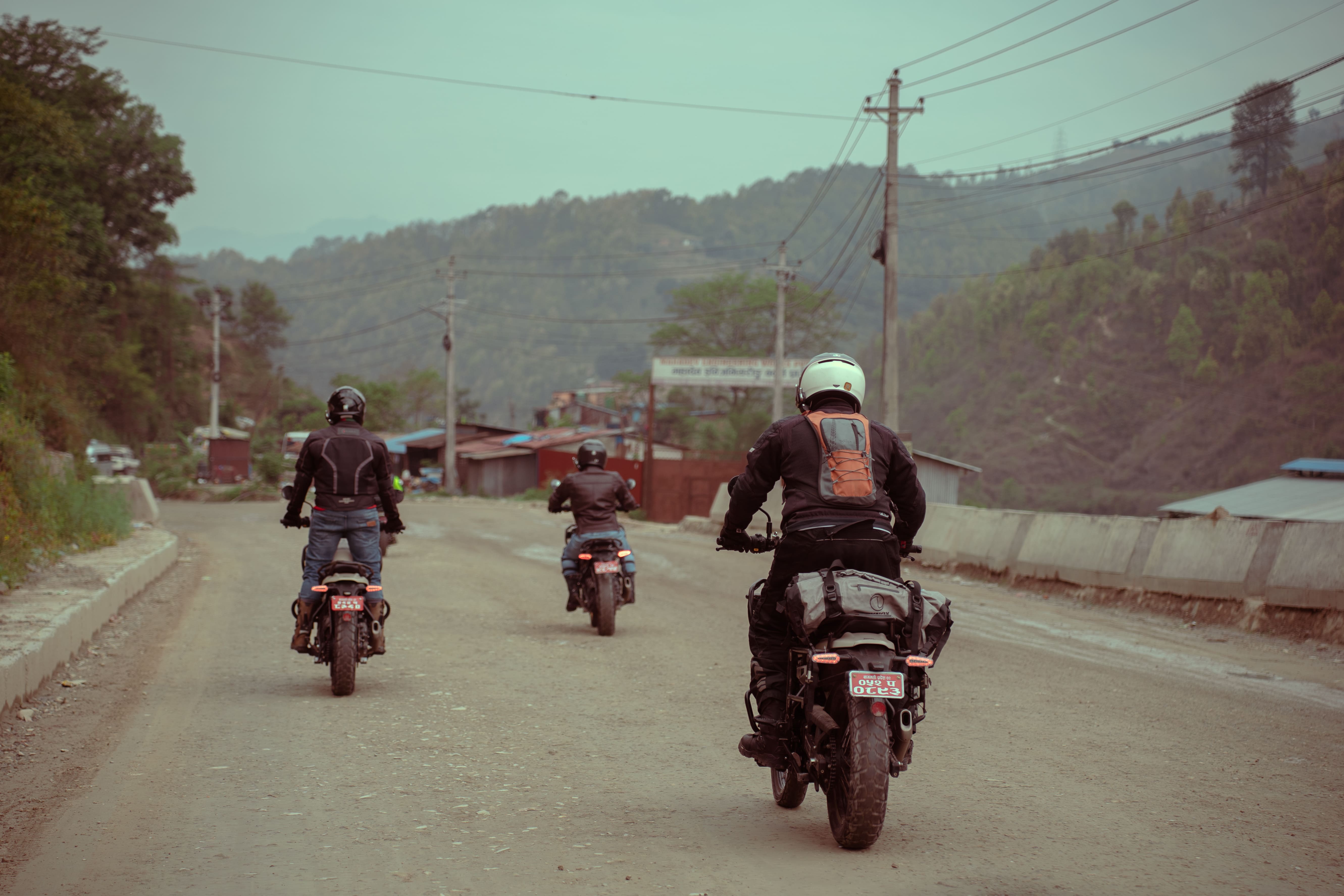
The Prithvi Highway (BP Highway / H01) is the direct route. Kathmandu to Pokhara, approximately 200 kilometres, following the Trishuli and Marsyangdi river valleys through Naubise, Malekhu, Mugling, Damauli, and into Pokhara. In good conditions, with manageable traffic, an experienced rider completes it in five to six hours. It is paved throughout, heavily trafficked by trucks and buses, and passes through a continuous ribbon of roadside commerce that varies from interesting to exhausting depending on your tolerance for it. The scenery in the Trishuli gorge section between Naubise and Mugling is genuinely dramatic and frequently overlooked by riders who are focused on making time.
The Siddhartha Highway (H06) is the alternative southern route. It exits Kathmandu through Thankot, drops to the Terai lowlands through Hetauda, and approaches Pokhara from the south through Butwal and Palpa. The distance is approximately 280 kilometres — eighty kilometres longer — but the road quality is significantly better on most sections, the truck traffic is substantially lower, and the approach to Pokhara through the Palpa hills offers riding that the Prithvi Highway never provides. First-time Kathmandu-to-Pokhara riders are consistently more positive about the Siddhartha route. The trade-off is time: allow eight to nine hours minimum, more if you stop at Palpa.
A third option, building a two-day itinerary incorporating Bandipur — deserves separate treatment and gets it later in this guide. It is the recommended choice for riders who are not constrained by a single-day deadline and want to understand what the Kathmandu-to-Pokhara corridor actually has to offer.
Route One: The Prithvi Highway in Detail
Kathmandu to Naubise (27km) — The Urban Exit
Leave Kathmandu via the Ring Road, picking up the Prithvi Highway heading west from Kalanki. This first section through Thankot and down to Naubise is the most demanding urban riding of the journey — dense traffic, unpredictable lane discipline, pedestrians and vendors encroaching on the road surface, and a descent from the valley rim that requires attention to both the road surface and the vehicles ahead.
Naubise itself is a fuel and tea stop. Fill up here regardless of your gauge. The stretch ahead through the gorge has fuel available but not always reliably so.
Road condition: Mixed urban surface deteriorating to patched tarmac on the descent. Watch for loaded trucks taking the middle of the road on the switchbacks.
Time from Kathmandu: 45–60 minutes in normal traffic.
Naubise to Mugling (79km) — The Trishuli Gorge
This is the section of the Prithvi Highway that rewards riders who slow down enough to actually notice it. The road follows the Trishuli River through a gorge of considerable drama — steep forested walls, the river running fast and green below, and frequent sections where the road has been cut directly into the cliff face. The scenery is best appreciated early morning before the truck traffic builds and dust reduces visibility.
Road quality on this section is variable and changes seasonally. The gorge receives significant rainfall and landslide activity during and after the Monsoon, and even in the dry season you will encounter sections of road surface that have been repaired multiple times and show it. Ride at a pace that gives you stopping distance on corners — the road is single carriageway throughout with limited overtaking opportunities, and trucks coming the other direction use every available centimetre of road width on the tighter bends.
Mugling is the junction town where the Prithvi Highway meets the road north toward Besisahar and the Annapurna Circuit. It is a significant truck stop and logistics hub — chaotic, dusty, and entirely functional. Eat here if you need to. The daal bhaat at the roadside dhabas is reliable and priced for the working truck driver, which means it is cheap and plentiful.
Road condition: Variable. Good tarmac interrupted by patched sections, particularly post-Monsoon. Narrow through gorge with active rockfall risk after rainfall.
Key stop: Mugling for fuel, food, and rest. Do not skip it — the remaining stretch to Pokhara is longer than it looks on a map.
Time from Naubise: 1.5–2.5 hours depending on traffic and road condition.
Mugling to Pokhara (95km) — The Long Valley Stretch
The road from Mugling to Pokhara follows the Marsyangdi River valley through Dumre and Damauli before climbing out of the valley system into the final approach to Pokhara. This is the section that most riders find least interesting on the Prithvi Highway — wider road, more consistent surface, but also more trucks, more commercial development, and less of the gorge drama that characterises the earlier section.
Dumre is the turning point for Besisahar and the Annapurna Circuit — if you are continuing to the Annapurna region on subsequent days, this junction is worth noting for orientation. Damauli is a reasonable fuel stop if you did not fill up at Mugling. The road quality improves progressively through this section as you approach Pokhara, and the final 30 kilometres on the improved highway approach are genuinely quick.
The entry into Pokhara from the east via the Prithvi Highway brings you in through the commercial fringe of the city. Navigate toward Lakeside — the Phewa Lake neighbourhood where the majority of rider-friendly accommodation, repair shops, and fellow expedition motorcyclists concentrate — via Mahendra Pul and the lake road.
Road condition: Best surface of the Prithvi Highway route. Dual carriageway on sections approaching Pokhara.
Time from Mugling: 2–2.5 hours.
Total Prithvi Highway: 200km, 5–6 hours riding time, longer with stops.
Route Two: The Siddhartha Highway in Detail
Why This Route Deserves More Attention Than It Gets
The Siddhartha Highway is underridden relative to its quality, primarily because it adds distance and is less obviously the direct line on a map. Riders in a hurry take the Prithvi. Riders who have time and want better riding take the Siddhartha, and they consistently report a more satisfying journey.
The route exits Kathmandu through Thankot — the same initial section as the Prithvi Highway — but diverges south after Naubise, dropping through the Palung Valley and the Tistung ridge before descending to Hetauda in the Terai. The descent from the Tistung ridge is among the most enjoyable sections of paved mountain road within a day's ride of Kathmandu — sweeping, well-surfaced, and almost entirely free of truck traffic compared to the Prithvi gorge.
Hetauda to Butwal (150km) — The Terai Crossing
Hetauda sits at the edge of Nepal's Terai lowlands — flat, warm, and climatically completely different from the Kathmandu valley. The riding through the Terai is fast and requires a different kind of attention than mountain roads: the surface is good, speeds are higher, and the hazards shift from loose corners and rockfall to livestock on the road, sudden speed bumps through villages, and the particular alertness required for high-speed riding in a mixed-traffic environment.
Butwal is the southern junction city for the Siddhartha Highway — a significant commercial hub where the road north toward Palpa and Pokhara diverges from the East–West Highway. Fuel, food, and mechanical facilities are all readily available. In hot months, the Terai crossing warrants an early start to reach Butwal before midday heat makes the riding uncomfortable.
Butwal to Palpa to Pokhara (130km) — The Best Section
The road north from Butwal climbs immediately and dramatically out of the Terai through a series of switchbacks into the Palpa hills. This climbing section — dense forest, cooler air arriving as altitude increases, the plains of the Terai opening below you — is one of the genuine riding pleasures of this route.
Palpa (Tansen) sits at approximately 1,370 metres and warrants a stop that most riders give it. It is a genuinely beautiful Newari hill town, far less visited than its quality deserves, with a historic centre of narrow lanes, traditional architecture, and a crafts tradition — metalwork particularly — that predates the tourism economy by centuries. If the two-day option is on the table, Palpa is the natural overnight stop on the Siddhartha route.
From Palpa, the road descends toward Waling and Syangja before climbing again through rolling Himalayan foothills into the final approach to Pokhara from the south. The Himalayas are visible on clear days throughout this section in a way the Prithvi Highway rarely provides — Dhaulagiri, Annapurna South, Machhapuchhre coming into view progressively as you climb toward Pokhara's elevation.
Total Siddhartha Highway: 280km, 8–9 hours riding time. One overnight recommended.
The Two-Day Bandipur Route: The Recommended Option
For riders who have a day to invest, the Kathmandu-to-Pokhara journey via Bandipur is the most rewarding version of the route and the one that best justifies the journey as an experience rather than a transit.
Day One: Kathmandu to Bandipur (140km)
Follow the Prithvi Highway to the Bandipur junction, approximately 8 kilometres past Dumre. The turnoff is signed but easy to miss in the commercial activity around Dumre — look for it on the right side heading west, immediately after crossing the Marsyangdi River bridge.
The road from the junction climbs 8 kilometres to Bandipur at 1,030 metres. The road is narrow and steep in places but paved throughout and manageable for any adventure motorcycle. The final kilometre approaches the old bazaar town on a switchback that deposits you at the edge of a pedestrianised historic centre — one of the few genuine old bazaar towns in Nepal that has been substantially preserved rather than incrementally modernised.
Bandipur deserves at least one night. The town sits on a ridge with Himalayan views that include Manaslu, Himalchuli, Baudha Himal, and on the clearest days the full Annapurna range. The morning view from the main street at sunrise, with the peaks catching light before the valley below has left darkness, is among the better versions of the experience Nepal provides of making you feel small in the best possible way.
Accommodation in Bandipur ranges from very basic to genuinely comfortable. Old Inn and Bandipur Village Resort represent the upper range and both provide clean rooms, reliable food, and the remarkable quiet of a town where motorcycle and vehicle access is restricted to the approach road rather than the centre.
Road condition: Prithvi Highway standard to Dumre junction. Good paved road on Bandipur climb.
Highlight: Bandipur old bazaar, Himalayan sunset views, Siddha Cave 2km below town.
Day Two: Bandipur to Pokhara (60km)
Return to the Prithvi Highway from Bandipur and continue west to Damauli, then follow the standard Prithvi Highway approach into Pokhara. The distance from Bandipur to Pokhara is only 60 kilometres — a short morning's riding that arrives in Pokhara before midday, leaving the afternoon for the city.
Alternatively, from the Bandipur junction, a rougher road continues west parallel to the Marsyangdi without rejoining the main highway immediately, passing through villages and agricultural land with dramatically less traffic and more interesting surface. This option requires a bike with some off-road capability and adds approximately 30 minutes but provides a final section of riding that the Prithvi Highway cannot match in character.
Practical Rider Information
Fuel
Fuel stations are consistent on the Prithvi Highway from Kathmandu to Mugling, then again from Mugling to Pokhara. The longest reliable gap is approximately 60 kilometres in the Trishuli gorge section. On the Siddhartha Highway, fill in Hetauda and again in Butwal. The Bandipur detour has no fuel on the hill — fill at Dumre before the junction.
Road Conditions by Season
The Prithvi Highway and Siddhartha Highway are both paved year-round and passable in all seasons, with important qualifications. The Monsoon months — June through August — bring landslide risk on the gorge sections of the Prithvi Highway and occasional flooding on the Terai crossing of the Siddhartha. Check current conditions through local riders or the Nepal Roads Board before departing during Monsoon season. The post-Monsoon period — September through November — frequently involves road repair work that creates delays but does not usually close routes entirely.
Traffic and Timing
Leave Kathmandu before 7 a.m. for any route. The Prithvi Highway through the Ring Road and Kalanki becomes seriously congested from 8 a.m. onwards. Early departure also positions you through the Trishuli gorge before peak truck traffic, which makes both the safety and the enjoyment of that section significantly better.
Avoid the Prithvi Highway on Saturdays — Nepal's public holiday — when recreational traffic from Kathmandu adds significantly to commercial vehicle volume on what is already a narrow road.
Accommodation Reference Points
Naubise: Basic roadside guesthouses for early stops or late starts. Functional, not comfortable.
Mugling: Several reasonable roadside hotels catering to bus and truck traffic. Clean rooms, reliable food, no atmosphere.
Bandipur: The recommended overnight. Book ahead in peak season — October and March — when trekking and Himalayan viewing traffic fills the limited rooms.
Damauli: Adequate guesthouses if Bandipur is full or timing requires an alternative.
Pokhara/Lakeside: Abundant accommodation at every price point. Bike parking is available and expected at any Lakeside guesthouse — ask explicitly when booking and confirm a covered option if possible.
Motorcycle-Specific Notes
The Prithvi Highway carries the heaviest truck traffic of any Nepal route and demands specific vigilance at narrow gorge sections. Trucks frequently occupy the road centre on blind corners — position yourself with escape options rather than hugging the centreline. The road surface produces significant tyre dust accumulation that reduces grip in dry conditions, particularly on bends.
Carry a basic puncture repair kit. Both highways are paved, but road debris — particularly metal fragments from truck tyre failures, which are common — creates puncture risk throughout. Roadside repair for basic punctures is available at most larger towns but spacing between reliable repair stops on the gorge section can be 30 to 40 kilometres.
The Bandipur approach road is narrow enough that passing a bus or large vehicle requires careful judgement and occasionally a stop to let the larger vehicle negotiate the tighter corners. Do not attempt the Bandipur climb in darkness — the road has no lighting and the edge drops are unguarded on multiple sections.
Arriving in Pokhara: What Riders Need to Know
Pokhara is Nepal's second city and the undisputed logistical hub for motorcycle tours in Nepal. The Lakeside neighbourhood — Baidam and the roads immediately surrounding Phewa Lake, concentrates most of what riders need: accommodation with secure parking, motorcycle repair and service facilities, gear shops, route information from other riders, and permit processing for Annapurna region access.
The Royal Enfield service centre on the Prithvi Highway approach to Pokhara is the most significant mechanical resource in western Nepal and worth locating before you need it rather than after. For riders continuing to the Annapurna Circuit, Mustang, or Manang, Pokhara is the last point of comprehensive mechanical support — use it.
Permits for the Annapurna Conservation Area (ACAP) and TIMS cards are obtainable in Pokhara at the Tourism Board office near Lakeside. Process them on arrival rather than the morning of departure for onward routes, queues can be longer than expected during peak season.
The Route in Summary
The Kathmandu to Pokhara ride is not the most dramatic motorcycle journey Nepal offers. That distinction belongs to the routes it leads toward — Annapurna, Mustang, Manang, and beyond. What it is, done properly with the right route choice and unhurried approach, is an excellent introduction to how Nepal's roads actually work: the traffic culture, the surface variability, the rhythm of tea stops and river views and mountain glimpses between ridgelines.
Riders who treat it as a transit suffer through it. Riders who treat it as the first chapter of a longer story find it exactly what a first chapter should be — orientation, texture, and the growing sense that the best parts are still ahead.
They are. But this road is how you reach them.