
Most people think the ride to Upper Mustang is a physical challenge. Dust, altitude, broken roads, river crossings, long days in the saddle with nowhere to stop and nothing ahead but more of the same. That assessment is accurate as far as it goes, which is not very far.
The physical challenge of the Upper Mustang motorbike tour is real, and it would be dishonest to minimize it. But for the majority of foreign riders who complete the journey, the physical difficulty turns out not to be what they remember most, talk about most, or find most difficult to explain to people who were not there. What they remember is something that happens internally — a gradual, involuntary recalibration of how their mind processes uncertainty, time, control, and attention that begins somewhere in the Kali Gandaki valley and completes itself, quietly, somewhere on the high desert plateau south of Lo Manthang.
This is an attempt to describe that process honestly, in the sequence it actually unfolds, for riders who are preparing for the journey or trying to make sense of one they have already completed.
The First Mental Shock: Losing Predictability
Foreign riders leaving Kathmandu for Upper Mustang almost universally arrive with a version of the same assumption: the hardest part will be the terrain. The altitude, the gravel, the river crossings, the technical sections above Kagbeni. They have researched the route, studied the elevation profiles, and read the gear guides. They feel prepared for the physical demands.
What they are not prepared for is the loss of predictability that begins within the first forty-eight hours — not at altitude, not on gravel, but on the ordinary roads of the lower route before the serious terrain has even started.
Traffic in Nepal does not behave the way traffic in structured riding environments behaves. It does not occupy its designated lane with the consistency that European or North American riders are neurologically calibrated to expect. Road conditions change without the warning that road markings and infrastructure normally provide. Time — the reliable planning tool that structures most organised riding — begins to decouple from distance in ways that make itinerary planning feel increasingly theoretical.
The mental adjustment this demands is specific and significant. The brain that has been operating on expectation — modelling the road ahead based on what similar roads have reliably delivered — is forced to shift its operating mode. It stops projecting and starts observing. It stops anticipating the next kilometre based on the last kilometre and starts reading what is actually in front of it, in real time, without the comfort of prediction.
This shift is subtle enough that most riders do not notice it happening. It feels, if it feels like anything specific, like a kind of heightened alertness that they attribute to the unfamiliarity of the environment. What it actually is is something more fundamental: the first stage of a mental recalibration that the rest of the journey will deepen and complete.
Attention Becomes Constant, Not Optional
In most riding environments that foreign riders come from, attention is periodic. There are moments of active engagement — urban intersections, motorway merges, technical corners — separated by stretches where the riding is routine enough that cognitive load drops to a maintenance level. Riders cruise. They relax. They notice the landscape. They think about where they are going for dinner. Attention is rationed because it does not need to be constant.
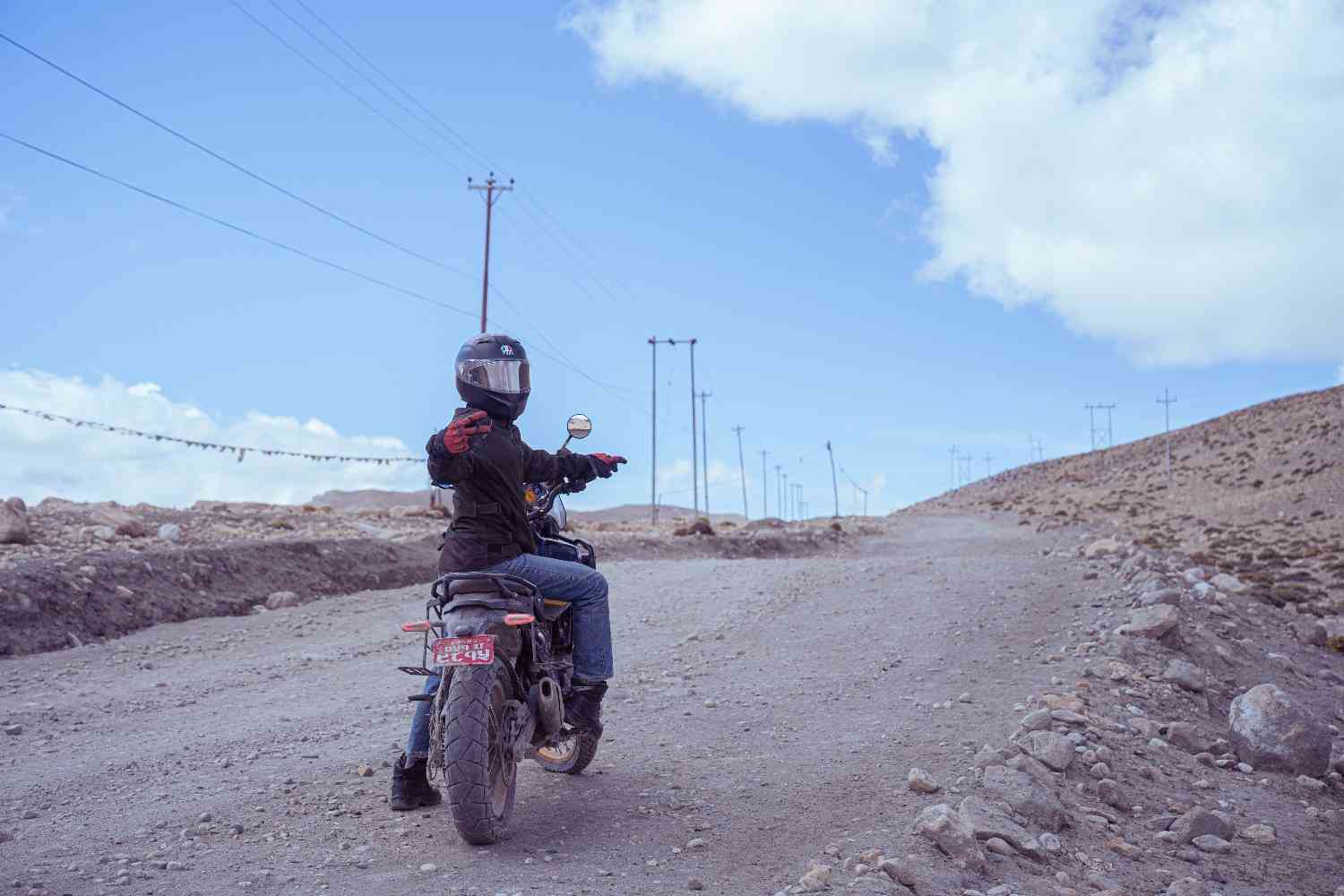
Beyond Besisahar, heading into the Marsyangdi valley and the approaches to Manang, this pattern becomes unavailable. The road surface changes character frequently enough that the moment of inattention that would be inconsequential on a European B-road becomes a moment of genuine risk on a Himalayan gravel track. Gravel texture shifts from compacted to loose without any visible warning. The road edge — where the surface is most likely to give way — varies in its reliability from one bend to the next. Wind, which becomes a significant factor through the Kali Gandaki corridor, arrives in gusts that affect handling with very little advance notice.
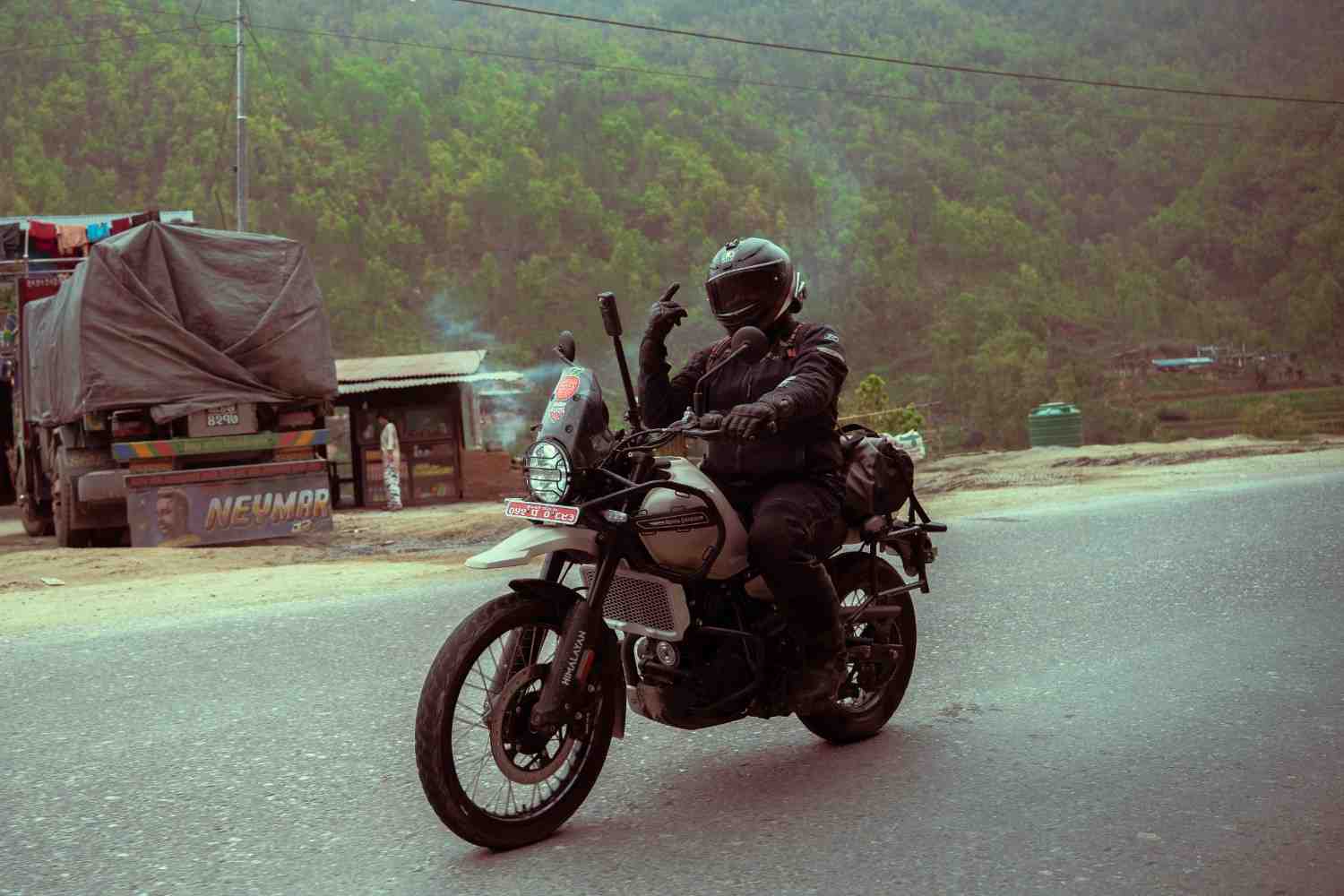
Every change in gravel texture demands a microadjustment. Every shift in wind direction requires a physical response. Every vehicle ahead — whether a jeep, a loaded truck, or a local rider on a 150cc Chinese motorcycle — represents a variable that needs monitoring rather than a predictable unit in a predictable system.
The initial experience of this continuous attention requirement is exhaustion. Riders who are accustomed to a periodic attention model find the sustained demand of Upper Mustang riding genuinely tiring in ways they did not anticipate. The physical demands of the riding are significant. The cognitive demands, particularly in the first two or three days, exceed them.
What happens next is the part that riders find difficult to explain afterward. At some point — there is no specific day or specific kilometre where it occurs — the sustained attention stops feeling like a demand and starts feeling like a state. The sharpening of awareness that constant engagement produces begins to feel not like effort but like clarity. The mind that was straining to maintain continuous focus finds that the focus has become, temporarily, its natural operating mode.
This is one of the things riders mean when they say that Upper Mustang changes how they think. It is not metaphor. It is a genuine, if temporary, shift in cognitive mode that the demands of the riding produce.
Decision Fatigue Replaces Physical Fatigue
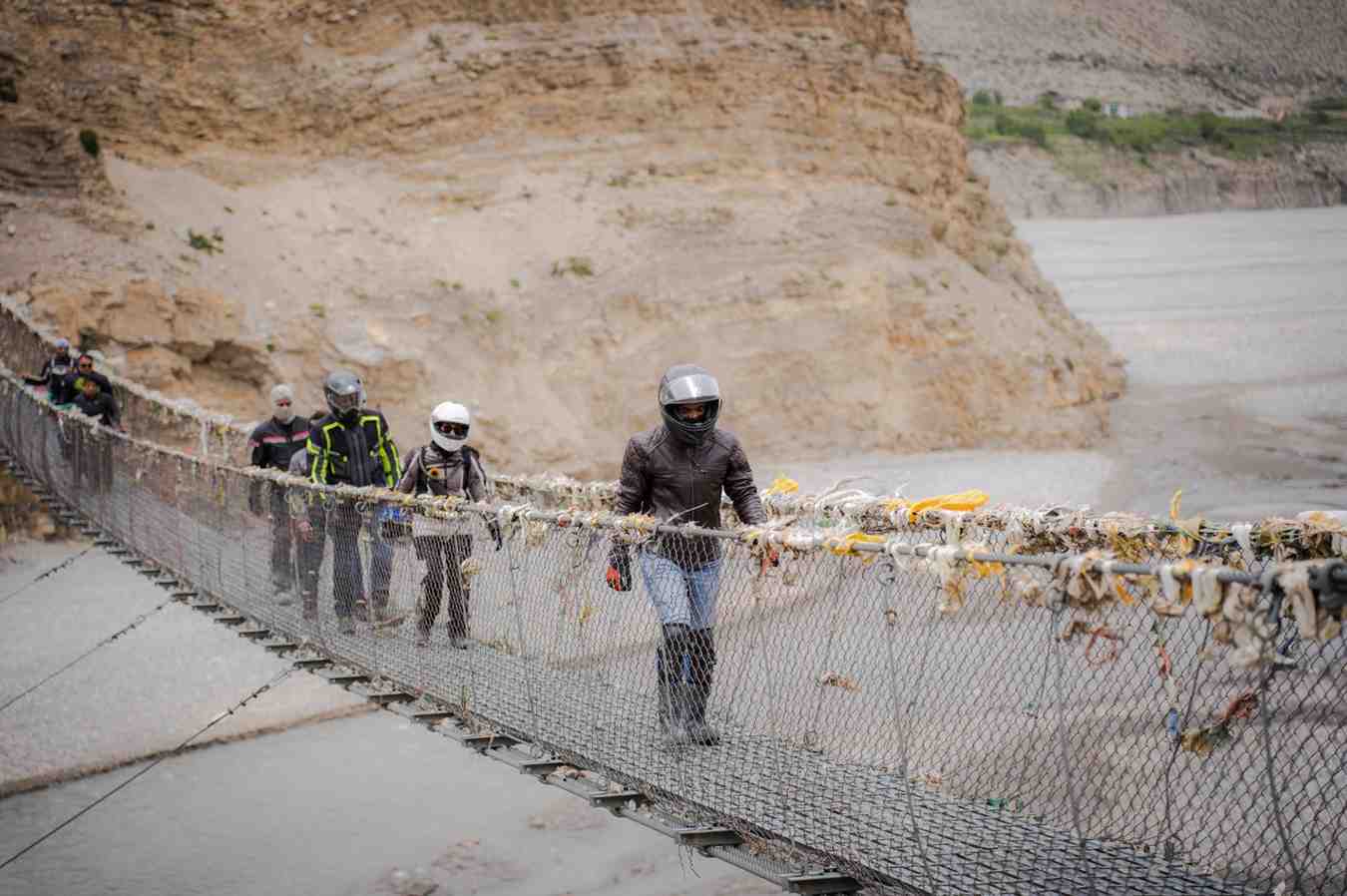
Foreign riders who have come for motorcycle tour in Nepal and are prepared for the physical demands of the Upper Mustang route are sometimes surprised to discover that the exhaustion accumulating by the end of the third or fourth day is qualitatively different from physical tiredness. Muscles ache, yes. The back and wrists and shoulders carry the accumulated toll of hours on broken surfaces. But the fatigue that feels most significant is something else — a heaviness in decision-making, a slowness in the cognitive processing that the riding continuously demands.
The Kali Gandaki River corridor, between Kagbeni and Lo Manthang, is where this effect is most concentrated. The wind through this valley — one of the deepest river gorges on earth, channelling air between the Annapurna and Dhaulagiri massifs — is not a background condition. It is an active participant in the riding, arriving in lateral gusts that require immediate physical response and demanding constant assessment of whether current conditions are rideable, borderline, or genuinely dangerous.
In this environment, the decisions that in a normal riding context would be made automatically — when to overtake, when to reduce speed, when to stand on the pegs to absorb a surface transition, when to stop and wait for a dust storm to pass — require conscious deliberation. The automaticity that experienced riders develop over years of riding in predictable environments is partially suspended by conditions that exceed the parameters those automatic responses were calibrated for.
The cognitive load this creates is real and cumulative. By the end of a full day in the Kali Gandaki, riders are not just physically tired. They are mentally spent in the specific way that comes from sustained analytical engagement with a dynamic, high-consequence environment. The riding has stopped being automatic and become, at least partially, deliberate. That shift is significant, and the fatigue it produces is distinct from anything that physical exertion alone generates.
The Silence Starts to Speak Differently
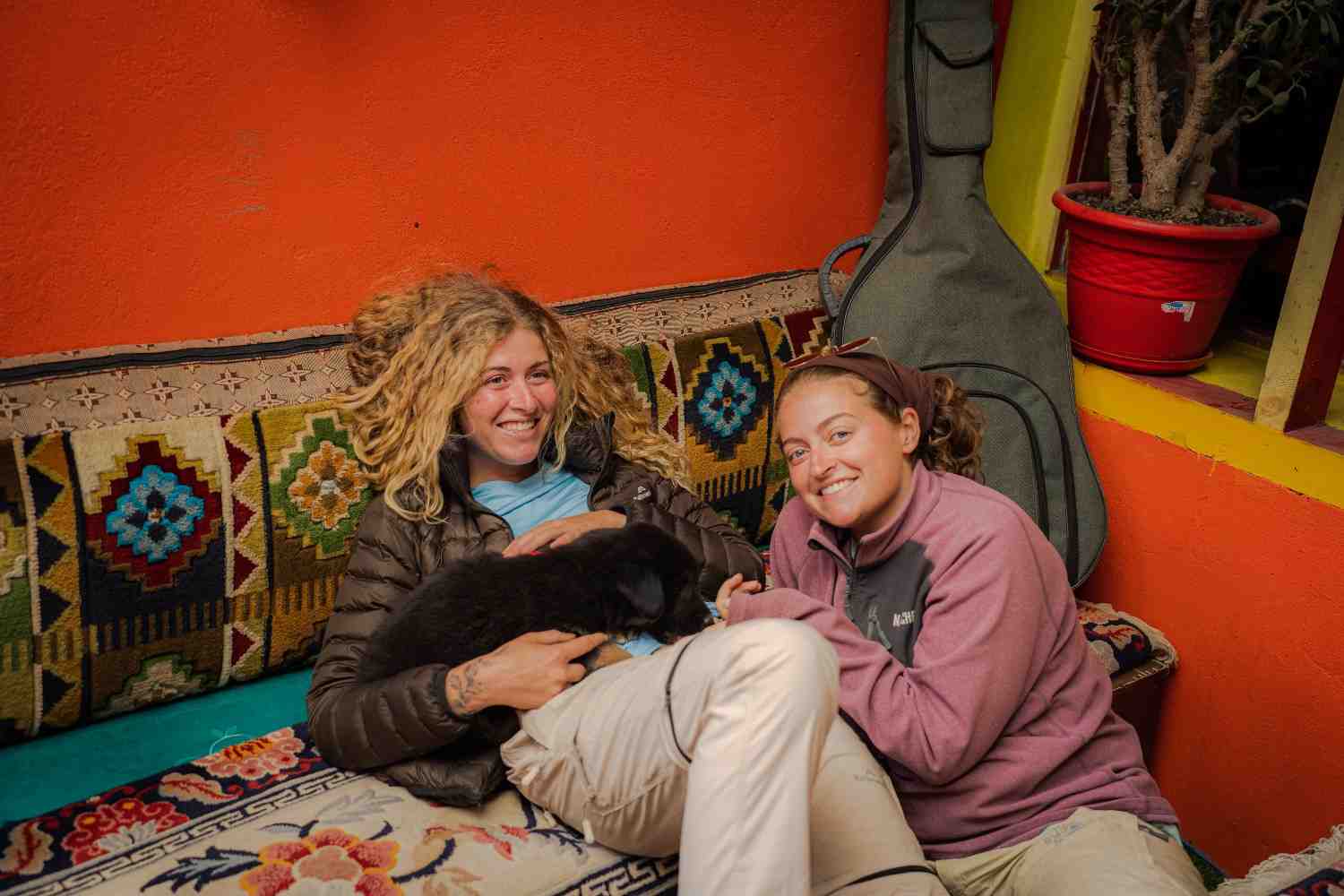
Past Marpha, heading north into the rain shadow that defines Upper Mustang's extraordinary landscape, something changes in the acoustic environment that foreign riders are rarely prepared for. The background noise that characterises almost every inhabited environment — traffic hum, construction sounds, human voices at various distances, the continuous low-frequency presence of other people living their lives nearby — gradually disappears.
It does not disappear dramatically. It thins, incrementally, as settlements become smaller and more widely spaced, as vehicle traffic reduces to occasional local jeeps and passing motorcycle expeditions, as the valley opens into the high desert terrain that makes Upper Mustang look less like Nepal and more like the Tibetan plateau it geographically adjoins.
The first response most foreign riders report is something they describe as peace or relief — the absence of noise experienced as the presence of calm. This response is genuine but temporary. After several hours in genuine silence, or in the near-silence of wind and the occasional bird call that characterises the high valley, something shifts. The silence stops being the absence of external noise and starts being the presence of internal noise. Your own thoughts, in the absence of competition, become audible in a way they rarely are in ordinary life.
This is the introspective quality of Upper Mustang that riders consistently cite as among the most unexpected and most significant aspects of the journey. The enforced interiority — the way the silence and the solitude and the absence of the usual distractions of connected life push attention inward — produces a quality of self-awareness that is neither comfortable nor uncomfortable in any simple sense. It is simply more honest than the conditions of ordinary life usually permit.
The Slow Recalibration of Time
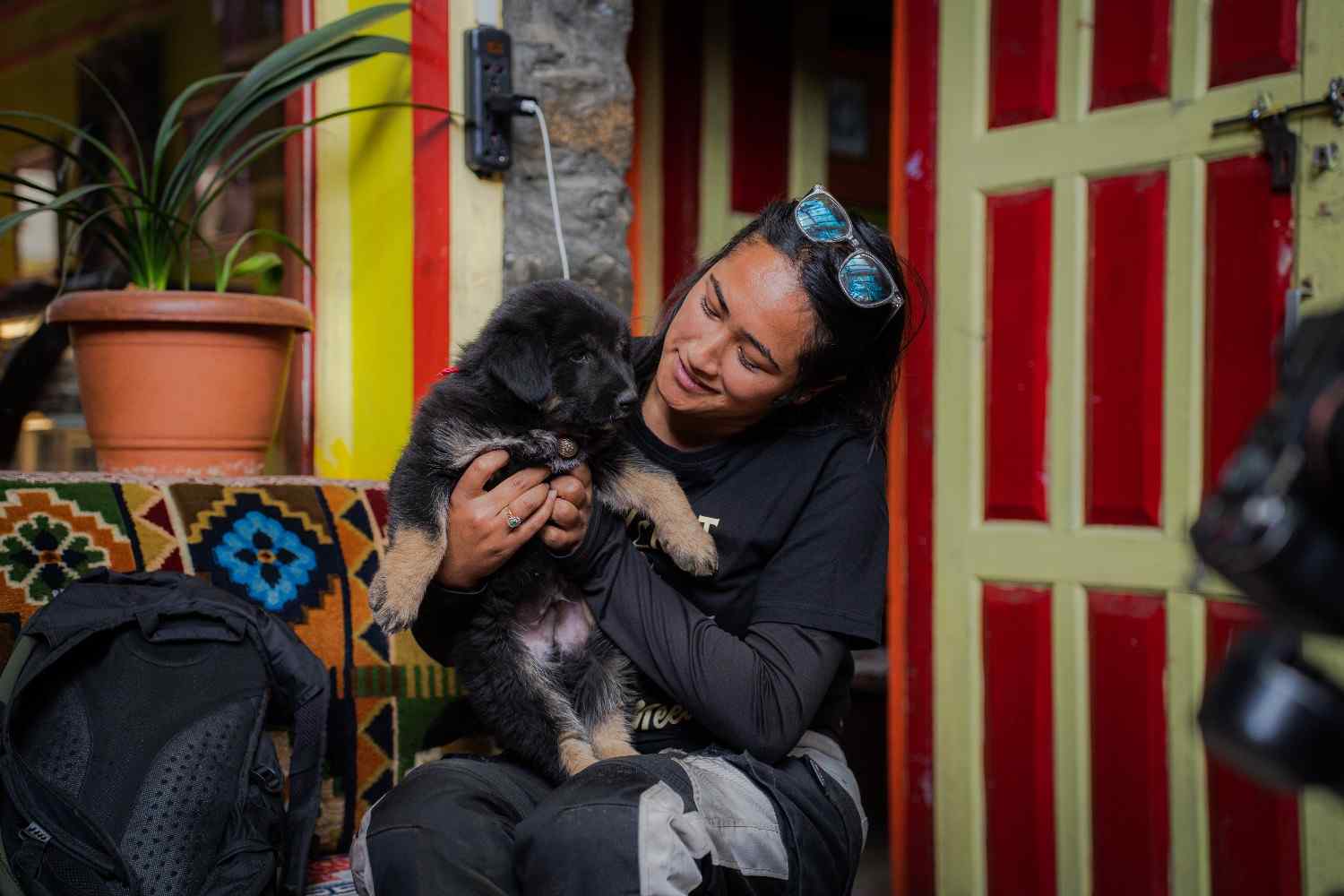
One of the more disorienting aspects of the Upper Mustang ride for foreign riders accustomed to structured environments is what happens to their relationship with time. In the riding contexts most have come from, distance and time maintain a broadly predictable relationship. A hundred kilometres takes approximately two hours under normal conditions, with a known margin for variables. Time functions as a reliable planning tool — it can be budgeted, allocated, and expected to behave consistently.
In Upper Mustang, this relationship dissolves. Thirty kilometres can take three hours on a technical gravel section. A stretch that appears on the map as a short morning ride can occupy a full day when wind, surface conditions, and the need for careful navigation through unmarked track junctions are factored in. Planned arrival times become aspirational rather than reliable. The entire framework of schedule-based planning that structures most organised travel becomes progressively less functional and less relevant.
The mental adjustment this demands is, for many riders, among the most uncomfortable aspects of the early journey. The impulse to calculate arrival times, to manage the day against a schedule, to know how the hours ahead will unfold — this impulse does not disappear easily or willingly. It is gradually overridden by a different cognitive priority: assessing the immediate situation and making the decision that is correct for the next hour rather than the decision that adheres to a plan made in different conditions with different information.
Riders who successfully make this adjustment describe it in similar terms: they stop asking "what time will I arrive" and start asking "can I continue safely from here." The shift from outcome orientation to process orientation — from managing the plan to managing the present moment — is one of the defining psychological movements of the Upper Mustang journey, and it persists, in attenuated form, well after the ride is over.
The Control Illusion Breaks Down
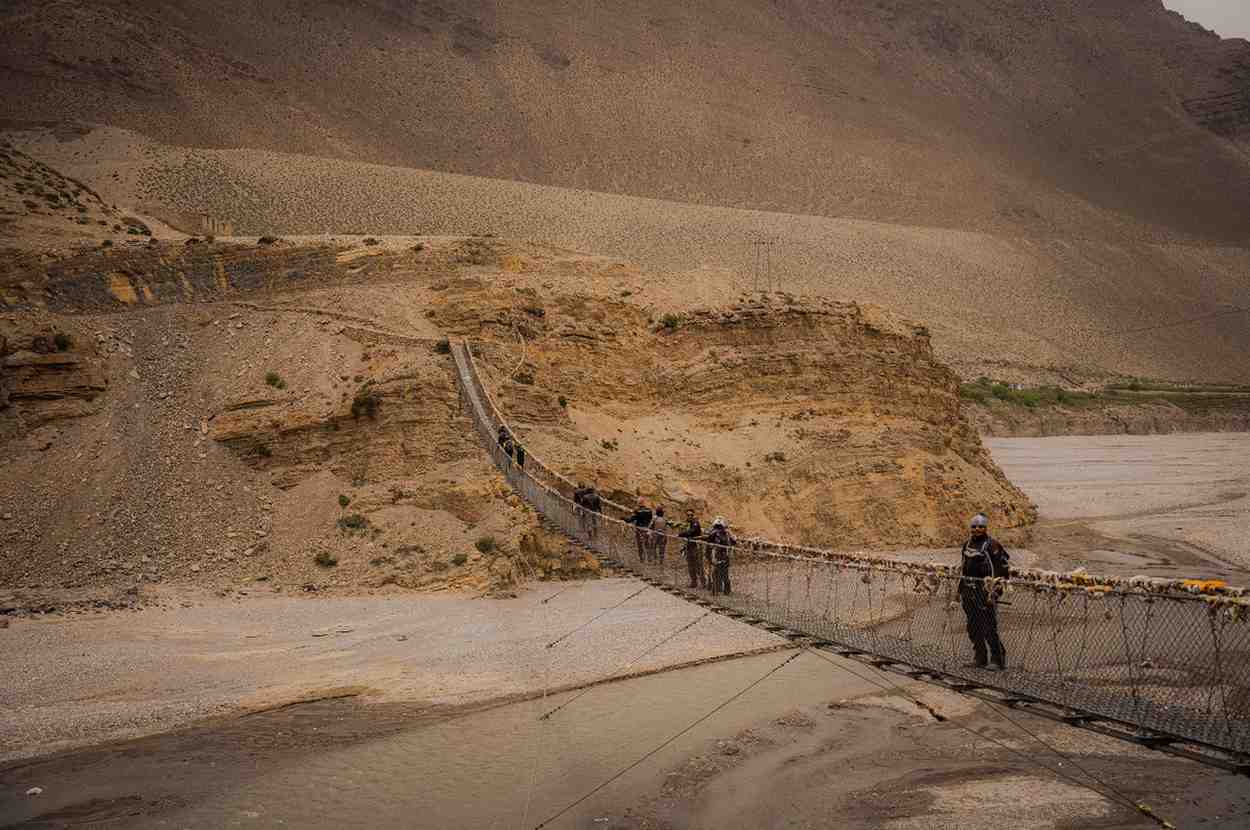
Closely related to the recalibration of time is a more fundamental shift in how riders relate to control itself. The assumption that careful preparation, skilled riding, and good judgment produce predictable outcomes — an assumption so embedded in the experienced rider's psychology that it rarely surfaces as an assumption at all — encounters conditions in Upper Mustang that test it directly.
Wind in the Kali Gandaki cannot be controlled, negotiated with, or reliably predicted beyond the immediate moment. The surface conditions of the high valley tracks shift in response to recent precipitation, frost, temperature change, and passing vehicle traffic in ways that make one crossing of a given section feel completely different from another crossing of the same section twenty-four hours later. The behaviour of other road users — local drivers who have developed their own entirely rational system of road use that operates on different principles than the systems foreign riders are trained in — cannot be standardised or anticipated with confidence.
The initial response of most experienced foreign riders to these conditions is to apply more control — more precise speed management, more deliberate line choice, more rigorous adherence to a planned approach. This response is natural and not entirely wrong. But it encounters a ceiling, relatively quickly, above which additional control effort does not produce better outcomes and can in fact produce worse ones by increasing cognitive load and reducing the fluid responsiveness that the conditions actually require.
What gradually replaces the control effort is something more like attentive responsiveness — a mode of riding that prioritises reading the current situation accurately over executing a predetermined plan correctly. The rider who stops trying to make the road conform to their plan and starts responding to what the road actually is in each moment is the rider who moves through Upper Mustang most effectively. This is not a philosophical position. It is a practical adaptation that the conditions demand and reward.
Altitude Changes How You Think
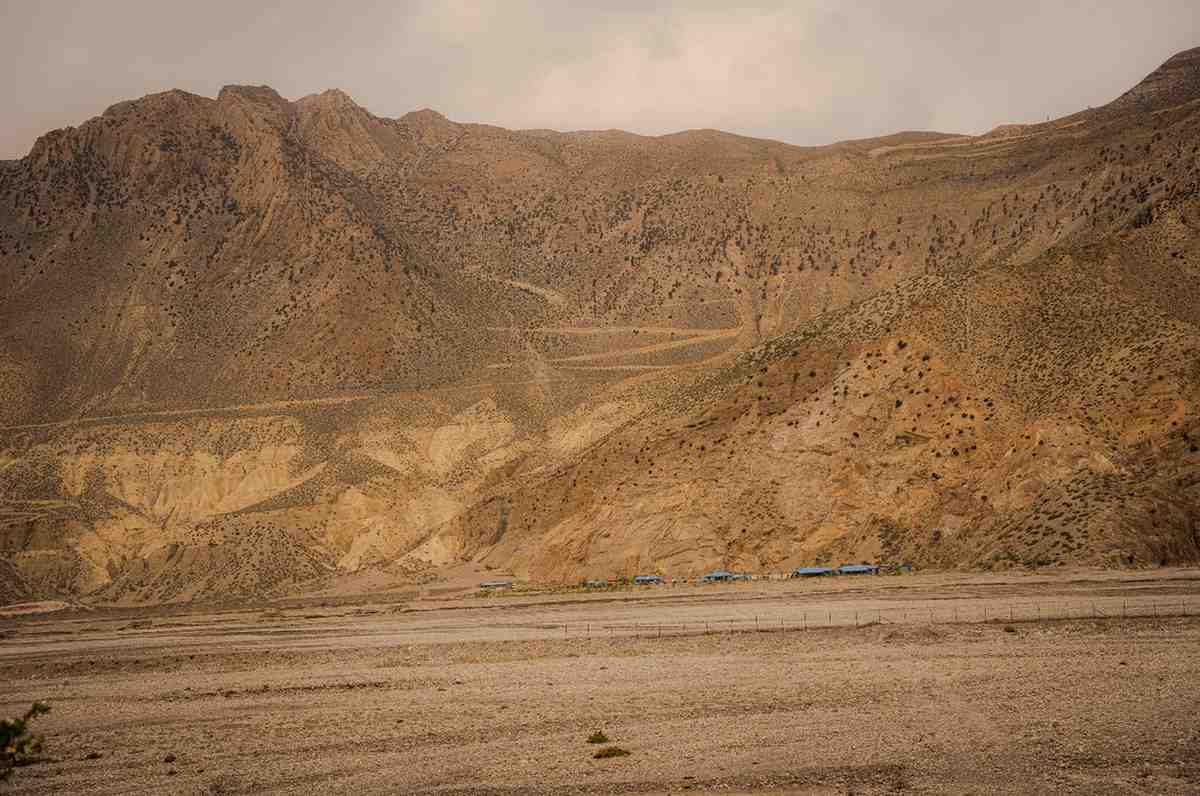
Above 3,500 metres — which the Upper Mustang route sustains for extended periods, with overnight stays in Kagbeni, Chuksang, Ghami, and Lo Manthang all at significant altitude — the cognitive effects of reduced oxygen become part of the riding experience in ways that are subtle but real.
Decision-making slows. Not dramatically, not in ways that feel like impairment from the inside, but measurably — the processing time between perceiving a situation and responding to it lengthens slightly. Patience, which the lower sections of the journey have already tested, becomes thinner. The capacity for the kind of broad, multi-variable thinking that complex situations require narrows toward simpler, more immediate assessment.
At the same time, something paradoxical occurs. The cognitive narrowing that altitude produces is also a kind of clarification. The mental space available for distraction — for thinking about what is happening elsewhere, for the background processing of concerns and plans and social obligations that constitutes a significant portion of ordinary mental activity — compresses. What remains is the road, the bike, the immediate decision. The enforced presence that altitude partly produces is uncomfortable and limiting in some respects and genuinely clarifying in others.
The Isolation Effect: Responsibility Becomes Personal
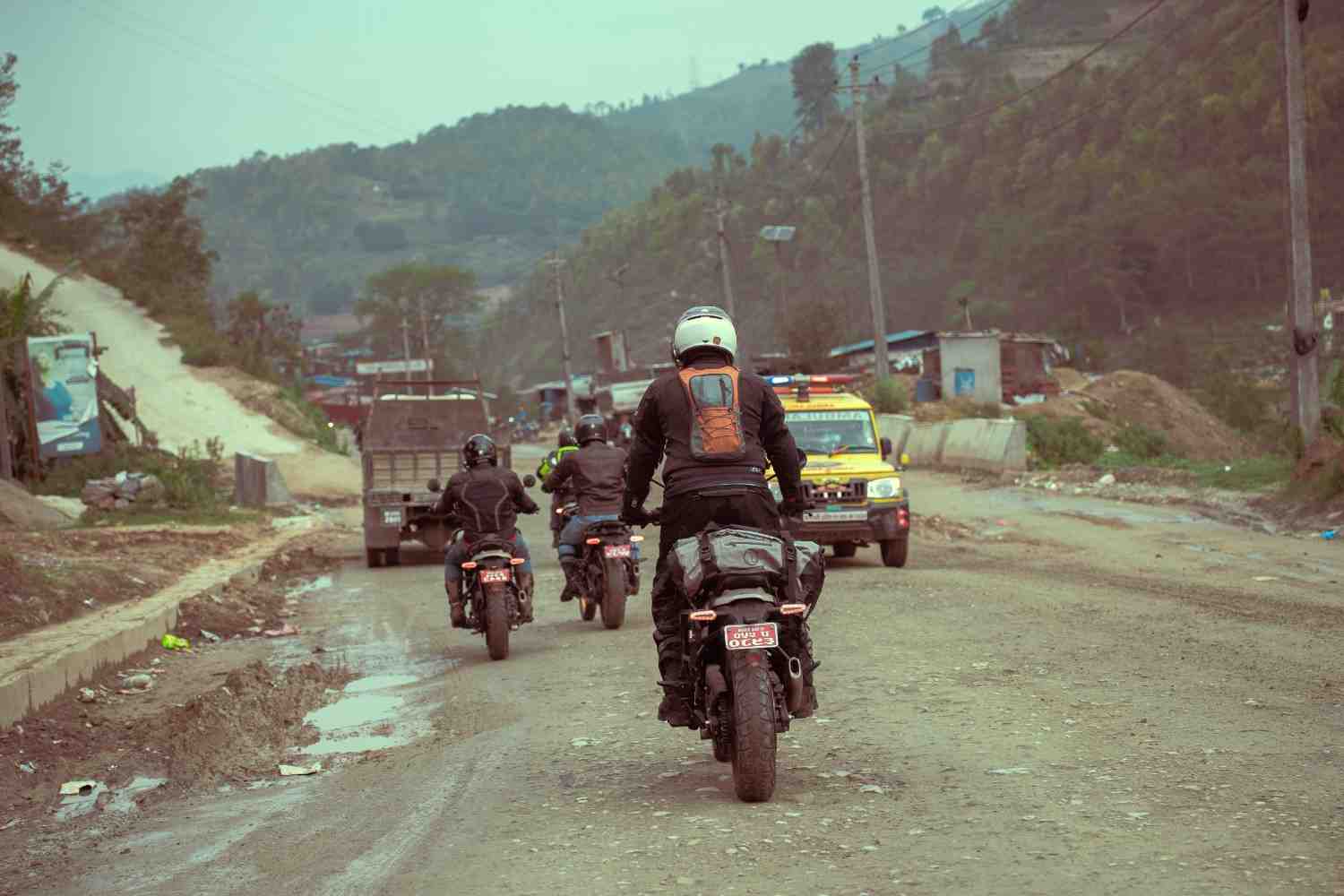
Past Kagbeni, entering Upper Mustang through the ancient checkpoint gate that marks the boundary of the restricted area, the landscape and the psychological environment change simultaneously. Settlements become sparse. The distances between inhabited places — between the small stone villages that appear as dots of habitation in an otherwise uninhabited plateau — extend to stretches where there is nothing for long enough that the absence registers consciously.
In most riding environments, the awareness of available assistance — a petrol station within range, mobile signal reachable within a short distance, other vehicles present who would stop if something went wrong — operates as a background reassurance that riders are rarely aware of until it is absent. In the high valleys of Upper Mustang, this background reassurance is not available. The nearest mechanical assistance may be a full riding day away. Mobile signal, where it exists at all, is intermittent. Other vehicles may not pass for extended periods.
The psychological effect of this genuine isolation is a shift in the quality of personal responsibility that riders carry. Decisions that in a normal riding environment carry limited consequence — because assistance is available if they go wrong — carry different weight in an environment where the consequence of a poor decision must be managed largely through your own resources. This shift is not anxiety-producing for most experienced riders. It is clarifying. The responsibility that has always existed is simply more visible, more personal, and less deniable.
The Shift From Resistance to Acceptance
At some point in the Upper Mustang journey — there is no consistent timing, no specific location where it reliably occurs, but most riders can identify it in retrospect — a fundamental shift in orientation happens. The mental mode of resistance to difficulty gives way to something that is not resignation but is closer to acceptance than anything most riders have experienced in a riding context.
The road that was perceived as difficult, as an obstacle between the current position and the destination, begins to be perceived differently. Not as easy — the difficulty is unchanged and fully present. But as simply how it is. The road is this. The wind is this. The surface is this. The distinction between how things are and how they should be, which generates most of the friction and frustration that difficult riding conditions produce, quietly collapses.
Riders describe this shift in different language — some call it flow, some call it surrender, some simply say the fighting stopped — but the underlying experience is consistent. It is one of the most reported psychological outcomes of the Upper Mustang journey, and it is one of the most difficult to produce deliberately in any other context.
What Returns With You
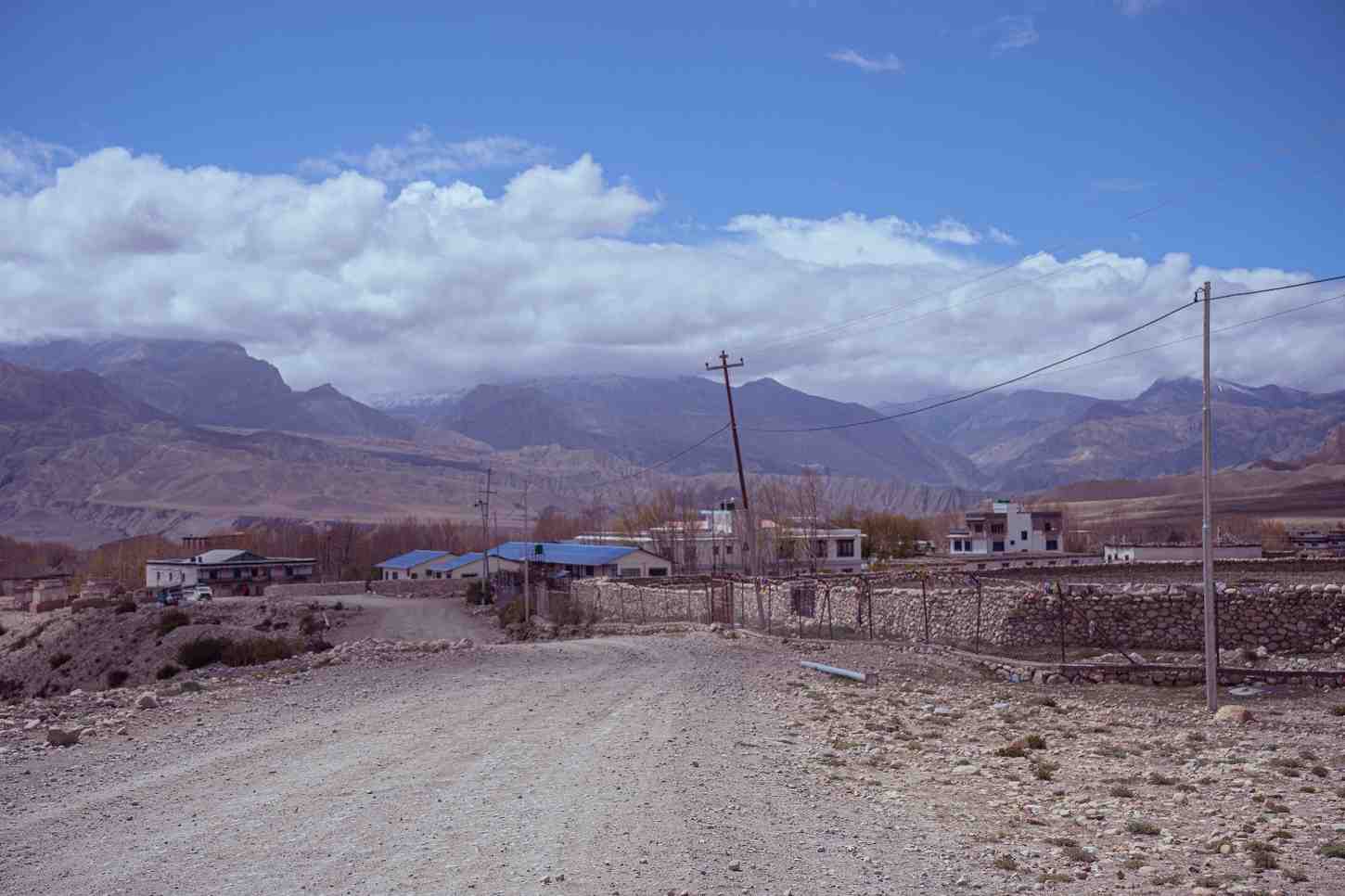
The changes that Upper Mustang produces in the riders who complete it are not dramatic. You do not return transformed in ways that are immediately obvious to people who know you. What returns with you is more subtle and, in the long run, more durable than dramatic transformation tends to be.
A higher tolerance for uncertainty — situations that previously felt uncomfortable because their outcome was unknown now carry less psychological charge. Better focus under conditions of cognitive load — the experience of sustained high-demand attention has recalibrated what your mind understands as demanding. A reduced need for the constant planning and scheduling and outcome-management that structures most of ordinary life. A different relationship with control — or more precisely, with the illusion of control that comfortable environments sustain.
These are not personality changes. They are baseline shifts — adjustments in what feels normal, what feels tolerable, what feels necessary. Riders consistently report that everyday environments feel, on return, slightly more structured than they remembered. Slightly more legible. Slightly more forgiving. Not because those environments have changed, but because the baseline against which they are being measured has.
Upper Mustang does not take you somewhere and bring you back the same. It takes you somewhere and recalibrates, quietly and without announcement, what same means. That is the part no gear list mentions and no route guide captures, because it is not about the road. It is about what the road, ridden fully and with genuine attention, does to the person riding it.