
Fuel Availability on the Upper Mustang Route (Complete Guide for Motorcycle Riders)
Fuel availability on the Upper Mustang motorcycle tour is one of the most critical logistics factors foreign riders underestimate.
Unlike structured touring regions, this is not a “refuel anytime” environment. Once you pass Kagbeni, fuel becomes a planned resource, not a spontaneous option.
By the time you reach the restricted corridor toward Lo Manthang, fuel strategy becomes as important as riding skill.
The Core Reality: Fuel Is NOT Continuously Available
Most foreign riders assume:
“There will be fuel in every town or lodge.”
That assumption is wrong.
Reality:
- Fuel stations are sparse
- Supply is irregular
- Availability depends on transport conditions
- Some villages may run out temporarily
You must treat fuel as a controlled supply chain, not a service.
Where Fuel Is Actually Available on the Route
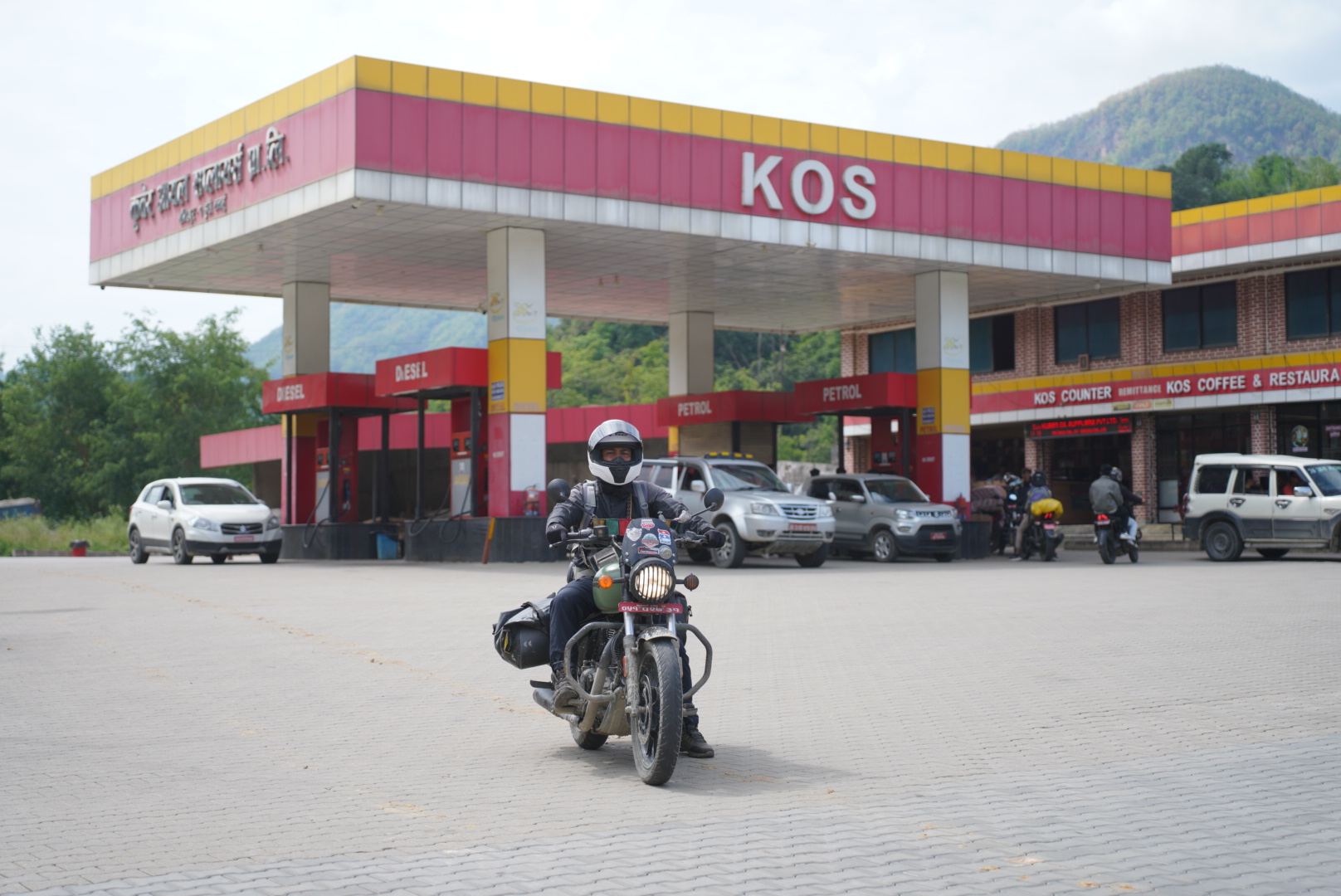
Let’s break the route into real refueling zones:
Zone 1: Pokhara Region (Full Availability)
At Pokhara:
- Multiple petrol stations
- Reliable supply
- Standard fuel quality
This is your last full-control refueling hub.
Riders should always start with full tank here.
Zone 2: Beni – Jomsom Corridor (Limited but Reliable)
Between Pokhara and Lower Mustang:
- Fuel available in key towns like Beni and Jomsom area
- Still part of general supply network
However:
- Availability depends on delivery timing
- Queues may form during peak season
This is your final semi-reliable backup zone.
Zone 3: Kagbeni Entry Point (Critical Transition)
At Kagbeni:
- Small-scale fuel availability (limited stock)
- Often expensive compared to lower regions
- Sometimes reserved for local use first
Important:
This is the last realistic fuel safety checkpoint before Upper Mustang.
Zone 4: Upper Mustang Restricted Area (Minimal Availability)
Beyond Kagbeni into the restricted region:
Fuel availability is:
- Extremely limited
- Not guaranteed daily
- Dependent on jeep transport deliveries
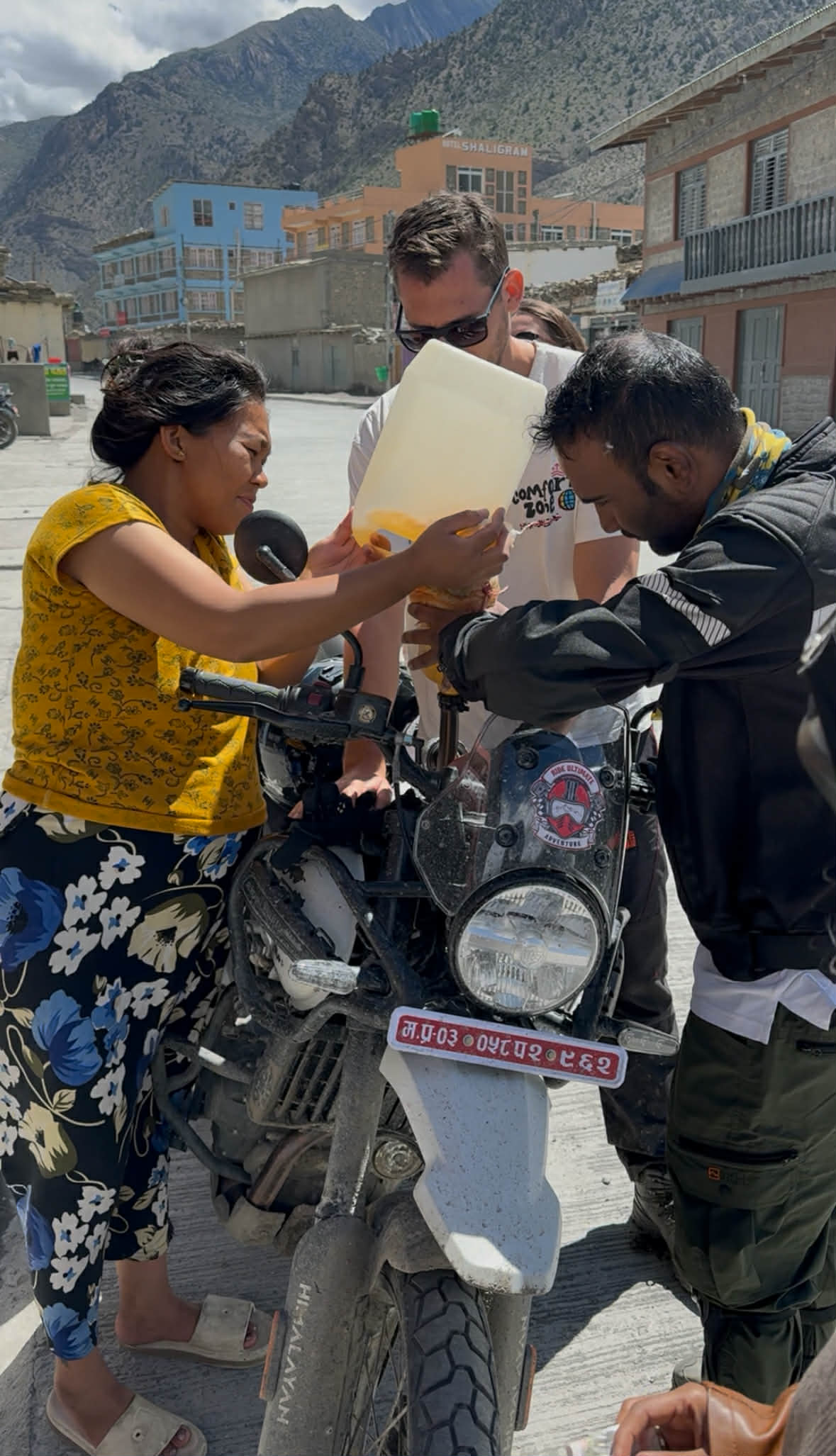
- Sometimes sold in small containers (not full pump access)
Villages such as:
- Chhusang
- Samar
- Ghami
- Tsarang
- Lo Manthang
may have:
- occasional fuel stock
- emergency supply only
- limited quantities per rider
The Hidden Fuel System: How It Actually Works
Fuel in Upper Mustang does NOT follow normal petrol station logic.
Instead, it operates like this:
Step 1: Fuel is transported from lower towns (usually Pokhara/Beni)
Step 2: It moves via:
- jeeps
- supply vehicles
- seasonal logistics runs
Step 3: Distributed in:
- small shops
- lodge storage
- emergency containers
This means fuel is logistics-dependent, not infrastructure-dependent.
Why Fuel Scarcity Happens in Upper Mustang
There are three main reasons:
1. Geographic isolation
- No direct highway fuel pipeline system
- Long supply chains from lower valleys
2. Weather disruption
- Landslides affect transport routes
- Seasonal road blockages slow delivery
3. Low infrastructure density
- Low population villages
- Limited commercial fuel demand
Fuel Types Available (Important for Foreign Riders)
In Upper Mustang, fuel is usually:
- Petrol (regular unleaded)
- Sometimes mixed-grade fuel in containers
Key issue:
Fuel quality can vary slightly due to:
- storage conditions
- transport method
- container handling
Most rental bikes are designed to handle this, but riders should avoid pushing engines aggressively.
The Biggest Mistake Foreign Riders Make
❌ Mistake:
Assuming they can refuel “whenever needed”
✔ Reality:
You must plan fuel stops in advance—sometimes 1–2 days ahead.
Example failure scenario:
A rider leaves Jomsom assuming the next village has fuel → arrives in Upper Mustang → fuel not available → range anxiety begins.
Fuel Consumption Reality on This Route
Fuel consumption increases significantly due to:
Terrain factors:
- Gravel sections
- Low gear riding
- Constant acceleration and braking
- Elevation changes
Result:
- Fuel efficiency drops compared to highway riding
- Consumption increases by 20–40% depending on terrain
Recommended Fuel Strategy (Expedition Logic)
Experienced riders follow this approach:
Step 1: Full tank in Pokhara
Always start fully loaded.
Step 2: Top-up in Beni/Jomsom if available
Do not rely on it—but use it if possible.
Step 3: Enter Kagbeni with buffer fuel
Never enter restricted area on low fuel.
Step 4: Carry buffer mindset inside Upper Mustang
Do not assume the next village has fuel.
Fuel Containers & Emergency Storage
Some expeditions carry:
- small spare fuel bottles (approved types)
- jerry cans in support vehicles
However:
- this is usually managed by tour operators
- not common for solo foreign riders (and restricted in many cases)
Why Kagbeni Is the Critical Fuel Decision Point
At Kagbeni, riders must decide:
- Enter Upper Mustang fully fueled
OR - Risk limited refueling options ahead
This is the last point where:
- fuel is relatively predictable
- logistics can be adjusted
- backup options exist
Fuel Inside Upper Mustang: Village-by-Village Reality
Chhusang:
- occasional small supply
- not reliable
Samar:
- very limited availability
- depends on transport timing
Ghami:
- small village stock possible
- often prioritized for locals
Tsarang:
- emergency-level supply only
Lo Manthang:
At Lo Manthang:
- limited but slightly more stable than mid-route villages
- still not a full-service fuel station system
Why You Should Never “Risk It” on Fuel in Upper Mustang
Unlike cities or highways:
- there are no nearby detours
- no alternate fuel stations within short distance
- no immediate rescue refuel option
A fuel shortage here becomes a logistics problem, not a minor inconvenience.
Seasonal Impact on Fuel Availability
The road conditions in Nepal for motorcycle touring heavily depends on the weather and season and so does the fuel availability.
Peak season (spring/autumn):
- better supply flow
- higher demand
Off-season:
- irregular deliveries
- some closures
- reduced stock availability
Winter:
- supply chain disruptions possible
- fewer operational points
Fuel Quality vs Engine Tuning Reality
Most rental bikes used in Upper Mustang tours are:
- designed for mixed fuel quality tolerance
- tuned for mid-altitude performance
However:
- avoid aggressive throttle in low-grade fuel conditions
- maintain steady RPM in rough sections
Smart Rider Behavior in Fuel Management
Experienced riders do the following:
- Never drop below 40% tank in restricted zone
- Refuel at every possible opportunity
- Monitor fuel more than speed
- Adjust riding pace based on consumption
Final Insight
Fuel availability on the Upper Mustang route is not about convenience, it is about predictive logistics awareness. You must be prepared for uncertainty when you are planning for a motorcycle tour in Nepal.
From Kagbeni onward, fuel becomes part of expedition planning, not roadside service. And once you understand that, your riding mindset changes:
You stop thinking in terms of:
“Where is the next petrol station?”
And start thinking:
“Do I have enough fuel to safely complete the next terrain segment?”
Because in the Upper Mustang, fuel is not just energy for the bike. It is a range of confidence for the entire expedition system.