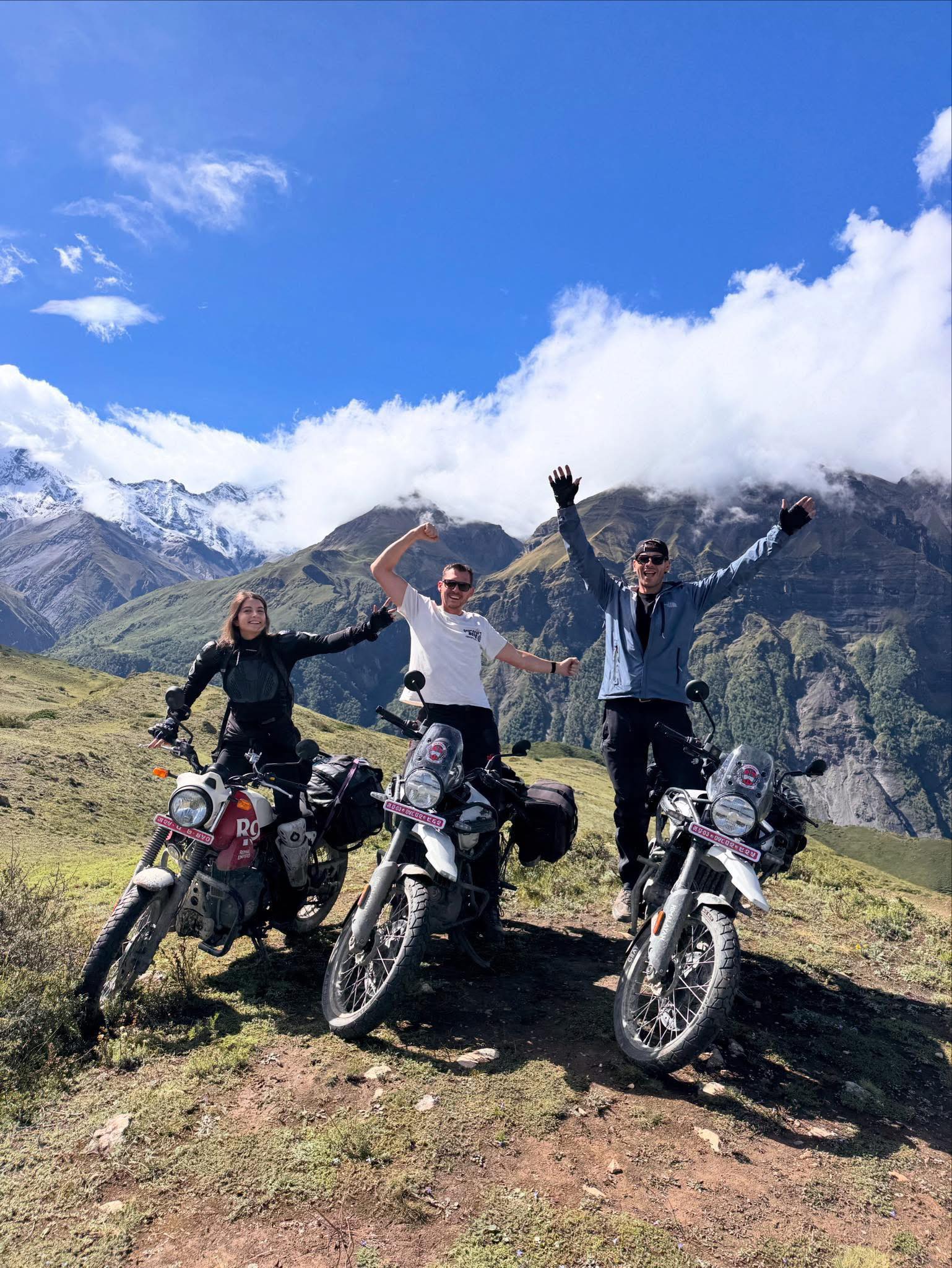
Nepal is one of those rare destinations that keep appearing on motorcycle bucket lists across the world.
From riders in Europe looking for something wilder than the Alps…
to Australians chasing raw terrain…
to Americans wanting a cultural experience beyond typical road trips…
Nepal delivers something different.
Routes like:
- Kathmandu to Pokhara
- Pokhara to Muktinath
- Manang and Annapurna circuits
- Upper Mustang expeditions toward Lo Manthang
have built a reputation as some of the most unique motorcycle journeys on the planet.
But before planning a motorcycle tour in Nepal, almost every rider asks the same question:
Is Nepal safe for motorcycle touring?
The honest answer is:
Yes, Nepal is generally safe for motorcycle touring, but only if you understand how safety actually works here.
And that “how” matters more than most riders expect.
Because Nepal is not a destination where safety comes from infrastructure alone.
It comes from:
- How you ride
- How you plan
- How you adapt
This is not Europe. Not Japan. Not even Southeast Asia in the usual sense.
Safety in Nepal is something you actively create, not something that’s automatically provided.
This guide breaks it down realistically:
- no romantic exaggeration
- no unnecessary fear
- just what riders actually experience on the ground
Understanding “Safety” in Nepal (Why the Definition Changes)
Before labeling Nepal as safe or unsafe, you need to adjust your definition of safety itself.
In countries like Switzerland or New Zealand, safety is largely built into the system:
- Roads are well-maintained
- Signage is clear
- Traffic rules are strictly followed
- Emergency services are easily accessible
If you follow the rules, you’re generally safe.
In Nepal, Safety Is More Dynamic
Here, safety is not fixed; it’s situational.
It depends on:
- terrain
- weather
- altitude
- Your riding behavior
- your awareness
Instead of asking:
“Are the roads safe?”
The better question is:
“Am I riding appropriately for the conditions?”
The Key Mindset Shift
Nepal rewards riders who:
- stay alert
- adapt constantly
- ride conservatively
It challenges riders who:
- assume predictability
- ride aggressively
- rely only on GPS or prior experience elsewhere
So Nepal is not inherently unsafe.
It is variable.
And that variability is what makes it both:
- exciting
- and demanding
Road Safety: The Biggest Concern (and Most Misunderstood)
When riders ask about safety, they usually mean one thing:
“How are the roads?”
The answer is: Road conditions in Nepal vary dramatically, sometimes within the same day.
The Three Types of Roads You’ll Encounter
1. Urban Roads (Kathmandu & Pokhara)
These are often the first riding environments you’ll experience.
Expect:
- dense traffic
- mixed vehicle types (bikes, cars, buses, pedestrians)
- potholes and ongoing construction
- loosely followed lane discipline
At first glance, it feels chaotic.
But it’s not random, it’s just informal.
2. Highway Roads (Connecting Cities)
Routes like:
- Kathmandu to Pokhara
- sections of the East-West Highway
are generally paved, but not always smooth.
You’ll encounter:
- trucks moving slowly uphill
- buses overtaking aggressively
- animals crossing unexpectedly
- occasional rough patches
These are manageable but require attention.
3. Mountain & Himalayan Routes (Where It Gets Real)
This is where Nepal becomes truly unique.
Routes toward:
- Manang
- Mustang
- Muktinath
involve:
- gravel roads
- loose rocks
- river crossings
- steep climbs and descents
- narrow cliffside tracks
Real Example: Beyond Kagbeni
Once you pass Kagbeni, heading deeper into Upper Mustang, the terrain changes immediately.
You’re no longer on “roads” in the traditional sense.
Instead, you’re riding through:
- dry riverbeds
- wind-carved canyon paths
- exposed gravel ridges
At this point, the ride becomes less about touring and more about controlled off-road navigation.
The Real Risk: Rider Misjudgment
Here’s something many people misunderstand:
Most accidents in Nepal don’t happen because roads are “dangerous.”
They happen because riders:
- misjudge terrain
- carry too much speed into gravel
- brake incorrectly on loose surfaces
- underestimate fatigue
- Ignore changing conditions
In simple terms:
Nepal does not forgive overconfidence.
Ride within your limits, and the country becomes manageable.
Push beyond them, and small mistakes escalate quickly.
Traffic Safety in Cities (The First Adjustment Phase)
For most international riders, Kathmandu is the biggest initial shock.
Traffic Behavior Feels Chaotic (But Isn’t Random)
You’ll see:
- scooters weaving between lanes
- buses pushing through gaps
- cars stopping suddenly
- horns being used constantly
At first, it feels overwhelming.
But there’s an underlying rhythm.
Drivers communicate through:
- eye contact
- positioning
- horn signals
Is It Dangerous?
Not necessarily.
But it demands:
- defensive riding
- constant awareness
- patience
Speed is less important than anticipation.
What Most Riders Experience
Most foreign riders:
- feel overwhelmed on day one
- start adapting by day two
- become comfortable within a few days
It’s not about mastering traffic.
It’s about flowing with it without forcing control.
Mountain Riding Safety (Where Nepal Becomes Serious)
This is where Nepal transitions from “interesting” to “demanding.”
Routes like:
- Pokhara to Muktinath
- Kathmandu to Manang
- Upper Mustang expedition routes
introduce a completely different level of riding.
Altitude Is a Real Factor
Above 3,000 meters:
- oxygen levels drop
- fatigue increases
- hydration becomes critical
Above 4,000 meters:
- concentration decreases
- reaction time slows
- physical endurance drops
What This Means for Riders
Even experienced riders notice:
- they get tired faster
- they need more breaks
- they must ride more carefully
This is not a skill issue, it’s a physiological one.
The weather can change rapidly
Mountain weather is unpredictable.
You might experience:
- clear mornings
- windy afternoons
- cold evenings
Rain or snow can appear quickly at higher elevations.
Wind Is Often Overlooked
In regions like Mustang:
- strong crosswinds are common
- open valleys amplify wind force
This affects:
- bike stability
- rider fatigue
Mechanical & Breakdown Safety
Motorcycles are reliable but long-distance riding always carries risk.
What Happens If Your Bike Breaks Down?
In Cities:
- repair shops are easily available
- parts are accessible
On Highways:
- roadside mechanics exist
- assistance can usually be arranged
In Remote Regions:
- help becomes limited
- parts may not be available
- waiting time increases
What Riders Need to Understand
A breakdown in Nepal is rarely “dangerous.”
But it can be:
- time-consuming
- logistically complicated
This is why many riders:
- carry basic tools
- learn simple repairs
- or choose guided support for remote routes
Political Stability & General Security
A common concern, especially for first-time visitors is political safety.
The Reality
Nepal is:
- stable for tourism
- welcoming to foreign visitors
- accustomed to adventure travelers
There are no active conflicts affecting travel routes.
Crime Levels
Violent crime against tourists is extremely rare.
What you may encounter:
- minor overcharging
- negotiation situations
- tourist-area pricing
These are inconveniences, not safety threats.
Health & Emergency Infrastructure
In Cities
Kathmandu and Pokhara offer:
- good private hospitals
- pharmacies
- emergency care
Medical support is accessible.
In Remote Areas
Facilities become limited.
Serious cases may require:
- evacuation
- helicopter rescue
This is available but depends on:
- weather
- location
- coordination
What This Means for Riders
You don’t need to be worried.
But you do need to be:
- prepared
- insured
- aware of your route
Skill Level: Who Can Ride Safely in Nepal?
Beginners
Can safely ride:
- Kathmandu to Pokhara
- short scenic routes
With:
- slow pace
- proper awareness
Intermediate Riders
Can handle:
- mixed terrain
- gravel sections
- moderate mountain routes
Advanced Riders
Suitable for:
- Upper Mustang
- Manang routes
- remote off-road sections
These require:
- technical riding skills
- endurance
- terrain awareness
Seasonal Safety (One of the Most Important Factors)
Monsoon (June–September)
- landslides increase
- roads become slippery
- visibility reduces
👉 Not ideal for long rides
Winter (December–February)
- cold temperatures
- snow in higher regions
- blocked passes
👉 Limited access in mountains
Best Seasons
- March to May
- September to November
👉 Stable weather + best visibility
Common Risks Riders Should Know
These are not extreme dangers but realistic factors:
- landslides (seasonal)
- gravel slips
- altitude fatigue
- sudden weather changes
- dust exposure
- traffic unpredictability
All manageable with proper riding approach.
Why Some Riders Feel Nepal Is “Unsafe”
Interestingly, most negative experiences come from:
- lack of preparation
- unrealistic expectations
- riding too aggressively
- underestimating terrain
Nepal doesn’t surprise riders, Expectations do.
What Actually Makes Nepal Safe
Nepal becomes safe when you:
- ride within your limits
- adjust speed to terrain
- respect altitude
- plan routes carefully
stay flexible
Guided support in remote regions further increases safety.
Final Verdict: Is Nepal Safe?
Yes, with a condition.
Nepal is safe for motorcycle touring if you:
- understand the environment
- adapt your riding
- respect the terrain
It is not a “plug-and-play” destination.
Conclusion
Motorcycle touring in Nepal is not about avoiding danger.
It’s about understanding the environment.
Once you adapt to:
- altitude
- terrain variation
- weather shifts
- logistical realities
Nepal becomes one of the most rewarding riding destinations in the world.
Routes like:
- Kathmandu to Pokhara
- Manang circuit
- Upper Mustang beyond Kagbeni toward Lo Manthang
are not just rides.
They are experiences that combine:
- adventure
- culture
- challenge
- and deep satisfaction
And for riders who approach it the right way…
Nepal is not just safe, it’s unforgettable.