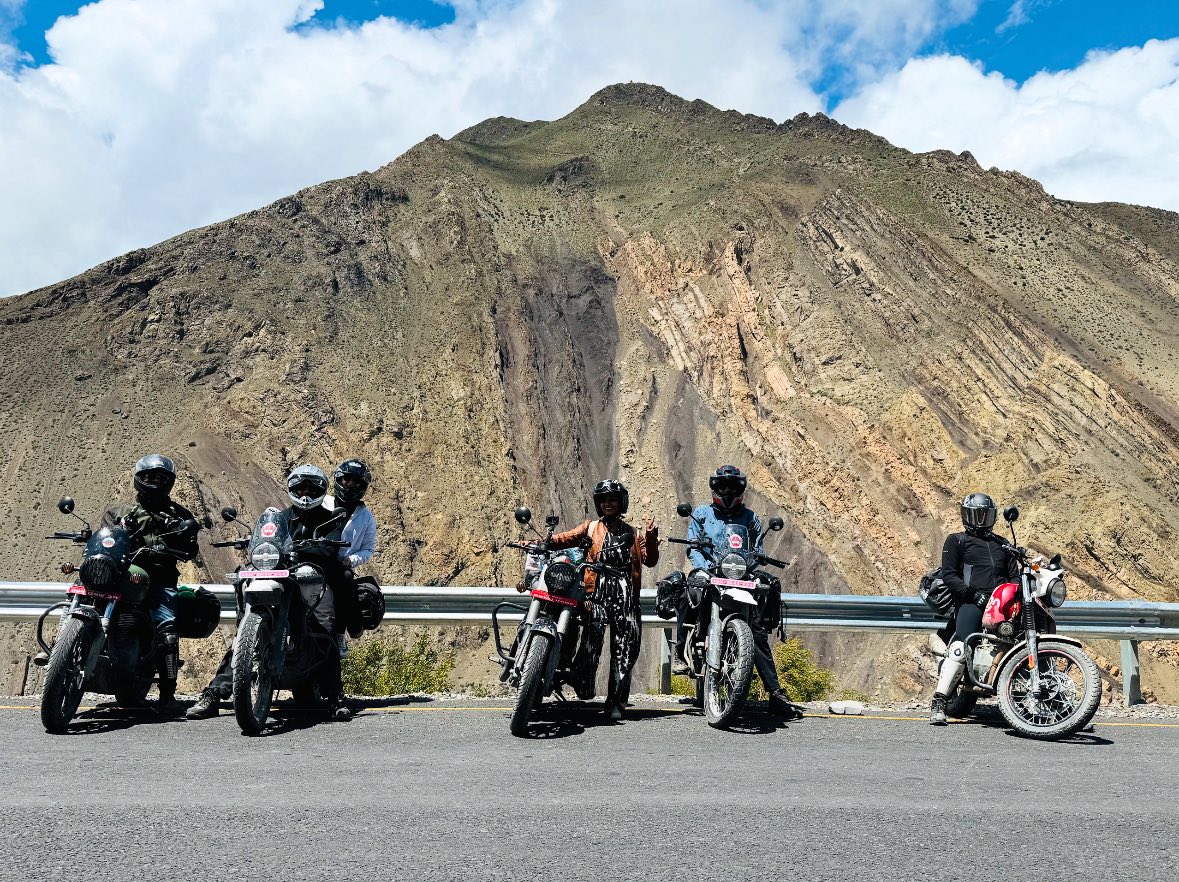
If you're planning a motorcycle adventure in Nepal, there’s one decision that will quietly shape your entire experience, often more than the route, the bike, or even the budget.
Should you go guided, or ride self-guided?
At first glance, it feels like a simple trade-off:
- Guided tours offer structure, safety, and convenience
- Self-guided trips offer freedom, flexibility, and independence
But Nepal doesn’t behave like most motorcycle destinations.
This isn’t a place where you casually pick a direction and ride without consequences. The terrain, altitude, infrastructure, and even legal rules mean that your choice between guided and self-guided riding has real impact.
It affects:
- where you can legally go
- how safe you’ll be in remote regions
- how much stress you carry each day
- how smoothly your trip unfolds
- and ultimately, how much you actually enjoy the experience
Some riders come to Nepal chasing pure freedom. Others want a structured Himalayan expedition.
Both approaches can work but not everywhere, and not for everyone.
This guide breaks it down honestly, based on how things actually work on the ground in Nepal, not theory.
Understanding the Two Styles of Motorcycle Touring
Before comparing them, it’s important to understand what “guided” and “self-guided” really mean in Nepal because the definitions here are more practical than romantic.
What Is a Guided Motorcycle Tour?
A guided motorcycle tour in Nepal is a fully supported riding experience where most of the logistics are handled for you.
You’re still riding your own motorcycle, but you’re part of an organized system that typically includes:
- A professional ride leader who knows the route
- A support vehicle (usually a jeep or pickup truck)
- A mechanic or technical support
- Pre-arranged accommodation
- Permits handled in advance
- A fixed itinerary and daily ride plan
Think of it less like a tour bus, and more like a mobile expedition team.
You ride but you’re not alone in handling the complexities.
What Is a Self-Guided Motorcycle Tour?
A self-guided tour is exactly what it sounds like:
You do everything yourself.
That includes:
- Renting or bringing your own motorcycle
- Planning your route day-by-day
- Booking your accommodation
- Managing permits
- Navigating roads and detours
- Handling breakdowns or emergencies
There’s no guide, no support vehicle, and no backup plan beyond what you create yourself.
For many riders, this is the purest form of travel.
But in Nepal, it comes with responsibilities that are easy to underestimate.
Why Nepal Makes This Decision More Important Than Anywhere Else
In most countries, the choice between guided and self-guided is about comfort level.
In Nepal, it’s about conditions.
This country compresses multiple riding environments into one trip, sometimes within a single day.
Terrain That Doesn’t Stay Consistent
You might start your day on a smooth highway leaving Kathmandu. Within hours, that same road can turn into:
- broken asphalt
- gravel sections
- mud tracks
- temporary diversions caused by landslides
And there’s rarely a sign warning you beforehand the road condition of Nepal can sometimes be unpredictable.
This unpredictability adds mental fatigue, especially for solo riders.
Altitude Isn’t Just Scenic—It’s Physical
Many of Nepal’s iconic motorcycle routes climb above 3,500 meters.
Some go beyond 4,000 meters.
At those elevations:
- oxygen levels drop significantly
- dehydration happens faster
- fatigue builds quickly
- your reaction time slows
This matters more than most riders expect, especially if they’ve never ridden at altitude before.
Navigation Is Not Reliable
In urban areas, navigation apps work fine.
But once you head into mountain regions:
- GPS signals can weaken or disappear
- road data is often outdated
- routes shown on maps may not be rideable
Local knowledge becomes far more valuable than digital navigation.
Weather Can Shift Without Warning
You can start a ride under clear blue skies and encounter:
- rainstorms
- strong crosswinds
- dust storms in dry regions
Weather patterns change quickly in mountainous terrain, and this affects road conditions directly.
All of this leads to one important reality:
In Nepal, your riding style choice directly impacts your safety, stress level, and overall experience.
Guided Motorcycle Tours in Nepal (Deep Dive)
Let’s take a closer look at guided tours, not just what they promise, but what they actually deliver in real riding conditions.
What a Guided Tour Feels Like Day-to-Day
A good guided tour doesn’t feel restrictive, it feels structured.
Your day typically starts with a briefing:
- distance
- road conditions
- fuel stops
- weather expectations
You ride in a group, but not necessarily in a tight formation. Riders naturally spread out based on comfort and pace.
Behind the scenes:
- your luggage travels in the support vehicle
- your hotel is already booked
- your permits are already cleared
At the end of the day, you arrive, not to uncertainty, but to a place that’s ready for you.
The Real Advantages of Guided Tours
1. High-Altitude Safety and Monitoring
This is one of the biggest reasons riders choose guided tours in Nepal.
At altitude, things can go wrong quietly.
You may not notice:
- early symptoms of altitude sickness
- dehydration
- fatigue affecting your riding
A good guide:
- monitors rider condition
- adjusts pace
- knows when to stop or descend
Some tours also carry:
- oxygen cylinders
- first-aid support
This isn’t overkill—it’s preparation.
2. Permits Become a Non-Issue
Nepal has one of the more complex permit systems for riders.
Depending on your route, you may need:
- conservation area permits
- restricted area permits
- local entry registrations
In restricted zones, paperwork must be:
- accurate
- pre-approved
- submitted through authorized channels
Guided tours handle all of this before you even arrive.
That means:
- no delays
- no confusion
- no risk of being turned back
Mechanical Backup Is a Huge Safety Net
Motorcycle breakdowns are part of long-distance riding.
But in Nepal, the consequences depend on where it happens.
In remote areas:
- workshops are limited
- spare parts may not exist
- recovery takes time
With a guided tour:
- tools and basic spares are carried
- a mechanic can fix most issues on the spot
- a support vehicle can carry your bike if needed
This dramatically reduces downtime.
Route Knowledge Saves Time and Energy
A guide doesn’t just follow a map.
They know:
- which roads are currently usable
- where landslides have blocked sections
- where to refuel safely
- which detours are worth taking and which aren’t
This removes a huge layer of uncertainty.
Group Energy Helps More Than You Expect
Riding in a group adds something intangible:
- encouragement during tough sections
- shared problem-solving
- a sense of momentum
On difficult days, this can make a big difference.
The Downsides of Guided Tours (Let’s Be Honest)
1. Higher Cost
Guided tours cost more because they include:
- people (guides, mechanics)
- vehicles
- planning and coordination
It’s not just a ride, it’s a full operation.
Fixed Structure
You follow a schedule.
That means:
- fixed start times
- planned stops
- set daily distances
If you like complete spontaneity, this can feel limiting.
3. Limited Flexibility
You can’t easily:
- take random detours
- extend a stay on impulse
- change routes mid-trip
The itinerary is designed for the group, not individuals.
4. Group Dynamics Matter
Not everyone rides the same way.
Some riders are:
- faster
- slower
- more cautious
- more aggressive
A good guide manages this but it’s still part of the experience.
Self-Guided Motorcycle Tours in Nepal (Deep Dive)
Now let’s look at the other side, the independent route.
What Self-Guided Riding Feels Like
Self-guided travel gives you full control.
Your day is entirely your own:
- when you start
- where you stop
- how far you go
There’s no plan except the one you create.
For many riders, this is the essence of motorcycling.
The Real Advantages of Self-Guided Riding
1. Total Freedom
You control everything:
- pace
- route
- stops
- timing
If you want to sit by a river for an hour—you can.
If you want to ride longer, you can.
2. Deeper, More Personal Experience
Solo riding creates space.
You notice more:
- landscapes
- local interactions
- quiet moments
You’re not following, you’re exploring.
3. Budget Flexibility
You decide:
- where to stay
- what to eat
- how much to spend
This makes self-guided trips more accessible financially.
4. Strong Sense of Accomplishment
When you:
- navigate a difficult route
- solve a problem
- reach a destination
It feels earned.
That’s something guided tours don’t replicate in the same way.
The Real Challenges of Self-Guided Riding
1. Permits Can Be Complicated
Without local knowledge, it’s easy to:
- miss required permits
- misunderstand rules
- face delays or restrictions
This is one of the most common issues riders face.
2. Navigation Requires Constant Attention
You’ll deal with:
- unclear road splits
- outdated maps
- unexpected detours
This adds mental load, especially over multiple days.
3. No Backup Means Higher Risk
If something goes wrong:
- you handle it
- you solve it
- you wait if needed
This is fine in cities but harder in remote areas.
4. Risk Increases with Altitude and Isolation
In high-altitude regions:
- mistakes have bigger consequences
- help is further away
- conditions are harsher
This is where experience matters most.
The Legal Reality You Cannot Ignore
Here’s something many riders discover too late:
Some areas in Nepal cannot be ridden self-guided, legally.
Restricted regions require:
- licensed guides
- special permits
- minimum group requirements
A key example is Upper Mustang motorbike tour.
Beyond certain checkpoints:
You must be part of a guided system
This isn’t optional—it’s enforced.
Route-Based Recommendations (What Actually Works)
Instead of thinking in general terms, it’s better to decide based on where you’re riding.
Easy Touring Routes
- Kathmandu to Pokhara
- Around Pokhara valley
👉 Ideal for self-guided riding
Intermediate Routes
- Pokhara to Jomsom
- Muktinath region
👉 Both guided and self-guided can work
Advanced Mountain Routes
👉 Guided recommended
Restricted Expedition Routes
- Upper Mustang (beyond Kagbeni)
👉 Guided mandatory
Cost Comparison (Realistic Breakdown)
Self-Guided
Typical daily cost:
$60–$120
Includes:
- bike rental
- fuel
- food
- accommodation
Guided Tours
Typical daily cost:
$150–$300
Includes:
- guide
- vehicle
- permits
- logistics
You’re paying more but you’re also offloading responsibility.
The Most Important Insight
Nepal isn’t one riding destination.
It’s three:
- Easy riding zones
- Mountain touring zones
- Restricted expedition zones
Each one demands a different approach.
Final Verdict (Straight Answer)
Choose Self-Guided If:
- You’re experienced
- You want independence
- You’re riding accessible routes
Choose Guided If:
- It’s your first time in Nepal
- You’re riding high-altitude routes
- You want safety and support
Conclusion
Nepal doesn’t reward one style over the other.
It rewards the right choice for the right route.
- Self-guided riding gives you freedom
- Guided tours give you access and security
And in places like Upper Mustang:
👉 Guided isn’t just better, it’s part of how the system works.