.png)
Nepal has quietly become one of the world’s most compelling motorcycle destinations. In a single ride, foreign motorcyclists can move from humid subtropical plains to alpine valleys, from ancient trade routes to newly carved Himalayan roads that brush the edge of the Tibetan Plateau. Yet Nepal is not a “ride-and-go” country. For foreign riders, legal motorcycling depends on visas, permits, regional restrictions, conservation rules, and evolving government policies.
Unfortunately, much of the information available online is outdated, incomplete, or trekking-focused, which leads riders to make costly mistakes, especially in restricted regions like Upper Mustang, Manaslu, or Dolpo. Major regulatory changes introduced in late 2025 and carried into 2026, notably the restructuring of Restricted Area Permit (RAP) fees, have further widened the information gap.
This article is a fully revised, 2026-accurate, motorcycle-specific guide to visa rules, riding permits, restricted area regulations, costs, and real-world enforcement in Nepal, written for:
- Foreign motorcycle tourists
- Adventure and overland riders
- Riders renting motorcycles in Nepal
- Riders entering Nepal with foreign-registered motorcycles
Everything below reflects current policy, not legacy assumptions.
Can Foreigners Ride Motorcycles in Nepal?
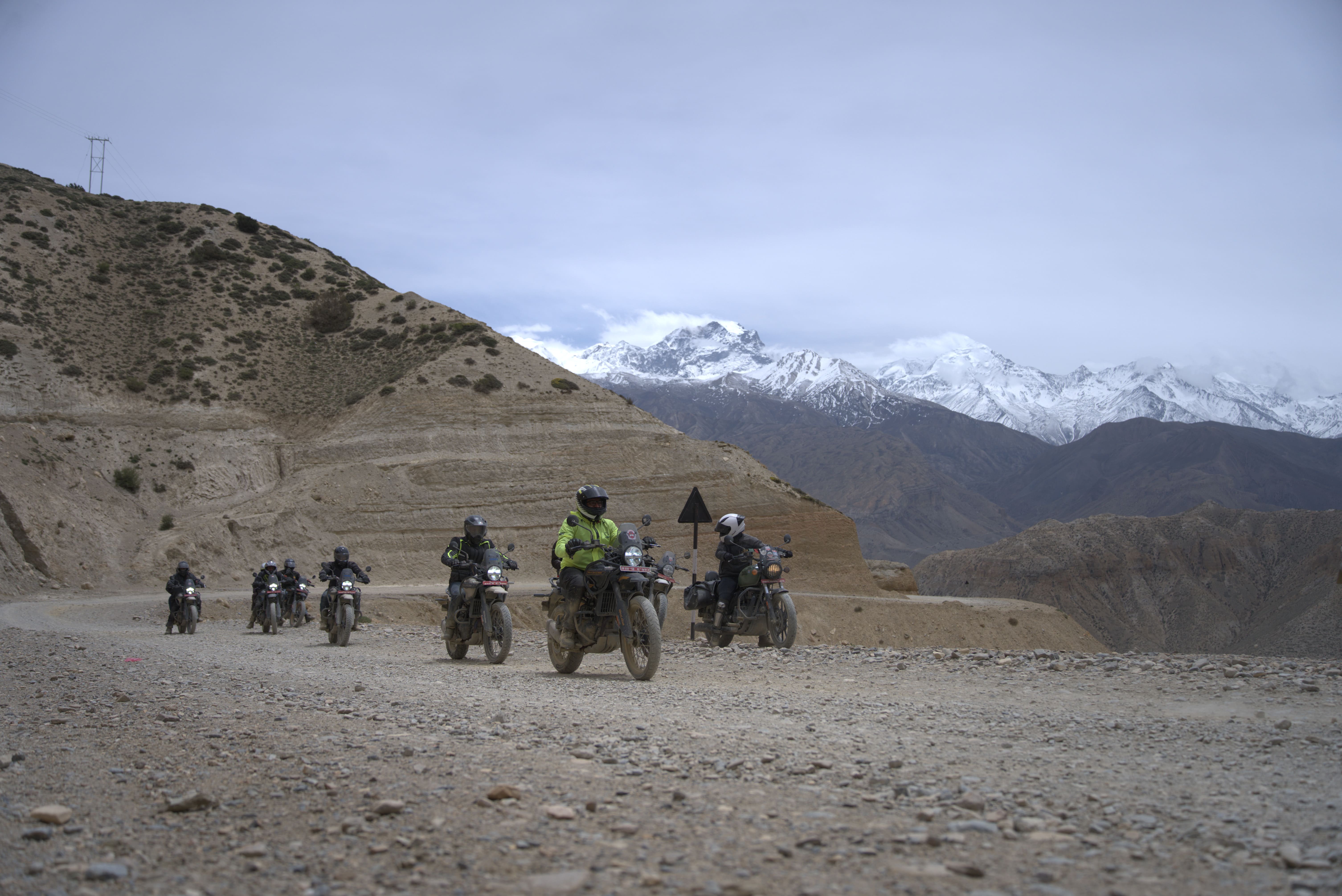
Yes, foreigners are legally allowed to ride and participate in motorcycle tours in Nepal. There is no blanket restriction preventing foreign nationals from operating motorcycles, whether rented locally or brought from abroad.
However, legality depends on compliance with four key areas:
- Immigration status (valid visa)
- Driving eligibility (license + IDP)
- Vehicle legality (registered or imported properly)
- Regional permits (depending on route)
One of the biggest misconceptions is that having a valid tourist visa automatically allows unrestricted travel. This is not true. In Nepal, access is determined more by geography than by visa type. You can legally enter the country but still be denied access to specific regions without the correct permits.
Visa Requirements for Foreign Motorcycle Riders in Nepal
Tourist Visa (Standard for Riders)
For nearly all foreign riders, the Tourist Visa is sufficient.
As of 2026, Nepal’s tourist visa system remains simple and rider-friendly:
- Available on arrival for most nationalities
- Issued for 15, 30, or 90 days
- Extendable up to 150 days per calendar year
- Valid for motorcycle travel across Nepal
There is no separate visa category for motorcyclists. Whether you are touring casually, doing a cross-country ride, or exploring Himalayan regions, the same tourist visa applies.
Importantly, this visa covers both riders renting motorcycles in Nepal and those entering with foreign-registered vehicles.
Visa on Arrival (VOA): What Riders Need to Know
Visa on Arrival is available at:
- Tribhuvan International Airport (Kathmandu)
- Major land border crossings with India
Requirements include:
- Passport valid for at least 6 months
- Visa fee (USD preferred)
- Completed the arrival form
- Passport-sized photo (recommended but not always required)
The process is generally smooth and fast, especially at the airport. Land borders can be more variable depending on traffic and time of day.
Important clarification:
A visa only grants entry into Nepal, it does not grant access to restricted areas. Many riders confuse immigration permission with travel permission, which leads to problems later.
Multiple Entry and Border Re-Entry
Many riders plan routes that include crossing borders, such as:
- Nepal → India → Nepal loops
- Nepal → Tibet (guided tours) → Nepal
Nepal does not offer a traditional pre-issued multiple-entry tourist visa in the same way some countries do. Instead:
- Re-entry is typically allowed but handled at the border
- You may need to pay a new visa fee upon re-entry
- Rules can vary slightly depending on immigration officers
If your itinerary involves leaving and re-entering Nepal, always plan for flexibility and carry extra cash for visa reprocessing.
Driving License Requirements for Foreign Riders
International Driving Permit (IDP)
_1777352348.png)
Nepal officially requires foreign riders to carry an International Driving Permit.
In practice, checkpoints and traffic police typically expect:
- IDP with motorcycle endorsement
- Original home-country driving license
- Passport (or a clear copy)
While enforcement is not always strict in rural areas, it becomes significantly tighter in:
- Kathmandu Valley
- Pokhara region
- Major highways and checkpoints
Riding without an IDP can result in fines, delays, or complications, especially if an accident occurs.
Is a Nepali Driving License Required?
No. Foreign tourists are not required to obtain a Nepali driving license if they:
- Hold a valid license from their home country
- Carry a valid IDP
Only long-term residents, work visa holders, or expats staying for extended periods may need to convert their license.
Motorcycle Legality: Renting vs Bringing Your Own Bike
Renting a Motorcycle in Nepal (Recommended)
For most foreign riders, renting a bike in Nepal is by far the easiest and most practical option.
Advantages:
- No customs or import procedures
- Fully registered Nepali vehicles
- Easier police verification
- Rental agencies assist with permits
- Widely available in Kathmandu and Pokhara
Common motorcycles available:
- Royal Enfield Himalayan 410
- Royal Enfield Himalayan 450
- Hero Xpulse 200
- Limited dual-sport/off-road bikes
Documents required:
- Passport + valid visa
- Driving license + IDP
- Security deposit (varies by bike)
Renting eliminates the bureaucratic complexity of vehicle importation and is strongly recommended unless you are on a long overland journey.
Riding a Foreign-Registered Motorcycle into Nepal
This is legally possible but comes with challenges.
Key issues include:
- Nepal does not accept Carnet de Passages
- Temporary import permits are inconsistent
- Customs may require:
- Cash deposits
- Bank guarantees
- Strict exit timelines
Most riders enter from India, where procedures are somewhat predictable, but delays of several hours—or even days—are not uncommon.
For short trips or standard tours, importing your own motorcycle is usually not worth the effort.
Permit System in Nepal: What Riders Actually Need
Nepal’s permit system is area-based, not activity-based. This means:
- Motorcyclists are treated similarly to trekkers
- Permits depend on where you go, not how you travel
There are three main categories:
- Conservation / National Park permits
- Restricted Area Permits (RAP)
- TIMS (limited relevance for riders)
Conservation Area & National Park Permits (2026)
Annapurna Conservation Area Permit (ACAP)
Required for:
- Manang
- Lower Mustang
- Annapurna Circuit routes
Cost (2026):
- NPR 3,000 (~USD 23–25)
This is one of the most common permits for riders, especially those heading for lower mustang motorbike tour.
Langtang National Park Permit
Required for:
- Langtang region access roads
- Northern border areas near Tibet
Cost:
- NPR 3,000 (~USD 23–25)
Where to Obtain These Permits
- Nepal Tourism Board (Kathmandu)
- Pokhara permit offices
- Registered trekking agencies
These permits are straightforward and do not require a guide.
TIMS Card: Do Riders Need It?
The TIMS (Trekkers’ Information Management System) card is designed for trekkers.
For motorcyclists:
- Often not required
- Rarely checked at road checkpoints
- Sometimes included by agencies automatically
It should not be relied upon as a substitute for proper permits.
Restricted Area Permits (RAP): Critical for Riders
Restricted areas are strictly controlled regions where special permits are mandatory.
Entering without a RAP can lead to:
- Immediate denial of entry
- Fines
- Forced return
- Potential blacklisting
Major Policy Update: RAP Fee Changes (2025–2026)
Nepal introduced a major reform to the RAP system:
Old system (pre-2025):
- Flat USD 500 for 10 days (Upper Mustang)
New system (2026):
- USD 50 per person per day
- Flexible duration
- More accessible for shorter trips
This change has significantly improved accessibility for motorcycle travelers.
Upper Mustang: The Most Motorcycle-Friendly Restricted Area
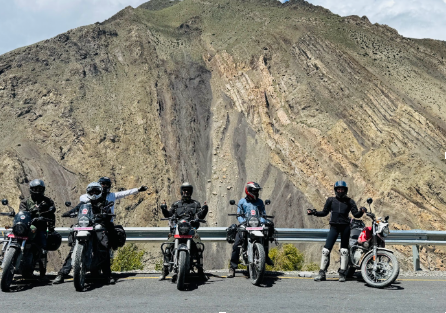
Upper Mustang stands out as the most practical restricted area for riders because:
- Roads exist (though rough)
- Routes are clearly defined
- Infrastructure supports motorcycles
To ride here, you must:
- Apply through a registered Nepali agency
- Submit:
- Passport
- Visa copy
- Itinerary
The agency will arrange:
- RAP
- Conservation permits
- Mandatory guide assignment
All permits are issued through the Department of Tourism and physically checked at multiple checkpoints.
Are Motorcycles Allowed in Restricted Areas?
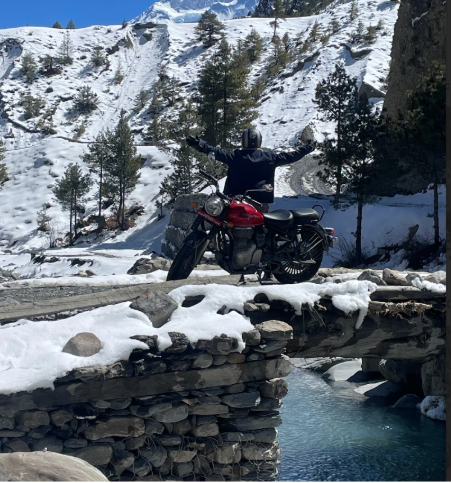
Yes, but with limitations:
- Only on designated roads
- No access to trekking-only trails
- Subject to local enforcement decisions
Upper Mustang is currently the most rider-accessible restricted region, while others like Dolpo or Manaslu are far more complex and less road-friendly.
Checkpoints, Enforcement & Ground Reality
Nepal relies heavily on physical checkpoints rather than digital systems.
Officials may request:
- Passport
- Visa
- Driving license + IDP
- Motorcycle registration
- Permits (ACAP, RAP)
Enforcement is stricter:
- At restricted area entry points
- Near district borders
- During peak tourist seasons
Best practice: Always carry printed copies of all documents.
Insurance Requirements
Motorcycle Insurance
- Rental bikes include basic third-party insurance
- Coverage is minimal
- Riders are often liable for damage
Travel & Medical Insurance
Strongly recommended due to:
- Remote terrain
- Limited healthcare access
- Frequent helicopter evacuations
Medical evacuation in Nepal can be extremely expensive without insurance.
Seasonal Closures & Timing
Permits do not guarantee road access.
Key seasonal factors:
- Monsoon (June–September): Landslides, road washouts
- Winter (December–March): Snow-blocked high passes
Best riding seasons:
- April to June
- September to October
Upper Mustang Motorcycle Tour is particularly popular during these windows.
Common Mistakes Foreign Riders Make
- Assuming a tourist visa allows unrestricted travel
- Entering restricted areas without RAP
- Ignoring updated RAP pricing
- Riding without an IDP
- Relying on outdated blog information
These mistakes often lead to unnecessary expenses and travel disruptions.
Practical Best Practices for 2026
- Rent locally unless doing long overland travel
- Confirm permit requirements before route planning
- Use agencies familiar with motorcycle logistics
- Avoid restricted areas without proper permits
- Respect local authority decisions at checkpoints
Preparation is the difference between a seamless ride and a frustrating experience.
Final Conclusion
Nepal offers one of the most rewarding motorcycle experiences in the world but it demands awareness and preparation.
As of 2026:
- Visa procedures are simple and accessible
- Permits are strictly route-dependent
- Upper Mustang is more flexible than before
- Restricted area regulations remain firmly enforced
Riders who understand Nepal’s layered system, visa, license, vehicle legality, and permits will experience unmatched freedom across some of the most dramatic landscapes on Earth.
Those who rely on outdated or incomplete information risk delays, fines, and missed opportunities.
Ride informed, ride legally and Nepal will deliver Himalayan motorcycling at its absolute finest. If you want any help with permit, Feel free to contact Nepal Moto Tours.