
Manang is one of the most rewarding motorcycle destinations in the entire Himalayan region but getting the timing right is what separates a memorable expedition from a genuinely difficult one.
Sitting at approximately 3,519 metres above sea level in the Annapurna Conservation Area of Nepal, Manang is not a destination you ride to casually. The route from Besisahar follows the Marsyangdi river valley through increasingly dramatic terrain, narrow gorges, cascading waterfalls, high-altitude pine forests, and eventually the wide open glacial landscape that surrounds Manang village itself. It is extraordinary riding. It is also riding that rewards preparation, and timing is the most important preparation of all.
This guide breaks down every riding season for the Manang motorcycle route including what conditions actually look like, what the road does in each month, and which window gives you the best combination of safety, scenery, and riding quality.
Why Timing Matters So Much for the Manang Motorcycle Route
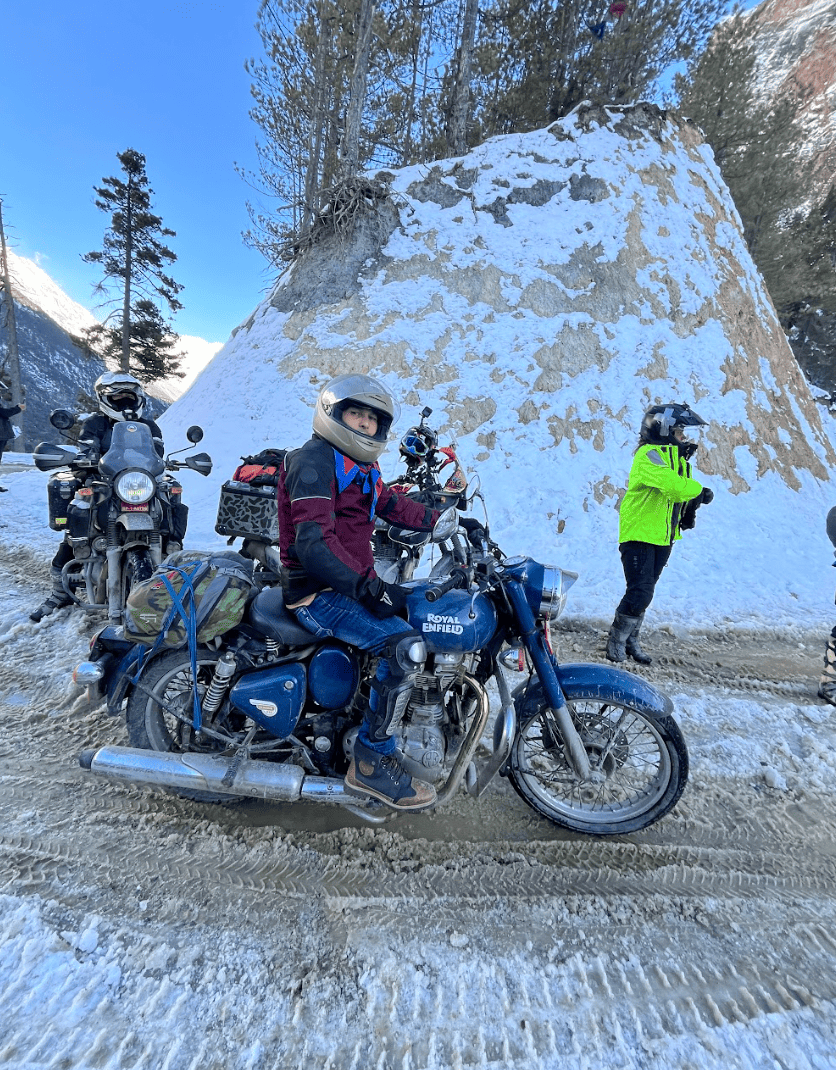
The road to Manang is not a sealed highway. The route from Besisahar through Tal, Chame, Pisang, and up to Manang is a mix of rough gravel tracks, river crossing sections, and narrow mountain paths that respond very differently to seasonal conditions.
In the right season, this is one of the most beautiful motorcycle adventures in Nepal. In the wrong season, sections of the lower route flood completely, and the high-altitude approach becomes genuinely dangerous, not difficult in an adventurous way, but dangerous in a practical, turn-back-now way.
Manang also sits at an elevation where altitude sickness is a real concern. Riding to altitude too quickly, or arriving when conditions force rushed riding decisions, increases the risk significantly. Choosing the right season gives you the conditions to ride slowly, acclimatise properly, and actually enjoy where you have arrived.
Season-by-Season Breakdown for Manang Motorcycle Riding
Spring Season (March to May) — Best Overall Window for Most Riders
Spring is the most recommended season for a Manang motorcycle expedition, and the conditions make the reason straightforward.
From March onwards, the winter cold retreats from the lower valley sections. Roads that were frost-hardened or occasionally snow-dusted in February become stable and rideable. By April, the entire route from Besisahar to Manang is typically in its best condition of the year — firm surfaces, manageable dust levels, and predictable weather patterns.
What riding looks like in spring:
The lower sections through the Marsyangdi gorge are lush and green. Waterfalls are running from snowmelt above, visibility is excellent, and temperatures in the valley are comfortable. As you gain elevation through Chame and Pisang, the landscape opens up dramatically and the Annapurna and Gangapurna massifs come into clear view.
Manang village in spring sits under reliably blue skies. Daytime temperatures at the village level are cool but comfortable — typically 8°C to 15°C — and the surrounding glacial amphitheatre of peaks is at its most visually dramatic with fresh snow on the high ridgelines.
Spring temperature range:
- Lower route (Besisahar–Chame): 15°C to 24°C daytime
- Upper route (Pisang–Manang): 8°C to 15°C daytime
- Manang village night: 0°C to 5°C
Why spring works for motorcycle riders:
- Road surfaces are at their most compact and stable
- River levels are still manageable before peak snowmelt
- Rhododendron forests between Besisahar and Tal are in full bloom — visually stunning
- Clear morning visibility across the entire Annapurna range
- Guesthouses in Manang are fully operational with good availability
One consideration for April and May riders: Afternoon clouds build on the high ridgelines from late April onward as the pre-monsoon atmospheric system develops. This rarely affects riding conditions directly but can reduce the dramatic mountain views that make the destination so worthwhile. Earlier in spring — March and early April — consistently offers the clearest conditions.
Autumn Season (September to November) — Second Best Season, Exceptional Visibility
Autumn runs very close to spring as the best riding window, and for one specific quality — clarity, it arguably edges ahead.
After Nepal's monsoon ends in September, the atmosphere is scrubbed clean of dust and haze. The sky over Manang in October is a particular shade of deep blue that experienced Himalayan riders describe as unlike anywhere else. The Annapurna range reflected in Gangapurna Lake below the village, under a clear autumn sky, is the kind of scene that justifies the entire expedition.
What riding looks like in autumn:
Road conditions in autumn are excellent. The monsoon has flushed loose material from the lower route surfaces, and by late September the tracks have dried and compacted. The gorge sections through the lower Marsyangdi valley are dramatic and clear. Higher up, the approach to Manang through Pisang sits under stable, predictable weather.
Temperatures in autumn are slightly cooler than spring, particularly as October moves toward November.
Autumn temperature range:
- Lower route (Besisahar–Chame): 12°C to 20°C daytime
- Upper route (Pisang–Manang): 5°C to 12°C daytime
- Manang village night: -3°C to 2°C
Why autumn works for motorcycle riders:
- Best overall visibility and mountain photography conditions
- Stable, predictable weather patterns through September and October
- Road surfaces well-settled after monsoon
- Peak trekking season means fully operational facilities and guesthouses
- Exceptional clarity on the Annapurna and Gangapurna views from Manang
November caution: Late November marks the beginning of the winter transition. Night temperatures at Manang village drop significantly below freezing. Morning riding requires full cold-weather gear, and the window of comfortable riding hours in each day shortens. Riders targeting November should aim to complete the Manang ride before mid-month for the most comfortable conditions.
Monsoon Season (June to August) — Not Recommended for Most Riders
The monsoon season is the most challenging window for the Manang motorcycle route, and most riders are better served by choosing a different window.
Unlike Upper Mustang, which benefits from a rain-shadow effect and stays largely dry during monsoon, the route to Manang runs through the full monsoon zone. The Marsyangdi valley receives heavy rainfall between June and August, and the impact on the riding route is significant.
What changes during monsoon:
The lower gorge sections between Besisahar and Tal are the most affected. This narrow canyon receives some of the highest rainfall concentrations on the Annapurna Circuit route. Landslides are a regular occurrence , not a remote possibility, but a predictable seasonal feature of this particular valley. Road surfaces become muddy, river crossing points rise and can become impassable, and visibility through the gorge is frequently reduced by rain and low cloud.
Higher sections above Chame are somewhat more protected, and the area around Manang itself receives less rainfall due to its more sheltered position. But reaching the upper sections requires riding through the lower gorge, which is the primary problem.
If you must ride during monsoon:
- July and early August are typically the most problematic weeks — heaviest rainfall, most landslide risk
- June and late August are marginally better but still significantly risky
- Check road conditions actively before departure — landslide closures can last days
- Ride with a local guide who has current route intelligence
- Allow significant schedule flexibility for weather delays
Winter Season (December to February) — For Cold-Weather Specialists Only
Winter closes the Manang motorcycle route for the vast majority of riders, and the reasons are straightforward.
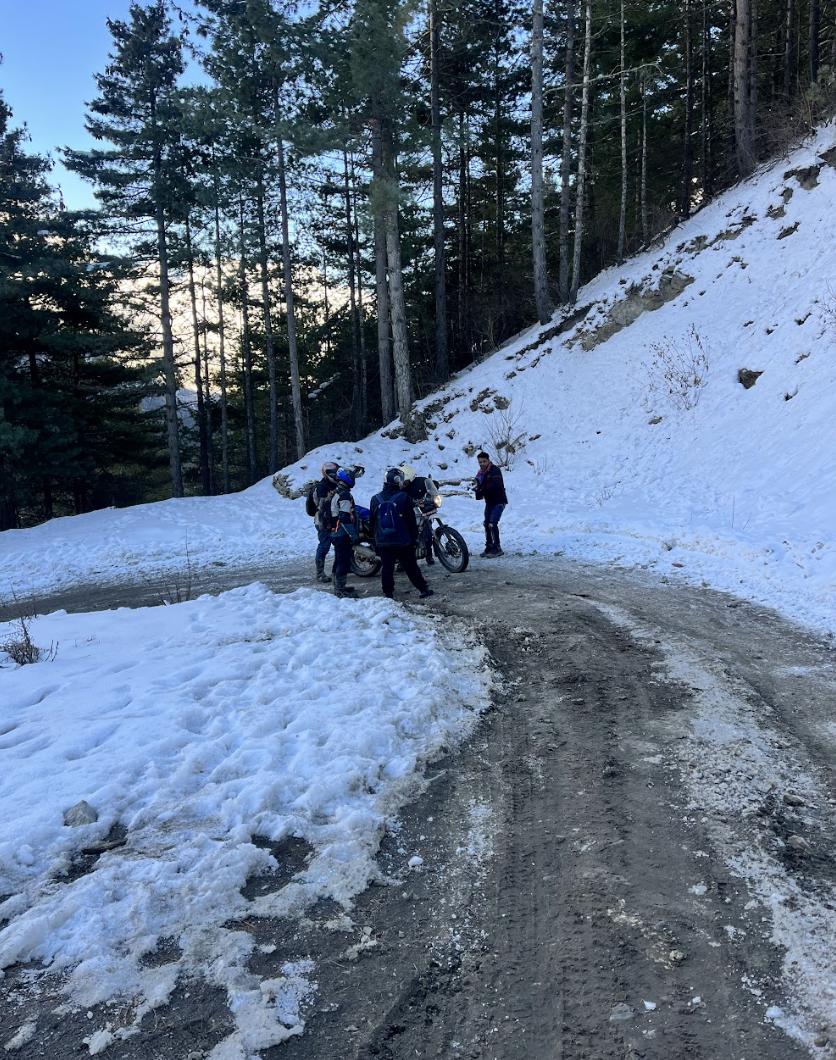
Manang village at 3,519 metres in December through February experiences overnight temperatures dropping to -15°C or lower. The approach road through the higher sections — particularly the exposed stretches above Pisang — can be covered with ice and compacted snow that makes motorcycle riding genuinely treacherous.
Many guesthouses in Manang close or significantly reduce services through the deep winter months. Fuel availability becomes unreliable. The support network that makes the route manageable in other seasons is largely absent.
For riders with full cold-weather expedition equipment, the experience of Manang in deep winter is visually extraordinary and completely isolated. It is also a serious undertaking that requires significant preparation, experience, and risk acceptance that goes beyond standard adventure riding.
For everyone else, winter is the planning season. Use it well and arrive in spring or autumn ready to ride.
Month-by-Month Quick Reference
|
Month |
Season |
Riding Condition |
Recommended? |
|
January |
Winter |
Snow, ice, extreme cold |
❌ No |
|
February |
Winter |
Cold, some ice on upper sections |
❌ No |
|
March |
Spring |
Excellent — warming, stable |
✅ Yes |
|
April |
Spring |
Best conditions of the year |
✅ Best |
|
May |
Spring |
Good, pre-monsoon clouds building |
✅ Yes |
|
June |
Monsoon |
Rain, landslide risk begins |
⚠️ Caution |
|
July |
Monsoon |
Heaviest rain, highest risk |
❌ Avoid |
|
August |
Monsoon |
Still wet, improving late August |
⚠️ Caution |
|
September |
Autumn |
Post-monsoon clearing, excellent |
✅ Yes |
|
October |
Autumn |
Best visibility of the year |
✅ Best |
|
November |
Autumn |
Good early, cold by late November |
✅ Early only |
|
December |
Winter |
Cold, services reducing |
❌ No |
Road Conditions on the Manang Motorcycle Route
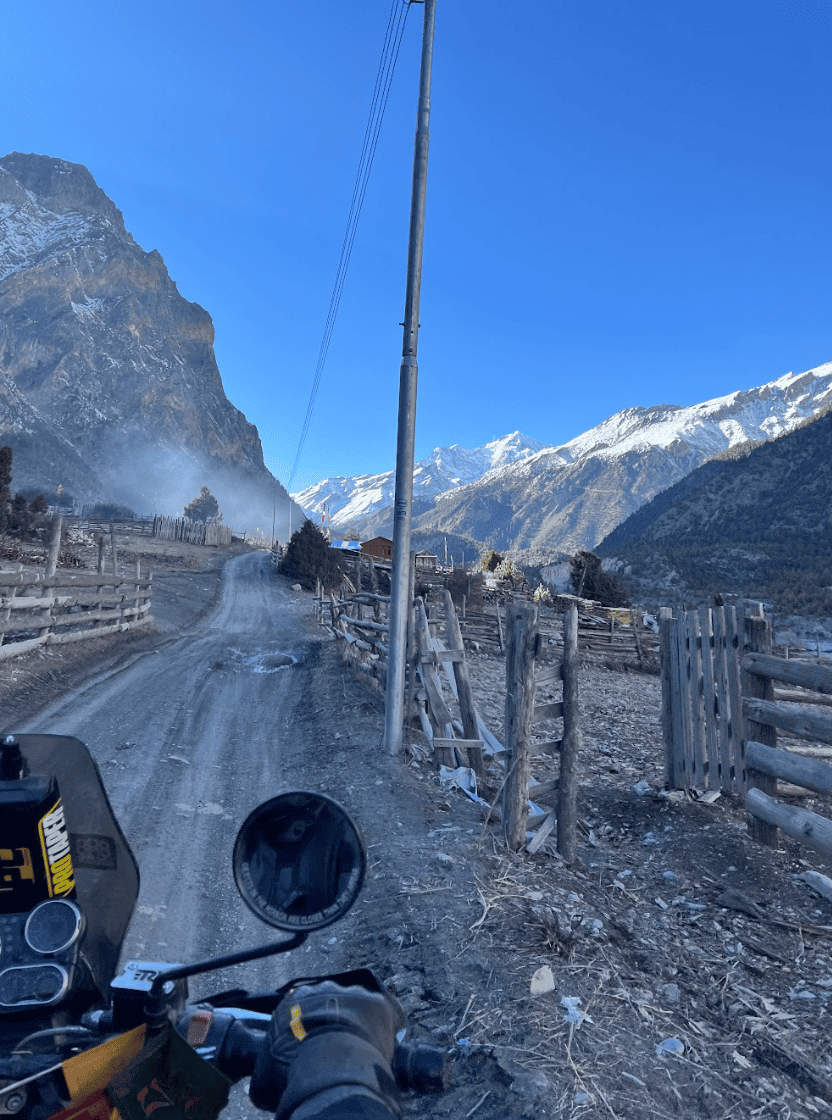
Understanding the road itself helps riders calibrate expectations regardless of season.
Besisahar to Tal — This lower gorge section is the most weather-sensitive part of the entire route. Narrow, carved into steep canyon walls above the Marsyangdi river, this section is spectacular in dry conditions and genuinely hazardous when wet or after landslides. In spring and autumn it is firm, dusty, and technically engaging.
Tal to Chame — The valley opens slightly here. Road surfaces are mixed gravel and dirt, with some improved sections. River crossings exist on this portion of the route. In spring and autumn these are manageable; during monsoon they can be impassable.
Chame to Pisang — The terrain transitions noticeably here. Pine forests replace the lower subtropical vegetation. The road climbs more steadily and the views of the Annapurna II and IV begin to appear. Surface quality is generally consistent in dry seasons.
Pisang to Manang — The final approach into Manang is the highest section of the route and one of the most visually dramatic. The wide glacial valley, Gangapurna glacier, and the ring of 7,000-metre peaks surrounding the village make this stretch unforgettable on a clear day. The surface is rough gravel and loose stone in sections. In spring and autumn, it is entirely rideable. In winter, it is potentially iced.
Essential Riding Tips for the Manang Motorcycle Route
Start early every day. The lower gorge sections can become windy and dusty by mid-afternoon. Morning light also gives the best visibility on the upper approach.
Acclimatise deliberately. Do not rush from Besisahar to Manang in a single day. Spend a night at Chame or Pisang to allow your body to adjust to the elevation gain. Altitude sickness at 3,500 metres is a genuine risk that a proper ascent pace eliminates.
Carry a spare air filter. Dust on the upper sections is persistent, even in the best seasons. Filter clogging at altitude compounds engine performance issues that are already present from the thin air.
Check landslide reports before departing in shoulder seasons. Early June and late September can see residual monsoon landslides. Local guesthouses in Besisahar and Ngadi are the most reliable current-condition sources.
A 150cc–250cc bike is ideal. Lightweight bikes handle the technical sections more comfortably than heavy adventure tourers. The road width on several gorge sections also makes a narrower bike genuinely preferable.
Conclusion: When Should You Ride to Manang?
April and October are the two peak months for Manang motorcycle riding — and both are peak for good reason.
April delivers spring's best combination of stable weather, firm road surfaces, and warm enough temperatures to ride comfortably from early morning. October delivers autumn's extraordinary visibility, settled post-monsoon roads, and the clearest mountain views of the year.
Between the two, the choice comes down to preference. Spring offers lush lower valley vegetation and blooming rhododendrons. Autumn offers sharper mountain clarity and cooler, crisper riding conditions.
Either way, Manang rewards the riders who arrive prepared and timed correctly with one of the most genuinely spectacular motorcycle destinations in the Himalayan world.
FAQ: Best Time to Visit Manang on Motorcycle
Q1: Can you ride a motorcycle to Manang year-round?
No. The practical riding window for Manang is March to November, with June through August being the most challenging due to monsoon-related landslides and road damage on the lower gorge sections. December through February is not recommended for standard motorcycle riding due to extreme cold and potential ice on the upper route sections.
Q2: What is the road condition from Besisahar to Manang?
The road is a mix of rough gravel tracks, loose stone sections, and some improved stretches, with the most technical and weather-sensitive section being the lower Marsyangdi gorge between Besisahar and Tal. In spring and autumn this is fully rideable for intermediate adventure riders. Road quality generally improves on the upper sections toward Pisang and Manang.
Q3: How long does it take to ride from Kathmandu to Manang?
Most riders complete the Kathmandu-to-Manang journey in two to three days, depending on pace and acclimatisation stops. A typical itinerary runs Kathmandu to Besisahar on day one, Besisahar to Chame on day two, and Chame to Manang on day three. Rushing this timeline increases altitude sickness risk significantly.
Q4: What bike is best for riding to Manang?
A lightweight 150cc–250cc adventure or trail bike is ideal for the Manang route. The narrow gorge sections, technical gravel tracks, and river crossings are all more manageable on a lighter motorcycle. Heavy adventure tourers are not recommended for this specific route due to road width constraints and the technical nature of several sections.
Q5: Is the Manang motorcycle route suitable for beginners?
The lower sections from Besisahar to Tal require basic off-road and gravel riding confidence — this is not a beginner-friendly route throughout. However, it is significantly more accessible than routes like the Upper Mustang motorbike tour, and a rider with some gravel experience and good physical preparation can complete it successfully in the right season with a knowledgeable guide.