You are weighing a real decision, not browsing inspiration. The flights are not cheap. The time off work is finite. You have read enough breathless trip reports promising "the ride of a lifetime" to be rightly suspicious of language that sells rather than informs. The question you actually want answered is narrower and more useful: given what it costs, what it demands, and what could go wrong, does a Nepal motorcycle tour deliver enough in return to justify the investment?
This article answers that directly, with the honest trade-offs most tour operator content skips, so you can decide with clear eyes rather than marketing copy.
The Short Answer
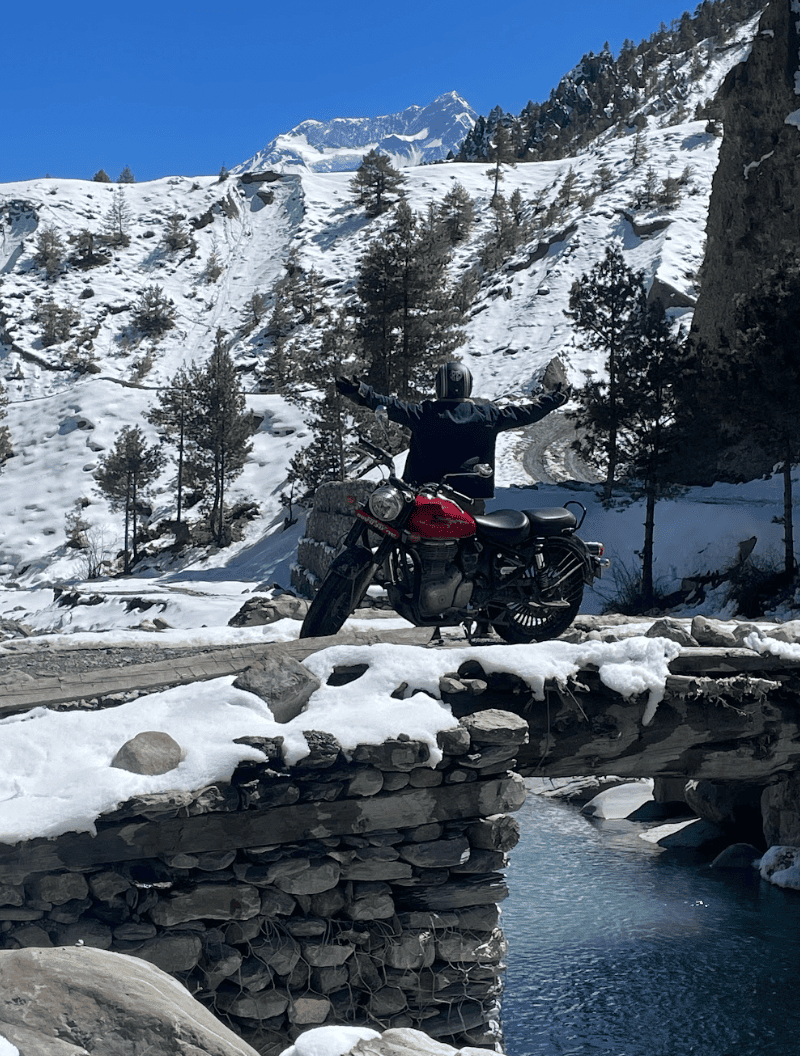
For most riders with genuine off-road experience, reasonable physical fitness, and at least 7–10 days to commit, yes, a Nepal motorcycle tour is worth it, and by a wide margin relative to its cost. For complete beginners, riders with significant health constraints, or anyone with fewer than 5 days available, the calculation is closer, and a guided day-tour or a different destination may serve better. The rest of this article explains exactly why, broken down by what you are actually paying for and what you are actually risking.
What You Are Actually Paying For
Cost Relative to Other Adventure Destinations
A guided multi-day Nepal motorcycle tour typically runs USD 100–250 per day depending on group size, bike choice, and route, all-inclusive of accommodation, meals, fuel, and guide support. Independent riders renting a bike and travelling self-supported can do it for USD 35–55 per day. Compare this to comparable adventure riding in Ladakh (USD 40–60/day, no all-inclusive discount at scale), Bhutan (a mandated minimum tariff exceeding USD 200/day regardless of how you travel), or any serious adventure tour in the European Alps or Andes, and Nepal sits meaningfully below all of them for an equivalent or superior intensity of experience.
What That Money Actually Buys
It buys access to the largest elevation range of any country on earth relative to its land area — tropical lowland to high Himalayan desert within days of riding. It buys entry into Tibetan Buddhist monastery towns, ancient Newari trading settlements, and Hindu temple complexes that span millennia of continuous use. It buys riding on a Royal Enfield Himalayan or similar machine through terrain that genuinely tests skill — gravel, river crossings, technical mountain track — rather than a sanitised tourist loop. And it buys a level of mechanical and hospitality support, through Nepal's tea house network and its century-old Royal Enfield service culture, that keeps "adventure" from tipping into genuine risk.
What the Riding Actually Demands
This is the section most sales-oriented tour pages soften, and it matters more to the worth-it calculation than almost anything else.
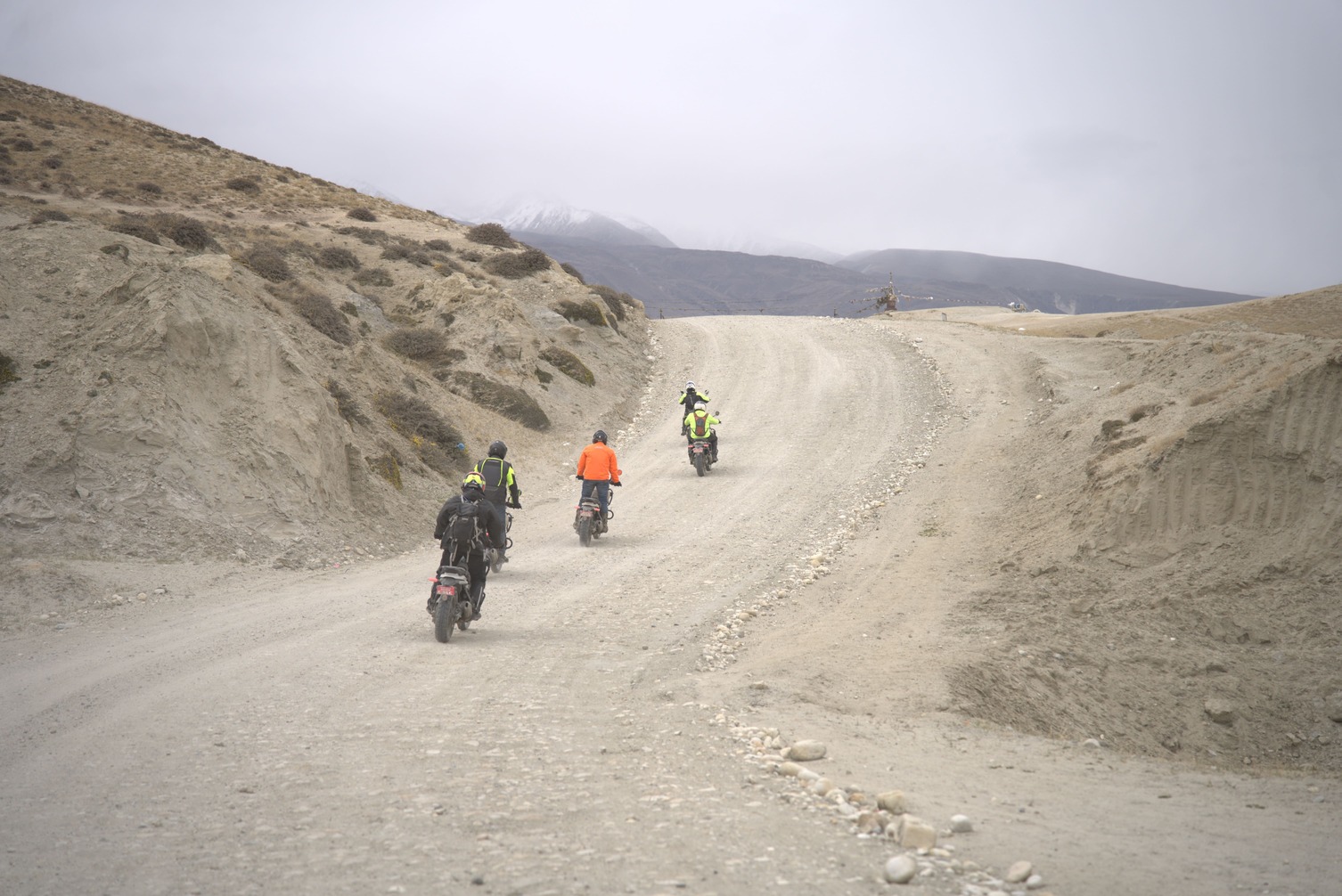
Nepal's mountain roads are not gentle. Outside the main highways, road surfaces shift constantly between packed dirt, loose gravel, exposed rock, and unmarked river crossings, often without warning. Altitude is a genuine physiological factor on routes above 3,000 metres — Manang, Mustang, the high passes of the Annapurna region — affecting decision-making, fatigue, and recovery time in ways that flat-country riding never tests. Traffic culture in Kathmandu and on the connecting highways is dense, unpredictable, and requires constant vigilance that periodic-attention riders from structured Western road systems often find exhausting in the first days.
None of this makes the tour not worth it. It makes it worth it specifically for riders prepared for those demands, and a poor fit for riders who are not. A rider with limited off-road experience attempting Upper Mustang or the Manang loop independently, without guide support, is taking on genuine risk that the romantic trip reports rarely emphasise.
Who Should Do It and Who Should Wait
You should book a Nepal motorcycle tour if: you have at least basic off-road or dual-sport riding experience, reasonable cardiovascular fitness for high-altitude exertion, 7 or more days to commit (shorter trips compress too much travel time relative to riding time), and either guided support or genuine self-sufficiency for remote sections.
You should wait, or choose differently, if: you have never ridden off paved roads before — consider a guided beginner route around Pokhara or Kathmandu Valley first, which several operators offer specifically for this purpose. You have a condition significantly affected by altitude — consult a doctor about routes staying below 3,000 metres. You have fewer than 5 days available — the value-per-day drops sharply on very short trips once travel and acclimatisation time is subtracted. Or you are seeking a relaxing holiday rather than an actively demanding one — Nepal rewards engagement and tests patience, and that is precisely what makes it worthwhile for the right rider and frustrating for the wrong one.
Guided vs Independent: Which Delivers Better Value
This is a genuine fork in the worth-it calculation, not a minor preference.
Guided motorcycle tours cost more per day but include experienced local guides who read road conditions and weather in real time, mechanical support that resolves breakdowns in hours rather than days, pre-arranged accommodation that removes a layer of daily logistics, and — for riders without Royal Enfield-specific mechanical knowledge — a meaningful safety margin. For first-time Nepal riders, riders without strong off-road experience, or anyone attempting Upper Mustang, Manang, or other high-altitude restricted routes, guided support is the version of the trip most likely to deliver genuine value without genuine risk.
Independent touring costs roughly half as much per day and delivers more flexibility, more unscripted local interaction, and — for experienced riders who want it — a deeper sense of earned accomplishment. The trade-off is that breakdowns, route-finding errors, and altitude management become entirely your responsibility, with consequences that scale with how remote the route gets.
Neither is objectively better. The independent route is worth it for riders who have the experience to handle what it demands. The guided route is worth it for riders who want the experience without absorbing the operational risk themselves.
What Riders Actually Report Afterward
Across trip reports and reviews from riders who have completed Nepal motorcycle tours, a consistent pattern emerges that is worth weighting in the worth-it calculation: riders disproportionately describe the difficulty itself as part of what made the trip valuable, not a cost they tolerated to reach the views. The sustained attention demanded by technical terrain, the physical and cognitive load of high-altitude riding, and the unpredictability of road conditions are described, after the fact, as producing a quality of focus and presence that comfortable touring rarely generates.
This matters for the worth-it question because it reframes what you are actually buying. A Nepal motorcycle tour is not primarily a scenery-viewing holiday with a motorcycle as transport. It is a demanding physical and mental experience that uses riding as the mechanism, and the value most former riders report is inseparable from that demand rather than despite it.
The Honest Risks That Affect the Calculation
A fair worth-it assessment requires naming the genuine downside risks rather than glossing them.
Road conditions on Nepal's mountain routes can deteriorate significantly between seasons, and a route confirmed rideable one month may be compromised by landslide or washout the next — current local information before departure is not optional. Altitude sickness is a real risk above 3,000 metres regardless of fitness level, and proper acclimatisation schedules need to be built into any itinerary rather than treated as a footnote. Mechanical breakdowns in remote sections, while manageable through Nepal's extensive Royal Enfield mechanic network, can still cost a full riding day or more depending on location. And riding in Kathmandu traffic, for newer riders, carries genuine accident risk that experienced city-traffic riders underestimate when planning their first day.
None of these risks are unusual for adventure motorcycle travel anywhere in the world. But they are real, they should factor into your decision, and a tour operator's marketing language will rarely surface them with the weight they deserve.
Conclusion
A motorcycle tour in Nepal is worth it for riders who come prepared for genuine adventure rather than a curated, low-friction holiday. The cost sits meaningfully below comparable Himalayan destinations like Bhutan and on par with or below Ladakh, while delivering terrain diversity, cultural depth, and mechanical and hospitality support infrastructure that few other destinations match at the price. The demands are real — altitude, technical terrain, unpredictable conditions — and they are precisely what most riders, after the fact, identify as the source of the trip's value rather than its cost.
If you have the baseline fitness and experience the routes require, and you are honest with yourself about choosing guided support where your skill level calls for it, the answer to whether a Nepal motorcycle tour is worth it is a confident yes. If you are looking for an easy, predictable holiday with motorcycles as scenery, the honest answer is that Nepal will test you more than you may want, and that test is the entire point.