Somewhere between your first solo ride around the block and the moment you start seriously considering a multi-day trip, motorcycle touring stops being an abstract idea and starts being a plan. That transition is exciting and slightly overwhelming in equal measure, because touring asks more of you than ordinary riding, more planning, more gear, more self-sufficiency, and a different relationship with the road than the commute or weekend blast you have built your confidence on so far.
This guide covers everything a beginner genuinely needs: how to choose the right touring bike, how to build riding stamina and skill progressively, what gear actually matters versus what is marketing noise, how to plan a route and a realistic daily distance, the mechanical basics every tourer should know, how to pack without overloading your bike, and how the calculus changes when you take your first tour somewhere genuinely demanding — illustrated throughout with examples from Nepal's Himalayan routes, because few environments test and teach touring fundamentals as clearly as mountain riding does.
What Motorcycle Touring Actually Is
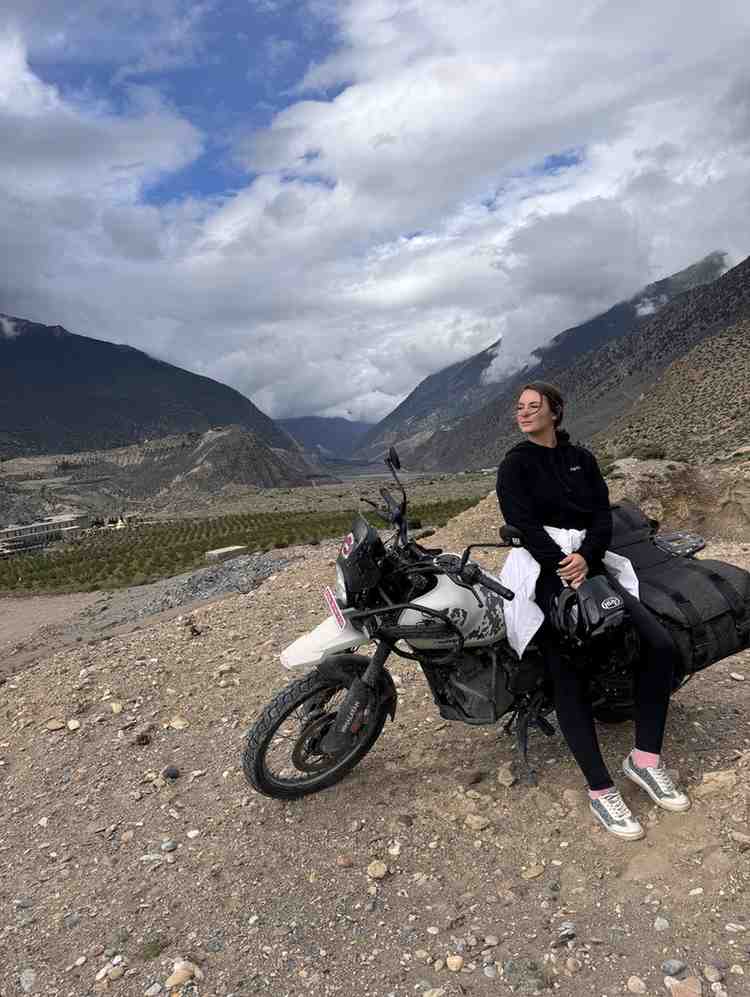
Motorcycle touring means riding with an overnight stay involved, gear packed on the bike, and the journey itself treated as part of the destination rather than simply the means of reaching it. It is distinct from a day ride in duration, from commuting on purpose, and from a guided tour in the degree of self-sufficiency it demands of you.
The defining shift, mentally, is this: on a commute or a weekend ride, the goal is usually arrival. On a tour, the road itself is the experience, and arrival is simply where the day's riding happens to end. This sounds like a small distinction. In practice, it changes nearly every decision you make, pace, route choice, how much you push through discomfort, and how you respond when something does not go to plan.
You do not need to cross a border or ride thousands of kilometres for it to count as touring. A weekend trip with one overnight stop, gear strapped to your bike, and a route you have not ridden before contains every fundamental skill that a three-week international expedition requires. Master the fundamentals on something manageable first.
Choosing Your First Touring Motorcycle
What Actually Matters for a Beginner Tourer
The most common mistake new tourers make is choosing a bike based on aspiration rather than fit. A bike that looks the part in photographs of Himalayan switchbacks or coastal highways is not automatically the right bike for you if it does not match your physical size, your current skill level, and the kind of roads you will actually be riding.
The qualities that matter most for a first touring bike, in order of importance, are: a seating position you can hold comfortably for six to eight hours, a weight you can manage confidently at walking pace and in a low-speed drop, a fuel range adequate for the gaps between stations on your intended routes, genuine reliability and a service network you can access along your route, and enough load capacity for the gear and luggage your trip requires.
Power and top speed, which dominate most bike marketing, matter far less for touring than they do for sport riding. A tourer rarely needs to ride at the limits of a bike's performance envelope. What a tourer needs is a bike that performs predictably and comfortably across long, varied days.
Bike Categories and What They're Actually Good For
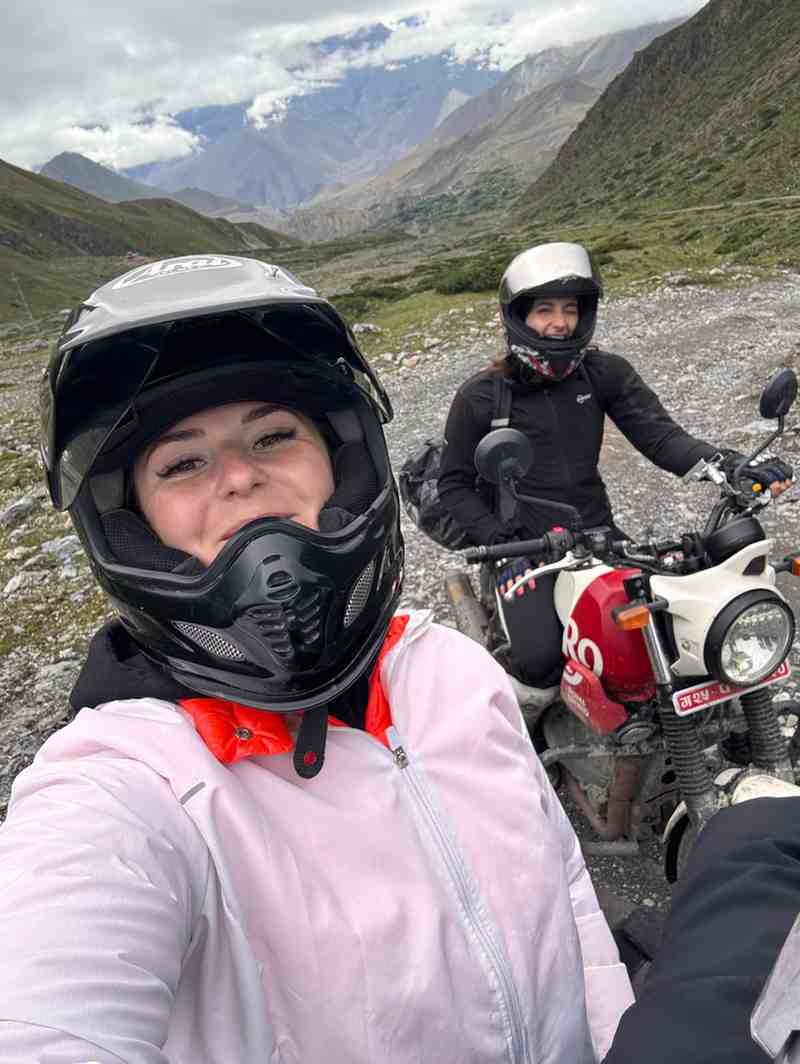
Adventure and dual-sport bikes — the Royal Enfield Himalayan, Honda CB500X, KTM 390 Adventure, Hero Xpulse — handle mixed paved and unpaved terrain well and suit riders planning routes that combine highway with gravel or dirt sections. This is the category most relevant to mountain touring, including Nepal's Himalayan routes, where road surfaces shift unpredictably between sealed tarmac, packed dirt, and loose gravel within a single day's riding.
Standard and naked bikes suit riders sticking primarily to paved roads who want a simpler, often lighter machine with fewer specialised features. They are frequently a sensible and underrated choice for a first tourer precisely because they avoid the complexity and cost of dedicated touring features you may not yet know you need.
Dedicated touring and sport-touring bikes — the BMW R1250RT, Honda Gold Wing, Kawasaki Versys — prioritise comfort, wind protection, and luggage integration for sustained highway distance, but their weight and complexity can be a liability for a beginner still building low-speed handling confidence, particularly off paved surfaces.
Cruisers, despite a reputation as purely recreational machines, tour well on paved routes due to their relaxed seating position and often generous torque, though their lower ground clearance and weight distribution make them a poor match for anything resembling Nepal's mixed mountain terrain.
The Rental Alternative
For a first serious tour, particularly an international one, renting rather than buying is frequently the smarter decision. This is especially true for mountain touring destinations like Nepal, where the Royal Enfield Himalayan dominates the rental fleet specifically because it matches the terrain and where renting locally means you are riding a machine that local mechanics understand intimately, rather than a bike you imported that no one along your route has seen before. Renting also removes the financial commitment of buying a touring-specific bike before you know whether the activity suits you long-term.
Building the Riding Skills Touring Actually Requires
Why Ordinary Riding Experience Isn't Quite Enough
A rider who is confident and capable on familiar daily roads is not automatically prepared for the specific demands of touring, and the gap between the two catches many beginners off guard on their first multi-day trip. Touring asks for sustained concentration across many consecutive hours, comfort riding a bike loaded with weight it does not normally carry, navigation and decision-making in unfamiliar conditions, and — on routes that include unpaved sections — a different and often unpracticed skill set entirely.
The Progressive Skill-Building Approach
The riders who transition into touring most successfully build up deliberately rather than jumping straight into an ambitious first trip. Start with day rides at the distance you intend to cover on tour, so you understand how your body and concentration hold up over that duration before adding the complication of unfamiliar roads and packed luggage. Then add a loaded bike to a familiar route, because weight distribution and handling change meaningfully once luggage is fitted, and you want to discover that on a road you already know rather than somewhere new. Then combine both factors — loaded bike, unfamiliar route — on an overnight trip close to home, which gives you a genuine touring experience with a short retreat distance if anything goes wrong.
Only after these stages does it make sense to commit to a longer or more demanding tour, and this is exactly the sequence experienced riders recommend before attempting something like a Nepal mountain route, where unpaved surfaces, altitude, and genuine remoteness compound the difficulty of any skill gap you have not yet closed.
Specific Skills Worth Practising Before You Go
Low-speed control — the ability to manoeuvre a loaded bike at walking pace without putting a foot down repeatedly — matters disproportionately on tour, where you will regularly navigate tight parking, fuel stops, and slow traffic. Emergency braking with a loaded bike behaves differently from an unloaded one, and practising this in a controlled environment before you need it on the road is worth the hour it takes. And if your route includes any unpaved sections — which most serious mountain touring does — basic off-road fundamentals (standing on the pegs, weighting the outside peg through loose corners, managing throttle on gravel) should be practised on manageable terrain before you encounter them on a remote Himalayan track with no margin for a steep learning curve.
Planning Your Route and Realistic Daily Distance
The Daily Distance Mistake Almost Every Beginner Makes
The single most common planning error among new tourers is overestimating how far they can comfortably ride in a day, and the consequence is a trip that feels like an endurance test rather than the experience they were hoping for. Experienced tourers consistently recommend 200 to 300 kilometres per day for a beginner on predominantly paved routes — not because the bike cannot cover more, but because the rider's concentration, comfort, and enjoyment degrade well before the bike's limits are reached.
This figure drops substantially on technical or unpaved terrain. On Nepal's mountain routes — the road toward Mustang through the Kali Gandaki gorge, the approaches to Manang, the tracks into Tsum Valley — a beginner should plan for considerably less distance per day, sometimes as little as 80 to 120 kilometres, because the combination of altitude, surface variability, and the sustained concentration technical riding demands consumes energy and attention far faster than equivalent highway distance. Riders who apply highway-distance expectations to mountain routes consistently arrive exhausted, frustrated, and riding past the point where their judgment is still sound.
Building the Route Itself
A realistic route plan identifies not just the distance and destination for each day but the fuel stops along the way, particularly important on routes where stations are widely spaced — Nepal's high-altitude routes can have gaps of 60 kilometres or more between reliable fuel — and a buffer for the unexpected: weather delays, road closures, a slower pace than anticipated, or simply wanting to linger somewhere unplanned. Building zero slack into a touring itinerary is one of the most reliable ways to turn an enjoyable trip into a stressful one.
For beginners, it is worth deliberately structuring the first few days of any tour as the easiest, both to build confidence and to allow your body to adapt to the cumulative demands of touring before facing the trip's most difficult sections. A Nepal beginner's itinerary, for instance, sensibly starts with the substantially paved Kathmandu–Pokhara corridor before building toward the more technical terrain of the Annapurna foothills or Mustang approach later in the trip — never the reverse.
Navigation
A dedicated motorcycle GPS unit offers glove-friendly, weatherproof navigation and is the preferred option for serious tourers, but a smartphone in a quality waterproof, vibration-resistant mount with an offline maps app downloaded in advance is a perfectly capable and far cheaper alternative for a beginner's first tours. Offline capability matters considerably on routes like Nepal's mountain roads, where mobile signal becomes unreliable or absent for extended stretches — download your maps before you lose connectivity, not after.
Gear: What Actually Matters and What Is Marketing Noise
The Non-Negotiables
A genuinely protective helmet — full-face for touring, given the range of weather and crash protection it provides over open-face alternatives — is the first and least negotiable purchase. A riding jacket and trousers with proper armour at the shoulders, elbows, hips, and knees protect against both impact and abrasion in ways that ordinary clothing simply does not. Gloves with palm sliders and knuckle protection, and boots that cover and support the ankle, complete the core protective kit that should never be compromised regardless of budget pressure elsewhere.
Layering Over Single-Solution Gear
A common beginner mistake is buying one premium jacket and trusting it to handle every condition a tour might bring. In practice, layering performs better across genuinely varied conditions: a base layer for moisture management, a mid-layer for insulation that can be added or removed as temperature changes through the day, and a shell layer for wind and rain protection. This logic matters most acutely on routes with significant elevation change — Nepal's mountain roads can move a rider from 28°C valley humidity to 8°C alpine wind within a single riding day, a range that no single jacket, however well specified, comfortably handles on its own.
Gloves Deserve More Thought Than Beginners Give Them
Most new tourers pack one pair of gloves and assume that is sufficient. For touring through varied climates or altitude, this is a mistake worth avoiding from the outset: a lightweight pair for warm, low-altitude riding where dexterity matters more than insulation, and a heavier, genuinely insulated pair for cold or high-altitude conditions, are both worth carrying if your route crosses meaningful elevation or climate range — which most serious mountain touring, Nepal's routes very much included, does.
Luggage
Soft luggage — tail bags, saddlebags, tank bags — is generally the better starting choice for beginners over rigid hard cases. It is lighter, less expensive, more forgiving of narrow trail sections or accidental contact with rocks and trail edges, and easier to remove from the bike entirely when needed. Whatever luggage system you choose, waterproofing is essential rather than optional: even gear that travels in a "waterproof" bag benefits from an inner dry-bag layer for documents and electronics, because sustained heavy rain — the kind Nepal's Monsoon-adjacent climate or any serious multi-day tour will eventually deliver — defeats more luggage waterproofing claims than manufacturers like to admit.
Mechanical Basics Every Tourer Should Know
You do not need to be a qualified mechanic to tour responsibly, but a baseline of mechanical self-sufficiency changes a roadside problem from a crisis into an inconvenience, and this matters more the further your route takes you from reliable mechanical support.
The Pre-Trip Check
Before any tour, check tyre pressure and tread condition, oil level and recent change interval, brake pad wear and fluid level, chain tension and lubrication if your bike uses a chain drive, and all lights and signals. This pre-trip check should happen with enough lead time before departure that any issue it surfaces can actually be addressed, not the night before you leave.
What to Carry and What to Know
A basic toolkit matched to your specific bike's fastener sizes, a tyre puncture repair kit with the tools to use it, spare levers if your bike has exposed clutch or brake levers prone to snapping in a fall, and zip ties, electrical tape, and a multi-tool round out a sensible minimum kit. Knowing how to check and adjust chain tension, how to identify a puncture and execute a basic repair, and how to perform a roadside diagnosis of common electrical faults with a simple multimeter are skills worth genuinely learning — through a course, a knowledgeable friend, or deliberate practice — before you depart, not skills to attempt for the first time stranded on a remote stretch of road.
This baseline matters considerably more on routes like Nepal's mountain roads, where the gap between a mechanical problem and the nearest qualified help can be measured in hours or, on the most remote stretches, in days. A rider who can resolve a puncture or a loose chain independently retains genuine control over their trip in a way that a rider entirely dependent on outside assistance does not.
Solo Touring vs Group Touring vs Guided Tours
Solo Touring
Riding alone offers complete flexibility over pace, route, and stops, and many experienced tourers describe it as the purest version of the experience but it places the entire burden of navigation, mechanical problem-solving, and decision-making on you alone. For a genuine beginner, a fully solo first tour on demanding or unfamiliar terrain is a meaningfully higher-risk choice than the alternatives below, and most experienced riders recommend building solo touring experience gradually, starting on familiar and well-supported routes before attempting it somewhere genuinely remote.
Group Touring
Riding with other experienced tourers distributes mechanical knowledge, navigation responsibility, and in the event something goes wrong, practical support across the group. The trade-off is reduced flexibility and, on technical terrain particularly, a real risk of pace pressure: riders pushing themselves beyond their comfort level to keep up with a faster group. This dynamic is worth naming explicitly before any group tour begins, with an agreed approach to regrouping and pace that protects the least experienced rider in the group rather than the fastest.
Guided Tours
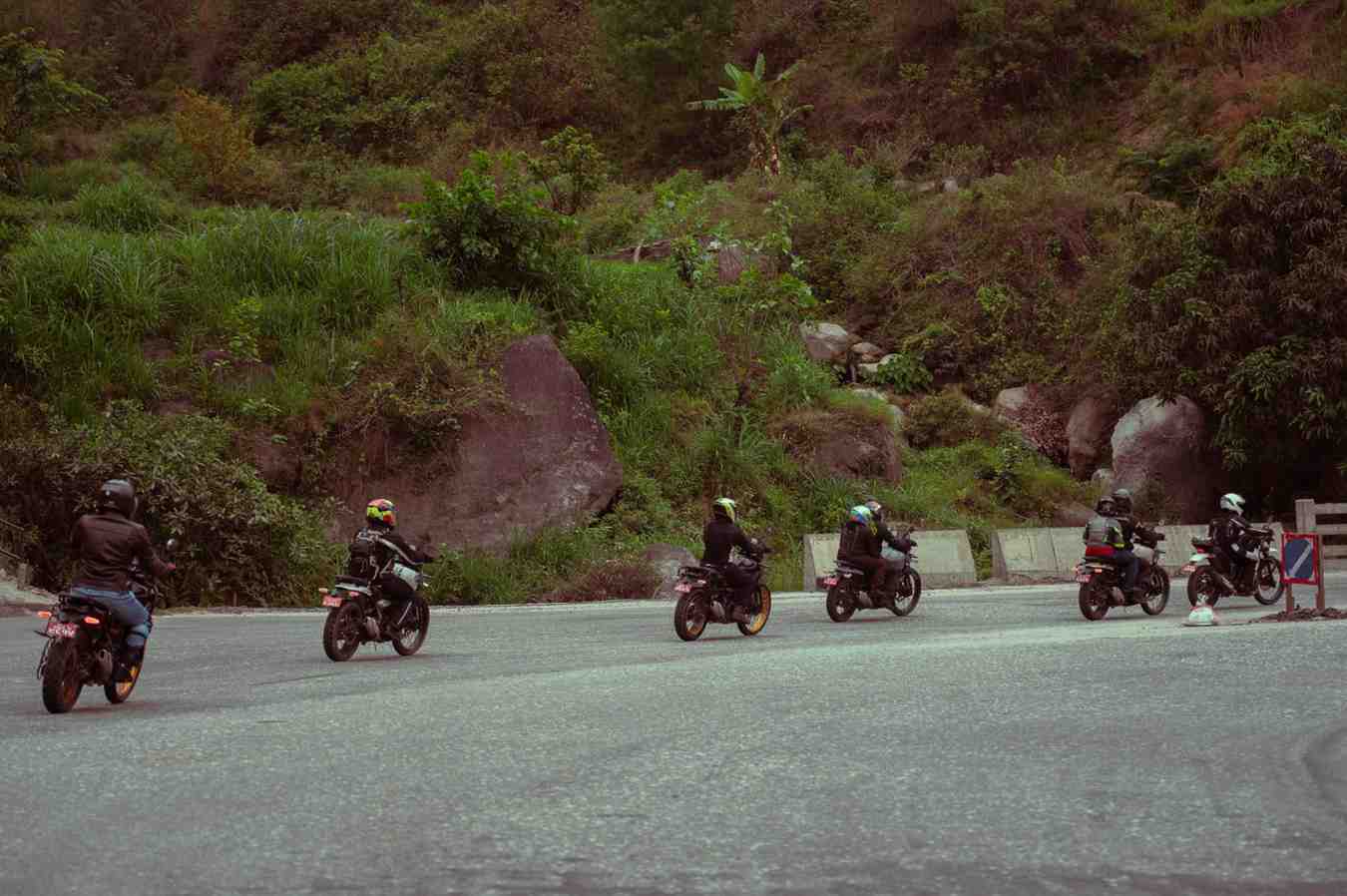
For a genuine beginner attempting a demanding destination for the first time, a guided motorbike tour is frequently the wisest entry point, and this is particularly true for technically and logistically complex destinations like Nepal's high-altitude and restricted-area routes. A guided tour provides local knowledge of current road conditions, mechanical support that resolves problems in hours rather than days, pre-arranged accommodation and permits, and an experienced rider's judgment about pace and route that a first-time visitor to the terrain simply cannot replicate. The cost premium over independent touring buys a meaningful reduction in genuine risk, and many experienced riders who tour independently in familiar territory still choose guided support for their first attempt at a destination as demanding as Upper Mustang or the Manang region.
Touring Internationally: What Changes
A first international tour adds a layer of complexity beyond domestic touring fundamentals, and it is worth understanding before committing to a destination.
Documentation
Confirm your passport validity well in advance, research the specific visa requirements for your destination — Nepal, for most nationalities, offers visa on arrival, which simplifies planning considerably compared to destinations requiring advance application and check whether an International Driving Permit is required alongside your home licence, which it typically is for riding internationally.
Insurance and Bike Logistics
Confirm whether your existing insurance extends to international riding, or whether you need a separate policy, well before departure rather than discovering a gap in coverage after an incident. If renting locally rather than bringing your own bike — the sensible choice for most first international tours, and especially for mountain destinations like Nepal where local rental bikes are matched to local terrain and mechanical support — confirm the rental agreement's coverage, the bike's condition, and what happens in the event of damage or breakdown before you sign anything.
Permits and Restricted Areas
Some international destinations require route-specific permits beyond standard entry documentation. Nepal's Annapurna Conservation Area and TIMS card requirements cover most popular touring routes at modest cost, while genuinely restricted regions like Upper Mustang and Dolpo require separate RAP permit, considerably more expensive permits. Research these requirements specifically for your intended route well before departure — permit processing can take time, and arriving at a checkpoint without the correct documentation can end a planned route on the spot.
Your First Multi-Day Tour: A Practical Structure
Bringing all of the above together, a sensible first multi-day tour follows a structure that builds confidence progressively rather than front-loading difficulty.
Day one should be your shortest and easiest, covering familiar or straightforward terrain, both to confirm your loaded bike is behaving as expected and to ease into the rhythm of touring before any genuine challenge arrives. Subsequent days can build distance and difficulty gradually, with rest stops built deliberately into the plan rather than treated as an afterthought — experienced tourers commonly recommend one rest day for every two to three riding days on a longer tour, both for physical recovery and for the simple enjoyment of a destination rather than treating the entire trip as transit.
For a beginner choosing Nepal motorcycle tour as a first serious destination, this structure maps naturally onto the country's geography: begin with the substantially paved Kathmandu–Pokhara corridor to build confidence and adapt to local riding conditions, add a rest day in Pokhara, then progress toward the more technically demanding Annapurna foothills with guided support if your off-road experience is limited, building toward the most demanding sections — Mustang, Manang — only once the earlier days have confirmed your bike, your gear, and your own readiness are genuinely equal to what comes next.
Common Beginner Mistakes Worth Avoiding
Overpacking is close to universal among first-time tourers and is almost always corrected by the second trip — pack for the realistic conditions ahead, not for every contingency you can imagine, and remember that most destinations, Nepal's towns very much included, have shops where forgotten items can be bought rather than carried preventatively from home.
Underestimating fatigue is the second consistent pattern: touring fatigue is cumulative in a way single-day riding rarely makes apparent, and the rider who feels fine on day one is not a reliable predictor of how they will feel on day four. Build rest into your plan before you need it, not after you discover you do.
Ignoring local riding culture and conditions — riding at home-country speeds and following home-country traffic assumptions in an unfamiliar environment — causes a disproportionate share of incidents among touring beginners abroad. Nepal's traffic culture, road hierarchy, and horn-as-communication norms differ meaningfully from most Western riding contexts, and a few days of careful observation before riding at full confidence pays for itself.
And finally, skipping the mechanical and route preparation covered above because it feels like unnecessary caution for "just a motorcycle trip" is the mistake that turns a manageable roadside problem into a genuinely difficult situation, particularly on routes where help is hours or days away rather than minutes.
The Foundation You're Actually Building
Motorcycle touring rewards exactly the kind of progressive, deliberate preparation this guide has walked through, not because the activity demands perfection, but because every fundamental skill, every piece of gear logic, and every planning habit you build on a manageable first tour becomes the foundation that makes a more ambitious second, third, and tenth tour both safer and more enjoyable.
Whether your next tour is a weekend loop near home or, eventually, something as demanding and rewarding as Nepal's high Himalayan routes, the fundamentals are the same: a bike that fits you, skills built progressively rather than assumed, gear chosen for function over appearance, a route planned with honest distance expectations, and the mechanical and logistical self-sufficiency to handle what the road actually throws at you rather than what you hoped it would.
Start manageable. Build deliberately. The roads that currently feel like a distant ambition — including the ones above 4,000 metres become genuinely achievable once the fundamentals in this guide are no longer something you are thinking about, but simply how you ride.