
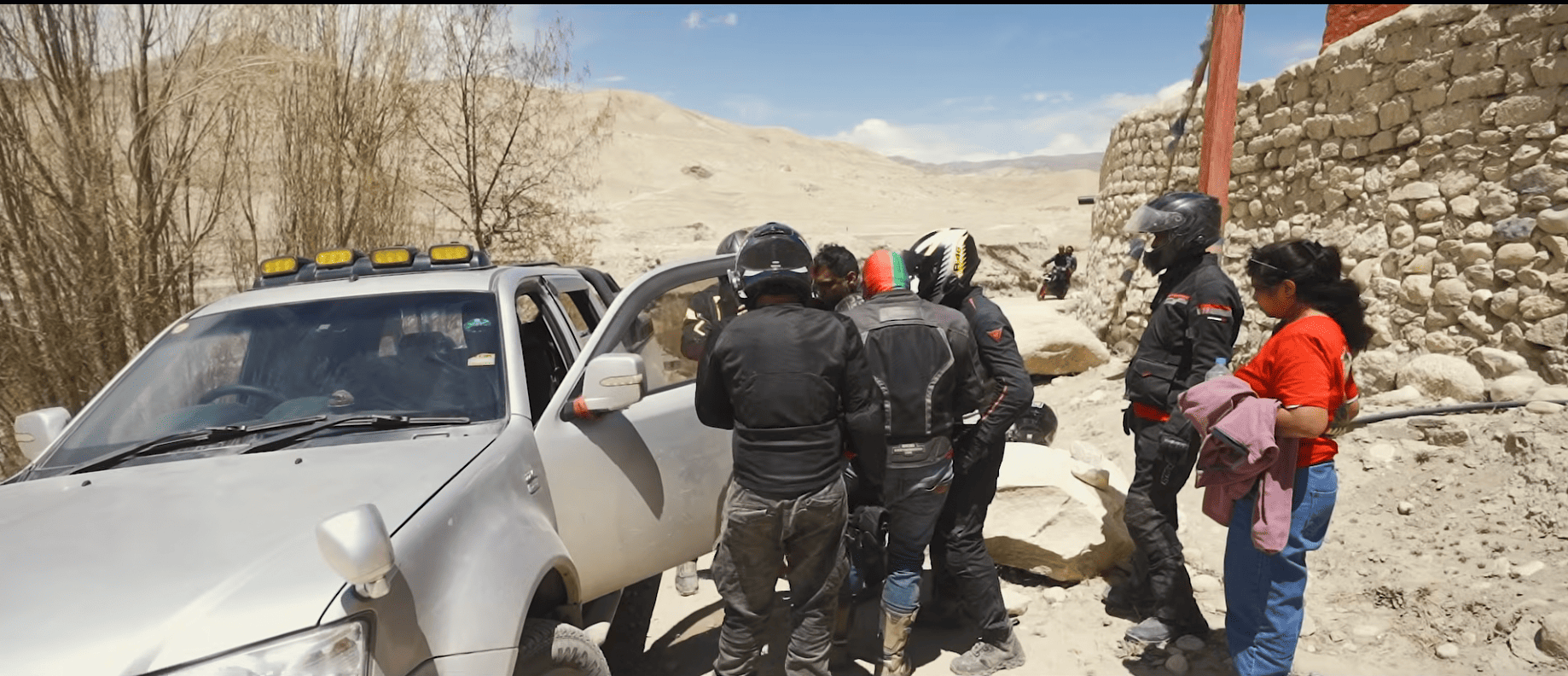
Upper Mustang is one of the most remote regions for motorbike expeditions in Nepal. It is famous for its dramatic Himalayan desert landscapes, ancient Tibetan culture, and off-road adventure routes but it is also a region where emergency support works very differently from normal travel destinations.
If you are planning an Upper Mustang motorcycle tour, understanding the emergency support and rescue system is just as important as knowing the route or packing list.
This guide explains how emergency response actually works in Upper Mustang, what kind of rescue systems exist, how evacuation happens, and what riders must prepare for before entering this restricted Himalayan zone.
In this guide, we cover:
- Medical and rescue infrastructure in Upper Mustang
- Helicopter evacuation system
- Roadside emergency support structure
- Communication networks and limitations
- What happens during accidents or altitude sickness
- Response time expectations
- Insurance and cost implications
- Rider responsibilities vs tour operator responsibilities
- Real risks on the route
- Preventive safety systems used by guides
Why Emergency Support Matters in Upper Mustang
Upper Mustang is not a typical motorbike destination. It is a high-altitude restricted region north of the Annapurna range, close to the Tibetan plateau.
Key locations along the route include:
- Kagbeni
- Jomsom
- Lo Manthang
Once you pass Kagbeni, you enter a region where:
- Hospitals are extremely limited
- Road access is slow and rough
- Mobile signals are weak or inconsistent
- Weather can delay rescue operations
- Helicopter landing depends on conditions
This makes emergency systems slow, expensive, and highly dependent on logistics.
Medical Infrastructure in Upper Mustang
Local Health Posts
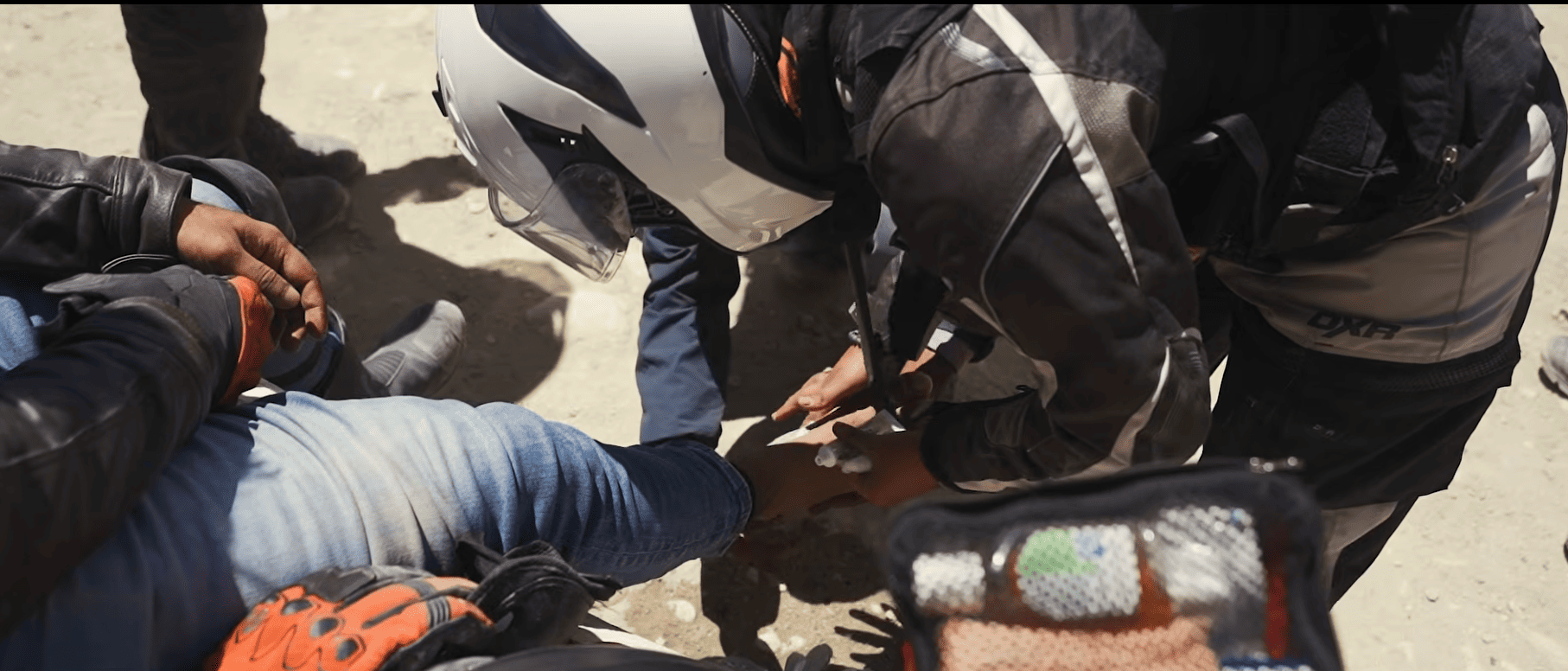
In Upper Mustang villages, there are small health posts that can handle:
- Minor injuries
- Basic wound dressing
- Mild altitude sickness support
However, they are not equipped for:
- Fractures requiring surgery
- Severe trauma
- Internal injuries
- Advanced altitude complications
Nearest Full Hospitals
Serious cases must be transported to:
- Pokhara
- Kathmandu
These cities have proper:
- Emergency rooms
- Orthopedic care
- Oxygen support systems
- Surgical facilities
Key Limitation
The biggest challenge is not treatment—it is getting there in time.
Distance + terrain + weather = delayed response
Types of Emergencies in Upper Mustang Motorcycle Tours
Emergency situations generally fall into five categories.
Road Accidents
Upper Mustang terrain includes:
- Loose gravel roads
- Sand sections
- Rocky climbs
- Cliffside trails
- River crossings
These can lead to:
- Falls
- Fractures
- Sprains
- Bike-related injuries
Altitude Sickness (AMS)
At elevations reaching:
- Around 2,800m in lower valleys
- Around 3,800m near Lo Manthang
Riders may experience:
- Headache
- Nausea
- Dizziness
- Shortness of breath
Severe cases can escalate quickly.
Mechanical Breakdown in Remote Zones
Motorbike issues in Upper Mustang can include:
- Brake failure
- Chain break
- Tire punctures
- Engine overheating
Recovery support is limited.
Weather-Related Emergencies
Upper Mustang is a Himalayan desert region with:
- Sudden wind storms
- Dust storms reducing visibility
- Cold temperature drops at night
Fatigue-Related Incidents
Multi-day riding leads to:
- Slower reaction time
- Poor decision-making
- Loss of concentration
Helicopter Rescue System in Upper Mustang
Helicopter evacuation is the most critical part of the emergency system in Upper Mustang.
When Helicopters Are Used
Helicopter rescue is typically required for:
- Severe accidents
- Fractures or trauma
- Acute altitude sickness
- Life-threatening conditions
How Evacuation Works
The emergency process generally follows these steps:
- Emergency is reported to guide/operator
- Local coordination begins
- Helicopter is dispatched from available hubs
- Landing zone is identified
- Patient is transported to hospital
Key Helicopter Hubs
- Pokhara
- Kathmandu
Limitations of Helicopter Rescue
Helicopter evacuation depends on:
- Weather conditions
- Wind speed
- Visibility
- Landing zone availability
- Daylight hours
If conditions are poor, delays can occur.
Cost of Helicopter Evacuation
Without insurance:
- Costs can reach several thousand USD per flight
With insurance:
- Coverage depends on policy terms
Ground Emergency Support System
Tour Guide Support System
Every professional Upper Mustang motorcycle tour includes:
- Lead guide
- Support riders (for group tours)
- Communication coordination
Guides are trained to:
- Assess injury severity
- Decide evacuation necessity
- Manage first-response care
Support Vehicle System (Where Available)
Some expeditions include:
- 4x4 backup vehicle
- Tool kits
- Spare fuel
- Recovery equipment
However, in the Upper Mustang interior:
- Vehicle access is limited
- Not all sections are reachable
On-Road Assistance Limitations
Unlike urban travel:
- No roadside towing network
- No quick ambulance access
- No repair garages in remote zones
Support is self-managed and guide-managed—not infrastructure-managed.
Communication System in Emergencies
Mobile Network Coverage
Coverage is available in:
- Lower Mustang regions
- Around Jomsom
But inside Upper Mustang:
- Weak signal
- Intermittent connectivity
- No guarantee of service
Radio Communication
Professional tours often use:
- Walkie-talkies
- Satellite phones (advanced expeditions)
Emergency Coordination Chain
In case of emergency:
Rider → Guide → Base Operator → Rescue Coordination → Helicopter/Support Dispatch
Response Time in Upper Mustang Emergencies
Response time varies significantly depending on location.
Near Jomsom Area
- Faster response
- Better transport access
- Possible response within hours
Inside Upper Mustang (Kagbeni Onward)
- Slower response
- Several hours may be needed for coordination
Remote High-Altitude Zones Near Lo Manthang
Response depends on:
- Weather
- Helicopter availability
- Coordination speed
Role of Tour Operators in Emergency Management
A professional motorcycle tour operator plays a critical role.
Risk Monitoring
Responsibilities include:
- Rider condition checks
- Weather monitoring
- Route safety evaluation
First Response Management
Operators help with:
- Basic medical aid
- Stabilization
- Evacuation decisions
Logistics Coordination
This includes:
- Helicopter booking
- Hospital coordination
- Communication with family
Limitations
Operators do not:
- Provide hospital-level treatment
- Guarantee instant evacuation
- Control weather or terrain conditions
Rider Responsibilities During Emergencies
Riders also play a major role in safety.
Personal Preparedness
Carry:
- Insurance documents
- First aid kit
- Emergency contacts
Riding Discipline
- Avoid reckless speed
- Follow guide instructions
- Maintain group spacing
Health Awareness
- Report altitude symptoms early
- Stay hydrated
- Rest when needed
Insurance and Emergency Coverage
Travel insurance is critical for Upper Mustang motorcycle tours.
Your policy should include:
- Medical coverage
- Helicopter evacuation
- Adventure riding coverage
- High-altitude coverage
Without insurance:
Emergency costs can become extremely high.
Realistic Emergency Scenarios in Upper Mustang
Scenario 1: Minor Injury
- First aid given by guide
- Rest stop provided
- Ride continues if safe
Scenario 2: Moderate Injury
- Stabilization
- Possible evacuation to Jomsom
Scenario 3: Severe Accident
- Immediate helicopter evacuation
- Transfer to Pokhara or Kathmandu
Scenario 4: Altitude Sickness
- Descent to lower altitude
- Oxygen support if available
Risk Reduction Systems Used in Tours
Professional expeditions reduce risk through structured systems.
Pre-Ride Briefing
Includes:
- Terrain explanation
- Safety rules
- Emergency protocols
Group Riding System
- Lead rider controls pace
- Sweep rider monitors the group
Daily Health Checks
Monitoring:
- Fatigue levels
- Altitude symptoms
Route Planning
Stops at locations like:
- Kagbeni
- Jomsom
These allow acclimatization and improve safety.
Key Limitations of Emergency Systems in Upper Mustang
Remote Geography
Distance slows everything down.
Weather Dependency
Helicopter rescue depends heavily on weather conditions.
Limited Infrastructure
No advanced medical system exists inside Upper Mustang.
Communication Gaps
Mobile connectivity becomes weaker in upper regions.
Is Upper Mustang Safe for Motorbike Tours?
Yes, but only with proper systems in place:
- Experienced guide
- Proper insurance
- Planned itinerary
- Safety-first riding discipline
Without these:
Risk increases significantly.
Final Verdict: Emergency Support in Upper Mustang
Emergency support in Upper Mustang is:
❌ Not fast like cities
❌ Not infrastructure-heavy
✅ Functional when properly managed
It relies on:
- Guides
- Helicopter evacuation
- Operator coordination
- Rider discipline
- Insurance coverage
FAQ: Emergency Support in Upper Mustang Tours
Are hospitals available in Upper Mustang?
Only basic health posts exist. Major hospitals are located in Pokhara and Kathmandu.
How fast is helicopter rescue?
It depends on weather and location. Rescue arrangements can take several hours.
Is emergency support reliable?
Yes, but not instant. The system is logistics-based rather than infrastructure-based.
Do tours include rescue services?
Guides coordinate rescue operations, but actual costs are generally covered through insurance.
What is the biggest risk?
Delayed response due to remoteness and weather.
Conclusion
Upper Mustang is one of the most remote motorcycle expedition routes in the Himalayas.
Its emergency support system is not about speed—it is about coordination, preparation, and risk management.
Riders who understand this system ride with confidence.
Riders who ignore it take unnecessary risk.