Nobody books the Kathmandu to Upper Mustang motorcycle route expecting it to be easy. Most foreign riders arrive prepared for a challenging ride — and still get caught out.
The reason almost never comes down to riding skill. It comes down to assumption. Riders who have logged serious kilometres on demanding roads in other countries arrive in Nepal with a mental model of what "difficult mountain riding" looks and feels like. That model is wrong for this environment, and the route from Kathmandu to Lo Manthang will show you exactly where it's wrong, often within the first day.
This guide covers the twelve most consistent mistakes that foreign riders make on this route — not the obvious ones like "bring the wrong gear" — but the specific, experience-pattern mistakes that guides see repeatedly, that forum posts only half-capture, and that no one in the booking process is incentivised to tell you about clearly.
Read these before you go. Some of them will save you a miserable day. A few of them could save you significantly more.
Mistake 1: Assuming Nepal Is a "Scenic Himalayan Highway Ride"
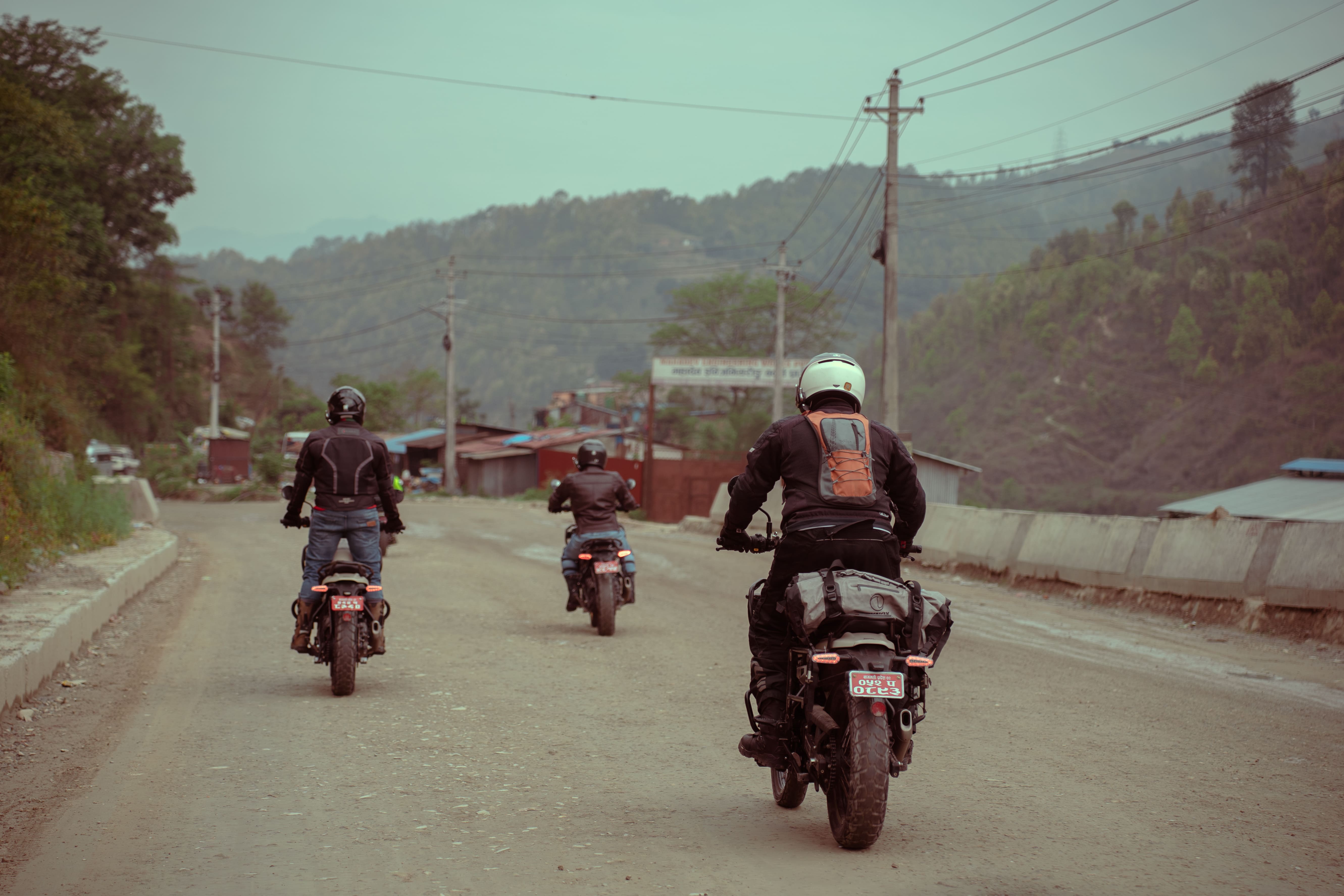
This is the foundational misunderstanding that most other mistakes grow from.
Foreign riders who have done alpine touring in Europe, mountain routes in the American West, or even parts of the Indian Himalaya arrive with a picture of what Himalayan road riding looks like: dramatic scenery, challenging passes, rough in places, but fundamentally a road environment.
Nepal's route toward Upper Mustang is not that.
From Pokhara northward, asphalt becomes progressively less relevant. By the time you cross Kagbeni into the restricted zone, the sealed road is a memory. What replaces it is a terrain corridor — a designated direction of travel across loose gravel, sand, rocky riverbeds, hard-packed dirt, and wind-scoured plateau that changes character every few kilometres without warning.
The problem isn't any single section. It's the absence of the consistency that highway riding trains you to expect. Surface reading — constant, active assessment of what the ground is doing right now and what it's likely to do next — matters more than speed, more than horsepower, and more than most of the skills that experienced road riders have developed.
The fix: Recalibrate before you leave Pokhara. You are not doing a road tour through mountains. You are doing an off-road expedition that passes through towns. The distinction changes everything about how you pace, position, and manage the bike.
Mistake 2: Starting Too Late in the Morning
This is the mistake that experienced guides spend the most time correcting, and the one that riders resist most stubbornly because it conflicts with normal travelling logic.
In the Kali Gandaki valley — the corridor you ride through from Tatopani northward toward Jomsom and beyond — afternoon wind is not a weather event. It is a daily environmental feature as reliable as the sunrise that precedes it. From roughly midday onwards, crosswinds build through the valley. By early afternoon on exposed plateau sections, those winds are strong enough to push a fully loaded adventure bike sideways off its intended line.
Foreign riders typically start their riding day between 8:30 and 10:00 AM, reasoning that they have daylight and that's what matters. By noon they're on exposed sections fighting conditions that an earlier start would have let them ride through in calm.
The experienced Upper Mustang rider's day looks like this: alarm at 5:30, riding by 6:30 or 7:00, difficult exposed sections completed before 11:00, lunch stop in a village, afternoon for exploration, rest, and preparation for the next day. It feels aggressive until you experience what 2:00 PM wind on the Ghami plateau actually feels like — at which point it becomes a non-negotiable habit.
The fix: Accept early starts as an operational requirement, not a preference. Your guide will enforce this on a well-run expedition. If you're inclined to negotiate, spend one afternoon fighting headwinds on an exposed section first. The lesson is persuasive.
Mistake 3: Bringing the Wrong Bike
The wrong bike for Upper Mustang is not necessarily a bad bike. It is a bike that was designed for a different purpose — and that mismatch costs you in ways that compound daily.
Heavy touring bikes (800cc and above): The weight that makes a large adventure tourer comfortable on long tarmac days becomes a serious liability on loose terrain. Recovering a fallen heavy bike at altitude — where your own physical capacity is already reduced — is a significant effort. Manoeuvring through narrow rocky sections requires constant physical input that a lighter bike handles easily.
Street-focused adventure bikes with road-biased tyres: The traction profile of road-optimised rubber is fundamentally wrong for the surface variability above Kagbeni. The first deep sand section will demonstrate this more clearly than any description.
Overloaded luggage setups: Hard panniers that extend the bike's width become a problem on narrow cliffside tracks where jeep clearance is measured in centimetres. Rear-heavy loading changes the bike's handling on loose descents in ways that require constant compensation.
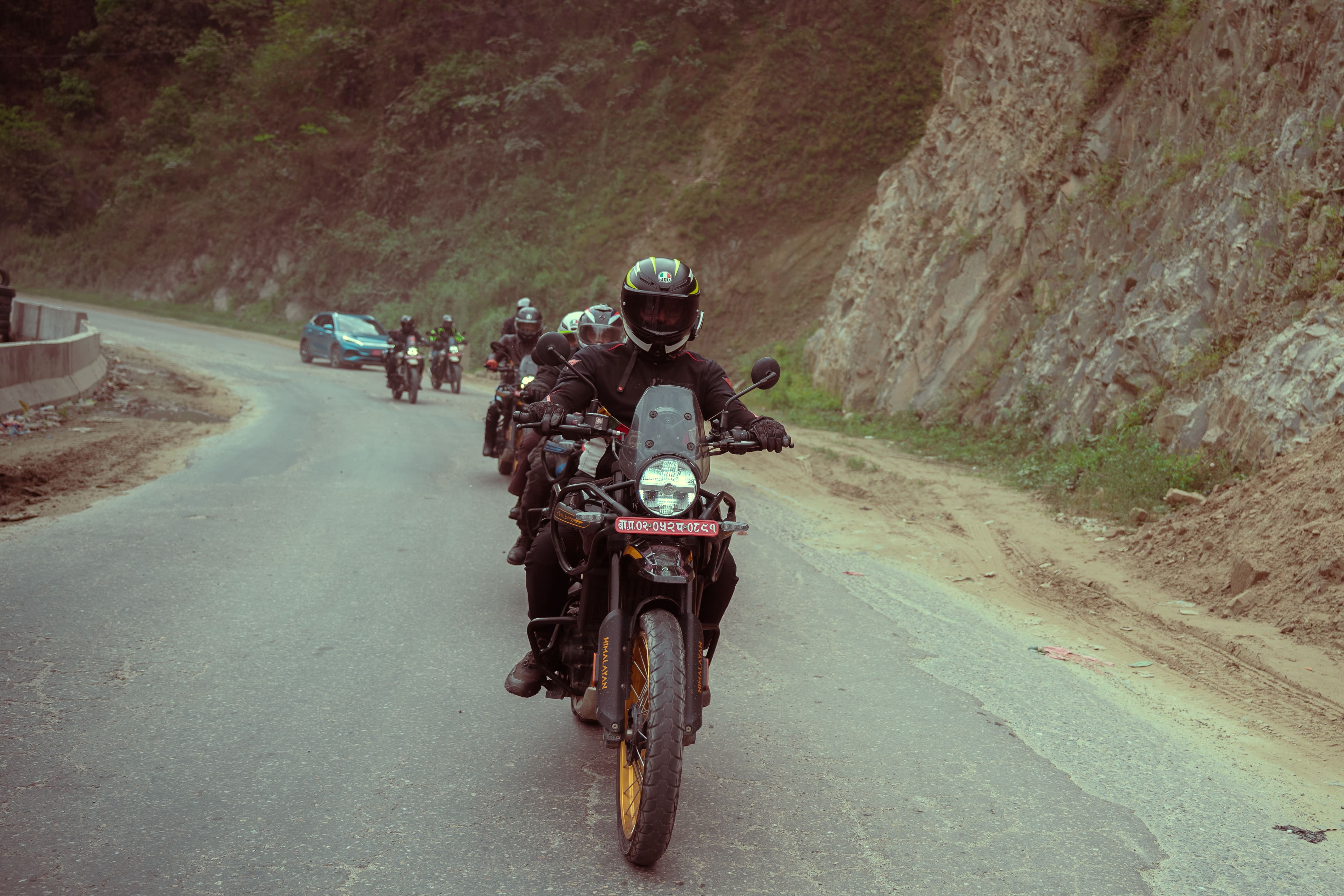
The sweet spot for this terrain: a 250cc–450cc dedicated adventure bike with off-road biased tyres, manageable weight, and luggage configured as centrally and compactly as possible. Royal Enfield Himalayan, Honda CRF 300L, Hero Xpulse 200, and comparable bikes are consistently well-proven on this route.
The fix: If you're hiring a bike through your operator, specify that you want something appropriate for the Upper Mustang terrain specifically — not a general-purpose hire bike. Nepal Moto Tours runs their Upper Mustang expeditions on terrain-appropriate bikes as standard, which removes this variable entirely for riders using their fleet.
Mistake 4: Ignoring Altitude Fatigue Until It Forces Itself on You
Altitude sickness gets the most coverage in pre-trip reading. Altitude fatigue — which is different, subtler, and more consistently relevant — gets almost none.
By the time you reach the higher sections of the route — above 3,000 metres on the approach to Kagbeni, and certainly by Lo Manthang at 3,840 metres — your body is working meaningfully harder than at sea level just to maintain baseline function. This is not dramatic. It doesn't feel like gasping. It feels like a persistent low-level drain.
Reaction time slows. Line-choice judgement degrades. The mental processing that good off-road riding requires — constant surface reading, hazard assessment, speed management — happens slightly more slowly and slightly less accurately. You don't notice this directly. You notice it when you make a small error on a section you'd have handled confidently at lower altitude.
The compounding factor: poor sleep at altitude (which is near-universal for the first few nights above 3,000m) means each riding day begins with a deficit. Riders who push long days at altitude without pacing or rest stops accumulate that deficit rapidly. By day five or six, it becomes visible in their riding — in slow reactions, missed lines, and the kind of low-speed drops that happen when a rider is operating past their functional capacity.
The fix: Acclimatise properly before entering the restricted zone. Spend at least two nights in Pokhara at 820m before heading north. Take the ascent from Jomsom to Lo Manthang at a genuinely unhurried pace — not because the terrain demands it, but because your physiology does. Build rest stops into your daily riding rhythm regardless of whether you feel like you need them. At altitude, the need arrives before you recognise it.
Mistake 5: Overpacking and Poor Luggage Distribution
Nepal's off-road terrain punishes excess weight and poor weight distribution in concrete, daily ways.
The most common packing failures: hard-sided panniers that add significant width to the bike on sections where width is the margin between safe passage and a cliffside incident; gear packed "just in case" that adds three kilograms without adding any genuine expedition capability; and rear-heavy loading that shifts the bike's weight balance away from the front wheel precisely when you need front-end grip on loose descents.
The practical consequences are real. A rear-heavy bike on a loose gravel descent develops understeer that requires constant throttle and brake management to control. Hard panniers on a narrow cliffside track — with a jeep coming the other direction — require a level of precision manoeuvring that a narrower setup handles easily. And the physical effort of managing an overloaded bike on a full riding day at altitude compounds fatigue in ways that a lighter setup does not.
The fix: Pack for function, not contingency. The legitimate Upper Mustang packing list is shorter than most riders expect: appropriate layers for temperature swings, waterproofs, basic first aid, essential tools, and riding gear. Everything else is weight you're carrying for psychological comfort rather than practical need. Soft luggage mounted centrally and balanced left-right performs better than hard cases in this terrain.
Mistake 6: Applying Foreign Traffic Logic to Nepal Roads
This one creates anxiety and occasionally creates incidents.
Traffic in Nepal — particularly in Kathmandu and on the highway sections south of Pokhara — does not operate on the rules that foreign riders are trained to expect. There is no consistent lane discipline. Overtaking happens when gaps appear, not when formal rules permit it. Horns are active communication tools, not expressions of frustration. Larger vehicles have practical priority regardless of what road markings suggest.
Foreign riders who try to enforce their home-country traffic logic in this environment create friction. They brake for situations that local traffic reads as normal. They hesitate at junctions where flow-based movement expects continuation. They misread the communication intent of horns and close passes.
The riders who adapt fastest are those who stop trying to control the traffic environment and start reading it — understanding that what looks chaotic from a rule-based perspective is actually a consistent flow logic that rewards observation over assertion.
The fix: Spend your first hour in Kathmandu traffic observing before participating. Watch how local riders move — their position choices, their horn use, their relationship to larger vehicles. You're not adopting dangerous practices. You're learning to read a different traffic language that is internally consistent once you understand its grammar.
Mistake 7: Underestimating Jeep Traffic on Narrow Sections
Above Besisahar and throughout the Upper Mustang corridor, the roads are shared with local jeeps, supply vehicles, and tourism transport. The dynamic is unlike anything most foreign riders have experienced.
These drivers know every centimetre of the track. They move with confidence and speed that seems aggressive given the surface conditions. On narrow cliffside sections, they do not slow down early for approaching motorcycles. They expect the motorcycle to find a position and hold it.
The mistake foreign riders make is assuming that smaller vehicles have priority or that the other vehicle will adjust. Neither is reliably true. Jeeps supply villages. Jeep drivers work this road daily. You are the variable — the less-experienced participant in a narrow logistics corridor — and the appropriate response to that reality is awareness and deference, not assertion.
The fix: On any section where width is limited, position early on the inside and reduce speed before you can see around corners. The question is not whether you'll encounter a jeep on a narrow section — you will — but whether you encounter it having already made space, or having to make it urgently.
Mistake 8: Poor Hydration and Nutrition Strategy
Dehydration at altitude is faster and less obvious than at sea level. The dry desert air of Upper Mustang — the region sits in a Himalayan rain shadow — accelerates fluid loss through respiration alone, before the physical demands of riding are factored in.
The typical foreign rider's approach: drink when thirsty, eat at mealtimes, treat stops as rest rather than recovery. At sea level this is adequate. At 3,000–3,800 metres on an off-road riding day, it results in progressive dehydration and caloric deficit that erodes concentration and physical performance faster than most riders recognise.
By the time you feel significantly thirsty at altitude, you are already meaningfully dehydrated. By the time fatigue feels notable, it has likely been affecting your riding for the preceding hour.
The fix: Drink 500ml of water before you start riding each morning. Carry a hydration system or water bottle accessible while riding. Eat at every stop, even when appetite is reduced by altitude (which is common and normal). Treat nutrition and hydration as active performance management, not passive comfort.
Mistake 9: Using Highway Distance Logic for Terrain Time
This mistake creates daily frustration and, more dangerously, pressure to push pace in deteriorating conditions.
Highway logic: 200 kilometres equals four or five hours of riding. On Nepal's Upper Mustang terrain, 80 kilometres can equal a full riding day. The variables that highway logic ignores — surface variability, sustained technical attention, permit checkpoints, wind windows, and the slower progress of loaded adventure bikes on rocky climbs — add up to a time-per-kilometre ratio that bears no relationship to sealed-road experience.
Riders who plan based on distance rather than terrain time consistently find themselves making one of two bad decisions: stopping short of their planned destination and adding pressure to the following day, or pushing through deteriorating afternoon conditions to make up distance — which is when accidents happen.
The fix: Plan by terrain time, not distance. Your guide's daily stage estimates are based on this route's actual time requirements, not theoretical distance capability. Trust those estimates. If your first instinct is "that's only 60km, we can do more," hold that instinct until you've ridden the first day. The terrain will recalibrate your expectations more effectively than any written description.
Mistake 10: Ignoring Weather Windows and Riding Through Peak Wind Hours
Upper Mustang's wind is not a weather event — it is a daily environmental system. The Kali Gandaki valley is one of the strongest natural wind corridors in the Himalayan region, and afternoon winds on exposed plateau sections above Kagbeni regularly reach speeds that meaningfully affect motorcycle stability.
Riders who dismiss the wind timing advice — who reason that they can push through if they ride fast enough, or that the conditions don't look that bad from the lodge at 11:00 AM — consistently report the afternoon plateau sections as the most physically draining and technically demanding riding of the entire expedition. Not because the terrain is hardest there, but because fighting crosswind for two hours at altitude drains reserves that you need for the days ahead.
The fix: Treat the morning riding window as a non-negotiable operational constraint. Difficult exposed sections before noon, shelter and rest in the afternoon. This is not caution — it is the experienced rider's practical response to a well-understood environmental pattern.
Mistake 11: Assuming Emergency Support Will Be Available
This is the psychological gap that most consistently surprises foreign riders on their first Upper Mustang expedition.
In most developed-world riding environments, a mechanical failure or accident triggers a response chain: a phone call, a recovery vehicle, a hospital within reasonable distance. The entire planning and pacing logic of normal adventure touring is built on the assumption that this chain exists.
Between Kagbeni and Lo Manthang, it does not exist in any reliable form. There are no motorcycle workshops. Medical facilities are basic health posts at best, with genuine emergency capacity requiring evacuation to Pokhara. Mobile signal is absent for significant stretches. Helicopter evacuation — the primary emergency response option — is weather-dependent and takes time to coordinate even with proper insurance and a clear sky.
This is not meant to alarm. It is meant to reframe self-sufficiency from a nice-to-have into an operational necessity. Carry a basic repair kit and know how to use it. Carry adequate first aid. Carry your insurance documentation and emergency contact numbers on your person. Plan as if support is not coming, and treat its availability as a welcome surprise rather than an expectation.
The fix: Before the trip, verify you have adequate travel insurance with helicopter evacuation coverage — the single most important financial protection for this expedition. Our Motorcycle tour in Nepal operates with guide support and established emergency networks, which meaningfully reduces — but does not eliminate — the self-sufficiency requirement.
Mistake 12: Over-Riding Instead of Adapting
This is the hardest mistake to address in a pre-trip guide, because it describes a mindset rather than a specific behaviour.
Over-riding on the Upper Mustang route means continuing to apply effort and aggression where the terrain requires patience and reading. It means pushing speed on loose gravel because it feels controllable. It means grinding through fatigue signals because stopping feels like falling behind. It means treating difficulty as something to overcome through commitment rather than something to navigate through adjustment.
Nepal's mountain terrain does not reward this approach. It punishes it — not dramatically, but consistently. Riders who push surface variability accumulate small errors that occasionally become larger ones. Riders who ignore fatigue signals ride the later hours of long days at degraded capacity. Riders who treat poor visibility as something to push through rather than a reason to stop put themselves in scenarios where reaction time determines the outcome.
The riders who have the best experience on this route — who arrive at Lo Manthang feeling genuinely capable rather than depleted — are uniformly those who learned to adapt early. Slower speeds on unstable surfaces. Deliberate rest stops regardless of schedule pressure. Weather windows respected. Terrain read rather than overpowered.
The fix: Make adaptation a conscious decision before the first day of riding. Decide in advance that slow, accurate, and responsive is the riding style this route rewards — and commit to it before the conditions force it on you.
The Common Thread: Assumption Is the Real Hazard
Read back through these twelve mistakes and one pattern is visible in almost every one: a rider applying a framework from a different riding environment to a context where that framework doesn't hold.
Upper Mustang does not operate on highway logic, predictable infrastructure, consistent traction, or reliable support. It operates on terrain, weather, altitude, and constant change. The riders who thrive on this route are not necessarily the most technically skilled — they are the most genuinely adaptable, the most willing to let the environment set the terms rather than imposing their own expectations onto it.
That adaptability is learnable. But it requires honest pre-trip self-assessment about which of these mistakes your current riding habits make you most susceptible to — and deliberate preparation to address those gaps before Kagbeni exposes them for you.
Planning your Kathmandu to Upper Mustang ride? Nepal Moto Tours runs fully guided Upper Mustang expeditions with experienced local guides who manage daily pacing, weather windows, and terrain decisions — removing the most common sources of over-riding and assumption-based mistakes. See our full tour tour range or explore the Annapurna Circuit Motorbike Tour as the ideal preparatory ride before committing to the Upper Mustang expedition.