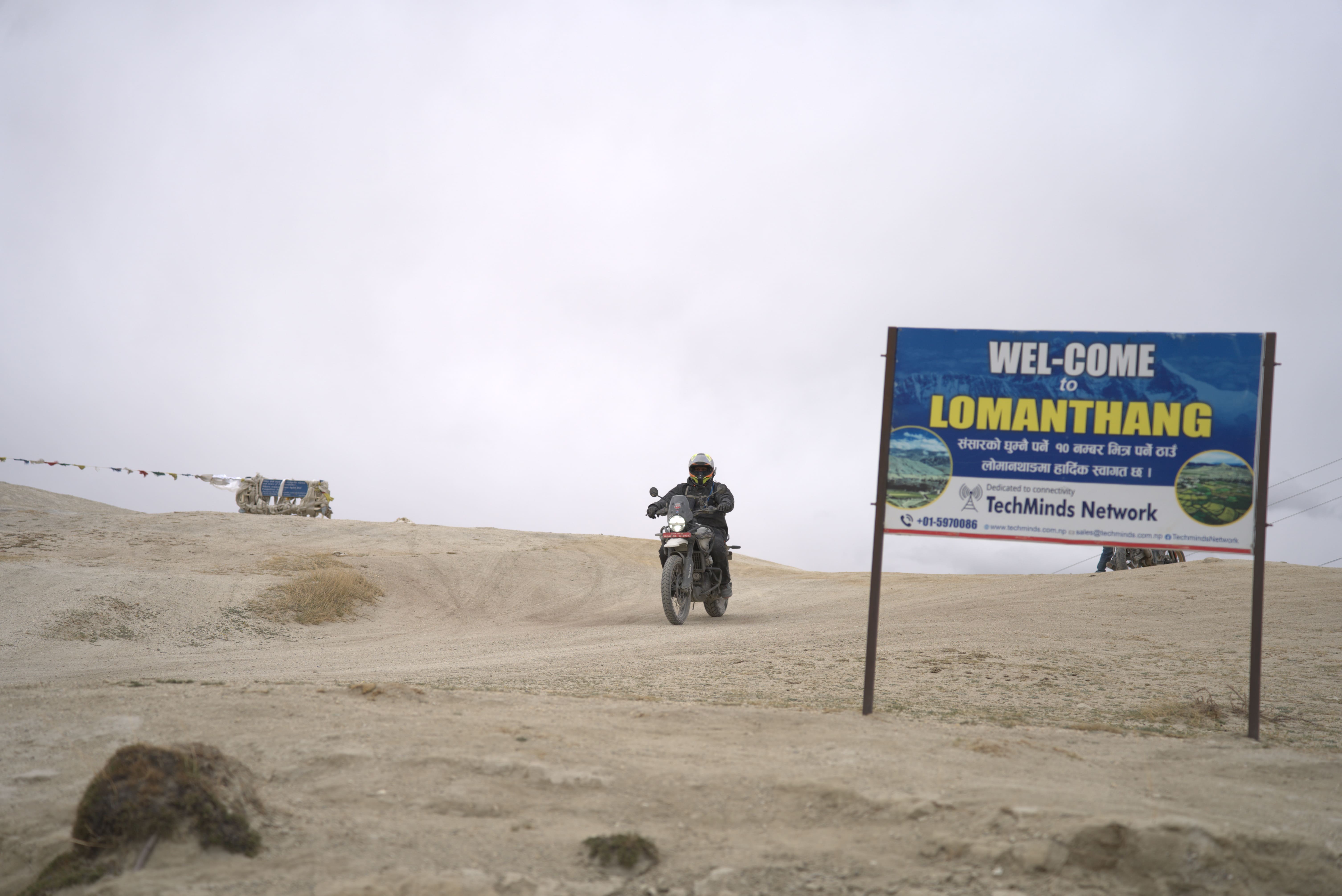
Most tour operators mention the Upper Mustang Restricted Area Permit in a single line buried in their FAQ. Pay this amount. Permit sorted. Move on. That brevity costs foreign motorbike riders real money, real confusion at checkpoints, and in some cases, a hard stop at Kagbeni with an illegal entry attempt they didn't know they were making.
This guide covers everything that actually matters about the RAP in 2026 — including the cost structure change, the rules that cannot be negotiated away, and the practical realities of how the permit system works on the ground.
If you're planning an motorbike adventure in Nepal, especially, Upper Mustang, understanding the RAP is not optional background reading. It defines your budget, your itinerary, and the legal terms of your entire journey beyond Kagbeni.
What Is the Upper Mustang Restricted Area Permit?
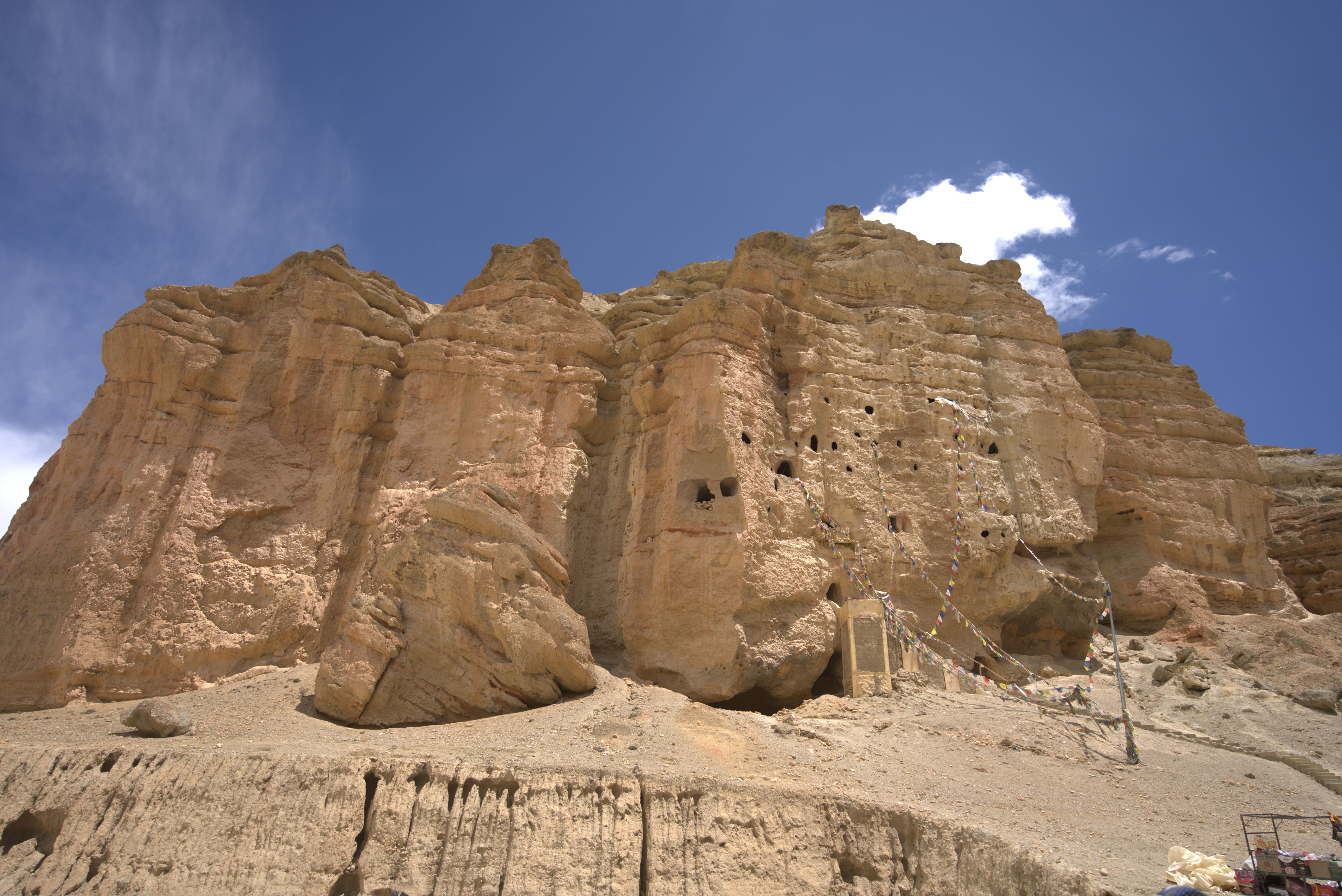
The Restricted Area Permit (RAP) is a government-issued document that authorises foreign nationals to enter Upper Mustang beyond the Kagbeni checkpoint. It is issued by Nepal's Department of Immigration and administered through registered trekking and motorcycle tour agencies.
The permit exists for three interconnected reasons that are worth understanding, not just acknowledging:
Ecosystem protection. Upper Mustang is a high-altitude Himalayan desert with genuinely fragile ecology. The rain-shadow environment, which is what keeps it visually spectacular and culturally distinct, is also what makes it vulnerable to unregulated visitor pressure. Footfall limits are part of the conservation logic.
Cultural preservation. The region is a living Tibetan-influenced Buddhist kingdom — Lo Manthang is still home to the King of Mustang's palace, and many villages maintain centuries-old traditions that have survived partly because the area remained closed to outsiders until 1992. The permit system is one mechanism for managing cultural exposure.
Geopolitical sensitivity. Upper Mustang shares a border with Tibet (administered by China). The restricted status of the zone is not purely ecological or cultural — it reflects a border-proximity control logic that the Nepalese government maintains regardless of tourism policy shifts elsewhere.
Understanding these reasons matters practically, because they explain why the regulations are enforced with consistency — there is no pressure-release valve, no unofficial workaround, and no argument that gets you past a checkpoint without valid documents.
Where the Restricted Area Actually Begins
This is one of the most commonly misunderstood aspects of the Upper Mustang permit system, and it matters specifically for motorbike riders who are mapping their route.
The RAP zone begins immediately north of the Kagbeni checkpoint.
Everything south of Kagbeni — including Pokhara, Beni, Tatopani, Jomsom, and Kagbeni itself — falls under a different permit system: the Annapurna Conservation Area Permit (ACAP). The ACAP covers the entire Annapurna conservation zone and costs approximately NPR 3,000 (roughly USD 22–25) for foreign nationals.
So in a single Upper Mustang motorbike tour, you actually pass through two distinct permit systems:
- ACAP zone: Pokhara → Jomsom → Kagbeni (unrestricted, standard tourism)
- RAP zone: Kagbeni checkpoint → Lo Manthang and interior villages (restricted, controlled entry)
The distinction matters because riders sometimes arrive at Kagbeni with only ACAP documentation and believe they're compliant. They are not. ACAP gives you access to the approach corridor. RAP gives you access to the Upper Mustang itself. Without RAP, the checkpoint stops you — firmly, and without exceptions.
The 2026 RAP Cost Structure: What Has Actually Changed
This is the section that most agencies haven't updated, and where riders most often encounter surprises.
The Old System
For years, Upper Mustang operated on a flat-fee RAP structure: USD $500 per person for the first 10 days inside the restricted zone. You paid $500 regardless of whether you stayed 4 days or 10. Days beyond 10 were charged additionally.
This system had an obvious problem for short expeditions and flexible-itinerary motorcycle tours: a 5-day crossing still cost the same as a 10-day immersive exploration.
The Current System (2025–2026)
The Nepalese government has shifted to a daily rate model: USD $50 per person, per day spent inside the Upper Mustang restricted zone.
The practical implications:
|
Days Inside RAP Zone |
Cost Per Person |
|
2 days |
$100 |
|
3 days |
$150 |
|
4 days |
$200 |
|
5 days |
$250 |
|
7 days |
$350 |
For motorcycle tours, most itineraries plan 5–8 days inside the restricted zone depending on the route and pace. At the current rate, the realistic RAP cost for most riders falls between $150 and $250 per person.
Why This Change Matters for Motorbike Tour Planning
The shift to daily-rate pricing changes how itinerary design affects cost. Under the old flat-fee system, there was no financial incentive to move efficiently through the zone — you'd paid for 10 days whether you used them or not. Under the per-day model, every idle day inside Upper Mustang adds $50 per person to the bill.
This creates a direct relationship between riding pace, weather-related delays, and total permit cost. A rest day at Lo Manthang that was costless under the old system is now a concrete line item. Riders who plan smart, move efficiently, and account for weather windows will spend less than those who build in generous buffer days.
Who Can Get the RAP and Who Cannot Apply Alone
This is the rule that catches the most riders off guard, particularly independent travellers accustomed to handling their own documentation.
Foreign nationals cannot apply for the Upper Mustang RAP individually. The permit must be arranged through a licensed, registered Nepalese trekking or motorcycle tour agency. There is no government portal where a foreign rider can self-apply.
Additionally, a minimum of two foreign travelers is required per application. Solo foreign riders cannot obtain the RAP under the current regulations regardless of experience level, guide arrangement, or any other factor.
Combined requirements:
- Processed through a registered Nepal agency (no exceptions)
- Minimum two foreign travelers per application
- Licensed local guide is mandatory (not optional, not a recommendation)
- All documentation submitted before arrival at Kagbeni
- Permit issued by the Department of Immigration, Kathmandu
This is why every legitimate Upper Mustang motorbike tour operates as a guided, organised expedition — it's not just a preferred format, it's the legal requirement. If you're planning to ride Upper Mustang, you are booking a guided tour with an agency. There is no alternative route for foreign nationals.
If you want to understand how this works in practice on a fully organised ride, Our Upper Mustang Motorbike Tour handles all permit processing, guide coordination, and documentation as part of the expedition — which is exactly why experienced riders choose a specialist operator rather than attempting to navigate the permit system independently.
Documents Required for the RAP Application
Your agency will handle the submission process, but they will need the following from each rider:
Personal documents:
- Valid passport with minimum 6 months validity beyond your Nepal travel dates
- Current Nepal visa (obtained on arrival or in advance)
- Passport-sized photographs (typically 2–4, confirm with your agency)
Trip documentation:
- Confirmed itinerary inside the restricted zone
- Agency booking confirmation
- Guide name and registration details
For motorbike-specific tours:
- Vehicle registration or rental documentation
- Group composition with minimum two foreign nationals confirmed
The cleaner and more organised your documentation submission, the faster permit processing moves. Delays at the agency almost always trace back to incomplete paperwork from riders, not government processing times.
What the RAP Actually Controls (Beyond the Fee)
Most riders think of the RAP as a payment receipt. It is more accurately a movement regulation document with several distinct functions.
Entry and Exit Logging
Your entry into the RAP zone at Kagbeni is recorded. Your exit is recorded. The duration between those two events is the basis for your permit cost calculation under the daily-rate system. This is not an honour system — checkpoints log your passage.
Route Corridor Control
The RAP authorises travel on specific Upper Mustang corridors. It does not grant open access to the entire region. Exploration of areas outside the permitted corridors requires additional authorisation. This is relevant for motorcycle riders who might identify tracks not on the standard itinerary — riding them without appropriate authorisation is a permit violation.
Guide Compliance
The mandatory guide requirement is enforced within the zone, not just at entry. Checkpoint logs will include your guide's details, and riding without your guide beyond the permitted entry point is a compliance failure, not a minor administrative lapse.
Understanding these control layers is what separates riders who plan their Upper Mustang itinerary correctly from those who find the system more restrictive than they expected once they're inside it.
The Real Total Cost: Beyond the RAP Fee
The RAP is the most prominent permit cost but not the only one. Foreign riders planning their budget should account for the full stack:
|
Cost Item |
Approximate Amount (USD) |
|
RAP (3 days, example) |
$150 per person |
|
ACAP permit |
~$22–25 per person |
|
TIMS card (Trekkers' Info Management) |
~$10–20 per person |
|
Mandatory licensed guide fee |
Variable (agency-dependent) |
|
Accommodation inside restricted zone |
Variable, limited options |
|
Fuel (limited availability beyond Jomsom) |
Plan carefully — carry extra |
The total permit-and-compliance cost for a 3-day Upper Mustang expedition sits in the $150–$180 per person range before guide fees, accommodation, and logistics.
Riders who budget only the RAP fee and arrive underprepared for the full cost stack are consistently surprised. Plan the full number from the beginning.
The Kagbeni Checkpoint: What Actually Happens
The entry process at Kagbeni is procedurally straightforward. What matters is that everything is in order before you arrive — there is no fix-it-at-the-checkpoint option.
The typical checkpoint flow:
- Passport presented and cross-referenced against permit
- Agency representative presents RAP documentation (your guide handles this)
- Entry date, time, and party details logged in official register
- Motorbike details recorded if applicable
- Entry authorised — riders proceed north into the restricted zone
The checkpoint process itself takes 15–30 minutes for a properly documented group. If documentation is incomplete, incomplete permits are held for correction, which can mean waiting in Kagbeni while your agency resolves the issue remotely. This has happened. It is avoidable entirely by using a reputable operator who processes permits correctly the first time.
Common Mistakes Foreign Riders Make With the RAP
Assuming Lower Mustang rules apply to Upper Mustang. Lower Mustang — the area around Jomsom, Marpha, and Tukuche — is not a restricted zone and requires only ACAP. Many riders who have done the Lower Mustang run assume the same documentation applies further north. It does not. Beyond Kagbeni, the permit system is entirely different.
Trying to extend stays informally. Under the daily-rate system, extending your time inside the restricted zone isn't just a logistics question — it directly increases permit cost and requires documentation update. You cannot simply stay an extra day beyond your registered duration. Extensions need agency coordination and cost an additional $50 per person per day.
Booking with operators who don't handle permits correctly. This is a real risk in the Nepal motorcycle tour market. Some operators advertise Upper Mustang tours at low prices and handle permit processing carelessly or late. Riders arrive at Kagbeni with incomplete documentation. Always confirm, explicitly, that your operator has processed RAP before you leave Pokhara heading north.
Underestimating lead time. RAP processing through the Department of Immigration is not instant. Reputable agencies submit applications well in advance. Last-minute bookings — particularly anything less than 2 weeks before departure — create genuine permit risk. Earlier is better, always.
Why the Permit System Makes Upper Mustang What It Is
This is worth stating plainly, because some riders arrive frustrated by the restriction layer and the cost.
The RAP system is directly responsible for the qualities that make Upper Mustang exceptional as a riding destination.
Visitor numbers are controlled. The roads beyond Kagbeni are not overrun with tourist traffic. The villages you ride through have not been commercialised into performance versions of themselves for mass tourism. Lo Manthang is genuinely inhabited by people living in a way that has continuity with how their ancestors lived for centuries.
None of that survives open access. Nepal has open-access trekking zones that demonstrate exactly what unrestricted tourism does to fragile high-altitude communities over a decade or two.
The $50 per day you pay for the RAP is not just a permit fee. It is the financial mechanism that controls the volume of visitors — which directly preserves the experience you came for.
Riders who understand this stop resenting the cost. It is, in a straightforward sense, what you're paying for.
Planning Your Itinerary Around the RAP System
Since cost is now directly tied to days inside the zone, itinerary design has become a genuine part of budget management for Upper Mustang motorbike tours.
Efficient approaches experienced operators use:
Enter the restricted zone ready to ride. Don't waste days acclimatising inside the RAP zone if you can acclimatise in Jomsom (which is outside the restricted zone at 2,720m) before crossing into Kagbeni. A night or two in Jomsom costs nothing extra permit-wise and can meaningfully reduce altitude adjustment time inside the paid zone.
Plan around weather windows, not buffer days. The primary reason for unexpected extra days inside Upper Mustang is wind-related delays on exposed plateau sections. Experienced guides know the weather patterns. Trust their routing advice — it directly affects your cost.
Lo Manthang deserves at least 2 nights. Don't race through the destination to save permit cost. The walled city, sky caves, and surrounding villages are what the entire journey is for. Budget for 2 nights minimum at Lo Manthang within your daily cost planning.
For a fully guided expedition that handles all of this — permits, daily routing, weather management, and Lo Manthang time — the Upper Mustang Expedition 2026 is worth reviewing as a baseline for how a well-structured itinerary handles the restricted zone efficiently.
Frequently Asked Questions
Can I get the RAP permit myself without an agency?
No. Foreign nationals cannot apply individually. The RAP must be processed through a registered Nepalese trekking or motorcycle tour agency. There is no self-application option.
Is the $50/day rate confirmed for 2026?
The shift to the daily-rate model was confirmed in updated permit notices for 2025–2026. The $50 per person per day rate reflects the current government structure. Always confirm current rates with your agency at the time of booking, as government fee structures can be adjusted.
What happens if my expedition runs longer than planned?
Overrunning your permitted duration inside the restricted zone is a compliance issue, not just a cost one. If weather or mechanical issues force an extension, your guide and agency must coordinate an extension request. This is not a self-service process. It is another reason why riding with an experienced guided operator — rather than attempting independent arrangements — matters for practical management of the unexpected.
Can I ride the Upper Mustang without a guide if I have the permit?
No. The mandatory licensed guide requirement is a condition of the RAP, not a separate optional service. A permit without a guide is a non-compliant permit.
Is the RAP refundable if I can't complete the journey?
Generally no. The RAP is a government-issued permit, not a tour package. Refund arrangements depend on your agency's terms, not the government. Confirm your agency's cancellation and partial-completion policy before booking.
The Bottom Line
The Upper Mustang Restricted Area Permit is not a bureaucratic inconvenience layered on top of a great ride. It is the structural mechanism that makes the ride worth doing.
The 2026 daily-rate system at $50 per person per day means your itinerary now has a direct cost relationship — plan efficiently, move purposefully, and the per-day cost becomes a framework for a better-designed expedition, not just a bill.
The rules — minimum two foreign travelers, mandatory agency processing, licensed guide requirement — are non-negotiable and consistently enforced. Work within them through a reputable operator and they become entirely straightforward.
Work outside them, or assume the rules are softer than stated, and you stop at Kagbeni. Every time.
Plan properly, budget the full cost stack, and the RAP becomes exactly what it should be: the entry point to one of the most extraordinary restricted-access motorcycle routes on earth.
Planning your Upper Mustang ride? Nepal Moto Tours handles the full permit stack — RAP, ACAP, guide coordination, and checkpoint documentation — for their guided Upper Mustang expeditions. Check our full tour listings or get in touch directly to discuss your 2026 dates.