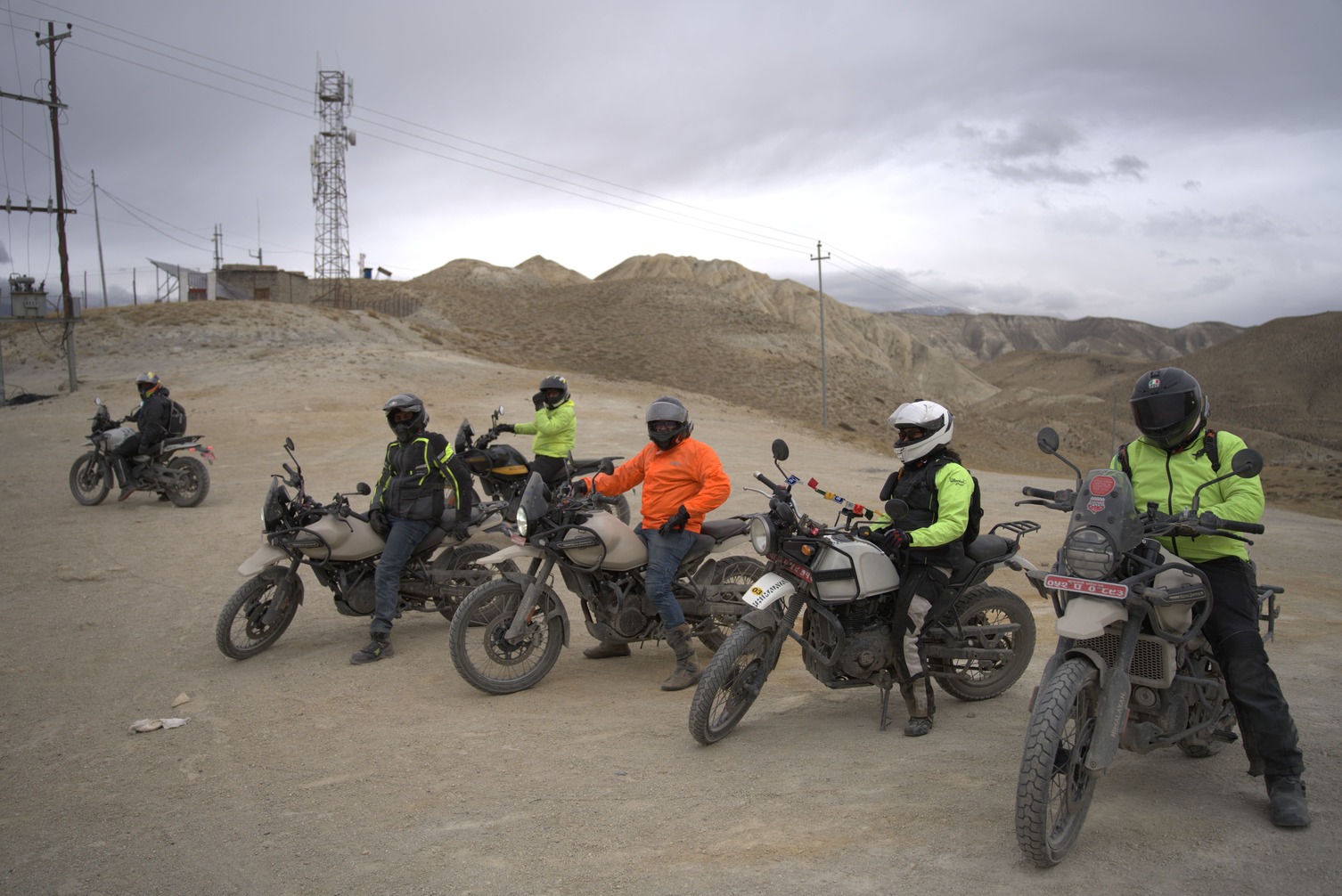
Nothing can beat the thrill of riding a motorbike into the forbidden kingdom of Upper Mustang, but while on that adrenaline rush, one can easily forget that this rain-shadow region lies well above 2,800 m. This means the threat of altitude sickness in the Upper Mustang remains a serious concern for every traveller visiting the region.
In fact, bikers are at a greater risk of altitude sickness than trekkers. Trekkers gain elevation slowly over multiple days in the Mustang, whereas bikers reach high altitudes within hours, which significantly reduces the body’s ability to adjust. Furthermore, helmets and riding gear can make it harder for bikers to notice the early symptoms of altitude sickness.
Which is why, compared to normal trekkers, it becomes absolutely essential for bikers to understand altitude sickness, and this guide explains just that.
From what altitude sickness is to why there is a bigger threat of it in Upper Mustang and what symptoms to look out for, we will cover everything in absolute detail. By the end of this blog, you will have a complete grasp of the prevention strategies that are dedicated to the riders. Besides that, we will also give you a little glimpse of the acclimatization process we follow during our Upper Mustang trip, the emergency response system that we have and the best expedition practices followed by us for every journey.
Now, without any further ado, let’s dive into what altitude sickness is.
Understanding Altitude Sickness in Upper Mustang
To put it simply, altitude sickness is a condition where the body struggles to cope with the lower oxygen levels available in high elevations.
As all of us already know, the air becomes thinner and thinner as we go higher and higher. This means each breath of ours becomes heavier as it delivers less oxygen to our bodies. And this becomes the reason why we acclimatize because proper acclimatization gives your body an ample amount of time to adapt to the changing environment.
However, when a person ascends too quickly without giving the body enough time to adapt, the lack of oxygen begins to affect normal functioning, which leads to discomfort and, in many cases, altitude sickness.
Talking from the perspective of Upper Mustang, altitude sickness remains one of the major threats because the whole region lies well above 2800 meters. From the moment riders enter the area, they are already at a height where oxygen levels are lower than in places like Kathmandu and Pokhara. As a matter of fact, as you move higher in regions like Lo Manthang, the elevation reaches about 3,800 m, and this means the bigger threat of altitude sickness is always around the corner.
What Altitude Levels Do You Reach During the Ride To Upper Mustang?
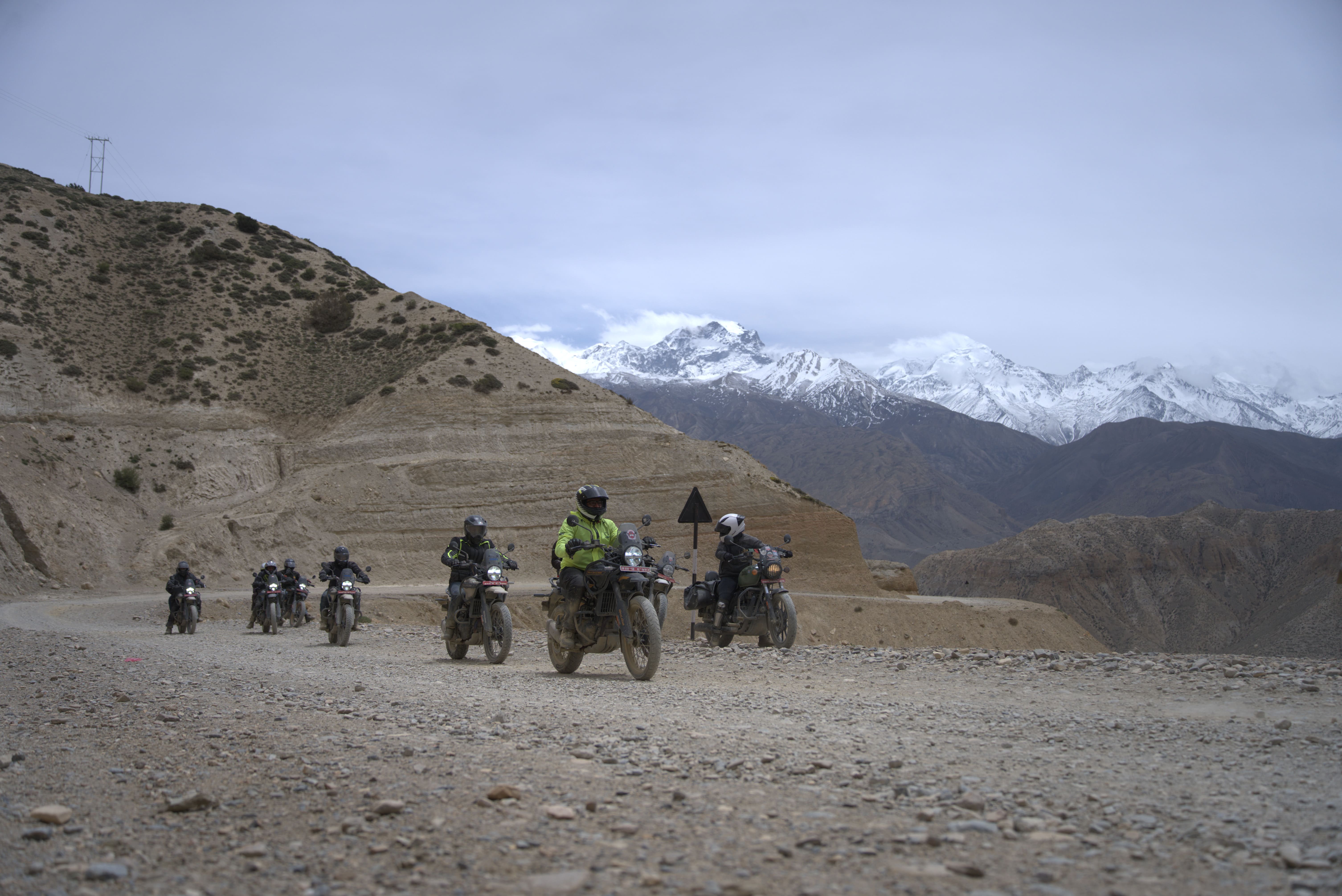
There is no doubt that the motorcycle tour to Upper Mustang is one of the most breathtaking rides in Nepal. A journey that typically starts from Pokhara and moves north towards the Kali Gandaki Valley, and finally reaches Lo Manthang. Sounds heavenly, right?
But this heavenly ride also comes with significant altitude changes along the way. In fact, the only region where there exists no threat of altitude sickness is Pokhara, as it sits at just around 800 meters above sea level. Since the oxygen levels are normal, there is no risk of altitude sickness at this level.
But then your journey takes you to Jomsom, which is at about 2700 meters. On a single day, you gain an elevation of about 2100 meters, and for riders, it happens in a matter of hours. And the air becomes noticeably thinner, but the threat of altitude sickness is not yet serious. However, if this is your first trip to the mountainous region, then you might have to face some difficulty.
From Jomsom, the journey continues towards Kagbeni, which lies at around 2,800 meters. While the elevation gain is just around 100 meters, this region is the threshold for serious AMS risks, which means if you haven’t properly acclimatized in Jomsom, then you will be at risk of altitude sickness.
After Kagbeni, you enter the main region of Upper Mustang, and the elevation continues to rise. On the way, you will find beautiful villages like Chele and Ghami, which sit between 3000 and 3500 meters. From there, you move toward our main destination, Lo Manthang, at 3,800 meters. Since the riders are well above the threshold of altitude sickness, throughout this journey, you stand at a greater risk of getting affected by it.
Besides the elevation risk, riding a motorbike in Upper Mustang requires a greater physical hardship. Since you will be on an adrenaline rush, you mightn’t feel it at first, but stress collected from the cold wind and the reduced oxygen level slowly builds up, pushing you towards the much bigger threats.
In addition to that, the roads leading to Upper Mustang are rough, dusty and often unpredictable. This often compels riders to stay focused for long hours just to maintain some balance on the road, which creates a hidden form of physical strain as your arms, shoulders, and core remain engaged the entire time.
And it is a well-known fact that recovery at higher altitudes is actually quite slower. Due to the above-mentioned lower oxygen level, the body tends to stay fatigued even after getting some rest.
Why are motorbike riders affected more?
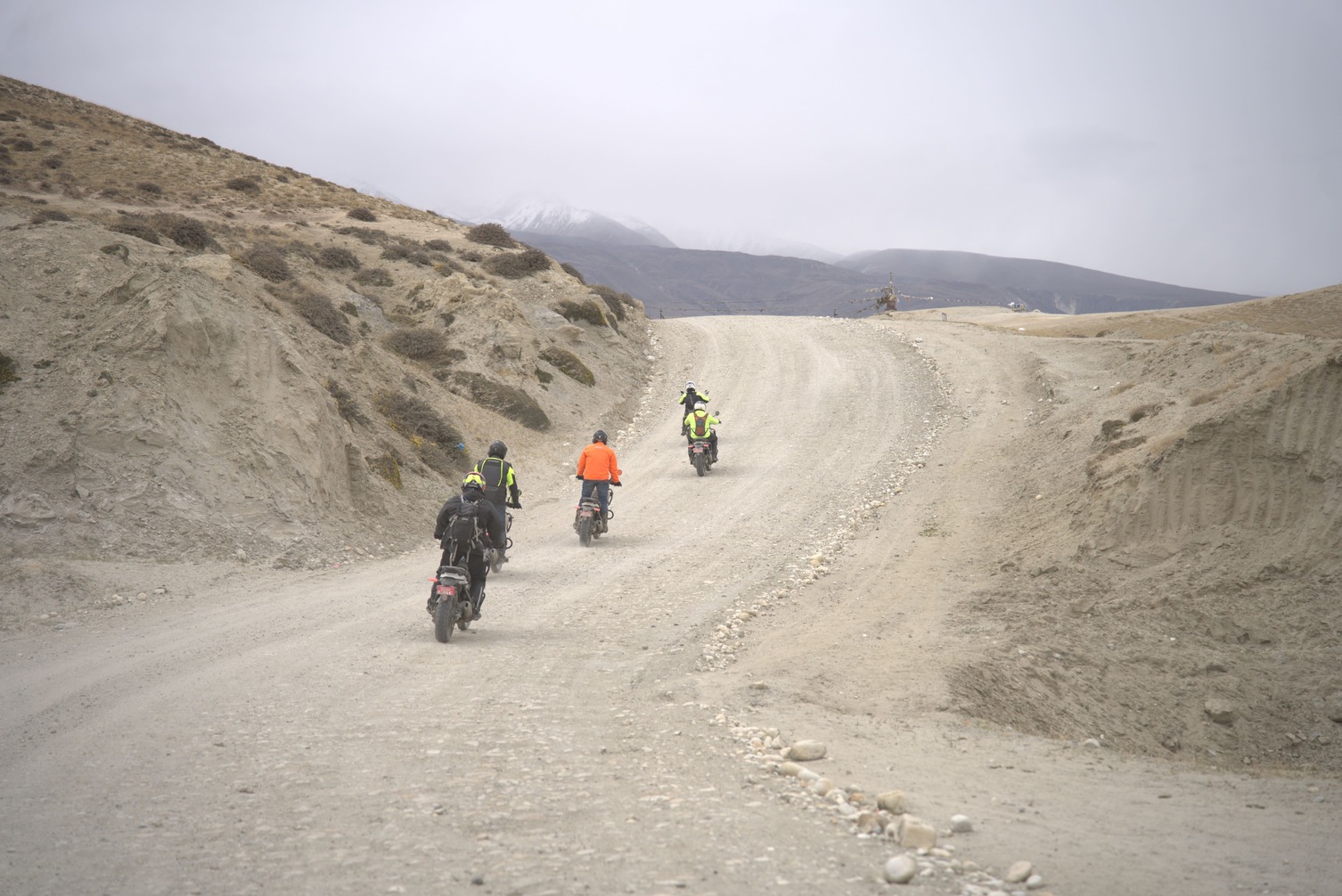
You might be amazed to know that most of the motorbike riders actually get affected more in comparison to trekkers. And this increased risk results from the combination of factors like rapid ascent, hidden physical strain, and delayed awareness of symptoms.
Let us give you guys an example: A normal trekker moving toward Upper Mustang spends several days reaching an elevation of above 3000 meters. Spending several days in tough terrain naturally facilitates the body to acclimatize as each step allows the trekkers’ bodies to adjust to the decreasing oxygen level.
However, a normal rider reaches Pokhara to Jomsom on a single day, and on the next day, they manage to reach Lo Manthang. While the time to reach the destination is reduced significantly, the reduced time doesn’t allow the rider to adapt to the decreasing oxygen level of Jomsom or Lo Manthang. As a result, from the day they reach Jomsom at 2700 meters, they begin to feel discomfort, which often results in altitude sickness.
Besides that, the physical exertion of riders is also high compared to normal trekkers. At first glance, it may look like riding requires much less effort, but the reality is entirely different. While crossing gravel roads, river crossings, and uneven tracks, they continuously engage their arms, shoulders and their core body. This increased level of strain on the body with less oxygen does increase physical load by multiple fold.
Another important factor is dehydration, as we already know, Upper Mustang is the rain-shadow region of Nepal, which makes it dry and windy. As you go higher, the region starts to get more and more windy, which makes the body lose fluid rapidly. On top of that, most of the riders are travelling for hours on this dusty road, and they don’t really feel thirsty, but when they reach Lo Manthang, they get dehydrated, making altitude sickness more likely.
But if you ask us, what’s the one reason that increases the risk of altitude sickness for riders in the Upper Mustang, then our response won’t be the above-mentioned factors. Rather, we will tell you in length about how most of the riders easily ignore the early symptoms of AMS. While trekking, you are often aware of the changes happening in your body. However, riders are more focused on the road, their bike and reaching the next stop. In addition, the combination of helmet, wind noise and constant motion often masks the symptoms of altitude sickness, making it difficult for early detection. And by the time the rider actually notices, the symptoms have already progressed.
Why does Upper Mustang increase the Altitude Sickness Risk?
Upper Mustang, while being gifted naturally, has a unique geography and difficult riding conditions. In the process, riders gain altitude rapidly as they are moving from low valleys to high desert-like plateaus in a shortened time. This limits their chances of natural acclimatization.
And as we already told you, long hours of riding come with continuous fatigue, which leads to dehydration, energy loss and reduced oxygen efficiency in the body. Besides that, the cold environment near Lo Manthang also increases the physical stress, which constantly forces your body to maintain temperature.
Additionally, the combination of the region’s low humidity and faster fluid loss worsens the symptoms of AMS, which directly increases the risk of AMS among travellers.
Types Of Altitude Sickness
Now, since you know the increased risk of altitude sickness in Upper Mustang, let us give you guys some idea about the different types of altitude sickness that you might be affected by.
The first thing that you need to understand is that altitude sickness is not a single condition; rather, it develops in stages and understanding each level actually helps in tackling this difficult condition.
Mild AMS (Acute Mountain Sickness)
Mild AMS, also known as Acute Mountain Sickness, is usually the first stage of Altitude sickness. In fact, it’s a stage where the body begins to react to reduced oxygen levels but can still adjust if given some time, with the risk level being low to moderate. You can treat this phase as a warning phase signalling it’s time to slow down and take some rest. Normally, in Upper Mustang, this stage is commonly experienced around Jomsom and Kagbeni, as it’s one of the regions where riders rapidly ascend.
The common symptoms of mild AMS are:
- A headache that usually gets worse at night or after intense physical pressure
- Unusual tiredness even when you are just lying around
- Loss of appetite where food seems less appealing
- Mild nausea that results in slight stomach discomfort
- Dizziness when trying to stand up quickly
- Sleep difficulty or frequent waking during the night.
Moderate AMS
Moderate AMS usually occurs when the symptoms of Mild AMS worsen. It happens if a person continues to ascend even when the body hasn’t properly acclimatized or didn’t rest when the first symptoms occurred.
In Upper Mustang, these symptoms are more common in regions like Chele and Ghami because the altitude in those regions easily exceeds 3,000 meters. In fact, Moderate AMS is actually quite risky, and it is the first sign signalling that it’s time to descend and rest at a comfortable altitude.
The common symptoms include:
- Continuous headache that lasts even after taking basic medications
- Ongoing nausea that sometimes leads to vomiting
- A weakness that makes even a simple task like walking feel exhausting
- Feeling of breathlessness at night
- Reduced coordination and slower reaction time
- Harder to maintain balance due to dizziness
Severe AMS
This last stage of AMS is actually the sign that the body can no longer cope with the decreased level of oxygen. And the honest fact is, this only happens when the symptoms of the early stages of AMS are completely ignored. Furthermore, now it’s no longer a sign, and one suffering from this needs to descend back to safety and get a proper medical check-up as soon as possible.
When this condition arrives, you might be suffering from either HAPE or HACE.
HAPE
HAPE stands for high altitude pulmonary edema and is a condition where fluid gets collected in the lungs, affecting breathing and oxygen intake. This condition is extremely serious if left untreated, which makes it extremely risky.
The symptoms of HAPE include:
- Shortness of breath even while resting
- Tightness in the chest
- A cough that produces pinkish sputum
- Increased heart rate with the feeling of suffocation
HACE
HACE stands for High Altitude Cerebral Edema, which is a condition where the brain swells due to a lack of oxygen. It is more dangerous than HAPE because it impacts neurological function and is a dangerous outcome of altitude sickness.
The common symptoms of HACE include:
- Severe headache worsening at a rapid pace
- Confusion, disorientation, leading to unusual behaviour
- Difficulty walking in a straight line
- Slurred speech or delayed responses
- Blurred vision with great difficulty in focusing
- Loss of consciousness with increased risk of coma in the advanced stage.
Both HACE and HAPE are most likely to occur in Lo Manthang and the remote high altitude routes of Upper Mustang. And both of these conditions are far more risky than one can imagine. So, when the symptoms occur, the only response is to descend and get checked up by the medical practitioner. In fact, in many cases of these conditions, immediate evacuation using a helicopter is also suggested.
Early Symptoms Of Altitude Sickness That Riders Often Ignore In Upper Mustang
After learning about the types of AMS, now you might have a fair grasp of the symptoms of AMS, but there are some specific early signs that riders easily ignore, and those are:
- Headache: They often ignore this symptom because, while riding, they mistake headache for dull pressure and continue riding without proper rest.
- Fatigue: Riders ignore this symptom because they mistake it for long riding hours and lack of sleep. They rarely give any second thoughts on fatigue resulting from rapidly changing altitude.
- Loss of appetite: After reaching a higher region, many riders often give up on eating, which results in decreased energy, further increasing tiredness.
- Mild Dizziness: Riders often feel it while stopping their ride after long riding hours. And since it feels like a brief imbalance, they ignore the indication that their body is not adjusting well at this altitude.
Severe symptoms and when to stop immediately
Conquering an altitude during the ascent or ride is what motivates everyone to go for a trek or an adventurous ride. And as a motorcycle tour organizer, we get it, and most of the time, we are filled with the same rush as you. But sometimes, this same thrill conflicts with our decision-making. It is the same thrill that sometimes doesn’t let us descend. However, let us tell you that even the experienced guide descends when they are dealing with Mild or Extreme AMS. And here are the symptoms that tell you to do so:
- Severe Headache that doesn’t stop even after the medication or rest
- Vomiting indicates that the body is not coping well
- Confusion or unusual behaviour indicates your brain is being affected
- Difficulty in maintaining coordination, and for riders, this can be dangerous because it can also lead to unfortunate accidents
- Breathlessness even during rest.
If you are experiencing any of the above-mentioned symptoms, then you need to contact your respective guide and descend immediately.
Why is Lo Manthang the critical zone?
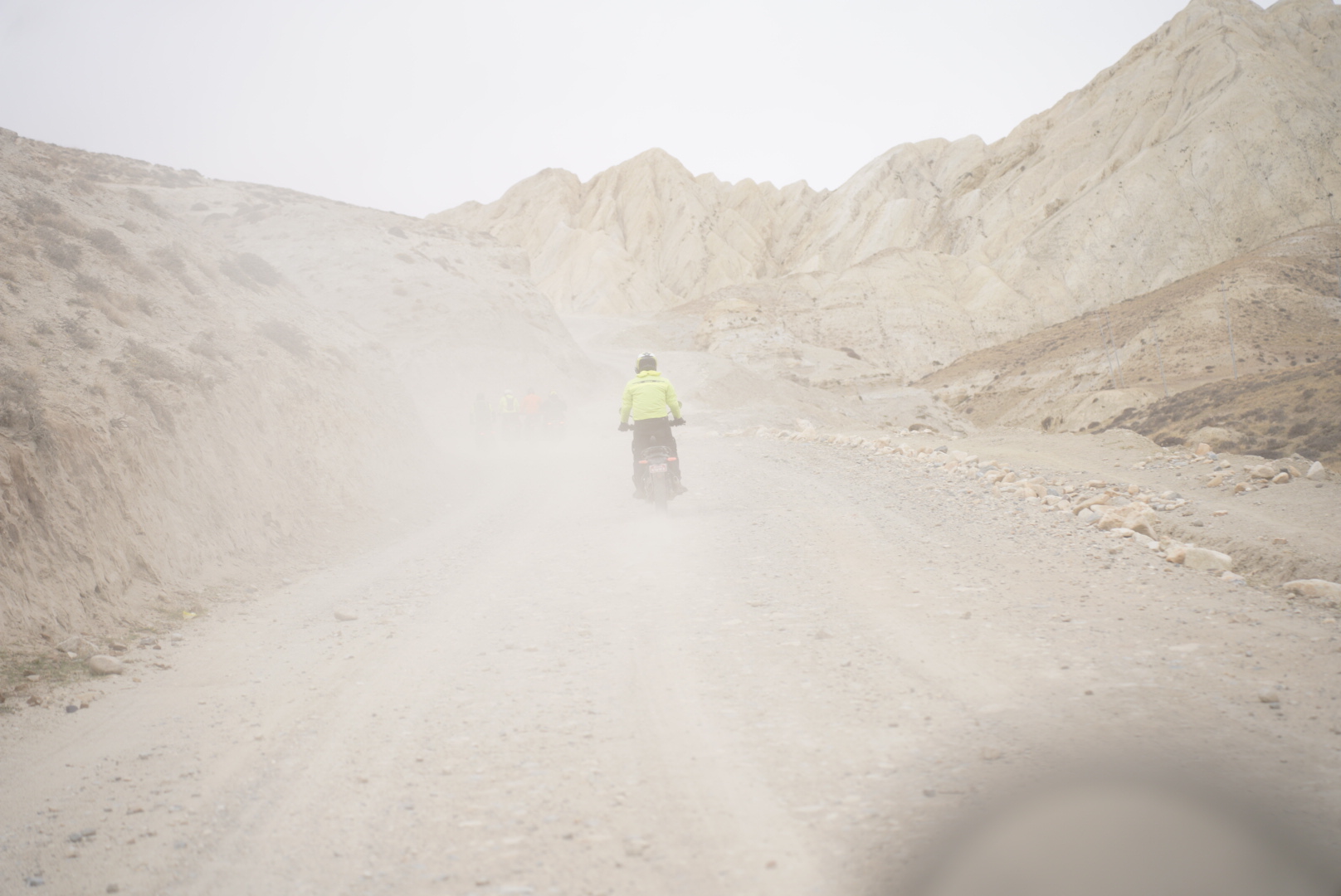
While Lo Manthang is the highest point during most of the rides, it is also the critical zone where most cases of altitude sickness appear. And this phenomena mainly appears because of its altitude and environmental conditions.
Since the whole region is right around 3,800 meters, oxygen levels in this area are the lowest in the entire journey. At this height, fatigue increases rapidly, and riding becomes difficult.
Furthermore, winds are stronger compared to Jomsom or Kagbeni, which makes the rider lose fluid quickly. Loss of fluid can easily lead to dehydration.
The combination of all these factors makes Lo Manthang a critical zone.
How to prevent altitude sickness in Upper Mustang?
Now, you might have heard that prevention is better than cure. Since we have already discussed the symptoms, let us give you some idea on how to prevent yourself from getting altitude sickness during the trail:
- Follow gradual acclimatization instead of steady progression, as it allows the body to adjust step by step.
- Stay hydrated and drink at least 3 to 4 litres of water daily during the trial,l even if thirst is not felt.
- Refrain from alcohol and smoking during the trial, as this habit reduces the body’s ability to use oxygen efficiently.
- Keep the food intake light but frequent, with more carbs, as it uses oxygen more effectively.
- Follow slow and controlled riding with frequent breaks, as it gives your body some much-needed rest.
- Allocate some time to properly rest.
Acclimatization Strategy For Motorcycle Riders
Since trekkers spend an average of 12 days on trek, developing an acclimatization strategy is actually quite easy. However, the same can’t be said for the ones who are riding.
Because they ascend more quickly and achieve elevation gain within a matter of days.
For the riders who are travelling with us, we prepare them to stay for the first two days in lower altitude areas like Kathmandu or Pokhara, which prepares their body.
And then in the next phase, we ride till Jomsom, while spending a night there. Spending a night at Jomsom exposes the body to mild altitude.
However, we know that the real threat comes on the second day, so we deliberately keep that day short by riding till Kagbeni for 40 to 45 minutes. By experiencing an elevation gain of just around 100 meters, the body gets enough time to acclimatize. Furthermore, we sleep at this altitude, which makes it easier for the body.
Only after this should riders enter Upper Mustang, giving the body time to adapt before reaching higher elevations.
And since we follow the logic of climb high and sleep low, the body adjusts better and reduces the risk of altitude sickness.
Medication for altitude sickness
While there are many medications that can help, they should be used carefully, and only with medical advice, as in the past, it is known that some medications mightn’t be suited for you.
The common medications used during altitude sickness are acetazolamide and Diamox, as these help the body to adapt to lower oxygen levels. Furthermore, it can reduce the severity of symptoms.
Besides that, to manage headaches, you can use pain relief like paracetamol or ibuprofen, as they can manage headaches even during the early stages.
Emergency response for altitude sickness
Our emergency response to altitude sickness actually begins by assessing the situation. We first look for the symptoms. If it’s just mild AMS, then we stop ascending entirely and allow the body to rest. While resting, we increased the hydration and then monitored your situation closely.
However, if the symptoms don’t improve, then we descend 1,000 meters down to safety. In many cases, this process improves the condition significantly.
But things in the mountains can be unpredictable, and if the symptoms don’t change at all, then we begin our evacuation process. This often means a helicopter transfer to medical facilities in Pokhara.
Role of guides in altitude safety
In the terrain like Upper Mustang, a well-experienced guide can play an important role in ensuring your safety.
These are the people who are trained to handle the difficult situation of the mountain. In fact, when things go south, they are the first people to monitor the health of riders and closely look for the early symptoms.
Furthermore, they are also responsible for adjusting the pace of travel based on how riders are feeling and in emergencies, they are usually the ones making decisions about when to rest, when to descend, and how to handle emergencies.
Apart from that, in a critical situation, they are the ones who coordinate evacuation and medical support.
Insurance and altitude coverage
Travel insurance is essential for riding in Upper Mustang. It must include coverage for high altitude travel, ideally above 4000 meters.
Emergency evacuation should be included because helicopter rescue is expensive.
Medical treatment coverage is also necessary in case hospitalization is required.
Without proper insurance, the financial cost of emergencies can be very high.
Is Upper Mustang safe for riders?
Yes, Upper Mustang is safe for riders and every year, thousands of riders complete this beautiful journey. In fact, Upper mustang is one of the bucket lists for tourists coming for motorcycle tours in Nepal. But the most important factor is that proper precautions need to be followed.
In fact, if you follow gradual acclimatization, stay hydrated, listen to your guides and take symptoms seriously, then there is a very small chance of you getting affected by AMS.
And without AMS, your journey will be a safe and rewarding experience.
FAQ
At what altitude does altitude sickness start?
Altitude sickness starts at an altitude above 2500 meters above sea level. In Upper Mustang, the early symptoms may arise in Jomsom or Kagbeni.
Is Lo Manthang risky?
No, Lo Manthang isn’t risky even though it’s considered as the highest risk zone in Upper Mustang, as following proper guidelines can completely minimize the risk of altitude sickness.
Can fit riders get altitude sickness?
Yes, even fit riders can get altitude sickness. In fact, even seasoned trekkers can develop symptoms as the conditions are related to the decreasing level of oxygen, not strength or endurance.
How can altitude sickness be prevented?
The effective ways to prevent altitude sickness are gradual acclimatization, proper hydration, and maintaining a slow and steady ascent.
What is the best treatment for altitude sickness?
If you get the symptoms of altitude sickness, then the most effective way to treat it is to descend immediately to a lower altitude. This allows body to recover as oxygen levels get increased.