Every motorbike route promises scenery. A handful promise adventure. Very few deliver something that changes the way you think about travel entirely.
The Upper Mustang motorbike tour is in that last category, not because of any single destination, but because of the sequence. The way Kathmandu organised chaos gives way to Pokhara's mountain calm. The way Pokhara's sealed roads dissolve into Beni's rough valley tracks. The way Kagbeni's checkpoint draws a hard line between accessible Nepal and the ancient, restricted kingdom beyond. That’s one of the reason, Upper mustang remains one of the top destinations for motorcycle tours in Nepal.
This guide walks through every major stop on the Upper Mustang motorbike route, not as a checklist of GPS coordinates, but as a rider's account of what each place actually feels like, demands, and delivers. If you're planning this journey in 2026, this is the pre-trip context that most tour summaries don't give you.
Kathmandu — Where Every Upper Mustang Expedition Actually Begins
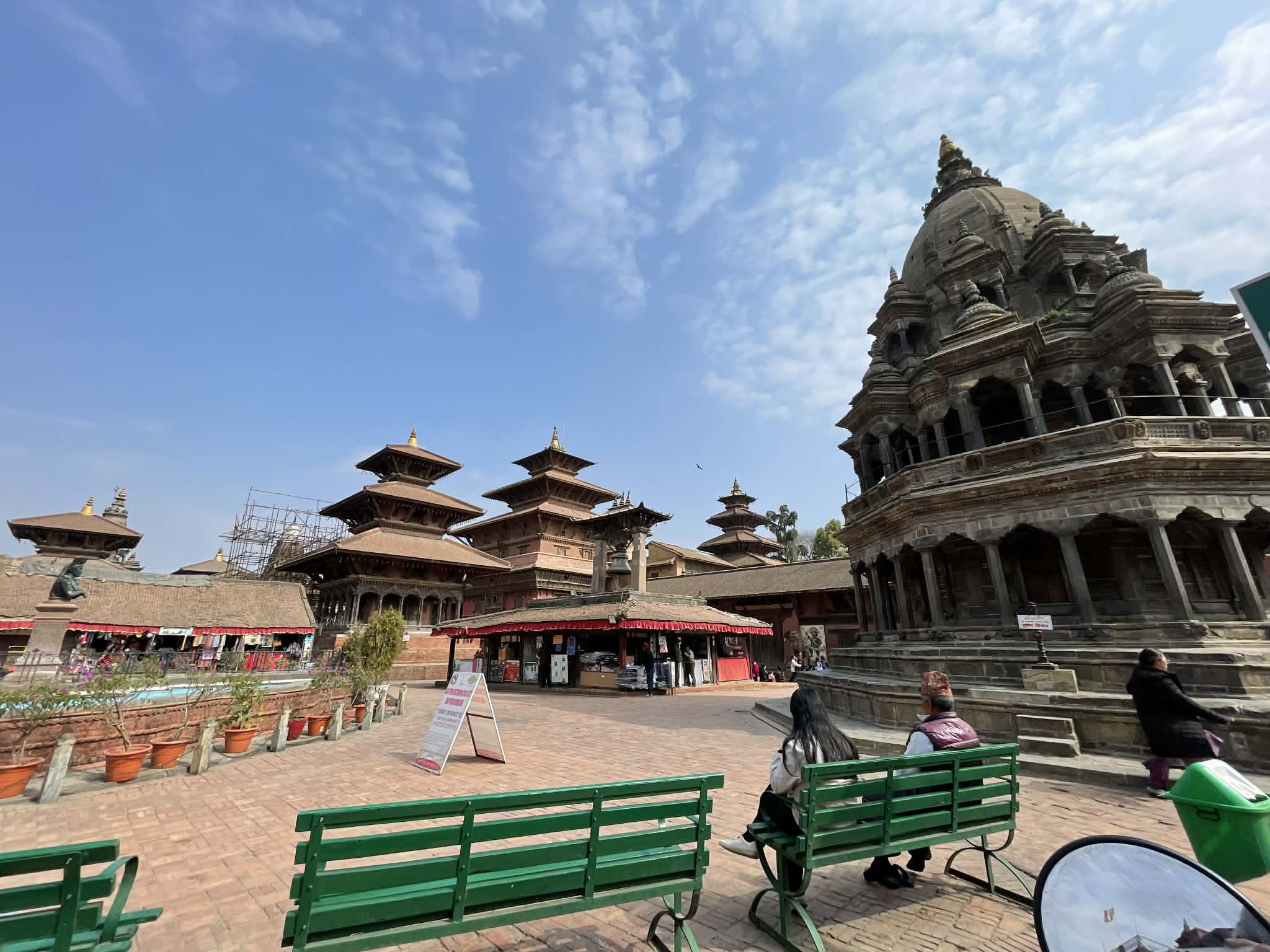
Most riders think the tour begins when they first sit on a bike. The reality is that for an Upper Mustang expedition, it begins the moment you land in Kathmandu.
This is where your Restricted Area Permit is processed through your licensed agency. This is where bike allocation, safety briefings, guide coordination, and documentation verification happen. Miss anything here and you'll discover it at a checkpoint 600 kilometres north with no immediate fix available.
Kathmandu is also where many riders get their first realistic read on the weather window ahead. Nepal's capital sits at roughly 1,400 metres and gives you no indication of what the terrain will be like in three days — but your guide and operator will be reading current Upper Mustang conditions and making real-time itinerary adjustments based on what's happening in the restricted zone right now.
What to do in Kathmandu beyond logistics: Thamel's gear shops are worth a final sweep for anything forgotten, base layers, neck gaiters, anti-dust masks. Spare parts for your specific bike model are worth sourcing here; the further north you go, the less likely you are to find them. And if altitude sickness is a concern, Kathmandu at 1,400m is a useful first acclimatisation step before the ascent to 3,800m at Lo Manthang.
Rider reality check: You won't ride in Kathmandu as part of the expedition route. Use the time here to prepare rather than explore, the ride itself starts the moment you leave the valley heading west toward Pokhara.
Pokhara — The Last Easy Day
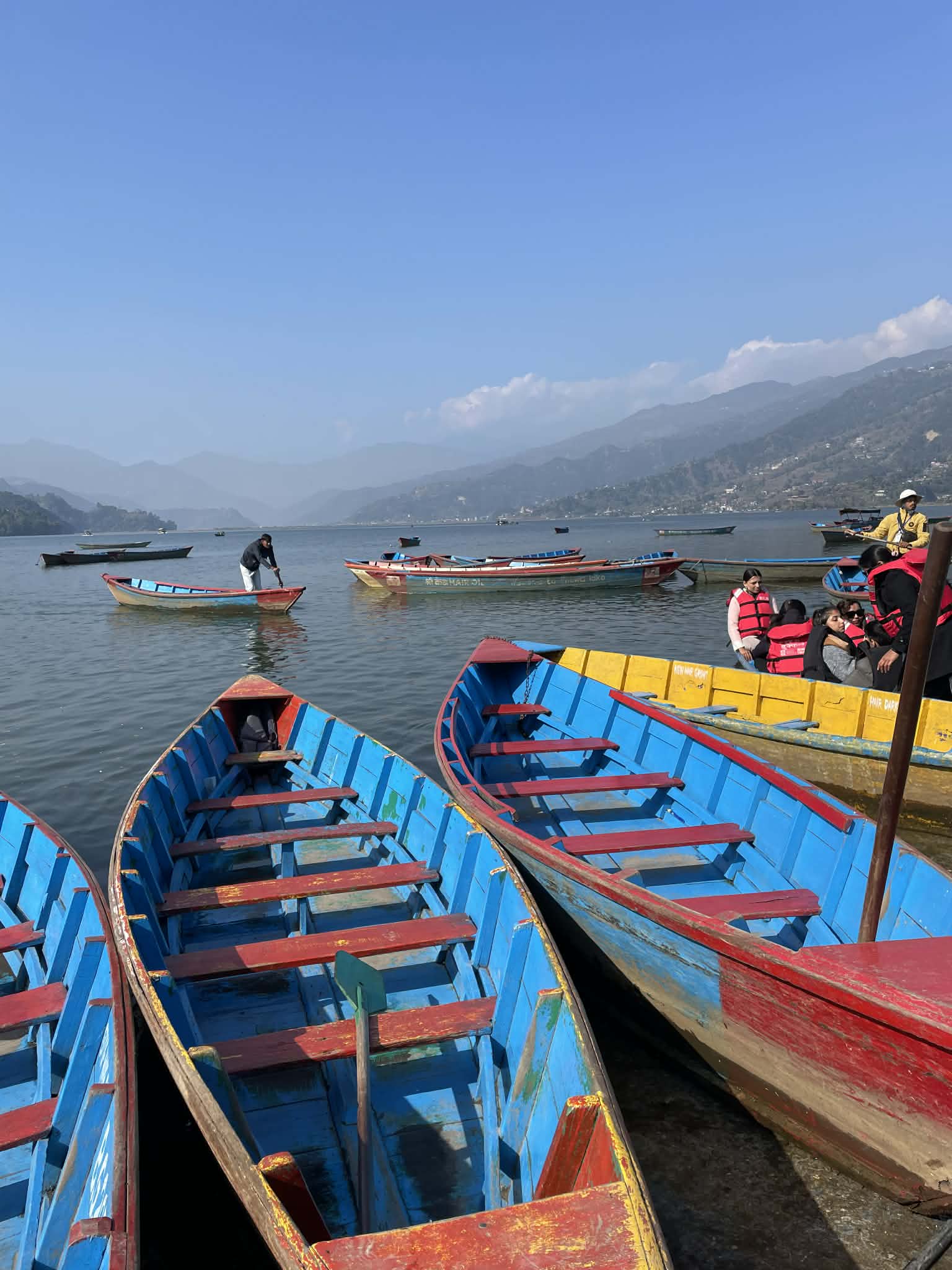
Pokhara is where the mountains become visible and the expedition mindset has to arrive, if it hasn't already.
The city sits at 820 metres on the shore of Phewa Lake, framed by the Annapurna range. On a clear morning the Fishtail peak — Machhapuchhre — dominates the northern horizon in a way that makes the distance you're about to cover feel appropriately serious.
For Upper Mustang riders, Pokhara serves several functions simultaneously. It's the final comfortable night before sustained off-road days begin. It's where altitude acclimatisation should consciously start — spend at least two nights here before heading north, and take that instruction seriously. Sleep quality at Lo Manthang is directly affected by how well your body adapted at the lower elevations along the way.
It's also where your gear gets its last real-world test. A test ride on Pokhara's outskirts — even just 30 minutes on rougher surfaces — will reveal fit issues with your bike, luggage distribution problems, and gear friction points before they become problems at altitude.
What Pokhara delivers as an experience: The lakeside area is genuinely beautiful and worth an evening walk. The food is better and more varied than anything you'll find above Jomsom. Eat well, sleep properly, and arrive at the Beni road rested — not still recovering from a Kathmandu late night.
For riders considering building the full Upper Mustang experience around a well-structured expedition from Pokhara, Nepal Moto Tours' Upper Mustang Motorbike expedition departs from here and covers the full Pokhara-to-Lo Manthang route with guided daily stages.
Beni — Where the Real Riding Starts
.png)
Beni doesn't get much coverage in Upper Mustang tour summaries. It deserves more.
The town sits at the confluence of the Kali Gandaki and Myagdi rivers, at roughly 830 metres. It's the last reliable fuel stop before conditions begin changing seriously, and it's the point where a sealed highway gives way to the first taste of what the next ten days will actually feel like.
From Beni northwards, asphalt begins breaking apart. Road width narrows. Cliff-edge sections start appearing without warning. River valley winds pick up. Dust becomes a constant presence rather than an occasional inconvenience.
Most riders don't struggle at Beni — the terrain here is challenging but not extreme. What Beni does is deliver your first honest feedback on whether your gear, your bike setup, and your physical readiness are what you thought they were. Pay attention to that feedback. The terrain ahead only increases in demands; problems identified at Beni can still be addressed before they compound.
Rider note: Check tyre pressure here and verify your chain tension before heading north. These are easy mechanical checks that save disproportionate amounts of trouble later.
Tatopani — The Hot Spring Pit Stop That Actually Matters
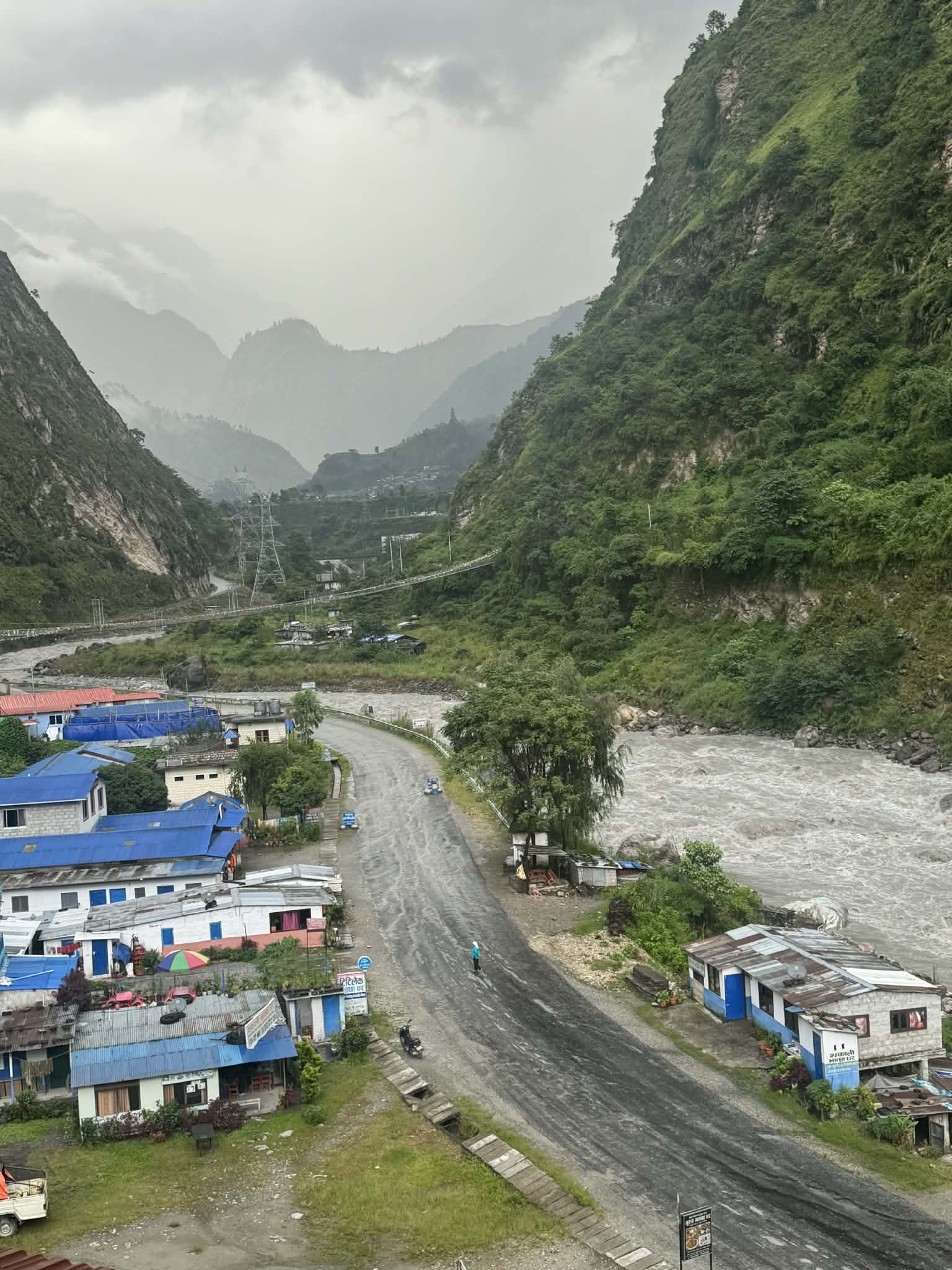
Tatopani translates directly from Nepali as "hot water" — and the natural hot springs here are not just a tourist attraction. They are a legitimately useful physical recovery tool for riders in the middle of a demanding multi-day expedition.
The village sits along the Kali Gandaki at approximately 1,190 metres. By the time you arrive, you've been riding mountain terrain for hours. The hot springs help with muscle tension in the lower back, shoulders, and hips — the exact muscle groups that take the most sustained impact from whole-body vibration on rough roads.
This might sound like a minor benefit. On a 10-day expedition where you're accumulating fatigue every day, anything that genuinely reduces muscle tension and improves sleep quality has a measurable effect on performance by day five or six. Smart riders take Tatopani seriously as a recovery stop, not just a photo opportunity.
What else Tatopani offers: The village has basic lodge accommodation and reliable food. The gorge scenery here — the Kali Gandaki canyon is one of the deepest river gorges on Earth, flanked by some of the world's tallest mountains — is genuinely impressive even at this early stage of the journey.
Jomsom — The Wind Capital and Last Major Hub
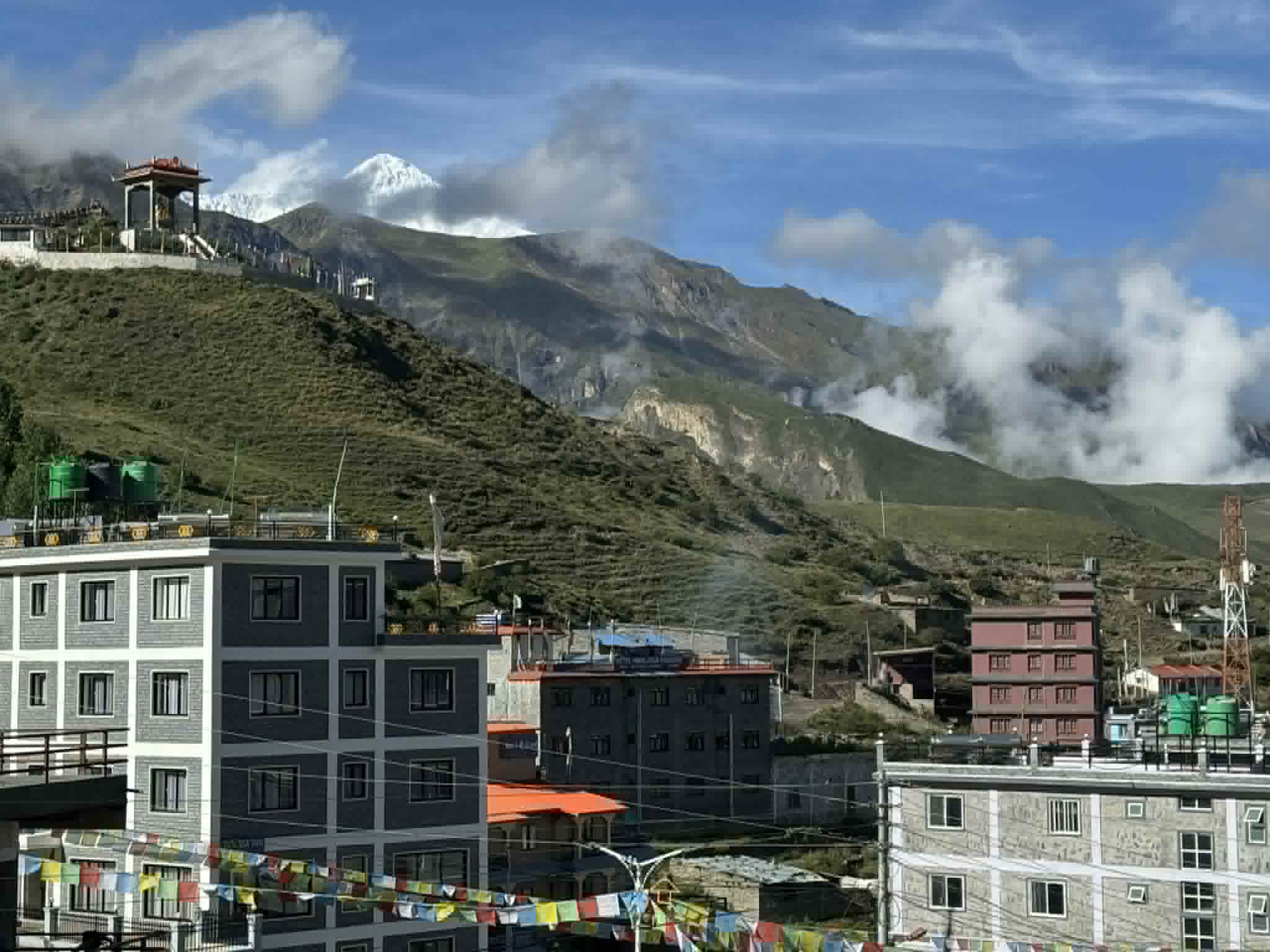
Jomsom is the largest town in the Mustang district and the last place on the route that operates with anything resembling conventional infrastructure.
At 2,720 metres, it has an airport (weather permitting, small aircraft connect to Pokhara), a functioning fuel supply, mechanical services, lodge options with reliable power, and mobile signal. After Jomsom, all of these become significantly less available or disappear entirely.
The town is famous — genuinely notorious among riders — for its wind. The Kali Gandaki valley acts as a natural wind tunnel between the Annapurna and Dhaulagiri massifs, and afternoon winds in Jomsom can exceed 50 km/h regularly. These are not uncomfortable gusts — they are winds that meaningfully affect bike control on open road sections.
The wind lesson most riders learn here: Arrive in Jomsom by midday if possible. Watching what the afternoon wind does to visibility and stability in Jomsom is your preview of what it will do on exposed plateau sections further north. Riders who dismiss Jomsom's wind as a local quirk consistently underestimate the wind factor above Kagbeni.
Strategic use of Jomsom: This is your last full-service point. Fuel topped to maximum. Any mechanical concerns addressed. Any gear issues resolved. A night of reasonable sleep before the restricted zone begins. Treat it as a genuine logistics checkpoint, not just another overnight stop.
Kagbeni — The Gateway Everything Changes At
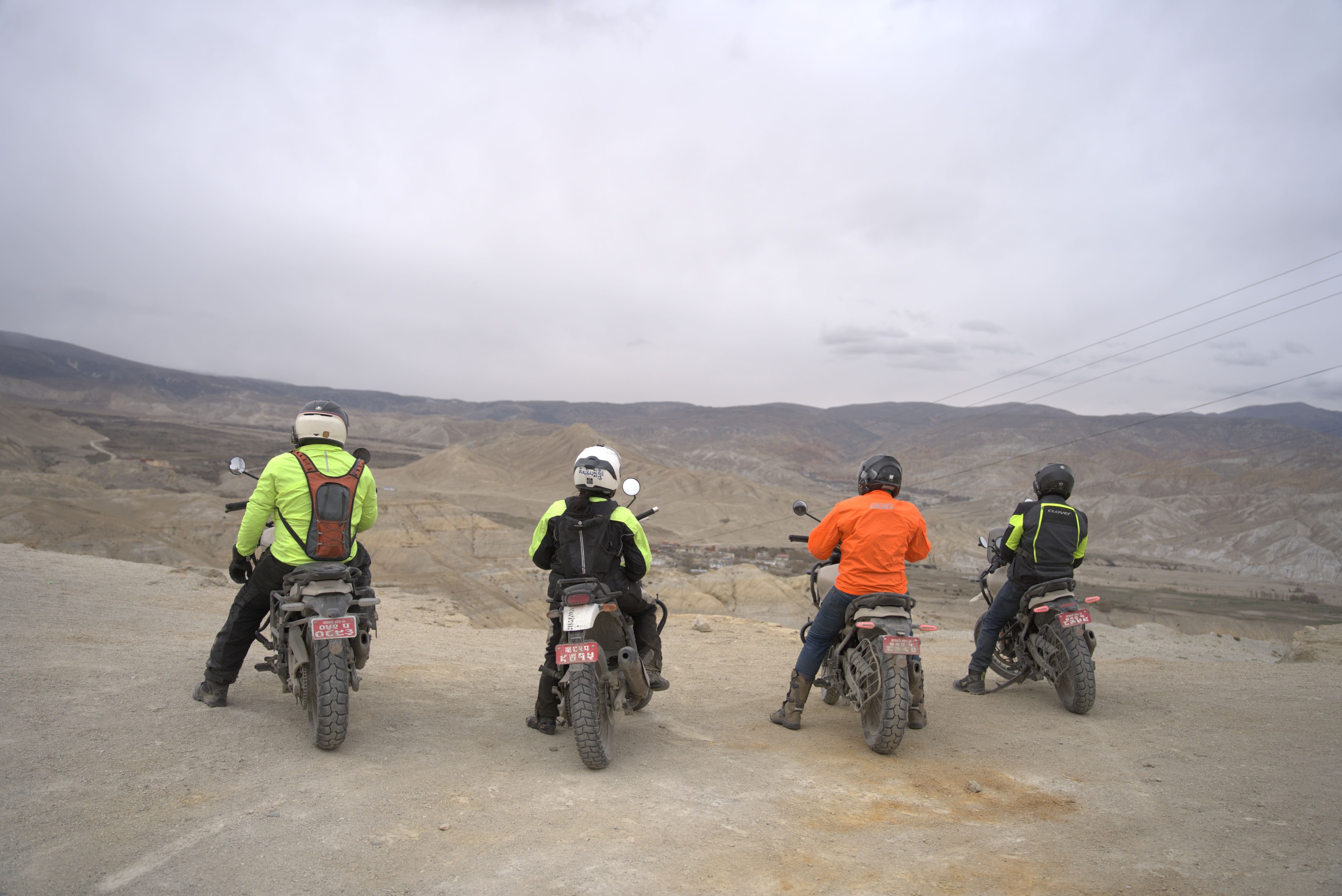
If the Upper Mustang motorbike tour has a single defining moment, it is crossing the Kagbeni checkpoint.
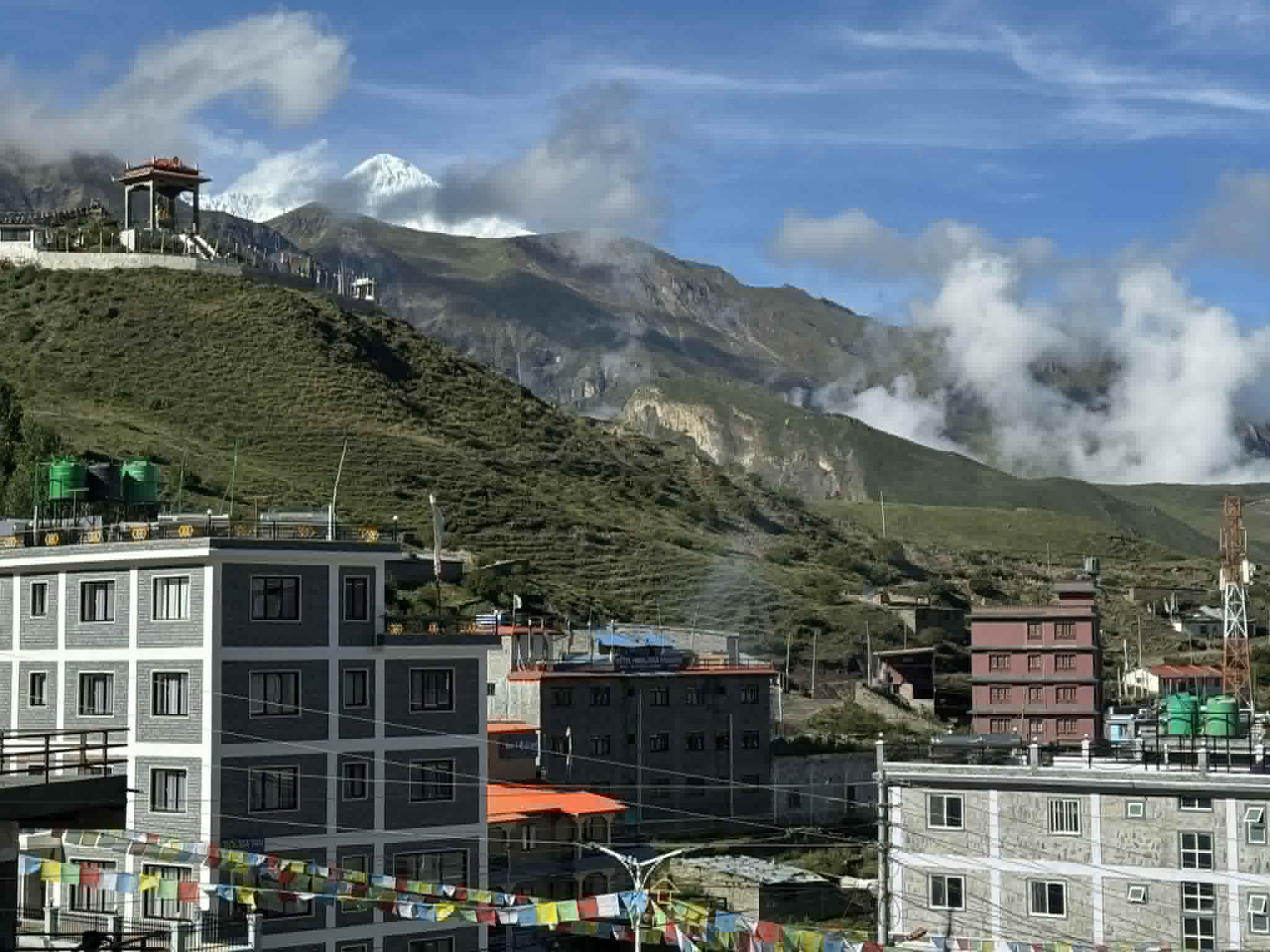
The village itself is extraordinary — ancient stone architecture, a dominant monastery perched above the valley, ochre and red cliff walls rising on all sides, the Kali Gandaki riverbed spreading wide and flat below. Kagbeni looks like it was designed to mark a boundary between two different worlds, and in every functional sense, it was.
North of Kagbeni's checkpoint, your Restricted Area Permit is verified, your entry is logged, and you cross into the controlled corridor of Upper Mustang. The immediate effect on the riding environment is striking: traffic disappears, the road surface changes character entirely, and the sense of isolation arrives within the first kilometre with a clarity that no tour description fully prepares you for.
Kagbeni is also where the most common overconfidence mistake happens. Riders who have done the Lower Mustang approach — Jomsom, Marpha, Tukuche — sometimes arrive at Kagbeni feeling comfortable with what they've seen. Upper Mustang is not an extension of Lower Mustang. It is a different riding environment. The terrain complexity, isolation level, and mental demands all increase substantially beyond this checkpoint.
Cultural note: Kagbeni's Red Gompa (Kag Chode Thubten Samphel Ling Monastery) is one of the most significant religious sites on the entire route. Even riders on tight time schedules benefit from a 30-minute stop here — it sets the cultural tone for everything that follows.
Chele — The First Village Beyond the Boundary
Chele is the first major settlement inside the Upper Mustang restricted zone, and it announces the landscape transformation with zero subtlety.
The green vegetation that characterised the lower Kali Gandaki valley is gone. In its place: layered red and brown cliffs, dry canyon systems, and a visual starkness that the word "dramatic" barely covers. Chele sits at approximately 3,050 metres and the air is noticeably thinner than at Kagbeni.
The riding from Kagbeni to Chele involves the first significant loose-gravel and rocky-riverbed sections of the restricted zone. This is where riders who haven't adjusted their style yet — still carrying tarmac habits of consistent speed and seated riding — get their first corrections. Surface instability requires constant active management. The terrain doesn't ask you to adapt; it demands it.
Ghami — Ancient Walls and Open Desert
Ghami is one of the largest settlements in Upper Mustang and one of the most visually distinctive stops on the entire route.
The village is famous for its extraordinarily long mani wall — a stone wall carved with Buddhist prayers and mantras that stretches for several hundred metres along the trail approach. It is among the longest mani walls in the Himalayan region and provides an immediate, tactile sense of the cultural depth of this landscape.
The riding into Ghami crosses open plateau terrain that fully exposes you to Upper Mustang's wind conditions. This is the section where afternoon crosswinds push loaded bikes sideways on exposed tracks. The rule that experienced guides enforce without exception — ride mornings, protect afternoons — becomes operationally critical from Ghami onward.
What Ghami delivers beyond the ride: Several ancient gompas (monasteries) are accessible from the village, some dating back centuries. The combination of the mani wall, the monastery architecture, and the surrounding canyon landscape makes Ghami one of the most photographically and culturally rich stops on the route — and it's consistently underrated in comparison to the more famous Lo Manthang.
Tsarang — The Cultural Heartbeat Before Lo Manthang
Tsarang (also spelled Charang) is the last major settlement before Lo Manthang and, in many ways, the most complete picture of traditional Upper Mustang village life on the entire route.
The village has a large monastery complex, an ancient fortress structure, and traditional mud-brick houses that have been continuously inhabited for generations. At approximately 3,560 metres, the altitude here is serious — riders who haven't been managing their hydration and rest carefully start feeling it noticeably in Tsarang.
The riding from Ghami to Tsarang crosses increasingly exposed plateau terrain. Wind exposure intensifies. The landscape becomes more austere. And the combination of altitude, wind, and accumulated fatigue from previous days creates exactly the conditions where small riding errors become more likely.
The Tsarang principle: Don't rush through. A short break here — food, water, 20 minutes off the bike — resets cognitive sharpness in a way that matters on the final approach to Lo Manthang. Riders who push straight through from Ghami to Lo Manthang without stopping at Tsarang consistently report the last section feeling harder than it needed to be.
Lo Manthang — The Forbidden Kingdom
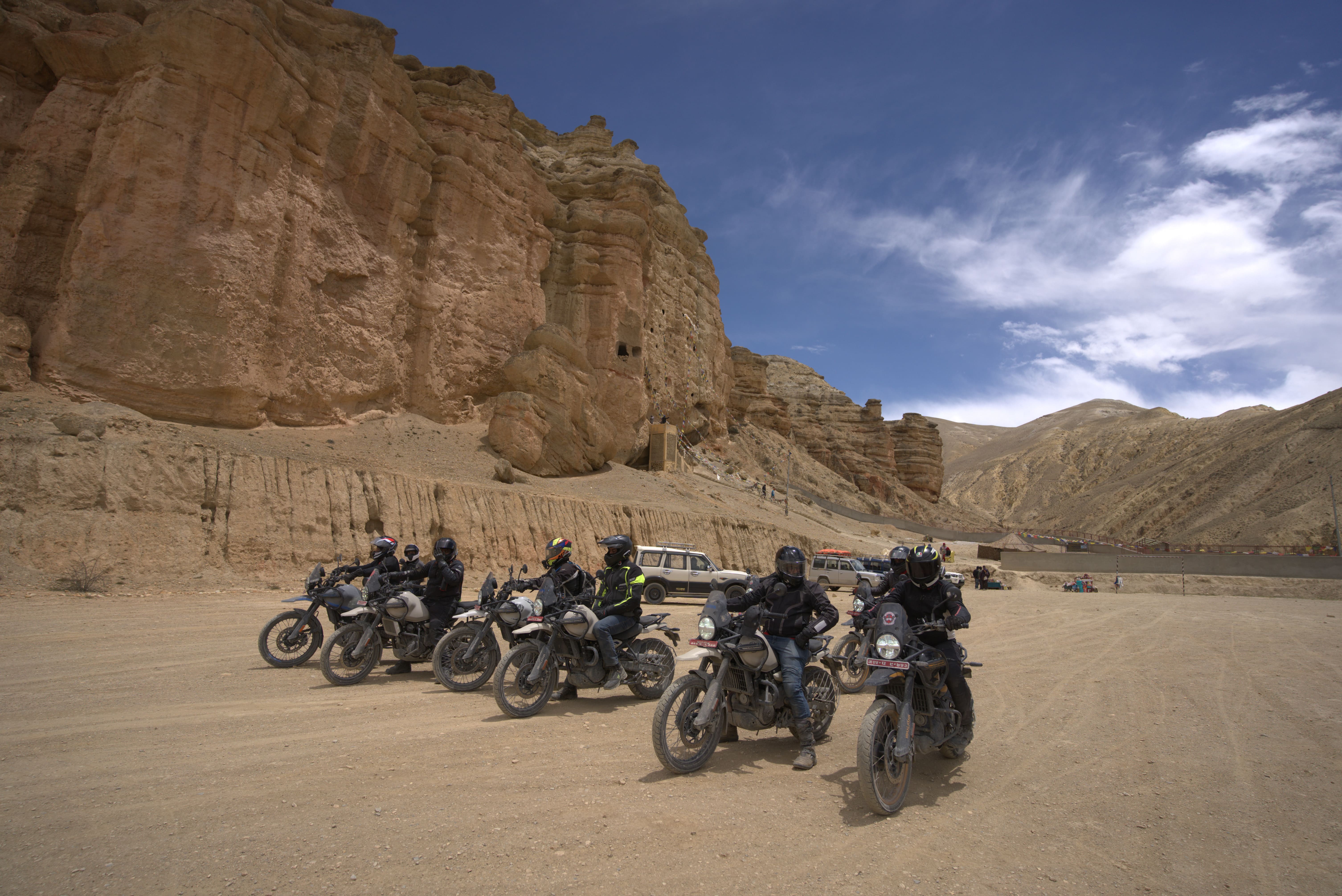
There is no preparing for Lo Manthang.
You can read descriptions of the ancient walled city, look at photographs, watch drone footage. None of it captures the actual experience of cresting the final plateau approach and seeing the ochre walls of the former capital of the Kingdom of Lo rise out of the desert landscape at 3,840 metres.
Lo Manthang was the seat of the Kingdom of Lo for centuries. The royal palace still stands inside the walls. Monasteries with thangka paintings and religious artefacts dating back hundreds of years are still actively used. The streets inside the walled city are narrow, dusty, and entirely unlike anything accessible on a motorbike tour anywhere else on earth.
At this altitude, your engine is running at reduced power and your body is working harder than normal just to breathe. The combination creates a strange physical quality to the arrival — slightly lightheaded, deeply satisfied, aware that you are somewhere genuinely extraordinary and that very few riders ever make it here.
Plan at minimum two nights in Lo Manthang. One night is not sufficient to do the place justice. The surrounding area — including the sky caves at Chhoser and the ancient cave settlements nearby — requires a rest day of exploration to begin to understand what you've reached.
Lo Manthang and the sky caves: The Chhoser cave complex near Lo Manthang contains ancient meditation and burial caves carved into the cliffs, some estimated to be over 3,000 years old. Short rides on rough tracks access the cliff base. The caves themselves require a short hike. The combination of the riding approach and the archaeological experience makes this one of the most memorable half-days of the entire expedition.
The Return: Muktinath and the Sacred Route South
Most Upper Mustang motorbike tour itineraries include Muktinath on the return route — and it's worth treating as a genuine destination rather than just a waypoint on the way home.
Muktinath sits at 3,710 metres and is one of the most sacred pilgrimage sites in both Hinduism and Buddhism. The temple complex — featuring eternal flames fed by natural gas seeping through the rock and 108 sacred water spouts — draws pilgrims from across Nepal and India year-round.
For riders, the approach to Muktinath involves steep, winding descent sections on loose gravel that demand the same careful technique as the climbs on the way north. Brake management and controlled speed on downhill loose terrain require specific attention — loaded bikes pick up momentum quickly on descents and brake performance at altitude can be reduced compared to sea level.
The descent back through Jomsom, Tatopani, Beni, and toward Pokhara carries a different emotional quality than the ascent. The terrain is the same. The rider is not.
Why the Sequence of Places Matters More Than Any Single One
The Upper Mustang motorbike tour is fundamentally a progression, not a collection of destinations.
Kathmandu and Pokhara build logistical readiness. Beni and Tatopani introduce the terrain and begin the fatigue accumulation. Jomsom calibrates your weather understanding. Kagbeni marks the psychological threshold. Chele, Ghami, and Tsarang layer on cultural depth and riding demand simultaneously. Lo Manthang delivers the destination that justifies every difficult kilometre.
Remove any stage from the sequence and the others lose context. Riders who fly directly into Jomsom to skip the lower approach miss the gradual adaptation — physical, psychological, and altitudinal — that makes the upper sections manageable and meaningful.
This is why the best Upper Mustang expeditions are structured as full-route journeys from Pokhara, not compressed highlight-reel shortcuts. The full route is the experience.
If you're ready to plan the full sequence, Nepal Moto Tours runs guided Upper Mustang expeditions that cover every stage described in this guide — from Pokhara preparation through Lo Manthang and back — with permit handling, experienced guides, and daily route management built in. Their full tour listings include multiple Upper Mustang itinerary options for different rider experience levels.
For riders who want to build toward Upper Mustang with a preparatory Himalayan ride first, the Annapurna Circuit Motorbike Tour covers the approach terrain and altitude profile in a less restricted environment — the ideal step before committing to the full Upper Mustang expedition.
Frequently Asked Questions
What is the single most important stop on the Upper Mustang motorbike tour?
Lo Manthang is the destination that defines the entire tour. But Kagbeni is arguably the most important experiential threshold — the point where the journey's character permanently changes.
How many days do you actually need at Lo Manthang?
Two nights minimum. Three nights allows for the Chhoser sky cave excursion and a more relaxed exploration of the walled city and surrounding monasteries. Riders who spend only one night consistently describe it as the one thing they'd change about their itinerary.
Is Jomsom worth a full day stop?
Yes, particularly for acclimatisation. A night in Jomsom before crossing into the restricted zone gives your body time to adjust to 2,720 metres before the rapid ascent to 3,800m at Lo Manthang.
Can I explore beyond Lo Manthang?
The Chhoser cave area near Lo Manthang is accessible with your existing RAP and guide. Exploration further toward the Tibetan border requires additional authorisation and is not part of standard expedition itineraries.
Are the sky caves at Chhoser worth the detour?
Unambiguously yes. The Mustang sky caves are among the most archaeologically significant sites accessible to visitors anywhere in the Himalayan region. The short detour ride and cliff approach add one of the most genuinely extraordinary experiences of the entire expedition.
Ready to experience these places yourself? Nepal Moto Tours specialises in fully guided Upper Mustang motorbike expeditions — permits, bikes, guides, and daily logistics all handled. Get in touch to plan your 2026 dates.