
Every tour operator will tell you Upper Mustang is "challenging but doable." Most of them stop there because going further might cost them a booking.
This guide doesn't do that.
We're going to tell you exactly how hard the Upper Mustang motorbike tour really is, who should do it, who should absolutely wait, what can go wrong, and critically, what nobody in the booking brochure will ever admit out loud.
The short answer: Upper Mustang earns a Moderate to Hard difficulty rating. It is not a beginner trip. It is not a tick-box adventure. And it is one of the most genuinely transformative motorcycle journeys on the planet for riders who respect it.
Let's break it all down honestly.
What Is the Upper Mustang Motorbike Tour, Actually?
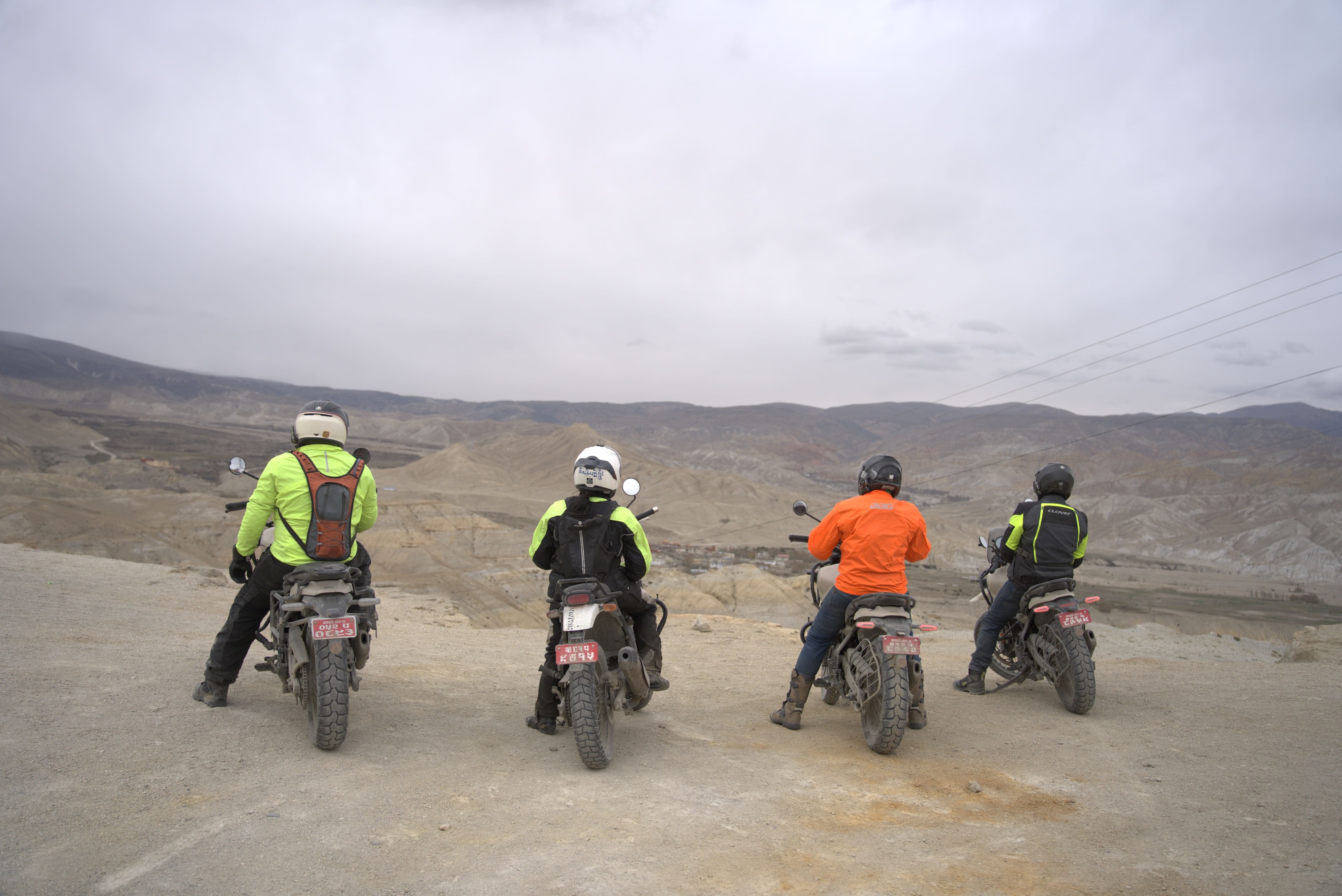
Upper Mustang is a restricted high-altitude desert region in north-central Nepal, nestled against the Tibetan border. Until 1992, it was completely closed to foreign visitors. Today it remains one of the most tightly controlled travel zones in Asia, requiring a Restricted Area Permit (RAP) that costs $50/day, a figure most budget tour sites bury deep in their FAQs. Upper Mustang remains one of the bucket list destinations for tourists coming for motorcycle tours in Nepal.
The region sits inside a dramatic rain-shadow desert carved by the Kali Gandaki gorge - the deepest river gorge on Earth. Lo Manthang, the ancient walled capital and the crown jewel of the route, sits at approximately 3,840 metres above sea level.
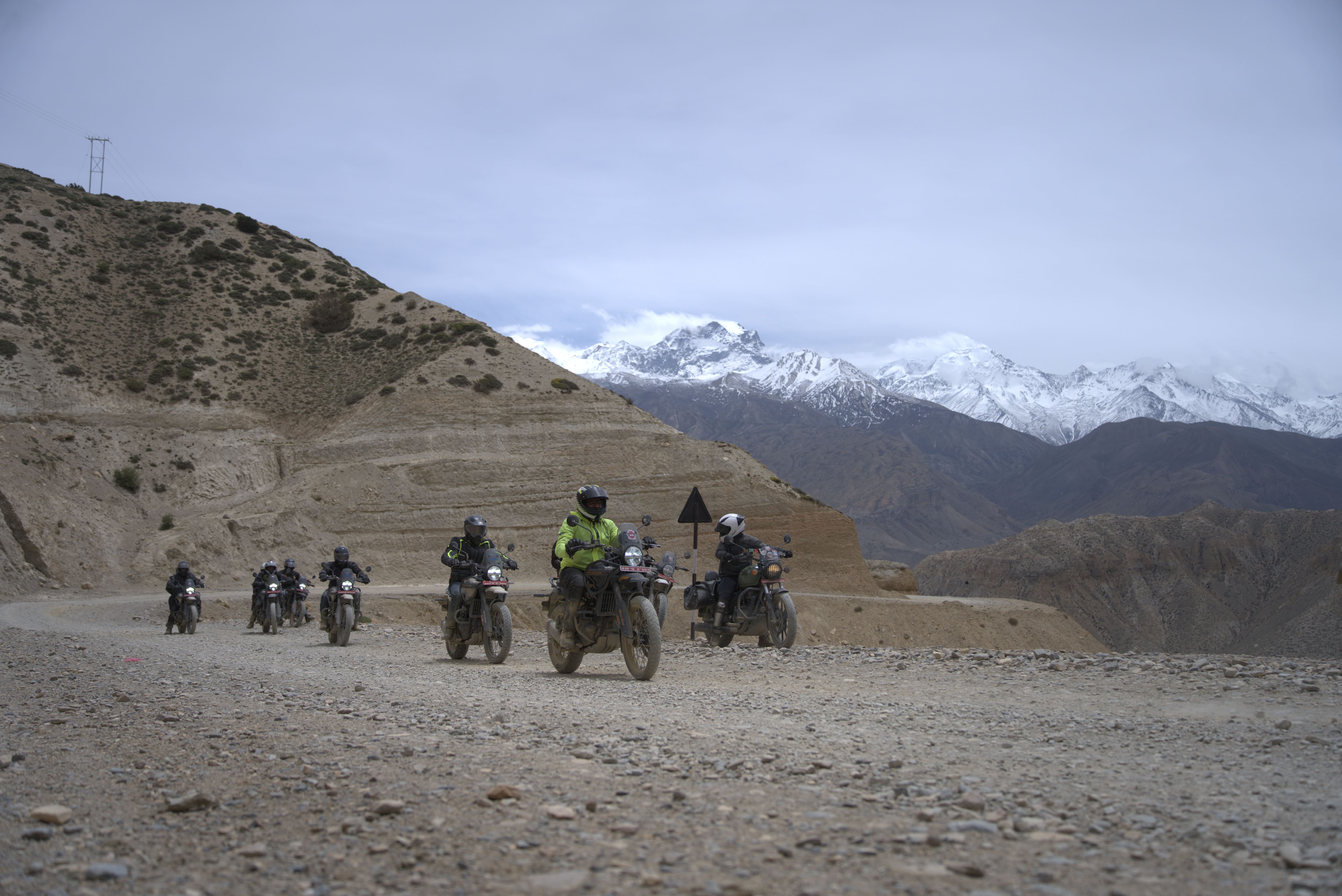
On a motorbike, you ride from Pokhara north through increasingly remote terrain, crossing into the restricted zone at Kagbeni, and pushing to Lo Manthang across some of the most otherworldly landscape Nepal has to offer: ochre cliffs, sky caves, fluttering prayer flags, and roads that sometimes disappear entirely.
The total journey from Pokhara and back spans roughly 700–900 kilometres over 10–14 days, depending on the itinerary. Daily riding averages 5–8 hours in the saddle, often stretching to 9–10 hours with stops, permit checks, and navigation.
If you want to see what this journey looks like itinerary-by-itinerary, Upper Mustang Motorbike Tour page has a full breakdown of their guided expedition structure, including daily stages and what to expect at each stop.
Honest Difficulty Rating: Moderate to Hard
Most tour operators slap a vague "challenging" label on Upper Mustang and move on. Here's what that actually means, in real terms.
Overall Rating: Moderate to Hard
|
Factor |
Difficulty Level |
|
Terrain (post-Kagbeni) |
Hard |
|
Altitude (Lo Manthang: 3,840m) |
Hard |
|
Daily endurance requirement |
Hard |
|
Technical off-road skill required |
Moderate |
|
Navigation complexity |
Moderate (guided) |
|
Wind and weather exposure |
Hard |
|
Mechanical stress on the bike |
Moderate to Hard |
Suitable for: Intermediate to experienced adventure riders with prior off-road experience.
Not suitable for: Anyone whose riding history is exclusively on tarmac, or anyone who has never ridden a loaded bike on gravel, loose stone, or dirt.
 (1)_1779386409.png)
6 Things That Actually Make It Hard
1. The Terrain: It Never Lets Up
From Pokhara to Beni, you're on a sealed highway. Comfortable, forgettable. But from Beni northwards, the road starts breaking up. And from Kagbeni onwards, the gateway to the restricted zone, paved road is essentially a memory.
What replaces it:
- Loose gravel highways with unpredictable camber
- Deep sand trails that grab your front wheel and pull left
- Rocky dry riverbeds with irregular stones
- Narrow cliffside single-tracks with sheer drops and zero barrier
- Wind-blasted plateaus where the road blends visually into the terrain
Here's the part most operators don't tell you: no single section is technically extreme. The Kagbeni–Lo Manthang stretch won't ask you to do Dakar-grade technical riding. What it does instead is deny you any recovery time. Eight to ten hours of constantly shifting, unpredictable surface wears through concentration faster than tyres. Mistakes happen in that fourth or seventh hour, not the first.
2. Altitude: The Invisible Performance Drain
Lo Manthang sits at roughly 3,840 metres. Many passes on the approach exceed 4,000 metres. At these elevations, the effects on a rider are subtle until they're not:
- Reaction time measurably slows
- Cognitive load increases — line choice, speed judgement, and hazard reading all degrade
- Fatigue arrives 2–3 hours earlier than at sea level
- Your engine loses power (air is thinner, combustion is less efficient — typically a 10–15% power drop at 3,800m compared to sea level)
- Poor-quality sleep at altitude means you start each riding day already operating on a deficit
The number one reason accidents happen on the Upper Mustang motorbike tour is not technical difficulty, it's altitude-compounded fatigue.
Acclimatisation is not optional. Spend at least two nights in Pokhara before heading north. Don't rush the ascent from Jomsom to Lo Manthang.
3. Distance and Endurance: The Silent Grind
Most riders dramatically underestimate this one. On paper, 60–80 km/day sounds manageable. On a loaded adventure bike crossing river gravel and fighting crosswinds at altitude, those same kilometres can take seven or eight hours.
Fatigue accumulates daily through whole-body vibration (which is physiologically more tiring than most people expect), constant core muscle engagement to control the bike on unstable surfaces, UV exposure at altitude (the sun hits significantly harder above 3,000m), and temperature swings that can range 20°C or more between morning starts and afternoon descents.
By day five, riders who felt strong on day one are making small errors. That's precisely when things go wrong.
4. Wind: Upper Mustang's Most Underestimated Hazard
This deserves its own section because almost no one talks about it honestly.
Upper Mustang is a Himalayan rain-shadow desert. Wind is not an occasional inconvenience here, it is a daily feature of the riding environment, as reliable as sunrise.
Afternoon winds in the upper Kali Gandaki valley frequently hit speeds strong enough to push a fully loaded 400cc adventure bike laterally off its intended line on exposed plateau tracks. Dust storms can reduce visibility to near zero within minutes. Cold gusts on exposed ridgelines create windchills that no amount of base layering feels adequate against.
The rule that experienced riders follow and first-timers ignore: ride mornings. Most Upper Mustang winds build from noon onwards. Riders who push through afternoon sections thinking they can outrun it consistently report it as their hardest hours of the entire tour.
5. Mechanical Stress on the Bike
Upper Mustang is brutal on machinery. Common mechanical issues that guides see regularly:
- Chain stretch and loosening from constant vibration and loose debris
- Air filter clogging (dust is extraordinary — check and clean daily)
- Brake overheating on descents, especially from loaded weight at altitude
- Suspension wear accelerated by rocky riverbeds
- Reduced engine performance from altitude-thinned air
Carry a basic repair kit and, more importantly, know how to use it. A snapped chain at Chele, 6 hours from the nearest mechanic, is not a theoretical scenario.
6. The Mental Load
Physical difficulty has a ceiling. Mental fatigue doesn't.
Upper Mustang is remote. There is no mobile signal for large stretches. Medical facilities don't exist in the conventional sense. Evacuation, if it ever came to it, is slow and expensive.
This creates a sustained low-level cognitive pressure — heightened environmental vigilance that never fully switches off — that compounds with physical fatigue to deplete riders in ways they don't fully recognise until they stop riding for the day and realise they're exhausted in a completely different way than they expected.
Riders who have done multiple Himalayan tours consistently rate Upper Mustang as mentally harder than routes that are technically more demanding.
Section-by-Section Route Difficulty: What to Expect
Pokhara to Beni — Easy
Sealed highway. Manageable traffic. Your last predictable riding day. Use it to dial in your bike setup and settle any fit issues before everything changes.
Beni to Tatopani — Moderate
Asphalt starts breaking apart. Narrow cliff-edge sections begin appearing. Dust picks up noticeably. This is the warm-up signal — pay attention to how your body and your bike are responding.
Tatopani to Jomsom — Moderate to Hard
The Kali Gandaki valley winds arrive here. Hours in the saddle start biting. River crossings have become a regular feature. Fatigue accumulation begins in earnest. Jomsom is the last town with reliable food, mechanics, and accommodation before the restricted zone.
Jomsom to Kagbeni — Moderate
Conditions ease slightly. Dust and jeep traffic remain constant. Cross Kagbeni and your permit is checked. From here, the character of the tour changes completely. You're now in the restricted zone.
Kagbeni to Chele — Hard
Loose gravel tracks replace any pretence of road. Riverbed riding begins. Sudden elevation changes. This is expedition riding — not touring. First-time Himalayan riders consistently report this section as their hardest psychological adjustment.
Chele to Ghami — Hard
Cliffside single-tracks. Rocky technical climbs. Narrow zig-zag paths that demand a standing riding position. Upper body strength and throttle control matter here more than anywhere else on the route.
Ghami to Tsarang — Hard
Exposed plateaus and full crosswinds. This is where afternoon riding becomes genuinely dangerous. Visibility can drop fast. Riders who ignore the wind rule here most often have their worst moments of the tour.
Tsarang to Lo Manthang — Hard
Altitude fatigue peaks. Engine power has dropped. Your body has been grinding for days. And then you crest the final rise and Lo Manthang's ancient mud-brick walls appear across the plateau like something from another century. Every hard metre is immediately, completely, worth it.
Skill Requirements: What "Intermediate Rider" Actually Means
The term "intermediate" appears in almost every Upper Mustang tour description. It's vague enough to be nearly useless. Here's what it actually means.
Skills You Must Have Before Booking
Gravel and loose-surface control: You need to have ridden on unpaved roads before and know how to manage front-wheel wash, adjust body position, and read surface changes. Not perfectly — but with confidence.
Standing riding position: A significant portion of post-Kagbeni terrain requires riding standing on the pegs. If you've never done this for extended periods, practice before you go. Your lower back will remind you every single day.
Slow-speed balance: Loaded bikes on rocky terrain require crawling. The ability to control a bike at 10–15 km/h on uneven ground is genuinely tested.
Endurance capacity: Can you ride 6–8 hours a day for 8–12 consecutive days? Have you done it before? If the answer is no, Upper Mustang is not the right first test.
Basic mechanical awareness: You don't need to rebuild an engine. But you should know how to adjust chain tension, check brake fluid, clean an air filter, and troubleshoot a fuel issue.
Skills That Help Enormously
Prior Himalayan riding experience (even the Annapurna Circuit) prepares you for altitude mechanics in ways that no lowland riding can. If you haven't done a Himalayan trip before, consider the Annapurna Circuit Motorbike Ride as a powerful step up before Upper Mustang.
Sand riding technique is genuinely useful. Counter-intuitively, faster is often more stable in deep sand — but this is a learned instinct, not a theoretical one.
Skills You Do Not Need
You do not need motocross racing ability. You do not need technical enduro training. You do not need high-speed off-road experience. Upper Mustang rewards patience and precise control far more than aggression or speed.
The Altitude Factor: Data Riders Need to Know
This gets glossed over constantly, so let's be concrete.
Lo Manthang sits at approximately 3,840 metres above sea level. Several passes and approach roads in the region exceed 4,000 metres.
At 3,500m, most unacclimatised riders will notice reduced aerobic capacity — climbing stairs leaves you noticeably short of breath. At 3,800–4,000m, this effect is significant.
Altitude sickness (Acute Mountain Sickness, or AMS) is a genuine risk. Early symptoms — headache, nausea, loss of appetite, disturbed sleep, fatigue — are easy to dismiss as tiredness. AMS can escalate to High Altitude Pulmonary Edema (HAPE) or High Altitude Cerebral Edema (HACE), both of which are medical emergencies.
The practical rules for Upper Mustang motorbike riders:
- Spend at least two nights in Pokhara (820m) before heading north
- Ascend no more than 300–500m per day once above 3,000m
- Hydrate aggressively — dehydration accelerates altitude symptoms and at altitude you dehydrate faster than you realise
- Avoid alcohol at altitude, particularly in the first days
- Know the symptoms of AMS and have a clear plan to descend if they appear
- Diamox (acetazolamide) can be used prophylactically — consult a travel medicine specialist before the trip
Seasonal Difficulty: When You Go Changes Everything
Spring (March–May) — Recommended for Most Riders
Good weather, manageable temperatures, and stable ground conditions make spring the most accessible season. The landscape is dramatic and the risk level is at its manageable baseline. Difficulty: Moderate to Hard.
Monsoon (June–August) — Complicated
Upper Mustang sits in a rain-shadow, so the region itself stays relatively dry during Nepal's monsoon season — one of its genuine advantages over other high-altitude routes. However, the roads south of Kagbeni, and particularly around Beni, can be affected by flooding and landslides. Logistics become complicated even if the destination is clear. Difficulty: Moderate to Hard (with added logistical risk south of Kagbeni).
Autumn (September–November) — Best Overall Season
Crystal-clear skies, stable temperatures, and excellent visibility make autumn the premium Upper Mustang season. Roads are at their best post-monsoon condition. This is when the region shows itself at its most spectacular. Difficulty: Moderate (optimal conditions).
Winter (December–February) — Experts Only
Sub-freezing temperatures, possible route closures, and the genuine risk of being stranded make winter Upper Mustang a serious undertaking. This is not a season for casual adventure — it's a season for experienced high-altitude expedition riders only. Difficulty: Very Hard.
For a deeper dive into timing, Nepal Moto Tours has a dedicated When to Visit guide covering seasonal conditions across all their Nepal routes.
‘
The Bike Question: What Everyone Gets Wrong
Most riders either significantly over-spec or under-spec their bike for Upper Mustang.
Over-spec: A heavy 800cc+ adventure tourer is not an advantage here. Its weight becomes a serious liability in deep sand, on narrow cliffside tracks, and any time you need to lift a fallen bike at altitude (which is significantly harder than at sea level — this is not a small point).
Under-spec: A 125cc commuter bike with road tyres will struggle beyond Jomsom and become genuinely dangerous beyond Kagbeni.
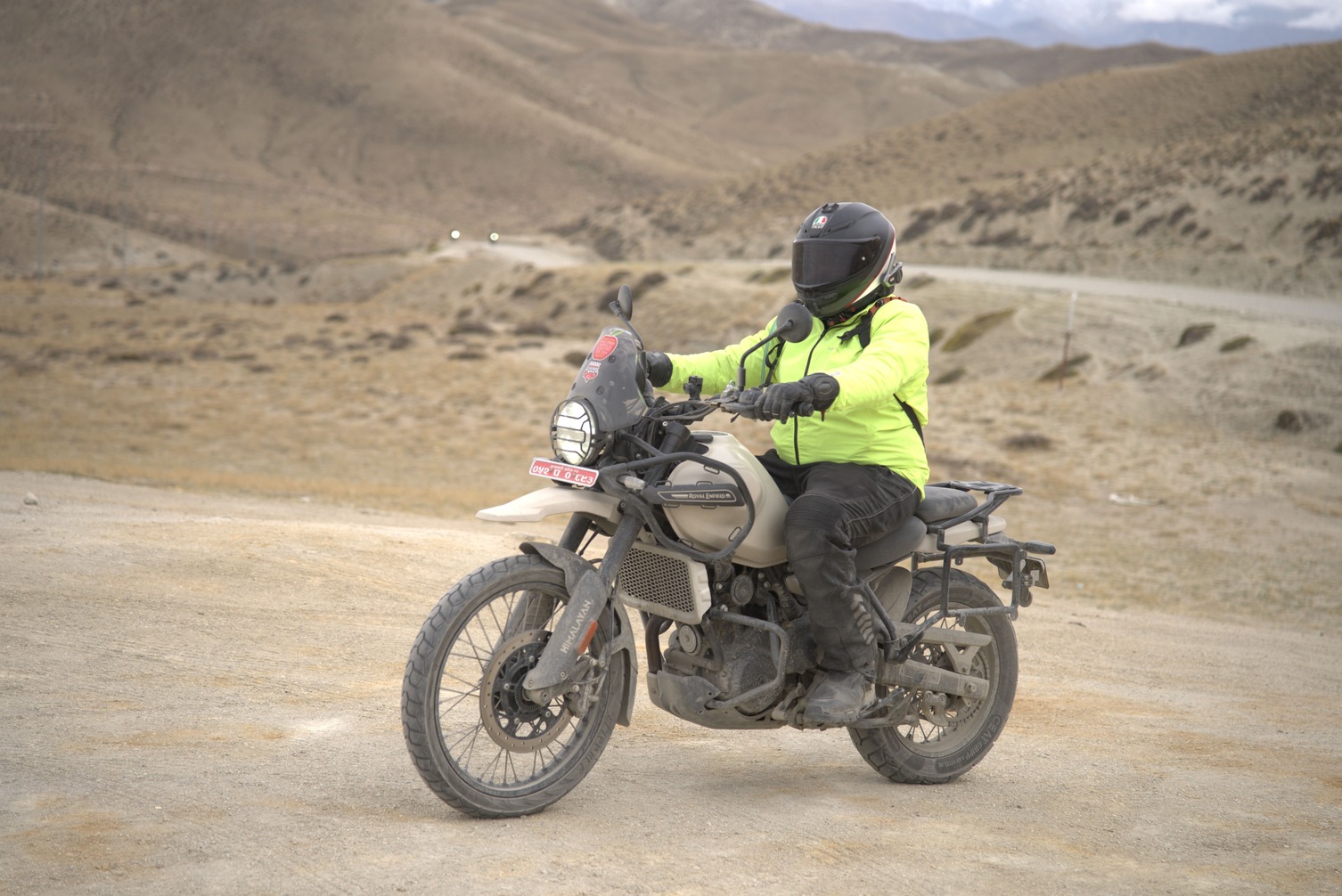
The sweet spot: A 250cc–450cc dedicated adventure bike with proper ground clearance, off-road-biased tyres, and adequate torque for altitude-affected engine output. The Royal Enfield Himalayan, BMW G 310 GS, Hero Xpulse 200, and Honda CRF 250L are all well-proven in this terrain.
If you're considering riding without your own bike, Nepal Moto Tours operates a full guided Upper Mustang expedition 2026 on quality adventure bikes suited to the terrain, with full support, guides, and logistics handled.
What Can Actually Go Wrong: A Realistic Risk Assessment
Upper Mustang is not extreme-sport dangerous. But remoteness fundamentally changes the risk equation.
Altitude sickness is the most common serious issue. Aggressive ascent schedules combined with riders who push through early symptoms account for the majority of medical evacuations from the region.
Fatigue-related riding errors are the most common cause of drops and minor accidents. Day five or six, on a technical descent, with a rider who slept badly at altitude and ate poorly — this is when mistakes happen.
Mechanical failures in a location with no mobile signal and no mechanic for 40+ kilometres are a serious situation. A snapped chain or seized brake caliper isn't a roadside fix for most riders.
Weather exposure — particularly wind on exposed plateau sections and unexpected cold fronts — can become dangerous quickly for riders without adequate gear.
None of these risks are reason not to go. All of them are reason to prepare seriously and — strongly — to ride with an experienced guide.
Why Riding With a Guide Isn't Just a Legal Requirement
Upper Mustang legally requires a licensed local guide. This gets stated in every tour description. What rarely gets stated is why guides matter beyond paperwork.
Local weather knowledge: An experienced local guide knows which sections turn dangerous in afternoon wind, which river crossings are manageable and which are not, and how conditions change between seasons in ways that no GPS app captures.
Route navigation: Even with GPS, tracks above Kagbeni are inconsistent and frequently obscured by dust and wind erosion. Getting your line wrong on a cliffside track without someone who knows it is a serious scenario, not a minor inconvenience.
Altitude management: A good guide watches riders for early AMS symptoms — often spotting them before the rider notices themselves. This is genuinely life-relevant on a multi-day high-altitude trip.
Logistics and support: Food, accommodation, permit checkpoints, mechanical assistance contacts — an experienced guide removes an enormous cognitive load that, at altitude, matters more than most riders expect.
The Truth About Upper Mustang vs. Manali–Leh
This comparison comes up constantly. The honest answer: they're different challenges, not a hierarchy.
Manali–Leh has better infrastructure — more mechanical support, more accommodation options, more traffic (which can be both a comfort and an annoyance), and more established emergency resources.
Upper Mustang is more remote, more dusty, longer in saddle-time accumulation, and has fewer bailout options. The terrain difficulty is comparable, but the compounding factors of isolation, altitude, and wind make Upper Mustang, in our assessment, the more demanding undertaking overall.
Riders who have done Manali–Leh and found it comfortable are good candidates for Upper Mustang. Those who found Manali–Leh very hard should consider that Upper Mustang will be harder still.
How to Prepare: Practical Pre-Trip Checklist
Physical Preparation (Start 8–12 Weeks Before)
Core strengthening directly reduces fatigue on rough terrain. Focus specifically on lower back, hip flexors, and upper body stability — the muscle groups that suffer most from sustained vibration on loose surfaces.
Cardiovascular fitness helps significantly at altitude. This doesn't mean becoming an athlete — it means being comfortably active, not sedentary, before you arrive.
Riding Preparation
If your experience is primarily tarmac, get at minimum 2–3 full days of off-road riding in before this trip. Many countries have off-road riding schools or adventure riding courses that cover exactly the skills you need.
Practice your standing riding position on rough terrain specifically. It feels very different from standing on smooth ground.
Gear Checklist (Non-Negotiable Items)
- Full-face helmet rated for off-road dust
- Armoured adventure jacket with thermal liner
- Adventure riding gloves (not sport gloves — you need dexterity and warmth together)
- Waterproof over-pants
- Ankle-protecting riding boots (not trainers)
- Neck gaiter/balaclava for dust and wind
- High-altitude sunscreen (SPF 50+ minimum — UV is significantly more intense above 3,000m)
- Quality polarised goggles or sunglasses
Bike Preparation
- Full service before departure
- Off-road biased tyres in good condition
- Check chain tension and carry a chain tool
- Carry spare air filter or at minimum a cleaning kit
- Carry brake fluid
- Carry basic tools: tyre levers, patch kit, 8mm/10mm/12mm spanners, cable ties, gaffer tape
Who Should Do the Upper Mustang Motorbike Tour
You belong here if:
- You have prior off-road riding experience and are comfortable on gravel and loose surfaces
- You can realistically commit 6–8 hours per day in the saddle for 8–12 consecutive days
- You have the physical fitness to manage altitude and sustained physical demand
- You're willing to ride slowly, patiently, and humbly — not aggressively
- You understand that things can go wrong and have a plan, not a panic, for when they do
Consider waiting if:
- Your entire riding history is on sealed roads
- You've never ridden at altitude before
- You're uncomfortable with genuine remoteness and limited rescue options
- You're expecting predictable conditions and reliable infrastructure
The best intermediate step before Upper Mustang? Consider Annapurna Circuit Motorbike Ride or our Manang Motorbike Tour — both prepare you for Himalayan altitude and terrain in a less remote context before committing to the full Upper Mustang expedition.
Conclusion
The Upper Mustang will not destroy you. It will, however, test you — honestly, thoroughly, and without any padding.
The terrain is not the hardest in Nepal. What Upper Mustang actually tests is the combination of sustained physical demand, altitude, isolation, and the mental discipline to ride slowly, carefully, and consistently when every instinct says to push.
Riders who prepare properly, choose the right season, ride with an experienced guide, and bring the right bike and gear consistently rate it among the greatest experiences of their riding lives.
The riders who struggle — or worse, end up in real difficulty — are almost always those who underestimated the compounding effect of all the factors above, or who arrived unprepared hoping the scenery would carry them through.
Prepare well. Ride slowly. Respect the terrain.
And if you're ready — Upper Mustang is waiting, unchanged, extraordinary, and completely worth it.
Ready to start planning? Nepal Moto Tours offers fully guided Upper Mustang expeditions with experienced local guides, quality bikes, full permit handling, and support — designed specifically for riders who want to do this properly.
Frequently Asked Questions
Is the Upper Mustang motorbike tour suitable for beginners?
No. Riders without prior off-road experience will struggle significantly beyond Kagbeni and face genuine safety risks on cliffside and river-section tracks. The route should not be attempted without at least intermediate off-road experience.
What is the hardest single section of the route?
The Kagbeni–Chele section is consistently rated the most demanding adjustment by first-time visitors. The Ghami–Tsarang plateau section is rated the most tiring overall, due to sustained crosswinds and altitude fatigue in combination.
What permits are required?
Upper Mustang requires a Restricted Area Permit (RAP) — currently USD $500 for the first 10 days. You also need a TIMS card (Trekkers' Information Management System) and the mandatory licensed local guide. Permit checks occur at multiple checkpoints and cannot be bypassed. Attempting to ride Upper Mustang without permits carries serious legal consequences and has happened — don't attempt it.
How does altitude sickness risk compare to other Himalayan tours?
Upper Mustang reaches altitudes comparable to the highest sections of Manali–Leh and the Annapurna Circuit. The risk is real and should be prepared for specifically, not dismissed. Gradual ascent, hydration, and awareness of symptoms are the primary mitigation tools.
How many riding hours per day should I realistically plan for?
Plan for 5–8 hours active riding. Total daily duration including stops, permit checks, fuel top-ups (fuel availability is limited — plan carefully), and navigation is often 9–10 hours.
Can I do Upper Mustang on a 150cc or 200cc bike?
A well-maintained 200cc with off-road tyres and adequate ground clearance (such as the Hero Xpulse 200) can complete the route. You will experience more significant altitude-related power loss than on larger bikes and will need to be patient on climbs. Anything below 150cc is not recommended.