Ask most travel agencies the difference between Upper and Lower Mustang and they'll say something like: "Upper Mustang goes further north and is more adventurous." Technically true. Practically useless.
The real answer is that Lower Mustang and Upper Mustang are not the same ride extended, they are two fundamentally different travel systems that happen to share the same valley approach. Treating them as a spectrum, where Upper is simply "more" of what Lower offers, is the misunderstanding that leads riders to book Upper Mustang underprepared, or to skip it entirely thinking it's just a longer version of something they've already done.
This guide draws the real distinctions: terrain, permits, infrastructure, cost, difficulty, and the psychological experience of each — so you can make an honest decision about which route fits where you are as a rider right now.
The Core Difference in Plain Language
Lower Mustang is an accessible Himalayan road trip with functioning tourist infrastructure, shared roads, and genuine flexibility. It is a spectacular introduction to Nepal's mountain riding environment and perfectly suited to intermediate riders wanting their first Himalayan experience.
Upper Mustang is a permit-controlled expedition inside a restricted border zone. It operates under entirely different legal, logistical, and terrain rules. It is not a tourism corridor, it is a regulated access system to one of the last culturally intact Tibetan-influenced kingdoms on earth.
The boundary between them is the Kagbeni checkpoint. Before it: shared adventure route. After it: restricted expedition zone. That single checkpoint divides not just geography but the entire logic of how you travel.
Geography and Route Structure
Lower Mustang
The standard Lower Mustang motorbike route runs from Pokhara north through Beni, Tatopani, Marpha, and Jomsom, terminating at or around Kagbeni. It follows the Kali Gandaki valley — one of the deepest river gorges on Earth — through a landscape that transitions from green mid-hills to the distinctive desert conditions of the Mustang rain shadow.
The route has a connected road network, multiple exit options, and regular settlements throughout. You can adjust your pace, extend into side valleys, or turn back at any point without legal or logistical consequence.
Upper Mustang
From Kagbeni northward, the route structure changes fundamentally. The road — which stops being a road in any conventional sense — follows a single controlled corridor: Kagbeni → Chhusang → Samar → Ghami → Tsarang → Lo Manthang.
There are no alternate route options. Movement is regulated by the permit system and logged at checkpoints. Settlements are sparse and spaced further apart. Once inside the restricted zone, your movement follows the permitted corridor — not the rider's preference.
The geographic implication: Lower Mustang gives you a journey. Upper Mustang gives you a route — and the distinction matters for how you prepare and what you expect.
The Permit Gap: Where the Legal Difference Lives
This is the single most important practical distinction between the two routes, and the one that most pre-trip research underestimates.
Lower Mustang Permits
Lower Mustang falls under the Annapurna Conservation Area Permit (ACAP) system — standard Nepal tourism regulation. The ACAP costs approximately NPR 3,000 (around USD 22–25) for foreign nationals. No guide is mandatory. No minimum group size applies. Individual foreign riders can travel freely through the lower valley.
Upper Mustang Permits
Upper Mustang requires a Restricted Area Permit (RAP) — a government-controlled document issued through licensed agencies only. The current 2026 structure charges USD $50 per person per day inside the restricted zone. The permit requires a minimum of two foreign travellers per application and mandates a licensed local guide for the duration of the visit.
A 10-day Upper Mustang motorbike tour costs $150-$200 per person in RAP fees alone, before guide costs, accommodation, or logistics.
This cost gap is not incidental. It is the structural mechanism that keeps Upper Mustang's visitor numbers controlled and its cultural environment intact. The permit expense is what you're paying for the exclusivity that makes the experience worth having.
For riders planning the full Upper Mustang expedition, Nepal Moto Tours handles all RAP and ACAP processing as part of the guided expedition structure — removing the permit complexity from the rider's plate entirely.
Road Conditions: A Genuine Contrast
Lower Mustang Roads
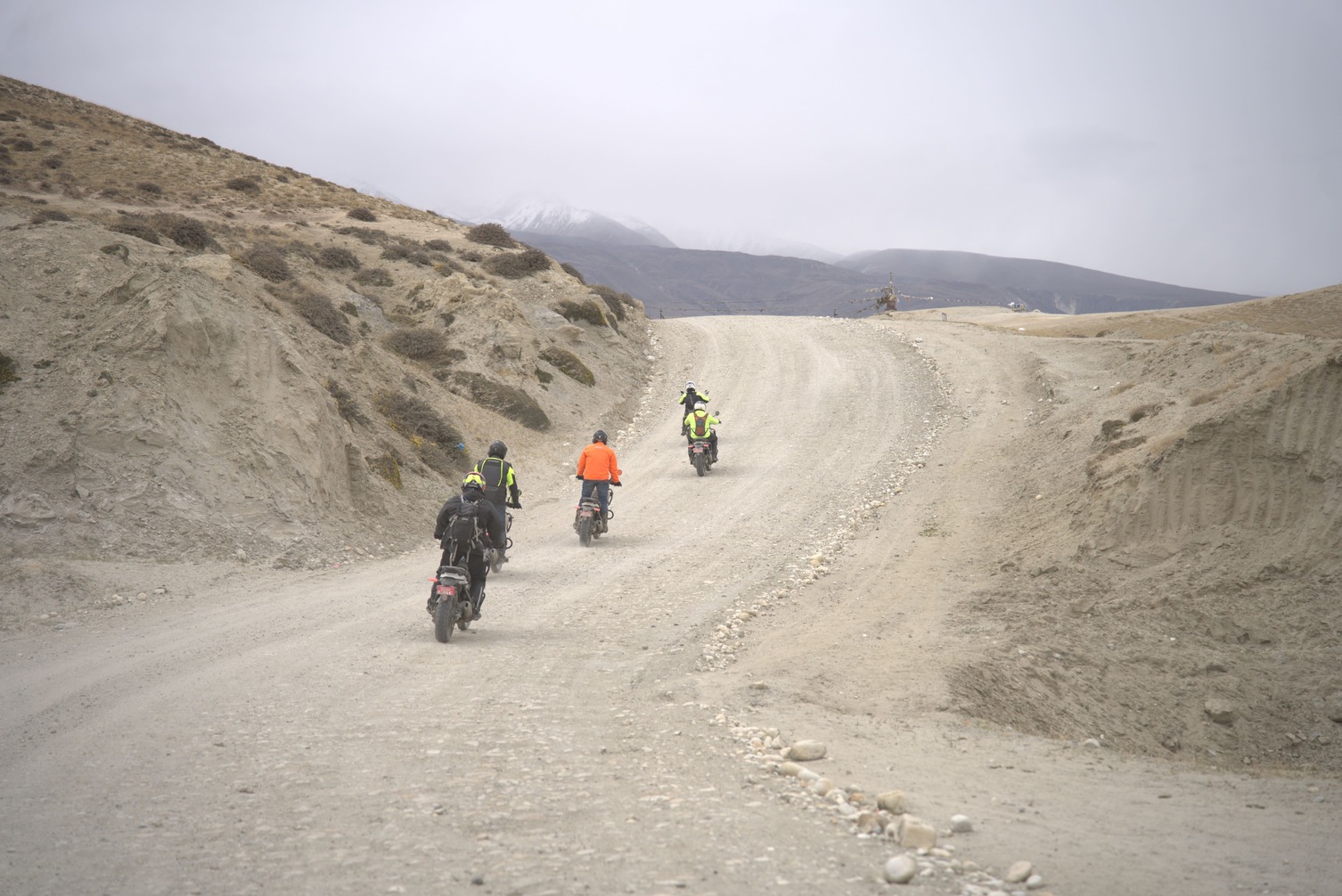
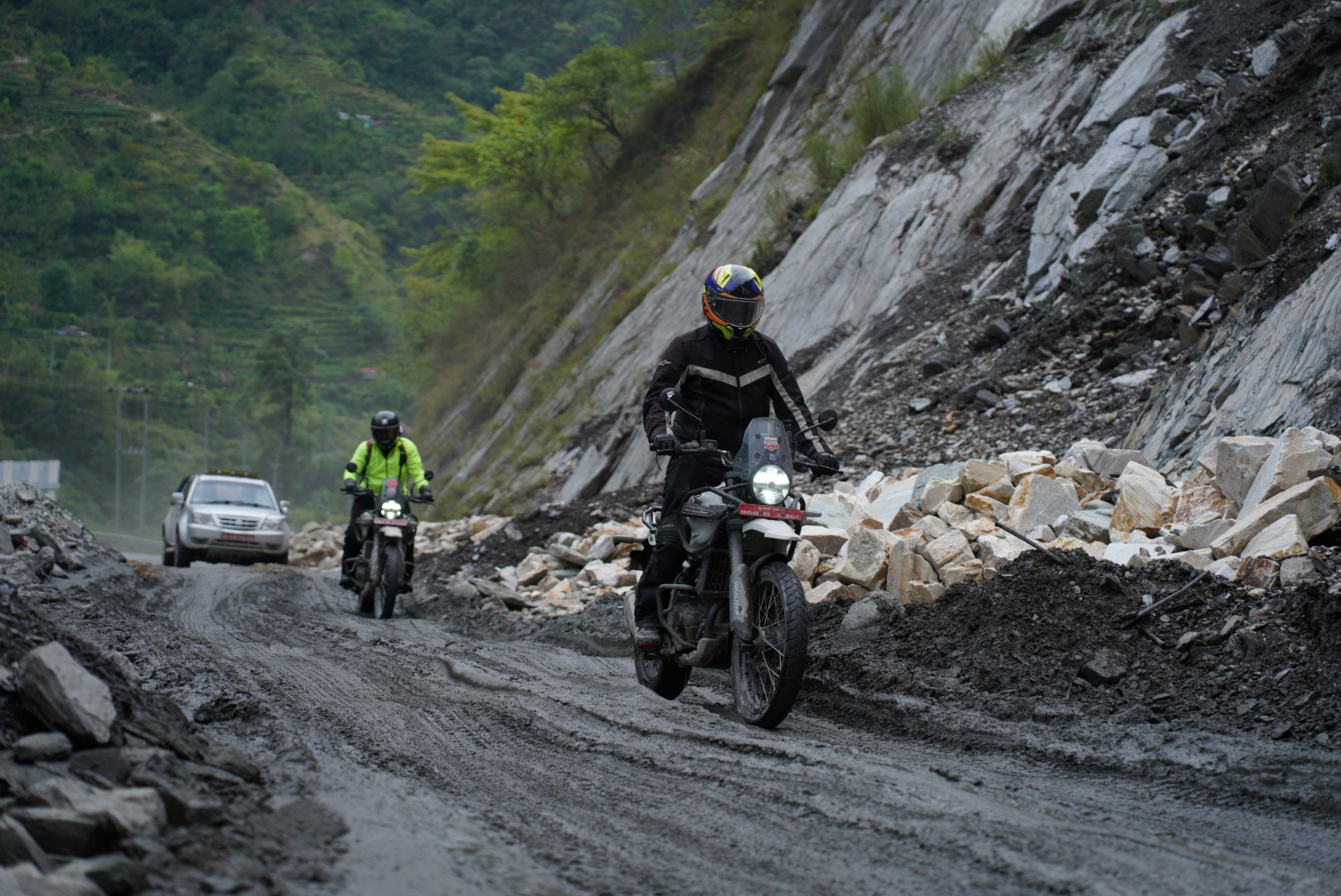
The Lower Mustang motorcycle tour approach involves a mix of asphalt and gravel, with ongoing road improvement projects that have progressively improved surface conditions over the past decade. Jeep tracks, motorcycle traffic, and trekker pathways share the same corridor, which means the road is frequently used and relatively predictable.
The rough sections — particularly between Beni and Tatopani — are genuinely challenging. But challenging here means "demanding gravel road," not "expedition terrain." Most intermediate riders with basic off-road experience handle the Lower Mustang surface comfortably.
Upper Mustang Roads
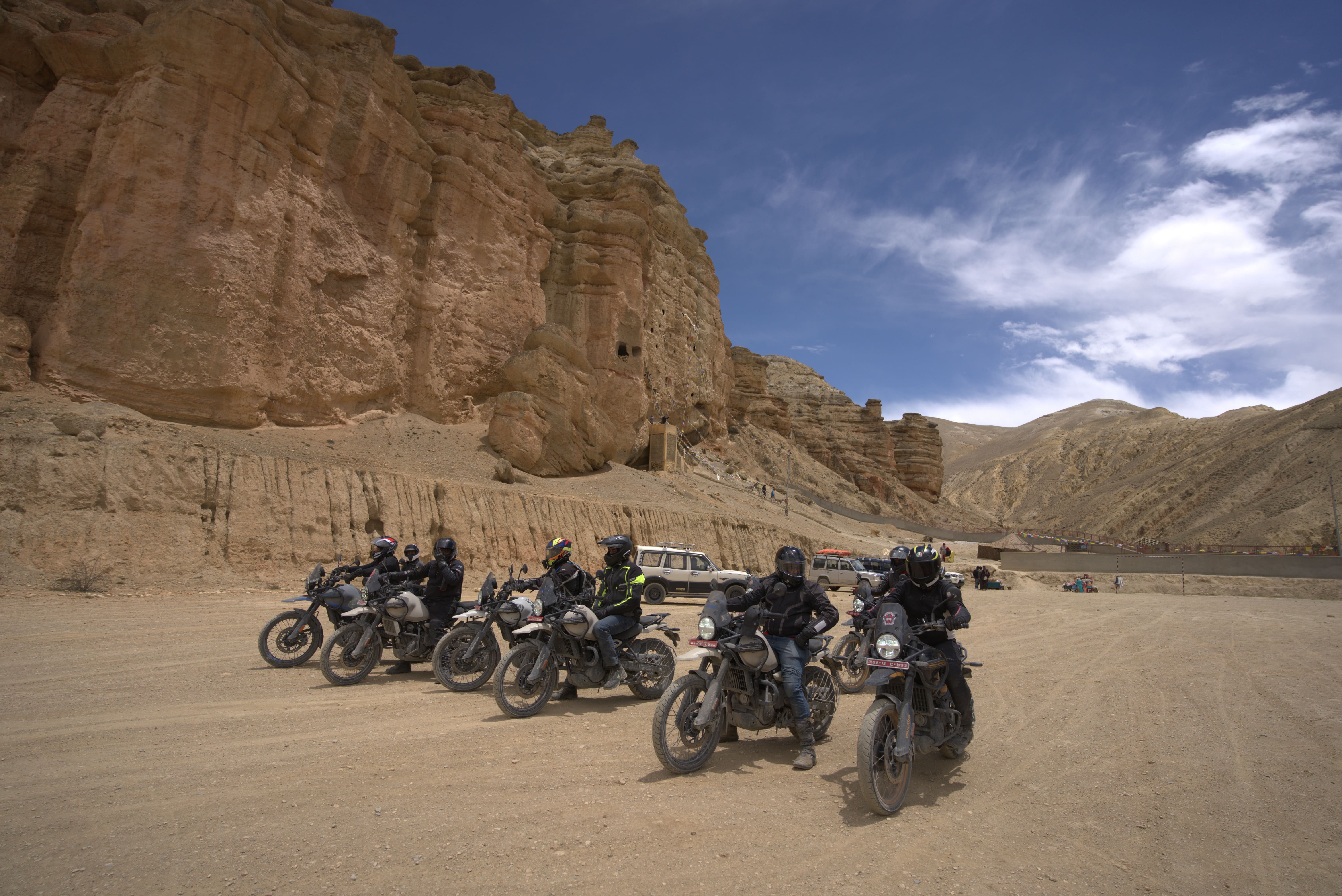
From Kagbeni northward, the concept of "road" becomes conceptual rather than literal. What you're riding is a terrain corridor — a direction of travel across whatever the landscape provides at any given section.
Sand mixed with loose gravel. Dry riverbeds with irregular rock distribution. Hard-packed dirt that transitions without warning. Wind-scoured plateaus where the visual boundary between track and surrounding terrain disappears. The surface changes constantly and gives no guarantee that conditions in the next kilometre will resemble the last.
The critical insight: Lower Mustang is a road ride with rough sections. Upper Mustang is a terrain navigation exercise with occasional road-like sections. These are different skill sets, and riders who arrive at Kagbeni expecting an extended version of what came before receive an immediate and unambiguous correction.
Difficulty: Why "More Challenging" Doesn't Capture It
Lower Mustang Difficulty
Lower Mustang is appropriately described as beginner to intermediate. First-time Himalayan riders who are comfortable on gravel roads and have basic off-road awareness handle the route well. The terrain is demanding enough to feel adventurous; it is not technical enough to require specialised skills.
The Annapurna Circuit, which overlaps partially with the Lower Mustang approach, is one of Nepal Moto Tours' recommended introductory Himalayan rides for exactly this reason — it builds the foundational skill set without exposing newer riders to the conditions that begin after Kagbeni.
Upper Mustang Difficulty
Upper Mustang requires intermediate to advanced off-road capability. The difficulty increase from Lower to Upper Mustang is not linear — it is exponential. Riders who rate themselves a 6/10 in Lower Mustang frequently find themselves operating at their limit in Upper Mustang within the first day of the restricted zone.
The compounding factors — altitude fatigue, sustained off-road concentration, isolation-driven psychological load, and persistent wind — create a difficulty environment that exceeds what any individual element suggests. Upper Mustang's hardest moments are rarely the most technically demanding sections. They are the seventh hour of day five, when the accumulated weight of all those factors arrives simultaneously.
Infrastructure: Tourism Industry vs Village Survival System
Lower Mustang Infrastructure
Jomsom has an airport, reliable electricity, Wi-Fi, ATMs, a functioning fuel supply, and accommodation ranging from basic teahouses to genuinely comfortable lodges. Marpha has apple orchards, apple brandy, and restaurants that serve more than dal bhat. Tukuche has heritage guesthouses with character. The infrastructure in Lower Mustang serves tourism — it has been shaped by decades of trekker and rider traffic.
Upper Mustang Infrastructure
Beyond Kagbeni, the infrastructure logic changes entirely. Lodges exist in the main villages — Chele, Ghami, Tsarang, Lo Manthang — but they are basic by any standard: limited rooms, shared facilities, solar power when available, and menus that reflect what can be transported to a restricted desert zone, not what a tourist might prefer.
Fuel is available at specific points but not reliably. Mechanical support is minimal — a local welder or basic toolset at best, not a motorcycle workshop. Mobile signal is intermittent and in places absent for hours of riding at a time.
This is not a complaint about Upper Mustang's infrastructure — it is a description of what "remote expedition territory" actually means in practice. Riders who adjust expectations accordingly are fine. Riders who expect Lower Mustang levels of comfort and availability above Kagbeni are not.
Cultural Experience: Tourist-Adapted vs Culturally Preserved
Lower Mustang Culture
The Thakali culture of the Jomsom and Marpha region is genuine, rich, and worth engaging with — but it has been shaped by decades of tourism contact. The villages are accustomed to foreign visitors. Menus are translated. Guesthouses have experience managing international guests. The cultural experience is authentic, but it operates within a framework designed for accessible tourism.
Upper Mustang Culture
Upper Mustang is a functionally different cultural environment. The region maintained Tibetan-influenced Buddhist traditions through centuries of isolation, and the restricted permit system has slowed the tourist-adaptation process that has reshaped accessible Himalayan regions elsewhere.
Lo Manthang is not performing its heritage for visitors. The monasteries are actively practised religious sites. The alleyways of the walled city are lived in. The villages you ride through are communities, not attractions.
This cultural authenticity is one of Upper Mustang's defining qualities and one of the genuine justifications for the permit cost. The restriction is what preserved it.
Cost Comparison: What You Actually Pay
|
Cost Category |
Lower Mustang |
Upper Mustang |
|
Primary permit (foreign rider) |
~USD $25 (ACAP) |
USD $50/day (RAP) |
|
Mandatory guide |
Not required |
Required (cost varies) |
|
7-day permit total |
~$25 |
$150+ |
|
Accommodation quality |
Tourist-grade lodges |
Basic village lodges |
|
Fuel availability |
Reliable (Jomsom) |
Limited, strategic |
|
Overall daily budget |
Lower |
Significantly higher |
Upper Mustang costs more at every layer — permits, guide fees, and the logistical premium of operating in a restricted zone with limited supply infrastructure. Riders who budget based on Lower Mustang cost expectations will be underprepared financially.
Which Route Is Right for You?
Choose Lower Mustang if:
You are new to Himalayan riding and want a genuine introduction to Nepal's mountain terrain without the permit complexity, cost, or skill requirements of the restricted zone. Lower Mustang will challenge you, reward you, and leave you with a clear sense of whether you want to go further. It is also a self-sufficient experience — you don't need a guide, you have flexibility, and the support infrastructure makes independent riding viable.
Choose Upper Mustang if:
You have prior off-road and ideally Himalayan riding experience, you're ready for a multi-day expedition with real logistical complexity, and you want the category of experience that genuinely earns the word "expedition." If you've done Lower Mustang or a comparable route and found it manageable, Upper Mustang is the next level — not marginally harder but fundamentally different in what it demands and what it delivers.
Consider Doing Both in Sequence:
Many riders do Lower Mustang as a first Nepal trip and return specifically for Upper Mustang. This is the most effective progression — Lower Mustang builds the terrain familiarity, altitude awareness, and riding style adjustments that make Upper Mustang manageable and genuinely enjoyable rather than overwhelming.
Nepal Motorcycle Tours offers both routesas separate guided expeditions, with itinerary structures that reflect the different demands of each — including the option to combine them in a single extended journey for riders who want the full Mustang experience from Pokhara to Lo Manthang and back.
The Bottom Line
Lower Mustang and Upper Mustang are not the same ride at different distances. They are different travel systems — different legal frameworks, different terrain demands, different cultural environments, and different psychological experiences.
Lower Mustang is one of Nepal's great accessible motorcycle journeys. Upper Mustang is one of the world's great restricted-access expeditions.
Both are worth doing. Neither substitutes for the other. And understanding the genuine differences between them is the starting point for planning either trip correctly.
Ready to plan your Mustang ride? Nepal Moto Tours runs guided expeditions for both Lower and Upper Mustang, with full permit handling and experienced local guides across all routes. Get in touch to discuss your 2026 itinerary.