Nepal's motorcycle tourism market operates across a wider price range than most riders realise when they start planning. At one end, a basic independent rental with a borrowed helmet and a route pieced together from forum posts can cost as little as USD 50 per day. At the other, a fully guided premium expedition with high-specification bikes, vetted accommodation, full mechanical support, and a guide who has ridden Upper Mustang every season for fifteen years can run USD 200 or more per day. The question any rider standing between those two options reasonably asks is: what does the gap actually buy, where does the money make a real difference, and where is the marketing premium attached to a marginal improvement?
This article answers that honestly, category by category, with the specifics that matter rather than the generalisations that fill most comparison content.
The Honest Starting Point: Both Can Work
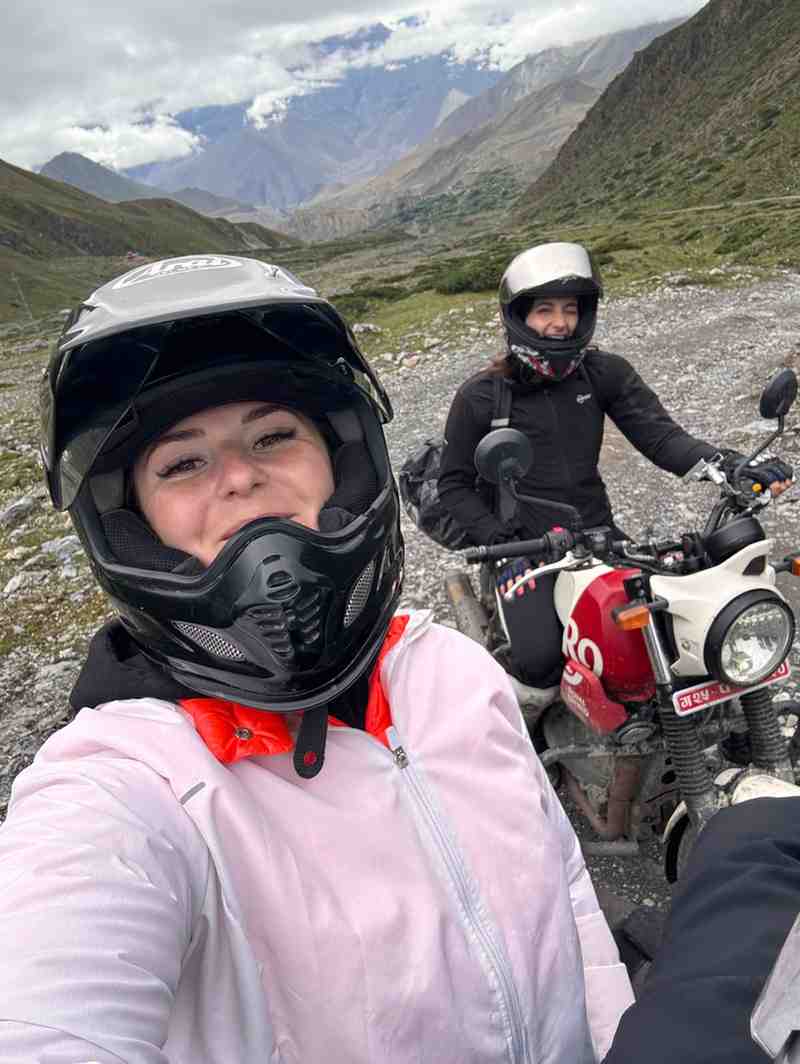
Budget motorcycle tours in Nepal are not inherently inferior experiences. Some of the most memorable Nepal motorcycle journeys have been completed by riders on basic rental bikes with minimal support, improvising their way through permit logistics and route-finding with the kind of creative self-sufficiency that adventure travel rewards. The tea house network along established routes is dense enough to catch most problems before they become crises. The Royal Enfield mechanic culture is embedded deeply enough in Nepali towns that basic mechanical failures rarely strand independent riders for long on popular routes.
Similarly, a premium guided motorcycle tour is not automatically a better experience than a well-planned independent trip. A premium price buys certain specific things — and those things matter differently depending on the rider, the route, and the risk they are comfortable absorbing.
What a higher price does not buy is better landscape, more dramatic passes, or a more authentic version of Nepal. Those are the same whether your bike costs USD 40 a day to rent or USD 200. What it buys is operational smoothness, risk reduction, and local knowledge — and the value of each of those varies significantly depending on your specific situation.
Motorcycles: Where the Difference Is Largest
This is the category where budget versus premium produces the most concrete, consequential difference — and also the category where riders most consistently underestimate the gap until they are mid-route.
Budget Tier Bikes
A budget bike rental in Kathmandu typically means an older generation Royal Enfield Classic 350 or Bullet, a Chinese-manufactured 150cc or 200cc commuter bike, or in better-maintained rental fleets, an earlier-model Royal Enfield Himalayan with significant kilometres on the clock. The maintenance standard for budget rental bikes varies enormously between operators, from genuinely well-serviced machines that happen to be basic, to neglected bikes whose problems surface only once you are two days from the nearest repair facility.
The practical consequence of a budget bike on Nepal's mountain roads is not primarily about power or comfort, though both matter. It is about reliability in a context where unreliability carries real cost. A loose chain, a degraded tyre, a battery that struggles in the cold above 4,000 metres — on a city commute, these are inconveniences. On the track between Kagbeni and Lo Manthang with no phone signal, they are problems of a different order.
Premium Tier Bikes
Premium guided tours with operators running maintained fleets — including Nepal Moto Tours' Royal Enfield Himalayans and Classic 500s — provide machines that have been specifically serviced before departure, ridden and checked for the terrain of the planned route, and matched to the rider's size and experience level. Ground clearance is appropriate for the river crossings and rocky sections the route requires. Tyres are in condition for the surface type. Critical components — chains, cables, brake pads — have been inspected and replaced if needed before you leave, not discovered deficient when the bike behaves unexpectedly at 4,500 metres.
The difference, practically, is the probability of a mechanical event on the route. It does not reduce to zero on a premium bike. But it reduces meaningfully, and on Nepal's most demanding routes, that reduction is worth considerably more than the abstract sum on a day-rate comparison.
The Middle Ground
An increasingly populated segment of the Nepal rental market offers mid-range options: the Royal Enfield Himalayan 411 or 450 in reasonable condition, the Hero Xpulse, or the Honda CRF300L from operators whose maintenance standards fall between the budget floor and the premium ceiling. For riders planning routes that don't venture into the most remote sections — the Annapurna Circuit approaches, the Kathmandu–Pokhara corridor, Chitwan and Lumbini loops — a carefully vetted mid-range rental bike is often the best value position, combining adequate reliability with meaningfully lower daily cost.
Guides and Local Knowledge: The Category Budget Cannot Replicate
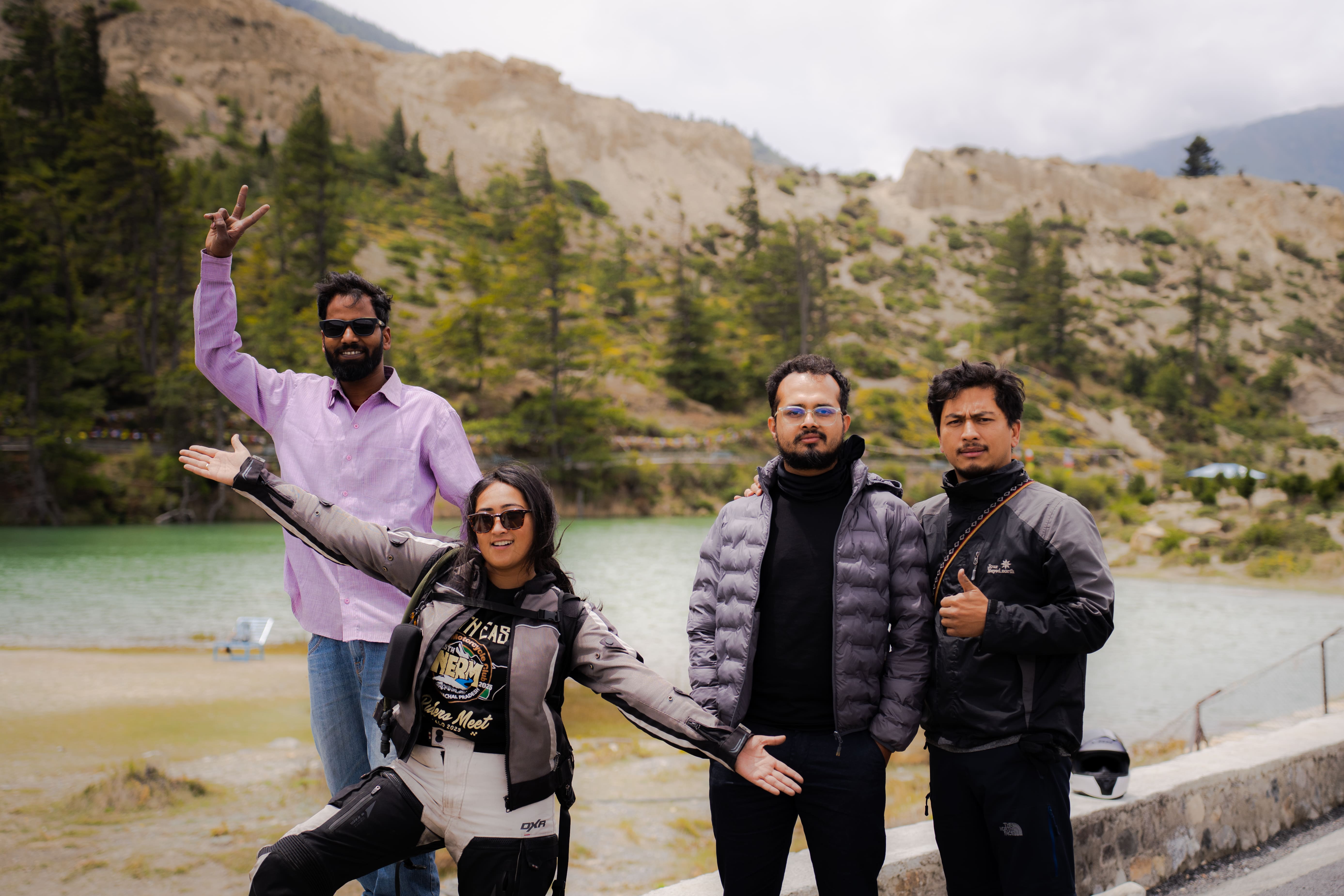
There is a version of the guided-versus-independent comparison where the guide is a nice-to-have, someone who adds colour commentary and handles minor logistics while an experienced rider navigates a well-documented route. That version applies to motorcycle tourism in many parts of the world where routes are well-signed, support is consistent, and the consequences of a wrong turn are limited to a delay.
Nepal is not that version.
What a Good Guide Actually Provides
A genuinely experienced Himalayan motorcycle guide, the kind running with premium operators who have been on these roads for years rather than seasons — provides a specific and consequential set of capabilities that no pre-trip research can fully replicate.
Current route conditions are the most immediately practical. A guide who spoke to a rider coming the other direction yesterday morning, or who has contacts in the village at the pass, knows whether the track above Kagbeni is rideable today or requires a different line. A blog post from last October, however detailed, cannot tell you that.
Decision-making under uncertainty is the deeper value. When weather closes in on a high pass approach, when a river crossing that looked manageable from the bank reveals a different character in the current, when a rider is showing early altitude symptoms that they themselves are attributing to tiredness — an experienced guide makes the correct call in that moment from a base of pattern recognition that independent riders simply do not have on a first or second Nepal trip.
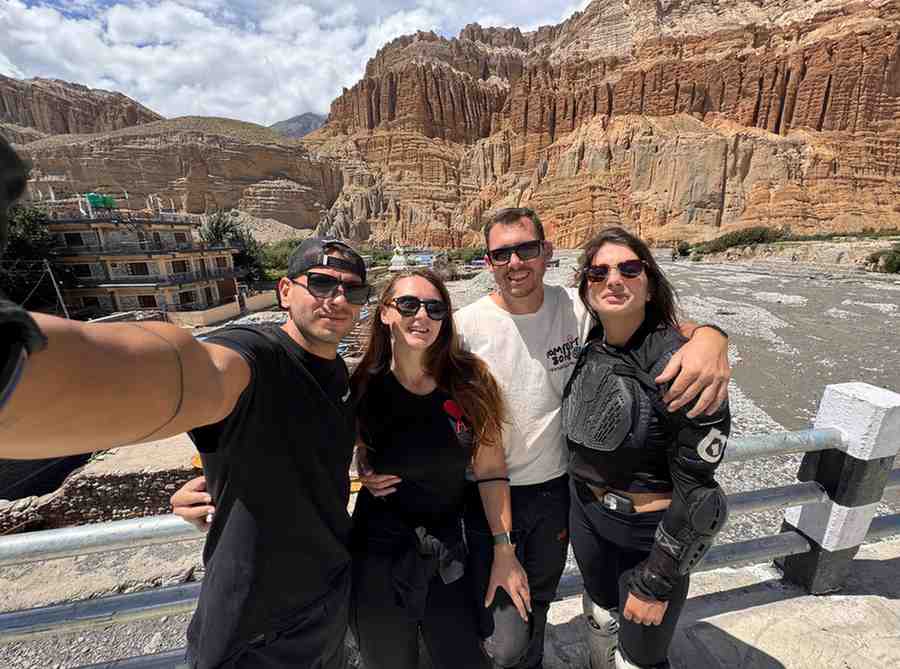
Cultural and community access is the third dimension, frequently underestimated. A guide who grew up near Mustang, whose family relationships extend through the villages on the route, who is known at the tea houses and the checkpoints — this person opens conversations, encounters, and local experiences that an independently travelling foreigner, however curious and respectful, will not reach in the same way.
What Budget Tours Provide Instead
Budget independent travel in Nepal replaces the guide with self-reliance, research, and the informal intelligence that comes from talking to other riders on the route. For experienced riders who have done Nepal before, who are mechanically competent, and who are travelling well-documented routes, this trade-off is often reasonable. The route is known, the risk tolerance is calibrated, and the absence of a guide is genuinely fine.
For first-time Nepal riders, for anyone attempting Upper Mustang, Manang, or Dolpo for the first time, or for riders with limited off-road experience, the absence of a guide is not a neutral difference — it is a genuine risk increase whose magnitude is proportional to how demanding the route is and how thin the support infrastructure gets along it.
Accommodation: The Most Variable Category
This is the area where premium versus budget produces the widest experiential range, and also the area where the difference matters least to the experience overall, assuming a certain minimum standard is met.
Budget Accommodation on Nepal's Routes
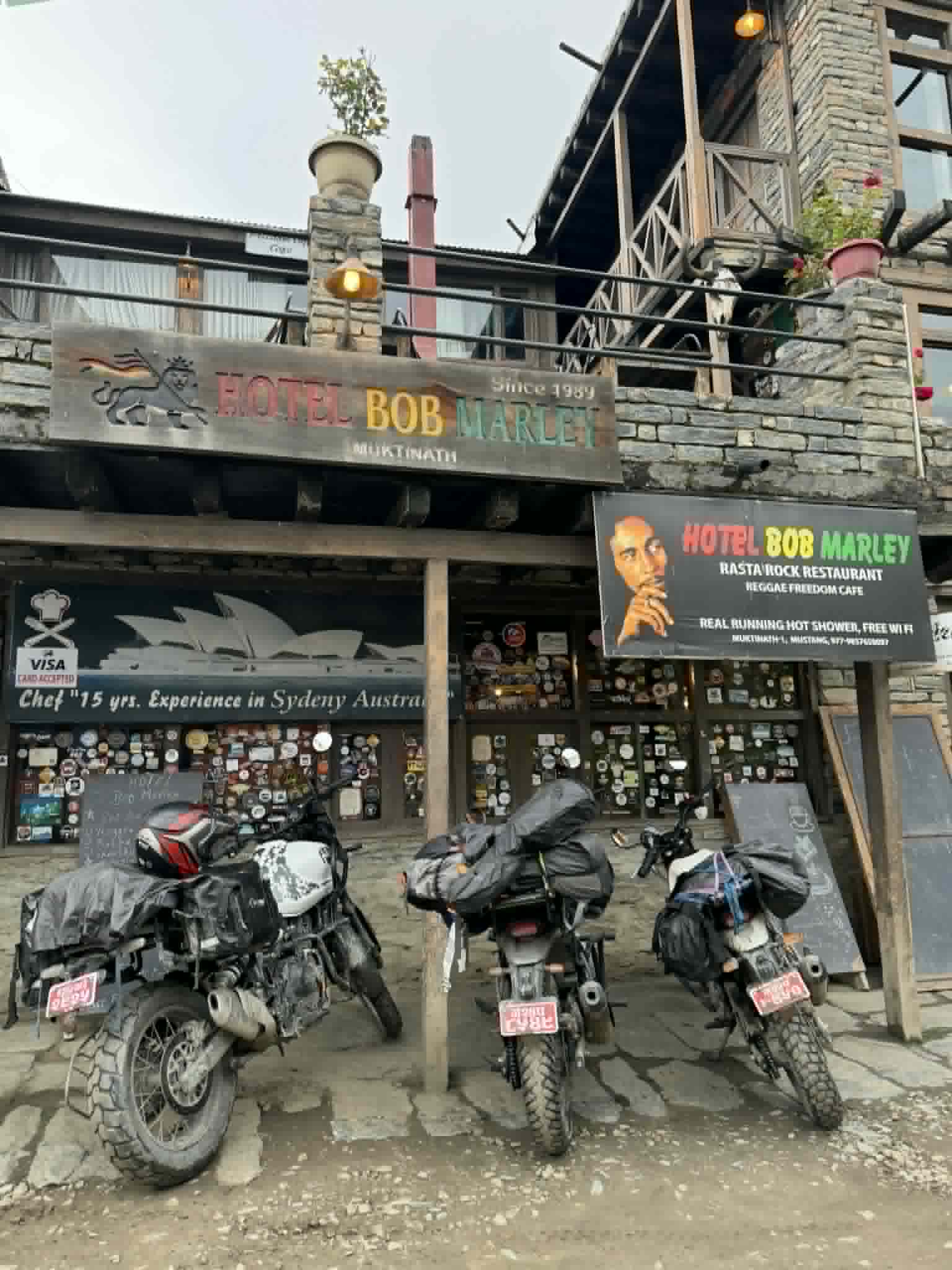
Tea house accommodation on Nepal's established motorcycle routes ranges from basic but entirely functional to genuinely rough depending on elevation, season, and route. At its best — a family-run tea house in Marpha with clean rooms, reliable heating, excellent Thakali cooking, and an owner who has been hosting riders for two decades — budget accommodation on Nepal's mountain routes is one of the most rewarding parts of the journey, embedded in the fabric of the community in a way that more curated accommodation deliberately tries to replicate.
At its floor — a concrete room in a half-built guesthouse at a high-altitude junction on a route that sees fewer riders, accessed because you arrived late and had no confirmed option — budget accommodation is uncomfortable in ways that meaningfully affect the next day's riding. Cold enough to disrupt sleep at altitude, which compounds altitude acclimatisation. No reliable way to dry wet gear after a river crossing or a late-day storm. Food that is limited and variable in quality.
Premium Accommodation
Premium guided tours with operators like Nepal Moto Tours pre-book accommodation along the route that has been vetted for the specific combination of cleanliness, heating reliability, food quality, and secure bike parking that makes a multi-day mountain ride recoverable rather than cumulatively exhausting. This does not mean luxury hotels — in Upper Mustang or Manang, the accommodation ceiling is simply lower than what the word "premium" might suggest in other contexts. What it means is that the accommodation at the end of each day has been confirmed to meet a standard, rather than improvised at the moment of arrival.
The concrete impact on the trip is in sleep quality, gear management, and food reliability — unglamorous variables that compound significantly over a ten-day expedition. A rider who has slept well, dried their gear, and eaten adequately arrives at each riding day in a fundamentally different condition from a rider who has improvised all three, and that difference is measurable in concentration, decision-making, and enjoyment.
Permits and Logistics: Where Budget Trips Carry Hidden Costs
This is the category that blindsides independent riders most consistently, and it deserves specific treatment because the cost is not always financial.
Upper Mustang's Restricted Area Permit costs USD 50 per day and must be processed through a registered Nepal Tourism Board agency. This cannot be done independently by a foreign tourist, regardless of persistence or resourcefulness. Riders arriving in Kagbeni without this permit, assuming they can arrange it at the checkpoint, cannot enter Upper Mustang. The permit processing through an agency in Kathmandu takes time and requires specific documentation — adding this to a budget independent itinerary mid-trip, rather than pre-arranged before departure, typically costs at least a day of riding time.
Premium operators process all permits before the trip begins. The rider arrives with everything in order. The checkpoint at Kagbeni is a formality rather than a potential obstacle.
Beyond restricted area permits, the conservation area fees, TIMS cards, and route-specific documentation that Nepal's protected areas require accumulate into a permit management task that is routine for an experienced operator and non-trivial for a first-time independent rider to navigate correctly under time pressure.
Mechanical Support: The Risk That Only Matters When It Happens
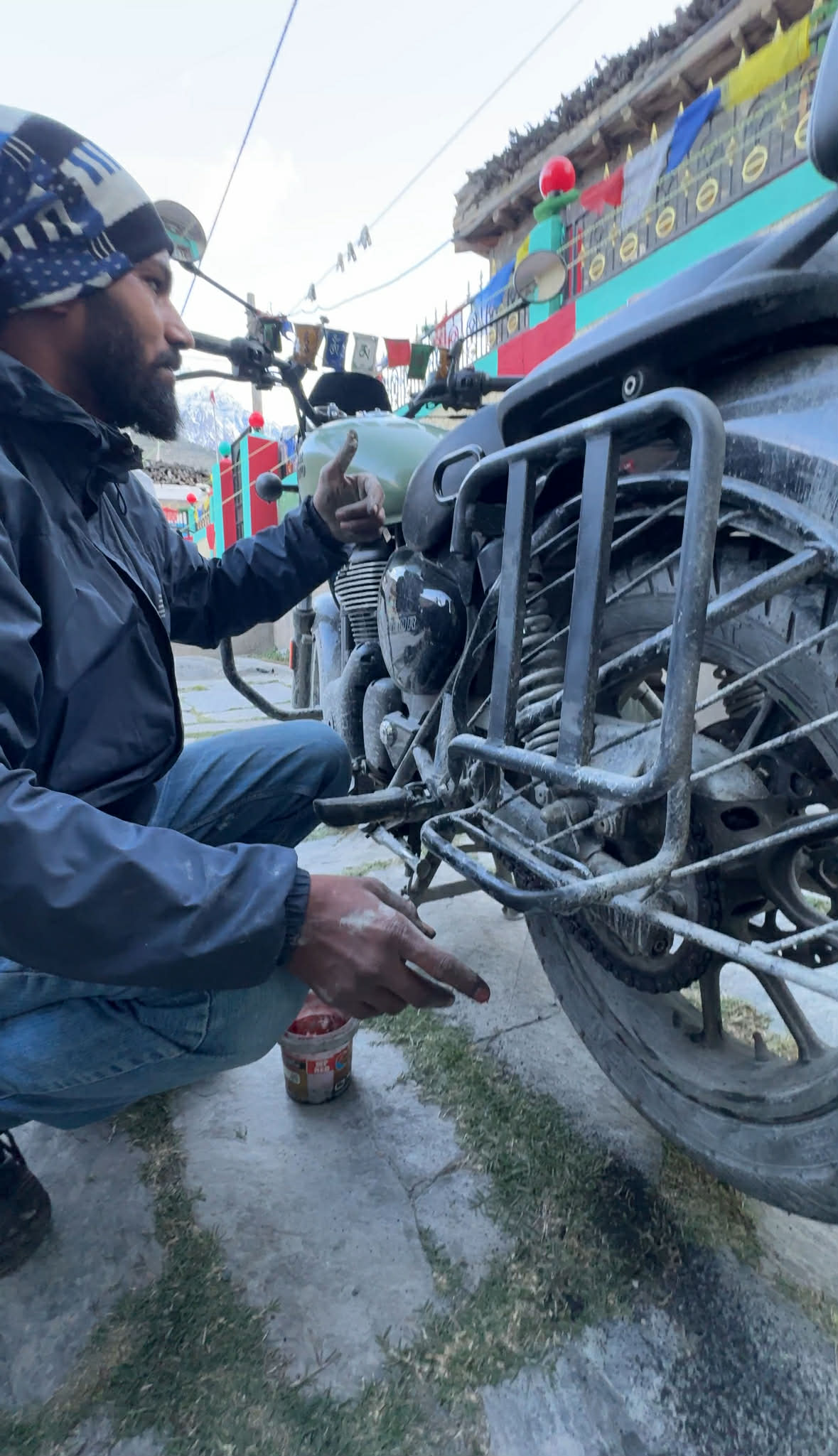
Most riders planning a Nepal motorcycle tour underweight this category precisely because it only becomes relevant when something goes wrong, and optimism is a natural planning mode. The experienced rider considers what the situation looks like when a tyre fails above Muktinath, or a clutch cable snaps on the way into Tsum Valley, before they leave rather than after.
Budget independent trips carry full mechanical risk on the rider. A puncture repair kit and basic toolkit managed by a rider with sufficient competence handles the majority of common issues on well-travelled routes. The situations that exceed this capacity — a seized engine, a bent wheel, a broken frame component — require transport of the bike, which on remote sections means improvising a solution with whatever is locally available, at whatever cost and time that requires.
Premium guided tours with mechanical backup — a support vehicle, a guide who carries a curated toolkit matched to the bike's specific failure points, confirmed relationships with mechanics along the route — convert most mechanical events from trip-threatening situations to manageable delays. This is not about eliminating mechanical risk. It is about having a proportionate response to it already in place before the situation requires one.
The Real Cost Comparison: What Budget and Premium Actually Spend
These figures are realistic ranges for independent and guided touring in Nepal, mid-2026, to give context beyond day-rate headlines.
|
Category |
Budget Independent |
Premium Guided |
|
Bike rental |
USD 30–70/day |
Included in tour rate |
|
Accommodation |
USD 10–25/night |
USD 30–70/night, pre-confirmed |
|
Food |
USD 8–15/day |
Included or USD 15–25/day |
|
Fuel |
USD 5–12/day |
Included in tour rate |
|
Permits (Mustang route) |
USD 50/day+ self-arranged |
Included, pre-arranged |
|
Guide |
NIL or USD 40–80/day local |
Included |
|
Mechanical risk |
Self-managed |
Covered by operator |
|
Estimated total per day (Mustang route) |
USD 70–150 |
USD 150–220 |
The gap at the total level is narrower than the day-rate comparison suggests, because budget independent travel carries costs — permit agency fees, day-rate local guides, occasional emergency mechanical spend — that the headline rental figure does not include. The honest premium for guided service on a demanding Nepal route is roughly USD 60–90 per day above a realistic independent budget, not the larger figure that a bike-only rental comparison implies.
Who Gets the Most From Each Option
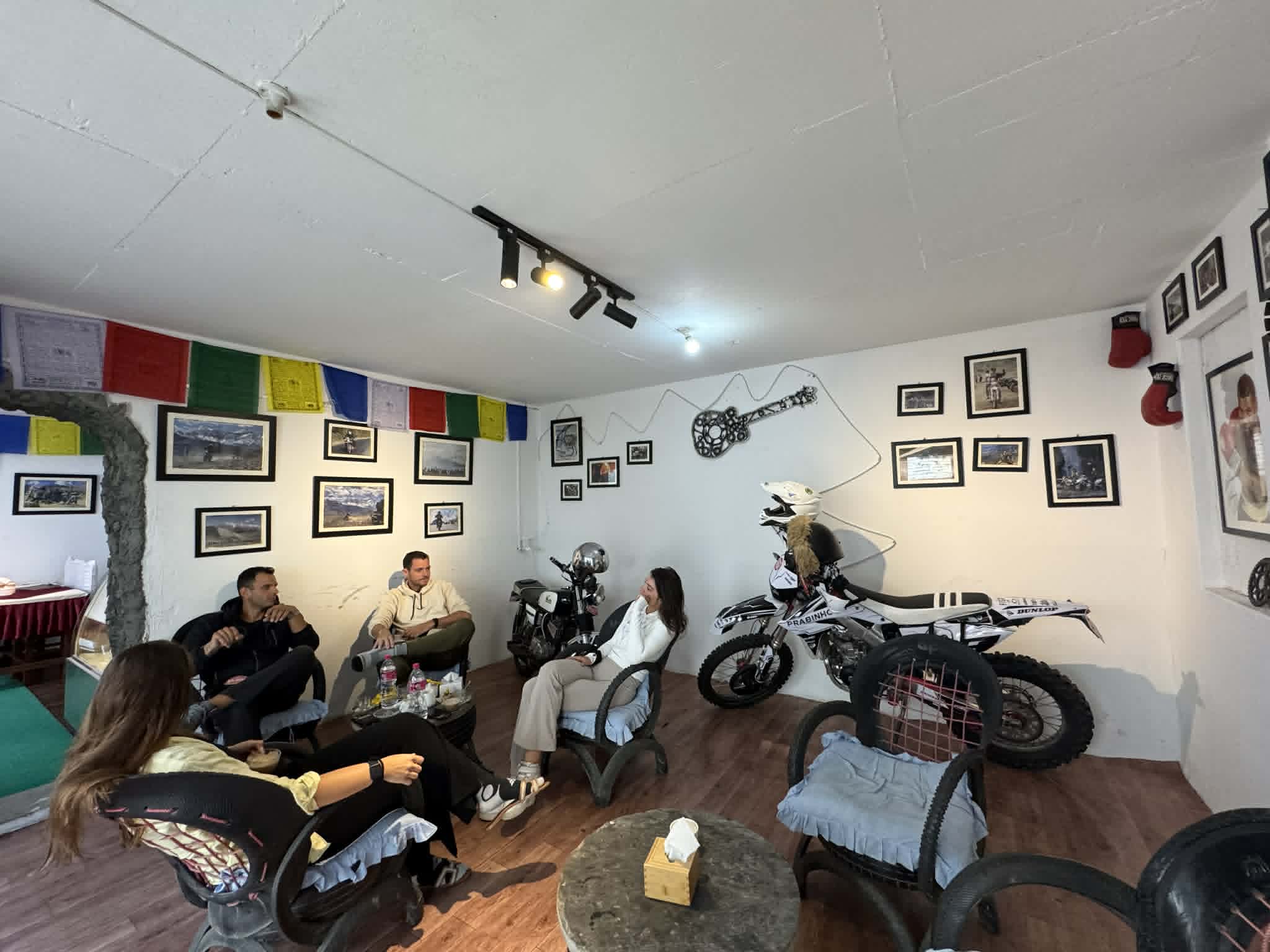
Budget independent touring is the stronger choice for riders with previous Nepal experience, strong mechanical self-sufficiency, adequate off-road riding competence, flexibility on timing and itinerary, and a preference for the self-reliance that independent travel produces. On well-travelled routes — the Annapurna foothills, the Pokhara region, Chitwan and Lumbini — a carefully planned independent trip often delivers better value for this rider profile than a guided tour would.
Premium guided touring is the stronger choice for first-time Nepal riders, anyone attempting Upper Mustang, Manang, or other restricted-area routes, riders without strong off-road or mechanical backgrounds, groups with limited flexibility for delays or itinerary changes, and anyone whose primary goal is the riding itself rather than the operational challenge of making the trip work from scratch.
The dividing line is not experience level alone, and it is not budget sensitivity alone. It is the combination of experience, route ambition, risk tolerance, and how much the operational friction of independent planning is part of the appeal versus something you'd prefer handled.
The Version of Nepal That Matters Most
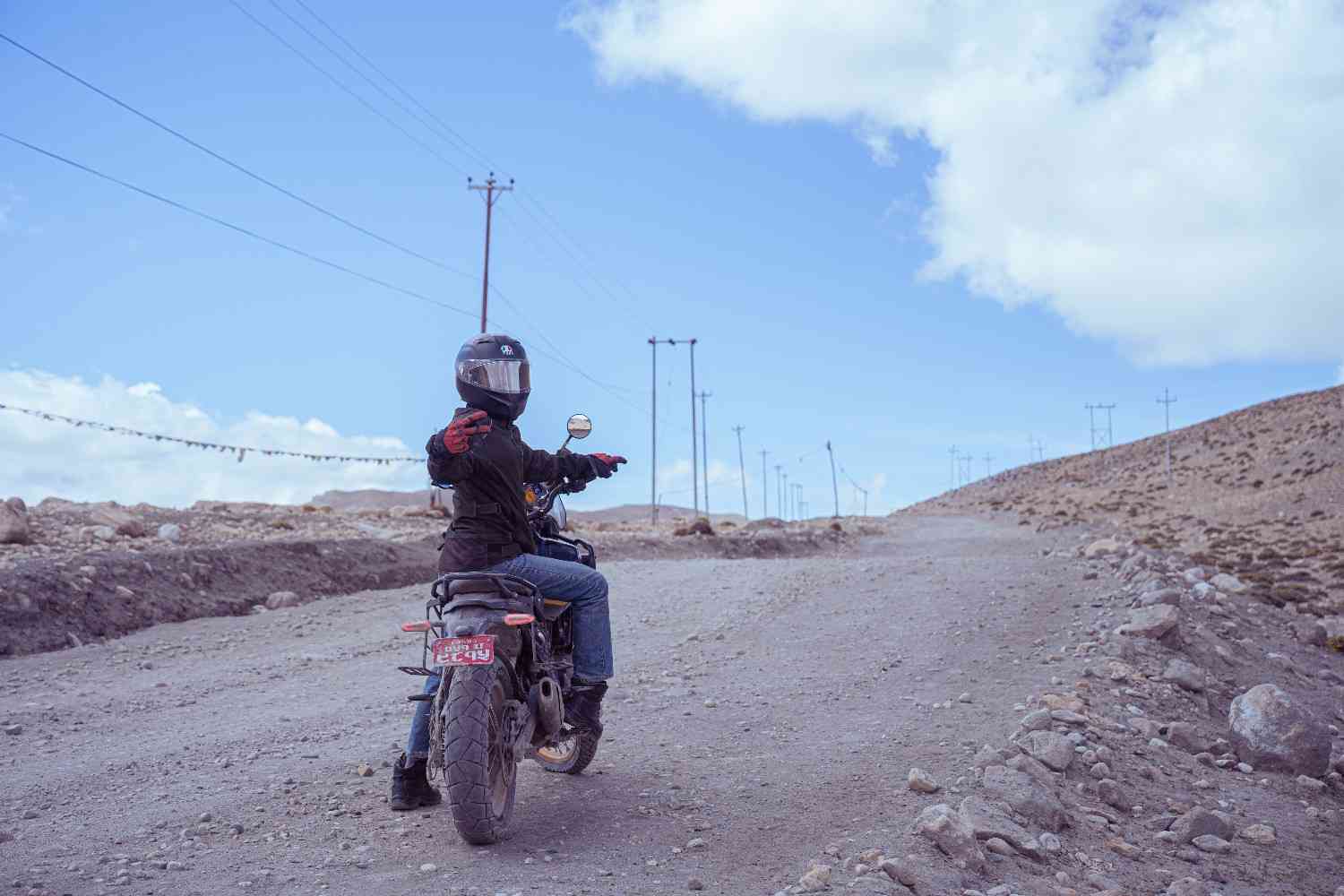
The landscape between Kagbeni and Lo Manthang looks the same from a budget rental bike and a well-maintained premium fleet machine. The Kali Gandaki wind does not discriminate between a USD 40 rental and an included Royal Enfield Himalayan. The moment the Annapurna range appears above the morning cloud line on your second day out of Pokhara is equally extraordinary regardless of what you paid to reach it.
What differs between budget and premium is everything around those moments — how reliably you reach them, how prepared you are when you do, what happens if something interrupts them, and how much of your limited trip time and mental energy is spent managing logistics rather than experiencing the place you came to ride through.
Choose on that basis, and the decision makes itself.