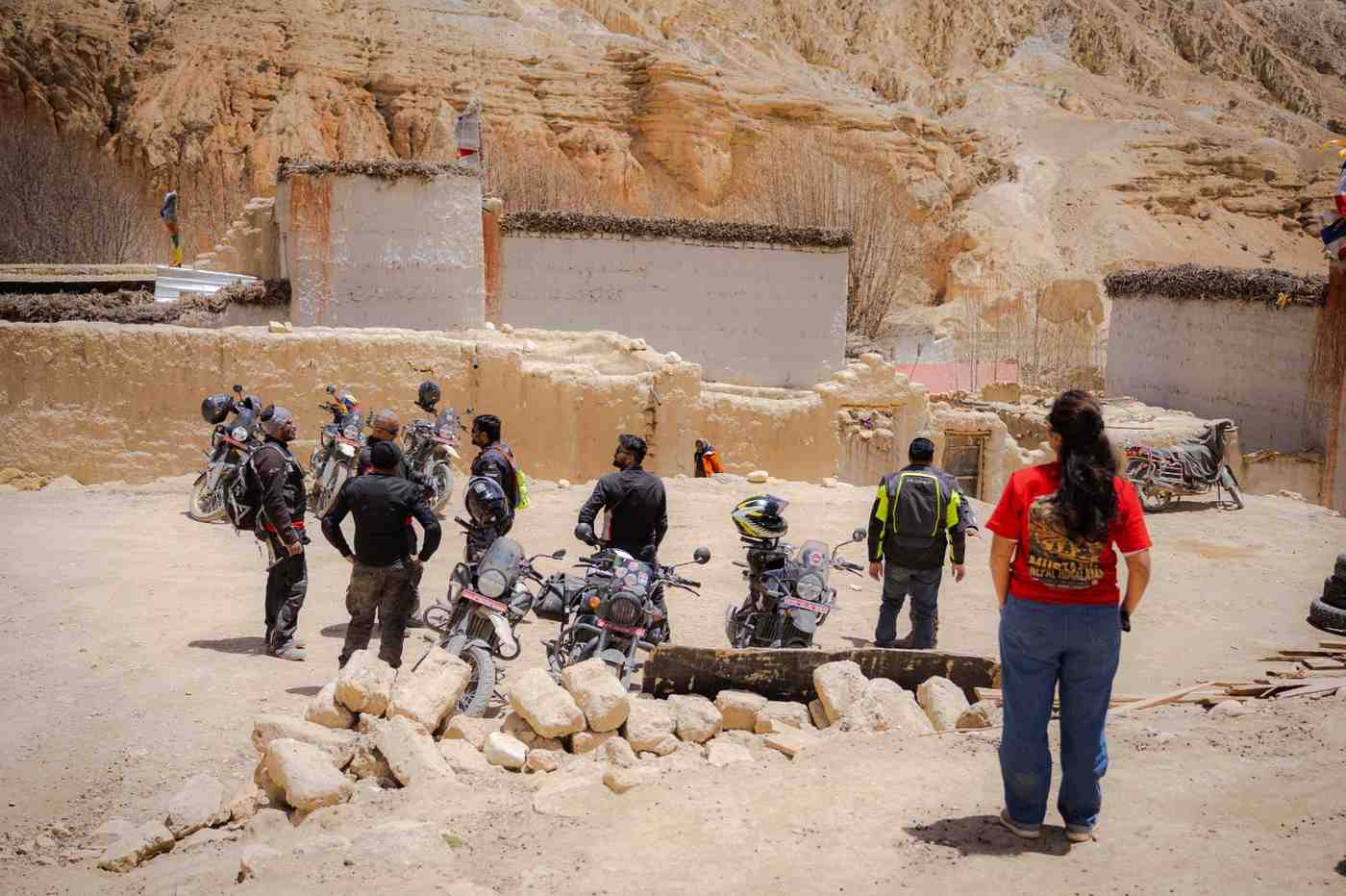
You can absolutely plan a Nepal motorcycle tour yourself. People do it every season, renting a bike in kathmandu, picking a route off a blog, figuring out permits as they go. Some of those trips turn out brilliantly. Some turn into the kind of story that starts with "so we ended up sleeping in a half-built guesthouse because we didn't know the pass was closing early that day."
The honest question isn't whether independent planning is possible. It clearly is. The question is whether it's the better choice for you specifically, given what you're trying to get out of the trip, how much time you have to plan it, and how much risk you're comfortable absorbing yourself. This article makes that case directly, including where DIY genuinely wins, because pretending otherwise wouldn't earn your trust or your booking.
What You're Actually Deciding Between
Booking with Nepal Moto Tours and planning independently aren't simply "guided" versus "unguided", that framing misses what actually changes. The real differences are in who carries the risk when something goes wrong, who has the local relationships that make problems disappear quickly, how much of your limited trip time goes to logistics versus riding, and whether the route you end up on reflects genuine local knowledge or whatever sequence of blog posts and forum threads you pieced together at 1am three weeks before departure.
Every section below addresses one of those differences honestly, including the cases where doing it yourself is the right call.
Local Knowledge You Cannot Get From a Blog Post
This is the advantage that matters most and is hardest to replicate independently, regardless of how much research you do.
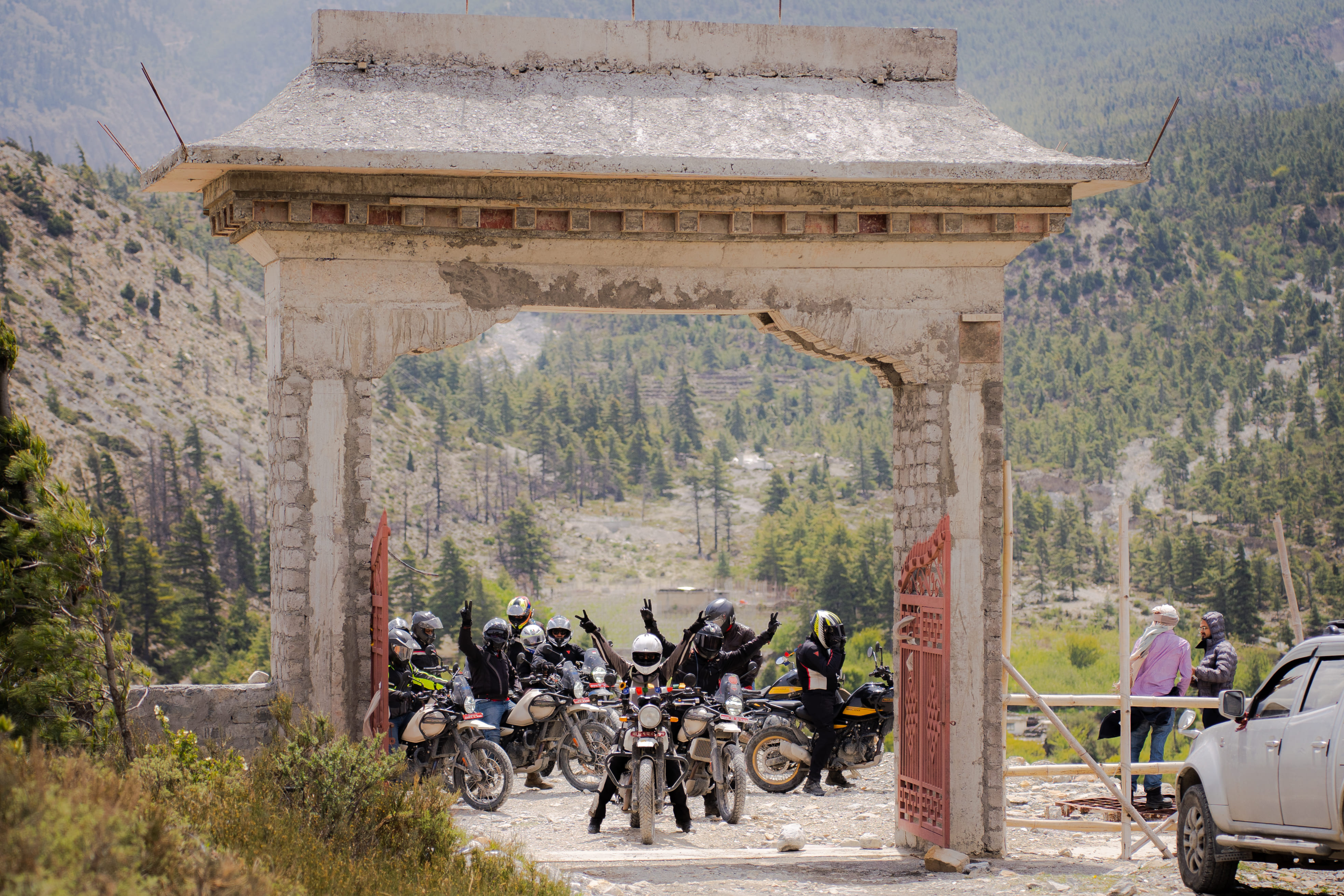
Nepal Moto Tours is led by Prabhash, based in Bhaktapur, who has spent over a decade riding Nepal's roads, from the Terai plains to the high Himalayas, through remote villages most travel content never mentions. That kind of accumulated knowledge isn't available in a blog post or a forum thread, because it isn't really about facts you can write down. It's about which guesthouse owner in a particular Mustang village will know if the road ahead has slipped overnight. It's about which stretch of the Kali Gandaki gorge gets dangerous wind specifically in the early afternoon versus the morning. It's about reading a sky over Thorong La and knowing, from years of pattern recognition, whether today is a crossing day or a wait day.
Independent riders working from blog posts and trip reports are working with information that was true when someone else rode that road, possibly years ago, under different seasonal conditions, on a different bike. Nepal's mountain roads change between seasons — a route that was rideable last October may be washed out this April. A guide who rides these roads continuously has current information. A blog post has a snapshot.
Permits and Bureaucracy Handled Before You Land
Nepal's permit system is one of the more genuine sources of friction for independent travellers, and it's worth being specific about why.
The Annapurna Conservation Area permit and TIMS card cover most popular routes at modest cost. Routes into Upper Mustang or Dolpo require a separate Restricted Area Permit that costs USD 50/day in Upper Mustang alone, that must be processed through a registered trekking or tour agency, not independently by a foreign tourist. This is not a bureaucratic inconvenience you can route around with enough patience. It is a structural requirement of how Nepal manages access to its restricted regions.
When you book with Nepal Moto Tours, permit processing happens before you've left home, handled by people who do it routinely and know exactly what documentation is needed and how long each step takes. Independent riders attempting to navigate this for the first time, often during their limited days in Kathmandu before a trip is meant to start, frequently lose a day or more to processing delays that an experienced operator simply doesn't encounter.
A Fleet Matched to the Terrain, Not Whatever's Available
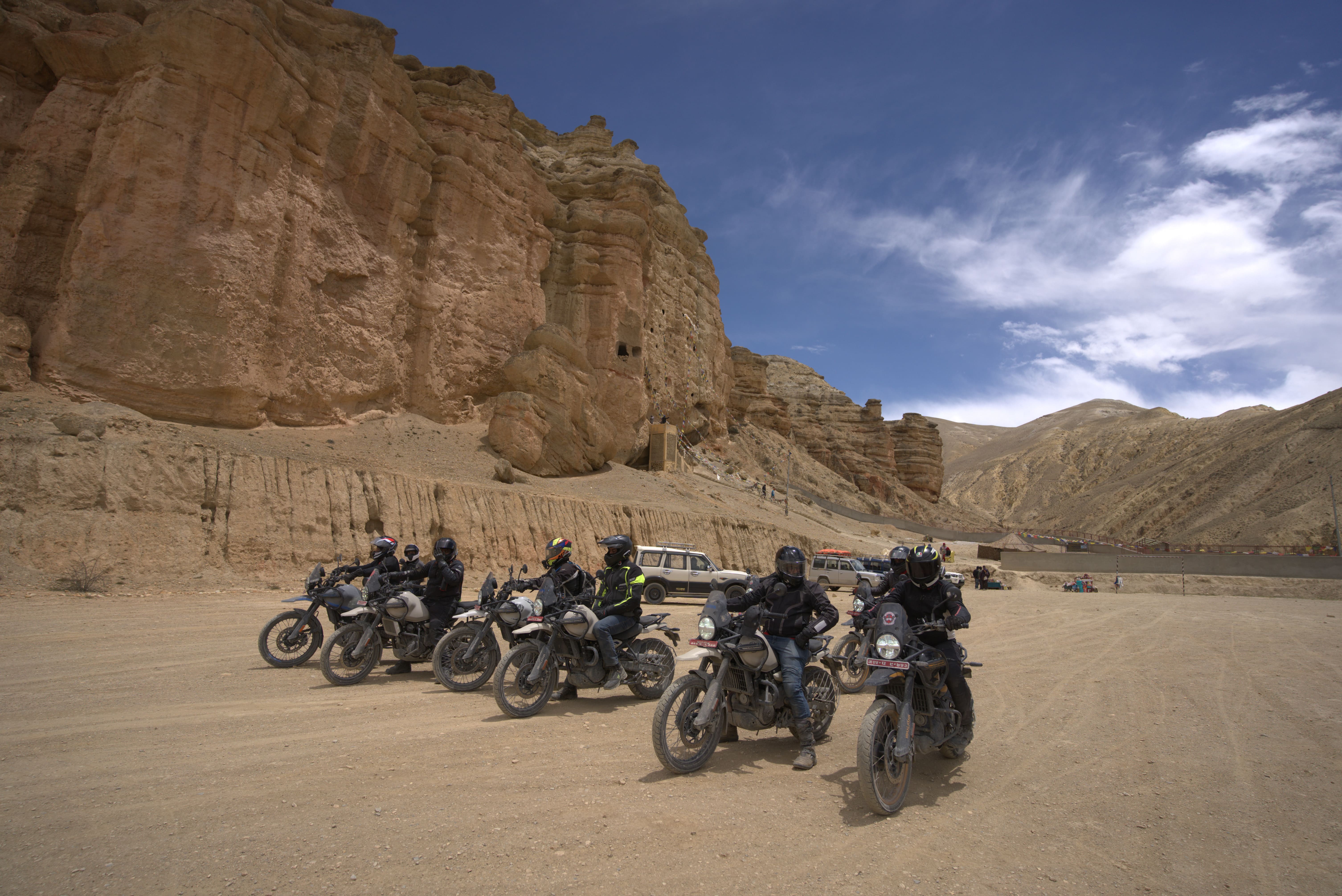
Nepal Moto Tours maintains a stable fleet prepared specifically for Nepal's varied terrain — Royal Enfield Himalayans and Royal Enfield Classic 350s, chosen because they are genuinely the right machines for the mix of paved highway, gravel, and river crossing that defines Nepal's mountain routes, not because they're whatever happened to be available for rent that week.
This distinction matters more than it might first appear. Independent riders renting from a general rental shop in Thamel are sometimes offered whatever bike is in stock, regardless of fit for their intended route. A bike that's wrong for the terrain, too heavy for technical gravel, insufficient ground clearance, poorly maintained, turns a manageable challenge into a genuinely difficult one. When the fleet is curated specifically for the routes being ridden, and maintained by people who know exactly what condition those roads will put the bike through, that risk is substantially reduced before you've even left.
Time: What You're Actually Trading
This is the trade-off that deserves the most honest treatment, because it's where independent planning sometimes genuinely wins.
Planning a Nepal motorcycle trip independently, researching routes, comparing rental options, working out permit requirements, building a realistic itinerary, identifying accommodation along remote stretches — takes real hours, often spread across weeks of evening research before departure. For some riders, that research process is part of the appeal. If you genuinely enjoy the planning itself, want full control over every decision, and have the time to do it properly, independent planning can be a satisfying part of the overall experience, not just overhead to get through.
For most people booking a limited window of vacation time, though, that planning time is time not spent doing the things that actually make a trip worthwhile — and a poorly researched independent plan, built under time pressure, often produces a worse trip than a guided one would have, simply because the planning quality suffers. Booking with an experienced operator converts that planning time directly into time you'd rather be using elsewhere, while still ending up with a route built on genuine local knowledge rather than a compressed version of someone else's research.
What Happens When Something Goes Wrong
This is the scenario independent riders underestimate most consistently, and it's worth being direct about it.
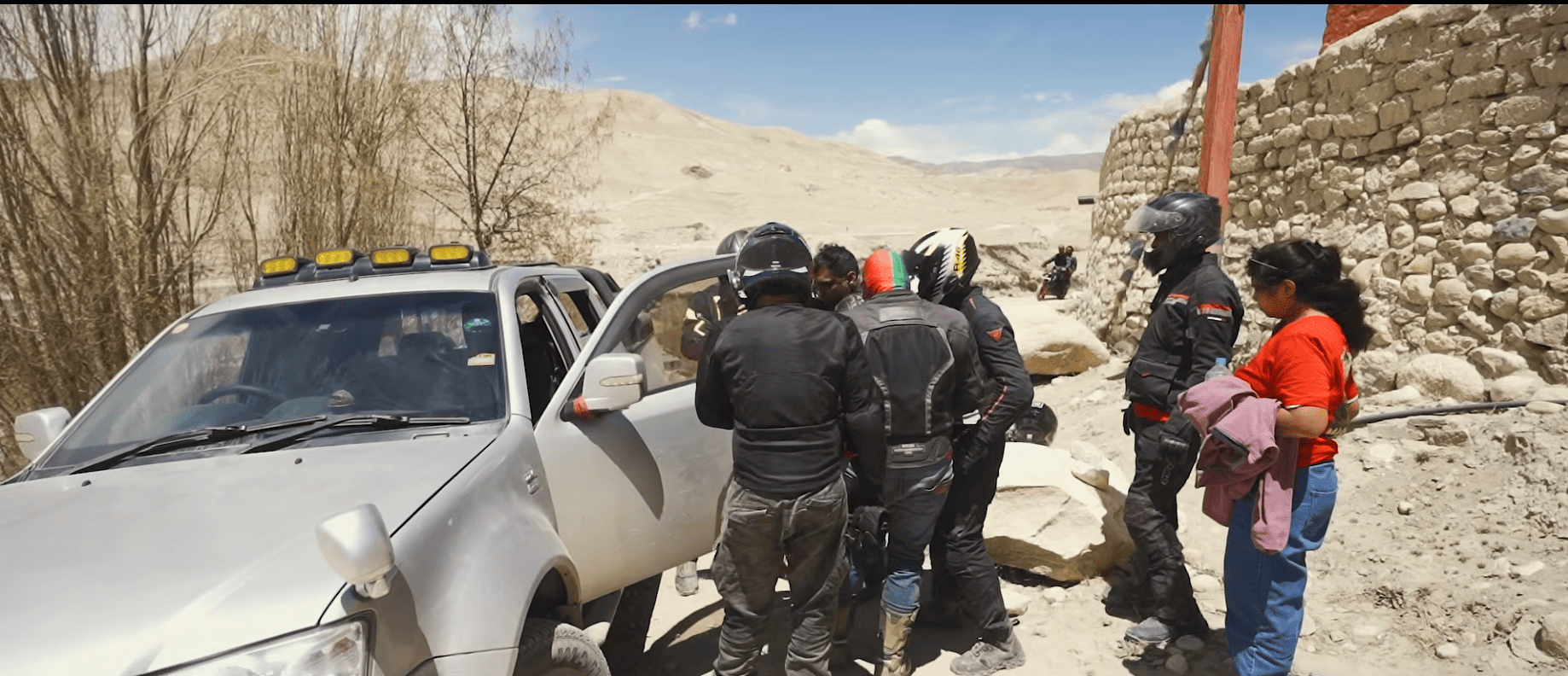
A flat tyre, a snapped clutch cable, a road washed out overnight, a rider developing altitude symptoms above 4,000 metres, these are not exotic edge cases on Nepal's mountain routes. They are routine occurrences that most multi-day Himalayan tours encounter in some form. The difference is not whether something happens. It's what happens next.
On a guided motorcycle tour, a mechanical problem becomes a delay measured in an hour or two — a guide who knows the route, knows who to call, and often carries the tools and parts to resolve common issues on the spot. Independently, the same problem can mean walking or hitching to the nearest village, hoping someone there can help, and losing the better part of a day or more, particularly on the more remote stretches toward Mustang or Manang where mechanical support thins out considerably. The same logic applies to altitude symptoms, route uncertainty, or any of the dozen small things that can go sideways on a demanding multi-day ride — a guide's judgment, built from years on these specific roads, is a genuine safety margin that independent research cannot fully replicate, however careful you are.
Where Independent Planning Is Genuinely the Better Choice
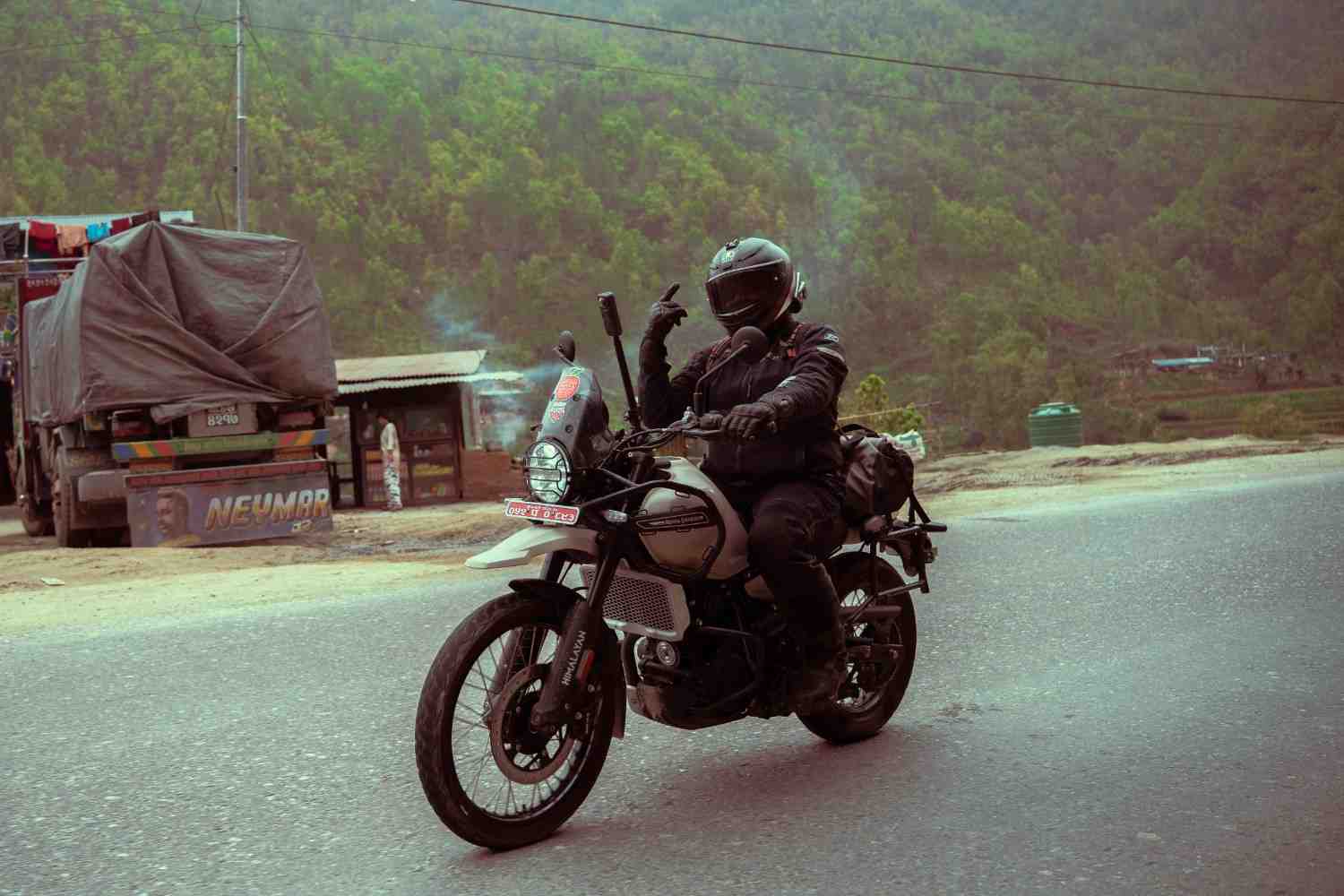
In the interest of an honest comparison rather than a sales pitch dressed as one: independent planning makes real sense for experienced riders who already know Nepal's roads from previous trips, riders with strong off-road and mechanical self-sufficiency who specifically want the challenge of figuring it out themselves, and riders sticking to well-travelled, lower-altitude routes — the Kathmandu-Pokhara corridor, for instance — where the margin for error is wider and local support is denser regardless of whether you're guided.
If that describes you, you don't need us, and we'd say so honestly if you asked. What Nepal Moto Tours is built for is the larger group of riders — first-time Nepal visitors, riders attempting restricted or high-altitude regions for the first time, anyone who wants the experience without absorbing the operational risk of figuring out permits, route conditions, and mechanical support from scratch.
The Actual Trade-Off, Stated Plainly
Booking with Nepal Moto Tours costs more per day than the cheapest independent option. That's a real cost, and pretending otherwise would be dishonest. What it buys in return is current, ground-level knowledge of routes and conditions that no amount of pre-trip research fully replicates, permits processed correctly and on time, a fleet matched deliberately to the terrain rather than whatever's available, your own time redirected from logistics to riding, and a meaningful reduction in genuine risk when something on the road doesn't go to plan — which, on Nepal's mountain routes, it eventually will, for almost everyone.
For riders weighing that trade-off honestly — what the extra cost buys against what self-planning saves — the calculation tends to favour guided support specifically when the stakes are highest: first-time visitors, restricted regions, high-altitude routes, and any trip where your limited days in Nepal are too valuable to spend resolving problems that local knowledge would have prevented in the first place.
Thinking about your own Nepal motorcycle trip? Tell us what you're picturing — the route, the timeframe, the kind of riding you want — and we'll help you work out whether a guided tour or independent planning makes more sense for your specific trip.