They appear on the same shortlist for the same reason: both are motorcycle destinations that riders with genuine taste consistently recommend, both reward a certain quality of attention that distinguishes touring from transit, and both deliver scenery and cultural texture that stay with you in the way that genuinely good travel does. Beyond that shared reputation, Nepal and Italy are so different in almost every dimension that choosing between them is less a matter of preference and more a matter of honest self-assessment about what kind of riding experience you are actually ready for and what you want your next serious trip to deliver.
This comparison is not going to tell you that both are wonderful and it depends on what you want. That is true but not useful. This comparison is going to tell you specifically what each destination does well, where each falls short, what kind of rider each suits, and — where the evidence supports a direct answer, which one to do first.
The Fundamental Difference in What Each Delivers
Italy's motorcycle touring territory, the Dolomites, Tuscany, the Amalfi Coast, the Stelvio Pass and its Alpine neighbours, Sicily's interior roads are a civilised version of extraordinary. The roads are engineered and maintained to a standard that lets a rider focus entirely on the pleasure of riding them: the line through a well-surfaced corner, the unfolding of a mountain view, the rhythm of a long descent. Culture, food, wine, and architecture are available at the end of every riding day at a standard that the rest of the world spends considerable effort trying to replicate. The infrastructure: fuel, accommodation, mechanical support, road signage, emergency services works reliably and without requiring advance planning beyond the normal.
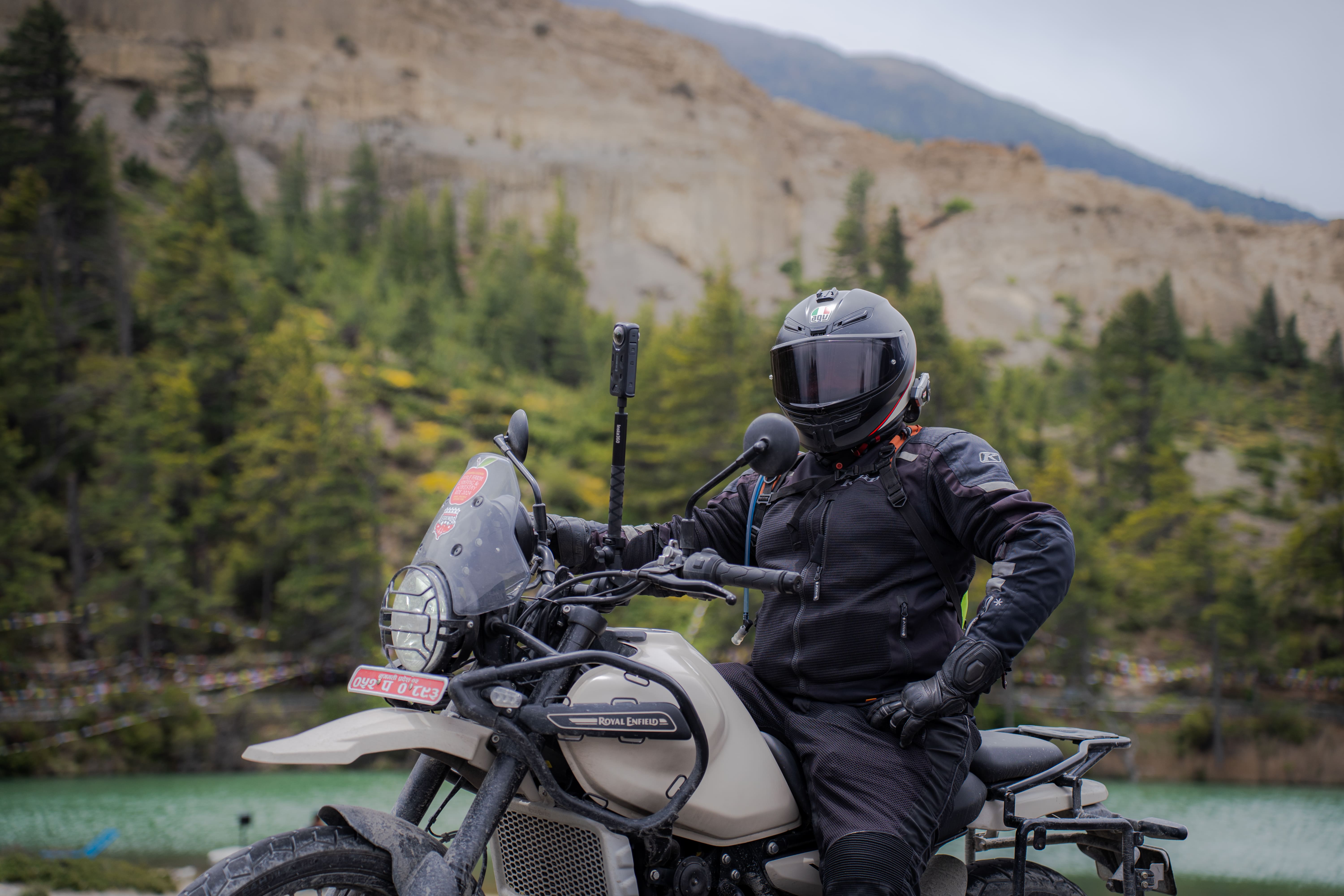
Nepal's motorcycle touring territory is a different kind of extraordinary, less civilised, more demanding, and in certain specific respects more rewarding precisely because of what it costs to reach and experience it. The roads are not engineered to European standards and are not maintained to them. The food at the end of a long day is simple and good rather than sophisticated and exceptional. The accommodation ranges from comfortable to basic depending on elevation and route. The infrastructure requires more advance planning, more mechanical self-sufficiency, and more flexibility than Italy ever asks of you. What Nepal provides in return is a combination of landscape scale, cultural depth, and genuine physical challenge that Italy, for all its excellence, does not.
The choice between them is ultimately a choice between two different theories of what a great motorcycle trip is for, and understanding which theory you actually hold is more useful than any specification comparison.
Roads: The Most Important Comparison for a Rider
Italy's Roads
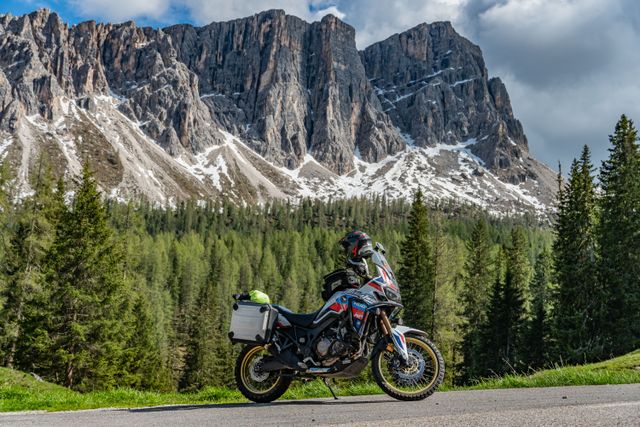
Italy's road network for motorcycle touring is among the best in the world in the sense that matters most to a rider who loves riding: a combination of surface quality, geometric interest, and scenic context that the country's geography delivers in extraordinary density. The Passo dello Stelvio — 48 hairpin bends ascending to 2,757 metres, engineered by Austrian military road builders in the nineteenth century — is frequently cited as the greatest motorcycle road in Europe, and it earns that reputation fairly. The Dolomites deliver a different but equally compelling version: shorter passes, denser hairpin sequences, the visual drama of vertical limestone walls rising from Alpine meadows that no photograph fully captures.
Tuscany's road character is lower-speed but equally rewarding for a different kind of rider — the undulating white gravel of the Crete Senesi and the Val d'Orcia, the cypress-lined approaches to hilltop towns, the road surfaces that combine sealed tarmac with stretches of the traditional Tuscan gravel road that gives the landscape its particular quality. Sicily's interior offers wide, lightly-trafficked roads through agricultural landscape of considerable beauty, with the added dimension of Etna's volcanic topography.
What unites all of Italy's best motorcycle roads is their engineered quality. They have been built to be ridden, maintained to stay rideable, and organised into a touring network that rewards both spontaneous exploration and deliberate route planning. A beginner on an unfamiliar bike can ride the Stelvio safely with appropriate care. An expert on a precision sports bike can find the same road genuinely engaging at a completely different pace. Italy accommodates both simultaneously and makes both feel welcome.
Nepal's Roads
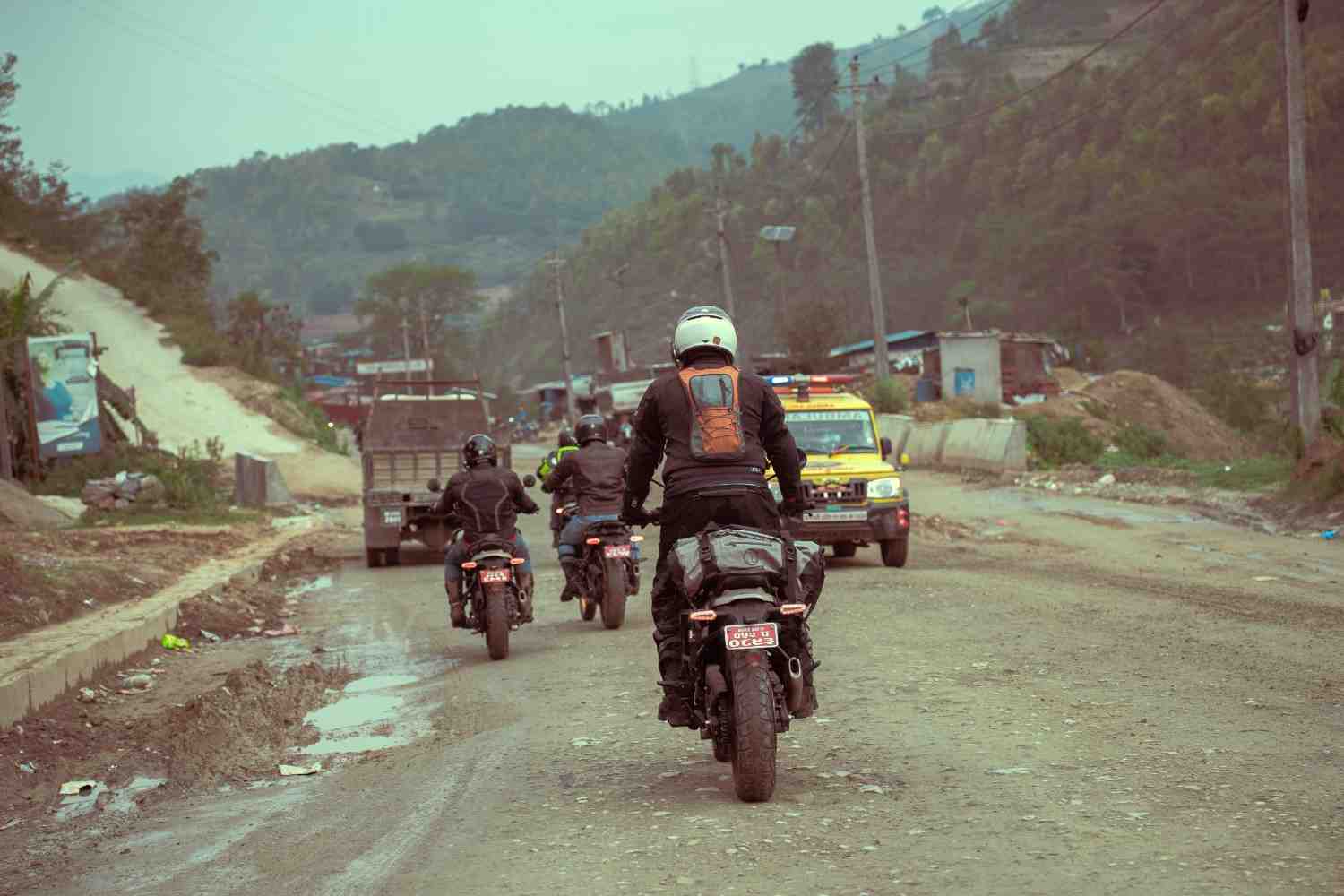
Nepal's motorcycle roads do not accommodate all riders simultaneously, and they are not engineered to be ridden so much as they are negotiated, route by route and day by day, as the landscape permits. This is either a description of what makes them extraordinary or a description of what makes them unsuitable, depending on the rider.
The Prithvi and Siddhartha Highways between Kathmandu and Pokhara are real roads — paved, maintained at a functional standard, carrying real traffic in both directions. They are interesting rather than thrilling, providing orientation to Nepal's road culture and a useful acclimatisation to the specific demands of riding in a mixed-traffic environment where the road hierarchy operates on different principles than European drivers expect.
Beyond the main highways, Nepal's roads become progressively more demanding and progressively more rewarding. The Annapurna Circuit approaches combine sealed and unpaved sections in proportions that shift annually with road development. The Mustang district routes above Kagbeni are unpaved tracks — loose gravel, exposed rock, river crossings — that require genuine off-road technique and continuous surface reading. The approaches to Manang, Langtang, and Tsum Valley combine the technical demands of mountain single-track with the altitude factor that reduces physical and cognitive performance simultaneously.
The best of Nepal's roads, a subjective assessment that most experienced Nepal riders place somewhere in the Upper Mustang motorbike tour or on the high approaches to Thorong La — are not the best in the sense of being the most pleasant or most technically perfect to ride. They are the best in the sense of delivering the most complete engagement between rider, machine, and landscape that motorcycle travel produces. Whether that is better than the Stelvio's engineered perfection is a question of what you think motorcycle roads are for.
Cultural Experience: Depth vs Accessibility
This comparison resolves more clearly than the road comparison, in favour of each destination for different reasons.
Italy's Culture
Italy's cultural offer is one of the deepest and most accessible in the world simultaneously — a combination that is rarer than it sounds. Two thousand years of continuous documented history, the highest concentration of UNESCO World Heritage sites of any country, a living art and architecture tradition that has shaped the visual culture of the entire Western world, and a food culture that has been extensively studied and is deeply embedded in the daily life of ordinary Italians rather than existing as a performance for visitors.
For a motorcycle tourist, Italy's cultural depth is available at exactly the pace the riding allows — a hilltop medieval town visible from the road becomes a lunch stop that turns into an hour of wandering. A roadside chapel contains a Renaissance fresco that a local points out. A street market in a Sicilian town on a Sunday morning is not a tourist attraction; it is simply what happens on Sunday mornings. The culture is not concentrated in dedicated sites but distributed through the entire landscape, available to any rider who is paying attention.
The accessibility dimension of Italy's culture is equally significant. English is spoken with adequate frequency across Italy's tourist infrastructure. Road signs are clear and consistent. Museum and site entry is well-organised. The practical friction of navigating a new cultural environment, the language barrier, the administrative complexity, the uncertainty about correct behaviour in specific cultural contexts — is lower in Italy than in almost any non-English-speaking country a motorcycle tourist might visit.
Nepal's Culture
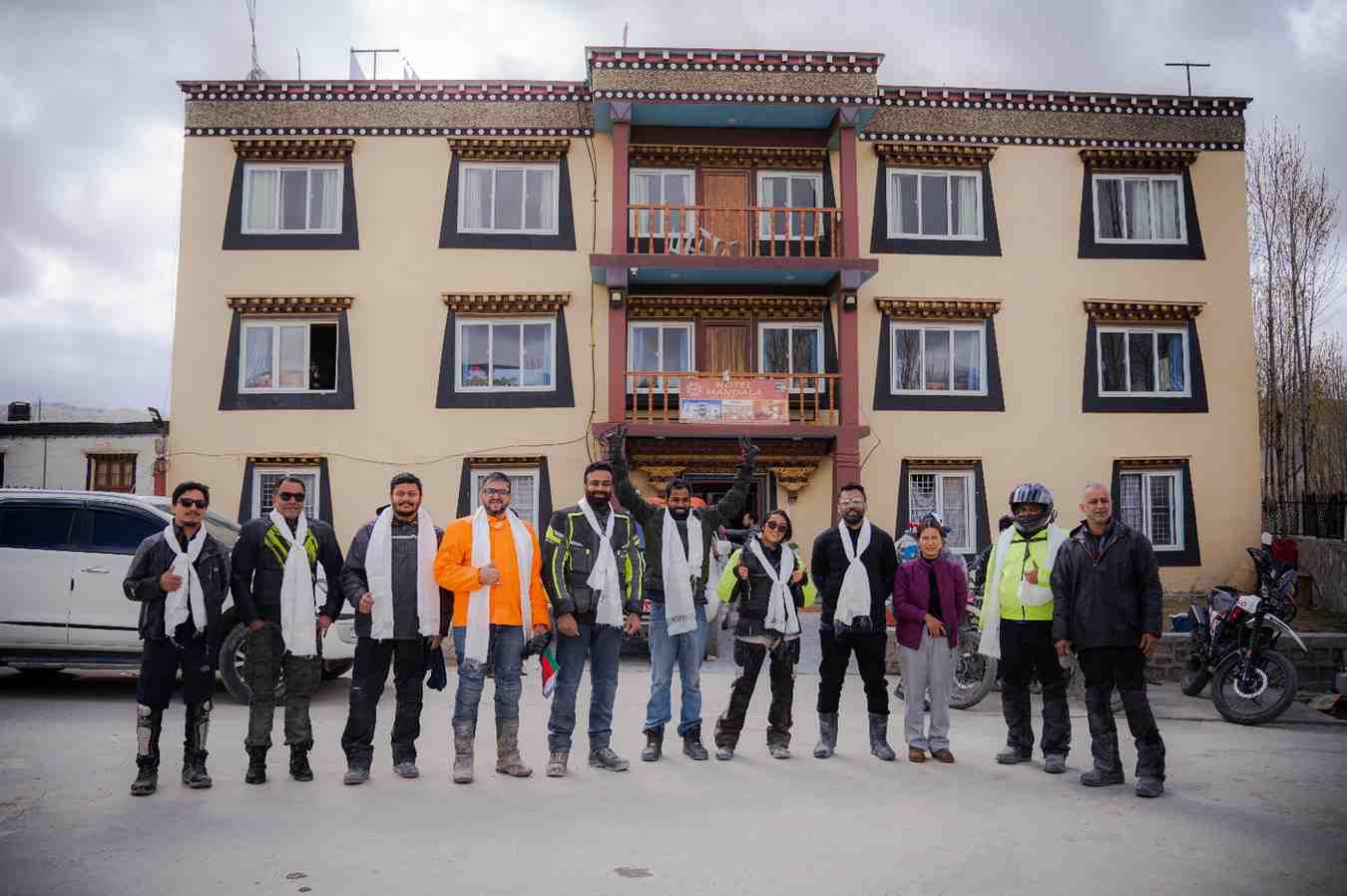
Nepal's cultural offer is different in kind rather than inferior in quality. The Hindu temple culture of the Kathmandu Valley, the Pashupatinath complex, the Buddhist stupas of Boudhanath and Swayambhunath, the durbar squares of Kathmandu, Patan, and Bhaktapur — represents a living religious culture of extraordinary antiquity and continuous practice. The Newari architecture of the valley's medieval cities is a distinct and sophisticated tradition unlike anything visible elsewhere in the world.
Beyond the Kathmandu Valley, Nepal's cultural landscape shifts with altitude in a way that produces an experience of genuine cultural diversity within a single trip: Hindu culture in the lowlands, Gurung and Magar traditions in the middle hills, Tibetan Buddhist culture in the high Himalayan communities of Mustang, Manang, and the Khumbu. A rider who covers meaningful elevation range in Nepal encounters multiple distinct cultural traditions in the course of riding through a single connected landscape.
The cultural experience that Upper Mustang specifically offers — the walled city of Lo Manthang, the Tiji Festival, the cave monasteries and ancient trade route infrastructure of the high plateau — has almost no direct parallel in accessible adventure motorcycle travel anywhere in the world. It is a form of cultural encounter that depends precisely on the difficulty of reaching it for the preservation of what it offers.
The accessibility of Nepal's culture for a visiting rider is lower than Italy's. Language, cultural norms, religious etiquette, and the general complexity of navigating a South Asian cultural environment require more preparation and more adaptability. For riders who find that preparation interesting rather than burdensome, it becomes part of the trip's value. For riders who prefer their cultural encounters to arrive with minimal friction, Italy's model is significantly better suited.
Infrastructure and Logistics: Italy Wins Clearly
This comparison is the least ambiguous in the article and deserves a direct assessment rather than a balanced one.
Italy's infrastructure for motorcycle touring is excellent. Fuel is available everywhere a rider wants it. Accommodation ranges from basic but clean agriturismo to world-class hotels, with online booking working reliably. Road surfaces are repaired. Emergency services respond. Mobile signal is consistent. Mechanical support for any mainstream motorcycle brand is available in most towns of meaningful size. A breakdown in Italy is an inconvenience. A breakdown in the Dolomites is, at worst, a half-day interruption.
Nepal's infrastructure for motorcycle touring is variable in ways that require specific planning for each route. Fuel availability gaps of 60 kilometres or more on remote routes require advance planning of tank range. Accommodation above certain elevations is basic and should be confirmed in advance during peak periods. Mobile signal is unreliable on most mountain routes and absent on the most remote sections. Mechanical support for non-Royal Enfield bikes is limited outside Kathmandu and Pokhara. A breakdown in Upper Mustang can be a multi-day event depending on the specific location and the nature of the problem.
This infrastructure gap does not make Nepal's riding inferior — for riders who are self-sufficient and well-prepared, it is the conditions under which the most rewarding versions of Nepal riding happen, and the adversity itself is part of the experience. But it does make Nepal categorically more demanding from a logistics and self-sufficiency perspective than Italy, and pretending otherwise does riders considering their first international tour a disservice.
Riding Skill Requirements: An Honest Assessment
Italy's best riding — the Stelvio, the Dolomites, Tuscany's gravel roads — is accessible to a rider with ordinary road experience and appropriate care. The Stelvio is steeper and more exposed than most riders encounter at home, and deserves respect. But it is a paved road, well-signed, ridden by thousands of motorcyclists annually of widely varying skill levels. A moderately experienced road rider, paying appropriate attention, can ride it safely and enjoyably on a first attempt.
Nepal's best riding requires more. The technical surfaces of the Mustang district demand genuine off-road technique — the ability to read loose gravel, manage weight distribution through river crossings, stand on the pegs for sustained periods on technical single-track. The altitude demands physical fitness, proper acclimatisation scheduling, and the judgment to recognise altitude-related cognitive impairment in yourself before it produces a riding error with serious consequences. The infrastructure gaps demand mechanical competence and self-sufficiency that Italian touring never requires.
A reasonable minimum recommendation for Nepal's serious mountain routes — anything above Kagbeni, the high approaches to Manang and Thorong La — is a rider with at least basic off-road experience on variable surfaces, genuine physical fitness, and the mechanical confidence to handle common roadside problems without external assistance. None of these requirements apply to Italy's road touring.
Cost: Closer Than You Expect
This comparison surprises most riders who assume Italy's European infrastructure automatically makes it more expensive than Nepal.
A two-week Italian motorcycle touring trip — including flights from Europe, rental or ferry costs for your own bike, accommodation ranging from budget to mid-range, fuel, food, and site entry — runs approximately USD 2,500–4,500 depending on accommodation standard, rental specification, and route. Italy's costs are real: fuel prices are high by global standards, accommodation in popular regions like the Dolomites and Tuscany in peak season carries significant premiums, and restaurant meals in tourist areas reflect tourist pricing.
A two-week Nepal motorcycle touring trip — including flights, all permits (Upper Mustang permit adds USD 50/day), accommodation, food, guide if used, and rental — runs approximately USD 2,000–4,000 depending on route and support level. The permit cost adds a fixed overhead that has no Italian equivalent, but Nepal's lower daily costs for accommodation and food partially offset it over a two-week stay.
For riders flying from North America or Australia, Nepal's geographic position adds trans-Pacific or trans-Asian flight costs that can substantially change the cost comparison. For European riders, Italy's accessibility via low-cost carriers makes it significantly cheaper to reach than Nepal, and this flight cost difference can offset Nepal's lower in-country costs entirely.
The honest answer is that two weeks in Italy and two weeks in Nepal cost broadly similar amounts for a mid-range independent traveller, with the specific comparison depending heavily on origin country and accommodation standard chosen.
The Seasonal Dimension
Italy's primary motorcycle touring season runs from May through September, with June and September representing the ideal combination of settled weather, manageable temperatures, and reduced peak-summer crowding on the most popular routes. The Stelvio and Dolomite passes open after snowmelt, typically in May, and close again with early autumn snowfall from October. Tuscany and Sicily extend the season at both ends — March riding in Sicily and October riding in Tuscany are both excellent.
Nepal's motorcycle touring season has two distinct windows: March through early June pre-Monsoon, and October through November post-Monsoon. The May window aligns with Italy's opening season, creating a genuine calendar conflict for riders trying to do both in the same year. The October–November window has no Italian equivalent at its quality level — Nepal's post-Monsoon clarity and the freshly washed landscape and perfect mountain visibility of October and November are not replicated anywhere in Europe's autumn riding calendar.
For riders with flexible timing, October in Nepal and June in Italy represent the respective seasonal peaks that neither destination can replicate in the other's window.
The Honest Head-to-Head
|
Factor |
Nepal |
Italy |
|
Road technical difficulty |
High — off-road skills required |
Low–Medium — road skills sufficient |
|
Road quality |
Variable — unpaved on best routes |
Excellent — fully engineered |
|
Cultural depth |
Extraordinary, requires preparation |
Deep, highly accessible |
|
Infrastructure |
Variable, requires planning |
Excellent, consistent |
|
Permit complexity |
Moderate–High (Upper Mustang USD 500+) |
None beyond EU/Schengen entry |
|
Best season |
May, October–November |
June, September |
|
International access |
Moderate |
Easy from Europe, moderate from elsewhere |
|
Cost (2 weeks, all-in) |
USD 2,000–4,000 |
USD 2,500–4,500 |
|
Rider experience required |
Intermediate–Advanced for best routes |
Beginner–Advanced |
|
Accommodation range |
Basic–Comfortable |
Budget–Luxury |
|
Food quality |
Good, simple |
World-class |
|
Unique experience factor |
Exceptional |
Very high |
Who Should Go Where
Italy first if: you are a road-focused rider with limited off-road experience, you are planning your first serious international motorcycle tour and want infrastructure that supports rather than tests you, you are travelling from Europe and want the best combination of riding quality and logistical ease, or you specifically want world-class food and accommodation as part of the experience rather than a backdrop to it.
Nepal first if: you have genuine off-road experience and are looking for terrain that uses it seriously, you are drawn to the combination of cultural depth and physical challenge that demanding adventure travel produces, you are travelling from Asia or are willing to invest in the flight from further afield, or you are specifically seeking the kind of experience, Upper Mustang's plateau, the Tiji Festival in Lo Manthang, the Annapurna Circuit's high approaches — that has no European equivalent regardless of which passes Italy offers.
Do both, eventually: because the experiences do not substitute for each other. A rider who has done the Stelvio and the Dolomites brings a specific appreciation for what engineered road riding excellence feels like, which makes the contrast with Nepal's improvised, landscape-determined tracks all the more vivid and instructive in the other direction. And a rider who has managed Upper Mustang's technical terrain and logistics finds Italy's infrastructure a profound relief and its riding quality, the same quality it always had newly visible by contrast.
The best version of this comparison is not choosing between them permanently. It is understanding which one you need right now and then doing the other one next.