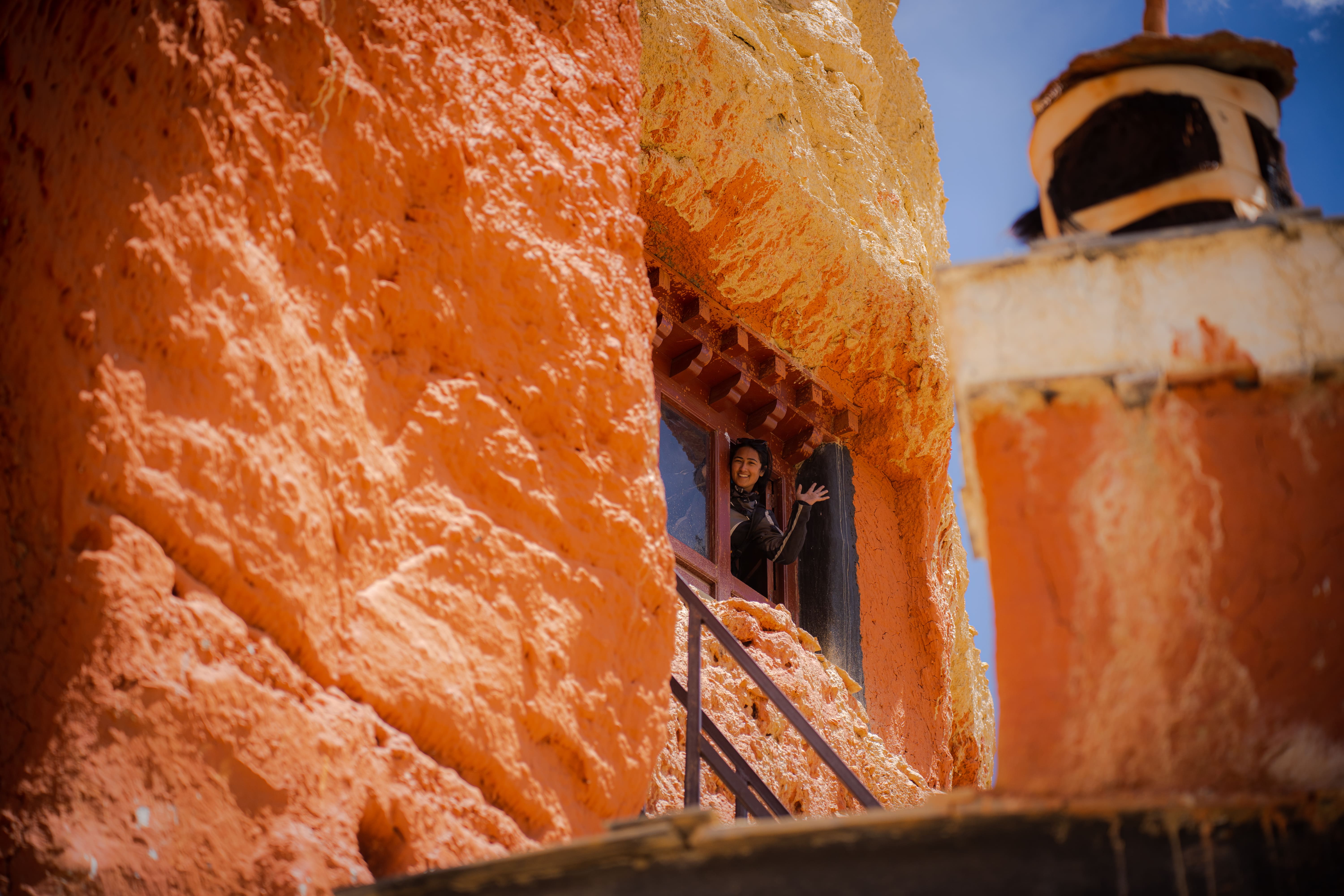
Upper Mustang is one of the most extraordinary places on earth, a high-altitude desert kingdom tucked behind the Himalayas, where ancient Tibetan culture, medieval walled cities, and raw canyon landscapes have survived almost untouched for centuries. Often called the "Last Forbidden Kingdom of Nepal," it remained closed to foreign visitors until 1992 and still requires a special restricted area permit to enter.
This guide covers everything you need to plan your trip: permits, costs, routes, itineraries, best time to visit, accommodation, cultural etiquette, photography tips, and practical advice that most travel articles miss.
Table of Contents
- Where Is Upper Mustang?
- Why Upper Mustang Is Unlike Anywhere Else in Nepal
- Permits and Entry Requirements
- Best Time to Visit Upper Mustang
- How to Get to Upper Mustang
- Route Overview: The Upper Mustang Circuit
- Upper Mustang by Motorbike
- Trekking vs. Jeep vs. Motorbike: Which Is Right for You?
- Difficulty Level and Physical Preparation
- Accommodation: What to Expect
- Food and Water in Upper Mustang
- Culture, People, and Local Etiquette
- Budget Breakdown and Cost Estimates
- Sample 12-Day Itinerary
- Altitude Sickness: Prevention and Response
- What to Pack for Upper Mustang
- Internet, Connectivity, and Cash
- Photography Guide: How to Shoot Upper Mustang
- Common Mistakes Travellers Make
- Is Upper Mustang Worth It?
- FAQ
Where Is Upper Mustang?
Upper Mustang lies in the northern part of Nepal, tucked deep inside the rain shadow of the Annapurna and Dhaulagiri mountain ranges. It borders Tibet (China) to the north and is classified as a trans-Himalayan region — geographically and culturally closer to the Tibetan Plateau than to the Nepal most visitors know.
Key locations:
- Kathmandu — international entry point and permit hub
- Pokhara — main domestic travel hub and last major city before the route
- Jomsom — the gateway town and starting point for Upper Mustang
- Kagbeni — the permit checkpoint village where restricted zone entry begins
- Lo Manthang — the medieval walled capital of Upper Mustang, sitting at approximately 3,800 metres
The region covers roughly 2,934 square kilometres and remains one of the most sparsely populated districts in Nepal. Its position behind the Himalayas means it receives almost no monsoon rainfall — which is why it looks, and feels, like a completely different country.
Why Upper Mustang Is Unlike Anywhere Else in Nepal
Nepal has dozens of extraordinary trekking and travel destinations. Upper Mustang occupies a category entirely its own.
What makes it different:
While the rest of Nepal turns lush and green during the summer monsoon, Upper Mustang stays dry, windy, and sun-baked. Infact, the weather condition of upper mustang is very unpredictable. Its landscapes are shaped by erosion rather than vegetation — towering red and ochre cliffs, deep canyon corridors, ancient cave networks carved into cliffsides, and wind-sculpted valleys that stretch in every direction.
Culturally, Upper Mustang is Tibetan in language, religion, architecture, and daily life. The Loba people — the indigenous inhabitants — speak a Tibetan dialect, practice Tibetan Buddhism, and live in flat-roofed mud-brick houses that have changed little in centuries. Lo Manthang, the walled capital, is still governed by a traditional royal lineage and contains monasteries, royal palaces, and cultural artifacts that predate most of what exists elsewhere in the Himalayas.
Historically, the kingdom of Lo existed as an independent state for over 500 years. Its isolation and restricted status after 1992 (only 1,000 permits per year were issued in the early years) meant that modernisation arrived slowly — and some of what was preserved here no longer exists anywhere else in the world.
Key highlights at a glance:
- Ancient Tibetan Buddhist monasteries and chortens
- Dramatic red cliff formations and canyon valleys
- Over 1,000-year-old cave dwellings and sky caves
- The medieval walled city of Lo Manthang
- The Tiji Festival — one of the most sacred and visually spectacular in the Himalayas
- World-class off-road motorcycle and jeep routes
- Near-total absence of mass tourism
Permits and Entry Requirements
This is the most critical section to understand before planning your trip. Upper Mustang is a restricted region, you cannot enter independently.
Permits required:
- Cost: USD 50/day per person
- This permit is specific to Upper Mustang and is non-negotiable
Annapurna Conservation Area Permit (ACAP)
- Cost: approximately USD 20–30
- Required for the broader Annapurna region through which you pass
Entry rules:
- A minimum of two travellers is required — solo travel is officially not permitted
- You must be accompanied by a licensed, registered guide at all times
- Permits must be booked through a government-registered travel agency
- Permits must be carried and shown at multiple checkpoints along the route
- Independent backpacking is not allowed
Important: Permit regulations can change. Always confirm current requirements with a registered Nepal-based agency before booking. Attempting to enter without permits results in fines and forced return.
Best Time to Visit Upper Mustang
One of Upper Mustang's most practical advantages is its extended travel window. Because it sits in a rain shadow, the monsoon that floods the rest of Nepal between June and August barely affects it.
March to May — Spring (Excellent) Clear skies and comfortable daytime temperatures make this ideal for photography. Wildflowers appear along lower sections of the route. The Tiji Festival — Upper Mustang's most important cultural event — typically falls in May, making this the peak season for cultural travellers.
June to August — Monsoon Season Elsewhere, Dry Here (Very Good) While the rest of Nepal becomes difficult or dangerous, Upper Mustang remains largely accessible. Afternoon winds and dust can be intense, but visitor numbers are lower and accommodation is easier to book. A strong option for those who want the experience without the crowds.
September to November — Autumn (Best Overall) This is the sweet spot. Skies are clearest, visibility is best, temperatures are comfortable, and the roads are in their best condition after any summer maintenance. For motorbike riders especially, this is the most recommended window.
December to February — Winter (Not Recommended for Most) Temperatures drop severely, many lodges close, and snow can block key sections of the route. Experienced winter travellers can still visit with proper preparation, but it is not suitable for casual visitors.
How to Get to Upper Mustang
Getting to the Upper Mustang involves multiple stages. Plan the logistics carefully, each leg has its own variables.
Stage 1: Arrive in Kathmandu All international travellers enter Nepal through Tribhuvan International Airport in Kathmandu. Permits are arranged here through your registered agency before departure.
Stage 2: Kathmandu to Pokhara
- By air: 25–30 minutes (recommended for time saving)
- By road: 6–8 hours on a reasonably maintained highway
Stage 3: Pokhara to Jomsom
- By air: 20–25 minutes on a small aircraft — weather-dependent, flights are frequently delayed or cancelled; book early and build buffer days
- By road/bike: via Beni along the Kali Gandaki corridor — long, rugged, and spectacular; typically 8–12 hours depending on conditions
Stage 4: Jomsom into Upper Mustang From Jomsom, the route heads north through Kagbeni (permit checkpoint) and into the restricted zone. All travel beyond this point requires your RAP to be physically in your possession.
6. Route Overview: The Upper Mustang Circuit
The standard Upper Mustang route follows the Kali Gandaki valley northward from Jomsom to Lo Manthang, then returns along the same or an alternative trail.
Stage by stage:
|
Stage |
Route |
Key Feature |
|
1 |
Jomsom → Kagbeni |
Permit check, entry into restricted zone |
|
2 |
Kagbeni → Chele |
First canyon views, wind exposure begins |
|
3 |
Chele → Samar |
High passes, remote villages |
|
4 |
Samar → Ghami |
Red cliff formations, ancient mani walls |
|
5 |
Ghami → Tsarang |
Tsarang Monastery, dramatic ridgelines |
|
6 |
Tsarang → Lo Manthang |
Arrival at the walled city |
|
7–8 |
Lo Manthang exploration |
Royal palace, monasteries, cave hikes |
|
9–10 |
Return journey |
Same route or alternative trails |
Side routes worth considering:
- Chhoser caves (sky caves north of Lo Manthang — extraordinary)
- Luri Gompa cave monastery
- Ghami to Charang via high ridge trail
Upper Mustang by Motorbike
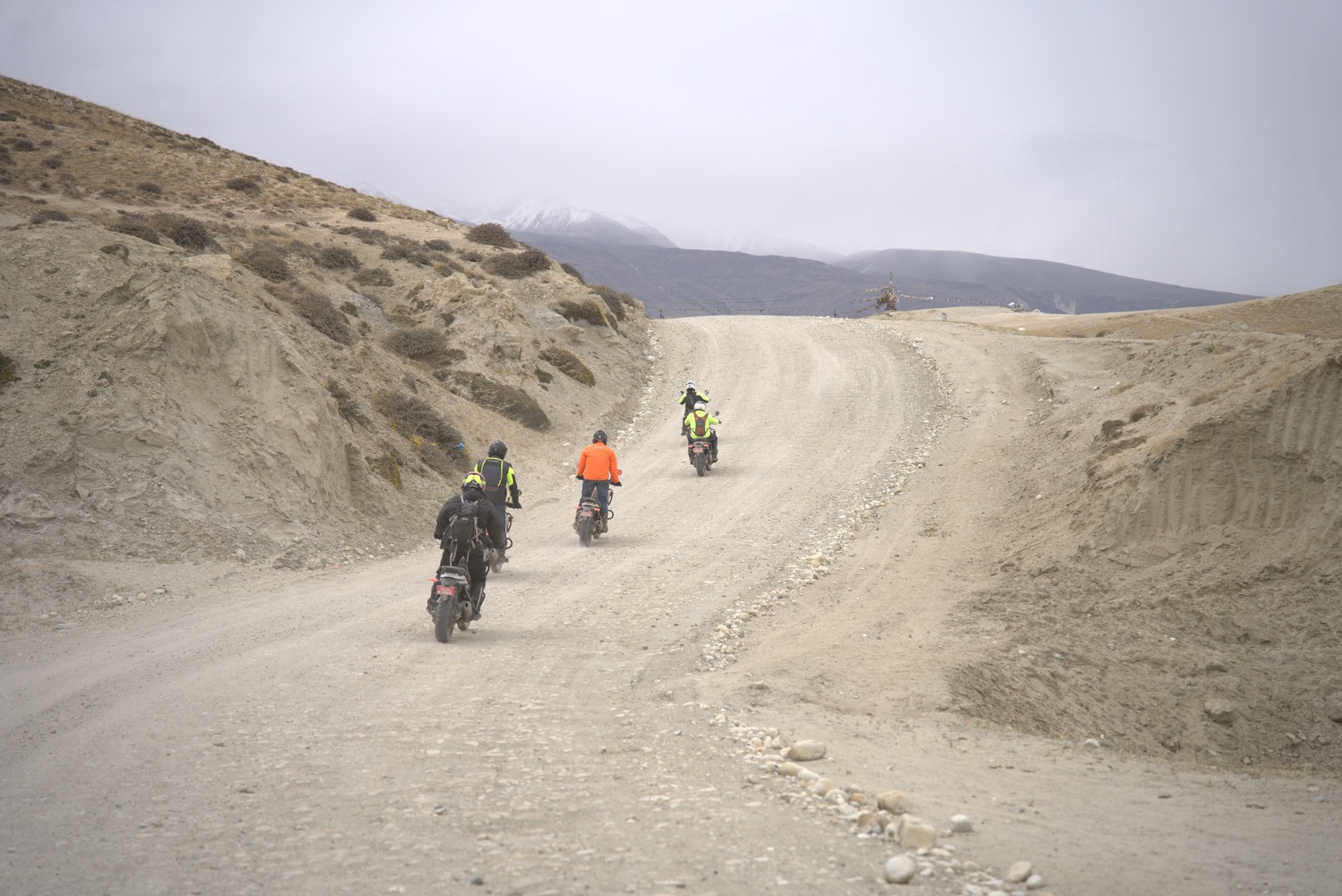
For adventure riders, the motorcycle tour to Upper Mustang is one of the most iconic routes in Asia, and one of the most demanding.
Why it draws riders from around the world:
The terrain is genuinely off-road. Loose gravel, river crossings, rocky climbs, and wind-blasted open plateaus mean you are always riding, never cruising. The Kali Gandaki valley produces afternoon winds that can stop forward progress entirely. The altitude climbs steadily past 3,800 metres. And the landscape — red canyon walls, vast empty valleys, distant snow peaks — is unlike anything most riders have experienced.
Recommended motorcycles:
- Royal Enfield Himalayan (most common locally available option)
- KTM 390 Adventure or similar middleweight ADV bikes
- Larger bikes (650cc+) are manageable but harder to handle on technical sections
Fuel and repairs:
- Last reliable fuel stop is Jomsom
- Carry extra fuel from Jomsom onwards — settlements beyond have limited or no supply
- Bring basic spare parts: tubes, levers, cables
- Mechanical support is not available in Upper Mustang — prepare for self-sufficiency
Key riding challenges:
- Strong afternoon winds in the Kali Gandaki valley (ride early mornings when possible)
- Loose river gravel on approaches to Lo Manthang
- Altitude effects on both rider and engine
- River crossings during early season when water levels are higher
Upper Mustang by motorbike is best suited to experienced off-road riders. Beginners who travel with experienced support and a guide can complete the route, but should be honest about their skill level before committing.
Trekking vs. Jeep vs. Motorbike: Which Is Right for You?
Trekking: The original and purest way to experience the Upper Mustang. Slower, more immersive, harder physically. You see every village, every prayer wheel, every face up close. Best for those prioritising cultural depth over coverage.
Jeep tour: The most accessible option. You cover more ground per day, accommodation and logistics are typically pre-arranged, and the physical demand is lower. Best for those with limited time or physical constraints.
Motorbike expedition: The most adventurous option. Higher skill requirement, more variables, but the most rewarding for riders who want both the landscape and the challenge. Best for experienced ADV riders travelling with proper support.
All three modes require the same permits and guide requirements.
Difficulty Level and Physical Preparation
Overall difficulty: Moderate to Hard
If you 'd how difficult is upper mustang tour, It is not technically extreme, but it is demanding in ways that catch unprepared travellers off guard.
Physical factors:
- Sustained high altitude (3,000–3,800+ metres throughout)
- Long days in the saddle or on foot
- Dust and wind exposure over multiple days
- Basic accommodation with limited rest facilities
Mental factors:
- Remote isolation from familiar infrastructure
- Unpredictable conditions requiring constant adaptation
- Limited medical facilities — the nearest hospital is in Jomsom
Preparation recommendations:
- Spend at least 1–2 nights in Pokhara or Jomsom before entering the restricted zone
- Build cardiovascular fitness in the months before travel
- Research altitude sickness symptoms and carry appropriate medication
- Riders should practice off-road riding before attempting this route
Accommodation: What to Expect
Accommodation in Upper Mustang is basic, improving, and part of the experience.
Types available:
- Teahouses — the most common option throughout the route; simple twin-sharing rooms, shared bathrooms, and communal dining areas
- Small lodges — slightly more structured, found in larger villages
- Lo Manthang guesthouses — the best accommodation on the route, though still modest by international standards
What you'll typically get:
- A bed with blankets (bring a sleeping bag liner for warmth)
- Shared squat or Western toilet
- Cold water (hot bucket shower occasionally available at extra cost)
- Electricity for a few hours in the evening (solar-dependent)
- Simple meals prepared fresh in the teahouse kitchen
What you won't get:
- Wi-Fi (largely absent beyond Jomsom)
- Hot showers on demand
- Heating systems (some places have yak dung or gas heaters — use them)
- Luxury of any kind
Book accommodation in advance during peak season (September–November). In shoulder and off seasons, walk-in is usually possible.
Food and Water in Upper Mustang
Common dishes:
- Dal bhat — the Nepali staple of rice, lentil soup, and vegetables; filling and reliable everywhere
- Thukpa — Tibetan noodle soup; excellent at altitude
- Momos — steamed or fried dumplings; found in most villages
- Tibetan bread with jam or honey — a common breakfast
- Butter tea — an acquired taste, but warm and caloric in cold conditions
As you go deeper into Upper Mustang, food variety decreases. Lo Manthang has the best selection given its status as the regional capital, but even there, menus are limited to local staples.
Water:
- Do not drink tap water at any point
- Carry a reliable water filter or purification tablets
- Boiled water is available at teahouses — ask and pay for it rather than using untreated sources
- Staying properly hydrated is critical for altitude acclimatisation
Culture, People, and Local Etiquette
Along with some amazing places to visit in upper mustang, its culture is Tibetan in almost every meaningful sense. The Loba people maintain their own dialect, dress, religious practices, and social structures largely independent of mainstream Nepali culture.
Cultural highlights:
- Lo Manthang's royal palace — still inhabited by the royal family
- Thubchen and Jampa monasteries — containing extraordinary medieval murals
- Chortens and mani walls lining every trail
- Prayer flags marking every high pass and ridgeline
Etiquette to observe:
- Always walk clockwise around monasteries, chortens, and mani walls
- Remove shoes before entering any monastery or temple
- Ask permission before photographing people, especially monks and elders
- Dress modestly — cover shoulders and knees when visiting religious sites
- Do not touch religious artifacts or statues
- Accept food or gifts with both hands or the right hand only
- Avoid loud or disruptive behaviour in villages
The Tiji Festival — held annually in Lo Manthang, usually in May — is a three-day Buddhist ritual drama representing the defeat of a demon threatening the kingdom. It is one of the most remarkable cultural events in the Himalayas and worth planning your trip around if timing allows.
Budget Breakdown and Cost Estimates
Costs vary significantly based on travel style, group size, and season.
|
Category |
Budget Range (per person) |
|
Restricted Area Permit (RAP) |
USD 150 (3 days) |
|
ACAP Permit |
USD 20–30 |
|
Licensed guide |
USD 30–50 per day |
|
Accommodation |
USD 10–30 per night |
|
Food |
USD 15–25 per day |
|
Transport (bike/jeep equivalent) |
USD 40–100 per day |
|
Miscellaneous (fuel, tips, extras) |
USD 100+ |
Total estimated cost for a 10–12 day trip:
- Budget: USD 1,200–1,800
- Mid-range: USD 1,800–2,800
- Premium guided expedition: USD 3,000+
Permits alone represent the largest fixed cost. Group travel reduces per-person costs significantly on transport and guide fees.
Sample 12-Day Upper Mustang Itinerary
Day 1 — Kathmandu: Arrival, permit processing, briefing with agency, overnight rest
Day 2 — Kathmandu to Pokhara: Travel by flight or road; explore Lakeside, prepare gear
Day 3 — Pokhara to Jomsom: Flight or jeep ride through Kali Gandaki; acclimatisation walk in Jomsom
Day 4 — Jomsom to Kagbeni to Chele: Enter the restricted zone at Kagbeni checkpoint; first canyon landscapes
Day 5 — Chele to Samar: High passes, wind exposure, remote trail villages
Day 6 — Samar to Ghami: Red cliff formations, ancient mani walls, sweeping plateau views
Day 7 — Ghami to Tsarang: Tsarang Monastery, dramatic ridgeline riding or trekking
Day 8 — Tsarang to Lo Manthang: Arrival at the walled city; first evening exploration
Day 9 — Lo Manthang Exploration: Royal palace, Thubchen Gompa, Jampa Gompa, local market
Day 10 — Optional side trip: Chhoser sky caves or Luri Gompa cave monastery
Day 11 — Begin return journey: Lo Manthang to Ghami or Samar
Day 12 — Return to Jomsom / Pokhara: Depart for onward travel
Altitude Sickness: Prevention and Response
Upper Mustang's altitude builds steadily and reaches above 3,800 metres at Lo Manthang. Altitude sickness in upper mustang is a real risk and should not be underestimated.
Prevention:
- Spend at least one night in Pokhara (827m) and one in Jomsom (2,720m) before ascending
- Ascend gradually — do not rush the route
- Drink 3–4 litres of water per day
- Avoid alcohol during the ascent phase
- Consider Diamox (acetazolamide) — consult a doctor before travel
- Eat even if appetite decreases
Warning signs to take seriously:
- Persistent headache that doesn't respond to paracetamol
- Nausea or vomiting
- Dizziness or loss of balance
- Difficulty sleeping
- Confusion or unusual fatigue
Response: If symptoms are moderate to severe, descend immediately. Do not push through serious altitude sickness — it can progress rapidly and become life-threatening. The nearest medical facility is in Jomsom.
16. What to Pack for Upper Mustang
Clothing:
- Thermal base layers (top and bottom)
- Fleece mid-layer
- Windproof and waterproof outer jacket
- Warm gloves and hat
- UV-protective sunglasses
- Comfortable trekking or riding boots
Gear:
- Sleeping bag liner (teahouse blankets can be thin)
- Dust mask or buff — essential for motorbike riders and jeep travellers
- High-SPF sunscreen (UV radiation is significantly stronger at altitude)
- Power bank (electricity is intermittent)
- Headlamp with spare batteries
- Basic first aid kit including altitude medication
Documents:
- Passport
- All permits (physical copies — digital may not be accepted at checkpoints)
- Emergency contact information and travel insurance details
Internet, Connectivity, and Cash
Mobile coverage:
- NTC (Nepal Telecom) provides marginally better coverage than Ncell in Upper Mustang
- Expect signal to be weak, intermittent, or absent beyond Jomsom
- Do not rely on mobile internet for navigation or emergency communication — carry offline maps (Maps.me or OsmAnd downloaded before departure)
Cash:
- There are no ATMs beyond Jomsom — this is the single most common mistake travellers make
- Withdraw sufficient Nepalese rupees (NPR) in Kathmandu or Pokhara before departure
- Budget generously — unexpected costs arise (extra fuel, meals, accommodation)
- Cards are not accepted anywhere in Upper Mustang
Photography Guide: Shooting Upper Mustang
Upper Mustang is one of the most photogenic landscapes in Asia. A few specific techniques make a significant difference.
Best subjects:
- The red and ochre cliff formations between Ghami and Tsarang
- Sunrise over the walls of Lo Manthang (arrive the night before and wake early)
- Prayer flags against blue sky on high passes
- Faces and portraits in villages — always ask permission first
- Canyon corridors from elevated vantage points
- Cave monastery entrances in late afternoon light
Technical tips:
- The dust haze at golden hour creates a warm atmospheric glow — use it rather than fighting it
- Wind moves prayer flags rapidly — use a faster shutter speed (1/500 or higher) to freeze them or a slower one to show motion deliberately
- High altitude light is intense and contrasty at midday — shoot early or late
- Bring a dust-proof camera bag or zip-lock protection — dust infiltrates everything
Common Mistakes Travellers Make
Underestimating altitude — The ascent from Pokhara to Lo Manthang is significant. Rushing it causes avoidable sickness.
Not carrying enough cash — Covered above, but worth repeating. No ATMs exist beyond Jomsom.
Booking permits last-minute — Processing takes time and agency availability varies. Book at least 4–6 weeks in advance.
Ignoring wind schedules — Afternoon winds in the Kali Gandaki valley can be severe. Experienced guides and riders plan morning starts specifically to beat them.
Choosing an inexperienced guide — Your guide is your safety net in a restricted region with no external support. Verify credentials and experience before committing.
Packing for warmth but forgetting wind and dust protection — Many travellers bring warm layers but arrive without a dust mask or windproof outer shell. Both are essential.
Is Upper Mustang Worth It?
Yes, without a doubt.
Upper Mustang is expensive relative to most Nepal destinations. The permit alone costs USD 50/day. The logistics are complex. The conditions are demanding.
And it is worth every part of that.
There are very few places left on earth where you can ride or walk through a medieval walled city, sleep in a teahouse below cave monasteries that are a thousand years old, and spend days in a landscape so remote that the silence becomes physical. Upper Mustang is one of them.
Whether you travel by motorbike, jeep, or on foot, what you take home is not just photographs. It's a recalibrated sense of what remote actually means — and what it costs to have kept a place like this alive.
FAQ: Upper Mustang Travel Guide
Do I need a permit for Upper Mustang? Yes. A Restricted Area Permit (USD 500 for 10 days) and an Annapurna Conservation Area Permit are both required.
Can I travel solo to Upper Mustang? No. A minimum of two travellers and a licensed guide is mandatory under current regulations.
How many days do I need? A minimum of 10 days is recommended. Twelve to fourteen days allows for proper acclimatisation and exploration.
Is Upper Mustang safe? Yes, with proper preparation, a registered guide, and respect for altitude. Medical facilities are limited — preparation matters more than in most destinations.
What is the altitude of Lo Manthang? Approximately 3,800 metres above sea level.
Can beginners do the Upper Mustang motorbike tour? With experienced support, a skilled guide, and honest self-assessment, yes — but the terrain requires genuine off-road competence. It is not a beginner route ridden alone.
Is internet available in Upper Mustang? Very limited and unreliable. Treat it as unavailable and plan offline alternatives for maps and communication.
What is the single best month to visit? October offers the clearest skies, best road conditions, and most stable weather. September and November are close seconds.
What is the Tiji Festival? A three-day sacred Buddhist festival held annually in Lo Manthang, usually in May. It is one of the most significant cultural events in the Himalayas and highly recommended if your timing allows.