Every guide to solo travel in Nepal tells you the same things: it's safe, it's beautiful, the people are warm, you'll love it. All of that is true. But most guides skip the parts that actually prepare you — the Kathmandu chaos that hits within minutes of landing, the scams that catch even experienced travellers, the new trekking rules that changed everything in 2023, the loneliness that comes and goes on the trail, and the specific quiet moments that make Nepal unlike anywhere else. This is the honest version, drawn from practical research and the experiences of real travellers who have been there recently.
Table of Contents
- Why Nepal Works So Well for Solo Travel
- Real Travellers, Real Experiences
- The Reality of Arriving in Kathmandu Alone
- Getting Around: Transport Truth and Practical Options
- Where Solo Travellers Actually Stay
- The Social Life of a Solo Traveller in Nepal
- Trekking Solo in Nepal: What Changed in 2023 and 2026
- The Teahouse System: Why It's Perfect for Solo Travellers
- Safety: What's Real, What's Overstated, What to Watch For
- Scams Targeting Solo Travellers — and How to Avoid Them
- Solo Female Travel in Nepal: The Honest Picture
- Cultural Etiquette That Makes or Breaks the Experience
- Budget: What Solo Travel in Nepal Actually Costs
- The Best Places to Travel Solo in Nepal
- The Emotional Reality: Loneliness, Connection, and What Nepal Does to You
- Practical Pre-Departure Checklist
- Frequently Asked Questions
1. Why Nepal Works So Well for Solo Travel
Nepal has been absorbing solo travellers since the 1960s. The infrastructure has evolved around it, guesthouses designed for one, trails built around a teahouse system that makes solitary trekking feel communal, a culture that treats guests with a warmth encoded in the national philosophy of Atithi Devo Bhava — the guest is god.
But beyond infrastructure, Nepal suits solo travel for a deeper reason: it is one of the few destinations where being alone actually enhances the experience. Locals talk to you more freely. Other travellers gravitate toward you in teahouses. Monks invite you in for tea. Children follow you with curiosity. The country has a way of filling the social space around a solo traveller that most destinations don't.
It also rewards patience and flexibility in ways group travel doesn't allow. A sunrise that clears unexpectedly. A monastery discovered by following a sound. A conversation with a porter that changes how you see your own life. These moments happen most readily when you are moving at your own pace, accountable to no one, and genuinely open.
None of that means Nepal is without challenges for solo travellers. It has real ones. Understanding them upfront is what separates a difficult, frustrating trip from a transformative one.
2. Real Travellers, Real Experiences
Before the practical guide, it's worth hearing directly from people who have done this recently.
"Everything I had manifested, I was able to accomplish in 60 days"
In April 2025, Zahabiya Nuruddin — a solo traveller documenting her journey on her Substack The Long Way Home — landed in Kathmandu with almost no plan and an open journal. She spent two months trekking the Manaslu Circuit, volunteering at a children's home, taking Nepali language classes, completing a 10-day Vipassana meditation course, and building what she describes as a genuine local community in Kathmandu.
Writing on the flight home in June 2025, she reflected:
"I found love in every corner… afternoons spent speaking in broken Nepali with local shopkeepers that would recognize me and give me a few extra sweets with my groceries, and evenings spent cooking momos and singing along to songs at my new friends' apartments. They all taught me that community can be built no matter where I am in the world."
Her account is one of the most honest portraits of what extended solo travel in Nepal actually looks like — not a highlights reel, but the full 60-day arc of solitude, effort, connection, and the particular quiet that comes from being entirely present in a place. Read her full journal at zabocat.substack.com.
"I received no unwanted attention for being by myself, even in Kathmandu"
Emily, a solo female traveller from the UK who blogs at Journey by Backpack, describes arriving in Nepal "so nervous" about the trip — and finding almost immediately that her fears were unfounded:
"Travelling alone can be a scary prospect, especially as a woman going to a country with a very different culture. However, I have only positive things to say about my experience as a solo female traveller in Nepal. When I landed and was greeted by a friendly taxi driver, all my fears disappeared."
Her guide at journeybybackpack.com remains one of the most practically grounded solo travel resources written from first-hand female experience.
"Nepal is a country full of kindness"
A Japanese traveller returning to Nepal for the fourth consecutive year during Golden Week 2025 wrote about meeting a fellow solo traveller by chance at Kathmandu airport — and beginning the entire trip together by the first night, taking an overnight bus to Pokhara side by side:
"You never know what's going to happen when you're travelling. Nepal is a country full of kindness, and I will definitely come again next year."
Four consecutive years of return visits tells you something that no travel guide can quantify.
"Solo but full of soul"
An Australian traveller trekking the Annapurna Circuit solo in April 2024 — while his wife stayed home — wrote:
"I landed in Kathmandu, buzzing with nerves and excitement. The chaos of Thamel, the prayer flags swaying in the breeze — I was already falling for Nepal. This journey gave me something deeply personal: silence, strength, and soul-searching."
The roads were rough. The altitude was real. And by the end, the experience was the most personal thing he had done in years — precisely because he did it alone.
These accounts are not curated marketing. They are what solo travel in Nepal looks like when real people write about it honestly.
3. The Reality of Arriving in Kathmandu Alone
Tribhuvan International Airport is your entry point, and it sets the tone immediately. The visa-on-arrival process is manageable but slow — queues can run 90 minutes at peak hours. Have your visa fee in cash (USD, EUR, GBP, or AUD), a passport photo, and your accommodation address ready before joining the queue.
The moment you step outside arrivals, Kathmandu begins. Taxi drivers, guesthouse touts, tour agency representatives, and well-meaning strangers all converge at once. It is loud, relentless, and completely normal. The first time you experience it, it reads as chaos. By day three, you understand the rhythm.
The first 24 hours: Most solo travellers base themselves in Thamel, Kathmandu's main tourist district. It is dense, walkable, full of gear shops, restaurants, travel agencies, and guesthouses at every price point. It is also the epicentre of most tourist-targeting scams. Navigate it with awareness rather than suspicion — the majority of people who approach you are simply trying to earn a living.
Thamel can feel overwhelming when you arrive jet-lagged and carrying everything you own. The remedy is simple: check in, eat, sleep. Kathmandu in daylight after rest is a completely different experience.
Getting from the airport to your hotel: Use a pre-booked hotel pickup, or use a ride-hailing app like Pathao or InDrive. These apps show the fare before you confirm, display the driver's rating, and share your live location. They are significantly safer and cheaper than negotiating with unmetered taxis at arrivals, where quoted prices for foreign travellers can run three to five times the actual fare.
4. Getting Around: Transport Truth and Practical Options
Nepal's transport infrastructure is the most consistent source of friction for solo travellers. Understanding it honestly saves time, stress, and money.
Within Kathmandu and Pokhara — use apps
Pathao and InDrive function as Nepal's ride-hailing services and are fully operational in both cities as of 2026, now with live location sharing and emergency alerts. Use them for all city movement. They eliminate fare negotiation and remove the most common taxi scam targeting tourists.
Kathmandu to Pokhara
- Flight (25–30 minutes): Most comfortable option, typically USD 80–120. Book ahead in peak season. Weather delays are common.
- Tourist bus (7–8 hours): Reputable operators like Greenline and Swift are reasonable if you have time. Air-conditioned and manageable.
- Local bus: Much cheaper, significantly more uncomfortable. Crowded, slow, frequent stops. Not recommended for solo travellers carrying gear on a first visit.
- Private jeep: Most flexible ground option. Better value when split with other travellers met at your guesthouse.
Important road reality: Outside urban centres, roads are often narrow, partially unpaved, and vulnerable to landslides during monsoon. A journey that looks simple on a map can take substantially longer in practice. Never plan a tight connection after a long road journey in Nepal.
Domestic mountain flights: Small aircraft service routes including Pokhara–Jomsom and Kathmandu–Lukla. These are weather-dependent, frequently delayed, and can book out in peak season. Always build buffer days around domestic mountain flights — not one day, two.
5. Where Solo Travellers Actually Stay
In Kathmandu and Pokhara
Thamel in Kathmandu and Lakeside in Pokhara host the majority of solo travellers. Hostel dorms run USD 5–8 per night. Private guesthouse rooms start from USD 10–25. Mid-range hotels from USD 30–60 offer reliable hot water and decent mattresses.
The single supplement problem common in many countries is largely absent in Nepal at budget and mid-range levels. Private rooms are affordable enough that not sharing barely registers.
On the Trekking Routes
The teahouse system — family-run lodges spaced one to three hours apart along all major routes — is one of the most solo-traveller-friendly accommodation structures in the world. You arrive, you eat, you sleep, you leave. No booking required outside of peak season. The communal dining room is where solo travellers find each other every single evening.
Rooms in teahouses are simple: a bed, thin mattress, blanket, shared bathroom, usually cold water. At higher elevations, rooms are cold at night. Bring a sleeping bag liner or lightweight bag for anything above Chhomrong on the ABC route.
The teahouse system means you never need camping equipment, cooking gear, or advance reservations on the ABC, EBC, or Annapurna Circuit. This makes solo trekking in Nepal vastly more accessible than wilderness trekking in most other countries.
6. The Social Life of a Solo Traveller in Nepal
When you are on a trekking or on a motorcycle tour in Nepal, You will not be alone for long if you don't want to be.
The social architecture of Nepal solo travel is built around convergence points — places where individual travellers naturally cluster. Thamel in Kathmandu. Lakeside in Pokhara. Hostel common rooms. Bulletin boards in trekking guesthouses where handwritten notes seek trail companions. The communal dining tables of teahouses.
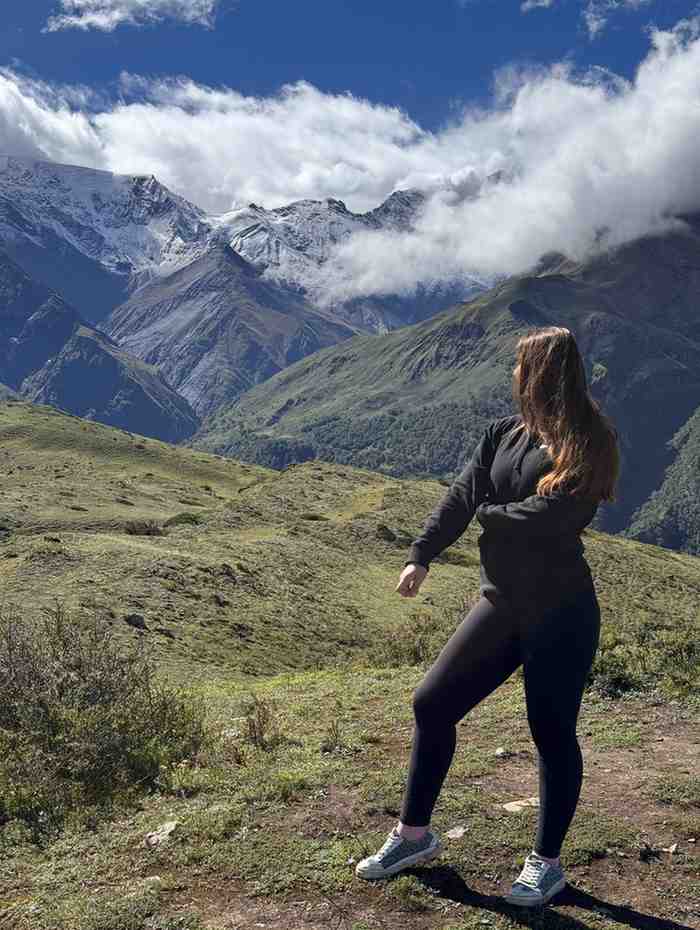
On the trekking routes, the dynamic is remarkable. You begin the day alone. Within the first hour you fall into step with someone heading the same direction. By lunch you are three. By the teahouse that evening you are seated at a long table with eight people from five countries, comparing altitude headaches and recommending blister remedies.
Teahouses make this happen. Communal dining rooms mean no one eats alone unless they actively seek it. The shared physical experience of the trail — the same stairs, the same dust, the same thinning air — generates a solidarity between strangers that normal social settings rarely produce as quickly.
Emily from Journey by Backpack notes this directly: Nepal is a destination where you are unlikely to feel isolated for long, particularly on the popular trekking routes where the community of travellers creates a natural social ecosystem.
One honest note: this social infrastructure is most active in peak season — spring and autumn. Travel solo in monsoon or deep winter and the teahouses thin out, the social density drops, and the experience is significantly more solitary. Know which version you want before choosing your season.
7. Trekking Solo in Nepal: What Changed in 2023 and 2026
This is the most important practical update, and the one most online resources still get wrong.
Since April 1, 2023, the Government of Nepal officially requires all foreign trekkers in National Parks, Conservation Areas, and Restricted Areas to be accompanied by a government-licensed guide. This covers the Annapurna Conservation Area and therefore the ABC trek, the Sagarmatha National Park and therefore the EBC route, and the Manaslu Conservation Area.
The Nepal Tourism Board's director confirmed the reasoning publicly: "There were many cases where tourists have disappeared. Deaths among solo trekkers had given some tourists the misperception that Nepal was unsafe." In fiscal year 2019–20 alone, 390 tourists were reported lost or missing — the majority trekking without guides.
What this means practically:
The independent Green TIMS card — which previously allowed solo travellers to trek without a guide — no longer exists. Permits are now issued only through registered agencies. The theoretical framework for fully independent trekking on major Nepal routes has been dismantled at the regulatory level.
Ground reality in 2026: Enforcement varies significantly by route and season. On the Annapurna Base Camp route, checkpoint officers primarily verify the ACAP permit rather than guide documentation. Many solo travellers continue to complete the ABC trek unguided. However, the legal position is clear, and enforcement is gradually tightening.
Why the rule matters beyond compliance: A licensed guide trained to recognise altitude sickness symptoms is not a bureaucratic requirement — it is a genuine safety measure on routes where the nearest hospital is hours away. Trekking with a guide is the legally correct and demonstrably safer approach.
Costs: A licensed guide hired privately costs USD 25–40 per day. A porter costs USD 15–25 per day. Both are investments that directly support local livelihoods and make a meaningful practical difference to your safety and experience.
8. The Teahouse System: Why It's Perfect for Solo Travellers
The teahouse trekking system deserves its own section because it is genuinely one of the best-designed structures for solo independent travel anywhere in the world.
Here is how it works: family-run lodges, spaced one to four hours apart along every major trail, provide accommodation, meals, and basic supplies. No tent. No stove. No camping equipment. No food resupply planning. You walk. You arrive. You eat. You sleep. You leave.
Meals are simple and consistent: dal bhat, noodle dishes, soups, eggs, pancakes. The teahouse kitchen is the social heart of the trail — you eat communally, share trail information, and find out which sections ahead are affected by weather or damage.
The economics matter: accommodation is priced low — sometimes near free — on the expectation that you eat at least one or two meals at the teahouse. Eating elsewhere or bringing your own food breaks the social contract and usually results in being charged full accommodation rates. Eat at your teahouse. It is right, and the food is generally good.
Beyond practicalities, teahouses are where solo Nepal travel becomes something larger. The families who run them have spent years watching the world walk through their door. Their stories — about trails, about mountains, about the seasonal changes across decades — are often the richest conversations you have on the entire trip.
9. Safety: What's Real, What's Overstated, What to Watch For
Nepal is genuinely one of the safer countries in Asia for solo travellers. Violent crime against tourists is rare to the point of being statistically negligible. The cultural instinct toward hospitality is real and pervasive.
But safe is not the same as risk-free. The risks that do exist in Nepal are specific and worth understanding clearly.
Real risks:
Road accidents are the most statistically significant risk for travellers in Nepal. Mountain roads are narrow, often unpaved, used by overloaded vehicles, and susceptible to landslides. Use reputable tourist bus companies for inter-city travel, prefer flights where practical, and avoid local buses on mountain roads after dark.
Altitude sickness is the most serious physical risk for trekkers. It does not discriminate by fitness level, age, or experience. Know the symptoms — persistent headache, nausea, dizziness, confusion, shortness of breath at rest — and have a clear protocol. Travel insurance covering helicopter evacuation is not optional. It is essential.
Petty theft occurs in crowded tourist areas, particularly around Thamel and Lakeside. Keep valuables in a money belt, carry passport photocopies for day-to-day use, and use a daypack with lockable zips in markets.
Overstated risks:
Serious violent crime against tourists is rare. The generalised sense of threat that some online content projects about Nepal does not reflect the experience of the vast majority of solo travellers. Anna Sherchand — a Nepal-born travel writer who returned after a decade of global travel — describes Nepal as a place with "a low crime rate, a communal tea house trekking culture" where she felt consistently safe (annasherchand.com). Her perspective as someone who both grew up in Kathmandu and has since travelled to over 100 countries puts the safety conversation in unusually clear context.
10. Scams Targeting Solo Travellers — and How to Avoid Them
The scams operating in Nepal are not violent or sophisticated. They are economic. Knowing the common ones takes the edge off the first few days in Kathmandu.
Inflated taxi fares The most consistent issue in Kathmandu. Unmetered taxis at tourist hotspots quote three to five times the local rate as standard. Solution: Pathao or InDrive apps for all city transport. The fare is visible before you confirm.
Commission-based fake guides Individuals approach solo travellers in Thamel or outside temple complexes, initially framing it as casual conversation. The guide leads you to shops earning commission on your purchases, not to sights. Book guides through registered agencies with verifiable credentials.
The gem or pashmina export scheme A well-dressed, friendly person proposes a business arrangement involving you taking goods home to sell for profit. No variation of this story is genuine.
The milk for children scheme A woman asks you to buy milk rather than give cash. She leads you to a shop, the shopkeeper charges an inflated price, and the woman later returns the goods for a share. Decline politely and move on.
The monastery/meditation centre recruitment An invitation to a free yoga or meditation session that escalates into a pitch for expensive retreats. Legitimate centres in Nepal do not recruit from the street.
Overcharging for permits or services Without price knowledge, some agencies quote significantly above market rate. Research standard rates before engaging — ACAP permit: NPR 3,000; guide fees: USD 25–40 per day — and always get a full itemised quote before paying.
The tone worth adopting: relaxed awareness rather than defensive suspicion. Most people who approach you in Nepal are not running scams. Hospitality and curiosity are genuine here.
11. Solo Female Travel in Nepal: The Honest Picture
Nepal is among the better countries in Asia for solo female travel, and it rewards women who come prepared and culturally aware.
Emily from Journey by Backpack puts it plainly: she arrived nervous — it was her first solo destination outside Europe — and found it one of her most positive solo experiences. She received no unwanted attention even in Kathmandu, found the trekking community naturally supportive, and would recommend Nepal to solo women without hesitation, provided they come with reasonable cultural awareness.
The honest caveats: staring and persistent conversation from men occurs in urban areas, particularly in Thamel and Lakeside. It is usually not aggressive and rarely escalates. It is less prevalent on trekking routes, where the traveller community creates a more egalitarian social environment.
Practical guidance for solo women:
Dress modestly in cities and temple areas — shoulders and knees covered. Not because Nepal is particularly conservative, but because it is respectful, and respect here is reciprocal.
Trust your instincts without hesitation. If a guesthouse feels wrong, leave. If a taxi takes an unexpected route, ask them to stop. On the trail, the teahouse communal structure means you eat with other travellers every evening — you are rarely isolated after the first day.
Avoid walking alone in unlit or isolated areas at night. Use a ride-hailing app to get back to accommodation after dark rather than walking unfamiliar side streets.
The trail community is remarkably safe. Women trek the ABC and EBC routes regularly and report high levels of comfort and security, particularly when trekking with a licensed guide or porter who provides both practical support and a natural social buffer.
12. Cultural Etiquette That Makes or Breaks the Experience
Nepal is deeply rooted in Hindu and Buddhist traditions, and basic cultural awareness transforms your experience from tourism into genuine connection.
Namaste: Palms pressed together, a slight bow — the universal greeting. Use it constantly. It opens conversations, signals respect, and invariably produces a warm response.
The left hand: Considered unclean in Nepali culture. Use your right hand or both hands to give and receive — money, food, gifts.
Shoes at religious sites: Remove footwear before entering any temple, monastery, or religious building.
Clockwise circulation: Walk clockwise around monasteries, chortens, and mani walls. This is the directional flow of Buddhist ritual circumambulation.
Photographing people: Ask before photographing individuals, particularly monks, elderly people, and in rural villages. The request itself — even through gesture — usually results in an enthusiastic yes and a genuine moment of connection.
Tipping: Guides and porters depend significantly on tips. The standard: USD 10–20 per day for a guide, USD 5–10 per day for a porter, for the duration of the trek. These are the understood economic realities of the trekking industry.
13. Budget: What Solo Travel in Nepal Actually Costs
Nepal remains one of the most budget-friendly trekking destinations in the world. Here is the honest 2026 breakdown.
Budget solo traveller: USD 25–40 per day
- Hostel dorm or basic guesthouse: USD 5–12
- Three meals at local eateries: USD 6–10
- Local transport: USD 2–5
- Incidentals: USD 3–5
Mid-range solo traveller: USD 50–80 per day
- Private guesthouse with en-suite: USD 20–35
- Mid-range restaurant meals: USD 12–18
- Ride-hailing transport: USD 5–10
- Activities and site fees: USD 10–15
Trekking-specific costs (per day on trail):
- Teahouse accommodation: USD 3–8
- Teahouse meals: USD 12–20
- Licensed guide: USD 25–40
- Porter: USD 15–25
- ACAP permit (one-off): USD 22–25
Total per day on trail with guide and porter: USD 55–90
Major one-time costs:
- International flights: USD 600–1,200 depending on origin
- Kathmandu to Pokhara by air: USD 80–120
- Travel insurance with helicopter evacuation: USD 80–150 for two weeks
The single most effective budget reduction that doesn't compromise safety or experience: book a guide through a local Pokhara-based agency rather than an international platform, eat at teahouses rather than tourist restaurants, and use ride-hailing apps instead of street taxis.
14. The Best Places to Travel Solo in Nepal
Kathmandu At least three full days. Thamel as your base, with day trips to Bhaktapur (a medieval city that feels entirely removed from Kathmandu's noise), Patan (UNESCO heritage with extraordinary temple courtyards), and Pashupatinath (Nepal's most sacred Hindu site and open-air cremation ghats along the Bagmati River). The city rewards patience and penalises rushing.
Pokhara The counterweight to Kathmandu's energy. Lakeside is calm, the food is good, and the views of the Annapurna range across Phewa Lake on clear mornings are extraordinary. The café culture and social scene naturally brings solo travellers together. Paragliding from Sarangkot is reliably spectacular and straightforward to organise independently.
The Annapurna Region The most solo-traveller-friendly trekking region in Nepal. The ABC route and the Poon Hill circuit sit at the accessible end of the difficulty spectrum, the teahouse density is high, and the trail community is active year-round in peak seasons.
The Everest Region Harder, higher, more expensive, and more demanding. The Lukla flight is an experience in itself. The EBC route generates extraordinary trail camaraderie. The altitude demands more from solo trekkers specifically — the mandatory guide rule here is less contested because the risk is more clearly real.
Chitwan National Park A completely different Nepal — jungle, wildlife, subtropical heat. Rhinos, tigers, crocodiles, and the Tharu community whose culture is rooted in living alongside these ecosystems. Easily reached from both Kathmandu and Pokhara. Solo-friendly with organised jeep safaris and guided walks.
Lumbini The birthplace of the Buddha. A pilgrimage destination of international significance — Buddhist temples from Japan, China, Thailand, Sri Lanka, and dozens of other countries surround the sacred garden marking the site of Siddhartha Gautama's birth. Quiet, contemplative, and spiritually powerful regardless of your own religious framework.
15. The Emotional Reality: Loneliness, Connection, and What Nepal Does to You
No honest guide to solo travel in Nepal is complete without this section.
Solo travel in Nepal is, at various moments, profoundly lonely and profoundly connecting — sometimes within the same hour.
The loneliness is most present in the cities, particularly on rest days in Kathmandu when you are the only person at your table and you wonder what everyone at home is doing. It appears briefly on the trail when you have been walking in silence for three hours and the altitude is slowing your thinking. It surfaces in teahouses when couples share the experience and you are processing it alone.
This is normal. It is temporary. And it is part of what makes Nepal specifically valuable for solo travel: you have no choice but to sit with your own thoughts, which in an environment this extraordinary tend to be rather interesting thoughts.
Zahabiya Nuruddin captures this beautifully in her Substack journal. She arrived with the intention to "slow down and really take life one day at a time" — not seeking company for the sake of having it, but choosing experiences she genuinely wanted. Two months later, on the flight home, she had filled an entire journal and built a life in Nepal she hadn't planned. "I've lived so many lives," she wrote. "Different versions of myself. All on a journey to find my True Self."
That is what Nepal does to solo travellers who show up genuinely open. Not immediately. Not dramatically. But over the accumulation of difficult mornings and extraordinary evenings and conversations with strangers that somehow feel essential.
Most people who go to Nepal alone describe some version of the same thing on return: they thought they were going to see mountains. They didn't expect to feel like that.
16. Practical Pre-Departure Checklist for Solo Travellers
Documents and admin:
- Passport valid at least six months beyond departure date
- Nepal visa — arrange in advance online or obtain on arrival with cash and passport photo ready
- Travel insurance with helicopter evacuation and high-altitude medical coverage (confirm altitude limit — many standard policies cap at 4,000–5,000 m)
- Printed and digital copies of all bookings, permits, insurance documents
- Emergency contact information noted separately from your phone
Money:
- Sufficient USD cash for visa, initial expenses, and a buffer
- Notify your home bank of Nepal travel to avoid card blocks
- No ATMs exist beyond Jomsom (Mustang route) or Namche Bazaar (EBC route) — withdraw sufficient cash before departure
- Cards not accepted anywhere in remote trekking areas
Health:
- Consult your doctor about Diamox before departure — it must be prescribed
- Water purification: filtration bottle or purification tablets — never drink tap water in Nepal
- Stomach medication including oral rehydration salts, loperamide, and an antibiotic (with prescription)
- Comprehensive first aid kit including blister management and pain relief
- Vaccinations: confirm current recommendations with a travel health clinic — hepatitis A, typhoid, and tetanus are standard
Communication:
- Download offline maps (Maps.me or OsmAnd) before departure — do not rely on mobile data above Chhomrong on ABC or above Namche on EBC
- Consider a local SIM (NTC provides marginally better coverage in remote areas than Ncell)
- Share your trekking itinerary with a trusted person at home including expected daily stopping points and a check-in schedule
17. Frequently Asked Questions
Is Nepal safe for solo travellers? Yes, with awareness. Violent crime against tourists is rare. The main risks — road accidents, altitude sickness, petty theft — are all manageable with preparation and good judgement.
Can I trek solo in Nepal without a guide? Technically, solo unguided trekking in protected areas is illegal under regulations introduced in April 2023. Enforcement varies by route. From a safety perspective, hiring a guide on high-altitude routes is strongly recommended regardless of the legal question.
What is the best time to travel solo in Nepal? October and November are the most reliable for mountain views and trail conditions. March and April are excellent for rhododendron blooms and moderate temperatures. Avoid the peak monsoon months (June–August) unless experienced in wet-season trekking.
How much money do I need per day in Nepal? Budget solo travellers can manage on USD 30–40 per day in cities. On the trekking trail with a guide and porter, expect USD 60–90 per day all-in including permit costs amortised across the trek.
Is Nepal good for solo female travellers? Yes. Emily from Journey by Backpack — who arrived more nervous than she'd been about any previous solo destination — describes it as one of her best solo experiences. Violent incidents are very rare, the trekking community provides natural safety in numbers, and cultural norms generally favour courteous treatment of visitors.
Will I feel lonely travelling solo in Nepal? At moments, yes. The teahouse system and hostel culture mean extended loneliness is rare if you're open to connection. The solo moments that do occur tend to be the most memorable parts of the trip. As Zahabiya Nuruddin reflected after 60 days solo in Nepal: "Whether it was in the middle of the Himalayas, by the lakeside cafes in Pokhara, at the remote Vipassana center, or in the midst of the bustling city of Kathmandu — I found beauty in each moment."
Do I need travel insurance for Nepal? Yes — unconditionally. Helicopter evacuations from high-altitude routes cost USD 3,000–5,000 or more. Ensure your policy explicitly covers helicopter evacuation and activities at altitude up to at least 5,400 m for EBC or 4,200 m for ABC.
How long should I spend in Nepal? Two weeks is the practical minimum for combining Kathmandu, Pokhara, and one significant trekking route. Three weeks allows you to add Chitwan or Lumbini. Four weeks gives you the Nepal experience in full — and the pace the country actually deserves.