
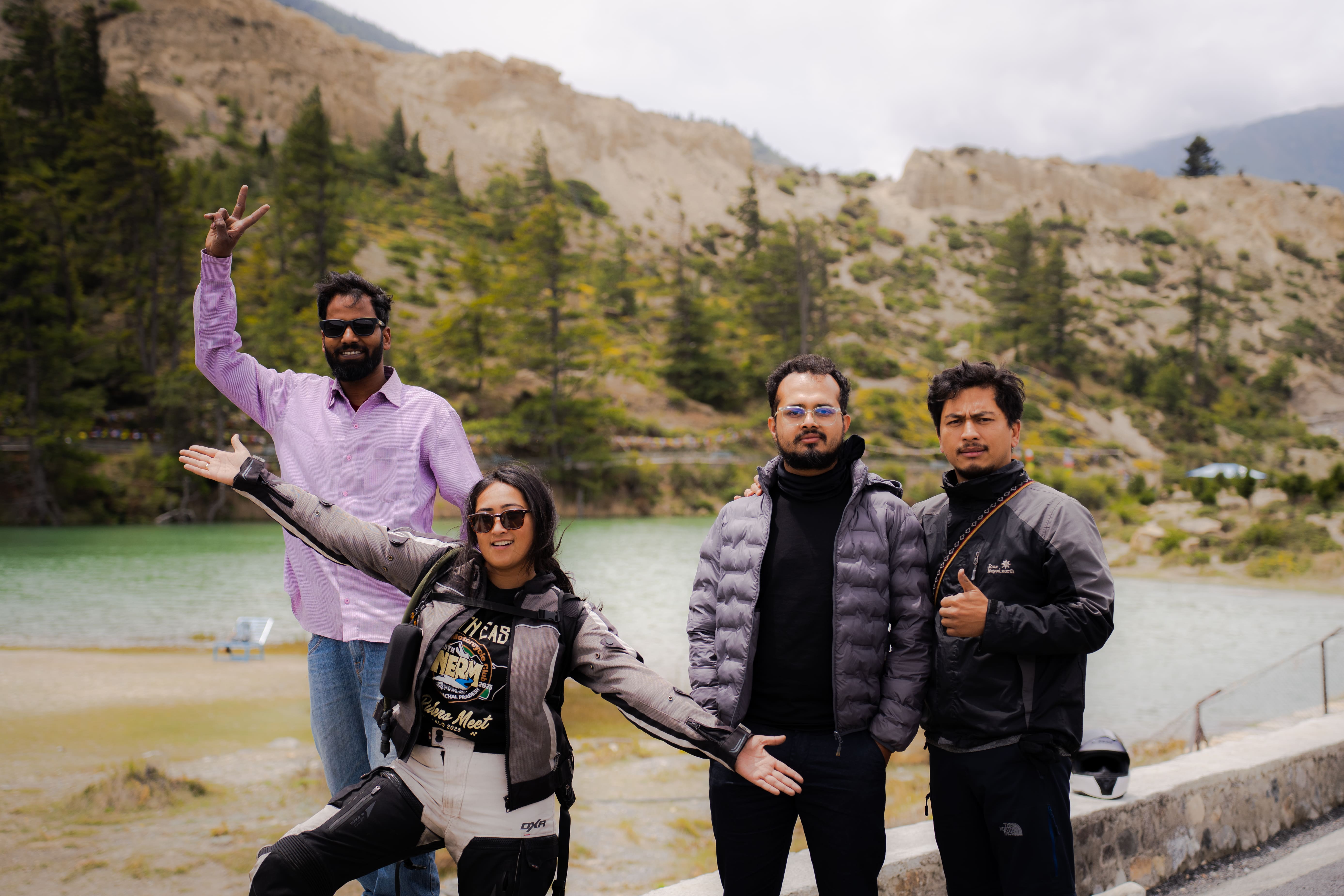
Every photograph from a Himalayan motorcycle expedition shows the same cast: the rider, the bike, the pass, the view. The story told in those photographs is a story of individual accomplishment, one person, one machine, one extraordinary landscape. It is a true story. It is also an incomplete one.
Behind the rider on the Kali Gandaki track, behind the loaded Royal Enfield cresting the high plateau approach to Lo Manthang, behind the traveller arriving in Lo Manthang at the end of a week's riding through Upper Mustang, is a workforce that made the journey possible and that appears in almost none of the photographs.
The mechanic in Jomsom who spent two hours the previous evening tracing an electrical fault by headlamp. The tea house owner in Ghami who knew to save a room because a guide called ahead three days earlier. The permit agency officer in Thamel who processed the Restricted Area paperwork in time for a departure date that was already tighter than it should have been. The local guide who read the sky above Thorong La at 4 a.m. and made a call about the crossing that the rider did not have the knowledge to make independently.
This article is about that workforce, who they are, what they carry, what they make possible, and why the Himalayan riding experience that adventure motorcyclists travel from across the world to reach is not, in any meaningful sense, a solo achievement.
The Guide: Knowledge That Cannot Be Downloaded
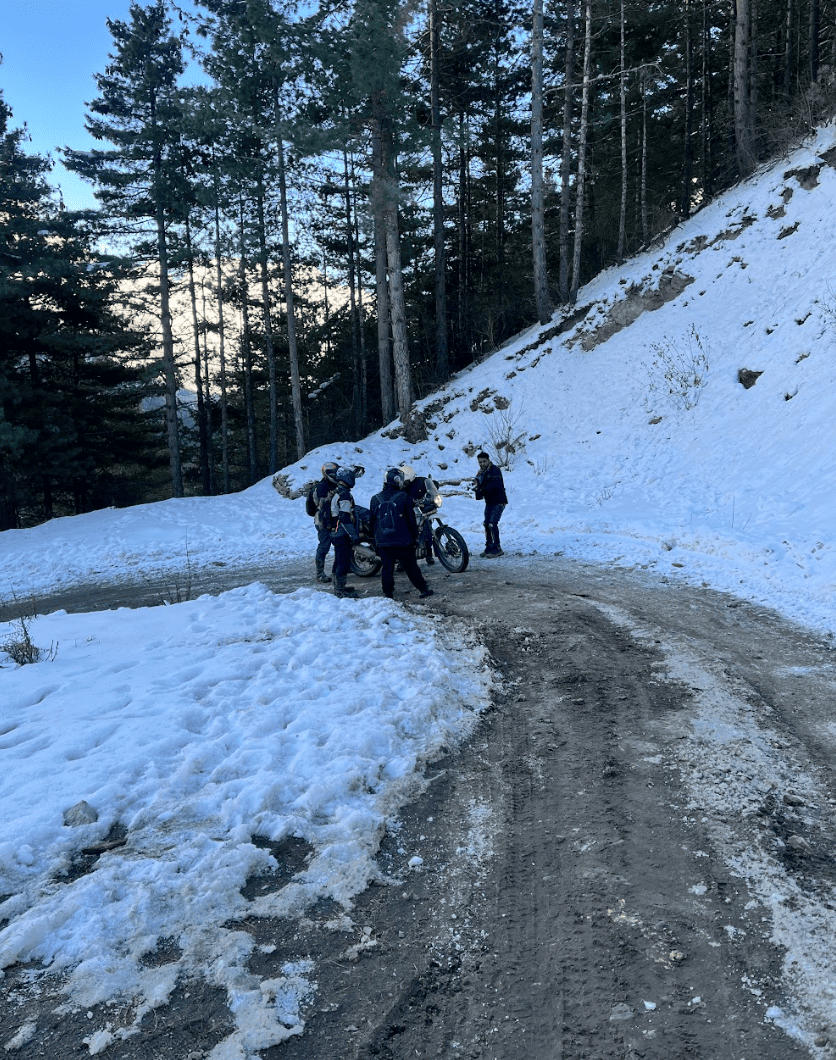
The most visible member of the hidden workforce is the guide and visibility is relative, because even guides rarely appear prominently in the trip reports and social media content that Himalayan motorcycle travel generates. They are in the background of the group photograph. They are the person being thanked in the final paragraph of the blog post. They are present throughout and credited briefly.
What they provide, concretely, is not reducible to route knowledge, though route knowledge is part of it. A guide who has led the Upper Mustang motorbike tour twenty times in fifteen seasons carries a specific and non-transferable kind of understanding, not of the route as a static geography but of the route as a living system that changes with weather, season, recent traffic, and the specific conditions of a given day in a given year. The track between Chusang and Ghami after three days of wind looks different from the same track after two days of rain followed by cold overnight temperatures. Knowing which version you are about to ride, and adjusting pace, tyre pressure, and line choice accordingly, is knowledge that a GPS track and a trip report from two Octobers ago cannot provide.
Beyond route knowledge, the guide is the community interface, the person whose relationships in the villages and tea houses along the route translate directly into information, preferential treatment, and the kind of local intelligence that turns potential problems into non-events. When a road closure ahead is being discussed at a tea house, it is the guide who hears it first, understands its implications accurately, and has already contacted someone downstream who can confirm the alternative before the rider has finished their dal bhat. When accommodation is scarce on the approach to a festival in Lo Manthang, it is the guide's relationships with specific guesthouse owners — relationships built over years of repeat business and mutual trust — that secure a room.
Prabhash Thakur of Nepal Moto Tours, based in Bhaktapur and riding these routes for over a decade, represents the profile that the best Himalayan motorcycle guides embody: not a logistics provider who happens to ride, but a rider whose deep knowledge of the country and its roads has been formalised into the ability to guide others through an experience that would be categorically different without that knowledge present.
The Mechanic: The Person Who Keeps the Journey Moving
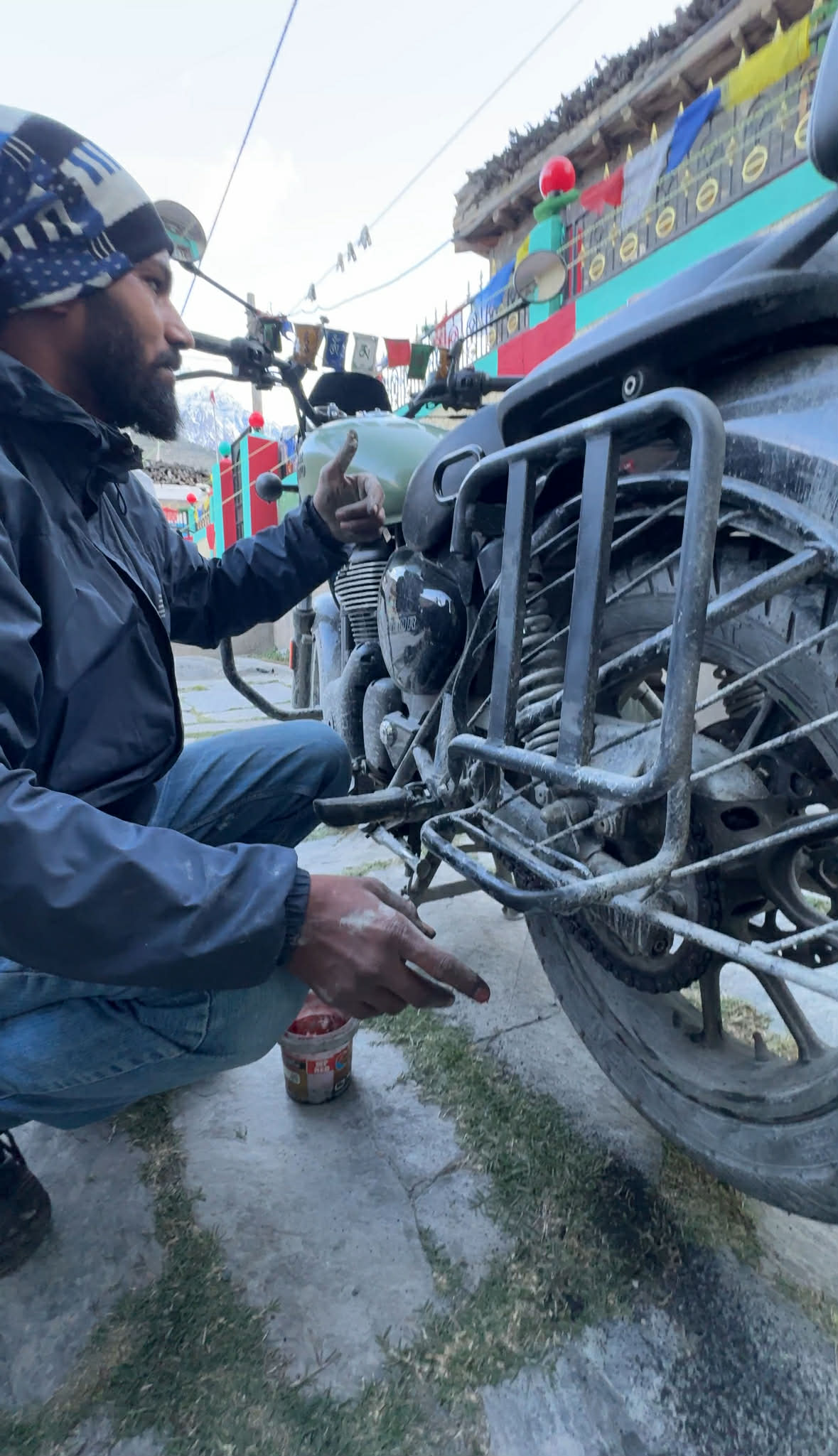
The Himalayan motorcycle mechanic occupies a position that is simultaneously central to every riding expedition and almost entirely invisible in the way that expedition is recorded and remembered.
In Jomsom, in Manang, in Beni, in Tatopani, and in the towns along Nepal's serious riding routes, there are mechanics who have been working on Royal Enfield engines for years or decades, not because Royal Enfield is the only brand they know, but because Royal Enfield is what the traffic on these routes is predominantly made of, and because the specific failure modes that high altitude, river crossings, sustained vibration on loose gravel, and extreme temperature variation produce on these engines have become, through repetition, a body of practical knowledge that no service manual fully captures.
The mechanic who traces an electrical fault on a loaded Royal Enfield Himalayan at 2,700 metres in Jomsom by headlamp, charging NPR 500 for two hours of work, is providing a service whose value to the rider is not proportional to its cost. The alternative to that two-hour repair is a riding day lost, an itinerary compressed, and potentially a permit period that expires before the restricted area is fully ridden. The mechanic's fee is a transaction. The riding day saved is what a permit costing USD 50 was purchased to protect.
The depth of Royal Enfield mechanical knowledge embedded in Nepal's mountain towns is not an accident. It is the accumulated consequence of a century of subcontinental motorcycle culture that has diffused across the trade and travel networks connecting Nepal and India, combined with the specific market dominance that the Royal Enfield Himalayan has achieved on Nepal's riding routes over the past decade. A mechanic in a workshop in Tatopani who has adjusted valve clearances on a 411cc single-cylinder engine fifty times has a relationship with that engine's characteristic behaviour that a new Royal Enfield dealership mechanic with formal training but limited high-altitude field experience does not yet have.
This knowledge is irreplaceable in the moment it is needed. And it is needed, on most serious Himalayan riding expeditions, at least once.
The Tea House Owner: Infrastructure at Human Scale
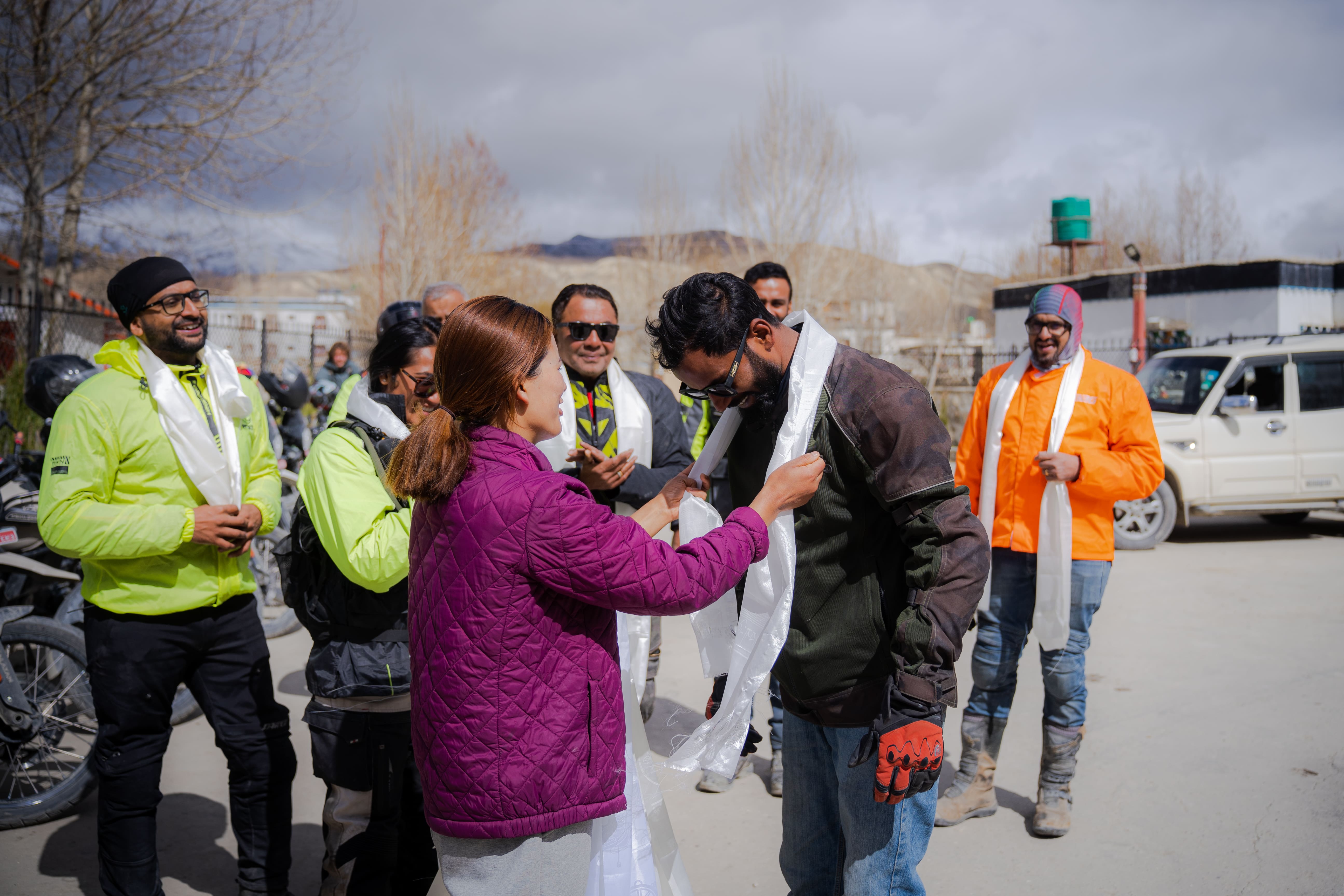
The tea house network along Nepal's established motorcycle routes is the infrastructure that makes multi-day Himalayan riding accessible to riders who are not carrying full camping and cooking equipment across the highest accessible roads in the world. It is also, from a distance, one of the least examined aspects of the Himalayan riding ecosystem — the accommodation is taken for granted in the way that infrastructure is always taken for granted until it is absent.
The tea house owner on an established Himalayan route is running a small business in conditions that would challenge any hospitality operation: supply chains that depend on jeep tracks that close seasonally, altitude and temperature ranges that complicate food storage and preparation, water supply that is often unreliable, and a customer base that arrives unpredictably, stays briefly, and has expectations shaped by the contrast between the extreme landscape outside and the basic conditions inside.
What the best tea house owners provide, beyond a room and a meal, is information. The tea house in Marpha where the owner has spoken to every vehicle coming south for the past three days and can tell you, with accuracy that a weather forecast cannot match, what the wind conditions have been above Kagbeni. The guesthouse during the motorbike tour to Manang where the owner knows which of her neighbours has a spare chain link that fits the specific bike the rider is struggling with. The tea house in Chuksang where the conversation over evening dal bhat produces the information that the river crossing three kilometres north is running higher than it looks from the south bank, and here is where to cross it.
This ambient intelligence, the accumulated local knowledge of people who live in and move through the landscape every day is one of the things that makes the tea house network's value to motorcycle travellers exceed its accommodation and food function. You cannot book this information on a reservation platform. It is available in person, in conversation, to travellers who treat the people providing it as something other than service infrastructure.
The Permit Officer: The Bureaucratic Gateway Keeper
The permit agency officer processing a Restricted Area Permit application in Thamel or Lakeside is perhaps the most thoroughly invisible member of the Himalayan riding workforce — their contribution is felt primarily in its absence, when something goes wrong.
Upper Mustang's Restricted Area Permit requires correct documentation, correct fees, and processing through a registered agency. The clerk who handles this process correctly, who catches the documentation gap before it creates a problem at the Kagbeni checkpoint, who knows the current processing time accurately and advises the rider to add a day before departure, who files the paperwork in the sequence the Tourism Board requires rather than the sequence that seems logical to a first-time applicant is providing a service whose value is not apparent when it works and immediately apparent when it does not.
Riders who have been turned back at the Kagbeni checkpoint, or who have spent an extra day in Jomsom waiting for permit confirmation to arrive, understand the clerk's role with a clarity that those for whom the process worked smoothly rarely develop. The permit process is administrative rather than experiential, and its invisibility when functioning correctly is precisely the intended outcome of work done well.
The Road Worker: The Reason the Track Exists at All
Nepal's rural road network — the tracks into Mustang, the mountain roads connecting the villages of the Annapurna and Manaslu circuits, the approaches to Langtang and the high passes of the Khumbu region — exists because people build and maintain it, often by hand, in conditions that no road maintenance job in a developed country would recognise.
The workers repairing the washed-out section of the Mustang track above Chusang after a debris flow, filling the exposed section with quarried rock carried by hand from the adjacent hillside, are engaged in work that makes the riding possible and that the rider passes through in minutes without necessarily registering that the passable track was not in that condition forty-eight hours ago.
Road maintenance in Nepal's mountain districts is a combination of government Border Roads Organisation work on strategic routes, local community labour on lower-priority tracks, and improvised repair by whoever has the access and the materials to address a specific obstruction. The result is a network whose condition is unpredictable in ways that European road infrastructure is not, but whose repair culture is more responsive and more community-embedded than any centrally managed system produces.
The rider who completes Upper Mustang and describes the road as "rough but rideable" is describing the accumulated outcome of years of maintenance work by people whose names are in none of the trip reports.
The Supply Chain That Feeds the Route
Every dal bhat served at a tea house above 3,000 metres in Upper Mustang represents a supply chain achievement that the person eating it rarely considers. Flour, rice, lentils, vegetables, fuel for cooking, bottled water, soft drinks, toilet paper, and the fifty other items that make a tea house functional — these things did not appear at the tea house at 3,800 metres by accident. They arrived on the back of a jeep that negotiated the same track the motorcycle rider just completed, driven by a driver who makes that journey regularly enough that the track's variable condition is a known and managed challenge rather than an adventure.
The logistics of supplying Upper Mustang's tea house network are genuinely complex and operate on timelines and cost structures that the USD 15 per night accommodation price does not obviously accommodate. Seasonal supply runs before the Monsoon, improvised restocking when a vehicle makes the journey for another purpose, community cooperation between tea house owners sharing transport costs — the supply chain is informal, adaptive, and entirely invisible to the traveller who receives its outputs.
What the Hidden Workforce Represents
The workforce behind every Himalayan ride is not a service layer attached to an otherwise independent experience. It is the condition under which the experience exists. Remove the mechanic from the equation and the mechanical event that every serious Himalayan ride eventually encounters becomes a crisis rather than a delay. Remove the guide's local intelligence and the decision about whether to attempt the crossing or wait becomes a guess rather than an assessment. Remove the tea house owner's information network and the rider navigates in the operational equivalent of darkness on the most consequential decisions of the journey. Remove the permit clerk's competence and the checkpoint at Kagbeni becomes a barrier rather than a formality.
The Himalayan motorcycle expedition as a form of adventure travel — the riding experience, the cultural encounter, the sense of earned achievement that draws riders from across the world to these routes — is a collective achievement presented and recorded as an individual one. This is not a criticism of the riders who complete these journeys. It is simply a more accurate account of what those journeys actually involve.
Paying It Forward: What Riders Owe the Workforce
This is not an abstract ethical argument. It is a practical one with specific implications for how a Himalayan motorcycle trip should be planned and conducted.
Pay guides at rates that reflect the value of what they provide rather than the minimum the market will bear. The guide who makes the difference between a successful Upper Mustang circuit and a trip-ending mechanical crisis three days from Lo Manthang is worth more than the day rate that budget operators quote to win bookings. The rate difference between a guide being paid fairly and one being paid minimally is, in the context of the total trip cost, small. The difference to the guide's livelihood and to the quality of service the rate produces is not.
Eat at local tea houses rather than carrying all your food from Kathmandu. Spend your incidental money in the villages along the route rather than consolidating purchases in the city before departure. Tip mechanics for good work. Thank the tea house owner for the road condition information that saved you two hours of wrong-route riding.
These are not gestures. They are the mechanism by which the economic benefit of motorcycle tourism reaches the communities that make it possible, rather than concentrating in the urban centres where the bikes are rented and the permits are processed. The hidden workforce is hidden partly by the invisibility that service roles always carry. It is also hidden, in the economic sense, when the money that flows through adventure tourism bypasses the communities providing its essential human infrastructure.
The Ride That Photographs
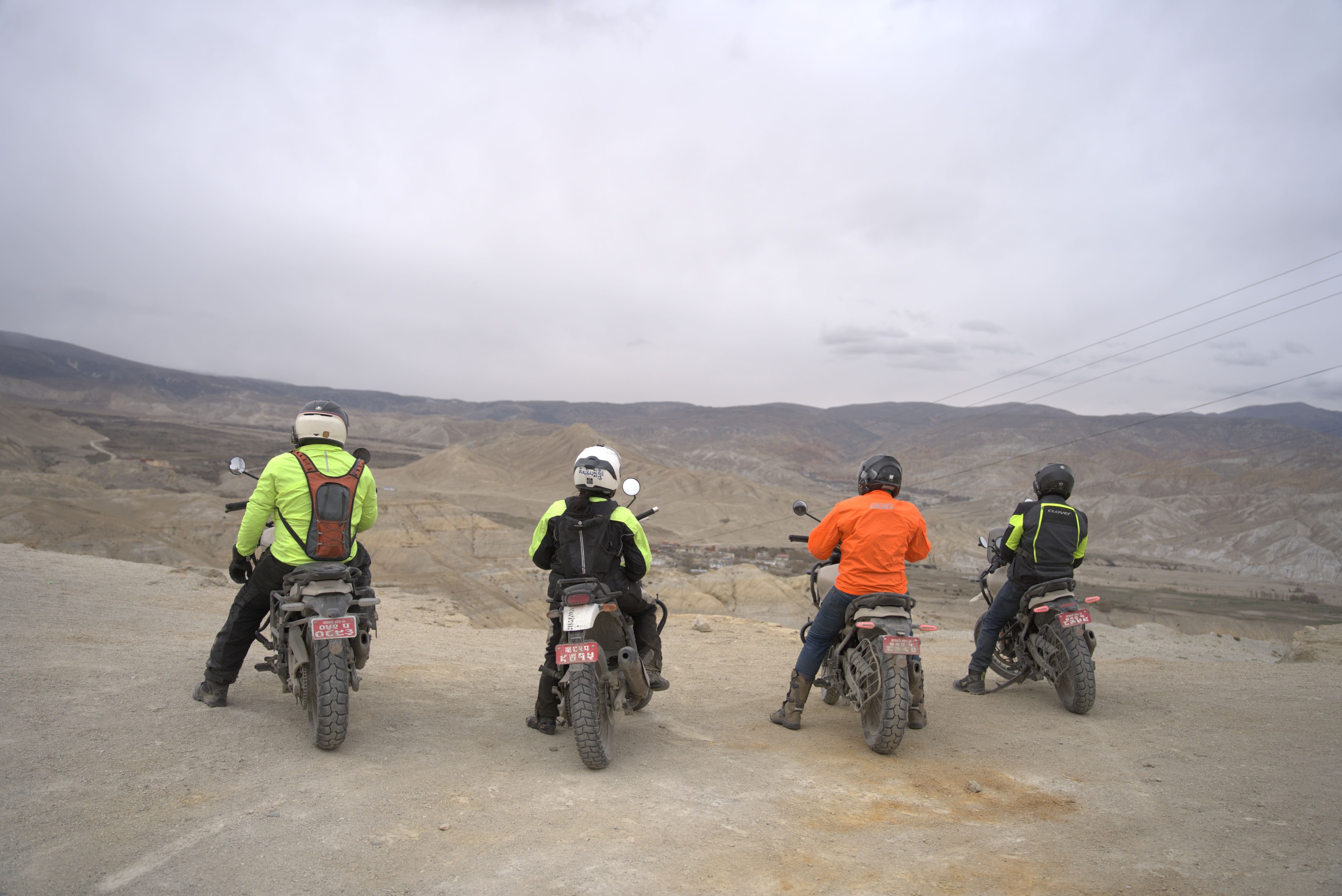
The photograph at the top of Thorong La will keep looking the same. One rider, one machine, one extraordinary sky. The story it tells is real and earned and worth telling.
But the fuller story, the mechanic's headlamp in Jomsom, the guide's 4 a.m. weather read, the tea house owner's room held on a relationship that predates the booking platform era, the permit clerk's paperwork filed in the right sequence — is also real, also earned, and considerably underrepresented in the record of what Himalayan motorcycle travel actually is.
Telling both stories does not diminish the one most often told. It simply makes it more accurate, more honest, and more respectful of the people who make it possible to tell it at all.