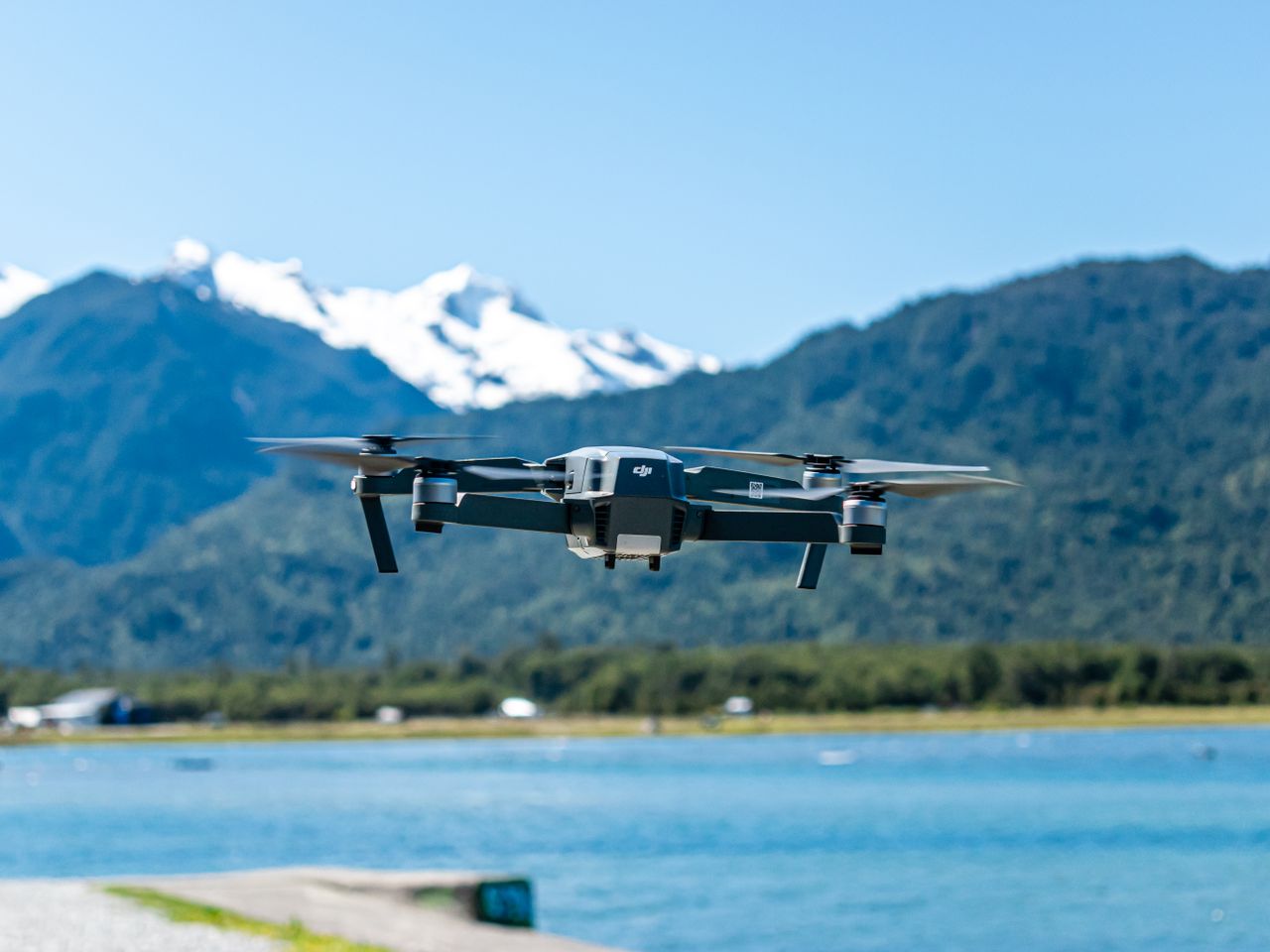
The temptation is obvious. You are on a motorcycle tour in Upper Mustang, the ochre plateau opens in front of you, Lo Manthang is visible on the horizon, and the light is doing something that a helmet camera at road level will not capture. A drone would get the shot that defines the trip.
Whether you can legally fly it is a different question, and the answer is more complicated than your drone or bike rental shops in Nepal suggest.
Nepal has a drone permit system that is genuinely operational, enforced at certain checkpoints, and specific enough that flying without the correct permissions in the wrong area can result in confiscation of the equipment, a fine, or both. This article covers what the system actually requires, where you cannot fly regardless of permits, and the practical reality of what enforcement looks like on Nepal's motorcycle touring routes.
Nepal's Drone Regulations: The Basics
Nepal's Civil Aviation Authority of Nepal (CAAN) governs drone operations in the country under the Remotely Piloted Aircraft System Regulations, updated most recently in 2023. The framework categorises drones by weight and intended use, and the permit requirements differ accordingly.
For the purposes of a tourist carrying a consumer drone on a motorcycle tour, the relevant categories are drones under 2kg used for recreational or personal photography, and drones between 2kg and 25kg. Most riders are carrying a DJI Mini series, a DJI Air series, or equivalent, which puts them in the sub-2kg category.
The regulation that most tourist drone users encounter first is this: all foreign nationals operating any drone in Nepal for any purpose require prior approval from CAAN. This is not a weight threshold or a commercial-use threshold. It applies to every foreign visitor flying any drone in Nepal, including recreational use and personal photography.
The approval is separate from any other permit you obtain for the trip. Your Upper Mustang Restricted Area Permit does not include drone permission. Your ACAP permit does not include drone permission. The national park entry fee does not include drone permission. Drone authorisation is a standalone process through CAAN.
How to Get a Drone Permit in Nepal
CAAN's drone permit process for foreign nationals requires an application submitted to the authority before the flight. The application is not something that can be resolved on arrival or at the location where you intend to fly.
The documents required for a CAAN drone approval include a copy of your passport, details of the drone including make, model, serial number, and weight, your intended flight locations with approximate GPS coordinates or area descriptions, your intended flight dates, proof of third-party liability insurance for the drone, and in some cases evidence of piloting competence such as a home country drone licence or certification.
The processing time varies. In straightforward cases with correct documentation, approval can come through in five to ten business days. Applications with incomplete documentation, ambiguous flight locations, or requests covering restricted areas take longer or are refused.
The practical implication for trip planning is that drone permit applications should be submitted at least three weeks before departure for a Nepal motorcycle tour that includes drone photography. Submitting after arrival is technically possible but the processing time means you are likely to spend your permit-waiting days at a guesthouse rather than on the road.
Several Kathmandu-based operators process CAAN drone applications on behalf of tourists as part of their service offering. If you are booking a guided tour and want to fly a drone, confirm with the operator that they handle drone permit processing and include this in the booking discussion before you commit. Nepal Moto Tours covers this as part of pre-trip permit management for riders who are bringing drones.
Where You Cannot Fly Regardless of Permits
A CAAN drone permit does not authorise flight everywhere in Nepal. There are categories of location where drone flight is prohibited regardless of what permits you hold, and several of them are directly relevant to motorcycle touring routes.
Kathmandu Valley: The airspace around Kathmandu is controlled because of Tribhuvan International Airport. The no-fly zone extends significantly beyond the airport perimeter and effectively covers most of the Kathmandu Valley. Flying a drone for the opening shots of your Nepal motorcycle trip from the hotel rooftop in Thamel is not permitted.
Military areas and installations: Nepal has significant military presence along certain road corridors, particularly in border-adjacent areas. Upper Mustang, which sits adjacent to the Tibet border, has military posts at points along the circuit. Flying a drone near or over a military installation without specific clearance is prohibited and actively enforced in ways that other drone regulations in Nepal are not.
National parks and conservation areas: The Annapurna Conservation Area, which covers the entire Mustang district including both Upper and Lower Mustang, requires a separate permit from the National Trust for Nature Conservation for drone operations within its boundaries. This is additional to the CAAN permit, not a substitute for it. The same applies to Shey Phoksundo National Park in Dolpo, Langtang National Park, and other protected areas that motorcycle touring routes pass through.
Religious and heritage sites: Nepal's cultural heritage regulations prohibit drone flight over religious sites and UNESCO World Heritage areas without specific permissions that are separate from the general CAAN drone authorisation. The Pashupatinath temple complex, the Boudhanath Stupa area, the Durbar Squares, Muktinath temple, the monastery complexes of Lo Manthang, all fall under this category.
Within 5km of airports: Nepal has a network of small airports and airstrips serving the mountain regions. Jomsom Airport, which handles flights serving the Mustang district, creates a no-fly zone that covers the Jomsom area through which most Upper Mustang motorcycle circuits pass. Pokhara International Airport has a corresponding zone covering the Pokhara valley. Mountain airstrips at Lukla, Manang, and other highland locations create their own restricted airspace.
Above 6,000 metres: CAAN regulations restrict drone operations above 6,000 metres. This is largely irrelevant for motorcycle touring routes but worth noting for riders planning ascents near high-altitude areas accessible from their circuit.
The Restricted Area Complication
Upper Mustang's status as a restricted area adds a layer to the drone question that sits above the standard CAAN permit process.
The restricted area permit system is managed by Nepal's Department of Immigration, not CAAN, and the two systems do not automatically coordinate. A CAAN drone permit for Nepal does not constitute permission to fly in the restricted area. A restricted area permit does not constitute drone flight authorisation.
For drone operations inside Upper Mustang's restricted zone, riders need the CAAN authorisation, the restricted area permit for the visit itself, and clearance for the specific flight locations within the restricted area from the relevant authorities. The practical process for obtaining this is through an operator who regularly handles restricted area drone authorisation rather than attempting to navigate it independently, because the number of authorities involved and the specificity of the location approval required makes independent processing slow and prone to errors that appear at the checkpoint.
The checkpoint at Kagbeni checks permits. At various points in recent years, checkpoint officers have also checked for drones in luggage, particularly following incidents of unauthorised drone operations in the restricted area. A drone found at the Kagbeni checkpoint without the correct authorisation documentation has been confiscated in documented cases. The frequency of this check varies and is not guaranteed, but it is a real risk that the permit documentation eliminates.
What Enforcement Actually Looks Like on the Touring Routes
The honest picture of drone enforcement in Nepal is that it is uneven. In Kathmandu's controlled airspace and near military installations, enforcement is active and consequences are real. In remote mountain areas with no military or airport proximity, the practical likelihood of encountering an enforcement action is lower.
This does not mean that flying without permits in remote areas is without risk. The risk is different in character. In the Kali Gandaki gorge between Jomsom and Kagbeni, an unauthorised drone flight is unlikely to result in an immediate enforcement action because there is no one watching. The risk accumulates differently: checkpoint inspections on the way in or out, locals in villages who report unauthorised drone activity to checkpoint posts, and the increasingly active enforcement in the Upper Mustang restricted area as drone tourism has grown.
Riders who choose to fly without permits in areas they assess as low-enforcement-risk are making a calculation about probability rather than legality. Both the legal position and the specific risks that calculation involves are clearer when stated plainly rather than implied.
The riders whose trip ends in drone confiscation are usually not the ones who flew deliberately without permits in a high-risk area. They are the ones who flew without permits in an area they assessed as remote and low-risk, who happened to encounter the checkpoint officer or the local report that their probability assessment did not account for.
Protected Areas Requiring Separate Drone Permits
The following areas covered by standard Nepal motorcycle touring routes have separate drone permit requirements additional to CAAN authorisation:
Annapurna Conservation Area (covering all of Mustang district): Drone permit from the National Trust for Nature Conservation, applied for through their Pokhara office or through a registered operator.
Shey Phoksundo National Park (Dolpo circuit): National park drone permit required from the Department of National Parks and Wildlife Conservation.
Langtang National Park (Langtang valley approach): Same authority as above.
Sagarmatha National Park (Khumbu approaches): Same authority. Also falls within the Kathmandu Airport extended approach airspace on certain routes.
Bardiya National Park (western Terai circuit): National park drone permit required.
Each of these has its own application process, its own fee structure, and in several cases its own processing timeline. A motorcycle tour that passes through multiple protected areas, which most serious Nepal circuits do, involves a separate drone permission for each one rather than a single consolidated approval.
The DJI Mini 3 and Mini 4 Pro Situation
Many riders carrying consumer drones on Nepal motorcycle tours are carrying DJI Mini 3 or Mini 4 Pro units, which weigh under 249g and are treated differently by drone regulations in many countries, including the EU's open category rules, the UK's rules, and the US FAA Part 107 framework.
Nepal's CAAN regulations do not mirror this sub-250g exemption. The requirement for prior CAAN approval applies to all foreign nationals operating any drone regardless of weight. A DJI Mini 4 Pro carried by a foreign national in Nepal requires the same prior CAAN approval as a heavier machine. The weight exemption that applies at home does not travel with the drone to Nepal.
This surprises many riders who are accustomed to their mini drone being treated as a near-exempt category. The CAAN website and the official Nepal Tourism Board documentation are clear on this point even if the drone rental shops near Thamel are not always clear when discussing it with potential customers.
Practical Advice for Riders Bringing Drones
Apply for CAAN approval at least three weeks before departure. The process is not instant and the consequences of not having documentation at the Kagbeni checkpoint or a national park entry point are significant enough to be worth the lead time.
List your intended flight locations specifically. Vague applications for drone operations in Nepal cover the entire country take longer to process and produce approvals that are less useful at specific checkpoints than approvals that name the regions and routes involved.
Carry all permit documentation with the drone. CAAN approval, national park drone permits, and evidence of third-party drone insurance should travel in the same document folder as your riding permits and bike registration. A checkpoint officer asking to see drone authorisation needs to see it immediately, not after a search through your luggage.
Check the insurance requirement. CAAN requires evidence of third-party liability insurance for the drone. Many home country travel insurance policies do not automatically include drone liability. Check this specifically and obtain a separate drone insurance policy if your travel policy does not cover it.
Confirm with your operator if using a guided tour. Operators who handle drone permits as part of their service offering will need the drone details, serial numbers, and your intended flight areas at the time of permit application, not on the day of departure.
Respect the no-fly zones even with permits. A CAAN permit does not override the military installation exclusions, the airport proximity zones, or the religious and heritage site restrictions. These apply regardless of what other permits you hold.
The Honest Position on Drone Photography in Nepal
Nepal produces some of the most compelling drone footage available anywhere in the world. The plateau of Upper Mustang from above, the Kali Gandaki gorge in morning light, the approach to Lo Manthang across the high desert. If you want those shots and you want them legally, the permit process exists and it works.
The process requires lead time, multiple permit applications for routes covering multiple protected areas, specific documentation, and in the restricted area zones a level of pre-clearance complexity that is most practically managed through an experienced operator rather than independently.
Riders who do the paperwork get the shots without the checkpoint risk. Riders who skip it fly with a probability calculation rather than a permit, and Nepal's enforcement is uneven enough that the calculation often works out and occasionally does not.
The permit process is the more boring version of the story. It is also the one where the drone is still in your possession at the end of the trip.