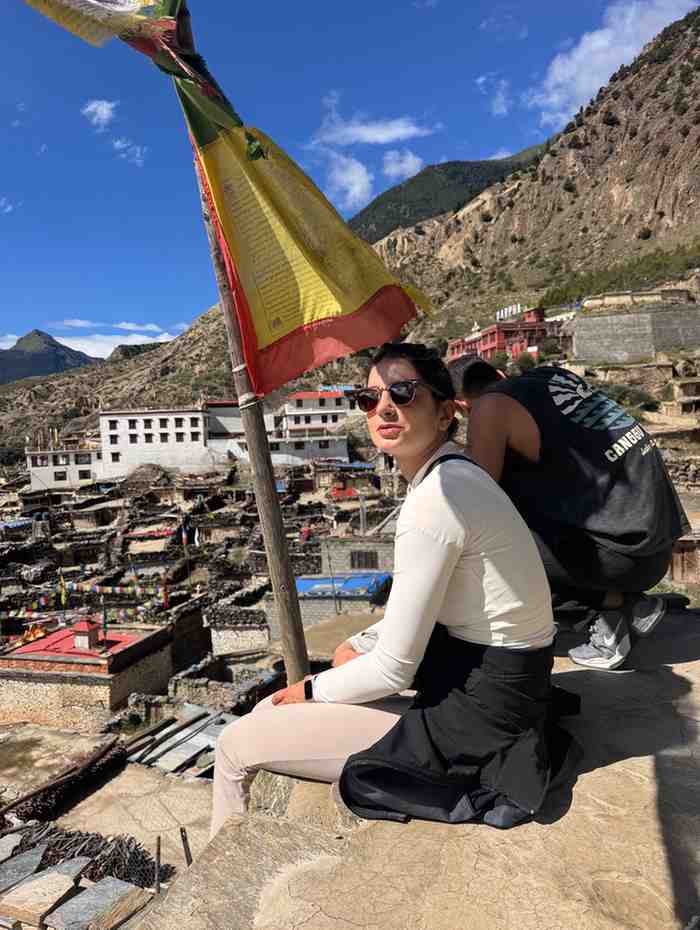
Marpha is the village most riders remember from the road to Jomsom, even if they only meant to stop for tea. It sits at about 2,650 metres on the Kali Gandaki, just below Jomsom, in a pocket of the valley where the wind is a little softer and the land is a little greener. White houses crowd together along stone-paved lanes, firewood is stacked along every flat roof, and apple trees grow in the walled gardens.
Nepal calls it the apple capital, and the label fits. This guide covers why Marpha looks the way it does, what to eat and drink, what to do in the morning, and how to fit an overnight stay into a Mustang motorcycle route.
Where Marpha Is

Marpha lies in Lower Mustang, in the Kali Gandaki valley, about 6 kilometres south of Jomsom. From Pokhara, the road runs northeast to Beni and then follows the river north through Tatopani and Ghasa and up the gorge. Most riders take two days to reach Jomsom, and Marpha sits at the end of the gorge section, just before the valley opens up.
The altitude is high enough to feel on a first trip but not high enough to cause trouble for most people. Marpha is a useful first night above 2,500 metres, and it gives you a quiet evening before the higher, more exposed sections to the north.
Why the Village Looks the Way It Does

Everything about Marpha's layout answers the wind. The Kali Gandaki gorge funnels air between Dhaulagiri and the Annapurna range, and by early afternoon the wind in the valley can be strong and dusty. Marpha's builders answered it with tight clusters of houses, narrow lanes, and walls that shelter the village from the worst of the gusts.
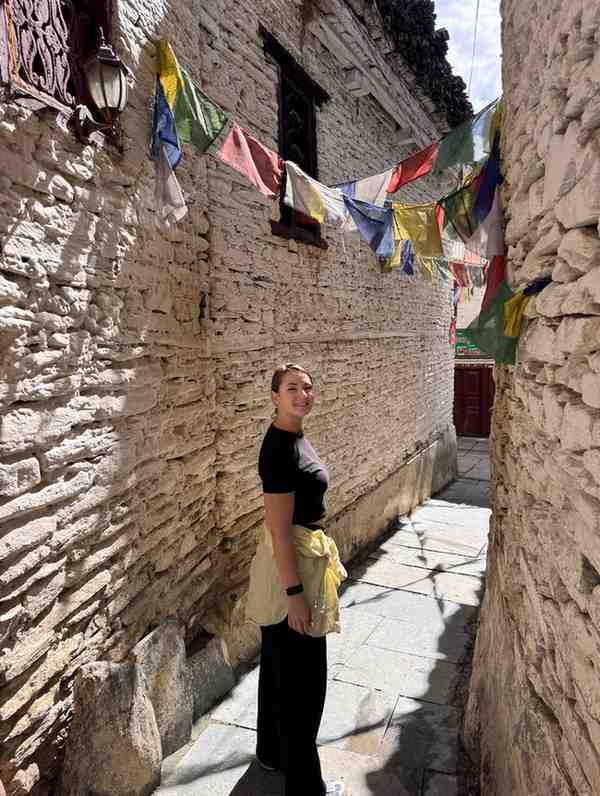
The houses are built of stone, whitewashed, and capped with flat mud roofs. On top of those roofs, people stack firewood for the winter, drying it in the sun and storing it in neat rows. The stacks also work as an informal display of a family's preparedness for the cold. Flat roofs make sense in a dry region where heavy rain and snow are less of a concern, and the roofs double as drying platforms for apples, vegetables, and grain.
The lanes are paved with stone slabs and often covered or partly enclosed. Walking through them on a windy afternoon, you feel the temperature and the noise drop within a few steps. It is a practical design, and it gives the village a calm that Jomsom, just up the road, lacks.
The Thakali People and the Salt Trade
Marpha is a Thakali village. The Thakali community has lived in this part of the Kali Gandaki valley for centuries and built much of its history around trade. For generations, caravans carried salt and wool from the Tibetan side and grain from the lowlands along this route, and Thakali families acted as traders, innkeepers, and middlemen between the two.
That history is visible in the architecture, in the food, and in the way many families run guesthouses today. Thakali hospitality has a reputation across Nepal. A Thakali thali, a set meal of rice, lentils, vegetables, pickles, and meat or greens, is one of the best things to eat in the region.
Tukuche, a short distance south, was once the most important Thakali trading town, and its old courtyard houses and long mani wall are worth a stop if you have time. Marpha is smaller and calmer, and it has held on to more of the working village feel.
Apples
Marpha's apple orchards date back roughly sixty years, to the period when horticulture projects introduced fruit trees to the valley. The trees have done well in the dry, sunny climate and the cool nights, and apples are now the village's identity.
In spring, the orchards flower. In autumn, from around September to October, the fruit is harvested, and the roofs and courtyards fill with apples drying in the sun. Visitors in that season see Marpha at its most productive.
The village sells apples in almost every form. Fresh apples, dried apple slices, apple juice, cider, jam, and apple pie all turn up in the lodges and small shops. Dried apples and apricots travel well, and they make easy gifts. A horticulture farm near the village sells fruit directly and lets visitors walk among the trees.
Brandy
Marpha brandy is the village's other trademark. It is a fruit spirit distilled from apples, with apricots and pears sometimes added, and bottled at about 42 percent alcohol. Local sources count around six distilleries in the village, many of them family-run, and some welcome visitors to see the copper stills and taste before buying.
A tasting at a small distillery is a short, friendly stop. The owners explain how the fruit is fermented and distilled, and they pour a measure or two. Bottles are sold on the spot at prices that make sense for a souvenir. Pack them carefully in clothing, since a broken bottle in a pannier is a mess no one enjoys.
One practical note for riders. Brandy at 42 percent is strong, and the altitude and the long riding day already take a toll. Save the tasting for the end of the day, after the bike is parked, and leave the bottle sealed until you are off the road. Tukuche's distillery, one of the older ones in the valley, is also worth a visit.
What to Do in Marpha
Walk the Lanes in the Morning
The best time to walk the village is early, before the wind builds. The stone lanes are quiet, smoke rises from kitchen chimneys, and the light on the white walls is at its best. Local walking guides advise starting any walks before about 10 a.m., because the Kali Gandaki wind picks up sharply around midday and makes afternoon walking dusty and tiring.
The Monastery

A Nyingma monastery stands above the village, and the walk up gives a view over the roofs and the river valley. The monastery is small and active. Ask permission before entering and before photographing.
Orchards and the Horticulture Farm
Walk among the apple rows and buy dried fruit straight from the farm shop. In autumn, the trees are heavy and workers are picking. In spring, the blossom is the draw.
The Village Library
A small library in the centre of the village holds material on local history and Thakali culture. It is a quiet stop for anyone curious about how the community sees its own past.
Chhairo
A short walk across the river leads to Chhairo, a Tibetan settlement with an old gompa. The walk gives you a look at a different community and a different building style.
Dhumba Lake
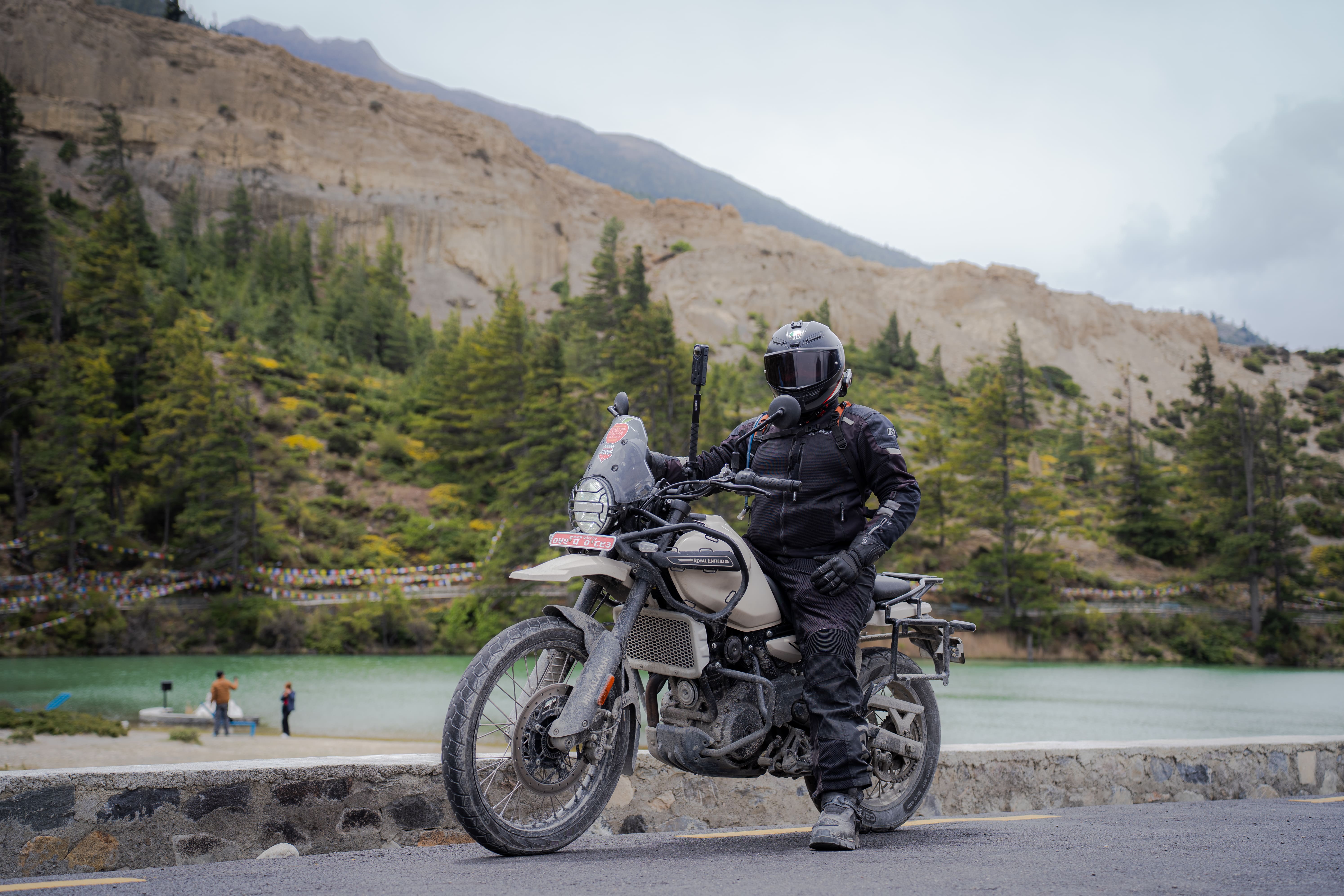
Local guides also point visitors toward Dhumba Lake, reachable on a hike from the village. Ask at your lodge for current directions and the time required, since trail conditions vary.
Where to Stay and Eat
Marpha has a good number of guesthouses and small hotels for a village its size. Rooms range from basic to comfortable, with shared or attached bathrooms, thick blankets, and hot water that depends on solar heating or electricity. Rooms fill in October and May, so book ahead through your operator or by phone.
Dining rooms usually serve Thakali set meals, dal bhat, noodle soup, Tibetan bread, and apple dishes. The apple pie is a standard order, and so is hot apple cider on a cold evening. Meals are served in a common room, and the stove in the middle warms the space after dark.
Carry cash. Cards are rarely accepted, and the nearest reliable ATM is in Jomsom, which may or may not work. Power can be intermittent, so charge devices when you can and keep a power bank in your bag.
Marpha on a Motorcycle Route

Marpha fits neatly into the standard ride to Jomsom and Muktinath. A common plan is to ride from Pokhara to Tatopani on day one, then continue up the gorge on day two to Marpha. An early start from Tatopani keeps you ahead of the wind through the narrowest part of the gorge. Arriving in Marpha in the afternoon gives you time to walk the village and settle in.
From Marpha, Jomsom is a short ride, and Kagbeni and Muktinath are a morning's ride farther. Fill your tank in Jomsom, since fuel supply in the villages is less reliable.
For a guided version of this ride, Nepal Moto Tours runs several routes that pass through Marpha. The Jomsom Muktinath Motorbike Tour is a seven-day ride from Kathmandu to Muktinath. The Lower Mustang Motorcycle Tour runs ten days and stays within the lower valley. For riders aiming farther north, the Upper Mustang Motorbike Tour and the shorter Upper Mustang Motorbike Tour from Pokhara both follow the Kali Gandaki through the village. The 14-day Best of Manang and Mustang Motorbike Tour combines the valley with Manang's glacial side.
If you are starting from Pokhara on your own bike, the Pokhara rental page lists the options, and the Royal Enfield Himalayan 411 is the usual pick for this road.
When to Go

October and November are the best months for clear skies, the apple harvest, and comfortable temperatures. Spring, especially April and May, brings blossom and mild days. Winter is cold and quiet, and some families move down to Pokhara for the season, so lodges and shops may be closed. The monsoon brings less rain here than to the rest of Nepal, since the mountains block much of it, but road conditions on the approach can vary.
The when to visit page has more on seasons, and the Mustang destination page gives the wider picture of the district.
What Riders Say
Riders often single out Marpha as a high point of the Mustang trip. Ivan Kyuchukov, who rode the Lower Mustang tour, wrote about the mix of raw landscape and challenging trails in his rider story, and Rahul described a well-organised eight-day trip in his review of the Jomsom Muktinath tour. The full set of rider stories shows how other riders describe the route.
Practical Notes
Altitude: About 2,650 metres. Most riders feel little, but drink plenty of water and take the evening easy.
Wind: The village is sheltered, but the road to and from it is not. Plan riding for the morning.
Cash: Carry enough for meals, lodging, and souvenirs. Small notes help.
Respect: Ask before photographing people or entering the monastery, and dress modestly.
Souvenirs: Dried apples, apricots, jam, and brandy are the local buys. Pack bottles carefully.
Frequently Asked Questions
How far is Marpha from Jomsom?
About 6 kilometres, a short ride by motorcycle.
Is Marpha worth staying the night?
Yes, for most riders. It is quieter and more pleasant than Jomsom, and it breaks the ride into manageable days.
What is Marpha known for?
Apples, apple brandy, apple pie, and its whitewashed Thakali architecture.
Do I need a special permit for Marpha?
No. The Annapurna Conservation Area Permit and, depending on your route, a TIMS card cover Marpha. The Restricted Area Permit is only needed north of Kagbeni.
Can I buy brandy to take home?
Yes, from the distilleries and shops in the village. Check your airline's rules on carrying alcohol before you travel.
Planning a ride through the Kali Gandaki valley? Nepal Moto Tours handles permits, guides, and support so you can focus on the road. Get in touch with your dates and experience level, and we will suggest a route that stops in Marpha.