.png)
Every August, the walled city of Lo Manthang trades its usual stillness for the sound of galloping hooves, drumbeats, and chang-fuelled celebration. This year was no different. King Jigme Singhe Palbar Bista, the ceremonial King of Mustang, rode out on horseback to attend the 2026 Yartung Festival, one of the oldest and most important cultural events in Upper Mustang.
For anyone planning a motorcycle expedition to Upper Mustang, understanding what Yartung is, and why the King's presence still matters to the Loba people, adds real depth to a ride through this Himalayan kingdom.
What Happened at Yartung 2026
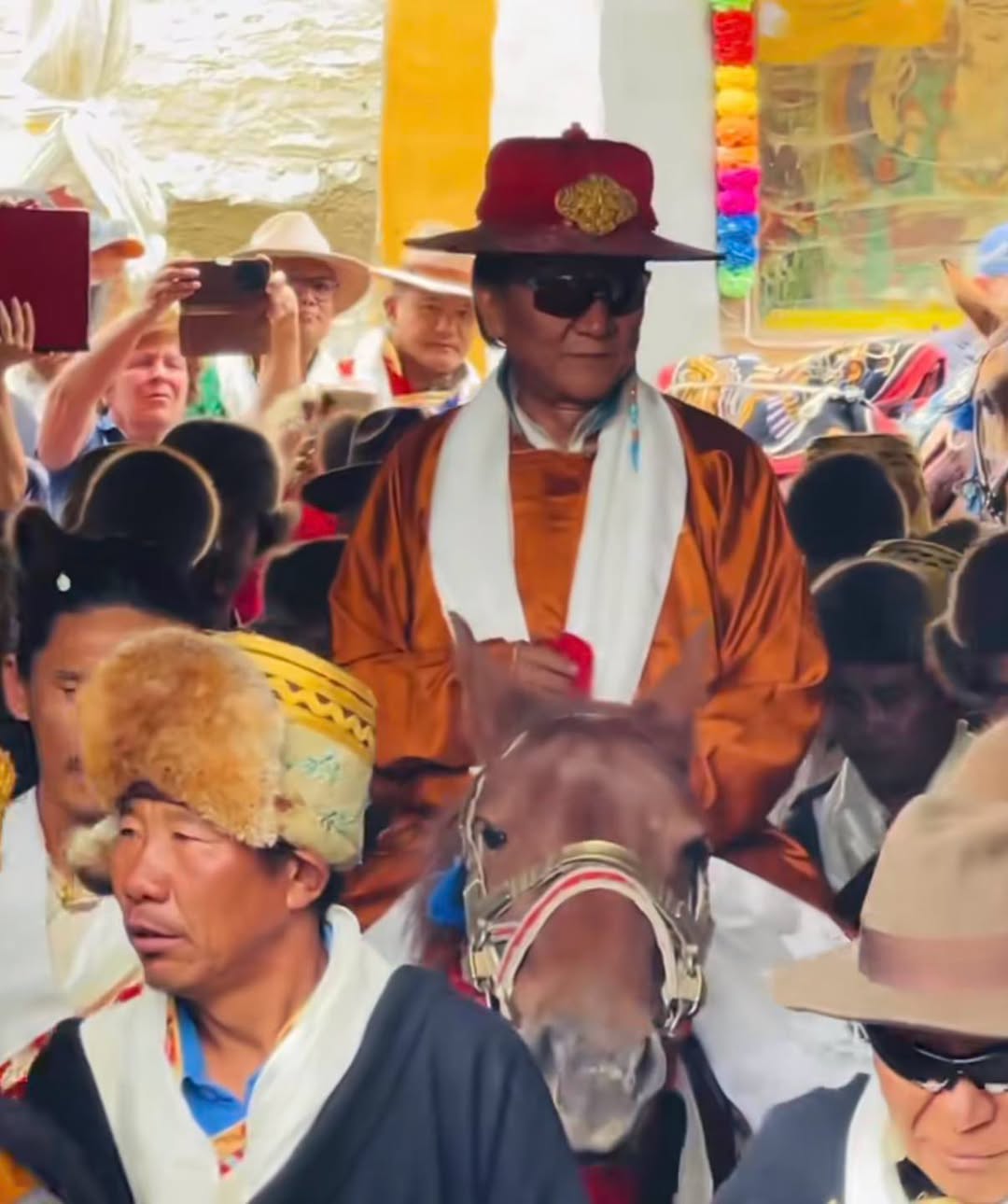
The 2026 edition of the festival ran for three days, from Bhadra 1 to 3 (mid-to-late August), centered on Lo Manthang's main square in front of the old royal palace. King Jigme Singhe Palbar Bista, dressed in a traditional saffron robe and red ceremonial hat, rode through the town on horseback and took his place among the community for the horse races and rituals that mark the occasion.
Photos from the festival show him greeting residents and guiding his own horse through the narrow whitewashed lanes near the palace, a scene that has repeated itself for generations in this part of Nepal, largely unchanged since Lo Manthang was the capital of an independent Buddhist kingdom.
Who Is King Jigme Singhe Palbar Bista
pic credit: Spl Rabi
Jigme Singhe Palbar Bista is the son of Jigme Dorje Palbar Bista, the 25th and last officially recognized King of Mustang, who ruled from 1964 until Nepal abolished the monarchy nationwide in 2008. The Mustang kingdom itself traces its royal line back to the late 14th century, when a Tibetan prince named Ame Pal founded the Kingdom of Lo.
When the elder king died in 2016, his son inherited the role in all but legal title. Nepal's government does not recognize a "King of Mustang" today, yet the prince is still deeply respected locally, with residents regularly turning to him to help resolve disputes. He continues to open major festivals, bless ceremonies, and represent Mustang's Loba culture to the outside world, functioning as a cultural head of state even without formal authority.
Locals refer to him by the Tibetan title Lo Gyalpo, meaning King of Lo, a term that carries the same weight in Lo Manthang today as it did centuries ago.
What Is the Yartung Festival
Origins and Meaning
Yartung translates roughly to "farewell to summer." The word comes from "Yar" (summer) and "Tung" (end), and the festival marks the close of the harvest season before Mustang's brutal winter sets in. Some accounts trace its roots over a thousand years to the horse-riding, semi-nomadic societies of the Tibetan plateau, where mounted celebrations followed successful campaigns or seasonal migrations. As Mustang settled into farming and trade, that martial tradition evolved into an annual community festival built around horsemanship, harvest, and gratitude.
The date is not fixed on the standard calendar. It falls on the full moon of Janai Purnima, calculated by the village's senior lama each year, which is why the exact dates shift slightly from year to year.
Three Days of Celebration
Yartung traditionally unfolds over three days, each with its own focus:
- Day one is dedicated to village elders and leaders, who open the proceedings
- Day two involves monks and religious rituals tied to the harvest
- Day three is the main event, open to the wider community, centered on horse racing and horsemanship displays
Throughout the festival, riders in traditional dress race across the open plains outside the town walls, competing in speed and skill while horses are decorated with colorful ribbons, bells, and ornaments. Alongside the racing, the festival includes archery, masked dances, singing, and communal feasting, with chang (barley beer) flowing freely as the community marks the end of the agricultural year.
Where It's Celebrated: Lo Manthang vs. Muktinath
Yartung is celebrated across the Mustang region, but two locations stand out:
Lo Manthang hosts the more traditional, historically rooted version of the festival, set against the medieval walled city that served as the kingdom's capital. This is where the King himself takes part, and it draws the fewest outside visitors due to its remoteness and the Upper Mustang Restricted Area Permit required to reach it.
Muktinath, further south and outside the restricted zone, hosts a larger, more accessible celebration that draws Hindu and Buddhist pilgrims from across Nepal and India, given the site's significance to both religions. It requires only a standard Annapurna Conservation Area Project permit, making it the easier option for travelers on a shorter timeline.
Both share the same spirit, but Lo Manthang's version is the one tied most closely to the royal family and the deepest Loba traditions.
Why the King's Presence Still Matters
Mustang's monarchy has had no legal standing since 2008, yet the King's role in festivals like Yartung is treated as essential rather than symbolic. There's a telling detail from local accounts of the years right after the death of the previous king in 2016: Yartung had traditionally required the king's blessing to proceed, and when he was gone, the community reportedly did not hold the festival that year. That alone says something about how central the royal family remains to Mustang's cultural calendar, regardless of what Kathmandu's constitution says.
For visitors and riders passing through Upper Mustang, catching a glimpse of the King at Yartung is a rare chance to see a living link to a kingdom that predates Nepal itself, still functioning in the same square, in front of the same palace, seven centuries on.
Riding Into Mustang During Festival Season
Timing a motorcycle tour to Upper Mustang around Yartung adds a layer most riders never get to experience. Beyond the monasteries, the Kali Gandaki gorge, and the stark high-desert landscape, arriving in Lo Manthang during the festival means riding into a town mid-celebration, with horse races on the plains, monks in ceremonial dress, and a royal procession through streets that have barely changed in centuries.
For riders planning routes through Jomsom, Kagbeni, and Lo Manthang, building a trip around the Yartung dates (typically the August full moon) is worth checking against the current year's lunar calendar before booking, since the exact days move annually. Anyone planning a ride through Upper Mustang around this time can reach out to Nepal Moto Tours for current route conditions, permit requirements, and festival-timed itinerary planning.