
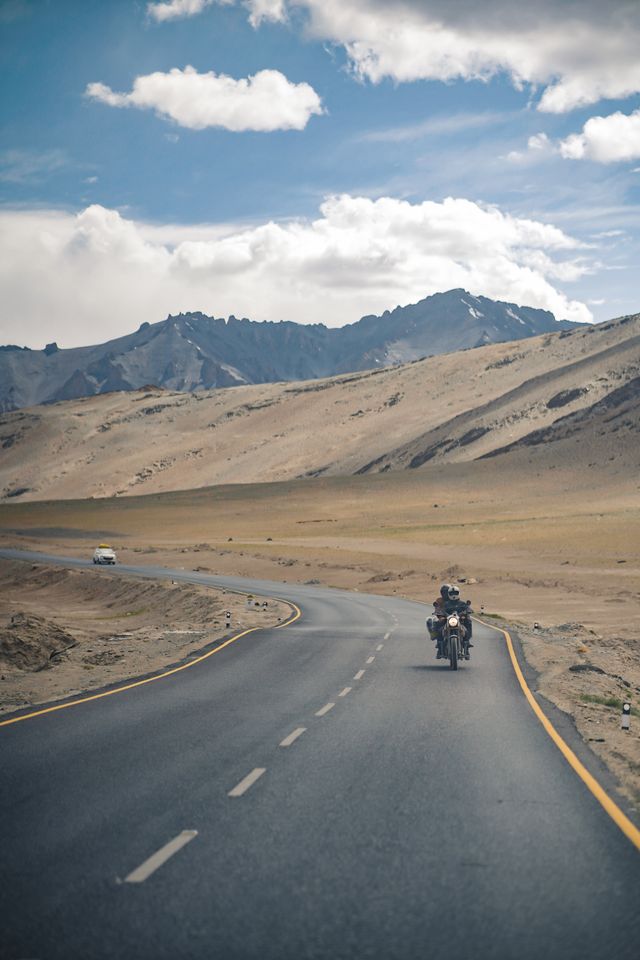
Asia is the largest continent on earth, and its motorcycle routes span the full range of what riding can be. Himalayan high-altitude passes where altitude sickness is a genuine planning variable. Tropical coastal roads where the only concern is which beach you stop at first. No other continent concentrates this density of world-class riding within reachable distance of each other, and no other continent rewards the serious adventure rider with the combination of technical challenge, cultural depth, and sheer visual scale that Asia's best routes deliver.
This list covers 15 of the best motorcycle routes in Asia. Not ranked by objective difficulty or scenic score, but selected on the basis of what makes each route genuinely worth the plane ticket rather than merely spectacular in photographs, and what kind of rider each suits. Routes from the Himalayas to Southeast Asia, from the ancient Silk Road to the tropical islands of Indonesia, from the high desert of Ladakh to the karst limestone of northern Vietnam.
Nepal features prominently because Nepal's concentration of world-class motorcycle routes within a single country is unmatched anywhere in Asia. Upper Mustang, the Annapurna approaches, the Manaslu Circuit, the Kathmandu-Pokhara corridor. But this is a continental list, and every route on it earns its place.
1. Upper Mustang Circuit, Nepal
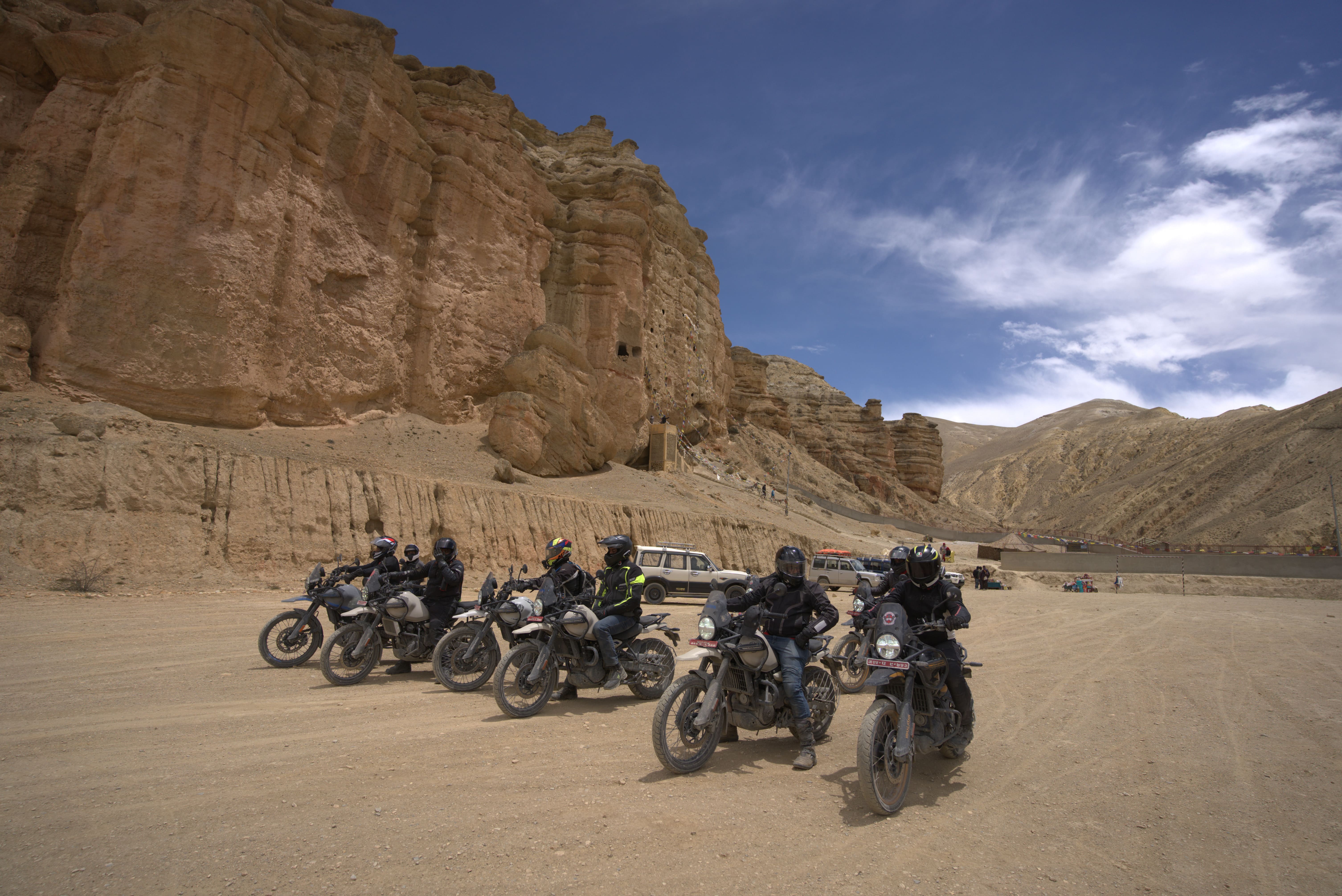
Distance: Around 500km round trip from Pokhara Duration: 7 to 12 days Difficulty: Advanced Best season: May (Tiji Festival), October
The Upper Mustang circuit is the best motorcycle route in Nepal by the assessment of most riders who have completed it, and among the top three motorcycle routes in Asia by almost any serious evaluation. The combination of extreme landscape and a living Tibetan Buddhist culture that has been preserved by the same geographic isolation that makes the riding demanding produces an experience no other route in Asia fully replicates.
Above Kagbeni, the checkpoint marking the boundary of the restricted area, the road becomes an unpaved track. Loose river gravel, exposed limestone shelf, ford crossings of the Kali Gandaki and its tributaries. The gorge wind that builds from mid-morning through afternoon is not an inconvenience but a riding factor that demands continuous active management. Riders spend multiple consecutive nights above 3,500 metres, which reduces physical and cognitive performance in ways that lower-altitude riding does not.
The reward for those demands is Lo Manthang: a medieval walled city at 3,840 metres, with monastery complexes holding thangka paintings and sacred texts of real historical weight, cave systems predating the Kingdom of Lo by centuries, and the Tiji Festival in May, a three-day masked dance ritual of concentrated cultural intensity that has no equivalent elsewhere on this list. The upper mustang motorbike tour is absolutely one of the best ones in Nepal.
Permit required: Yes. Restricted Area Permit USD 50/day.
Recommended bike: Royal Enfield Himalayan 450, Hero Xpulse 200/210
2. Leh-Ladakh Circuit, India
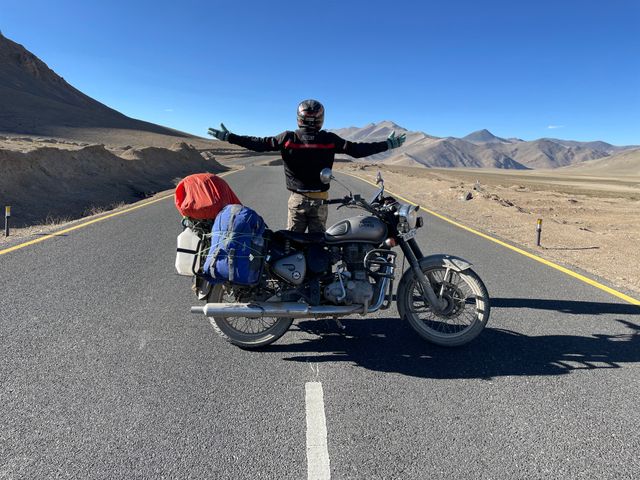
Distance: Around 1,000 to 1,500km depending on route Duration: 10 to 15 days Difficulty: Intermediate to Advanced Best season: June to September
The Leh-Ladakh circuit is the most famous motorcycle route in South Asia and the benchmark against which most Himalayan riding destinations are measured. The Manali-Leh Highway alone, ascending from near sea level to over 5,000 metres across Rohtang, Baralacha La, Lachung La, and Tanglang La, is among the most dramatic sustained ascents available to a motorcycle tourist anywhere in the world.
The Nubra Valley, accessible via Khardung La, long claimed as the world's highest motorable pass at 5,359 metres, opens into double-humped Bactrian camel territory of sand dunes between Himalayan peaks. Pangong Lake at 4,350 metres is 134 kilometres long and changes colour across the day in shades that photographs consistently fail to capture. These are not the kind of details that travel writing invents. They are the kind of details that riders mention first when you ask them what they remember.
The roads are maintained by India's Border Roads Organisation as strategic military routes, which means they are better maintained than most Himalayan roads while still delivering the gradient, exposure, and surface variability that mountain riding demands. Riders with road experience and altitude awareness can complete the main Ladakh circuit without off-road technique. The more remote routes into Zanskar valley or toward Tso Moriri raise that requirement considerably.
Permit required: Inner Line Permit for restricted zones including Nubra and Pangong. Recommended bike: Royal Enfield Himalayan, KTM 390 Adventure, Royal Enfield Classic 350
3. Spiti Valley Circuit, India
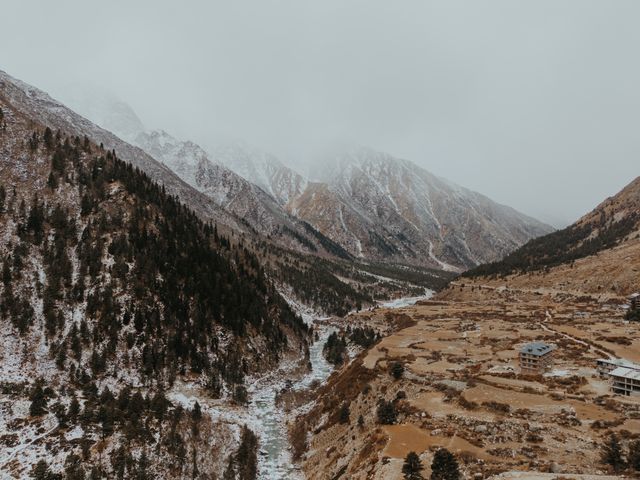
Distance: Around 800 to 1,000km as a circuit from Shimla or Manali Duration: 8 to 12 days Difficulty: Intermediate to Advanced Best season: June to September
Spiti Valley is Ladakh's less-visited, more technically demanding neighbour. A high-altitude cold desert in Himachal Pradesh sitting at similar elevations to Ladakh but with road conditions that more consistently challenge riders. The Spiti River valley, flanked by near-vertical walls of fractured rock in colours that shift between grey, rust, and ochre depending on mineral composition and light, is among the most visually dramatic riding environments in Asia.
The circuit typically combines the Shimla-Kinnaur-Spiti approach, the more gradually ascending entry route through Nako and Tabo, with the Manali exit via Kunzum La pass at 4,551 metres. Kunzum La in early season is a genuine off-road pass with loose rock and soft patches that separate riders who have practised low-speed balance on technical terrain from those who have not.
Tabo Monastery, one of the oldest continuously inhabited Buddhist monastery complexes in the world, founded in 996 CE, and Dhankar Gompa perched on a cliff above the confluence of the Pin and Spiti rivers are accessible from the route. Both belong in the short list of Himalayan sites that justify the journey on their own.
Permit required: Inner Line Permit for certain areas. Recommended bike: Royal Enfield Himalayan, Hero Xpulse 200/210
4. Ha Giang Loop, Vietnam
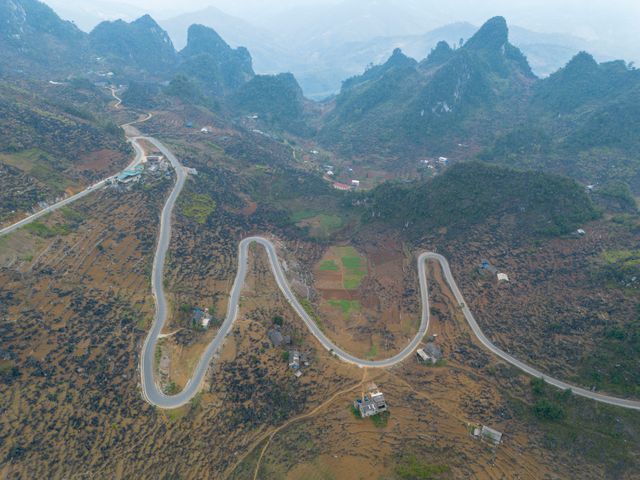
Distance: Around 350km circuit Duration: 3 to 5 days Difficulty: Beginner to Intermediate Best season: September to November, March to May
The Ha Giang Loop in Vietnam's far north is the route that has defined adventure motorcycle travel in Southeast Asia for the past decade, and its reputation is earned. The Dong Van Karst Plateau, a UNESCO Global Geopark covering 2,356 square kilometres of limestone karst landscape near the Chinese border, delivers the most dramatic road scenery in Southeast Asia across a route that beginners on automatic scooters can complete and experienced riders on dual-sport bikes can engage with on more technical terms.
The loop's most celebrated section, the Ma Pi Leng Pass connecting Dong Van and Meo Vac, is a 20-kilometre stretch of road carved into a cliff face above the Nho Que River gorge. The road hangs above the turquoise river with a directness that removes all ambiguity about the consequences of an error, while remaining paved and manageable for riders who respect its conditions.
The region is home to numerous ethnic minority communities including H'Mong, Dao, Tay, and Lo Lo, whose traditional dress, market culture, and agricultural practices remain largely intact. The Sunday markets in Dong Van and Meo Vac are among the most authentic market experiences available in Southeast Asia, and riders who arrive with curiosity rather than a camera lens come away with something more than photographs.
Permit required: Permit required for the Ha Giang restricted zone, obtainable in Ha Giang city. Recommended bike: Semi-automatic 110cc to 150cc locally; dual-sport for experienced riders.
5. Mae Hong Son Loop, Thailand
Distance: Around 600km circuit from Chiang Mai Duration: 3 to 5 days Difficulty: Beginner to Intermediate Best season: November to February
The Mae Hong Son Loop from Chiang Mai is the benchmark motorcycle circuit of mainland Southeast Asia. Route 1095 alone counts 1,864 corners through forested mountains that rise to over 2,500 metres on the Myanmar border, past hill tribe villages, across rivers, and through Pai before returning to Chiang Mai via the alternative southern route through Mae Sariang.
Thailand's road infrastructure makes this loop accessible to riders who would struggle on the less-developed roads of Vietnam or Nepal. The surfaces are maintained to a standard that allows road bikes to complete the circuit without off-road capability, while the density of corners and the elevation changes reward the rider who engages actively rather than treating the road as transport. First-time adventure tourers find it manageable enough to build confidence. Experienced riders find it engaging enough to hold attention across multiple days.
The proximity to Myanmar, the presence of long-neck Karen communities, and the Buddhist temple culture that punctuates every Thai town add context that pure road quality cannot provide alone.
Permit required: None beyond standard Thai entry. Recommended bike: Any capable road or adventure bike; Honda CB500X is the local favourite.
6. Ho Chi Minh Trail, Vietnam and Laos
_1789506232.jpeg)
Distance: Around 1,500 to 2,000km Duration: 10 to 15 days Difficulty: Intermediate to Advanced Best season: November to April
The Ho Chi Minh Trail as a motorcycle route follows the modern road network that traces the historical supply route used by North Vietnamese forces during the Vietnam War. It passes through some of the most remote and least-visited terrain in mainland Southeast Asia, through Laos's eastern provinces and Vietnam's central highlands, across passes that the original trail used and that the modern road has made accessible but not easy.
The appeal for serious adventure riders lies in the combination of historical weight and genuine technical challenge. Sections of the trail pass through terrain that requires off-road competence, while the historical context of the landscape adds a dimension of meaning that purely scenic routes cannot provide. The Vieng Xai caves in Laos, carved out as a government-in-exile during the American bombing campaign, are accessible from the trail route and constitute one of the more striking historical sites reachable by motorcycle in Asia.
Border crossing logistics between Vietnam and Laos require advance planning and, for most foreign riders, working with operators who understand the specific crossing options available to motorcycles.
Permit required: Standard Vietnam and Laos entry; some restricted zone permits for specific areas. Recommended bike: Dual-sport 250cc or above; Kawasaki KLX250, Honda XR series.
7. Silk Road, Central Asian Segment
Distance: 3,000 to 5,000km depending on specific route Duration: 3 to 6 weeks Difficulty: Advanced to Expert Best season: May to September
The Silk Road motorcycle route through Central Asia, typically covering Uzbekistan, Tajikistan, and Kyrgyzstan as the core countries with extensions into Kazakhstan and Turkmenistan possible, is the most logistically demanding route on this list and among the most rewarding for riders who can absorb that demand.
The Pamir Highway through Tajikistan, running from Dushanbe to Osh across the Wakhan Corridor and the high plateau of the eastern Pamirs at elevations regularly above 4,000 metres, is the Silk Road's definitive motorcycle section. A road of scale and isolation that delivers a physical and psychological challenge equivalent to Upper Mustang at greater distance from any kind of support infrastructure. The landscape is brutal and compelling in the way that true high-altitude terrain always is, in a way that no amount of prior riding fully prepares you for.
The medieval cities of Samarkand and Bukhara in Uzbekistan, the mountain communities of Tajikistan's Wakhan, and the nomadic culture of Kyrgyzstan's high Tian Shan layer historical and cultural depth over the riding that no other destination on this list matches in variety.
Permit required: Varies by country; GBAO permit required for Tajikistan's Gorno-Badakhshan region. Recommended bike: BMW GS series, KTM Adventure, Royal Enfield Himalayan for experienced budget riders.
8. Manaslu Circuit and Tsum Valley, Nepal
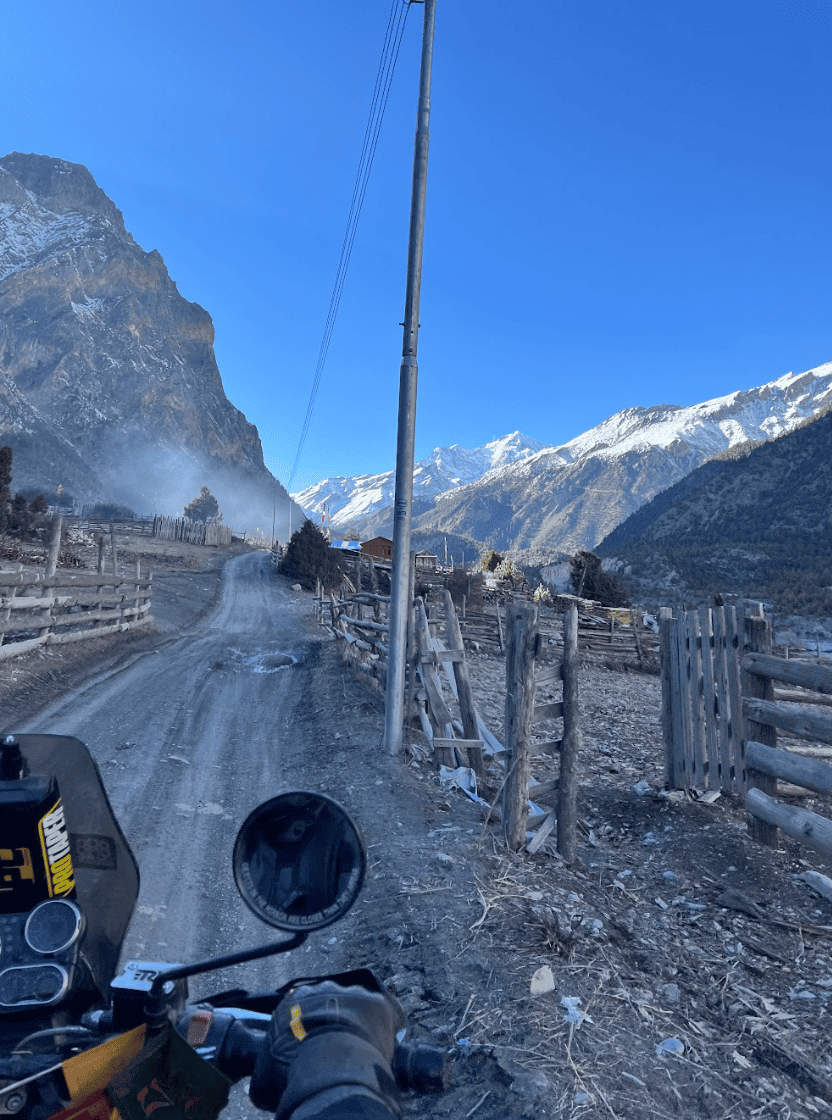
Distance: Around 400 to 500km circuit Duration: 7 to 10 days Difficulty: Advanced Best season: October to November, March to May
When it comes to Motorcycle tour in Nepal, the Manaslu Circuit is Nepal's least-ridden major mountain motorcycle route and, by the assessment of experienced riders who have completed both, technically more demanding than the Upper Mustang circuit on its most difficult sections. The route circles the Manaslu massif, the world's eighth-highest peak, through terrain that includes genuine single-track, substantial river crossings, and road surfaces that require active off-road technique rather than careful road riding.
The Tsum Valley extension branches north from the main circuit into a restricted valley bordering Tibet. A Tibetan Buddhist community of real cultural preservation in a valley that permit controls have kept relatively undisturbed. The combination of demanding riding and cultural depth makes the Manaslu-Tsum circuit among the top three motorcycle routes in Nepal, and among the most underrated routes in Asia.
Permit required: Manaslu Conservation Area permit, restricted area permits, TIMS. Recommended bike: Hero Xpulse 200/210, Honda CRF300L, Royal Enfield Himalayan for experienced riders.
9. Bhutan Motorcycle Tour
Distance: 600 to 900km depending on route Duration: 7 to 14 days Difficulty: Intermediate Best season: March to May, October to November
Bhutan's motorcycle touring territory is the most culturally rich riding destination on this list. An entire sovereign nation organised around Vajrayana Buddhist principles, where traditional dress is daily reality rather than tourist performance, where the development philosophy of Gross National Happiness produces a social atmosphere unlike any other Asian country, and where the dzong architecture is among the most visually compelling built environment in the Himalayan world.
The roads are sealed mountain highways maintained as strategic national infrastructure, with the gradient, exposure, and pass crossings that Himalayan riding demands without the extreme technical off-road character of Nepal's most demanding routes. Punakha Dzong, Taktshang Monastery above the Paro Valley, and the high passes of the central highway deliver an experience that riders consistently describe as among the most affecting of their touring lives.
Bhutan's tourism model requires engagement with a licensed operator and a Sustainable Development Fee of USD 100 per night, making it the most expensive destination on this list on a per-day basis and one of the least crowded as a direct result.
Permit required: All tourism through licensed operators; USD 100 per night Sustainable Development Fee. Recommended bike: Royal Enfield Himalayan, arranged through Bhutanese operator.
10. Annapurna Circuit, Nepal
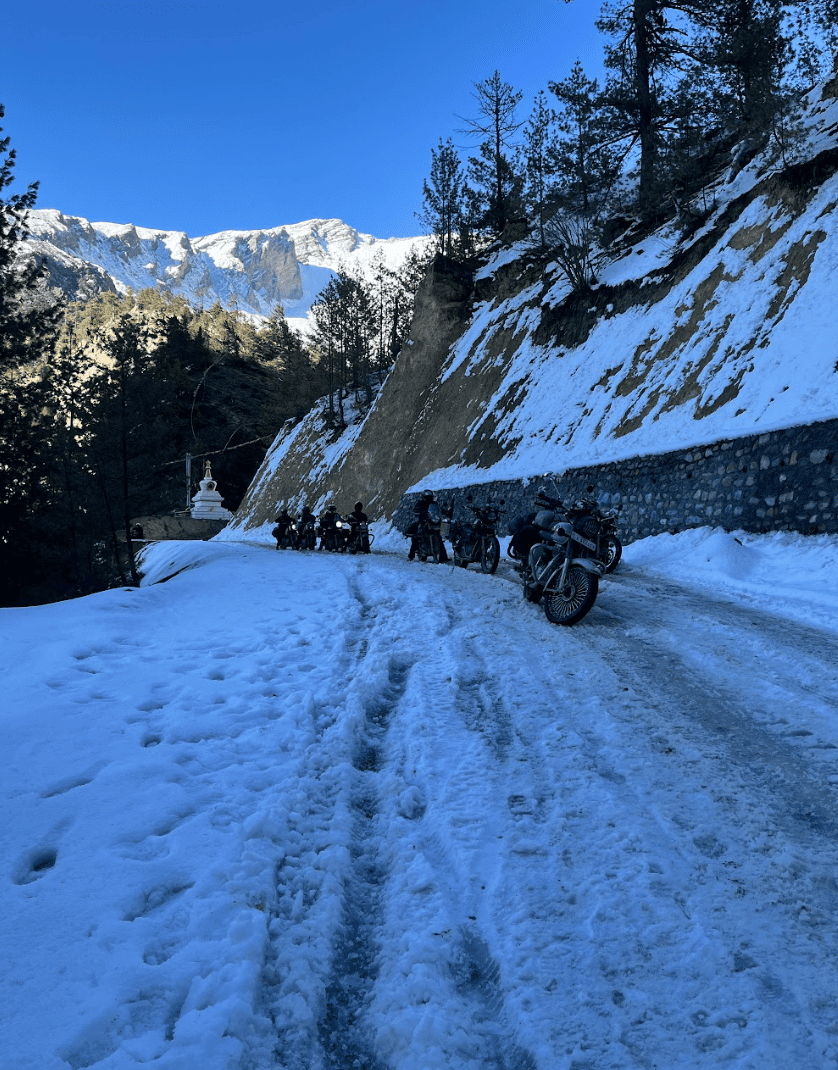
Distance: Around 300 to 400km circuit from Pokhara Duration: 5 to 8 days Difficulty: Intermediate to Advanced Best season: October, March to April
The Annapurna Circuit is Nepal's most accessible serious mountain motorcycle route. The gateway that introduces riders to Himalayan off-road touring conditions without the permit cost of Upper Mustang or the technical extremity of the Manaslu Circuit. The route from Pokhara through Besisahar, climbing through Chame and Pisang to Manang at 3,519 metres, delivers a progressive introduction to Nepal's terrain variety that builds in difficulty as it ascends.
The cultural context changes with every few hundred metres of elevation. Gurung and Magar communities on the lower approaches give way to the Tibetan Buddhist character of Manang and Muktinath, and the Hindu pilgrimage significance of Muktinath temple provides cultural depth that deepens the further you ride from the trailhead towns at the valley floor.
Permit required: Annapurna Conservation Area permit, TIMS. Recommended bike: Royal Enfield Himalayan 411 or 450.
11. Trans-Siberian Highway, Mongolia Segment
Distance: 1,000 to 2,000km depending on route Duration: 10 to 20 days Difficulty: Advanced to Expert Best season: June to August
Mongolia's motorcycle routes constitute one of the most genuinely remote riding environments accessible to adventure motorcycle tourists. The vast steppe, the Gobi Desert approaches, the Khangai Mountains, and the routes connecting scattered settlements across distances that no other populated country regularly produces between points of interest.
The absence of roads in any conventional sense across large portions of Mongolia's interior is the route's greatest challenge and its defining appeal. Navigation by GPS track across open steppe, river crossings that require real judgment about current speed and depth, and nights camped in terrain where the nearest settlement may be two hours' riding in the best direction. Mongolia demands a self-sufficiency and mental flexibility that no other destination on this list quite replicates.
The Mongolian people's hospitality tradition transforms the logistical challenge of the country's remoteness into a series of human encounters that riders consistently describe as the most memorable aspect of the journey. A traveller camping near a ger settlement will almost always be welcomed with tea, food, and sometimes shelter, without expectation of anything in return.
Permit required: Standard Mongolian entry; some border zone permits. Recommended bike: BMW GS series, KTM Adventure 790 or above, Kawasaki KLX450.
12. Karakoram Highway, Pakistan
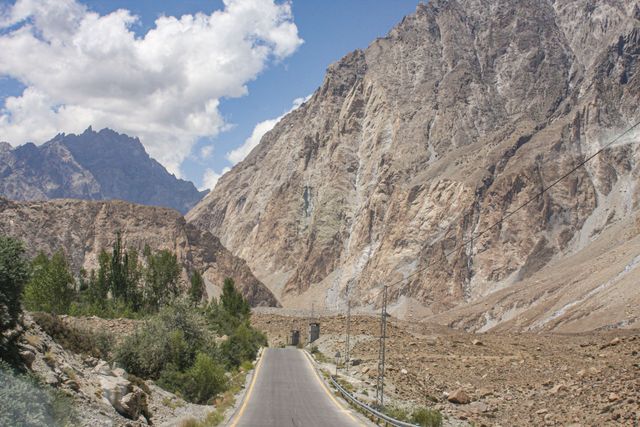
Distance: Around 1,300km from Islamabad to Khunjerab Pass Duration: 7 to 14 days Difficulty: Advanced Best season: May to September
The Karakoram Highway, connecting Islamabad in Pakistan to Kashgar in China's Xinjiang province through some of the most dramatic mountain terrain on earth, appears on the bucket lists of serious adventure riders who have done enough of Asia's other routes to need something at a different scale.
The highway passes through the confluence zone of three of the world's great mountain ranges, the Himalayas, the Karakoram, and the Hindu Kush, in landscapes that include Rakaposhi at 7,788 metres visible from the road, the Passu Cones, the Attabad Lake formed by a 2010 landslide, and the final ascent to Khunjerab Pass at 4,693 metres on the Chinese border. These are not attractions positioned along the route. They are what the route passes through.
The security and logistics overhead of riding the Karakoram Highway puts it beyond the practical reach of many adventure riders. Specific regions require permits, a police escort in some sections, and a security situation that demands current assessment before departure. For riders who can navigate these requirements, there is no equivalent route on earth.
Permit required: Pakistan entry visa, NOC permits for restricted zones, potential escort requirement. Recommended bike: BMW GS series, KTM Adventure; any capable large adventure bike.
13. North Sumatra and Aceh, Indonesia
Distance: Around 1,500 to 2,000km Duration: 10 to 15 days Difficulty: Intermediate Best season: April to October
Indonesia's motorcycle touring potential is vastly underrepresented in Asian adventure riding content, and North Sumatra and Aceh represent the country's most compelling concentration of riding. A route combining volcanic landscapes, the biodiversity of the Leuser Ecosystem, the cultural distinctiveness of Acehnese and Batak communities, and coastal sections along the Indian Ocean that provide context entirely different from the Himalayan routes that dominate Asia's motorcycle touring conversation.
Lake Toba, a supervolcanic crater lake 100 kilometres long and the largest of its kind in the world, is the route's visual centrepiece, approached through highland roads that deliver good motorcycle touring on surfaces better than Sumatra's main highway reputation might suggest. The Gayo Highlands of central Aceh, coffee-growing country at altitude with roads through plantation landscape of real beauty, are largely unknown to international motorcycle tourists and reward the riders who take the time to look for them.
Permit required: Indonesian tourist visa, most nationalities visa-free or on arrival. Recommended bike: Honda CRF series, Kawasaki KLX series available locally; rent locally.
14. Mekong River Route, Northern Laos to Southern Yunnan
Distance: Around 800 to 1,200km depending on route Duration: 7 to 10 days Difficulty: Intermediate Best season: November to March
The Mekong River corridor from northern Laos through the Golden Triangle region and into China's Yunnan province connects three countries across a route that follows one of Asia's great rivers through landscapes that change dramatically with each border crossing. Northern Laos's route from Luang Prabang toward the Chinese border via Phongsali offers some of the most remote and least-touristed motorcycle riding in Southeast Asia. Mountain roads through forested terrain, ethnic minority villages, and river crossings that the rainy season makes impassable and the dry season renders worth the detour.
The crossing into Yunnan opens the tea-horse roads of the ancient trade network connecting Yunnan's tea-growing highlands with Tibet, following routes through Jinghong, Dali, and Lijiang that carry historical depth layered beneath modern Chinese infrastructure.
Permit required: Laos and China entry visas; China requires specific permits for foreign-registered vehicles and guided tour requirements for some areas. Recommended bike: Dual-sport 250cc or above; local rental available in major cities.
15. Sri Lanka Coastal and Highland Circuit
Distance: Around 1,000 to 1,500km circuit Duration: 7 to 10 days Difficulty: Beginner to Intermediate Best season: December to March (west and south coast), May to September (east coast)
Sri Lanka is the surprise entry on this list. A small island nation that packs more riding variety into its geography than countries ten times its size. The highland tea country of the central massif, Nuwara Eliya, Ella, Haputale, delivers mountain riding of real quality through plantation landscapes at elevations above 2,000 metres. The coastal roads of the south and southwest provide the tropical beach contrast. The ancient cultural triangle of Anuradhapura, Polonnaruwa, and Sigiriya adds historical depth to a route that without it might read as primarily scenic.
Sri Lanka's roads are in better condition than most mainland South Asian alternatives, and the island's compact geography means a breakdown never places a rider far from mechanical support. The warmth that Sri Lankans extend to foreign motorcycle travellers, regarded with curiosity and enthusiasm that car tourists rarely generate, makes this one of the most socially rewarding riding destinations in Asia.
Permit required: Sri Lanka e-visa obtainable online for most nationalities. Recommended bike: Honda CB series locally; any road bike for visitors.
Choosing Your Next Route
The 15 routes above span skill levels from beginner to expert, budgets from USD 50 per day to USD 200 per day, and cultural contexts from Tibetan Buddhist kingdoms to tropical island circuits.
Riders doing their first serious Asian adventure tour are best served by the Mae Hong Son Loop in Thailand or the Ha Giang Loop in Vietnam. Sri Lanka is an underrated starting point with strong cultural rewards and forgiving logistics.
Intermediate riders ready for more should look at the Annapurna Circuit in Nepal, Spiti Valley in India, or the northern Laos Mekong route. Each delivers real adventure riding with enough infrastructure to keep self-sufficiency demands within reach.
For experienced riders, Upper Mustang and the Manaslu Circuit in Nepal and Ladakh in India are the routes where experience and mechanical confidence are directly rewarded. These are the routes that serious riders plan for years.
For expert-level riders who need a genuine challenge, Mongolia's interior, the Karakoram Highway, and the most remote sections of the Ho Chi Minh Trail test everything a serious adventure rider can bring.
Nepal's concentration of outstanding motorcycle routes within one country, Upper Mustang, the Annapurna Circuit, the Manaslu Circuit, and the Kathmandu-Pokhara corridor, makes it the single most compelling destination on this list for riders wanting the full range of what Asian motorcycle touring offers within one permit system and one mechanic network.