Riding both the Manang approaches and the Upper Mustang circuit in a single Nepal trip is the most comprehensive Himalayan motorcycle circuit available from Pokhara. It covers the eastern and western sides of the Annapurna massif, two distinctly different high-altitude landscapes, and three altitude zones that the seventeen-day circuit passes through in sequence. The timing question is more specific than a general Nepal seasonality guide covers, because the two regions have slightly different seasonal characters and the circuit's length means the same departure date produces different conditions at each destination.
This article covers the seasonal windows that work for the combined circuit, the specific conditions at Manang and Mustang in each period, and the timing decisions that make the difference between a well-planned circuit and one that encounters avoidable conditions problems.
Why the Two Regions Have Slightly Different Seasonal Characters
Manang at 3,519 metres sits in the upper Marsyangdi valley on the eastern side of the Annapurna massif. It receives more Monsoon precipitation than Upper Mustang because it sits on the southern, Monsoon-exposed side of the main Himalayan divide. The valley above Manang is beautiful in autumn and spring, snowbound in winter, and wet enough in the Monsoon months to make the jeep track above Chame genuinely difficult.
Upper Mustang, including the Kali Gandaki corridor above Kagbeni and the plateau to Lo Manthang at 3,840 metres, sits in the rain shadow of the Annapurna and Dhaulagiri ranges. It receives significantly less Monsoon rainfall than Manang, which is why it remains viable as a motorcycle destination during months when the Manang approaches are not.
This asymmetry is the central seasonal planning fact for the combined circuit. When Manang is at its best, Mustang is also at its best. When Manang is compromised by Monsoon conditions, Mustang is still viable but Manang is not. The circuit therefore has a primary recommended window where both regions align, and a secondary window where only the Mustang section is viable and the Manang section needs a different approach.
The Primary Window: October and the First Half of November
_1793303947.jpg)
The post-Monsoon autumn window from October through mid-November is the period when both Manang and Mustang are simultaneously at their best, and it is the clear recommendation for riders planning the combined circuit with flexibility in timing.
Manang in October and November
The Monsoon has cleared by early October, and the Marsyangdi valley above Besisahar is in the post-rain clarity that produces the best mountain views of the year. The approach from Besisahar to Chame to Pisang and Manang in October gives a version of the Annapurna Circuit's eastern landscape that the photographs are made from. The peaks of the Annapurna range, visible from the road approaching Pisang and from Manang village itself, are freshly washed by the Monsoon and carrying the snow that the summer heat reduced.
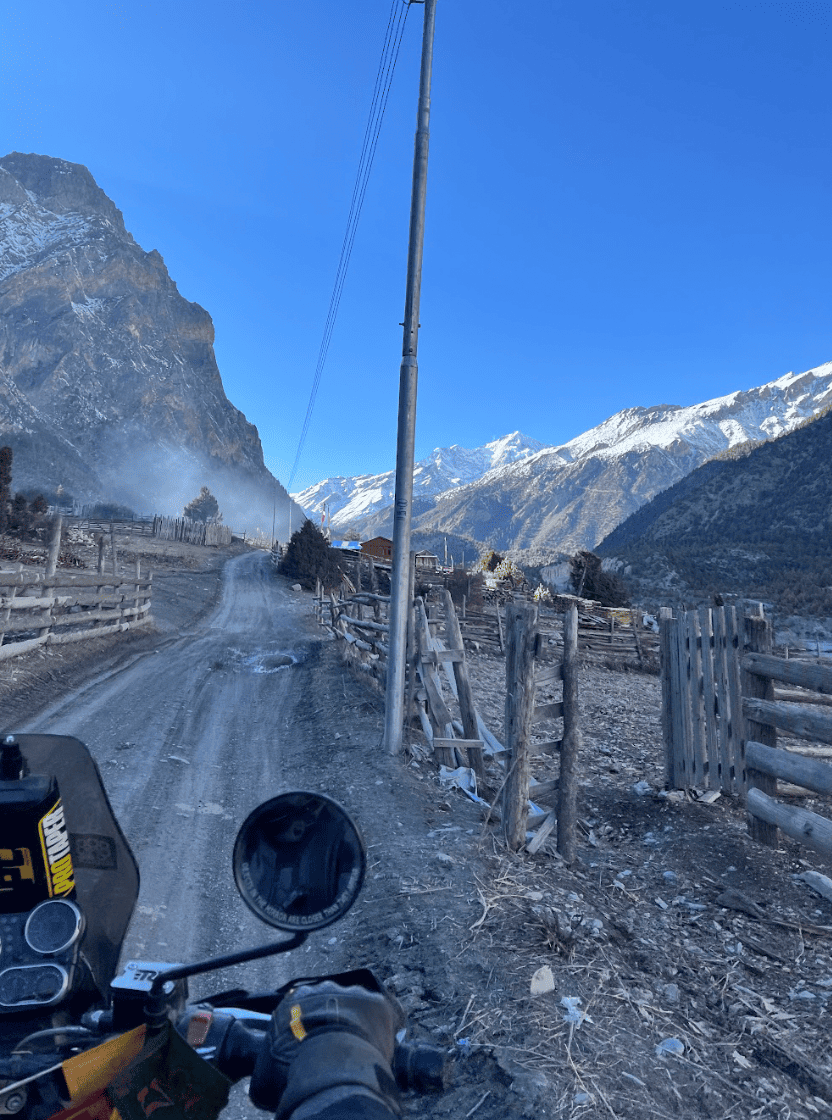
The road surface above Chame, which becomes a jeep track toward Manang and a rough track above Manang toward Yak Kharka and Thorong Phedi, is in its best post-Monsoon state in October. The summer rain that saturates and destabilises loose sections has passed and the track has had time to drain and firm up. For riders planning to push above Manang toward Thorong Phedi, October is the most reliable month for the track condition.
By late October temperatures at Manang's 3,519 metres are noticeably cold in the mornings and evenings. Overnight temperatures in late October approach or drop below zero. The riding in these conditions requires proper layering and the specific morning cold that high-altitude camping and guesthouse stays produce in late season. Early November continues this pattern with progressively colder conditions.
Mustang in October and November
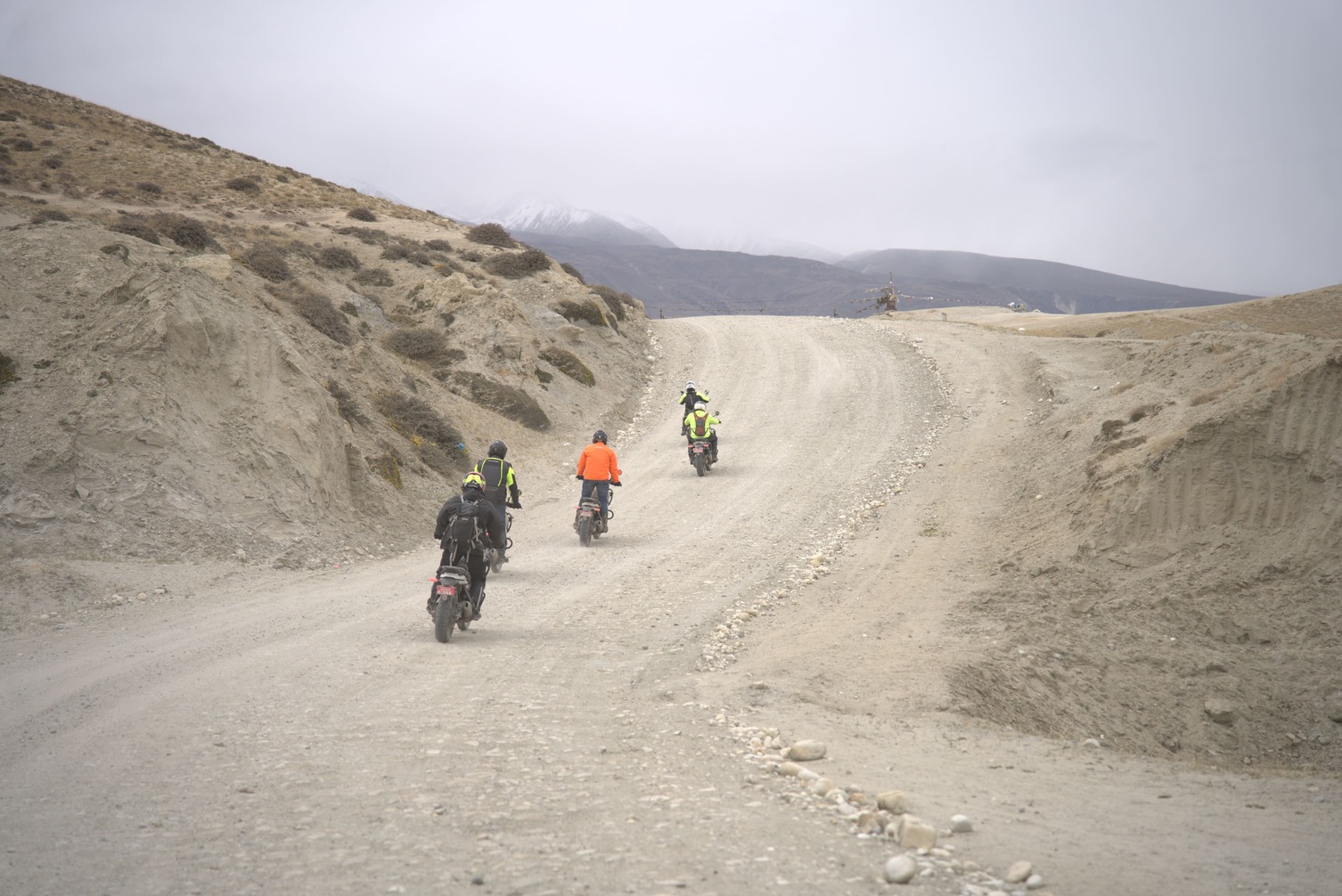
Upper Mustang in October is at its annual peak for most dimensions simultaneously. The track from Kagbeni to Lo Manthang is in post-Monsoon condition, drier and firmer than the summer months even within the rain shadow zone. The plateau views from the road approaching Lo Manthang are at their clearest, with the mountain range visible from the plateau in conditions that the pre-Monsoon haze of May does not produce with the same sharpness.
The Kali Gandaki gorge wind, a permanent feature of the route regardless of season, follows the same morning-calm and afternoon-peak pattern in October as in every other month. Departure from Tatopani or Marpha by 7:30 a.m. manages the wind in October exactly as it does in May.
The Tiji Festival in Lo Manthang does not fall in October. The festival is specific to May. Riders who want both Manang and Upper Mustang motorbike trip and the Tiji Festival on the same trip need the spring window, covered separately below.
By mid-November, temperatures on the Upper Mustang plateau at night approach minus 15 degrees Celsius. The plateau is still accessible and still clear, but the overnight cold at Lo Manthang requires serious winter sleeping gear and adds a physical demand that the October visit does not carry at the same severity.
The Spring Window: Late March Through May
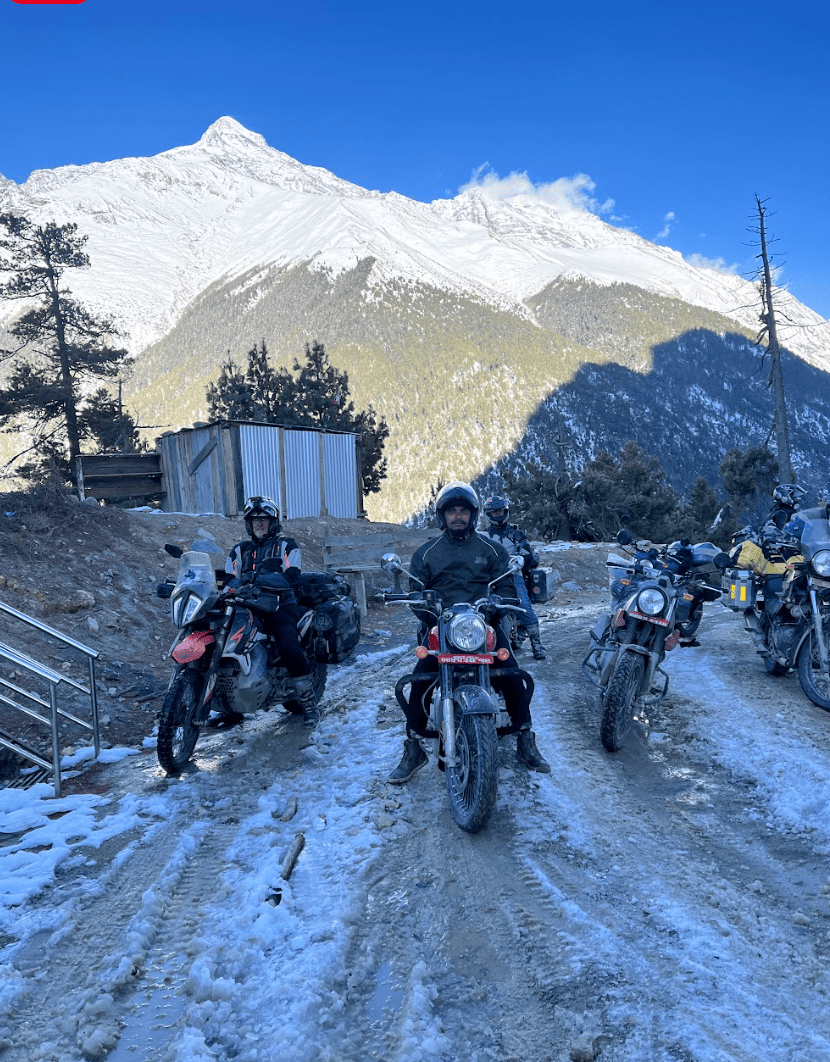
The pre-Monsoon spring window is the second recommended period for the combined Manang and mustang motorbike tour and the one that includes the Tiji Festival.
Manang in Spring
The Annapurna Circuit approaches above Besisahar are accessible from March onward as the winter snowpack clears from the higher sections. March conditions above 3,000 metres can include residual snow on the track sections between Manang and Thorong Phedi, and early March departure for the Manang section requires current local information about the track condition above Chame rather than a seasonal assumption.
April is the most reliable spring month for the Manang approaches. The rhododendron forests on the lower sections of the Besisahar-to-Manang approach are in full bloom in April, producing the flowering forest and snow-peak combination that the Annapurna Circuit is photographed for in spring. The track above Manang is clear by April in normal years. Temperatures are comfortable through the day and cold but manageable at night.
May at Manang begins to feel the pre-Monsoon heat building in the lower valleys, but at Manang's 3,519 metres the temperature remains pleasant. The concern in May for the Manang approach section is not temperature but the pre-Monsoon weather instability that produces afternoon thunderstorms from late May onward. These storms are usually brief and not dangerous in themselves, but they can make the track above Manang slippery in the hours after a storm and reduce the riding window to the morning hours.
Mustang in Spring
Upper Mustang in May is the month for the Tiji Festival, and May is specifically recommended for riders who want the cultural event alongside the riding. The track from Kagbeni to Lo Manthang in May is in its pre-Monsoon best condition, dry and firm, with the morning calm window available for the gorge section before the afternoon wind peaks.
The specific planning consideration for a spring combined circuit is the sequence. Riders who start with Manang in March or April and transition to Mustang in May can ride the Manang section in the best spring conditions and arrive in Mustang for the festival. Riders who try to combine both regions within May find the Manang section acceptable but approaching the pre-Monsoon conditions that make later May challenging, while the Mustang section is excellent throughout May.
April into May is the recommended sequence for the spring combined circuit: Manang in April for the rhododendron bloom and optimal track conditions, then Pokhara, then Mustang in May for the festival and the pre-Monsoon plateau.
The Monsoon Window: June Through September
This is where the asymmetry between the two regions matters most practically.
Manang Motorbike tour is not recommended during the Monsoon. The track above Chame becomes muddy and loose. The road damage from Monsoon rainfall on the Marsyangdi corridor between Besisahar and Chame can be significant and the road condition during the Monsoon requires current local intelligence rather than seasonal confidence. For the combined circuit, the Monsoon effectively makes the Manang section unavailable.
Upper Mustang during the Monsoon is a different situation. The rain shadow means the plateau receives significantly less precipitation than the rest of Nepal. The track from Kagbeni to Lo Manthang in the Monsoon months is more variable than in October or May, but experienced riders with appropriate bikes report completing it without difficulty in July and August in average rainfall years. Heavy rainfall years reduce this confidence.
For riders constrained to the summer holiday window who specifically want Upper Mustang, the Monsoon is manageable with current local intelligence about the specific track condition above Kagbeni. For the combined Manang-Mustang circuit in the Monsoon, the honest guidance is to treat the circuit as Mustang-only and save the Manang section for a different season or a different Nepal trip.
Winter: December Through February
Winter closes the combined circuit in both regions.
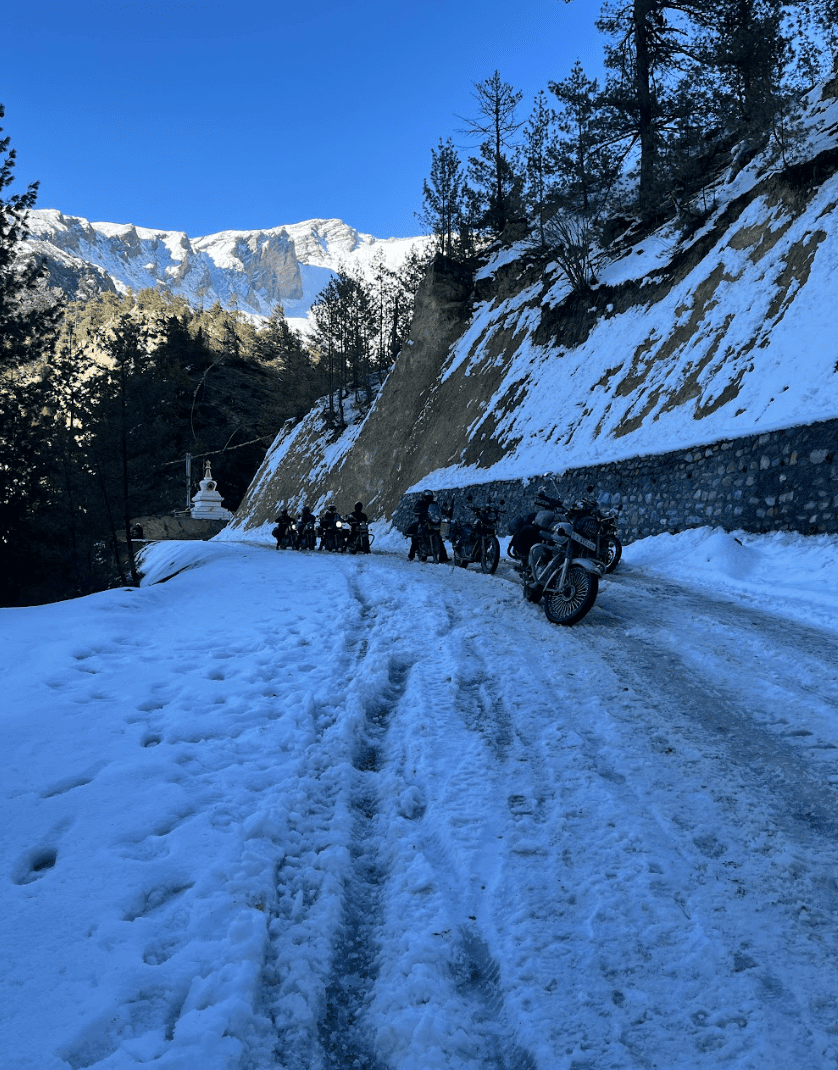
The Manang approaches above Chame carry significant snowfall from December onward and the track above Manang is inaccessible by motorcycle in winter. The road to Chame itself may be passable in good years, but riding above Chame toward Manang in winter requires a level of snow and ice management that falls outside the scope of a standard Nepal motorcycle circuit.
Upper Mustang in winter, particularly December and January, experiences the cold plateau nights at minus 15 to minus 20 degrees Celsius. The track is accessible and some operators run jeep circuits to Lo Manthang in winter, but the motorcycle version of the circuit requires cold-weather gear and preparation that most riders visiting Nepal do not carry. The February transition begins to improve conditions in both regions, but February is still early for the Manang section and only marginally more comfortable than January for the overnight temperatures on the Mustang plateau.
The Circuit Timing Decision in Practice
For a rider coming for a Nepal motorcycle tour with a fixed departure date, the seasonal guidance resolves as follows.
Departure in September: The Manang approaches improve significantly through September as the Monsoon recedes. The second half of September, from around September 20 onward, offers improving Manang conditions and good Mustang conditions. A late September departure catches the tail of the rain shadow Monsoon in Mustang and the improving post-Monsoon conditions in Manang. The full October conditions are not yet present but late September is a viable starting point for the circuit.
Departure in October: The best window for the combined circuit. Start with Manang for four to five days, backtrack to Pokhara via Besisahar, process Upper Mustang permits, and ride the Kali Gandaki to Lo Manthang. Both sections in October are in their best conditions simultaneously.
Departure in November: Good for the first two weeks of November. Manang conditions are still excellent in early November. Mustang conditions are still excellent with increasing cold. By mid-November the overnight temperatures in both regions require serious cold-weather preparation. Late November departure for a combined circuit means finishing the Mustang section in conditions that are cold enough to be a genuine physical demand rather than simply a logistical consideration.
Departure in March: The beginning of viability for the Manang section. March conditions above Chame require current track intelligence. Mustang in March is accessible and clear. A March departure that starts with Mustang first, taking advantage of its reliable spring conditions, and transitions to Manang in April when the track is more reliably clear, is the better sequence for a March-April combined circuit.
Departure in April: The best spring window. Manang's rhododendron season, optimal track conditions, and comfortable temperatures align in April. Mustang in April is good before the festival period. A combined April circuit with the Manang section first and the Mustang section in late April or early May captures both regions at high quality.
Departure in May: Possible but narrowing. Early May for Manang is still acceptable before the pre-Monsoon heat and storm instability build. Mustang in May is excellent and includes the Tiji Festival window. A May combined circuit should position the Manang section in the first half of the month and the Mustang section in the second half for the festival dates.
Permit Timing for the Combined Circuit
The Upper Mustang Restricted Area Permit requires at minimum two weeks of processing time through a registered Nepal Tourism Board agency. For a combined Manang-Mustang circuit, this means the RAP application must be submitted before the Manang section begins, not after it is completed.
The practical sequence is to submit the RAP application in Kathmandu or Pokhara before departing for the Manang approaches, so that the permit is ready by the time the Manang section is complete and the circuit transitions to Pokhara and then the Kali Gandaki toward Kagbeni.
The ACAP permit covers both the Annapurna Conservation Area, which includes the Manang approaches and the Mustang district, and is a single permit covering the full circuit rather than separate permits for each region. The TIMS card similarly covers the circuit as a single document.
A Note on Circuit Sequence
The circuit can be ridden in either direction, Manang first then Mustang, or Mustang first then Manang. The Manang-first sequence is more common because the standard Nepal arrival point of Pokhara or Kathmandu positions riders for the Besisahar approach to Manang before the Pokhara-based Mustang circuit.
The Mustang-first sequence has a specific advantage in the spring window: it allows riders to complete the Mustang section and the Tiji Festival in May and then transition to Manang in April, reversing the standard direction. This requires arriving in Nepal in early April to start with Manang, completing the Manang section by late April, and being in Mustang for the May Tiji Festival dates. This is the sequence that captures the rhododendron season on the Annapurna Circuit approaches in April and the Tiji Festival in Mustang in May within a single extended circuit.
For riders with seventeen to twenty days and the flexibility to plan around festival timing, this April-May sequence is the most comprehensive version of the combined circuit available.
Planning a combined Manang and Mustang motorcycle circuit with Nepal Moto Tours? The permit timing, the sequence, and the seasonal conditions all feed into the itinerary design. Get in touch with your available dates and we will build the circuit around the best window.