Europe's best motorcycle roads are concentrated in its mountain ranges and coastal edges, but the continent's density means that world-class riding is rarely more than a day's travel from wherever you start. The Alps alone contain more extraordinary passes than most continents manage in total. Add the Pyrenees, the Dolomites, the Scottish Highlands, the Balkans, and the coastal roads of the Mediterranean and Atlantic shores, and the selection problem becomes not finding good roads but choosing between them.
This list covers fifteen of the best. The criteria are the same across all of them: roads that reward the riding rather than simply providing access, whose character comes from the landscape they pass through, and whose reputation among experienced riders is based on what the road actually delivers rather than what the surrounding tourism infrastructure promotes.
1. Stelvio Pass, Italy
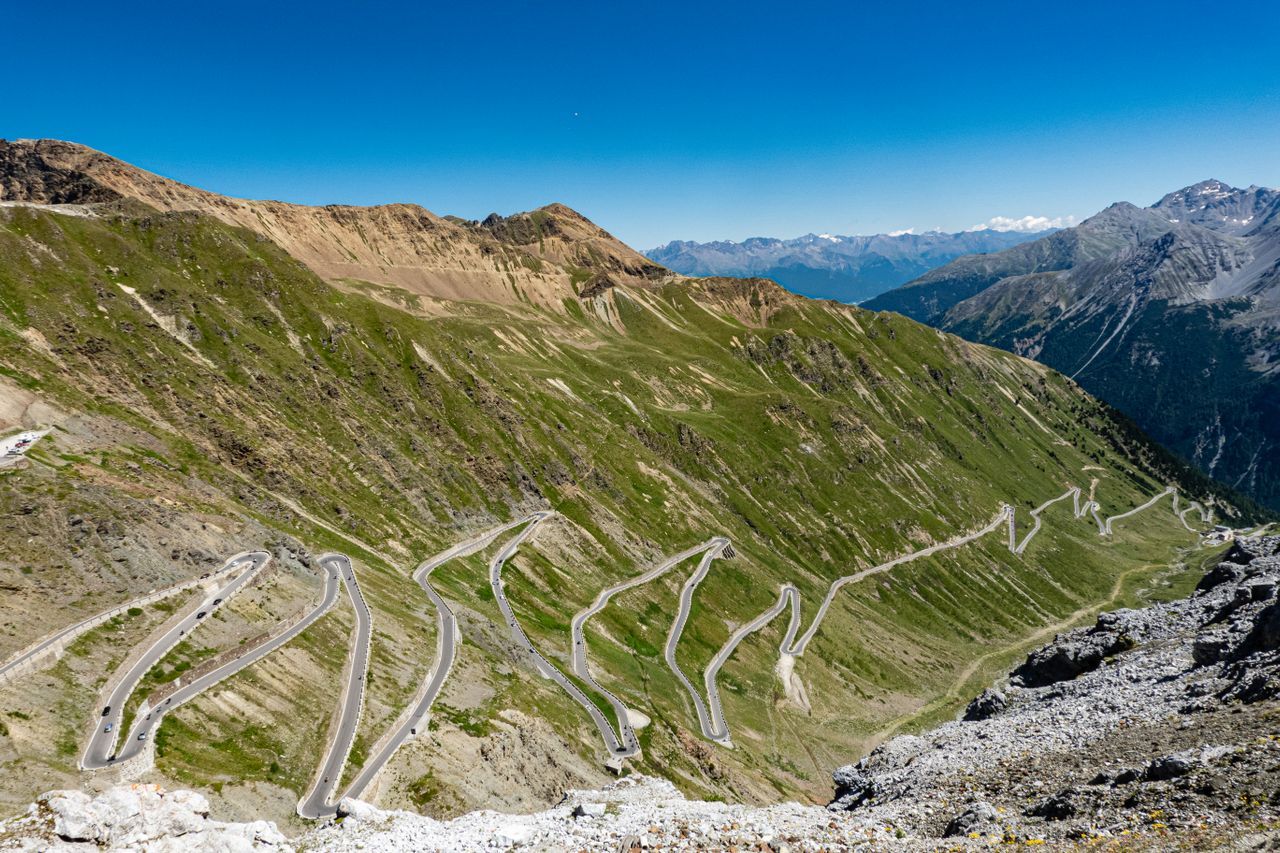
The Stelvio is the benchmark against which most European motorcycle roads are measured, and it earns that position across every dimension. The 48 hairpin bends ascending to 2,757 metres on the eastern approach from Prato allo Stelvio are the specific feature that photographs and videos have made the most recognised motorcycle road surface in Europe, but the road's quality extends beyond the hairpin sequence.
The western descent toward Bormio is the technical rider's version of the pass, a flowing sequence of longer, faster corners that the eastern approach's tight hairpins do not provide. The summit plateau connecting the two sides gives views toward Switzerland, Austria, and the Italian Alps simultaneously. The road surface is maintained to a standard that the Alpine tourism economy requires and that the winter closure period allows. In June when the road first opens after snow clearance, the surface is at its best and the surrounding peaks still carry the winter snowpack that disappears by August.
The Stelvio's limitation is its fame. In July and August the eastern approach is shared with tourist buses, cycling events, and a volume of motorcycles that turns the hairpins into a queue on busy weekends. May, June, and September produce the same road with significantly fewer other riders on it.
Best season: June and September
Combined with: Umbrail Pass into Switzerland, Mortirolo descent toward Mazzo
2. Trollstigen, Norway
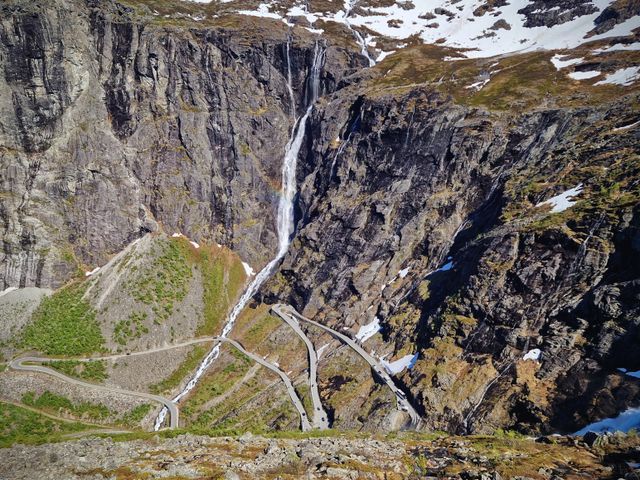
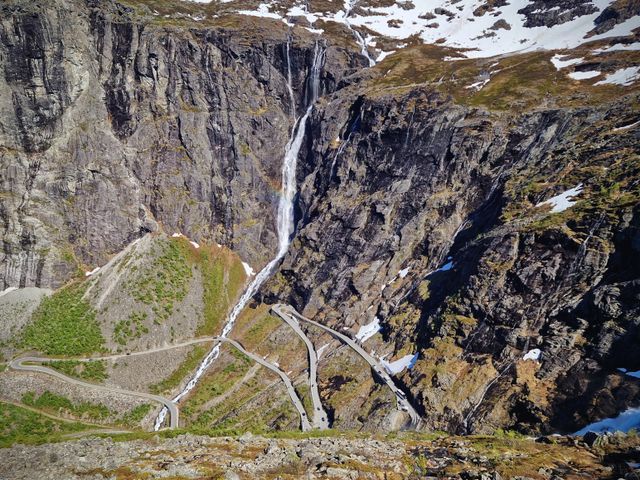
The Troll's Path climbs 11 kilometres through 11 hairpin bends at gradients reaching 12 percent between vertical walls of Norwegian mountain with waterfalls falling across the road from the cliffs above. The Stigfossen waterfall drops 320 metres alongside the most famous section of the climb and is close enough to the road that the spray reaches the tarmac in wet weather.
The Trollstigen's riding experience is concentrated into those 11 kilometres of climb rather than spread across a longer route. The road at the bottom of the valley and the plateau at the top are unremarkable. What happens between them is the reason the road is on this list and on most others like it.
The drive or ride to reach the Trollstigen is itself through Norway's fjord country, which provides a scenic context that makes the pass the climax of a day rather than its only point. The ferry crossings, fjord-side roads, and tunnel passages that Norwegian motorcycling requires as standard infrastructure are part of the experience rather than delays in it.
Best season: June to September
Combined with: Ørnevegen (Eagles Road) and Geiranger fjord road
3. Transfăgărășan Highway, Romania
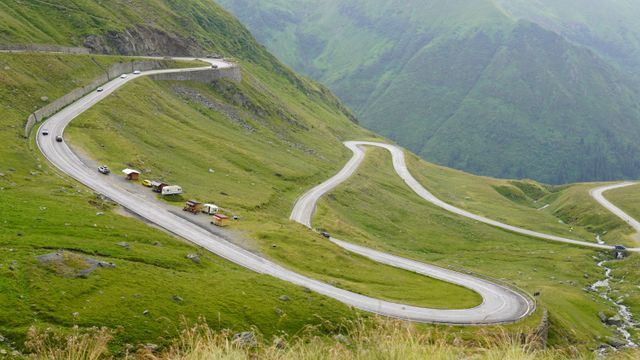
Romania's Transfăgărășan was built as a Ceaușescu-era military road across the Fagaras Mountains and has become one of Europe's most celebrated motorcycle roads on the strength of what it actually delivers rather than what promoted it. The road climbs to 2,042 metres through a landscape of glacial lakes and exposed ridge sections that the Carpathian range produces in a register different from the Western Alps.
The surface is good. The geometry is engaging. The mountain scenery is on a scale that the more developed Alpine countries no longer produce in the same undisturbed form. The bears that cross the road near Balea Lake are a specific Transfăgărășan feature rather than a Romanian generality. The Vidraru Dam reservoir that the southern approach passes is a significant piece of mid-century engineering in a landscape setting that turns infrastructure into a sightline rather than an intrusion.
Romania's road network requires more tolerance for variable surface quality than Western Europe, but the Transfăgărășan itself is maintained to a standard appropriate to its fame. The broader Romanian Carpathian riding territory that the Transfăgărășan introduces is one of Europe's underexplored motorcycle touring regions.
Best season: July to October
Combined with: Transalpina (DN67C), another high-altitude Carpathian crossing
4. Grossglockner High Alpine Road, Austria
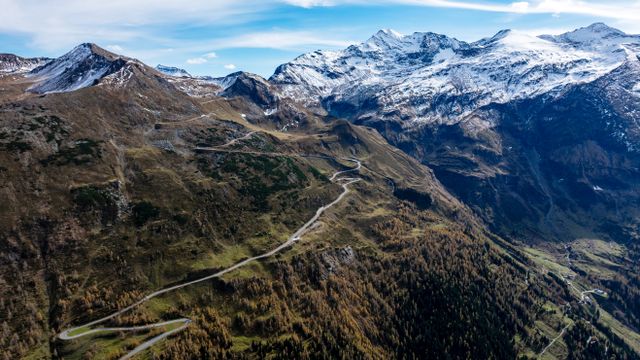
The Grossglockner Hochalpenstrasse was designed and built specifically as a scenic mountain road between 1930 and 1935, which means its geometry and viewpoint positioning were created with the viewing experience as the primary objective rather than as a by-product of engineering a crossing. The result is a 48-kilometre toll road that delivers its scenery deliberately rather than incidentally.
The Franz-Josefs-Höhe observation point gives the closest road-accessible view of the Pasterze Glacier, the longest glacier in the Eastern Alps, and of the 3,798-metre Grossglockner peak. The glacier's recession since the road was built is documented in comparative photographs at the observation point, which adds a dimension of environmental time to the visit that a purely scenic road does not carry.
The toll is NPR-level trivial and the road surface is excellent. The Grossglockner is the Austrian Alps' answer to the Stelvio and differs from it in the glacier, the more open landscape of the higher sections, and the less concentrated hairpin geometry that allows faster riding on the longer alpine curves.
Best season: May to October, closed in winter
Combined with: Gerlos Alpine Road, Timmelsjoch (to Italy)
5. Col du Galibier, France
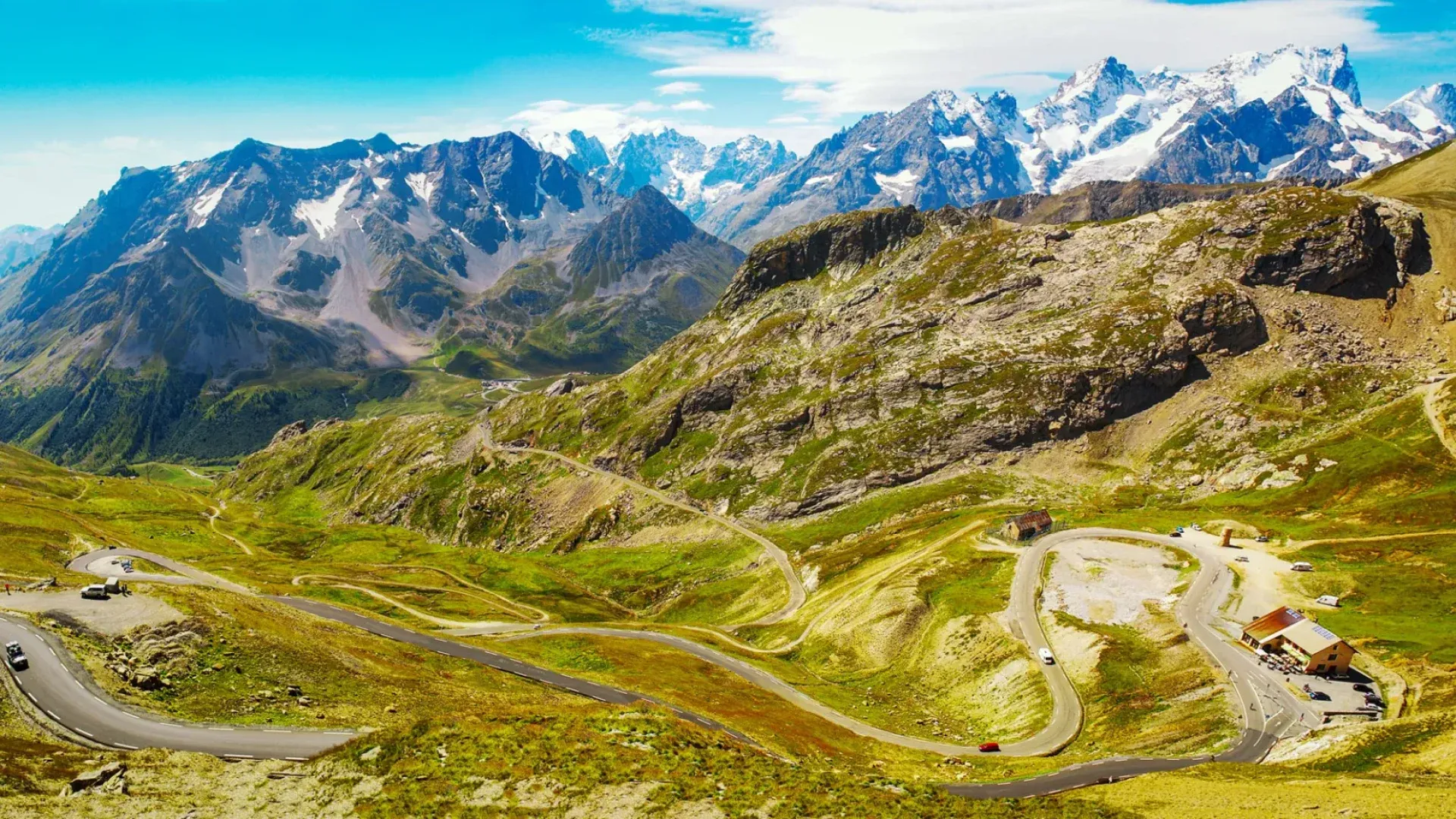
The Galibier reaches 2,642 metres on the road between Valloire in the Maurienne valley and Briançon via the Col du Lautaret. The Tour de France has used it so often that it has its own monument on the summit, but the road's motorcycle quality exists independently of its cycling associations.
The northern approach from Valloire through the Galibier valley is the sustained climb that the road is known for. The southern approach from the Lautaret junction is shorter and more open. Together they form a pass crossing that connects two different valley systems through terrain above the treeline where the views extend to Mont Blanc on clear days.
The Galibier works best as part of a day that connects it with the Col d'Izoard to the south and the Col de la Croix de Fer to the north, a three-pass day through the central French Alps that experienced Alpine riders plan as a full circuit. The Galibier alone is excellent. The three-pass day is one of the best Alpine riding sequences in France.
Best season: June to September
Combined with: Col du Lautaret, Col d'Izoard, Col de la Croix de Fer
6. Sa Calobra, Mallorca, Spain
_1793221664.jpeg)
Sa Calobra is a 12-kilometre road on Mallorca's northwestern coast that descends from the Serra de Tramuntana mountains to a narrow cove on the Mediterranean. The road's designer, Antonio Parietti Coll, built a knot into the lower section where the road loops under itself in a 270-degree turn that serves no engineering purpose other than managing gradient and providing a moment that every rider who has done Sa Calobra mentions in the same breath as the road's name.
The road's scenery is the Serra de Tramuntana in its most dramatic coastal expression, limestone cliffs dropping to turquoise Mediterranean water in a setting that the road accesses and that no other road on the island reaches. The combination of technical geometry and coastal landscape in 12 kilometres produces a road experience disproportionate to its length.
The practical challenge is that Sa Calobra's fame has made the parking area at the bottom a tourist destination that the single-lane road feeds with a consistent queue in summer. Early morning departure from the summit, arriving at the cove before the day-trip coaches from Palma, is the version of Sa Calobra that the road rewards.
Best season: April to June, September to October
Combined with: Cap Formentor road, Serra de Tramuntana circuit
7. North Coast 500, Scotland
The North Coast 500 is a 500-mile circuit of the Scottish Highlands from Inverness, covering the north coast, the northwest coast, and the return down the eastern side. It was named and marketed as a route in 2015 but the roads it describes have been among the best in Britain for as long as motorcycles have been on them.
The specific quality of NC500 riding is the single-track roads with passing places that constitute the majority of the west and north coast sections. These roads have a pace of their own that the rider either accepts or fights, and the ones who accept it find a mode of travelling through landscape that the main road network of the rest of Britain has largely removed. The passing place pulls to wave through an oncoming vehicle, the conversation with whoever is in that vehicle, and the way the road dictates a pace at which the surrounding mountains and lochs are actually visible rather than peripheral, are the features of the NC500 that distinguish it from any other road on this list.
The weather in the Scottish Highlands is the specific variable that the North Coast 500 makes central rather than peripheral. Riding the NC500 in the sunshine is beautiful. Riding it in the rain and wind that the northwest coast produces is part of the route's character rather than a failure of planning.
Best season: May to September
Distance: 500 miles/800km from Inverness
8. Picos de Europa, Spain
The Picos de Europa in Cantabria and Asturias are the Spanish mountains that most European riders outside Spain have not ridden and most Spanish riders consider the country's finest motorcycle territory. The limestone massif rises abruptly from the coastal plain of the Cantabrian coast to peaks above 2,600 metres and is accessed by a network of roads that penetrate the range's main valleys and cross between them on passes that the Cantabrian rain and the mountain scale make genuinely dramatic.
The N-621 from Panes through the Desfiladero de la Hermida gorge to Potes is the approach road that most circuits begin with, a canyon road through vertical limestone walls that confines the gorge traffic to a single shared space. From Potes the roads branch into the range toward the Picos' three massifs and the connecting passes between them.
The Picos lacks the organised tour infrastructure of the French or Italian Alps, which is part of what preserves its character. The roads are maintained rather than manicured. The guesthouses serve regional food rather than tourist menus. The other riders on the road are predominantly Spanish rather than the international tourism that the more famous Alpine passes draw.
Best season: June to September
Combined with: Costa Verde coastal roads, Ports de Beseitar into Catalonia
9. Timmelsjoch, Austria/Italy
The Timmelsjoch, known as the Passo del Rombo on the Italian side, crosses the border between the Austrian Ötztal valley and the Italian Val Passiria at 2,509 metres. The road is a toll route on the Austrian side and open only in the summer months when the winter snowpack clears from the highest sections.
What distinguishes the Timmelsjoch from the other major Alpine passes is its relative obscurity compared to the Stelvio and the Grossglockner and the specific character of the Ötztal approach. The Ötztal valley is one of Austria's longer alpine valleys and the ride from the Inn valley to the Timmelsjoch base climbs through a landscape that the valley's length makes sustained rather than concentrated. The pass itself is a two-country crossing with the border at the summit and the descent into the Italian Südtirol on the south side.
The Timmelsjoch is the connection road for riders doing the circuit that includes the Stelvio and the Grossglockner as anchor passes and wants a third significant crossing between them. It completes a triangle of Austrian and Italian Alpine road territory that a week's touring can cover comprehensively.
Best season: June to September, closed in winter
Combined with: Stelvio, Reschenpass, Grossglockner
10. Kotor Bay and Lovćen, Montenegro
The road from Kotor on the Bay of Kotor in Montenegro to the summit of Mount Lovćen is 25 kilometres of serpentine switchbacks ascending 1,749 metres from sea level to the National Park plateau in a sequence of turns that the specific mountain geometry produces without any apparent European equivalent.
The view from the Lovćen summit back down to Kotor Bay, the enclosed water of the bay surrounded by the Dinaric mountains on three sides with the narrow passage to the Adriatic barely visible at the bay's mouth, is the specific image that the Montenegro tourist board uses and that the road's summit delivers without exaggeration. The bay from above looks like a landscape that has been compressed from a larger scale into a smaller space.
The Kotor old city at the base of the climb is a walled medieval town with a UNESCO heritage listing and a character that the Montenegrin coast has preserved more completely than most Mediterranean equivalents. The combination of the medieval city at sea level and the mountain summit above it, connected by the switchback road, gives the day that this ride produces more dimensions than a purely scenic pass crossing does.
Best season: April to October
Combined with: Bay of Kotor coastal road, Durmitor National Park
11. Dolomites Circuit, Italy
The Dolomites do not have a single best road. They have a road network dense enough that a week of riding produces a different extraordinary day each day without repetition. The Passo Sella, the Passo Gardena, the Passo Falzarego, the Passo Pordoi, the Passo Giau, and the Passo Tre Croci are the passes most frequently included in circuits, and the Sella Ronda, the circular route around the Gruppo del Sella massif that connects four of the main passes, is the day ride that most Dolomites visitors do first and return to repeatedly.
The Dolomites' specific quality is the rock itself. The vertical limestone and dolomite towers that give the range its name rise from the passes and valley floors in formations that look architecturally planned rather than geologically produced, and the pale grey-pink colour that the dolomite takes in evening light is what makes the Rosengarten, the Rose Garden of the mountains' name, a description rather than a metaphor.
The road quality throughout the Dolomites is excellent. The food and accommodation infrastructure is among the best of any mountain region in Europe. The density of passes means that a rider can string three or four significant crossings together in a single day without covering the same road twice.
Best season: June to September
Distance: Varies by circuit; Sella Ronda is approximately 55km
12. Fjord Roads of the Lofoten Islands, Norway
The Lofoten Islands off Norway's northwestern coast are connected to each other and to the mainland by a combination of bridges and tunnels that allow motorcycle access to an archipelago whose landscape bears no resemblance to anything available on the European mainland. The jagged peaks of the Lofoten rise directly from the sea to heights above 1,000 metres without the graduated foothills that mainland mountains produce, which gives the island roads a visual relationship between mountain and ocean that is unique to this geography.
The E10 highway that runs the length of the Lofoten from Å in the southwest to the Hinnøya bridge in the northeast is the main road structure, but the minor roads branching to the fishing villages, the beaches, and the viewpoints are where the Lofoten's specific character is most accessible. The Ryten mountain approach near Fredvang, the road to Nusfjord, and the approach to the Reine village with its reflection in the still water of the fjord are the specific destinations that riders who have done the Lofoten consistently cite.
The Lofoten are in the Arctic Circle. The summer midnight sun means that the light that would be late afternoon light at lower latitudes is available at midnight. Riding the Lofoten roads at 11 p.m. in June or July, in the long-angle light that the low sun produces, is the specific riding experience that the latitude provides and that cannot be replicated further south.
Best season: June to August for midnight sun, September for autumn colours
Distance: E10 highway is approximately 170km
13. Millau Viaduct and Gorges du Tarn, France
The Gorges du Tarn in southern France is the route that riders who have exhausted the Alps' most famous passes and want something different in character from Alpine geometry discover and return to. The gorge road from Ispagnac to Le Rozier follows the Tarn River through a limestone canyon of consistent drama for 50 kilometres, the road carved into or running at the base of canyon walls that close to a width that the river and the road share without significant margin.
The road is slower than an Alpine pass, the gradient more moderate, and the riding requires a different kind of attention from the constant gear and brake management that hairpin sequences demand. The canyon walls, the river running alongside, and the medieval villages built into the cliff faces at intervals along the gorge produce a road environment that is intimate rather than expansive, specific rather than panoramic.
The Millau Viaduct at the gorge's southern end is the engineering counterpart to the natural drama. The cable-stayed bridge spans the Tarn valley at 270 metres above the river on piers that are taller than the Eiffel Tower. Riding across the Millau Viaduct is a specific and repeatable experience that the viaduct's height and the valley's scale produce each time.
Best season: May to October
Combined with: Gorges de la Jonte, Causses plateau roads
14. Rila and Rhodope Mountains, Bulgaria
Bulgaria's Rila and Rhodope mountain ranges are the Eastern European equivalent of the Picos de Europa: exceptional motorcycle territory that the western European riding community has been slow to discover and that Bulgarian and regional riders have been enjoying for years.
The Rila range contains Bulgaria's highest peak, Musala at 2,925 metres, and the Rila Monastery, one of the most significant Eastern Orthodox sites in the Balkans, accessible from the northern Rila foothills on a road through forested mountain terrain that the monastery's isolation has preserved. The Rhodope range to the south is lower and more forested than the Rila but has the Trigrad Gorge, a canyon road through vertical limestone that rivals the Gorges du Tarn for scale.
The practical advantages of Bulgarian riding for European riders on a budget are significant. Fuel costs are among the lowest in the EU. Accommodation is inexpensive relative to western European equivalents. The road network in the mountain regions has improved substantially over the past decade as EU infrastructure investment has reached the southeast. The riding character is authentic rather than touristically curated.
Best season: May to September
Combined with: Shipka Pass, Kazanlak valley roads
15. Serra da Estrela, Portugal
The Serra da Estrela is the highest mountain range in mainland Portugal, rising to 1,993 metres at Torre, and provides a motorcycle road character that the Atlantic-facing Portuguese mountains produce differently from the Mediterranean-facing ranges of Spain and France. The road network through the range connects the old wool-trading towns of Covilhã, Seia, and Manteigas on a circuit that covers the range's main passes and viewpoints in a day's riding.
The N339 road from Covilhã to Torre is the main access route to the range's summit plateau. The N232 from Manteigas through the Zêzere glacial valley to the summit is the rider's route, a longer approach through terrain that the glacial formation has shaped into a valley of specific scale. The Poço do Inferno waterfall near Manteigas is accessible from a short detour off the N232 and is one of the more dramatic specific viewpoints in a range that the weather makes dramatic generally.
The Serra da Estrela's position in central Portugal makes it accessible from Lisbon in under three hours and from Porto in under two, which means it works as a day circuit for riders based in either city or as a component of a longer Portuguese touring circuit that combines the mountains with the Atlantic coast.
Best season: May to October
Combined with: Douro Valley wine roads, Peneda-Gerês National Park
The Pattern Behind the List
The fifteen roads above are spread across ten countries and cover every major European mountain range plus the Atlantic and Mediterranean coasts. What connects them is not the geography but the specific quality that each one produces: a riding experience that the combination of road, landscape, and conditions makes available only in that specific place and that no other transport mode delivers in the same way.
The Alps contribute the most entries to a European motorcycle road list because the Alps contain the most extraordinary road engineering on earth in the most concentrated area. But the non-Alpine entries on this list, the NC500's single-track passes, the Picos' canyon approach, the Lofoten's midnight sun roads, the Gorges du Tarn's riverbank intimacy, are on it because they deliver something the Alps do not. The best European motorcycle roads are not all the same kind of best.
For riders planning to extend beyond Europe toward the roads that require more than a flight and a rental bike, the Kali Gandaki gorge and the Upper Mustang motorbike tour in Nepal offer the mountain road experience at a scale and with a cultural depth that Europe's most dramatic passes approach but do not reach. The comparison is not unfair to Europe. It is an accurate description of what the Himalayas produce.