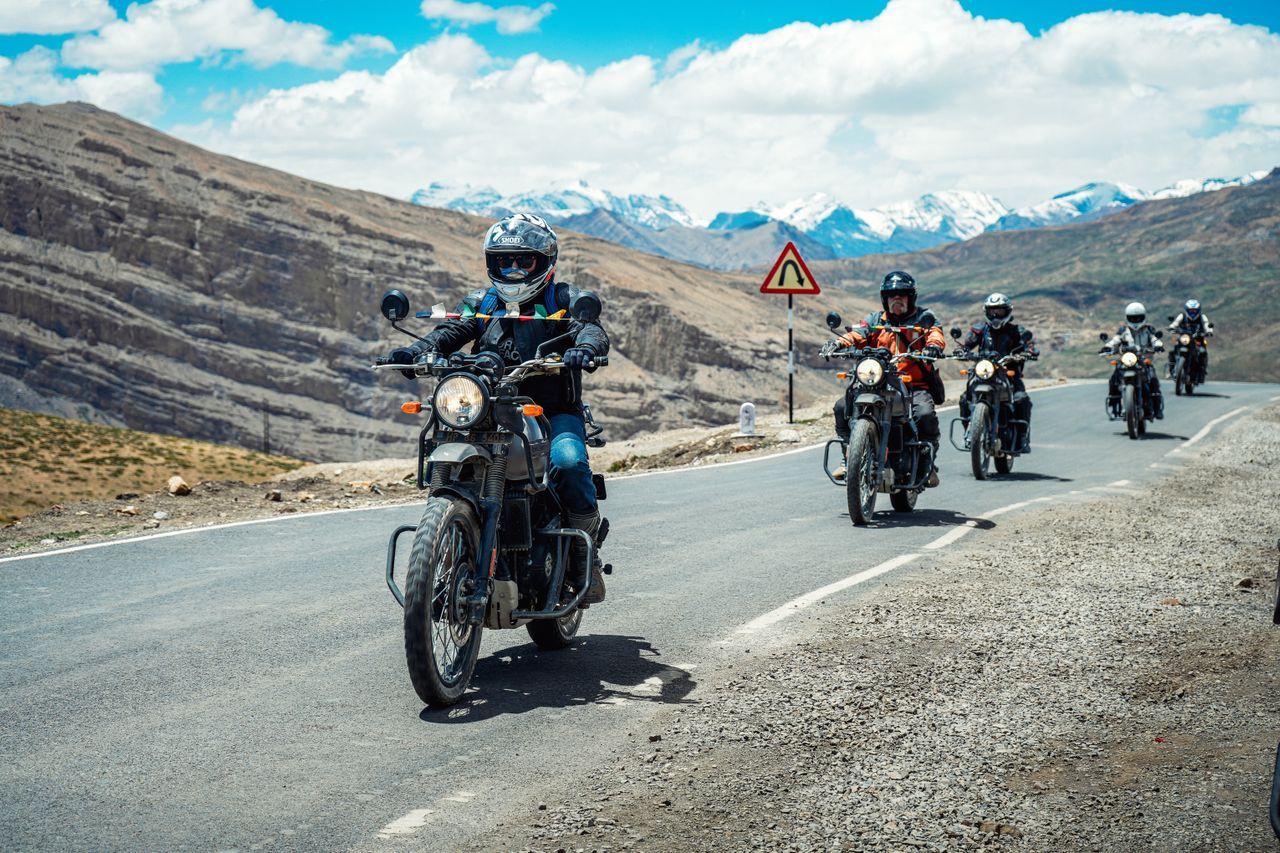
Most people know Everest Base Camp as a trekking destination. Fewer know that the north face base camp, on the Tibetan side of the mountain, is accessible by motorcycle. The road from the Nepal-China border at Gyirong to Rongbuk Monastery and the EBC viewpoint at 5,200 metres is one of the highest rideable roads on earth, and it is a real road rather than a track, maintained as part of Tibet's improving highway network and surfaced to a standard that surprises most riders who expect the approach to Everest to be rougher than it is.
The question of when to go matters more for this ride than for almost any other on this list, because the combination of Tibetan plateau weather, Tibet's periodic closures to foreign visitors, the Gyirong border's own operating conditions, and the altitude at which the final section of the ride happens makes timing the single most consequential planning decision.
The Two Base Camps: Why This Article is About Tibet
Everest has two base camps and they are in different countries. The south base camp in Nepal, at around 5,364 metres in the Khumbu glacier region, is accessible only by trekking from Lukla. No vehicle road reaches it. The north base camp in Tibet, at approximately 5,200 metres below the Rongbuk Glacier, is accessible by road from Gyirong via Old Tingri and Shegar. Motorcycles reach it regularly during the open season.
This distinction matters because riders planning an Everest motorcycle trip sometimes research the wrong base camp and discover at the planning stage that the Nepal side cannot be ridden. The Tibetan north base camp is the one this article covers, and the road access to it is what makes the motorcycle trip possible at all.
The Permit Stack You Need to Know First
Tibet is not accessible independently. This is the foundational logistical fact that shapes every other aspect of timing and planning for a motorcycle trip to Everest Base Camp.
Every foreign national entering Tibet requires a Tibet Travel Permit (TTP), issued by the Tibet Tourism Bureau. The permit cannot be obtained independently. It must be arranged through a licensed Tibetan travel agency as part of a confirmed guided tour. The processing time is 20 to 30 days minimum, which means permit applications need to be submitted well before any planned entry date.
For riders entering Tibet from Nepal via the Gyirong border, the permit situation has an additional layer. Group entry from Nepal requires a minimum of four travellers to obtain a Tibet group visa. Individual riders entering from Nepal cannot obtain a solo Tibet group visa and need to either join an organised group tour or coordinate with other riders to meet the minimum number.
For the Everest Base Camp section specifically, the TTP alone is not sufficient. The EBC area falls under restricted territory requiring an Aliens' Travel Permit (ATP) in addition to the TTP. The ATP covers travel beyond Lhasa into areas including Shigatse, Shegar, Tingri, and the road to Rongbuk. A Military Permit is also required for the EBC area, as the region is near the Chinese military zone adjacent to the Nepal border.
In practice, a licensed Tibetan operator handling the full motorcycle EBC tour processes all three permits as part of the tour package. The rider's responsibility is ensuring the operator has all required documentation, specifically passport copies, China visa details, and confirmed departure dates, at least 30 days before the planned border crossing.
The Gyirong border between Tibet and Nepal closed for a period in late 2025 following road damage from September landslides and reopened in late December 2025. As of 2026, the border is operational. Border conditions can change with limited notice, and confirming current status with your operator in the weeks before departure is standard practice rather than excessive caution.
The Four Seasons in Tibet: What Each Delivers
Tibet's climate is governed by two major factors: the altitude of the Tibetan plateau, which averages around 4,000 metres above sea level across the main riding routes, and the Indian Monsoon, which reaches the eastern and southern edges of the plateau in summer while leaving the central and northern plateau significantly drier than the surrounding Himalayan regions.
Spring: April to June
Spring is the first of the two primary riding windows for Tibet EBC motorcycle tours, and May and June specifically are what most experienced Tibet operators recommend as the best months for the route.
April is transitional. The winter cold has receded enough that the high passes are clear of the snow and ice that make them impassable from November through March, but the weather is still settling and cold nights at Rongbuk Monastery at 4,980 metres are genuinely cold, not uncomfortable cold. Temperatures at EBC in April can drop below minus 10 degrees Celsius at night. The road is passable but the window for comfortable overnight stays at the highest elevations is narrow.
May is when the conditions align best for the Lhasa to EBC section. The weather is stable, the passes are clear, the days are long enough that the riding schedule allows for the slow pace that altitude demands without compressed timelines, and the mountain visibility at EBC in May, in the weeks before the Monsoon cloud starts building over the Himalayan crest, is typically excellent. The north face of Everest in May morning light is the image that most photographs of this trip were taken in.
June remains good for the western Tibet sections including the EBC road, though by late June the Monsoon has reached eastern Tibet and the roads in that region become variable. The central plateau around Lhasa and the Shigatse-EBC corridor receives significantly less Monsoon rainfall than eastern Tibet, and June riding on the main Nepal-Lhasa-EBC route is manageable for most of the month.
Summer: July and August
July and August are the peak tourist season for Tibet overall because the temperatures are the most comfortable of the year at altitude. For motorcycle touring specifically, the season is more qualified.
Eastern Tibet routes are significantly affected by Monsoon rainfall in July and August. The road from Lhasa toward Sichuan, the eastern routes toward Yunnan, and the more remote tracks in that direction carry genuine flood and landslide risk during these months.
The western Tibet route relevant to EBC, the Gyirong border to Shigatse to EBC corridor, receives substantially less precipitation because it sits on the rain shadow side of the Himalayan crest. The riding is feasible in July and August but the mountain visibility at EBC deteriorates as the Monsoon cloud builds over the Nepal side of the range and the afternoon visibility at the base camp viewpoint is frequently obscured. The mornings clear more reliably than the afternoons, and riders who overnight at Rongbuk and rise before 6 a.m. see the mountain more consistently than those who arrive in the afternoon.
Autumn: September and October
September and October represent the second peak riding window for Tibet EBC motorcycle tours, and October specifically is what many riders who have done the trip in both spring and autumn describe as the marginally better month.
By late September the Monsoon has cleared from most of Tibet. The air quality that follows is the best of the year, and the visibility at EBC in October, when the post-storm clarity combines with the low sun angle of autumn, produces mountain views that the spring haze sometimes limits. The north face of Everest with fresh snow from the late Monsoon storms, seen in clear October air, is a different and arguably more dramatic sight than the same face in May.
The temperature at Rongbuk in October drops more sharply than in spring. October nights at the monastery approach minus 15 to minus 20 degrees Celsius. Riders staying overnight at EBC elevation in October need sleeping gear and clothing that the spring version of the trip does not require at the same severity.
October is also the month when Tibet permit demand is highest across all tour types, not just motorcycle tours. Permit processing through licensed agencies during September and October is under greater demand than other months, which is a reason to start the application process earlier for an autumn EBC trip than for a spring one.
Winter: November to March
Tibet is accessible to foreign visitors in winter in normal years, but the motorcycle EBC route is not a practical proposition between November and March for most riders.
The passes between the Gyirong border and Lhasa, and the high plateau roads around Shegar and the EBC approach, carry snow and ice from November through March that makes motorcycle travel genuinely dangerous rather than simply uncomfortable. The Gyirong road in particular, which involves altitude gain and several exposed switchback sections, carries ice risk from November onward. The EBC road at 5,000 metres in December or January is a winter mountaineering environment, not a motorcycle touring environment.
Operators who run Tibet or Nepal motorcycle tours do not schedule EBC departures between November and March. The window closes with the first significant snowfall and reopens when the passes clear in April.
The Route from Nepal to EBC
Understanding the route helps with the timing decision because the different sections of the ride have different weather sensitivities.
The crossing at Gyirong on the Nepal-Tibet border is at approximately 1,750 metres, the lowest point of the entire Tibet section. The road climbs steeply from the border to the Tibetan plateau through a section that gains over 2,000 metres in a relatively short distance. This section is the one most affected by the Gyirong border's own operating conditions and by landslide risk after heavy rainfall in the border region.
From Gyirong town the road crosses to Old Tingri, around 250 kilometres across the plateau at an average elevation above 4,000 metres. This section is the acclimatisation section and it is where altitude affects riders most significantly. Old Tingri at 4,390 metres is the standard staging point before the EBC approach, and the overnight here is part of the acclimatisation schedule rather than simply a convenient stopping point.
The final section from Old Tingri to EBC is 70 kilometres on a road that has been improved significantly in recent years. The surface quality on the EBC approach road is better than most riders expect. The altitude is what it is at 5,200 metres, and the physical response to riding at this elevation, even on a paved road in good condition, is different from anything the lower altitude sections of the route produce.
Rongbuk Monastery at 4,980 metres is the overnight stop for riders spending a night at EBC elevation. The monastery guesthouse is the highest altitude accommodation on the route and the sunrise view of Everest's north face from the monastery grounds in the early morning, in clear conditions, is what the logistics of the entire trip are organized around producing.
What Month to Go: The Direct Answer
The best months for a motorcycle trip to Everest Base Camp Tibet are May, June, September, and October. Within that window, the specific choice between spring and autumn depends on what you are optimizing for.
May is the best single month for mountain visibility and stable weather on the EBC approach. The mountain is clear more consistently in May than in any other month. The temperatures at Rongbuk are cold but manageable with appropriate gear. Permit demand is high but not at its peak.
September is the best month if the autumn window suits the travel schedule and if fresh snow on the north face is a visual priority. The post-Monsoon clarity is real and the mountain after a fresh snowfall is a different sight from the pre-Monsoon version. Temperatures are dropping but not yet at the severity of October.
October is the month that experienced Tibet riders cite most often when asked which single month produces the best overall EBC motorcycle trip. The visibility is excellent, the crowds at EBC itself are lower than in May, and the temperature, while requiring serious cold-weather preparation, is manageable for riders who have the right gear and expect it.
June is a viable alternative if May is not available. The first three weeks of June on the central Tibet EBC route are broadly similar to May conditions. From late June onward the Monsoon cloud that builds over Nepal starts affecting afternoon visibility at EBC.
The Practicalities That Affect Timing
Permit processing time: 20 to 30 days minimum. Whatever month you are targeting, the permit application needs to be with a licensed Tibetan operator at least six weeks before the planned border crossing to allow processing time and a buffer for any documentation issues.
Group minimum from Nepal: Four travellers minimum for a Tibet group visa via the Nepal entry route. Solo riders and pairs need to either join a scheduled group departure or coordinate with other riders. This affects timing because scheduled group departures run to fixed dates that may not align with a rider's preferred window.
Gyirong border status: Confirm current status with your operator in the month before departure. The border has experienced closures related to road damage, political events, and administrative decisions at various points in recent years. Your operator will have current information. General travel news will not always reflect the specific border status.
Acclimatisation days: The jump from Kathmandu at 1,400 metres to Old Tingri at 4,390 metres happens in two to three riding days from the Gyirong border. Most operators build acclimatisation days into the itinerary because the altitude gain is significant enough that riders who skip the rest days arrive at EBC with altitude symptoms rather than the clear head the experience requires. Build the acclimatisation days into the timing rather than treating them as optional.
What the Ride Actually Costs
A guided motorcycle tour to EBC from Kathmandu via the Gyirong border, covering Lhasa, the EBC approach, and return to Kathmandu, typically runs 10 to 14 days and costs in the range of USD 2,900 to USD 4,200 per person including permits, guide, motorcycle rental or use of your own motorcycle with a temporary Tibet licence, accommodation, and most meals. The permit fees are a significant portion of this: the TTP, ATP, and Military Permit combined represent several hundred dollars of the total.
Riders who bring their own motorcycle from Nepal require a temporary import permit for the vehicle in addition to the personal permits, and this adds both cost and processing time to the preparation.
The Honest Limitations
Tibet is a politically sensitive destination and the access conditions can change in ways that no amount of advance planning fully prevents. The border closures documented over recent years, the minimum group requirement, the mandatory guide requirement, and the permit stack that takes a month to process are all expressions of the Chinese government's management of access to Tibet, and that management can tighten with limited notice for political, administrative, or security reasons.
Riders who commit to this trip, financially and logistically, are accepting a level of access uncertainty that Nepal's own restricted area permits do not carry to the same degree. The Kagbeni checkpoint for Upper Mustang can be navigated on a confirmed permit with confidence. The Gyirong border for Tibet is confirmed by a permit but remains subject to border-level decisions that the permit does not override.
This is not a reason to avoid the trip. It is a reason to book through an operator with a clear refund or rebooking policy for border closure situations, and to treat the permit cost as partially sunk before the date of entry.
For the rider who reaches Rongbuk Monastery in clear October air and watches the north face of Everest catch the first light of the morning, the logistics that produced that moment recede to a reasonable price for what the mountain then delivers.