
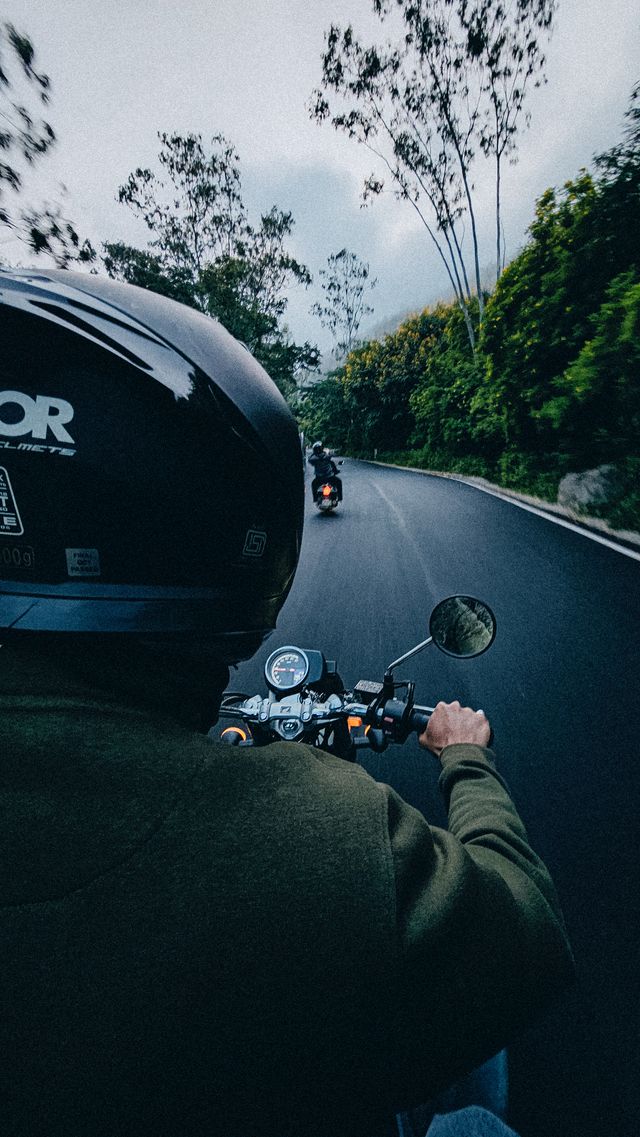
Nepal drives on the left. For riders from India, the UK, Australia, and most of Southeast Asia, this requires no adjustment at all. For riders from continental Europe, North America, the Middle East, or anywhere else that drives on the right, it is the first and most consistent challenge of the first day, and it deserves more honest preparation than the standard "just remember to stay left" advice provides.
This article is written specifically for riders who have never ridden on the left before and are about to attempt it on a Nepal motorcycle tour, which is not the ideal environment for this particular adjustment. It covers what the cognitive shift actually feels like, where the specific moments of danger occur, how long the adjustment takes, and the habits that make the first day manageable rather than terrifying.
What the Adjustment Actually Feels Like
Most right-side riders approaching their first left-side day expect the challenge to be remembering which side of the road to be on. That is a real part of it but it is not the most demanding part.
The more demanding part is that left-side riding requires reversing almost every instinct you have built over years of riding. The instinct to drift right after a stop. The instinct to look left first at a junction. The instinct to position yourself on the left side of the lane when approaching a corner, which on a left-side road puts you on the wrong side and closes your view into right-hand bends rather than opening it. The instinct to pull to the right when a vehicle comes toward you, which is the direction of oncoming traffic on a left-side road.
These instincts are not conscious decisions. They are the automatic responses that experience has built, and on the first day of left-side riding they surface at exactly the moments when you do not have the cognitive space to override them, because those moments are also the moments when traffic, junctions, or road conditions are demanding your attention.
The cognitive load of overriding these instincts while also navigating unfamiliar roads, unfamiliar traffic culture, and an unfamiliar bike is significant. Most riders underestimate it before the first day and have a very accurate understanding of it by the end of it.
The Moments That Catch You
Experience from riders making this adjustment for the first time in Nepal consistently identifies the same situations as the ones where the right-side instinct reasserts itself most strongly.
Pulling away from a stop. After stopping at a junction, a fuel station, or a guesthouse, the pull-away is the moment when the brain defaults to its training. Without active conscious thought, riders consistently pull away to the right side of the road. This is the adjustment moment that causes the most incidents in the first day, because the error happens at low speed and is fixable if caught early, but happens at exactly the point when you are managing clutch, throttle, balance, and observation simultaneously and have the least attention available for lane position.
The fix is a deliberate pre-departure check before every single pull-away on day one. Before releasing the clutch, look left, confirm traffic is clear, and consciously note which side of the road is the correct one to join. This sounds laborious and it is. It becomes less laborious as the day progresses and the new pattern starts to build.
Roundabouts. Roundabouts on a right-side road go clockwise. On a left-side road they go counterclockwise. Kathmandu has several roundabouts, including the major junctions at Ratna Park and Kalanki, and they are the specific infrastructure element that right-side riders most consistently approach from the wrong direction on the first encounter. The correct approach is counterclockwise entry, giving way to traffic already in the roundabout from your right.
Wide roads with no traffic. When the road is empty and the directional cues that other vehicles provide are absent, the brain reverts to its default positioning. A wide empty road in Nepal at an early morning hour is exactly the situation where a right-side rider will drift to the right side of the road without noticing they have done it. Oncoming traffic then appears as a surprise rather than a predictable feature of the road.
Corners. The correct positioning for a left-hand corner on a left-side road is on the left of the lane, which opens the view around the corner. The correct positioning for a right-hand corner is toward the centre of the lane, not the left, which also opens the view. Right-side riders instinctively position for the mirror image of both of these. On left-side corners they drift right, which closes the view. On right-side corners they stay left, which also closes the view. The corner positioning adjustment takes longer than any other element of the left-side adaptation and is worth specific practice on a quiet road before attempting it in traffic.
After overtaking. After completing an overtake on a right-side road, the natural return is to the right lane. After an overtake on a left-side road, the return is to the left lane. The overtaking sequence on day one ends, more often than riders expect, with a return to the wrong lane at the point when the attention that managed the overtake is relaxing.
The Left-Side Advantage You Did Not Know You Had
Before the specific Nepal complications, one piece of context that helps: left-side riding is not inherently more difficult than right-side riding once adapted. It is symmetrically the same activity in mirror image. Riders who have made the adjustment report that within two to three days the new side feels as natural as the old one, and within a week they have to think to remember which side they rode on at home.
The first day is the hardest because you are working against accumulated instinct. The second day is easier because the new pattern has started to form. By the third day most riders are operating on left-side instinct without active conscious override.
This timeline is worth knowing before you start, because the first day's difficulty can feel like evidence that the adjustment is not working rather than evidence that it is in progress.
Nepal's Roads as a First Left-Side Environment
Nepal is not the ideal country for a first experience of left-side riding, and honesty about this is more useful than the alternative.
The ideal first left-side experience is a quiet road in a country with consistent road discipline, clear lane markings, predictable traffic behaviour, and a forgiving response when you make a mistake. Nepal has none of these in abundance. The roads are unpredictable in surface and width. Lane markings exist in some places and not others. Traffic behaviour in Kathmandu follows a logic that takes time to read even for experienced left-side riders. And the consequences of a mistake in the Kali Gandaki gorge are different from the consequences of the same mistake on a quiet suburban road.
If you have never ridden on the left and Nepal is your first attempt, two things help more than any advice about the riding itself.
First, spend time in a vehicle on Nepal's roads before getting on a bike. A taxi or bus ride from the airport to your hotel, or a day of getting around Kathmandu as a passenger, builds a visual familiarity with left-side traffic flow that transfers to riding more quickly than approaching it entirely fresh from a bike seat.
Second, start on a quiet road rather than riding in Kathmandu city traffic. If the plan is to rent a bike in Kathmandu and immediately navigate through Thamel, reconsider. The roads around Patan, the routes out of the Kathmandu Valley toward Dhulikhel in the early morning, or any road with lower traffic density than the city centre gives you the space to run the left-side instinct without also managing the full complexity of Kathmandu's traffic culture simultaneously.
The Specific Challenges Nepal Adds
Beyond the left-side adjustment itself, Nepal's roads add specific elements that make the first day more demanding than first left-side days in more forgiving environments.
Road width is variable and often narrows without warning. A road that starts two lanes wide becomes effectively one lane at a curve, a settlement, or a section of road damage. The instinct to drift right on a narrowing road puts a right-side adapted rider into the oncoming path at the moment when road width is already the challenge.
Traffic emerges from unexpected positions. Nepal's road culture includes vehicles pulling out from side streets, pedestrians crossing from any point, motorcycles filtering through gaps in both directions, and animals on the road in rural areas. None of these are unique to Nepal, but the density and unpredictability of them in combination with the left-side adjustment creates a higher cognitive load than any individual element produces alone.
Road surface changes require attention that competes with lane discipline. Potholes, loose gravel, road repair sections, and the sudden surface transitions that Nepal's roads produce need active management. When your attention is divided between the surface, the lane position, and the traffic, the left-side instinct is the element most likely to be dropped.
The horn culture requires understanding before it makes sense. In Nepal, the horn is a communication tool rather than an expression of frustration. Vehicles horn before blind corners, before overtaking, and when passing through narrow settlements. For a right-side rider simultaneously managing the left-side adjustment, the horn cues coming from unexpected directions add to the sensory environment that the first day in Nepal already provides in quantity.
Practical Habits for Day One
These are the specific practices that riders adapting to left-side riding in Nepal consistently report as the most useful.
Set a reminder on your phone or write it on your hand. It sounds elementary and it works. LEFT on your left glove, or a phone alarm that says LEFT which you see when you check the map. The conscious reminder interrupts the automatic instinct at the moment before pull-away and junction navigation when it matters most.
Ride slower than you think necessary. The speed that feels conservative on a familiar right-side road feels correct on your first left-side day in Nepal. The additional cognitive load of the adaptation genuinely reduces your processing speed and reaction time. The gap between perceiving a situation and responding to it is slightly larger on day one than it will be on day three. Speed reduction is how you maintain the same margin for error.
Use the other traffic as your guide. When you are uncertain which side of the road is correct, the position of vehicles coming toward you tells you unambiguously. If they are on your right, you are in the correct lane. If they are on your left, you are not. In the early hours of day one, using other traffic as a constant reference point rather than relying on your own instinct catches the drift to the right before it becomes a problem.
Stop and reset after a confusing moment. If you find yourself in the wrong lane or seriously uncertain about your position, find a safe place to stop, take a moment, and consciously reorient before continuing. Trying to correct a confusing situation while moving at speed, particularly in traffic, combines two demands that together exceed what day-one left-side riding asks of most riders individually.
Tell your passenger if you have one. A passenger who knows you are adjusting to left-side riding for the first time can provide a calm verbal prompt at the moments you need it, pull-away from stops especially, without the surprise of an instruction appearing when you are not expecting it. A passenger who does not know and calls out something alarming when you drift right provides the same information in a format that is harder to act on calmly.
The Intersection of Left-Side Riding and Nepal's Traffic Culture
Left-side riding in Nepal is not simply the mirror image of right-side riding. It is left-side riding in a specific traffic environment that has its own logic, and the two adjustments compound on day one.
Nepal's traffic moves on consensus and negotiation rather than strict rule enforcement. Vehicles occupy whatever lane is available and moving, not necessarily the lane the road markings or the side-of-road convention assigns to them. This means that on Nepal's roads, particularly in Kathmandu, staying on the left does not guarantee that the traffic around you is also strictly on its corresponding side. Vehicles from both directions use the full road width in ways that right-side riding in regulated environments does not prepare you for.
The practical outcome of this for a right-side rider adapting to the left in Nepal is that the lane discipline reference points you are trying to use are themselves inconsistent. The left-side guidance that works in the UK, Australia, or India, following the left edge of the road and the vehicles ahead of you, works in Nepal on the roads outside the city where lane discipline is more consistent. In Kathmandu, the guidance is to read the whole road including oncoming traffic and position yourself where the actual flow is rather than where the theoretical left-side convention places you.
This is not a contradiction of left-side riding. It is the layer that Nepal's traffic culture adds on top of it, and it is the layer that experienced riders in Nepal navigate by reading the road as it is rather than as the convention suggests it should be.
How Long the Adjustment Actually Takes
For most riders without previous left-side experience, the timeline runs roughly like this.
After you rent a motorbike in Nepal, Day one is the hardest. Every pull-away requires a conscious check. Every junction requires active thought about which direction to give way. Every lane position requires deliberate maintenance rather than automatic habit. Expect to be more tired at the end of day one than the distance covered justifies.
By the end of day two, the instinctive pull-away to the right has reduced significantly. The junction logic is building. The corner positioning is still inconsistent but the errors are becoming fewer and more recognisable before they complete.
By day three to four, most riders describe operating primarily on new instinct rather than conscious override. The errors still occur in unusual or high-pressure situations but the baseline riding is left-side without active management.
By the end of a week, the adjustment is substantially complete. Most riders at this point find right-side driving on their return home requires the same conscious attention that left-side driving requires in Nepal's first day. The brain adapts in both directions with similar speed.
The implication for trip planning is that a Nepal motorcycle route where the first day's riding is also the longest or most demanding day of the trip does not give the adjustment time to happen before it is needed. Building a shorter first riding day into the itinerary, the Kathmandu valley motorcycle tour or a limited city circuit rather than an immediate departure for the mountain roads, gives the adjustment process the first day it needs before the routes that make the trip worth taking begin.