
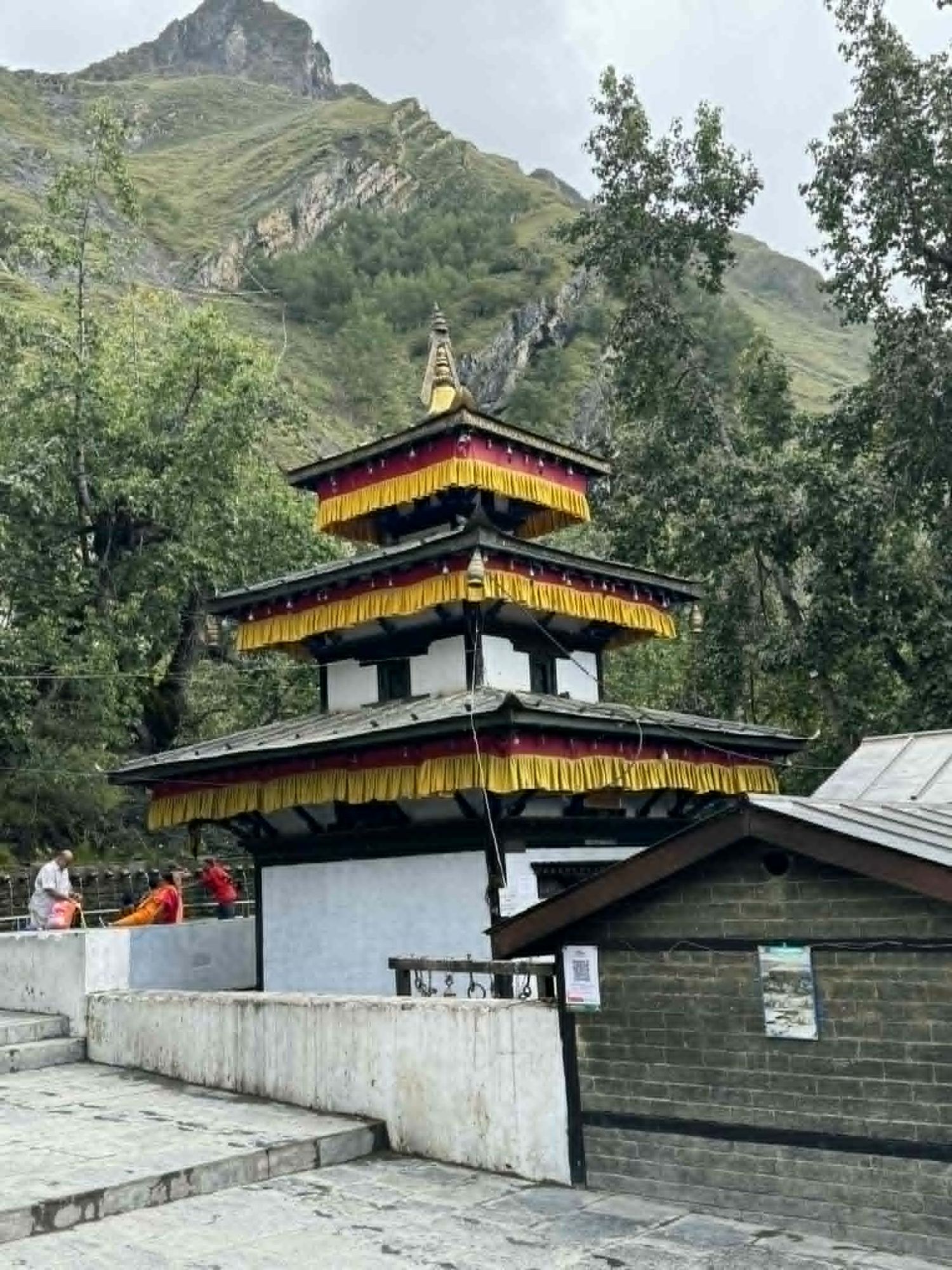
Muktinath at 3,710 metres does not have a single best time that applies to every visitor equally. The answer depends on what you are coming for. The pilgrim who needs the 108 water spouts regardless of temperature has a different calculation from the motorcycle rider who needs the road above Kagbeni to be rideable. The photographer who wants the Himalayan range visible from the approach has a different window from the trekker who wants the rhododendrons on the descent. The rider who wants Lo Manthang and Muktinath in the same circuit has a window shaped by both destinations simultaneously.
This article covers each seasonal window honestly, including the conditions that do not appear in the promotional versions of this information, so you can match your visit to what Muktinath actually offers in each period rather than what the best-case version of each month suggests.
Understanding Muktinath's Climate
Muktinath sits in the rain shadow of the Annapurna and Dhaulagiri ranges. The same geographic position that makes Upper Mustang's high desert what it is applies to Muktinath, though less completely. The main Monsoon moisture that saturates lower Nepal from June through September is significantly reduced here, but it is not eliminated. The distinction matters because the rain shadow gives Muktinath a longer usable season than Pokhara or Kathmandu, but the altitude means winter cold is genuine rather than merely inconvenient.
The Kali Gandaki gorge wind is the other climate factor that shapes a Muktinath visit regardless of season. The gorge wind builds from mid-morning and peaks in the early afternoon throughout the year, with the strongest gusts in the dry season months of November through May. For riders and trekkers approaching from Jomsom, this wind is not a weather event but a daily meteorological feature that governs departure timing. Muktinath motorbike tour is interesting particularly because The road to Muktinath from Jomsom climbs into exposed terrain where the gorge wind has full reach. Morning departures are the standard approach across all seasons.
October and November: The Consensus Peak Season
October and November are the months that the majority of experienced Muktinath visitors, whether arriving by motorcycle, on foot from the Annapurna Circuit, or by jeep from Jomsom, cited as the best overall conditions.
The Monsoon has ended by early October, and the rain-washed air produces mountain visibility that the pre-Monsoon haze of May does not always match. The Annapurna range and Dhaulagiri are visible from the Muktinath approach in their clearest version of the year, with fresh snow from the late Monsoon storms on the upper ridges providing the white that the spring season sometimes lacks after a dry winter.
The road from Jomsom to Muktinath in October and November is in its best post-Monsoon condition. The sealed sections of the lower approach are intact. The gravel on the upper switchbacks is compacted rather than loose from recent rainfall. The river crossings on the Jomsom side are at their most manageable as Monsoon water levels recede. A Royal Enfield Himalayan handles the full approach road in October and November without the surface complications that other seasons introduce.
Temperatures at 3,710 metres in October are cold in the mornings, manageable in the midday hours, and cold again by late afternoon. The temple complex visit is best timed for the mid-morning window after the initial cold has eased and before the afternoon wind peaks. October nights at Muktinath-area guesthouses require a sleeping bag or adequate blankets. The guesthouses provide these, but confirming bedding quality before accepting a room is sensible rather than assuming.
By November the temperatures drop further. Daytime riding to Muktinath in November is still entirely feasible, but the early morning and evening temperatures at 3,710 metres are cold enough that thin riding gear is inadequate. Layering with serious insulation under a riding jacket is the minimum. Riders who arrive at Muktinath in late November on a clear afternoon and watch the sunset on Nilgiri and Dhaulagiri are seeing the mountains in conditions that few people observe from this position, because by late November the visitor numbers have dropped considerably and the light quality in the clear post-Monsoon air is at its most dramatic.
The disadvantage of October specifically is the visitor volume. The post-Monsoon window is Nepal's peak trekking and motorcycle tourism season, and the jeep convoys from Jomsom to Muktinath reach their maximum frequency in October. The temple complex receives more visitors in October than in any other month, and arriving in the midday window produces a crowd that the early morning visit avoids. The early morning advantage is consistent enough in October that it is worth the discipline of an early start rather than a comfortable mid-morning departure.
March, April and May: The Pre-Monsoon Window
The pre-Monsoon window from March through May is the second peak season for Muktinath and the period that riders planning the Upper Mustang circuit in May for the Tiji Festival most commonly visit.
March at Muktinath is the transition from winter cold to spring warmth, and the transition is not linear. March days can be genuinely warm in the midday sun at altitude and cold enough for ice on the switchbacks in the early morning. Riders on the Jomsom-Muktinath road in early March should check the upper road section specifically, because ice on the concrete switchbacks on the upper approach is the condition most likely to cause a low-speed fall, and it forms on shaded sections regardless of how warm the day feels by the time of departure.
April is when the rhododendron forests on the lower slopes of the Muktinath approach, below the treeline and on the descents toward Kagbeni, are in bloom. The rhododendron flowering at this elevation peaks between late March and mid-April in most years, and the combination of the pink and red flowering forests on the lower slopes with the snow peaks visible above them is the specific visual quality of the Muktinath circuit in this season that the October version does not produce.
May is the month that most Upper Mustang motorcycle tour pass through Muktinath, either on the way north to Lo Manthang or on the return south through Jomsom. The Tiji Festival in Lo Manthang is typically held in May, and riders whose primary objective is the festival treat Muktinath as a significant stop on a route with multiple destinations rather than as the destination itself.
The disadvantage of May is the afternoon haze. The pre-Monsoon heat building through the Kali Gandaki valley below produces a haze layer from roughly late morning onward that reduces the mountain visibility to a degree that October's post-Monsoon clarity does not. The mountain views from the Muktinath approach in May are good. They are not October's best. For riders whose primary objective is the temple complex and the pilgrimage experience rather than the mountain panorama, May is as good as October and often has lower visitor volume outside the peak Tiji festival dates.
June Through September: The Monsoon Months
The rain shadow that defines Muktinath's geography produces a specific Monsoon experience here that differs from lower Nepal. The Monsoon precipitation that makes trekking in the Annapurna foothills wet and challenging from June through September is reduced at Muktinath by the barrier of the main Himalayan range.
This does not mean Muktinath is dry during the Monsoon. It receives Monsoon precipitation, and the road from Jomsom to Muktinath is affected by it. The loose sections of the upper approach become muddy rather than compacted. The switchbacks that are manageable in dry conditions become slippery in wet conditions. The river crossings on the Jomsom approach are at their highest water levels of the year during August.
What it does mean is that the Monsoon at Muktinath is significantly less severe than at Pokhara or Kathmandu, and experienced riders on appropriate machines have completed the Jomsom-Muktinath road in the Monsoon months without incident. The condition variability is the issue rather than a uniform closed road.
The practical guidance for the Monsoon months is: get current road condition information in Jomsom specifically on the upper road before departing, rather than relying on general seasonal guidance. A road that is fine one week can be compromised by a week of rainfall the next. The Jomsom guesthouses and the local tea houses on the Muktinath road have this information in real time. The internet does not.
Mountain visibility at Muktinath during the Monsoon is reduced on most days. The peaks that define the visual experience of the approach, Nilgiri, Dhaulagiri, Annapurna, are obscured by clouds on the majority of Monsoon days. A clear Monsoon morning at Muktinath occurs and when it does, the freshly washed peaks with snow at relatively low elevation produce a different and sometimes extraordinary sight. But it cannot be planned for, only encountered.
Pilgrimage activity at Muktinath does not stop during the Monsoon. Hindu pilgrims arriving from India and Nepal continue to visit the temple complex throughout the year, and the Monsoon months see pilgrimage groups who have timed their visit to the Shravan month of the Hindu calendar, which falls in July and August, and which is considered particularly auspicious for Vishnu worship. The Monsoon pilgrimage character of Muktinath is different from the trekking and tourism character of October and May, and riders who visit in July or August encounter a temple complex used primarily for its intended purpose rather than by adventure tourism.
December, January and February: The Winter Window
Winter at Muktinath is genuinely cold. December nights at 3,710 metres drop to minus 10 to minus 15 degrees Celsius. January is the coldest month. The Jomsom-Muktinath road in winter carries ice risk on the upper switchbacks, particularly in the morning before the sun reaches the shaded north-facing sections of the approach.
The road is not closed in winter in any formal sense. It is ridden by local vehicles and occasionally by motorcycle riders throughout December, January, and February. What changes is the surface risk on the upper approach, the cold management required for the visit itself, and the very limited visitor numbers that produce a specific quality of solitude at the temple complex that no other season provides.
A winter visit to Muktinath has the temple compound largely to yourself. The Jwala Mai flame in the cold air, the 108 water spouts running at their lowest volume of the year with ice forming on the concrete around the spout row, and the mountains visible with the full winter clarity that cold dry air produces, are the specific character of Muktinath in winter. For a rider comfortable in cold and equipped for it, a December or January visit to Muktinath is memorable in a way that the October crowd version is not.
The practical requirements for winter Muktinath riding are serious cold-weather riding gear, including thermal base layers that cover hands and feet as well as the core, a departure time from Jomsom that is late enough to allow the sun to clear the upper switchbacks before arrival, and accommodation confirmation in advance because the limited winter guesthouse opening at Muktinath means fewer options than the peak season provides.
February begins the transition toward spring. The upper switchback ice reduces but does not disappear. The days lengthen and the light quality in February is interesting rather than merely cold. February visitors are rare enough that the temple complex character is closer to winter than to spring, but the worst of the cold has passed and the approach road is marginally more predictable than in January.
Month-by-Month Summary
January: Coldest month. Ice on upper switchbacks. Low visitor numbers. Confirm road conditions from Jomsom. Full winter gear is essential. Mountain views clear when skies are clear, which they often are.
February: Cold beginning to ease. Ice risk reducing. Still quiet. Transition month.
March: Spring begins. Ice possible in the early mornings on the upper road. First rhododendrons at lower elevations. Check upper road conditions before departing Jomsom.
April: Rhododendron peak on lower slopes. Good visibility. Comfortable daytime temperatures at altitude. Pre-Monsoon season in its best form.
May: Pre-Monsoon haze building. Still good for the temple visit. Busier if overlapping with Tiji Festival traffic in Upper Mustang. Afternoon haze reduces mountain views compared to October.
June: Monsoon beginning. Precipitation is increasing. Road condition variability starts. Check locally before riding the upper road.
July: Full Monsoon. Rain shadow reduces but does not eliminate precipitation. Pilgrimage activity continues. Mountain visibility reduced most days. Road advice from Jomsom essential.
August: July. Shravan month brings Hindu pilgrims. Road conditions variable.
September: Monsoon receding. Road conditions are improving through the month. Late September can be excellent.
October: Post-Monsoon peak. Best mountain visibility of the year. Road in best condition. Highest visitor numbers. Morning arrival is recommended to avoid midday crowds.
November: Excellent conditions. Visitor numbers are lower than October. Cold evenings and nights. Later in November, mornings are cold enough to require serious layering.
December: Winter conditions beginning. Ice risk on upper road in mornings. Quiet. Full winter gear is essential. Worth doing for solitude and clarity.
For Riders Specifically
The Jomsom-Muktinath road on a Royal Enfield Himalayan is at its most manageable from late September through November and from March through May in dry conditions. The summer Monsoon months introduce surface variability that requires current local intelligence rather than seasonal generalisation. The winter months introduce cold and ice risks that require preparation but do not close the road.
The morning departure from Jomsom is the timing rule that applies regardless of season. The Kali Gandaki gorge wind affects the road from Jomsom to the Muktinath switchbacks from roughly mid-morning onward. A 7 to 7:30 a.m. departure from Jomsom reaches Muktinath before the wind peaks and gives a full morning at the temple complex before the return in the early afternoon.
The descent from Muktinath to Jomsom in the afternoon, with the gorge wind in the same direction as travel, is the return that requires more active handlebar management than the morning ascent. The wind pushes the bike rather than resisting it on the descent, and the loose gravel sections on the upper switchbacks with a following wind require different management from the same sections ridden into the wind. Neither is dangerous with appropriate attention. Both are worth understanding before encountering them.
Visiting Muktinath as part of a Nepal Moto Tours circuit? The Jomsom and Muktinath stop is built into the standard Upper Mustang circuit itinerary. Get in touch for current road conditions and timing.