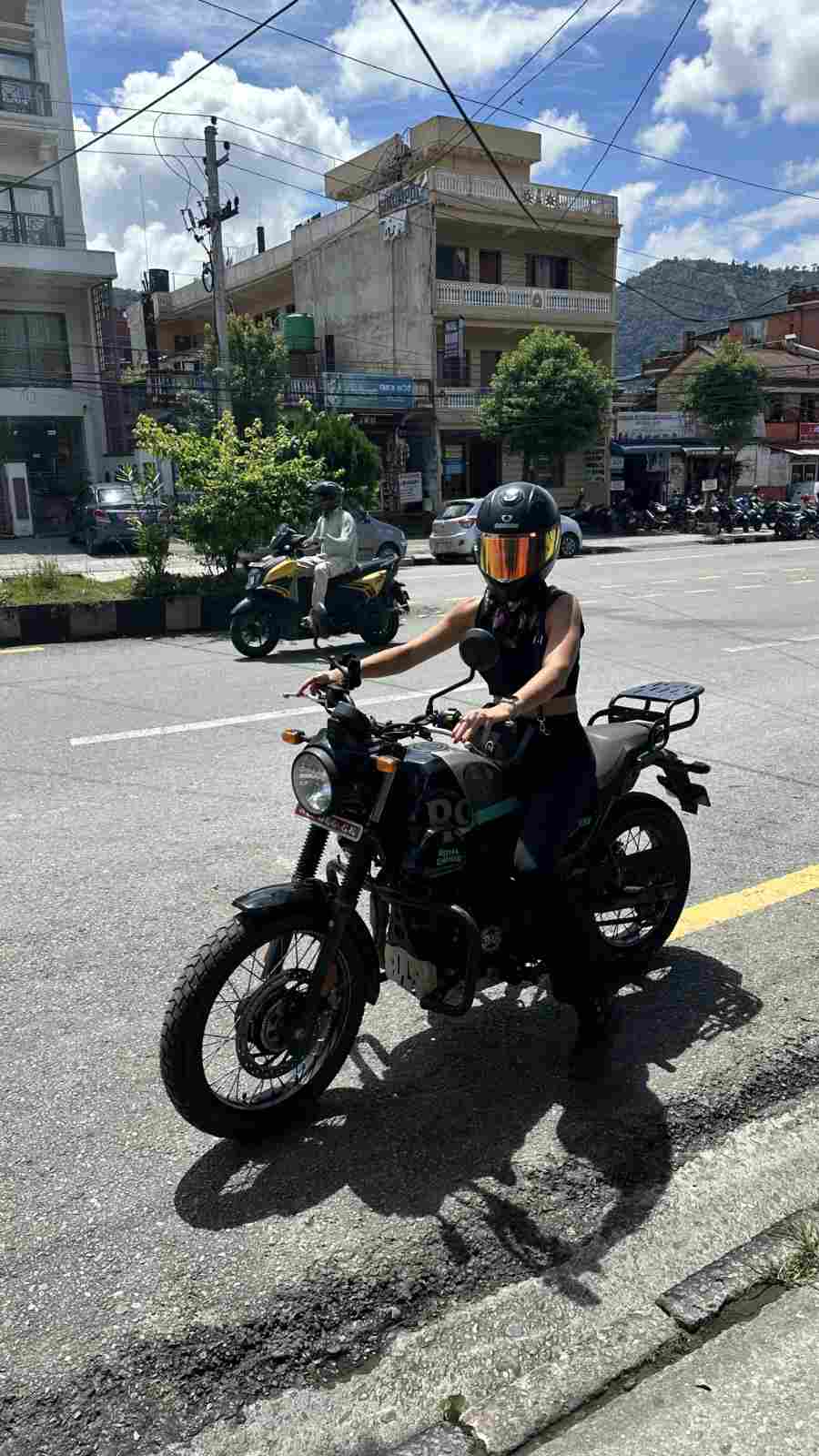
Renting a motorbike in Nepal as a foreigner is straightforward in practice and slightly confusing in documentation, because the rules as written and the rules as enforced do not always match perfectly. This article covers what the law actually requires, what police checkpoints actually check, and what you should carry to avoid a situation where the gap between those two things costs you time, money, or a confiscated bike on the side of a Pokhara highway.
What Nepal's Law Says About Foreign Riders
Nepal's Motor Vehicles and Transport Management Act requires a valid driving licence to operate a motorcycle on public roads. For foreign nationals, Nepal recognises licences issued by their home country under specific conditions, and also recognises International Driving Permits issued by countries that are signatories to the 1949 Geneva Convention on Road Traffic.
The practical summary is this. If your home country is a signatory to the 1949 Geneva Convention, your home licence plus an IDP is the legally recognised combination for riding in Nepal. If your country is not a signatory, or if there is any ambiguity about recognition, an IDP is the document that removes that ambiguity at a checkpoint.
The bottom line for most foreign riders: carry your original home country driving licence and an IDP. Both together. Neither alone is the complete answer the law and the checkpoint officer expect to see.
Do You Actually Need an IDP in Nepal
The honest answer is: you need one if you want to be certain, and you can probably manage without one on the tourist-heavy routes, but the risk of not having it lands entirely on you.
Bike Rental shops in Kathmandu and Pokhara will rent motorbikes to foreign nationals on a home country licence alone. They do this routinely and have been doing it for years. The rental agreement they give you does not require an IDP, and nobody at the rental desk will turn you away for not having one.
The checkpoint is a different situation. Nepal's traffic police run regular checks on the roads leading out of Kathmandu and Pokhara, at the entry points to national park and conservation areas, and on the main highway corridors. What they check varies by officer, by checkpoint, and by day. Some will accept a home country licence and let you through. Some will ask for an IDP. Some will ask for both and look at neither for more than three seconds.
The problem is that you cannot predict which situation you are walking into. On the Prithvi Highway heading out of Kathmandu toward the Pokhara circuit, on the road toward Kalopani and the Mustang approach, on the Trishuli corridor toward Dhunche, there are checkpoints where a foreign rider on a rental bike without an IDP has been turned back, fined, or had the bike detained. These are not daily occurrences and they are not the most common outcome, but they happen often enough that experienced riders and operators consistently recommend carrying the IDP rather than testing the checkpoint's flexibility.
An IDP costs the equivalent of a few dollars to obtain in most countries before you travel. The cost of not having one at the wrong checkpoint is harder to predict.
How to Get an IDP Before You Go
An IDP is not issued by Nepal. It is issued by a motoring authority in your home country before you travel, and it is only valid when carried alongside your original home country driving licence. The IDP alone, without the original licence, is not a valid document.
The issuing body varies by country. In India it is a Regional Transport Office. In the UK it is the Post Office or AA or RAC. In the US it is AAA. In Australia it is your state's motoring club. In most countries the process takes one to five business days, costs the equivalent of USD 10 to USD 25, and requires a passport photo and a copy of your existing licence.
You need a category covering motorcycles. In most countries this is Category A on the licence itself. If your home licence covers motorcycles and the IDP reflects that category, you are covered for geared motorcycles in Nepal. If your licence covers only cars and you are planning to rent a motorcycle, the IDP does not fix that underlying gap.
Get the IDP before you leave. It cannot be obtained in Nepal and cannot be obtained online from a foreign authority while you are already travelling.
What Rental Shops in Kathmandu and Pokhara Actually Ask For
The standard documentation that established rental operators ask for when renting a motorbike to a foreign national is a passport, a home country driving licence, and a deposit. Most ask to hold either the passport or a significant cash deposit for the duration of the rental. Some will accept a photocopy of the passport and hold the cash deposit instead.
They will not routinely ask for an IDP because their business runs without requiring it and because many of their customers do not have one. This does not mean it is not required. It means the liability for not having it sits with the rider at the checkpoint rather than the rental shop at the desk.
A few operators, including those running more structured tour arrangements rather than casual daily rentals, ask to see the IDP specifically. Nepal Moto Tours checks that riders on its fleet have the correct documentation before departure precisely because a checkpoint problem in Upper Mustang or on the Manaslu approach is a significantly more complicated situation than one on the road out of Thamel.
Police Checkpoints: What to Expect
Nepal operates two types of road checkpoints relevant to motorcycle riders. Traffic police checkpoints focus on licensing, registration, insurance, and helmet compliance. Army or police posts on restricted area routes check permits in addition to the above.
On the main riding corridors out of Kathmandu and Pokhara, traffic police checkpoints appear at the valley exit roads, at major junctions, and occasionally as mobile stops on the highway itself. What an officer asks for depends on the officer. The consistent items are:
The bike's registration document. If you are on a rental, this is a document the rental shop should have given you. Check that it is in the bike's document holder before you leave.
Your driving licence. Home country licence in the original. Not a photocopy, not a phone photograph. The physical card.
Your IDP if asked. If you have it, produce it. If you do not have it and the officer asks, the outcome ranges from a warning to a fine to a request to turn back, depending on the officer's assessment of the situation and, frankly, your ability to communicate clearly and remain calm.
Third-party insurance. Nepal requires basic third-party insurance on all motorcycles operating on public roads. Rental shops cover their bikes under their own insurance policy. Confirm this with the rental desk before you leave and ask for a copy of the insurance document to carry with the bike.
On the restricted area routes, the checkpoints at Kagbeni for Upper Mustang and equivalent entry points for other restricted areas check your Restricted Area Permit and ACAP in addition to the above. These are serious checks with no flexibility. A foreign rider without the correct permits at Kagbeni does not enter Upper Mustang, regardless of how persuasively they argue the case.
Helmet Rules and What the Checkpoints Actually Enforce
Nepal requires a helmet for both rider and pillion. The standard required is a full-face or open-face helmet meeting basic safety certification. Checkpoints on the main corridors out of Kathmandu and Pokhara enforce this consistently, particularly in the morning hours when checkpoint activity is highest.
Riders heading out of the city without a helmet are the most reliably stopped category at traffic checkpoints. The fine is modest by international standards, but the stop itself costs time and draws attention to the rest of your documentation.
Wear the helmet from the rental shop. Not from the edge of the city. From the rental shop.
Insurance: What It Covers and What It Does Not
The third-party insurance that comes with a rental motorcycle in Nepal covers damage or injury caused to a third party, meaning another person or their vehicle, in an accident. It does not cover damage to the rental bike itself, medical costs for the rider, or theft of the bike or its contents.
The rental deposit you pay when collecting the bike is the rental shop's security against damage to their machine. The amount varies between NPR 10,000 and NPR 50,000 or more depending on the operator and the bike's value.
Foreign riders planning a serious circuit, particularly one involving technical terrain where a low-speed fall is a realistic possibility rather than an extraordinary event, should check whether their home travel insurance covers motorcycle riding abroad. Many policies exclude motorcycles above 125cc or exclude motorcycles entirely unless the activity is specifically added. Read your policy before you leave home, not after you have had a fall during your motorbike tour to upper Mustang track and are wondering whether you are covered.
Common Checkpoint Situations and How to Handle Them
The officer asks for your IDP and you do not have one. Remain calm, produce your home country licence, and explain clearly that you are a tourist, that this is a rental vehicle, and that you hold a valid licence in your home country. Having the rental agreement and your passport accessible helps. The outcome is not guaranteed but a calm, cooperative interaction produces better results than an argument about whether an IDP is strictly required.
The officer wants to see the bike's registration and you cannot find it. This is the situation the rental shop should have prevented by ensuring the document was in the bike before handover. If it is missing, the checkpoint can detain the bike. Call the rental shop immediately. Established operators have dealt with this before and can usually resolve it, but the resolution takes time you did not plan to spend on the side of the road.
The checkpoint is asking for a permit for a route you believed was open without one. Nepal has restricted areas and controlled zones whose boundaries are not always obvious from a map. The road toward Tsum Valley, the approach to certain sections of the Manaslu Circuit, and anything north of Kagbeni require permits that general tourist information does not always make clear. Confirm the permit requirements for your specific planned route with a Kathmandu or Pokhara operator before departure, not at the checkpoint where the requirement becomes apparent.
The Specific Situation for Indian Riders
Indian nationals riding in Nepal have a distinct documentation situation from most other foreign nationals because Indian licences are not technically foreign licences in Nepal's framework. Nepal and India have a treaty-based relationship that means Indian nationals are not strictly foreign nationals for the purposes of Nepal's road law.
In practice, Indian riders on Indian licences are generally waved through traffic checkpoints without the IDP question that arises for riders from other countries. The original Indian driving licence covering motorcycles is the document to carry. An IDP is not routinely required and rarely asked for.
The permit requirements for restricted areas apply to Indian nationals in the same way they apply to other international visitors. No visa is required for Nepal entry, but the Upper Mustang Restricted Area Permit is required for the zone north of Kagbeni regardless of nationality.
What to Carry: A Practical Checklist
Before leaving the rental shop and before reaching the first checkpoint, confirm you have the following documents accessible, not buried in a bag under your luggage:
- Original home country driving licence covering motorcycles. Physical card.
- International Driving Permit, if you have obtained one. Carry it alongside the licence, not separately.
- Passport or a certified copy. Some checkpoints ask for it and some rental shops ask to hold the original, in which case carry a certified copy.
- Bike registration document. From the rental shop. In the bike's document holder.
- Rental agreement. Useful at checkpoints where the officer wants to confirm the bike is legitimately rented and not stolen.
- Insurance document. Confirming the bike is insured for third-party liability.
- Restricted area permits. If your route requires them, carry originals, not photocopies.
The Practical Summary
Renting a motorbike in Nepal as a foreigner is something thousands of riders do every year without incident. The documentation requirements are not complex, but the gap between what the rental shop asks for and what the checkpoint might ask for is real enough to be worth closing before you leave home.
Get an IDP if you are planning for a motorbike tour in Nepal. Carry your original driving licence. Confirm the bike's registration is in the holder before you ride away. Check your travel insurance covers motorcycle riding at the engine size you are renting. Know the permit requirements for your route before you reach the checkpoint where they are enforced.
The checkpoint that causes the most trouble is always the one the rider did not expect. Nepal's main riding corridors have enough of them that preparation is more reliable than optimism.
Riding with Nepal Moto Tours means your bike's documentation is confirmed correct before departure and your route permits are processed in advance. Get in touch if you want to plan a circuit without the checkpoint uncertainty.