Every rider has a list. It usually starts with the roads they have ridden and expands toward the ones they intend to. The disagreements about which roads belong on a global list are part of what makes the conversation worth having, because no two lists are identical and the reasoning behind each choice reveals something about what the person making it actually values in a motorcycle road.
This list is built on a specific set of criteria: roads that reward the act of riding rather than simply providing transport, roads whose character is produced by the landscape they pass through rather than the engineering that built them, and roads whose reputation among experienced riders is earned rather than manufactured by tourism marketing. Technical quality counts. Cultural context counts. What you see from the saddle counts. How the road makes you feel when you finish it counts most.
Ten roads. All of them are worth the flights required to reach them.
1. Stelvio Pass, Italy
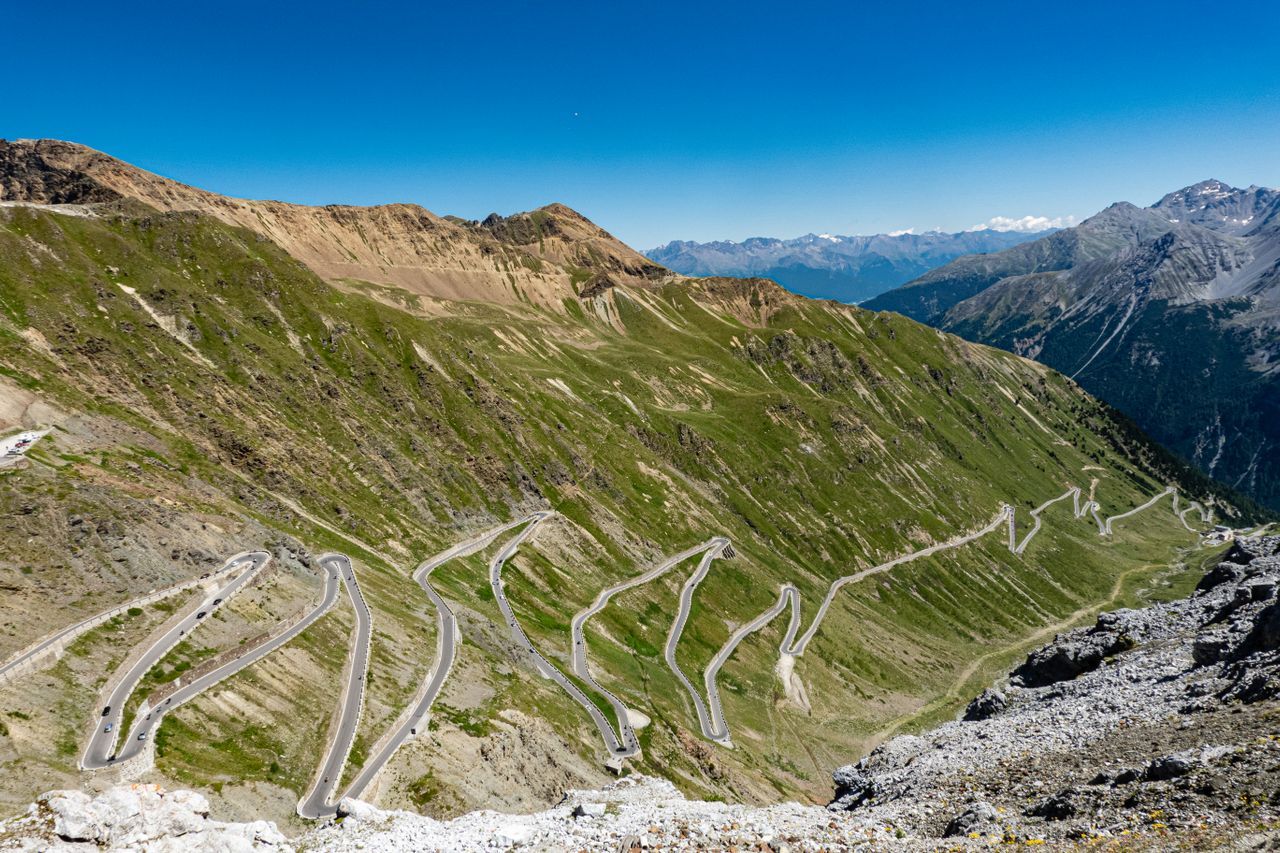
The Passo dello Stelvio in northern Italy is the road that appears first on most European lists and near the top of most global ones, and the 48 hairpin bends ascending to 2,757 metres above sea level are the specific reason why. The road was built by Austrian military engineers in the 1820s and has not been significantly modified since, which means it was designed for what it was rather than for the traffic it now carries.
The Stelvio is a paved road in perfect condition, engineered through a landscape of extraordinary Alpine drama, at a gradient and geometric density that produces the riding experience its reputation describes. Unlike many famous roads whose reputation exceeds the riding, the Stelvio genuinely earns every comparative superlative applied to it. The sequence of hairpins on the eastern approach, stacked visibly above each other from the valley, is the view that has appeared in more motorcycle photography than any other road surface in Europe.
What distinguishes the Stelvio from a merely spectacular road is the consistency of its reward. Every section delivers. The view from the summit at the Lombardy-Trentino-South Tyrol border looks three ways simultaneously into different landscapes and the road down each side is the equal of the road up.
Location: Lombardy/South Tyrol, northern Italy
Best season: June to September, open after snow clears in late spring
2. The Kali Gandaki Gorge to Upper Mustang, Nepal
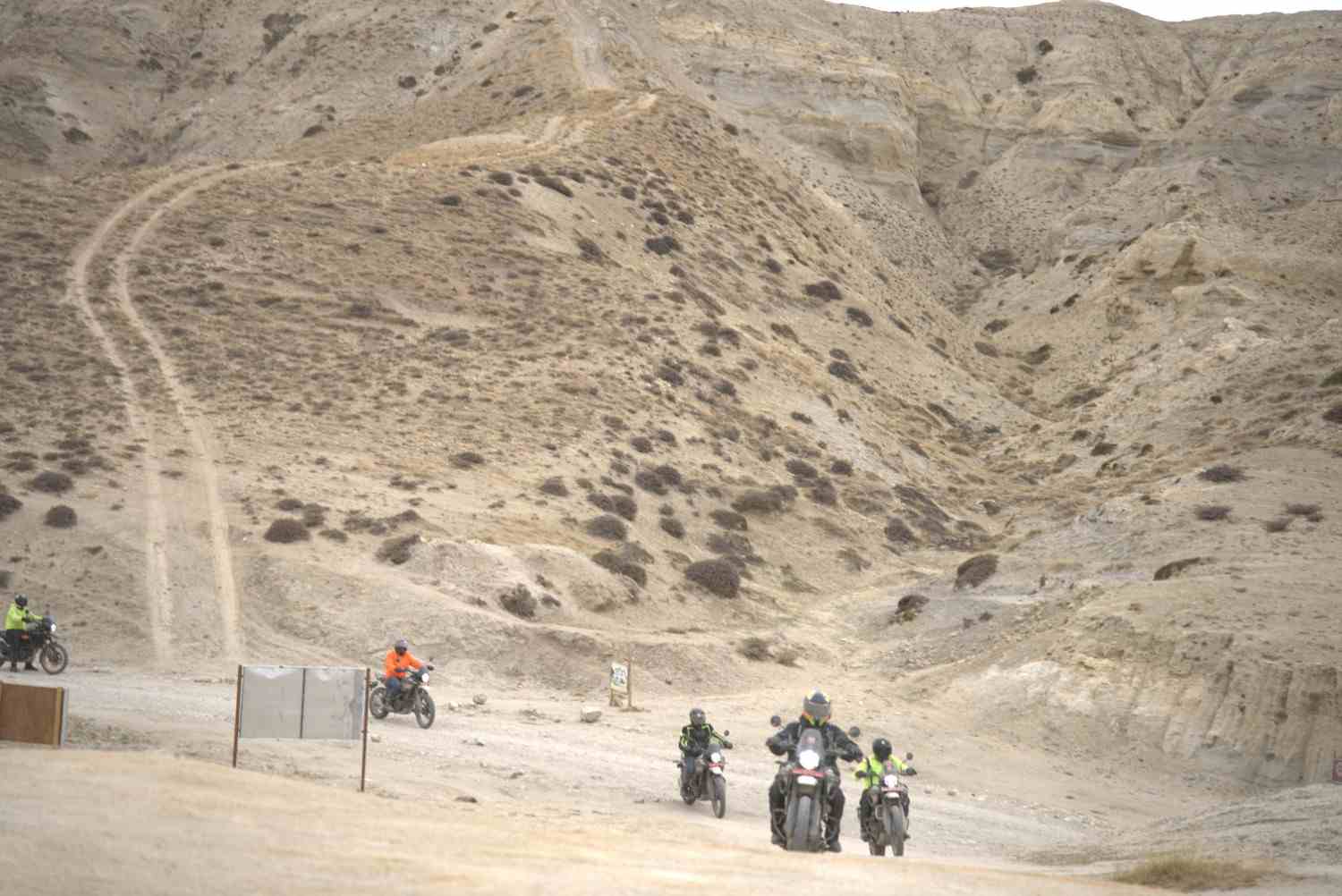
The road north from Pokhara through the Kali Gandaki valley to the Upper Mustang plateau is the best motorcycle road in Asia by the assessment of most riders who have completed it, and makes a credible argument for the same title globally.
The case begins with geography. The Kali Gandaki gorge is technically the world's deepest river valley, running between Dhaulagiri at 8,167 metres to the west and Annapurna I at 8,091 metres to the east. The road at the valley floor passes between two of the world's highest peaks in a corridor where the mountains fill the sky rather than appearing on the horizon. Above Kagbeni, through the Upper Mustang Restricted Area Permit checkpoint, the road continues onto the high Tibetan plateau of the ancient Kingdom of Lo, a medieval walled city at Lo Manthang sitting at 3,840 metres surrounded by ochre canyon systems and cave cities carved into cliff faces by civilisations predating the kingdom itself.
The riding is technically demanding rather than merely dramatic. Loose river gravel, genuine ford crossings, the sustained Kali Gandaki gorge wind that builds from mid-morning and requires active management through the afternoon section, and the altitude above Kagbeni that reduces both engine output and rider performance in ways that lower-altitude riding does not prepare you for. The road demands something from you and returns the plateau, the walled city, and the Tiji Festival in May in proportion to what the demand was. This makes the Upper Mustang motorbike trip more fun and challenging at the same time.
The permit system that restricts access to Upper Mustang at USD 50 per day is the mechanism that has preserved the road's character and Lo Manthang's cultural integrity. The restriction is part of what the road is.
Distance from Pokhara to Lo Manthang: approximately 260km
Best season: March, April, May (Tiji Festival), October
3. Trollstigen, Norway
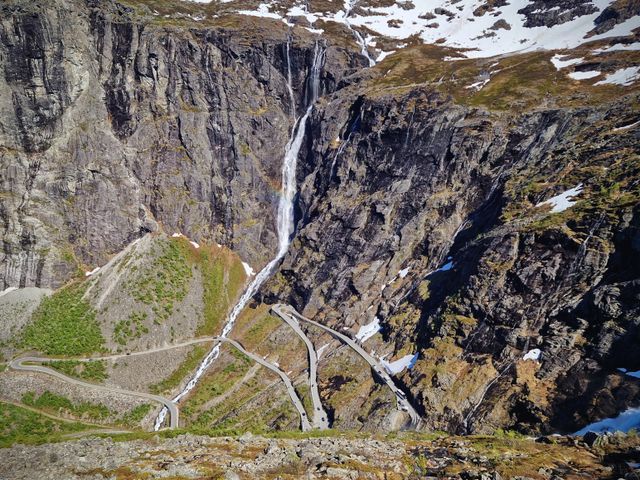
Norway's Trollstigen, the Troll's Path, is an 11-kilometre mountain road that climbs through 11 hairpin bends at gradients reaching 12 percent in a landscape of waterfalls and vertical mountain walls that the road cuts through rather than around. The engineering required to place a road in this specific terrain at this gradient is visible from the road itself, which adds an industrial dimension to the natural drama rather than concealing it.
The Trollstigen's character is concentrated rather than sustained. The 11 kilometres of the climb are the point and they are extraordinary, but the road's place on a global list rests on those kilometres rather than the wider touring territory that the road connects. Riders who expect a sustained day's riding on the level of the Stelvio or the Kali Gandaki gorge find the Trollstigen a shorter and more intense experience than those roads rather than a comparable one.
What makes it global-list worthy is the specific combination of gradient, geometry, waterfall, and vertical landscape that no other road in Europe or elsewhere fully replicates. The photographs do not exaggerate it.
Location: Møre og Romsdal, western Norway
Best season: May to October, closed in winter
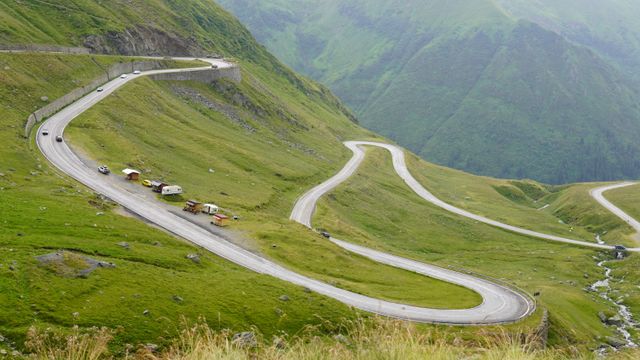
4. Transfăgărășan Highway, Romania

Romania's Transfăgărășan was built by Nicolae Ceaușescu between 1970 and 1974 as a strategic military road across the Fagaras Mountains and has since become one of the most celebrated motorcycle roads in Europe on the strength of a single Top Gear episode and the subsequent experience of every rider who went to verify the claim and discovered it was accurate.
The road climbs to 2,042 metres across a landscape of glacial lakes, exposed ridge sections, and tunnel passages through the highest points of the Fagaras range. The surface quality, the geometry, and the mountain scenery are all at the level that the description suggests. The road is not one of the most famous in the world because of television. The television episode found a road that was already exceptional and pointed at it.
What distinguishes the Transfăgărășan from better-known Alpine roads is its relative undiscovery at the time of its reputation's creation and the specific character of Romanian mountain scenery, which operates at a scale and wildness that the more developed Alps no longer produce. The bears that cross the road near the Balea Lake section are not a tourism embellishment.
Location: Fagaras Mountains, central Romania
Best season: July to October
5. Pamir Highway, Tajikistan
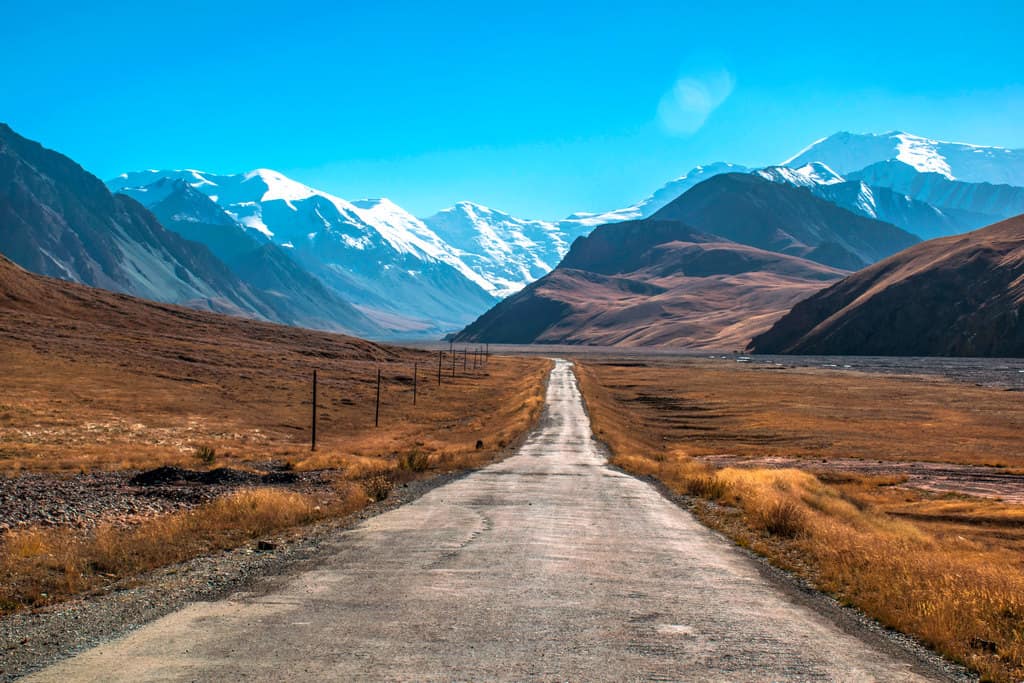
The M41, known as the Pamir Highway, runs from Dushanbe in Tajikistan to Osh in Kyrgyzstan across the Wakhan Corridor and the eastern Pamirs at elevations that regularly exceed 4,000 metres and peak above 4,600 metres at the Ak-Baital Pass. It is one of the highest roads in the world, one of the most remote, and by the consistent report of the experienced adventure riders who have completed it, one of the most significant.
The Pamir Highway is not a road in the engineering sense that the Stelvio or the Trollstigen is a road. It is a track across the Pamir plateau that has been maintained to the standard that the geography and the resources of the countries it crosses permit, which means it is variable, sometimes rough, and in sections where the track crosses the plateau's river systems, a genuine off-road navigation challenge. The Wakhan Corridor section, running along the Afghan border with views into Afghanistan's Wakhan Corridor across the Panj River, is one of the most historically and geographically singular riding environments on earth.
What the Pamir Highway provides that no more developed road can replicate is the experience of genuine remoteness at altitude, where the distance between any two points of support is measured in days rather than hours and the self-sufficiency the route demands is as much part of the experience as the scenery.
Distance: approximately 1,200km from Dushanbe to Osh
Best season: June to September
6. Karakoram Highway, Pakistan
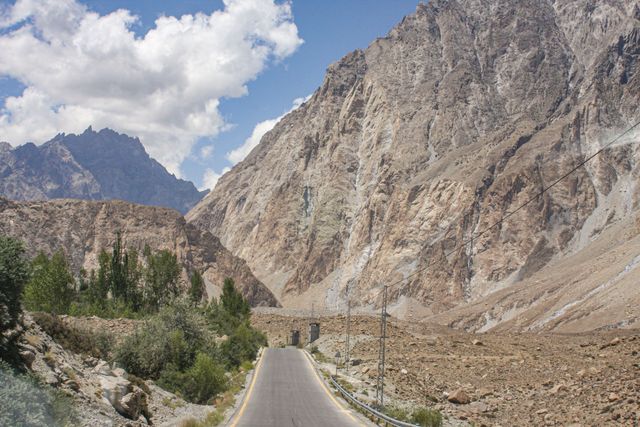
The KKH runs 1,300 kilometres from Islamabad to the Chinese border at Khunjerab Pass, passing through the confluence of the Himalayan, Karakoram, and Hindu Kush ranges in a landscape that concentrates more extreme vertical terrain within a single road corridor than anywhere else on earth. Rakaposhi at 7,788 metres is visible from the road. The Attabad Lake, formed by a 2010 landslide that dammed the Hunza River, sits alongside the rebuilt road in a turquoise that photographs consistently under-represent.
The Karakoram Highway is on this list despite its logistical complexity rather than because of its accessibility. The security situation in certain regions requires current assessment before travel. Some sections require a police escort. Permit requirements vary by passport nationality and by the specific districts the route crosses. None of these complications are insurmountable. All of them require research and planning that the Stelvio or the Trollstigen do not.
For the rider willing to absorb the preparation, the KKH delivers a road of genuine global significance through terrain that has no equivalent anywhere the road is less complicated to reach.
Distance: approximately 1,300km Islamabad to Khunjerab Pass
Best season: May to September
7. Grossglockner High Alpine Road, Austria
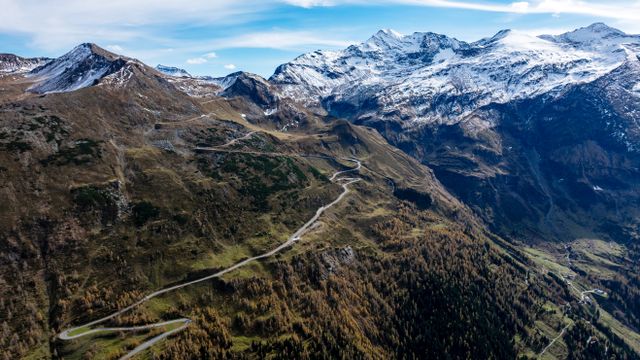
The Grossglockner Hochalpenstrasse is the road that the Austrian government built between 1930 and 1935 specifically as a scenic mountain route, which makes it unique on this list as a road designed for the purpose it serves rather than adapted to it. The 48-kilometre toll road climbs to 2,504 metres at the Edelweiss-Spitze viewpoint, passes the Franz-Josefs-Höhe glacier observation point overlooking the Pasterze Glacier and the 3,798-metre Grossglockner peak, and descends through a sequence of Alpine meadows and forested switchbacks that the approach from the south provides in one direction and the north approach provides in reverse.
What the Grossglockner offers that the Stelvio does not is the glacier. The road's position relative to the Pasterze Glacier, the longest glacier in the Eastern Alps, gives it a visual dimension that pure mountain road geometry cannot provide alone. The glacier itself has retreated significantly since the road was built, which is visible in the photographs along the observation route showing its historical extent. The current glacier is smaller than the road was built to view and continues to retreat, which adds an urgency to visiting it that roads without environmental change dynamics do not carry.
Location: Salzburg/Carinthia, Austria
Best season: May to October, closed in winter
8. Chapman's Peak Drive, South Africa
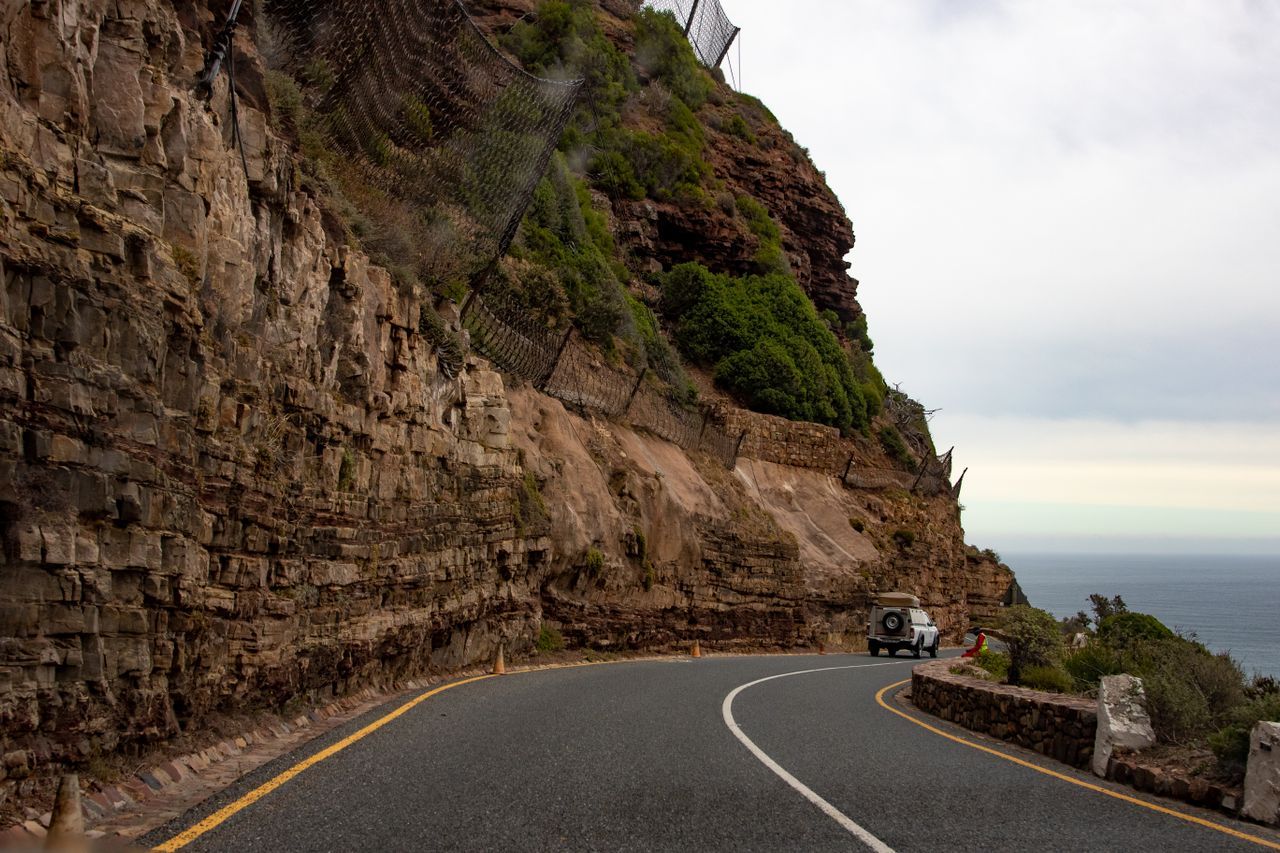
Chapman's Peak Drive on the Cape Peninsula south of Cape Town is the road that demonstrates that the best motorcycle roads are not exclusively in mountains. The 9-kilometre coastal route was carved into the vertical cliff face of Chapman's Peak between 1915 and 1922 and hugs the Atlantic Ocean at heights that the view from the road makes vertigo-inducing rather than simply impressive.
The specific quality of Chapman's Peak Drive is the combination of ocean and cliff that no Alpine or Himalayan road produces. The road is cut into rock that drops hundreds of metres to the ocean below, and the view from each corner looks simultaneously up at the cliff above and down at the Atlantic swell breaking on the rocks far below. The light on the ocean in the late afternoon, when the Cape sun angles across the water from the northwest, is the specific visual condition that the road's western-facing position on the Cape produces and that the morning visitors miss.
The drive passes through several tunnels where the rock required cutting rather than road placement, and emerging from each tunnel into the next section of cliff-face road and ocean view is the experience that the road repeats in variation across its nine kilometres.
Location: Cape Peninsula, Western Cape, South Africa
Best season: October to April (Southern Hemisphere summer)
9. Going-to-the-Sun Road, Montana, USA
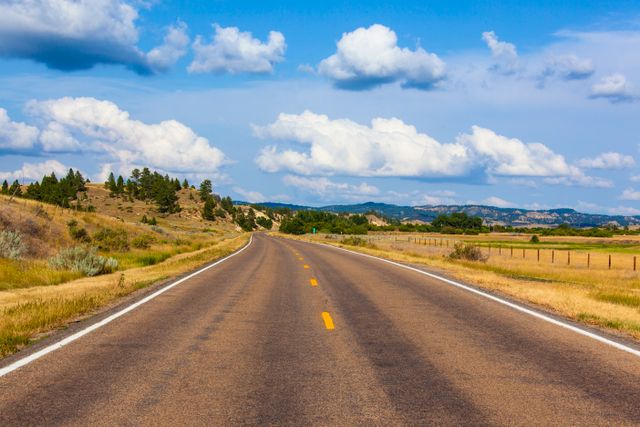
Going-to-the-Sun Road in Glacier National Park, Montana, crosses the Continental Divide at Logan Pass at 2,026 metres over 80 kilometres of road that the National Park Service built between 1921 and 1932 through terrain that engineers of the era described as impossible. The road is carved into the Garden Wall, the exposed ridge that forms the park's central spine, and the section crossing the headwall above the valley below is the specific passage that the road's reputation rests on.
The Going-to-the-Sun Road is on this list for two reasons beyond its scenery, which is exceptional. First, the road is closed to vehicles over a certain length and weight, which means it is one of the few major scenic roads in the United States where motorcycles experience the road in better proportion to the landscape than larger vehicles do. The road was not designed for full-size RVs and excludes them for physical rather than policy reasons.
Second, the wildlife density in Glacier National Park is the highest of any road on this list. Mountain goats on the road surface at Logan Pass are a standard rather than an exceptional occurrence. Grizzly bears are present in the park in numbers that make the drive through the park valley sections an active wildlife observation as well as a scenic road.
Location: Glacier National Park, Montana, USA
Best season: Late June to mid-September, when snow clears
10. Hai Van Pass, Vietnam
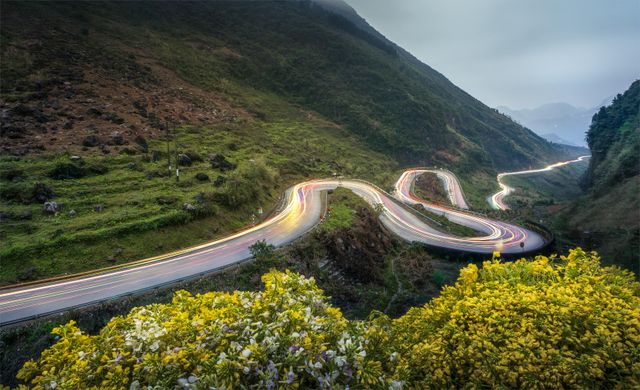
The Hai Van Pass on Vietnam's central coast, between Da Nang and Hue, is the road that reappears most often in conversations about Southeast Asian motorcycle touring, and the 21-kilometre section of Highway 1 that crosses the pass at 496 metres is the specific reason why.
The pass road separates the climate zones of northern and central Vietnam as decisively as any geographical feature on the country's coast. The southern approach from Da Nang climbs from sea level through increasingly dramatic coastal scenery. The summit gives a view down to the ocean on both sides of the peninsula and back toward Da Nang's bay to the south. The northern descent toward Lang Co and the approach to Hue crosses a different landscape from the southern approach, which is the specific reward of a pass rather than a viewpoint.
Hai Van is not technically demanding. The road is paved, the gradient is manageable, and the pass is short enough that the difficulty of the riding is never what a rider is managing. What it offers is the experience of a road that changes the landscape abruptly rather than gradually, that provides a view genuinely worth stopping for at the top, and that bookends the ride with two different versions of Vietnam's coastal scenery. These are the qualities that make a road worth riding rather than simply taking.
Location: Thua Thien Hue/Da Nang, central Vietnam
Best season: February to August, avoiding the northern wet season
What Makes a Road Worth the Ride
The ten roads above share a quality that is harder to name than the specific features of each one. They are roads where the riding is what you are doing rather than what you are using to get somewhere. The motorcycle is not a transport on these roads. It is the correct relationship to the landscape they pass through.
The Kali Gandaki gorge rewards a motorcycle because the wind, the altitude, and the loose surface all enter the riding directly rather than being filtered through glass and climate control. Chapman's Peak rewards a motorcycle because the cliff-face and the ocean are present at arm's length rather than through a car window. The Stelvio rewards a motorcycle because 48 hairpin bends are genuinely better ridden than driven.
The best motorcycle roads in the world are the ones that make the case for the motorcycle as the right tool for the specific terrain they cross. All ten of these do.
Upper Mustang is accessible on a guided motorcycle tour in Nepal with Nepal Moto Tours from Pokhara. Permits, mechanical support, and local knowledge are included. Get in touch to plan the route.