

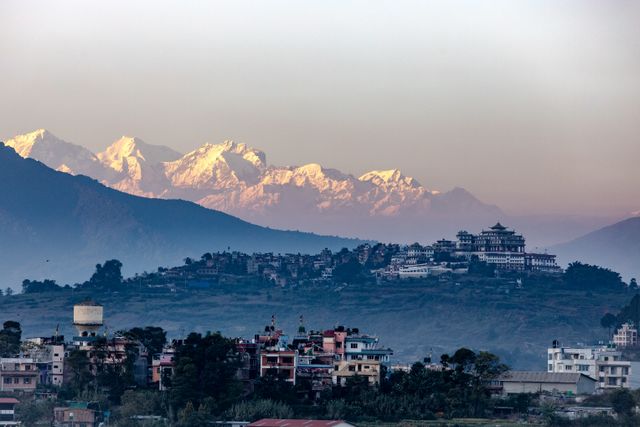
Ask most riders what they want to see in Nepal and the answers come quickly. Upper Mustang. The Annapurna Circuit. Pokhara. Chitwan. These are the places that the itineraries are built around, and they deserve the attention they get. But Nepal is a country that rewards the rider who looks past the first page of results, and the places that reward that looking are not consolation prizes for missing the famous ones. Several of them are better.
This article covers the Nepal motorcycycle tour destinations that experienced riders mention when the conversation moves past the obvious ones. Places that are harder to find in the standard tour content, harder to reach on some routes, and in most cases more rewarding for both the riding and the encounter they produce when you get there.
Bandipur
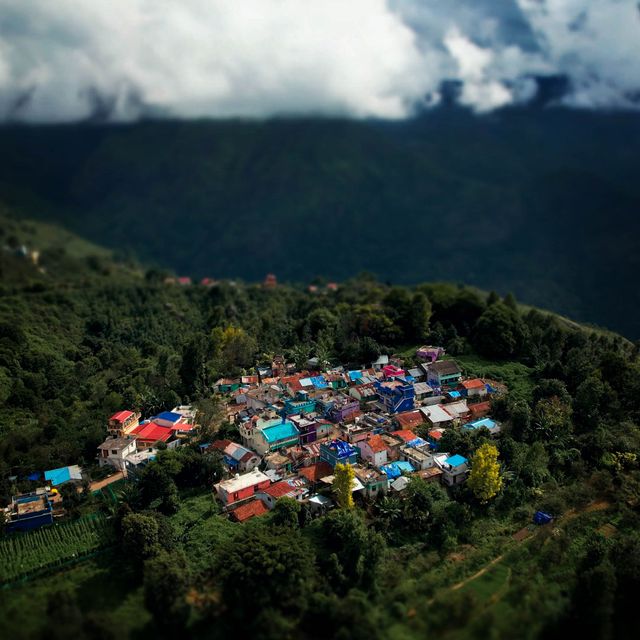
Bandipur sits on a ridge above the Marsyangdi valley at 1,030 metres, eight kilometres off the Prithvi Highway via a switchback approach that most riders pass without noticing the turning. It is one of the few genuinely preserved Newari trading towns in Nepal, its pedestrianised main street lined with traditional architecture that the lower valley towns lost to roadside development decades ago.
The riding to Bandipur is not technical, but the approach road is good enough to be genuinely enjoyable, and the town's position above the valley floor gives it Himalayan views that include Manaslu, Himalchuli, and Baudha Himal on clear mornings. The sunrise from the main street, with the peaks catching light before the valley below has emerged from darkness, is the kind of sight that riders who stop for it build overnight stays around on subsequent trips.
Most Nepal motorcycle circuits use Bandipur as an overnight stop on the Kathmandu-Pokhara route rather than as a destination in its own right, which means the town is usually encountered briefly and remembered well. A rider who gives it two nights instead of one and explores the surrounding ridgeline tracks on the second day finds a Nepal that the highway does not show.
Distance from Kathmandu: Around 140km Road condition: Paved throughout, including the Bandipur approach Best season: October to April
Palpa (Tansen)
_1789327336.jpg)
Palpa is the town that most riders on the Siddhartha Highway pass through without stopping long enough to understand what they are passing through. A Newari hill town at 1,370 metres above the Kali Gandaki plain, with a historic centre of narrow lanes, traditional architecture, and a metalwork craft tradition that predates the tourism economy by centuries.
The dhaka weaving and dhaulagiri metalwork that Palpa is known for in Nepali cultural circles are not tourist productions. They are working industries in which families have specialized for generations, and the workshops in Palpa's bazaar area operate on their own schedule with an indifference to whether a visitor is watching that distinguishes them from the craft demonstrations that tourism produces elsewhere.
The riding from Butwal to Palpa is the best section of the Siddhartha Highway, climbing through switchbacks that the highway's designers clearly enjoyed specifying, with the Terai plains opening below and the Himalayan range becoming visible on clear days as altitude increases. Most riders on the Siddhartha are making time rather than enjoying it, and the ones who stop in Palpa for a night consistently describe it as the decision that rescued the route.
The Rani Mahal below Palpa, a palace built by a local governor in the late nineteenth century in a style that mixes Mughal and Neoclassical influences above the Kali Gandaki River, is accessible by a descent from the town and warrants the detour. It is under-visited relative to its architectural interest and has a quality of quiet that the more famous heritage sites in Nepal's tourist circuit rarely produce.
Distance from Pokhara: Around 85km via Waling and Syangja Road condition: Paved throughout Best season: October to May
Mustang Foothills South of Kagbeni
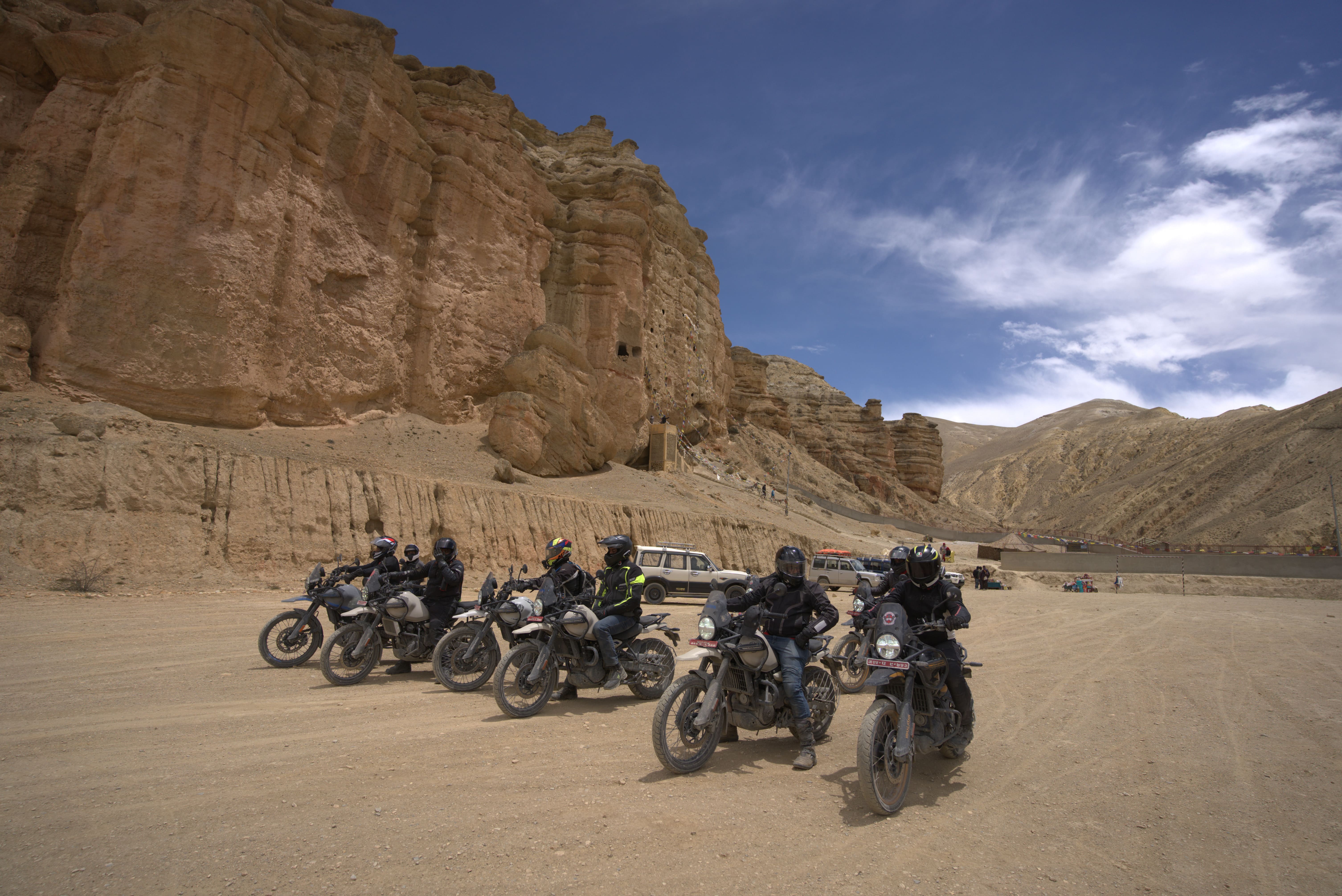
The Mustang district south of the Kagbeni checkpoint, in the area around Marpha, Tukuche, and Lete, is one of the most consistently undervalued riding sections in Nepal. Riders on the way to Upper Mustang treat it as transit to the restricted area. Riders who are not going to Upper Mustang rarely consider it at all. Both groups miss something worth stopping for.
Marpha is an apple-growing village at 2,670 metres whose white-washed stone houses and covered lanes produce an architectural quality unlike anything else in the lower Kali Gandaki. The apple distillery in Marpha, producing a local brandy that has been a rider and trekker staple for decades, is the obvious stop. The less obvious stop is the Dumba Lake above the village, a short trail ascent from the main road that delivers a view of the Nilgiri and Dhaulagiri massifs from an elevation that the valley floor road does not provide.
Tukuche has the ruins of the Thakali trading houses that once made this stretch of the Kali Gandaki the centre of the Nepal-Tibet salt trade. The trade is long finished but the architecture of the merchant houses, larger and more ambitious than anything the current village economy would produce, gives the town a ghost of its former importance that a rider who knows what to look for finds readable in the buildings.
The wind in this section of the Kali Gandaki builds from mid-morning in the same pattern as the Upper Mustang section further north, and riders who learn to use the morning window before the afternoon gusts arrive can cover this stretch in conditions that make it one of the more enjoyable paved-to-gravel transitions in Nepal.
Distance from Pokhara: Around 160km to Marpha via Jomsom Road condition: Sealed to Jomsom, gravel and dirt track on the Kagbeni approach Best season: March to May, September to November
Rara Lake, Karnali Zone
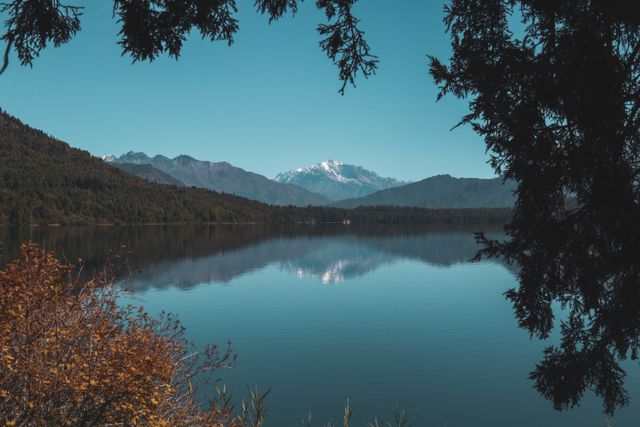
Rara Lake is Nepal's largest lake and, by most measures, its most visually extraordinary. A glacial lake at 2,990 metres in the remote Karnali zone of far western Nepal, surrounded by Rara National Park and with no road access until relatively recently, it receives a fraction of the visitors that Phoksundo Lake in Dolpo attracts despite producing a landscape experience that stands comparison with anything in Nepal.
The approach from Surkhet via the Karnali Highway is long, genuinely difficult in sections, and passes through a part of Nepal that most riders from Kathmandu and Pokhara have not explored. The road quality varies from maintained gravel to rough track, and the fuel planning required for this route demands more attention than the better-known circuits. A rider who arrives at Rara having managed the approach correctly has earned the view in a way that easier destinations do not require.
The lake itself changes colour with the light and season in a range that covers turquoise, cobalt, and a particular shade of grey in overcast conditions that is quietly dramatic in a way the turquoise photographs do not represent. The national park around it, protecting Nepal's largest lake in its original sub-alpine forest environment, produces wildlife encounters and a quality of silence that riders who have only ridden Nepal's more trafficked routes find unexpectedly affecting.
The communities around Rara are Thakuri and Chhetri in the lower areas, with a mixed cultural character that is distinct from both the Tibetan Buddhist culture of Upper Mustang and the Newari culture of the Kathmandu Valley. The remoteness of the region has preserved both the environment and the cultural life in conditions that the western Nepal government is beginning to develop for tourism, which makes the current period the best time to visit before that development changes what is there to find.
Distance from Surkhet: Around 180km on rough road Permit required: Rara National Park entry permit Best season: April to June, September to October Recommended bike: Royal Enfield Himalayan 411, Hero Xpulse 200/210
Nuwakot
Nuwakot is forty-five kilometres northwest of Kathmandu and receives a small fraction of the cultural tourism that the capital's Durbar Squares attract, despite having a palace complex of comparable historical importance and a hill setting that the valley floor cannot match.
The Nuwakot Durbar, a seven-storey palace built by Prithvi Narayan Shah in the eighteenth century as part of the campaign that unified Nepal, stands in better condition than most of its Kathmandu Valley equivalents and in a landscape context, hillside village, terraced fields below, Himalayan range visible on clear days, that the valley's urban setting cannot provide.
The riding from Kathmandu to Nuwakot on the road through Kakani is good enough to be a purpose in itself. The Kakani ridge at 2,073 metres provides one of the best accessible Himalayan panoramas within a half-day ride of Kathmandu, covering the range from Langtang Himal through Ganesh Himal to the Annapurna and Manaslu massifs on clear winter mornings. The descent from Kakani to Nuwakot is the kind of mountain road that riders who know it use as a benchmark for road enjoyment within the valley circuit.
Most riders visiting Kathmandu treat Nuwakot as a day trip option that they note and do not take. The ones who do take it, particularly in the October-to-February window when visibility is best and the Kakani ridge road is at its clearest, tend to put it near the top of the list when asked what surprised them about Nepal.
Distance from Kathmandu: Around 70km Road condition: Paved throughout, with good quality mountain road on the Kakani section Best season: October to February for Himalayan views
Manaslu Base Camp Approach, Gorkha District
The Gorkha district is known to most visitors for its town's connection to Prithvi Narayan Shah and the Gurkha regiments, which are well-documented. What is less documented is the motorcycle access toward the Manaslu Base Camp approach from Arughat, and the riding character of the route through the lower Budi Gandaki valley that connects Gorkha district to the Manaslu Circuit proper.
The road from Arughat north toward Soti Khola follows the Budi Gandaki River through a gorge whose walls are close enough and high enough that direct sunlight reaches the road surface for only a few hours each day in the deeper sections. The riding surface changes from sealed road to river gravel to rocky track over the course of the approach, and the technical sections require genuine off-road competence rather than careful road riding.
The cultural context along this approach is primarily Gurung and Ghale in the lower sections, transitioning toward the Tibetan-influenced communities of the upper Manaslu region as the valley narrows and altitude increases. The Gurung cultural landscape around Gorkha, with its terraced hillside villages and the distinctive wooden architecture of the mid-hills, is underrepresented in Nepal's motorcycle touring content relative to its quality as a riding and cultural destination.
Gorkha town itself, with the hilltop Gorkha Durbar above it and the bazaar town below, deserves more time than most riders give it on the way to or from the Manaslu Circuit approach. The durbar complex and its setting above the mid-hill landscape is among the better historical sites accessible from a Nepal motorcycle circuit.
Distance from Kathmandu: Around 140km to Gorkha, then 50km to Arughat Road condition: Paved to Arughat, rough track beyond Best season: October to November, March to May Recommended bike: Hero Xpulse 200/210, Royal Enfield Himalayan
Langtang Valley Approach
The Langtang region north of Kathmandu is the closest Himalayan valley to the capital and, for that reason, the one that most riders treat as a day trip option or a rest-day trekking destination rather than a motorcycle route in its own right. This is a mistake.
The road from Kathmandu to Syabrubesi, the main settlement at the Langtang valley's lower end at around 1,460 metres, covers around 120 kilometres of mountain road that includes some of the best technical sections accessible from the capital without a long transit day. The route via Trishuli and Dhunche climbs through mid-hill terrain that is less dramatic than the Annapurna approaches but technically more interesting than the Prithvi Highway, with road surfaces that mix sealed tarmac with sections of rock and gravel that keep a rider engaged across the full distance.
Syabrubesi itself is a modest town that serves as the trekking gateway to Langtang, Gosainkunda, and the Tamang Heritage Trail. For a motorcycle rider, it is a reasonable overnight base for exploring the surrounding Rasuwa district rather than a destination to rush through. The road toward the Rasuwagadhi border crossing with Tibet passes close enough to be visible from Syabrubesi and gives the area a frontier character that distinguishes it from more purely trekking-oriented gateway towns.
The 2015 earthquake that devastated parts of the Langtang valley affected the road infrastructure as well as the communities above Syabrubesi, and some sections above the town remain more challenging than their pre-earthquake state. This makes the Langtang approach a route that requires current local information before departure rather than reliance on older trip reports.
Distance from Kathmandu: Around 120km to Syabrubesi Road condition: Mixed paved and gravel; some rough sections above Dhunche Best season: March to May, October to November Recommended bike: Royal Enfield Himalayan 411
Ilam and the Eastern Tea Hills
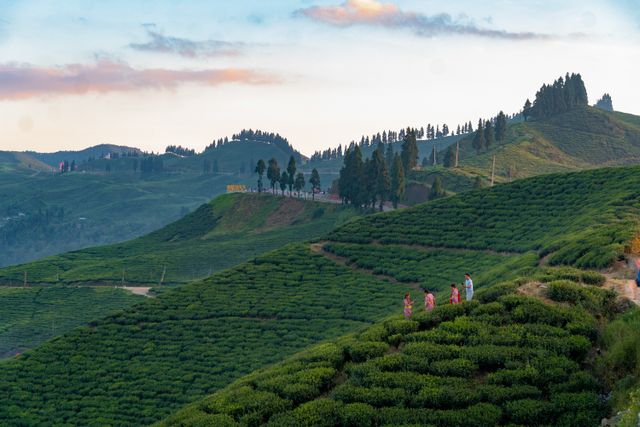
Eastern Nepal receives almost no attention in the motorcycle touring content that covers the country, and the reason is primarily geographic. The famous routes are all in the north and west. Ilam and the rolling tea-growing hills of the eastern Mechi zone sit on the other side of the country, two hard days from Kathmandu and most of a day from Pokhara, in a landscape that has nothing in common with the Himalayan desert character that defines Upper Mustang and Ladakh in most people's understanding of what Nepal looks like.
What the eastern tea hills deliver instead is a different kind of extraordinary. The road from Dharan to Ilam through Fikkal climbs from the Terai foothills through a landscape that transitions from tropical to temperate through a sequence of elevation bands that a rider covers in a single morning. The Ilam tea gardens at around 1,600 metres, the largest in Nepal and producing tea that is exported under Nepal's own designation rather than being absorbed into Indian blending, are beautiful in the specific way that managed agricultural landscapes are when the management has had time to mature into something that looks like it belongs.
The road quality in the eastern hills is better than most riders expect from a part of Nepal that receives limited tourist attention. The main roads are paved and maintained at a standard comparable to the Siddhartha Highway. The secondary roads that connect the tea estate communities and the hilltop villages are a different proposition, but the main circuit from Dharan through Ilam and down to the border town of Kakarbhitta is entirely manageable on any capable motorcycle.
The cultural character of eastern Nepal is distinct from the rest of the country. The Rai, Limbu, and Sherpa communities of the eastern hills have their own languages, architectural traditions, and festival calendars that differ from both the Hindu lowlands and the Tibetan Buddhist highlands. A rider who explores this part of Nepal with curiosity about what it is rather than disappointment that it is not more like Mustang comes away with a part of the country that very few foreign motorcycle tourists have any knowledge of.
Distance from Kathmandu: Around 550km to Dharan, eastern gateway Road condition: Paved on main routes, variable on secondary roads Best season: October to April Recommended bike: Any capable motorcycle
The Kathmandu Valley Circuit
This belongs on the list not because it is unknown but because it is consistently underridden by the riders who pass through Kathmandu on the way to somewhere else and never think of the valley itself as a riding destination.
The Kathmandu Valley contains three UNESCO World Heritage cities within a triangle of around 15 kilometres, seven of the ten UNESCO World Heritage Sites in Nepal, and a ring road circuit that can be ridden in half a day or extended into a full day with the right stops. The riding itself is not technical. The cultural density that the circuit accesses is unmatched by any comparable riding loop in Asia.
Bhaktapur's Durbar Square, the best-preserved medieval urban environment in the Himalayan world and significantly less visited than Kathmandu's equivalent, is accessible by motorcycle and has parking near the main gate. The Changu Narayan temple on the ridge above Bhaktapur, the oldest continuously maintained temple complex in Nepal at over 1,600 years old, is connected by a road that adds twenty minutes to the Bhaktapur visit and is worth twice that. Patan's Durbar Square and the metalwork and thangka workshops in the streets around it deserve a morning rather than the forty-five minutes that most riders on a transit schedule give them.
The valley's ring road and the secondary roads connecting the main heritage sites are congested in the peak morning and evening hours and manageable at other times. A rider who leaves the hotel at 7 a.m. and targets the main heritage sites before the tourist buses arrive finds the valley in a different condition from the one that midday photographs show.
Distance from central Kathmandu: All main sites within 20km Road condition: Paved throughout; traffic management required Best season: Year-round; clearest views October to February
A Note on What Makes These Places Worth Riding To
The common thread running through the destinations above is not that they are harder to reach than the famous ones, though several of them are. It is that they have not yet been reshaped by the volume of attention that Upper Mustang and Pokhara receive, and the encounter they produce with Nepal's landscape and culture has a quality that heavy tourist infrastructure tends to reduce over time rather than enhance.
Nepal is being discovered by motorcycle tourism at a pace that is accelerating. The routes and destinations that are currently underrated will not remain underrated indefinitely. Some of them are already changing, as operators extend their itineraries and riders who have done the standard circuits start asking their guides what comes next.
The rider who visits Bandipur in its current form, or explores the Karnali zone before its road network develops further, or finds the tea hills of Ilam before they acquire the infrastructure that tourism brings, is experiencing a version of those places that the photographs taken in five years will not capture in the same way.
This is not an argument for keeping places secret. It is an argument for riding them now, while now it is still available.