The Hidden Workforce Behind Every Himalayan Ride

The Hidden Workforce Behind Every Himalayan Ride

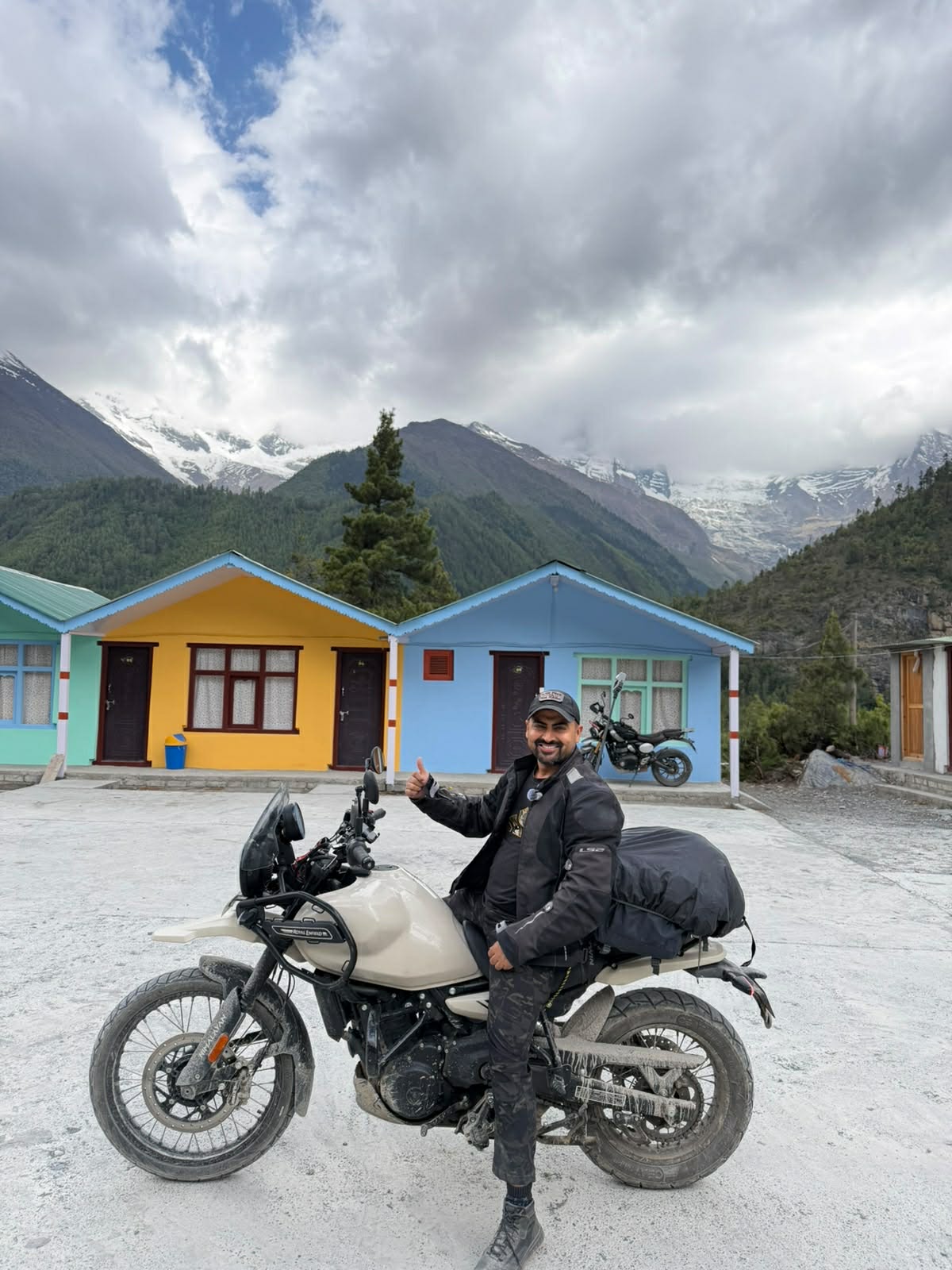
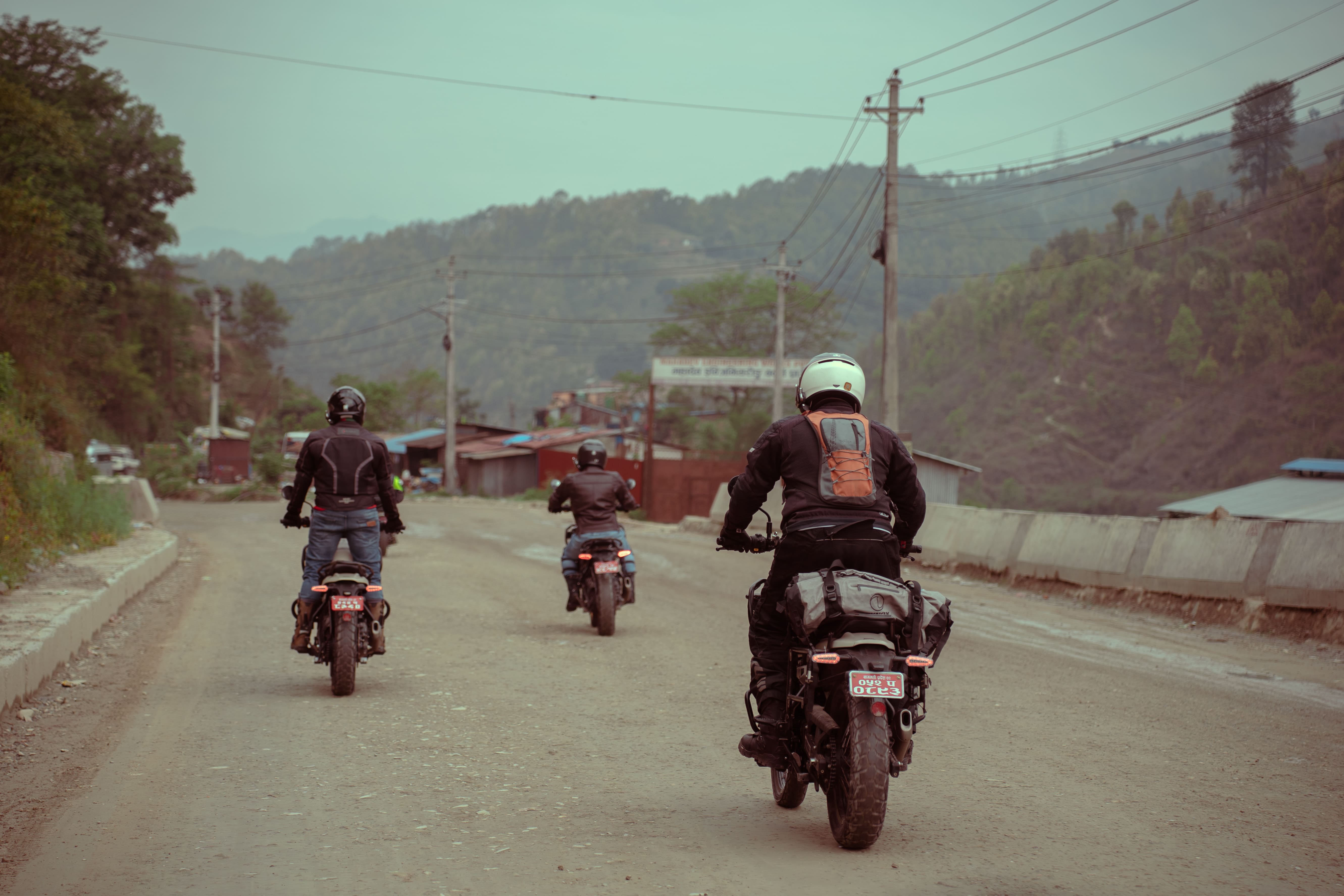
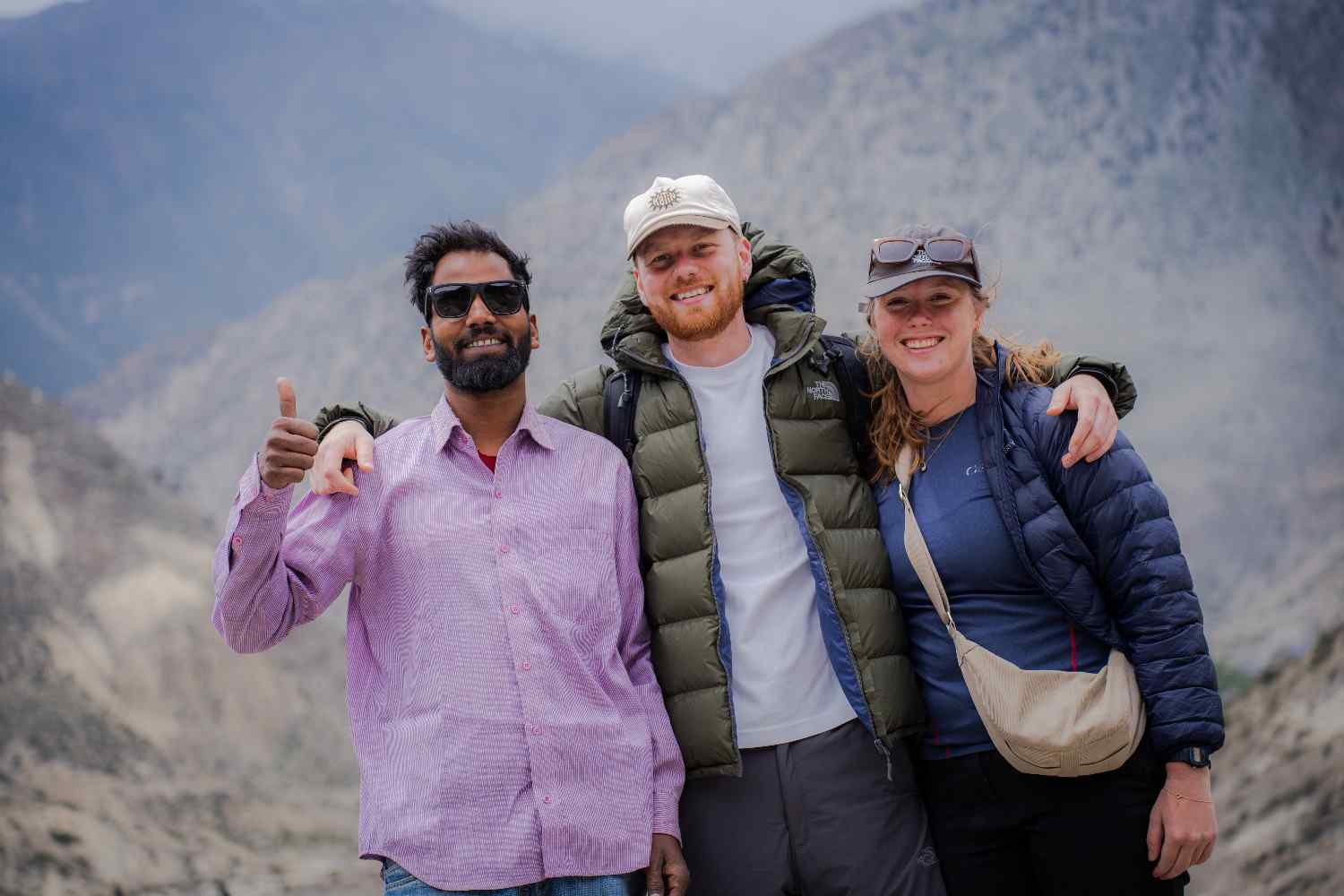
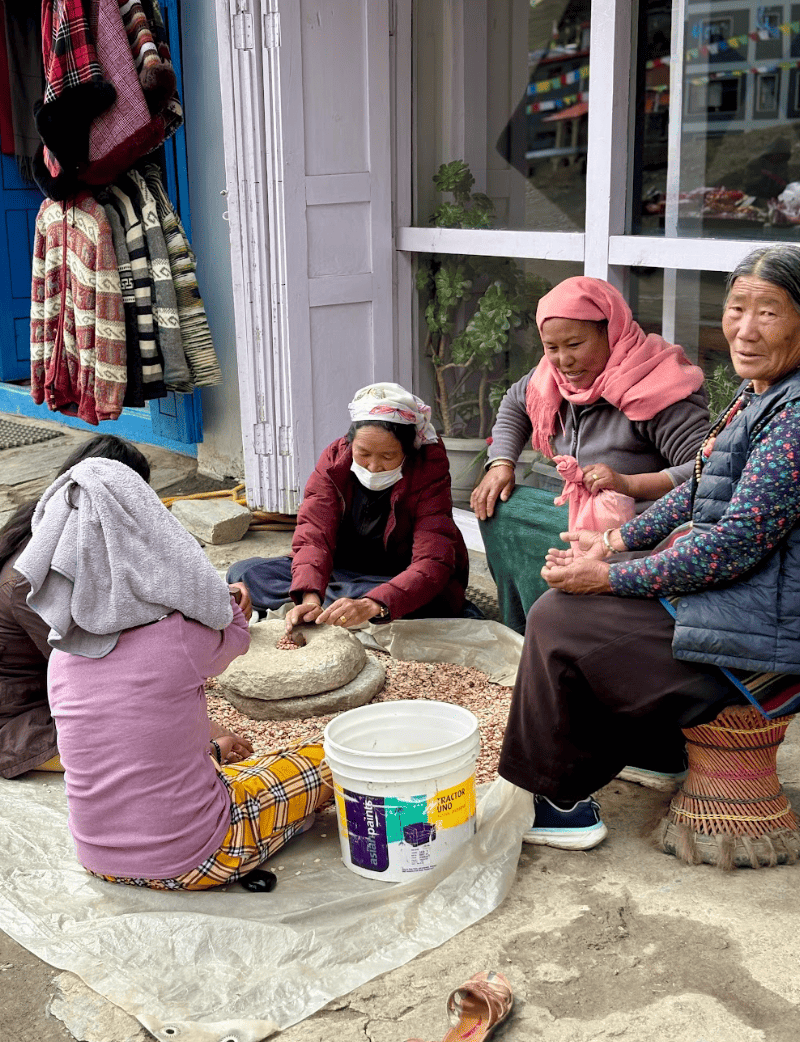
Every photograph from a Himalayan motorcycle expedition shows the same cast: the rider, the bike, the pass, the view. The story told in those photographs is a story of individual accomplishment, one person, one machine, one extraordinary landscape. It is a true story. It is also an incomplete one. Behind the rider on the Kali Gandaki track, behind the loaded Royal Enfield cresting the high plateau approach to Lo Manthang, behind the traveller arriving in Lo Manthang at the end of a week's riding through Upper Mustang, is a workforce that made the journey possible and that appears in almost none of the photographs. The mechanic in Jomsom who spent two hours the previous evening tracing an electrical fault by headlamp. The tea house owner in Ghami who knew to save a room because a guide called ahead three days earlier. The permit agency officer in Thamel who processed the Restricted Area paperwork in time for a departure date that was already tighter than it should have been. The local guide who read the sky above Thorong La at 4 a.m. and made a call about the crossing that the rider did not have the knowledge to make independently. This article is about that workforce, who they are, what they carry, what they make possible, and why the Himalayan riding experience that adventure motorcyclists travel from across the world to reach is not, in any meaningful sense, a solo achievement.   The Guide: Knowledge That Cannot Be Downloaded The most visible member of the hidden workforce is the guide and visibility is relative, because even guides rarely appear prominently in the trip reports and social media content that Himalayan motorcycle travel generates. They are in the background of the group photograph. They are the person being thanked in the final paragraph of the blog post. They are present throughout and credited briefly. What they provide, concretely, is not reducible to route knowledge, though route knowledge is part of it. A guide who has led the Upper Mustang motorbike tour twenty times in fifteen seasons carries a specific and non-transferable kind of understanding, not of the route as a static geography but of the route as a living system that changes with weather, season, recent traffic, and the specific conditions of a given day in a given year. The track between Chusang and Ghami after three days of wind looks different from the same track after two days of rain followed by cold overnight temperatures. Knowing which version you are about to ride, and adjusting pace, tyre pressure, and line choice accordingly, is knowledge that a GPS track and a trip report from two Octobers ago cannot provide. Beyond route knowledge, the guide is the community interface, the person whose relationships in the villages and tea houses along the route translate directly into information, preferential treatment, and the kind of local intelligence that turns potential problems into non-events. When a road closure ahead is being discussed at a tea house, it is the guide who hears it first, understands its implications accurately, and has already contacted someone downstream who can confirm the alternative before the rider has finished their dal bhat. When accommodation is scarce on the approach to a festival in Lo Manthang, it is the guide's relationships with specific guesthouse owners — relationships built over years of repeat business and mutual trust — that secure a room. Prabhash Thakur of Nepal Moto Tours, based in Bhaktapur and riding these routes for over a decade, represents the profile that the best Himalayan motorcycle guides embody: not a logistics provider who happens to ride, but a rider whose deep knowledge of the country and its roads has been formalised into the ability to guide others through an experience that would be categorically different without that knowledge present.   The Mechanic: The Person Who Keeps the Journey Moving The Himalayan motorcycle mechanic occupies a position that is simultaneously central to every riding expedition and almost entirely invisible in the way that expedition is recorded and remembered. In Jomsom, in Manang, in Beni, in Tatopani, and in the towns along Nepal's serious riding routes, there are mechanics who have been working on Royal Enfield engines for years or decades, not because Royal Enfield is the only brand they know, but because Royal Enfield is what the traffic on these routes is predominantly made of, and because the specific failure modes that high altitude, river crossings, sustained vibration on loose gravel, and extreme temperature variation produce on these engines have become, through repetition, a body of practical knowledge that no service manual fully captures. The mechanic who traces an electrical fault on a loaded Royal Enfield Himalayan at 2,700 metres in Jomsom by headlamp, charging NPR 500 for two hours of work, is providing a service whose value to the rider is not proportional to its cost. The alternative to that two-hour repair is a riding day lost, an itinerary compressed, and potentially a permit period that expires before the restricted area is fully ridden. The mechanic's fee is a transaction. The riding day saved is what a permit costing USD 50 was purchased to protect. The depth of Royal Enfield mechanical knowledge embedded in Nepal's mountain towns is not an accident. It is the accumulated consequence of a century of subcontinental motorcycle culture that has diffused across the trade and travel networks connecting Nepal and India, combined with the specific market dominance that the Royal Enfield Himalayan has achieved on Nepal's riding routes over the past decade. A mechanic in a workshop in Tatopani who has adjusted valve clearances on a 411cc single-cylinder engine fifty times has a relationship with that engine's characteristic behaviour that a new Royal Enfield dealership mechanic with formal training but limited high-altitude field experience does not yet have. This knowledge is irreplaceable in the moment it is needed. And it is needed, on most serious Himalayan riding expeditions, at least once.   The Tea House Owner: Infrastructure at Human Scale The tea house network along Nepal's established motorcycle routes is the infrastructure that makes multi-day Himalayan riding accessible to riders who are not carrying full camping and cooking equipment across the highest accessible roads in the world. It is also, from a distance, one of the least examined aspects of the Himalayan riding ecosystem — the accommodation is taken for granted in the way that infrastructure is always taken for granted until it is absent. The tea house owner on an established Himalayan route is running a small business in conditions that would challenge any hospitality operation: supply chains that depend on jeep tracks that close seasonally, altitude and temperature ranges that complicate food storage and preparation, water supply that is often unreliable, and a customer base that arrives unpredictably, stays briefly, and has expectations shaped by the contrast between the extreme landscape outside and the basic conditions inside. What the best tea house owners provide, beyond a room and a meal, is information. The tea house in Marpha where the owner has spoken to every vehicle coming south for the past three days and can tell you, with accuracy that a weather forecast cannot match, what the wind conditions have been above Kagbeni. The guesthouse during the motorbike tour to Manang where the owner knows which of her neighbours has a spare chain link that fits the specific bike the rider is struggling with. The tea house in Chuksang where the conversation over evening dal bhat produces the information that the river crossing three kilometres north is running higher than it looks from the south bank, and here is where to cross it. This ambient intelligence, the accumulated local knowledge of people who live in and move through the landscape every day is one of the things that makes the tea house network's value to motorcycle travellers exceed its accommodation and food function. You cannot book this information on a reservation platform. It is available in person, in conversation, to travellers who treat the people providing it as something other than service infrastructure.   The Permit Officer: The Bureaucratic Gateway Keeper The permit agency officer processing a Restricted Area Permit application in Thamel or Lakeside is perhaps the most thoroughly invisible member of the Himalayan riding workforce — their contribution is felt primarily in its absence, when something goes wrong. Upper Mustang's Restricted Area Permit requires correct documentation, correct fees, and processing through a registered agency. The clerk who handles this process correctly, who catches the documentation gap before it creates a problem at the Kagbeni checkpoint, who knows the current processing time accurately and advises the rider to add a day before departure, who files the paperwork in the sequence the Tourism Board requires rather than the sequence that seems logical to a first-time applicant is providing a service whose value is not apparent when it works and immediately apparent when it does not. Riders who have been turned back at the Kagbeni checkpoint, or who have spent an extra day in Jomsom waiting for permit confirmation to arrive, understand the clerk's role with a clarity that those for whom the process worked smoothly rarely develop. The permit process is administrative rather than experiential, and its invisibility when functioning correctly is precisely the intended outcome of work done well.   The Road Worker: The Reason the Track Exists at All Nepal's rural road network — the tracks into Mustang, the mountain roads connecting the villages of the Annapurna and Manaslu circuits, the approaches to Langtang and the high passes of the Khumbu region — exists because people build and maintain it, often by hand, in conditions that no road maintenance job in a developed country would recognise. The workers repairing the washed-out section of the Mustang track above Chusang after a debris flow, filling the exposed section with quarried rock carried by hand from the adjacent hillside, are engaged in work that makes the riding possible and that the rider passes through in minutes without necessarily registering that the passable track was not in that condition forty-eight hours ago. Road maintenance in Nepal's mountain districts is a combination of government Border Roads Organisation work on strategic routes, local community labour on lower-priority tracks, and improvised repair by whoever has the access and the materials to address a specific obstruction. The result is a network whose condition is unpredictable in ways that European road infrastructure is not, but whose repair culture is more responsive and more community-embedded than any centrally managed system produces. The rider who completes Upper Mustang and describes the road as "rough but rideable" is describing the accumulated outcome of years of maintenance work by people whose names are in none of the trip reports.   The Supply Chain That Feeds the Route Every dal bhat served at a tea house above 3,000 metres in Upper Mustang represents a supply chain achievement that the person eating it rarely considers. Flour, rice, lentils, vegetables, fuel for cooking, bottled water, soft drinks, toilet paper, and the fifty other items that make a tea house functional — these things did not appear at the tea house at 3,800 metres by accident. They arrived on the back of a jeep that negotiated the same track the motorcycle rider just completed, driven by a driver who makes that journey regularly enough that the track's variable condition is a known and managed challenge rather than an adventure. The logistics of supplying Upper Mustang's tea house network are genuinely complex and operate on timelines and cost structures that the USD 15 per night accommodation price does not obviously accommodate. Seasonal supply runs before the Monsoon, improvised restocking when a vehicle makes the journey for another purpose, community cooperation between tea house owners sharing transport costs — the supply chain is informal, adaptive, and entirely invisible to the traveller who receives its outputs.   What the Hidden Workforce Represents The workforce behind every Himalayan ride is not a service layer attached to an otherwise independent experience. It is the condition under which the experience exists. Remove the mechanic from the equation and the mechanical event that every serious Himalayan ride eventually encounters becomes a crisis rather than a delay. Remove the guide's local intelligence and the decision about whether to attempt the crossing or wait becomes a guess rather than an assessment. Remove the tea house owner's information network and the rider navigates in the operational equivalent of darkness on the most consequential decisions of the journey. Remove the permit clerk's competence and the checkpoint at Kagbeni becomes a barrier rather than a formality. The Himalayan motorcycle expedition as a form of adventure travel — the riding experience, the cultural encounter, the sense of earned achievement that draws riders from across the world to these routes — is a collective achievement presented and recorded as an individual one. This is not a criticism of the riders who complete these journeys. It is simply a more accurate account of what those journeys actually involve.   Paying It Forward: What Riders Owe the Workforce This is not an abstract ethical argument. It is a practical one with specific implications for how a Himalayan motorcycle trip should be planned and conducted. Pay guides at rates that reflect the value of what they provide rather than the minimum the market will bear. The guide who makes the difference between a successful Upper Mustang circuit and a trip-ending mechanical crisis three days from Lo Manthang is worth more than the day rate that budget operators quote to win bookings. The rate difference between a guide being paid fairly and one being paid minimally is, in the context of the total trip cost, small. The difference to the guide's livelihood and to the quality of service the rate produces is not. Eat at local tea houses rather than carrying all your food from Kathmandu. Spend your incidental money in the villages along the route rather than consolidating purchases in the city before departure. Tip mechanics for good work. Thank the tea house owner for the road condition information that saved you two hours of wrong-route riding. These are not gestures. They are the mechanism by which the economic benefit of motorcycle tourism reaches the communities that make it possible, rather than concentrating in the urban centres where the bikes are rented and the permits are processed. The hidden workforce is hidden partly by the invisibility that service roles always carry. It is also hidden, in the economic sense, when the money that flows through adventure tourism bypasses the communities providing its essential human infrastructure.   The Ride That Photographs The photograph at the top of Thorong La will keep looking the same. One rider, one machine, one extraordinary sky. The story it tells is real and earned and worth telling. But the fuller story, the mechanic's headlamp in Jomsom, the guide's 4 a.m. weather read, the tea house owner's room held on a relationship that predates the booking platform era, the permit clerk's paperwork filed in the right sequence — is also real, also earned, and considerably underrepresented in the record of what Himalayan motorcycle travel actually is. Telling both stories does not diminish the one most often told. It simply makes it more accurate, more honest, and more respectful of the people who make it possible to tell it at all.  
Nepal Moto Tours Returns as Official Adventure Partner for Nomad Basecamp Nepal 2026

Nepal Moto Tours Returns as Official Adventure Partner for Nomad Basecamp Nepal 2026

Building on Last Year's Foundation of Nomad Basecamp  When the Nepal Tourism Board (NTB), in partnership with Saarang Services, hosted Nepal's first-ever Digital Nomad Summit — Nomad Basecamp from August 27–31, 2025, at Bar Peepal Resort in Lakeside Pokhara, it marked a deliberate shift in how Nepal positions itself on the global tourism map. NTB CEO Deepak Raj Joshi called it a "new chapter" for the country, one aimed at welcoming not just travelers, but remote workers and entrepreneurs looking to live and build from the Himalayas. The five-day inaugural edition drew 148 attendees for a program of keynotes, hands-on workshops, morning yoga, mastermind sessions, and cultural immersion around Phewa Lake.  Nepal Moto Tours' relationship with the Nomad Basecamp community began in the wake of that first event. In September 2025, a group from the Nomad Basecamp network — four guests accompanied by two Nepal Moto Tours guides — set out on a Lower Mustang motorcycle expedition, riding through Chusang, Kagbeni, and the dramatic canyon country of Mustang's badlands. The group was welcomed at Kagbeni by local officials of the Baragung Muktichhetra Rural Municipality, presented with traditional white khada scarves, before continuing through the region's high-altitude trails, sharing meals, stories, and mountain views along the way. What's New for Nomad Basecamp 2026 Nomad Basecamp returns to Pokhara for a bigger second edition, running September 1–7, 2026, expanding from five days to a full week. This year's program leans further into both business substance and Himalayan atmosphere, combining laptop-open keynote sessions and workshops (including sessions on AI automation and business scaling) with what organizers call "Himalayan Zen" — daily Kirat yoga, shamanistic meditation, and sound healing led by local masters, alongside a Welcome Cocktail Gala and a closing Farewell Dinner. Attendees also get access to the event's "Golden Key" perks program: lifetime discounts of 25–50% at a curated list of Pokhara hotels, cafes, and wellness spaces — the same tier of partnership benefit under which Nepal Moto Tours' offer sits this year. The 2026 Nepal Moto Tours Partnership For 2026, Nepal Moto Tours has been named the official motorcycle adventure partner of Nomad Basecamp, deepening the relationship built with last year's riders and bringing a taste of Himalayan riding to a wider community of long-stay, location-independent travelers already based in Pokhara for the week. What's on offer: Grand prize giveaway: One Nomad Basecamp summit participant wins a fully guided 4-day Lower Mustang Motorcycle Expedition, valued at $1,000 Delegate discount: Every registered Nomad Basecamp ticket holder receives 20% off any custom Himalayan riding tour booked through Nepal Moto Tours Route: Lakeside Pokhara through deep mountain valleys to Lower Mustang and the ancient Himalayan town of Kagbeni Included: Top-tier adventure bikes (Royal Enfield Himalayan, Hero Xpulse, BMW), lead mechanics, local guide support, and hotel stays along the route Group upgrades: Backup vehicles and dedicated adventure photographers available for group rides "A lot of the people coming to Nomad Basecamp are already living the kind of independent, adventurous life that makes them perfect candidates for a ride into the Himalayas," said Prabhash Thakur, founder of Nepal Moto Tours. "We saw that firsthand last year with our first group from the community — this year we wanted to open that same experience up to everyone at the summit." How to Enter and Claim the Discount Secure a Nomad Basecamp Summit Pass at digitalnomadsnepal.com All registered ticket holders are automatically entered into the Mustang Motorcycle Tour giveaway Use the official Nomad Basecamp application when booking any tour directly with Prabhash and the Nepal Moto Tours team to receive the 20% discount Why Pokhara's Nomad Scene Is a Natural Fit for Motorcycle Adventure Pokhara has steadily grown into Nepal's hub for the digital nomad and remote-work community, with co-living retreats, coworking spaces, and now a flagship annual summit drawing long-stay international visitors to the lakeside city. Many attendees spend weeks or months in the region — far longer than a typical tourist — making a multi-day motorcycle detour into Lower Mustang or Manang a natural extension of their time in Nepal, as last year's riders discovered firsthand. About Nomad Basecamp Nepal Nomad Basecamp Nepal is an annual festival for digital nomads, remote professionals, and entrepreneurs, hosted lakeside in Pokhara. The inaugural 2025 edition was organized by the Nepal Tourism Board in partnership with Saarang Services; the 2026 edition continues under organizer Danny Flood's Nomad Basecamp community, expanding the program to a full week of keynotes, workshops, wellness sessions, and cultural immersion set against the Himalayan backdrop of Phewa Lake. About Nepal Moto Tours Nepal Moto Tours is a Nepali-run motorcycle tour operator in Nepal, founded in 2022 by Prabhash Thakur, offering guided Himalayan motorcycle expeditions across Upper Mustang, Lower Mustang, Manang, and surrounding routes on a Royal Enfield fleet.  
Solo Travel in Nepal: Honest Guide, Costs & Tips

Solo Travel in Nepal: Honest Guide, Costs & Tips

Every guide to solo travel in Nepal tells you the same things: it's safe, it's beautiful, the people are warm, you'll love it. All of that is true. But most guides skip the parts that actually prepare you — the Kathmandu chaos that hits within minutes of landing, the scams that catch even experienced travellers, the new trekking rules that changed everything in 2023, the loneliness that comes and goes on the trail, and the specific quiet moments that make Nepal unlike anywhere else. This is the honest version, drawn from practical research and the experiences of real travellers who have been there recently. Table of Contents Why Nepal Works So Well for Solo Travel Real Travellers, Real Experiences The Reality of Arriving in Kathmandu Alone Getting Around: Transport Truth and Practical Options Where Solo Travellers Actually Stay The Social Life of a Solo Traveller in Nepal Trekking Solo in Nepal: What Changed in 2023 and 2026 The Teahouse System: Why It's Perfect for Solo Travellers Safety: What's Real, What's Overstated, What to Watch For Scams Targeting Solo Travellers — and How to Avoid Them Solo Female Travel in Nepal: The Honest Picture Cultural Etiquette That Makes or Breaks the Experience Budget: What Solo Travel in Nepal Actually Costs The Best Places to Travel Solo in Nepal The Emotional Reality: Loneliness, Connection, and What Nepal Does to You Practical Pre-Departure Checklist Frequently Asked Questions   1. Why Nepal Works So Well for Solo Travel Nepal has been absorbing solo travellers since the 1960s. The infrastructure has evolved around it, guesthouses designed for one, trails built around a teahouse system that makes solitary trekking feel communal, a culture that treats guests with a warmth encoded in the national philosophy of Atithi Devo Bhava — the guest is god. But beyond infrastructure, Nepal suits solo travel for a deeper reason: it is one of the few destinations where being alone actually enhances the experience. Locals talk to you more freely. Other travellers gravitate toward you in teahouses. Monks invite you in for tea. Children follow you with curiosity. The country has a way of filling the social space around a solo traveller that most destinations don't. It also rewards patience and flexibility in ways group travel doesn't allow. A sunrise that clears unexpectedly. A monastery discovered by following a sound. A conversation with a porter that changes how you see your own life. These moments happen most readily when you are moving at your own pace, accountable to no one, and genuinely open. None of that means Nepal is without challenges for solo travellers. It has real ones. Understanding them upfront is what separates a difficult, frustrating trip from a transformative one.   2. Real Travellers, Real Experiences Before the practical guide, it's worth hearing directly from people who have done this recently. "Everything I had manifested, I was able to accomplish in 60 days" In April 2025, Zahabiya Nuruddin — a solo traveller documenting her journey on her Substack The Long Way Home — landed in Kathmandu with almost no plan and an open journal. She spent two months trekking the Manaslu Circuit, volunteering at a children's home, taking Nepali language classes, completing a 10-day Vipassana meditation course, and building what she describes as a genuine local community in Kathmandu. Writing on the flight home in June 2025, she reflected: "I found love in every corner… afternoons spent speaking in broken Nepali with local shopkeepers that would recognize me and give me a few extra sweets with my groceries, and evenings spent cooking momos and singing along to songs at my new friends' apartments. They all taught me that community can be built no matter where I am in the world." Her account is one of the most honest portraits of what extended solo travel in Nepal actually looks like — not a highlights reel, but the full 60-day arc of solitude, effort, connection, and the particular quiet that comes from being entirely present in a place. Read her full journal at zabocat.substack.com. "I received no unwanted attention for being by myself, even in Kathmandu" Emily, a solo female traveller from the UK who blogs at Journey by Backpack, describes arriving in Nepal "so nervous" about the trip — and finding almost immediately that her fears were unfounded: "Travelling alone can be a scary prospect, especially as a woman going to a country with a very different culture. However, I have only positive things to say about my experience as a solo female traveller in Nepal. When I landed and was greeted by a friendly taxi driver, all my fears disappeared." Her guide at journeybybackpack.com remains one of the most practically grounded solo travel resources written from first-hand female experience. "Nepal is a country full of kindness" A Japanese traveller returning to Nepal for the fourth consecutive year during Golden Week 2025 wrote about meeting a fellow solo traveller by chance at Kathmandu airport — and beginning the entire trip together by the first night, taking an overnight bus to Pokhara side by side: "You never know what's going to happen when you're travelling. Nepal is a country full of kindness, and I will definitely come again next year." Four consecutive years of return visits tells you something that no travel guide can quantify. "Solo but full of soul" An Australian traveller trekking the Annapurna Circuit solo in April 2024 — while his wife stayed home — wrote: "I landed in Kathmandu, buzzing with nerves and excitement. The chaos of Thamel, the prayer flags swaying in the breeze — I was already falling for Nepal. This journey gave me something deeply personal: silence, strength, and soul-searching." The roads were rough. The altitude was real. And by the end, the experience was the most personal thing he had done in years — precisely because he did it alone. These accounts are not curated marketing. They are what solo travel in Nepal looks like when real people write about it honestly.   3. The Reality of Arriving in Kathmandu Alone Tribhuvan International Airport is your entry point, and it sets the tone immediately. The visa-on-arrival process is manageable but slow — queues can run 90 minutes at peak hours. Have your visa fee in cash (USD, EUR, GBP, or AUD), a passport photo, and your accommodation address ready before joining the queue. The moment you step outside arrivals, Kathmandu begins. Taxi drivers, guesthouse touts, tour agency representatives, and well-meaning strangers all converge at once. It is loud, relentless, and completely normal. The first time you experience it, it reads as chaos. By day three, you understand the rhythm. The first 24 hours: Most solo travellers base themselves in Thamel, Kathmandu's main tourist district. It is dense, walkable, full of gear shops, restaurants, travel agencies, and guesthouses at every price point. It is also the epicentre of most tourist-targeting scams. Navigate it with awareness rather than suspicion — the majority of people who approach you are simply trying to earn a living. Thamel can feel overwhelming when you arrive jet-lagged and carrying everything you own. The remedy is simple: check in, eat, sleep. Kathmandu in daylight after rest is a completely different experience. Getting from the airport to your hotel: Use a pre-booked hotel pickup, or use a ride-hailing app like Pathao or InDrive. These apps show the fare before you confirm, display the driver's rating, and share your live location. They are significantly safer and cheaper than negotiating with unmetered taxis at arrivals, where quoted prices for foreign travellers can run three to five times the actual fare.   4. Getting Around: Transport Truth and Practical Options Nepal's transport infrastructure is the most consistent source of friction for solo travellers. Understanding it honestly saves time, stress, and money. Within Kathmandu and Pokhara — use apps Pathao and InDrive function as Nepal's ride-hailing services and are fully operational in both cities as of 2026, now with live location sharing and emergency alerts. Use them for all city movement. They eliminate fare negotiation and remove the most common taxi scam targeting tourists. Kathmandu to Pokhara Flight (25–30 minutes): Most comfortable option, typically USD 80–120. Book ahead in peak season. Weather delays are common. Tourist bus (7–8 hours): Reputable operators like Greenline and Swift are reasonable if you have time. Air-conditioned and manageable. Local bus: Much cheaper, significantly more uncomfortable. Crowded, slow, frequent stops. Not recommended for solo travellers carrying gear on a first visit. Private jeep: Most flexible ground option. Better value when split with other travellers met at your guesthouse. Important road reality: Outside urban centres, roads are often narrow, partially unpaved, and vulnerable to landslides during monsoon. A journey that looks simple on a map can take substantially longer in practice. Never plan a tight connection after a long road journey in Nepal. Domestic mountain flights: Small aircraft service routes including Pokhara–Jomsom and Kathmandu–Lukla. These are weather-dependent, frequently delayed, and can book out in peak season. Always build buffer days around domestic mountain flights — not one day, two.   5. Where Solo Travellers Actually Stay In Kathmandu and Pokhara Thamel in Kathmandu and Lakeside in Pokhara host the majority of solo travellers. Hostel dorms run USD 5–8 per night. Private guesthouse rooms start from USD 10–25. Mid-range hotels from USD 30–60 offer reliable hot water and decent mattresses. The single supplement problem common in many countries is largely absent in Nepal at budget and mid-range levels. Private rooms are affordable enough that not sharing barely registers. On the Trekking Routes The teahouse system — family-run lodges spaced one to three hours apart along all major routes — is one of the most solo-traveller-friendly accommodation structures in the world. You arrive, you eat, you sleep, you leave. No booking required outside of peak season. The communal dining room is where solo travellers find each other every single evening. Rooms in teahouses are simple: a bed, thin mattress, blanket, shared bathroom, usually cold water. At higher elevations, rooms are cold at night. Bring a sleeping bag liner or lightweight bag for anything above Chhomrong on the ABC route. The teahouse system means you never need camping equipment, cooking gear, or advance reservations on the ABC, EBC, or Annapurna Circuit. This makes solo trekking in Nepal vastly more accessible than wilderness trekking in most other countries.   6. The Social Life of a Solo Traveller in Nepal When you are on a trekking or on a motorcycle tour in Nepal, You will not be alone for long if you don't want to be. The social architecture of Nepal solo travel is built around convergence points — places where individual travellers naturally cluster. Thamel in Kathmandu. Lakeside in Pokhara. Hostel common rooms. Bulletin boards in trekking guesthouses where handwritten notes seek trail companions. The communal dining tables of teahouses. On the trekking routes, the dynamic is remarkable. You begin the day alone. Within the first hour you fall into step with someone heading the same direction. By lunch you are three. By the teahouse that evening you are seated at a long table with eight people from five countries, comparing altitude headaches and recommending blister remedies. Teahouses make this happen. Communal dining rooms mean no one eats alone unless they actively seek it. The shared physical experience of the trail — the same stairs, the same dust, the same thinning air — generates a solidarity between strangers that normal social settings rarely produce as quickly. Emily from Journey by Backpack notes this directly: Nepal is a destination where you are unlikely to feel isolated for long, particularly on the popular trekking routes where the community of travellers creates a natural social ecosystem. One honest note: this social infrastructure is most active in peak season — spring and autumn. Travel solo in monsoon or deep winter and the teahouses thin out, the social density drops, and the experience is significantly more solitary. Know which version you want before choosing your season.   7. Trekking Solo in Nepal: What Changed in 2023 and 2026 This is the most important practical update, and the one most online resources still get wrong. Since April 1, 2023, the Government of Nepal officially requires all foreign trekkers in National Parks, Conservation Areas, and Restricted Areas to be accompanied by a government-licensed guide. This covers the Annapurna Conservation Area and therefore the ABC trek, the Sagarmatha National Park and therefore the EBC route, and the Manaslu Conservation Area. The Nepal Tourism Board's director confirmed the reasoning publicly: "There were many cases where tourists have disappeared. Deaths among solo trekkers had given some tourists the misperception that Nepal was unsafe." In fiscal year 2019–20 alone, 390 tourists were reported lost or missing — the majority trekking without guides. What this means practically: The independent Green TIMS card — which previously allowed solo travellers to trek without a guide — no longer exists. Permits are now issued only through registered agencies. The theoretical framework for fully independent trekking on major Nepal routes has been dismantled at the regulatory level. Ground reality in 2026: Enforcement varies significantly by route and season. On the Annapurna Base Camp route, checkpoint officers primarily verify the ACAP permit rather than guide documentation. Many solo travellers continue to complete the ABC trek unguided. However, the legal position is clear, and enforcement is gradually tightening. Why the rule matters beyond compliance: A licensed guide trained to recognise altitude sickness symptoms is not a bureaucratic requirement — it is a genuine safety measure on routes where the nearest hospital is hours away. Trekking with a guide is the legally correct and demonstrably safer approach. Costs: A licensed guide hired privately costs USD 25–40 per day. A porter costs USD 15–25 per day. Both are investments that directly support local livelihoods and make a meaningful practical difference to your safety and experience.   8. The Teahouse System: Why It's Perfect for Solo Travellers The teahouse trekking system deserves its own section because it is genuinely one of the best-designed structures for solo independent travel anywhere in the world. Here is how it works: family-run lodges, spaced one to four hours apart along every major trail, provide accommodation, meals, and basic supplies. No tent. No stove. No camping equipment. No food resupply planning. You walk. You arrive. You eat. You sleep. You leave. Meals are simple and consistent: dal bhat, noodle dishes, soups, eggs, pancakes. The teahouse kitchen is the social heart of the trail — you eat communally, share trail information, and find out which sections ahead are affected by weather or damage. The economics matter: accommodation is priced low — sometimes near free — on the expectation that you eat at least one or two meals at the teahouse. Eating elsewhere or bringing your own food breaks the social contract and usually results in being charged full accommodation rates. Eat at your teahouse. It is right, and the food is generally good. Beyond practicalities, teahouses are where solo Nepal travel becomes something larger. The families who run them have spent years watching the world walk through their door. Their stories — about trails, about mountains, about the seasonal changes across decades — are often the richest conversations you have on the entire trip.   9. Safety: What's Real, What's Overstated, What to Watch For Nepal is genuinely one of the safer countries in Asia for solo travellers. Violent crime against tourists is rare to the point of being statistically negligible. The cultural instinct toward hospitality is real and pervasive. But safe is not the same as risk-free. The risks that do exist in Nepal are specific and worth understanding clearly. Real risks: Road accidents are the most statistically significant risk for travellers in Nepal. Mountain roads are narrow, often unpaved, used by overloaded vehicles, and susceptible to landslides. Use reputable tourist bus companies for inter-city travel, prefer flights where practical, and avoid local buses on mountain roads after dark. Altitude sickness is the most serious physical risk for trekkers. It does not discriminate by fitness level, age, or experience. Know the symptoms — persistent headache, nausea, dizziness, confusion, shortness of breath at rest — and have a clear protocol. Travel insurance covering helicopter evacuation is not optional. It is essential. Petty theft occurs in crowded tourist areas, particularly around Thamel and Lakeside. Keep valuables in a money belt, carry passport photocopies for day-to-day use, and use a daypack with lockable zips in markets. Overstated risks: Serious violent crime against tourists is rare. The generalised sense of threat that some online content projects about Nepal does not reflect the experience of the vast majority of solo travellers. Anna Sherchand — a Nepal-born travel writer who returned after a decade of global travel — describes Nepal as a place with "a low crime rate, a communal tea house trekking culture" where she felt consistently safe (annasherchand.com). Her perspective as someone who both grew up in Kathmandu and has since travelled to over 100 countries puts the safety conversation in unusually clear context.   10. Scams Targeting Solo Travellers — and How to Avoid Them The scams operating in Nepal are not violent or sophisticated. They are economic. Knowing the common ones takes the edge off the first few days in Kathmandu. Inflated taxi fares The most consistent issue in Kathmandu. Unmetered taxis at tourist hotspots quote three to five times the local rate as standard. Solution: Pathao or InDrive apps for all city transport. The fare is visible before you confirm. Commission-based fake guides Individuals approach solo travellers in Thamel or outside temple complexes, initially framing it as casual conversation. The guide leads you to shops earning commission on your purchases, not to sights. Book guides through registered agencies with verifiable credentials. The gem or pashmina export scheme A well-dressed, friendly person proposes a business arrangement involving you taking goods home to sell for profit. No variation of this story is genuine. The milk for children scheme A woman asks you to buy milk rather than give cash. She leads you to a shop, the shopkeeper charges an inflated price, and the woman later returns the goods for a share. Decline politely and move on. The monastery/meditation centre recruitment An invitation to a free yoga or meditation session that escalates into a pitch for expensive retreats. Legitimate centres in Nepal do not recruit from the street. Overcharging for permits or services Without price knowledge, some agencies quote significantly above market rate. Research standard rates before engaging — ACAP permit: NPR 3,000; guide fees: USD 25–40 per day — and always get a full itemised quote before paying. The tone worth adopting: relaxed awareness rather than defensive suspicion. Most people who approach you in Nepal are not running scams. Hospitality and curiosity are genuine here.   11. Solo Female Travel in Nepal: The Honest Picture Nepal is among the better countries in Asia for solo female travel, and it rewards women who come prepared and culturally aware. Emily from Journey by Backpack puts it plainly: she arrived nervous — it was her first solo destination outside Europe — and found it one of her most positive solo experiences. She received no unwanted attention even in Kathmandu, found the trekking community naturally supportive, and would recommend Nepal to solo women without hesitation, provided they come with reasonable cultural awareness. The honest caveats: staring and persistent conversation from men occurs in urban areas, particularly in Thamel and Lakeside. It is usually not aggressive and rarely escalates. It is less prevalent on trekking routes, where the traveller community creates a more egalitarian social environment. Practical guidance for solo women: Dress modestly in cities and temple areas — shoulders and knees covered. Not because Nepal is particularly conservative, but because it is respectful, and respect here is reciprocal. Trust your instincts without hesitation. If a guesthouse feels wrong, leave. If a taxi takes an unexpected route, ask them to stop. On the trail, the teahouse communal structure means you eat with other travellers every evening — you are rarely isolated after the first day. Avoid walking alone in unlit or isolated areas at night. Use a ride-hailing app to get back to accommodation after dark rather than walking unfamiliar side streets. The trail community is remarkably safe. Women trek the ABC and EBC routes regularly and report high levels of comfort and security, particularly when trekking with a licensed guide or porter who provides both practical support and a natural social buffer.   12. Cultural Etiquette That Makes or Breaks the Experience Nepal is deeply rooted in Hindu and Buddhist traditions, and basic cultural awareness transforms your experience from tourism into genuine connection. Namaste: Palms pressed together, a slight bow — the universal greeting. Use it constantly. It opens conversations, signals respect, and invariably produces a warm response. The left hand: Considered unclean in Nepali culture. Use your right hand or both hands to give and receive — money, food, gifts. Shoes at religious sites: Remove footwear before entering any temple, monastery, or religious building. Clockwise circulation: Walk clockwise around monasteries, chortens, and mani walls. This is the directional flow of Buddhist ritual circumambulation. Photographing people: Ask before photographing individuals, particularly monks, elderly people, and in rural villages. The request itself — even through gesture — usually results in an enthusiastic yes and a genuine moment of connection. Tipping: Guides and porters depend significantly on tips. The standard: USD 10–20 per day for a guide, USD 5–10 per day for a porter, for the duration of the trek. These are the understood economic realities of the trekking industry.   13. Budget: What Solo Travel in Nepal Actually Costs Nepal remains one of the most budget-friendly trekking destinations in the world. Here is the honest 2026 breakdown. Budget solo traveller: USD 25–40 per day Hostel dorm or basic guesthouse: USD 5–12 Three meals at local eateries: USD 6–10 Local transport: USD 2–5 Incidentals: USD 3–5 Mid-range solo traveller: USD 50–80 per day Private guesthouse with en-suite: USD 20–35 Mid-range restaurant meals: USD 12–18 Ride-hailing transport: USD 5–10 Activities and site fees: USD 10–15 Trekking-specific costs (per day on trail): Teahouse accommodation: USD 3–8 Teahouse meals: USD 12–20 Licensed guide: USD 25–40 Porter: USD 15–25 ACAP permit (one-off): USD 22–25 Total per day on trail with guide and porter: USD 55–90 Major one-time costs: International flights: USD 600–1,200 depending on origin Kathmandu to Pokhara by air: USD 80–120 Travel insurance with helicopter evacuation: USD 80–150 for two weeks The single most effective budget reduction that doesn't compromise safety or experience: book a guide through a local Pokhara-based agency rather than an international platform, eat at teahouses rather than tourist restaurants, and use ride-hailing apps instead of street taxis.   14. The Best Places to Travel Solo in Nepal Kathmandu At least three full days. Thamel as your base, with day trips to Bhaktapur (a medieval city that feels entirely removed from Kathmandu's noise), Patan (UNESCO heritage with extraordinary temple courtyards), and Pashupatinath (Nepal's most sacred Hindu site and open-air cremation ghats along the Bagmati River). The city rewards patience and penalises rushing. Pokhara The counterweight to Kathmandu's energy. Lakeside is calm, the food is good, and the views of the Annapurna range across Phewa Lake on clear mornings are extraordinary. The café culture and social scene naturally brings solo travellers together. Paragliding from Sarangkot is reliably spectacular and straightforward to organise independently. The Annapurna Region The most solo-traveller-friendly trekking region in Nepal. The ABC route and the Poon Hill circuit sit at the accessible end of the difficulty spectrum, the teahouse density is high, and the trail community is active year-round in peak seasons. The Everest Region Harder, higher, more expensive, and more demanding. The Lukla flight is an experience in itself. The EBC route generates extraordinary trail camaraderie. The altitude demands more from solo trekkers specifically — the mandatory guide rule here is less contested because the risk is more clearly real. Chitwan National Park A completely different Nepal — jungle, wildlife, subtropical heat. Rhinos, tigers, crocodiles, and the Tharu community whose culture is rooted in living alongside these ecosystems. Easily reached from both Kathmandu and Pokhara. Solo-friendly with organised jeep safaris and guided walks. Lumbini The birthplace of the Buddha. A pilgrimage destination of international significance — Buddhist temples from Japan, China, Thailand, Sri Lanka, and dozens of other countries surround the sacred garden marking the site of Siddhartha Gautama's birth. Quiet, contemplative, and spiritually powerful regardless of your own religious framework.   15. The Emotional Reality: Loneliness, Connection, and What Nepal Does to You No honest guide to solo travel in Nepal is complete without this section. Solo travel in Nepal is, at various moments, profoundly lonely and profoundly connecting — sometimes within the same hour. The loneliness is most present in the cities, particularly on rest days in Kathmandu when you are the only person at your table and you wonder what everyone at home is doing. It appears briefly on the trail when you have been walking in silence for three hours and the altitude is slowing your thinking. It surfaces in teahouses when couples share the experience and you are processing it alone. This is normal. It is temporary. And it is part of what makes Nepal specifically valuable for solo travel: you have no choice but to sit with your own thoughts, which in an environment this extraordinary tend to be rather interesting thoughts. Zahabiya Nuruddin captures this beautifully in her Substack journal. She arrived with the intention to "slow down and really take life one day at a time" — not seeking company for the sake of having it, but choosing experiences she genuinely wanted. Two months later, on the flight home, she had filled an entire journal and built a life in Nepal she hadn't planned. "I've lived so many lives," she wrote. "Different versions of myself. All on a journey to find my True Self." That is what Nepal does to solo travellers who show up genuinely open. Not immediately. Not dramatically. But over the accumulation of difficult mornings and extraordinary evenings and conversations with strangers that somehow feel essential. Most people who go to Nepal alone describe some version of the same thing on return: they thought they were going to see mountains. They didn't expect to feel like that.   16. Practical Pre-Departure Checklist for Solo Travellers Documents and admin: Passport valid at least six months beyond departure date Nepal visa — arrange in advance online or obtain on arrival with cash and passport photo ready Travel insurance with helicopter evacuation and high-altitude medical coverage (confirm altitude limit — many standard policies cap at 4,000–5,000 m) Printed and digital copies of all bookings, permits, insurance documents Emergency contact information noted separately from your phone Money: Sufficient USD cash for visa, initial expenses, and a buffer Notify your home bank of Nepal travel to avoid card blocks No ATMs exist beyond Jomsom (Mustang route) or Namche Bazaar (EBC route) — withdraw sufficient cash before departure Cards not accepted anywhere in remote trekking areas Health: Consult your doctor about Diamox before departure — it must be prescribed Water purification: filtration bottle or purification tablets — never drink tap water in Nepal Stomach medication including oral rehydration salts, loperamide, and an antibiotic (with prescription) Comprehensive first aid kit including blister management and pain relief Vaccinations: confirm current recommendations with a travel health clinic — hepatitis A, typhoid, and tetanus are standard Communication: Download offline maps (Maps.me or OsmAnd) before departure — do not rely on mobile data above Chhomrong on ABC or above Namche on EBC Consider a local SIM (NTC provides marginally better coverage in remote areas than Ncell) Share your trekking itinerary with a trusted person at home including expected daily stopping points and a check-in schedule   17. Frequently Asked Questions Is Nepal safe for solo travellers? Yes, with awareness. Violent crime against tourists is rare. The main risks — road accidents, altitude sickness, petty theft — are all manageable with preparation and good judgement. Can I trek solo in Nepal without a guide? Technically, solo unguided trekking in protected areas is illegal under regulations introduced in April 2023. Enforcement varies by route. From a safety perspective, hiring a guide on high-altitude routes is strongly recommended regardless of the legal question. What is the best time to travel solo in Nepal? October and November are the most reliable for mountain views and trail conditions. March and April are excellent for rhododendron blooms and moderate temperatures. Avoid the peak monsoon months (June–August) unless experienced in wet-season trekking. How much money do I need per day in Nepal? Budget solo travellers can manage on USD 30–40 per day in cities. On the trekking trail with a guide and porter, expect USD 60–90 per day all-in including permit costs amortised across the trek. Is Nepal good for solo female travellers? Yes. Emily from Journey by Backpack — who arrived more nervous than she'd been about any previous solo destination — describes it as one of her best solo experiences. Violent incidents are very rare, the trekking community provides natural safety in numbers, and cultural norms generally favour courteous treatment of visitors. Will I feel lonely travelling solo in Nepal? At moments, yes. The teahouse system and hostel culture mean extended loneliness is rare if you're open to connection. The solo moments that do occur tend to be the most memorable parts of the trip. As Zahabiya Nuruddin reflected after 60 days solo in Nepal: "Whether it was in the middle of the Himalayas, by the lakeside cafes in Pokhara, at the remote Vipassana center, or in the midst of the bustling city of Kathmandu — I found beauty in each moment." Do I need travel insurance for Nepal? Yes — unconditionally. Helicopter evacuations from high-altitude routes cost USD 3,000–5,000 or more. Ensure your policy explicitly covers helicopter evacuation and activities at altitude up to at least 5,400 m for EBC or 4,200 m for ABC. How long should I spend in Nepal? Two weeks is the practical minimum for combining Kathmandu, Pokhara, and one significant trekking route. Three weeks allows you to add Chitwan or Lumbini. Four weeks gives you the Nepal experience in full — and the pace the country actually deserves.  
Nepal's Himalayan Roads Are Becoming a Bucket List Destination

Nepal's Himalayan Roads Are Becoming a Bucket List Destination

There is a specific moment that veteran Himalayan motorcycle guide Alex — who has led close to 80 tours across the region, describes in his guide for Adventure Bike Rider, and it captures something that no statistics can fully represent: "The Himalayas change the way you see life. It's a very profound motorcycling experience." That framing profound rather than merely impressive, is why Nepal's roads are no longer simply a destination for the global adventure riding community. They are a reference point. A benchmark. The kind of place riders mention when other riders ask: what is the ride you would do again if you could only choose one? The shift from niche interest to bucket list status doesn't happen overnight, and it doesn't happen for reasons that are mysterious. There are numbers behind it, market forces driving it, demographic shifts accelerating it, and a country uniquely positioned to absorb and benefit from the momentum. This article maps all of it.   The Global ADV Market Is Booming and Nepal Is Positioned at Its Centre To understand what is happening to Nepal specifically, you first need to understand what is happening to adventure motorcycle tourism globally. The global adventure motorcycle market was valued at approximately USD 15.23 billion in 2024 and is projected to reach USD 24.96 billion by 2034, growing at a CAGR of 5.06%, according to Precedence Research. More relevant to the Nepal context, adventure motorcycle tour bookings saw a 40% increase in 2024, according to Global Growth Insights, a figure that reflects not just more motorcycles being sold, but a structural shift in how riders are choosing to spend their discretionary travel budget. They are going further, staying longer, and choosing destinations that demand something of them. The off-road adventure segment, most relevant to Nepal's mountain routes, is growing faster than the broader market. It is projected to dominate with more than 55% of global adventure motorcycle market share by 2035, driven specifically by what Roots Analysis describes as "the versatility and ability to navigate various terrains, appealing to riders seeking exploration beyond paved roads." This is precisely Nepal's offer. Its roads are not polished. They are not predictable. They demand precisely the kind of riding skill and mindset that the growing ADV community has been training for and investing in equipment for. Nepal is not a beneficiary of the global adventure motorcycle boom by accident — it is a natural destination for a rider demographic that has been getting larger, better equipped, and more geographically ambitious for a decade. The Asia Pacific region is specifically identified as the adventure motorcycle market's fastest-growing geography, with India, Vietnam, and Thailand leading regional expansion, according to Expert Market Research. Nepal, sitting at the intersection of the Indian subcontinent and the Himalayan barrier, is uniquely placed to capture a disproportionate share of that regional growth. Riders from India, Nepal's largest tourism source market by far increasingly arrive with their own motorcycles or rent locally, having cut their teeth on Ladakh routes before seeking the next level.   The Countries Riding Nepal's Roads Nepal's international visitor data, published monthly by the Nepal Tourism Board, provides the clearest picture of where motorcycle tourism interest originates. The country welcomed 1,147,567 international visitors in 2024, a 13.1% increase over 2023 and 1,158,459 in 2025, representing 97% recovery against pre-pandemic levels, according to Ecosphere News. But it is the source country breakdown that tells the motorcycle tourism story with particular clarity. India (317,772 visitors in 2024 | 25.2% of total 2025 arrivals) India is Nepal's largest source market by an enormous margin, and its motorcycle tourism contribution is structurally different from every other country on the list. Indian riders — particularly from Delhi, Mumbai, Bangalore, and the northeastern cities — arrive either overland on their own motorcycles or fly to Kathmandu and rent locally. The India-Nepal border at Sunauli is one of the most active overland motorcycle crossing points in South Asia. The demographic driving this is specifically India's rapidly expanding adventure riding middle class: professionals who have completed the Manali-Leh route, the Spiti Circuit, or the Uttarakhand hills and are now seeking the next progression. Nepal is that next step — more remote, more restricted, more culturally distinct, and more technically demanding than anything available within India's own borders. United States (111,216 visitors in 2024, up 10.8% over 2023) American riders represent the most financially significant overseas source market for Nepal motorcycle tourism. The United States holds the largest adventure motorcycle revenue share in the above-1,000cc premium segment globally, according to Market Growth Reports, and its adventure riding community is one of the most active globally in terms of international travel specifically for riding. Communities like ADVrider.com — with hundreds of thousands of active members — have documented Nepal expedition reports that generate sustained interest and planning activity. The average American rider visiting Nepal for a motorcycle expedition typically budgets 14–21 days and USD 3,000–5,000 for the experience — a high-spending profile that benefits the local economy significantly. United Kingdom (57,554 visitors in 2024, up 8.9%) The UK has one of the world's most developed motorcycle touring cultures, with publications like Adventure Bike Rider specifically running Himalayan motorcycle touring features that have introduced Nepal routes to hundreds of thousands of readers. UK-based operators including Nomadic Knights, Ride Nepal, and Motorcycle Expeditions run dedicated Nepal expedition programs that consistently sell out in peak season. The UK's established culture of organised motorcycle travel — often departing in groups from the same riding club or online community — means that a single well-reviewed Nepal expedition generates cascading bookings from the same network in subsequent years. Germany (29,801 visitors in 2024, up 10.5%) Germany's motorcycle culture is unusually expedition-oriented — BMW's GS series, the archetypal adventure touring motorcycle, originated in Germany and has defined a generation of long-distance riding there. German riders visiting Nepal are disproportionately represented in the longer, more remote expedition categories: Annapurna Circuit, Upper Mustang, and multi-week custom routes. French-language operator Vintage Rides, which has taken over 14,000 riders on Nepal motorcycle tours since 2006 draws heavily from the French and German-speaking European market, with 14-day guided expeditions as its core Nepal product. Australia (43,980 visitors in 2024, up 13.4%) Australia's adventure riding market punches well above its population weight globally. Long distances, varied terrain, and a deeply embedded motorcycle culture have produced a cohort of riders who regularly travel internationally specifically for remote riding experiences. Australia holds one of the top five positions in the above-1,000cc premium adventure motorcycle segment globally, per Market Growth Reports, reflecting the country's preference for high-capacity, long-haul capable machines — exactly the profile of Nepal expedition riders. France (25,126 visitors in 2024, up 8.5%) and the Broader European Market European arrivals collectively reached 206,841 in 2024 — a 10.4% year-on-year increase. The European adventure motorcycle market is led by Germany, France, Italy, and the UK, all of which are represented in Nepal's arrival growth figures. Vintage Rides, the French-founded operator, is the most prominent European gateway into Nepal motorcycle tourism, having built a Nepal itinerary portfolio that spans everything from 7-day accessible routes to the 14-day Mustang Legend expedition for expert riders. The Emerging Markets: China and the New Rider Chinese arrivals to Nepal surged 67.3% in 2024 to 101,879 visitors, according to NTB data, and continued growing through 2025 as post-COVID travel restrictions were lifted and bilateral connections strengthened. More significantly, China's domestic adventure riding market is developing rapidly, driven by a young urban professional class with rising disposable income and strong social media influence from platforms like Xiaohongshu and Douyin. Nepal motorcycle content, dramatic canyon landscapes, ancient monasteries, riders silhouetted against Himalayan peaks, performs exceptionally well on these platforms, seeding a wave of intent from a demographic that was barely on Nepal's radar a decade ago.   The Popular Routes: What Riders Actually Come to Ride Not all of Nepal's roads carry equal weight in the bucket list conversation. The routes that have driven international motorcycle interest are specific, well-documented, and collectively cover a terrain spectrum that no other country can match within comparable distances. Upper Mustang — The Flagship Expedition The route from Pokhara to Lo Manthang via the Kali Gandaki corridor is the most internationally recognised motorcycle destination in Nepal and increasingly one of the most recognised in all of Asia. The combination of factors is unique: a restricted zone requiring advance permits, medieval walled city at journey's end, canyon landscapes with 800-metre vertical walls, sections of road that disappear into riverbed, and an altitude arc that climbs from 900 metres in Pokhara to 3,800 metres at Lo Manthang across eight to twelve riding days. Upper Mustang motorcycle tours typically run 10 to 14 days and represent the highest-spending category of Nepal motorcycle tourism. The Restricted Area Permit at USD 50/day per person plus the ACAP at NPR 3,000 and licensed guide fees establishes a minimum entry cost that filters the market toward committed, higher-spending riders. Operators including Nepal Moto Tours, Himalayan Rides, and The Everest Holiday run structured Upper Mustang expedition programs that consistently generate their strongest demand from UK, US, German, and Australian riders. The Annapurna Circuit — High Passes and Maximum Terrain Diversity The motorcycle version of the Annapurna Circuit is a route in transformation. The construction of roads through sections that were previously trek-only has divided opinion among walkers but created an extraordinary motorcycle route that passes through five district elevation zones, crosses the Thorong La at 5,416 metres — the highest rideable pass in the circuit — and delivers terrain variety that no comparable route anywhere in the world can match in the same distance. Annapurna Circuit motorcycle tours run 12 to 18 days for the full circuit, or 7 to 10 days for partial routes combining the western approach with the Mustang corridor.    The Kathmandu–Pokhara–Chitwan Triangle The most accessible Nepal motorcycle loop for first-time visitors is the roughly 500-kilometre triangle connecting Kathmandu, Pokhara, and Chitwan National Park. This route combines the Prithvi Highway's Trishuli River canyon sections with Pokhara's lake and Himalayan backdrop and the subtropical wildlife landscape of Chitwan — all on predominantly paved road. Tour durations in this category typically run 5 to 9 days and are increasingly popular with riders from India and neighbouring countries who arrive overland. The Everest Base Camp Route The Everest Base Camp motorcycle route approaching through the Araniko Highway via Kodari and the high-altitude roads toward Everest's base is the least-ridden of the major Nepal motorcycle destinations and the most technically demanding. The road conditions are rougher, the altitude higher, and the navigation more complex. But the draw of riding to the base of the world's tallest mountain on two wheels gives this route a gravitational pull on a specific category of rider — one for whom the Everest association alone justifies the logistics. Tour durations run 10 to 15 days for the dedicated base camp approach. Western Nepal and the Frontier Routes Rara Lake, Dolpo, and the far-western routes are Nepal's least-developed motorcycle destinations and its fastest-growing in terms of rider interest within the community. The combination of complete remoteness, minimal tourist infrastructure, and landscapes that appear on virtually no mainstream travel content creates a category of appeal that experienced riders — who have already done Mustang and the Annapurna Circuit — find irresistible. These routes run 15 to 30 days and are exclusively for experienced off-road riders with genuine expedition capability.   Seasonality: When the Roads Fill and When They Empty Motorcycle tours in Nepal follow a seasonal pattern that is broadly aligned with the country's overall tourism calendar — but with important nuances specific to the riding context. The Two Peak Windows Spring: March to May March, April, and May represent Nepal motorcycle tourism's primary peak season. The Nepal Tourism Board's data confirms that March 2024 recorded 128,167 arrivals — the highest month of the year — while April 2025 set a historic record for April arrivals with 116,490 visitors, according to Great Nepal Treks. For motorcycle riders specifically, this window offers the clearest mountain views of the year, manageable temperatures at altitude, and roads that are dry and settled after winter. The Tiji Festival in Lo Manthang — held annually in May — adds a significant cultural draw that generates booking spikes for Upper Mustang expeditions timed to coincide with it. Autumn: September to November The traditional peak season and arguably the optimal window for motorcycle touring. Post-monsoon skies reach their maximum clarity — critical for the mountain panoramas that form a central part of the Nepal motorcycle experience — temperatures are ideal at all elevations, and road surfaces are at their annual best. October 2025 recorded 128,443 arrivals — near full recovery to pre-pandemic levels — with the top generating markets being India, the USA, the UK, China, and Germany, according to NTB data. For Upper Mustang specifically, October and November are the most commonly booked expedition months. The Shifting Shoulder Seasons One of the most significant recent developments in Nepal's tourism data is the growth of monsoon-season arrivals. August 2025 recorded 88,680 arrivals — more than double the 41,532 of August 2022 — according to the Datahome Nepal analysis. The monsoon months, long dismissed as unreachable low season, are now the only period showing consistent double-digit growth year-on-year. For motorcycle tourism, this shift has specific implications. Upper Mustang and the Dolpo region — both sitting in the Himalayan rain shadow — remain largely dry throughout the monsoon. Experienced riders are increasingly booking Upper Mustang expeditions in July and August precisely because the rest of Nepal is in monsoon, which keeps competitor tourist traffic low and accommodation reliably available. The quieter teahouses, the dramatic monsoon light conditions, and the reduced trail competition create a different but compelling version of the Upper Mustang experience. Seasonal Duration by Route Category Based on operator itineraries across the major Nepal motorcycle tour companies: Route Typical Duration Peak Season Low Season Upper Mustang 10–14 days Oct–Nov, Mar–May Dec–Feb, Jun–Aug Annapurna Circuit 12–18 days Oct–Nov, Mar–May Jun–Sep (partial) Kathmandu–Pokhara–Chitwan 5–9 days Sep–Nov, Feb–May Jun–Aug EBC Approach 10–15 days Mar–May, Oct Nov–Feb, Jun–Sep Western Nepal / Rara / Dolpo 15–30 days Oct–Nov, May All others   Average Tour Duration: The Long-Stay Advantage Nepal's motorcycle tourists are not passing through. They are staying. Nepal's overall average tourist stay is 12 to 15 days, according to multiple sources citing Nepal Tourism Board and Nepal Rastra Bank data. Motorcycle expedition tourists specifically exceed this average meaningfully. The standard Upper Mustang expedition runs 10 to 14 days. The Annapurna Circuit adds days. Combining multiple routes — which many international riders do, particularly those coming from the UK, US, Australia, and Germany — produces stays of 18 to 30 days, and in some cases longer. This matters economically in a way that needs to be stated explicitly. A rider who stays 14 days and spends USD 60–90 per day on accommodation, food, fuel, guide, and porter — before permit costs and rental fees — generates USD 840–1,260 in daily expenditure during their trip. Add the Upper Mustang RAP permit at USD 500, the rental at USD 35 per day (USD 490 for a two-week rental), and the guide cost (USD 25–40 per day), and a single rider's total in-country spend approaches USD 2,500–4,000 for a standard Upper Mustang expedition. Royal Enfield's Himalayan Odyssey — a guided annual ride through the Indian Himalayas that draws 50 to 90 riders from around the world for 18–20 days over 2,000–3,000 kilometres — is the clearest precedent for what organised, long-duration Himalayan motorcycle tourism looks like at scale, according to Allied Market Research. Nepal is developing its own version of this phenomenon through the growing network of international tour operators who now include Nepal specifically in their Himalayan programming.   Search Trends and Digital Interest: What the Internet Tells Us While Nepal does not publish dedicated motorcycle tourism search volume data, the pattern of digital interest is visible through several proxy signals. YouTube content explosion: Nepal motorcycle expedition content — Upper Mustang ride reports, Royal Enfield Himalayan tours, Annapurna Circuit footage — has experienced dramatic view count growth since 2022. Videos from US, UK, and Australian riders documenting Nepal expeditions routinely accumulate hundreds of thousands of views and generate sustained comment threads of riders in the planning phase. The comment sections read like planning forums: asking about permit costs, rental shops, best months, and road conditions. Royal Enfield's own data: Royal Enfield launched its global motorcycle rental platform in April 2024 across 52 touring destinations in 25 countries, according to Grand View Research. The Himalayan region — including Nepal — is central to this expansion, reflecting the brand's own intelligence about where global rider demand is growing fastest. A manufacturer of Royal Enfield's scale does not invest in formal rental infrastructure in 52 destinations based on speculation. The Royal Enfield Nepal Rental Partners Meet: As reported by Ratopati in May 2026, Royal Enfield Nepal convened 40 motorcycle rental companies alongside Royal Enfield India representatives specifically to discuss the scaling of two-wheeler tourism in Nepal. The event's framing — around sustainable development, regulatory navigation, and long-term sector growth — signals that the industry is past the early-adopter phase and entering the phase where organisation, standards, and scale become necessary. Adventure media coverage: Nepal has graduated from occasional feature to recurring destination across the world's most-read adventure motorcycle publications. Adventure Bike Rider (UK), Horizons Unlimited, ADVrider, and RoadRUNNER (US) now include regular Nepal content not as exotic exceptions but as standard coverage of a recognised riding destination. This media presence functions as sustained bucket list placement — each article and forum thread seeds the Nepal ambition in riders who may not act on it for years but do eventually act on it.   The Bucket List Mechanics: Why Nepal Works for Riders The bucket list framing is not accidental and is worth examining specifically. Not every destination earns bucket list status. The ones that do share specific properties — they are sufficiently challenging to feel earned, sufficiently distinct to be uncategorisable by reference to other places, and sufficiently documented by credible peer voices to be believable rather than merely marketed. Nepal's Himalayan roads meet all three criteria in ways that most riding destinations do not. The challenge is real. The Kali Gandaki corridor between Jomsom and Lo Manthang is genuinely difficult. River crossings that vary in depth based on upstream conditions, loose rock sections with no guardrails at 3,500 metres, afternoon winds strong enough to stop forward progress, altitude that affects both rider and engine — these are not marketing embellishments. Riders who have done easier routes report Nepal as genuinely different. The difficulty is what makes completion meaningful. The distinctiveness is irreducible. You can describe Patagonia, Ladakh, the Atlas Mountains, or the Australian Outback in terms that reference other places. Nepal's Upper Mustang corridor — high-altitude Tibetan desert enclosed by the Annapurna and Dhaulagiri massifs, populated by a culture that has been geographically isolated for centuries — has no ready comparison. The medieval walled city of Lo Manthang, the ochre canyon walls of Ghami, the wind-carved landscape between Samar and Tsarang: these exist nowhere else on Earth. Riders who visit cannot describe the experience by reference to their previous rides. That distinctiveness is the substrate of bucket list status. The peer documentation is dense. The international riding community's record of Nepal expeditions is now extensive enough to be self-reinforcing. Every well-documented trip report on ADVrider, every YouTube expedition series, every Instagram grid of a Royal Enfield against a Himalayan backdrop, every forum thread answered by an experienced Nepal rider — all of these function as peer endorsement that reduces the planning friction for the next rider. Nepal is no longer terra incognita in the global riding community. It is a known quantity with a strong reputation. That is precisely when bucket list conversion happens at scale.   What the Numbers Add Up To Pull together everything this analysis has documented and a specific picture emerges. The global adventure motorcycle market is growing at 5–9% annually. The off-road segment — most aligned with Nepal's terrain — is growing faster. Tour bookings in the adventure category grew 40% in 2024 alone. The countries sending the most growth in visitors to Nepal — the US (up 10.8%), Germany (up 10.5%), Australia (up 13.4%), the UK (up 8.9%), France (up 8.5%) — are precisely the countries with the largest and most active adventure motorcycle communities. The average Nepal visitor stays 12–15 days; motorcycle expedition visitors stay 14–30 days and spend more per day than the average tourist. Royal Enfield, the world's most iconic adventure motorcycle brand, convened 40 Nepali rental partners in 2026 to formally develop the sector. Paragliding in Pokhara — the closest comparable adventure tourism metric — saw 99.2% growth in foreign tourists between 2022 and 2024, demonstrating that high-adrenaline experiences are Nepal's fastest-growing visitor motivation. None of this is coincidence. Nepal's Himalayan roads are becoming a bucket list destination because the global conditions for exactly this kind of growth have never been more aligned, and because Nepal offers a riding experience that the global ADV community has been searching for and has now found. The question is no longer whether Nepal is a serious motorcycle destination. It is whether Nepal's tourism infrastructure, regulatory framework, and domestic industry can scale quickly enough to serve the demand that is already arriving — and the significantly larger wave of interest that is building behind it.   A Note on What's Next Adventure tourism is Nepal's fastest-growing visitor segment. Paragliding's near-doubling in two years is the clearest quantified signal of where the market is moving. Motorcycle tourism, less easily counted but visible in every rental fleet expansion, every new operator launch, and every rider community thread, is on the same trajectory with a longer and more valuable average trip duration. The routes are exceptional. The cultural depth is irreplaceable. The terrain is genuinely challenging. And the word of mouth — from the riders who have done it and keep talking about it — is the most powerful marketing any destination can have. Nepal's Himalayan roads are on the bucket list. The riders are already arriving.  
A Day in the Life of a Motorcycle Nomad in Nepal

A Day in the Life of a Motorcycle Nomad in Nepal

Most travel content about Nepal shows the same things: mountain panoramas, ancient monasteries, scenic switchbacks, highlight reels set to cinematic music. None of that is false. But it is incomplete. The motorcycle nomad experience in Nepal is something structurally different, a daily rhythm that weaves remote work, Himalayan riding, physical recovery, and slow cultural immersion into a single coherent lifestyle. This is more of a slow ride rather than a typical motorcycle tour in Nepal. This guide takes you inside a real motorcycle nomad day in Nepal, hour by hour, with honest notes on what works, what surprises people, and why Nepal specifically, rather than Bali, Chiang Mai, or Lisbon, has become the most compelling remote work and riding destination in Asia. Table of Contents Why Nepal Is Built for the Motorcycle Nomad Life The Morning: Waking Up Inside a Landscape 7:00 AM: The Slow Start Ritual 8:00 AM: The Deep Work Block Where to Work: Connectivity by Location 11:30 AM : The Transition Phase 12:00 PM :  Riding Begins What the Riding Actually Feels Like by Region 1:30 PM :  Scenic Stop and Lunch 3:00 PM :  Afternoon Ride or Light Exploration 5:00 PM :  Return and Recovery 6:30 PM :  Evening Work and Content Window 7:30 PM :  The Sunset Moment 8:00 PM :  Dinner and Social Time 9:30 PM :  Wind Down and Preparation Day Variations: Work-Heavy, Ride-Heavy, Expedition Nepal vs. Other Digital Nomad Destinations The Inner Shift: What This Lifestyle Does to You Frequently Asked Questions   1. Why Nepal Is Built for the Motorcycle Nomad Life The digital nomad movement has been running long enough to produce a settled hierarchy of destinations. Bali, Chiang Mai, Lisbon, Medellín, Tbilisi, these cities have functional coworking infrastructure, established expat communities, and enough English-speaking services to make settling relatively frictionless. Nepal is not on that list. And that is precisely what makes it interesting. Nepal offers something different from every established nomad hub, and the difference is geographic. Within a single day's ride from Kathmandu or Pokhara, you can transition from subtropical river valley at 800 metres through terraced agricultural hillside at 1,500 metres into rhododendron forest at 2,500 metres and, if you push further, into high-altitude desert terrain above 3,500 metres. No other nomad destination on earth puts this kind of environmental range within a day's riding of a café with 100 Mbps internet. The motorcycle is what unlocks it. On foot, covering this terrain takes weeks. By jeep, you are a passenger. On a motorcycle, specifically a Royal Enfield Himalayan or Honda CRF, the two most practical choices for Nepal's road mix, you are the mechanism of your own movement. You feel the temperature drop as you gain elevation. You smell the transition from pine forest to dust. You slow down at river crossings and make judgements that matter. The experience is embodied in a way that no other form of Nepal travel produces. Add the work layer, the remote income that allows sustained presence rather than a holiday — and the lifestyle becomes something genuinely new. Not a vacation. Not an office. Something between, with the best qualities of both and the compromises of neither.   2. The Morning: Waking Up Inside a Landscape 6:30 AM The first thing most motorcycle nomads in Nepal notice, particularly after arriving from urban nomad hubs, is how waking up feels different here. In Kathmandu, even in the heart of Thamel, mornings start with something quieter than you expect from a city of this density. Before the traffic builds, there is birdsong, the distant sound of temple bells, and occasionally the low thrum of a monk's prayer from a nearby monastery. By 6:30 the light is already moving across the hills on the northern rim of the valley. In Pokhara, waking up facing Phewa Lake on a clear morning is one of the more arresting experiences available to someone who has just opened their eyes. The Annapurna range hangs in the pre-mist air, Machapuchhre (the Fishtail peak) visible with unusual sharpness at this hour before afternoon cloud builds. The lake surface is still. The effect is not subtle. On the Mustang route, from Jomsom northward mornings are something else entirely. The thin air at 2,700 metres has a physical quality that wakes you completely and immediately. The light in the upper valley is extraordinarily clear, with none of the haze that characterises lower-altitude mornings. Wind starts to build around 9 or 10 am, which shapes the riding schedule more than any other single variable. But at 6:30, the desert plateau is completely still. This geographic variety in the morning experience is not incidental to the motorcycle nomad lifestyle, it is central to it. The fact that where you wake up physically changes how waking up feels creates a quality of daily renewal that long-term nomads in fixed locations, even beautiful ones — eventually lose. Nepal renews it continuously by moving you through genuinely different environments every few days.   3. 7:00 AM — The Slow Start Ritual One of the more consistent behavioural patterns among experienced motorcycle nomads in Nepal is the deliberate refusal to rush the morning. This is not laziness. It is an adaptation. Nepal's mountain roads are safest in the morning hours, specifically before 1 pm when afternoon winds in the Kali Gandaki valley can make riding genuinely difficult, and before afternoon cloud builds in the lower-altitude sections to reduce visibility. This creates a natural incentive structure that rewards morning productivity at a desk and riding in the pre-noon window. The slow morning typically looks like this: Black coffee or tea comes first. In Kathmandu and Pokhara, the café culture is good enough that this involves a proper espresso and a view worth looking at for ten minutes without immediately opening a laptop. In teahouse accommodation on the trail routes, butter tea (thick, salty, warming) or milk tea with ginger serves the same settling-in function. Breakfast in Nepal is not elaborate. Dal bhat leftovers reheated from the night before, eggs in various configurations, porridge with honey, or simple toast is the standard. Mountain appetite operates differently from sea-level appetite, the combination of altitude and physical activity creates a specific hunger pattern that tends toward carbohydrates and warmth rather than the protein-heavy breakfasts that gym culture has made standard in the west. While eating, two checks happen that structure the rest of the day. The first is weather — specifically cloud pattern, wind direction, and whether any precipitation is likely in the afternoon. In Nepal, these checks are not casual. Weather determines routing, timing, and in some cases whether to ride at all. The second is the bike, a walk-around that confirms tyre pressure, chain tension, fuel level, and brake feel. Experienced riders in Nepal do this automatically. New arrivals learn to do it quickly after their first puncture ten kilometres from the nearest help. By 7:45, the morning has been absorbed. The laptop opens.   4. 8:00 AM — The Deep Work Block This is the most important two to four hours of the motorcycle nomad's Nepal day, and the window most people get wrong before they get it right. The temptation on arrival in a place as visually overwhelming as Nepal is to compress or eliminate the work block entirely and fill the time with experience. This works for two or three days. It does not work for a 30-day program. The structure that makes the motorcycle nomad lifestyle sustainable over a month is the clear separation of work time and riding time — and the discipline to protect both. The 8:00 to 11:30 am window is the productive period. The principles that apply are familiar to any experienced remote worker, deep focus on the highest-priority task first, async communication batched into a single window rather than managed reactively throughout the day, and minimal meetings unless they are genuinely synchronous by necessity. What changes in Nepal is the quality of the focus. This is the element that people reliably report as surprising, regardless of whether they expected it or not. The combination of physical tiredness from riding (even experienced riders find Nepal's terrain more fatiguing than standard roads), altitude effect on the nervous system at mid-elevations, and the complete absence of the urban stimulation that usually competes for attention — notifications, street noise, social media ambient pressure, creates a cognitive environment that many remote workers describe as the most focused they have experienced in years. There are no colleagues visible through a partition. There is no commuter traffic through the window. There is a mountain, a cup of coffee, a deadline, and a quiet room. Work expands into this space naturally.   5. Where to Work: Connectivity by Location Connectivity is the practical variable that motorcycle nomads research most carefully before committing to Nepal, and the picture is more nuanced than either the optimistic "Nepal has 4G everywhere" claims or the pessimistic "the internet disappears after Pokhara" warnings suggest. Kathmandu Kathmandu's connectivity in 2026 is genuinely functional for serious remote work. Coworking spaces in Thamel, Lazimpat, and the Boudha area offer stable connections in the 50–200 Mbps range, power backup for load-shedding periods, and enough of a community of resident remote workers to make the environment socially coherent. Popular coworking options include spaces along Thamel's main circuit and the cluster of newer purpose-built spaces that have opened near the Boudha stupa. Café WiFi is more variable, the better cafés in Thamel and Jhamsikhel are reliable for the work session, while the atmospheric but budget spots may deliver inconsistent speeds. The backup is a local SIM card with data: NTC and Ncell both offer 4G in Kathmandu and are the most cost-effective mobile data in South Asia at current rates. Most experienced nomads carry both. Pokhara Pokhara's Lakeside district has developed genuinely solid remote work infrastructure over the past few years, driven by the growing resident nomad population that winters there. Café connectivity along the lake perimeter runs at 20–50 Mbps typically, which handles standard remote work — video calls, cloud storage, async communication — without difficulty. The coworking options are fewer than Kathmandu but expanding. The creative quality of the environment, working with the Annapurna range visible through the café window on a clear morning, is something that productivity researchers would probably classify as a significant environmental advantage. On the Trail Routes Beyond Pokhara, internet connectivity becomes the variable that requires advance planning rather than assumption. In Jomsom, NTC provides a usable signal that handles messaging and email but degrades quickly under video call load. In the villages between Jomsom and Kagbeni, signal exists intermittently. Beyond Kagbeni into Upper Mustang, mobile connectivity is largely absent. This absence is, for most motorcycle nomads who have experienced it, not the problem it sounds. The work block happens in the morning at the previous night's accommodation — typically the best connectivity point on any given day. The riding fills the rest. The evenings are light editing and email, not deep work. The system accommodates the connectivity reality rather than fighting it. A satellite communicator (Garmin inReach or equivalent) is strongly recommended for the Upper Mustang and other remote sections — not for internet access but for emergency communication and location sharing with your contacts at home.   6. 11:30 AM — The Transition Phase This is the moment in the day that people who have not experienced the motorcycle nomad lifestyle find hardest to imagine, and that people who have lived it identify as its most psychologically distinctive feature. At 11:30, the laptop closes. The work is done for the morning. What happens next is not a break, it is a complete context switch. The gear comes out. The helmet is checked. The bike is prepped. Within fifteen minutes, the person who was a few minutes ago writing code or editing copy or running a client call is now standing in mountain air, adjusting riding gloves, looking at a road that climbs into a landscape that is frankly not possible to contextualise with any office reference. The mental shift this produces is not something you need to manufacture or prepare for. It happens automatically and completely. The riding environment demands full present-tense attention — road surface, wind, other vehicles, altitude, navigation — in a way that leaves no cognitive bandwidth for whatever was occupying the work block. The digital world does not follow you out of the café. The mountain begins immediately. Experienced motorcycle nomads describe this transition as one of the most reliably effective mental resets they have found across years of location-independent work. The physical demand of the riding is sufficient to clear the work residue in a way that a lunch break walk or an afternoon gym session does not.   7. 12:00 PM — Riding Begins The riding phase of the day is when Nepal's claim to uniqueness in the motorcycle nomad world becomes inarguable. The riding itself is not the kind of riding that most people have done before their first Nepal trip — and this is true regardless of how many kilometres a rider has logged in their home country. Nepal's roads are adaptive rather than formulaic. They change character within minutes. A smooth blacktop descent becomes a gravel river crossing becomes a cobblestone village lane becomes a canyon cliff road with no guardrail. The transitions are constant, the surface variables are high, and the navigation is genuinely active rather than GPS-following. This adaptive quality is what experienced riders travel from the UK, US, Germany, and Australia specifically to encounter. It is not available at home. It is not available in Thailand or Vietnam or even most of Ladakh, which has higher altitude but more standardised route character. Nepal's terrain variety, compressed into distances where you can ride from subtropical to alpine in a morning, is its structural advantage over every alternative Himalayan riding destination.   8. What the Riding Actually Feels Like by Region Kathmandu Valley For riders new to Nepal, the Kathmandu Valley loop is the best first day's riding in the country. Within 30 kilometres of Thamel, the roads climb to 2,175 metres at Nagarkot, pass through medieval Newari towns, traverse pine forest sections, and deliver a Himalayan panorama — from Ganesh Himal to the Everest group — on a clear morning. Traffic is light beyond the Ring Road. The roads mix smooth blacktop with occasional rough sections. The riding is engaging without being technical. This is also the calibration day. Nepal's traffic culture — left-hand driving, unpredictable overtaking from all directions, cattle that do not yield to motorcycle engines — takes adjustment. The Kathmandu Valley loop provides this calibration in a relatively forgiving environment before the higher-stakes terrain of the trail routes further north. Pokhara Region Pokhara riding is Nepal at its most visually generous. The lake perimeter roads, the approach to Sarangkot, the routes toward Ghandruk and Ulleri through terraced farmland with the Annapurna massif behind every viewpoint — this is the Nepal that appears on motorcycle tourism imagery, and it earns its representation. The roads here are predominantly paved, the riding is flowing rather than technical, and the stops — lakeside chai, viewpoint cafés, village teahouses — are spaced perfectly for a day with an afternoon photography goal. The Mustang Approach: Beni to Jomsom The Beni to Jomsom section is where the riding character fundamentally changes. This is the Kali Gandaki River corridor — the world's deepest gorge — and riding it north from Beni requires a recalibration of what "road" means. River crossings where the depth varies by day. Shale sections where the surface shifts under the tyre mid-corner. Wind in the afternoon that opposes forward motion with a force that requires physical resistance. Sections of track carved from cliff faces with views that make the rider simultaneously grateful and aware. This is not recreational riding. It is expedition riding, and the distinction matters. The engagement level is total. The landscape is extraordinary. The combination produces the specific state that veteran guides and experienced riders consistently describe as the most memorable riding of their lives. Upper Mustang: Kagbeni to Lo Manthang Above Kagbeni, the landscape becomes Tibetan in a way that no description adequately prepares you for. The vegetation disappears. The palette shifts to ochre, red, and grey. The canyon walls rise to 800 metres on both sides. The villages — Chele, Samar, Ghami, Tsarang — appear like anchors in the wilderness, each with its monastery and prayer flag field and population of a few hundred Loba people who have been living in this high-altitude desert for centuries. Riding this section is not fast. It is deliberate. Every kilometre demands assessment — the loose river gravel between Ghami and Tsarang, the cliff track approaches to village entrances, the exposed plateau sections where wind and altitude combine. The Royal Enfield Himalayan 450 or Honda CRF 250L — the standard tour fleet bikes — are the right tools for this terrain. The 450's fuel injection handles altitude well. The CRF's lightweight makes river crossings and technical sections more manageable. Lo Manthang arrives like a reward. The medieval walled city — still inhabited, still governed by traditional royal lineage, still containing monasteries with 700-year-old murals — is the kind of destination that motorcycle nomads write about differently from everything else on the route. It is not a viewpoint or a café stop. It is a place where you sit with what you have just ridden through.   9. 1:30 PM — Scenic Stop and Lunch   Lunch in Nepal motorcycle nomad life is never rushed, never elaborate, and rarely disappointing in the ways that matter. Dal bhat — rice, lentil soup, seasonal vegetables, and usually a small portion of pickle and papad — is the meal that appears most reliably across every region, every elevation, and every style of establishment from roadside stall to teahouse dining room. It is filling, caloric-dense in the right way for physical activity, and almost invariably freshly prepared. The Nepali saying that dal bhat gives "24-hour power" is only slight hyperbole. For motorcycle riding at altitude, where energy expenditure is higher than it feels because the cold and the concentration draw more than a sedentary hour would, dal bhat is functionally excellent fuel. In Pokhara and Kathmandu, the lunch options diversify considerably — pasta, sandwiches, wood-fired pizza, Korean bibimbap, Japanese ramen, and a growing range of Nepali-fusion options crowd the lakeside and Thamel menus. For digital nomads with dietary preferences or requirements, these urban centres handle them without difficulty. On the trail routes above Jomsom, menu options narrow as altitude increases. Thukpa (Tibetan noodle soup), butter noodles, and rice-based dishes are available in every village teahouse. Variety decreases; quality remains consistent. The simplicity is part of the environment's character. Riders who arrive in Lo Manthang expecting menu variety find instead a cooking culture that has remained essentially unchanged for generations — which, given the context of a 700-year-old walled kingdom, feels entirely appropriate. The lunch stop in motorcycle nomad life is also the social anchor of the day. Other riders at the same teahouse, local drivers waiting out the afternoon wind, guides eating with their groups — these conversations are where information travels. Road conditions ahead. A washed-out section three kilometres north. A festival in the next village that nobody's itinerary mentioned. The informal intelligence network of mountain road travellers operates through these stops.   10. 3:00 PM — Afternoon Ride or Light Exploration The afternoon phase is the most variable part of the motorcycle nomad day, shaped by how the morning's riding went, what the weather is doing, and what stage of the route you are on. In the Kathmandu Valley and Pokhara region, the afternoon typically means continuing the loop, stopping for photography at viewpoints that the morning's angle didn't favour, or discovering the kind of secondary road that appears on no map but was mentioned by a local at lunch. Nepal's secondary road network — the lane between Panauti's heritage temples, the track toward Namobuddha through terraced farmland — holds the country's best discovery riding precisely because so few people think to look for it. On the Mustang route, the afternoon is dictated by wind. The Kali Gandaki valley generates powerful, consistent afternoon updrafts from approximately 1 pm onward that are locally famous and internationally documented. Riding into these winds on a section of exposed plateau road between Ghami and Tsarang at 3 pm with a loaded bike is a form of physical labour that uses the rider's entire upper body. Experienced guides and operators build their daily stages specifically to arrive at the next overnight stop before the worst of it. Afternoon riding in this corridor is for short hops between villages, not for covering distance. Village exploration fills the gap where riding is impractical. The villages along the Upper Mustang route reward walking that motorcycle riding bypasses. The monasteries — many of which have remained architecturally unchanged for centuries — are accessible only on foot. The encounter with local life in these settlements, where your arrival on a motorcycle from a foreign country is genuinely novel rather than a routine tourist interaction, generates the kind of unscripted experience that structured tourism rarely achieves. For motorcycle nomads with a content creation dimension to their work, the afternoon light in Nepal's mountain valleys is specifically photographic. The late afternoon sun at 3,500 metres, filtered through the dry air of the upper valleys, produces a golden quality that landscape photographers travel specifically to find. The combination of riding, stopping, and shooting is a rhythm that the afternoon window accommodates naturally.   11. 5:00 PM — Return and Recovery The riding day ends before fatigue becomes a decision-making variable. This is not a soft preference — it is a safety principle. Nepal's roads, challenging enough in good physical condition and clear daylight, become disproportionately more demanding when a rider is tired. The judgments that moderate fatigue impairs — line choice on loose surface, speed assessment for river crossings, reaction to unexpected obstacles — are precisely the ones that matter most on Nepal's terrain. The standard motorcycle nomad practice is to plan riding stages that conclude by 4 to 5 pm, leaving adequate daylight and physical reserve for the final approach to the overnight stop. This planning discipline is easier in the Kathmandu Valley where stages are shorter and accommodation is dense. On the Mustang route, where stages are longer and stops more spaced, it requires earlier starts and more disciplined lunch stop management. Returning to the guesthouse or hotel triggers a consistent recovery sequence. The shower first — and it matters more than it sounds. Nepal's unpaved routes generate dust that infiltrates every layer of clothing and settles into hair and skin in ways that only becomes apparent under running water. The shower is not comfort — it is the transition between the physical riding state and the evening cognitive state. Riders who skip it find the mental carry-over of the day's road dust into the evening's work or rest more significant than expected. Stretching follows. Six hours on a motorcycle through varied terrain works specific muscle groups — hip flexors, lower back, shoulders from wind resistance, forearms from grip — in ways that a static day of desk work does not. The cumulative stiffness across a multi-day Nepal expedition is manageable with a consistent 15-minute evening stretch and significant without it. This is not theoretical advice from a physiology text. It is the lived experience of every rider who has completed a Nepal tour of more than a week. Bike maintenance is the third element of the return phase. Even on days when nothing obviously went wrong, a brief check of chain tension, tyre condition, brake feel, and fluid levels after a day's riding on variable terrain is worthwhile. Nepal's roads are harder on machinery than they look. The loose rocks that don't slow you meaningfully still hit wheels with consistent force. Chain lubrication in dusty conditions is an every-other-day necessity rather than a weekly one. The final element — journaling or content review — is where the day's experience gets recorded before sleep erodes the details. Experienced motorcycle nomads and content creators develop a consistent evening documentation habit because Nepal generates experience faster than memory consolidates it. Three days of Upper Mustang riding without documentation produces a blur where distinct scenes and conversations were happening. Day-end notes — even brief ones — resolve the blur into a retrievable record.   12. 6:30 PM — Evening Work and Content Window The evening work session in motorcycle nomad life is deliberately lighter than the morning block. In Kathmandu and Pokhara, this window typically involves email response, content editing, social media updates, and planning for the next day's stage. The cognitive load is lower than morning deep work — partly by design, partly because the day's physical activity has produced a pleasant neural tiredness that makes deep analytical work harder but makes curation, editing, and communication feel natural. Most of our guests coming for the creators expedition are mostly photographers, YouTubers, travel writers, and the growing cohort of riders building audiences around their Nepal experience. The evening window is the editing and upload session. Raw footage from the day's riding, photos from the scenic stops, audio clips from teahouse conversations: all of this gets reviewed, selected, and processed in the evening light. Connectivity in Kathmandu and Pokhara handles upload loads without difficulty. On the trail routes, uploads happen in batches on return to better-connected towns. The work-life balance embedded in this structure is not accidental. It is the product of Nepal's specific temporal constraints, morning is best for work before the riding window opens, evening is best for light work before early sleep for early rising, operating on a human schedule rather than a 24-hour digital one. Many motorcycle nomads report that Nepal enforces better work-life boundaries than any deliberate personal system they had previously tried to maintain.   13. 7:30 PM — The Sunset Moment In a lifestyle full of visual intensity, the sunset in Nepal's mountain landscapes occupies a specific emotional category that experienced motorcycle nomads consistently identify as the psychological anchor of the day. In Kathmandu, sunset from Nagarkot or from the Boudha stupa rooftops silhouettes the valley's northern hills against an amber sky while the city sounds, traffic, distant music, prayer bells — create an urban acoustic landscape unlike anywhere else. In Pokhara, the Annapurna range catches the last light at angles that change colour every ten minutes from orange through pink to grey, reflected in the lake surface with a doubling effect that amplifies the whole. In Upper Mustang, the desert plateau at sunset produces the most dramatic light of any Nepal location — the red cliffs of Ghami and Tsarang radiating warmth while the sky above transitions through colours for which the English language has insufficient vocabulary. What the sunset does functionally, in the psychological architecture of the motorcycle nomad day, is mark the hard boundary between effort and rest. The work is done. The riding is done. The remaining hours are for food, conversation, and wind-down. The sunset makes this boundary visible in a way that office walls and computer screens do not. It is a punctuation mark written at a civilisational scale. Many motorcycle nomads in Nepal nomad ride report that the consistent quality of this daily closure — the definitive end of the active day marked by something genuinely beautiful, has effects on their mental health and creative productivity that persist beyond the Nepal trip. The habit of noticing the end of the day, of marking the transition from doing to being, is easier to form in Nepal than almost anywhere else because Nepal makes the transition unmissable.   14. 8:00 PM — Dinner and Social Time Dinner in Nepal is the most social meal of the day, and in a motorcycle nomad lifestyle — which by definition involves significant solo or small-group experience — this social dimension matters more than it might in conventional travel. In Kathmandu, dinner is whatever you want it to be. The Thamel restaurant ecology covers Indian, Tibetan, Chinese, Japanese, Korean, Italian, and Nepali cuisines across a price range from budget dal bhat to mid-range tasting menus. The choice has a decompression quality after days on trail routes where the menu is dal bhat or noodles. Most motorcycle nomads find themselves craving the simplicity of teahouse food within 48 hours of returning to the city. In Pokhara, lakeside dinner is one of the more civilised experiences available in Nepal motorcycle nomad life. Tables by the lake, the faint reflection of lights on the water, reasonable wine, good food, and the daily social convergence of a town that has been gathering adventure travellers for decades. The conversations at Pokhara dinner tables are worth sitting at for an hour even if you are not hungry. On the trail routes, dinner is communal by the architecture of teahouse life. The dining room is shared. The table is long. The people at it arrived from different directions, are heading to different destinations, and have had different days — but the mountain road context creates an immediate common ground that urban social settings rarely achieve as quickly. Routes compared, weather discussed, riding challenges laughed about after the fact: the teahouse dinner table is where the day gets processed socially rather than privately. In guided motorcycle expeditions, dinner is often a group debrief as well as a meal — the guide reviewing the next day's stage, the group sharing notes on what was difficult or exceptional about the day's riding, mechanics reporting on any bike issues that need attention before morning. The structure is informal but functional.   15. 9:30 PM — Wind Down and Preparation Motorcycle nomads in Nepal tend toward early sleep, not from lack of enthusiasm but from biological alignment with the mountain schedule. The day starts early because the riding window opens at noon and the morning work block begins at eight. Early rising requires early sleeping. Nepal enforces it. The wind-down is quiet and consistent. Slow music or the silence that only achieves this quality at altitude. Photo and video editing if the evening work session didn't cover it all. The journal entry that records the day with enough detail to be useful later. Gear preparation for tomorrow, jacket, gloves, and helmet positioned for a quick exit, riding boots checked for the dust that always finds its way in. Tomorrow's route was reviewed one more time: stage distance, elevation change, potential fuel stops, weather outlook. Not with anxiety, but with the specific quality of practical preparation that experienced riders develop — comfortable with uncertainty, clear on the variables that matter and relaxed about the ones that don't. Phones go down at 10 pm. Sleep comes easily. The body has earned it.   16. Day Variations: Not Every Day Is the Same The structure described above is the standard day — what a typical motorcycle nomad session in Nepal looks like when all variables align. In practice, across a 30-day program, the days distribute across three distinct modes. The Work-Heavy Day On some days — when a deadline lands, when a client needs sustained attention, when the weather closes the riding window — the day becomes predominantly digital. No riding. Full coworking session from morning through mid-afternoon. Content production, planning, calls, deep output. These days serve a specific function in a long program: they provide the financial and professional grounding that makes everything else sustainable. A 30-day Nepal program is not a holiday. It is a work-enabled lifestyle that requires the work to actually happen. The work-heavy days are what make the ride-heavy days responsible. In Nepal's urban centres — Kathmandu particularly — these days are not difficult. The coworking infrastructure is adequate, the café culture is good, and the environment has enough interest at street level that a day spent mostly at a desk still generates more sensory variety than the equivalent day in a home office. The Ride-Heavy Day Periodically, the schedule opens fully for riding. No meaningful work obligation. Full-day route. Photography focus. The kind of day where you leave at 8 am, stop for nothing except lunch and significant viewpoints, and return at 5 pm having covered 150 to 200 kilometres of terrain that took everything you had. These days are the experiential peak of the motorcycle nomad program. They are also the most physically demanding and the ones that most reliably produce the state that riders spend years trying to describe — total absorption, no residual mental noise, complete presence in motion through an extraordinary landscape. The Expedition Day On the deep trail sections — Upper Mustang approach, Thorong La crossing, western Nepal frontier routes — the day becomes what the industry calls an expedition day. Everything is riding. Stages are long, terrain is demanding, stops are minimal, and altitude adds a constant background load to every decision and movement. Expedition days are not frequent in a balanced 30-day program — perhaps five to eight concentrated in the high-altitude sections — but they define the program's outer edge. They are the days that people most frequently describe when someone asks what the experience was like, because they represent the full combination of everything Nepal motorcycle nomad life is about: technical riding, physical commitment, altitude exposure, cultural distance, and the specific quality of landscape that exists only above 3,500 metres in the western Himalayan rain shadow.   17. Nepal vs. Other Digital Nomad Destinations The comparison matters because choosing Nepal for a 30-day remote work program involves trade-offs that are worth naming honestly. Bali: Better established coworking infrastructure. More reliable internet across the island. Larger English-speaking nomad community. No motorcycle terrain comparable to Nepal's Himalayan routes. The riding is pleasant but operates in a different category — recreational cruising through rice paddies versus expedition riding through high-altitude desert. Chiang Mai: Outstanding coworking ecosystem, arguably the best-developed digital nomad infrastructure in Asia. Cheap, stable, socially rich. The mountain riding north of the city is genuinely good. But the elevation tops out around 2,565 metres at Doi Inthanon, and the terrain character — accessible, well-maintained, predictable — does not produce the specific type of riding experience that brings international adventure riders to Nepal. Lisbon: Exceptional internet connectivity, strong food culture, European timezone advantages for remote workers serving European clients. No mountains within riding distance that approach Nepal's scale or terrain variety. Tbilisi: Emerging nomad hub with good value and beautiful Georgian landscape. The Caucasus mountain riding is underrated internationally. But Georgia's highest paved pass tops at approximately 2,700 metres, compared to Nepal's 5,416-metre Thorong La, and the cultural depth accessible by motorcycle in Nepal — restricted kingdoms, ancient monasteries, Tibetan Buddhist villages — has no Georgian equivalent. Nepal's specific advantage over every alternative is the combination: Himalayan terrain, cultural depth, motorcycle accessibility, genuine adventure, and a cost structure that makes 30-day programs financially viable for the demographic of riders who most want the experience. That combination exists nowhere else. The honest disadvantages: the internet is not globally reliable, particularly above Pokhara. Urban connectivity in Kathmandu and Pokhara is adequate for most remote work but will frustrate those who need consistently high-bandwidth video production workflows. Food variety in remote sections is limited. Medical infrastructure outside Kathmandu is basic. For riders who have done the conventional nomad circuit and are looking for something that cannot be described by reference to anything they have already done — Nepal is the answer the comparison produces.   18. The Inner Shift: What This Lifestyle Does to You The most consistent thing people say about a month of motorcycle nomad life in Nepal is that they did not expect what changed. They expected the landscape — they had seen the photographs. They expected the riding to be challenging — that was the point. They expected the remote work to be manageable — they had a functional setup. What they did not expect was the cumulative effect of the rhythm. The daily alternation between focused cognitive work and physically demanding environmental navigation — between the deep focus of a morning work block and the adaptive attention of a Himalayan afternoon ride — appears to produce a specific cognitive state that very few conventional environments generate. The work gets sharper. The riding gets more intuitive. The evening feels genuinely complete in a way that most days, even good ones, don't. The Chhomrong to Deurali effect — the psychological shift from resistance to acceptance described by every rider who has pushed through a difficult mountain section — happens across the full month as well as within individual riding days. The uncertainty of Nepal's roads, the unpredictability of conditions, the requirement to respond rather than to control — these expose and then gradually dissolve the planning-anxiety that remote work tends to reinforce. You stop trying to schedule everything and start reading conditions instead. That shift — from scheduling to reading, from controlling to adapting, from outcome-focused to process-present — is what people mean when they say Nepal changed how they work. Not what they do. How they do it. A 30-day motorcycle nomad program in Nepal is, among other things, an extended education in the difference between those two things. And most people who experience it find that the education lasts considerably longer than the month.   19. Frequently Asked Questions Do I need riding experience to do a motorcycle nomad program in Nepal? Meaningful off-road and mixed-terrain riding experience is necessary for the full Himalayan route sections. For programs based predominantly in the Kathmandu Valley and Pokhara region, intermediate road riding skill is sufficient. Be honest about your level when selecting a program — reputable operators like Nepal Moto Tours assess this carefully because the terrain genuinely requires it. What internet speed should I expect for remote work? Kathmandu: 50–200 Mbps in good coworking spaces, 20–50 Mbps in cafés. Pokhara: 20–50 Mbps. Jomsom: intermittent 4G that handles email and messaging. Above Kagbeni: largely absent. Plan your work schedule around the connectivity geography, not the other way around. Is a 30-day program necessary, or can I do a shorter version? A 10 to 14-day program captures the Kathmandu–Pokhara–Upper Mustang highlights and is sufficient for a first Nepal motorcycle experience. The 30-day program specifically enables the lifestyle rhythm described in this article — the slow alternation between deep work, trail riding, and cultural immersion that produces the cumulative internal shift. Two weeks shows you Nepal. A month lets Nepal change you. What motorcycle will I ride? The Royal Enfield Himalayan 450 is the most widely used bike for Nepal motorcycle tour programs as of 2026 — fuel-injected, altitude-competent, locally serviceable, and purpose-designed for the terrain it is named after. The Honda CRF 250L is the preferred choice for more technical off-road sections. Both are available through reputable Kathmandu rental shops and are included in guided tour programs. How do I manage time zones with clients while doing a month in Nepal? Nepal Standard Time (NPT) is UTC+5:45 — one of only two non-integer offset time zones in the world, which makes scheduling slightly unusual. For European clients, Nepal morning work hours align reasonably with European afternoon. For US clients, the overlap is more challenging and typically requires either very early Nepal morning calls or evening Nepal calls. Most experienced nomads working the US market adopt a split schedule: early morning for calls, daytime for riding, evening for US-timezone follow-up. It is manageable with client communication and expectations set in advance. Is Nepal safe for a solo motorcycle nomad? Nepal's general safety for foreign visitors is good — violent crime is rare and the cultural hospitality framework is genuinely pervasive. The risks specific to motorcycle nomads — road accidents, altitude sickness, mechanical breakdowns in remote areas — are real and manageable with preparation, proper insurance, and the travel-with-guide approach that Nepal's regulations now mandate in protected areas. Solo riding in Upper Mustang without a guide or backup vehicle is not recommended regardless of experience level. What does a 30-day Nepal motorcycle nomad program cost? Full-cost estimates for a 30-day program run USD 3,500–6,000 all-in for a guided expedition with accommodation, support vehicle, and mechanical backup. Independent programs with rented motorcycle, self-arranged accommodation, and guide hired as needed run USD 2,000–3,500. Flight costs are additional. The investment is comparable to or lower than equivalent duration in Bali or Thailand when full activity costs are accounted for — and the experience is categorically different.  

Motorcycle Tourism Is Quietly Becoming Nepal's Next Adventure Economy

Motorcycle Tourism Is Quietly Becoming Nepal's Next Adventure Economy

There is a particular kind of arrival story that is becoming more common in Kathmandu's Thamel area. A rider lands at Tribhuvan International Airport with a duffel bag of gear, a riding licence, and no fixed itinerary. Within 24 hours, they rented a Royal Enfield Himalayan from one of the dozens of bike rental shops along the main streets, collected their ACAP permit from the Nepal Tourism Board office, and pointed the front wheel toward the Annapurna region or Upper Mustang. This rider is not a new type of traveller for Nepal. What is new is how many of them there are, where they come from, how long they stay, and  most significantly how much economic activity they leave behind in the places no trekker on foot ever reaches. Motorcycle tourism in Nepal is growing. Not in the headline-grabbing way of Everest summit records or large-scale hotel development, but in the quieter, more durable way that genuinely transformative economic shifts tend to happen: village by village, lodge by lodge, mechanic shop by mechanic shop, along roads that didn't exist fifteen years ago. This is the story of that growth, told with data, with ground-level observation, and with the conviction of people working inside it every day. The Numbers Behind Nepal's Tourism Rebound To understand where motorcycle tourism sits, you first have to understand what is happening to Nepal's tourism sector overall. According to the Nepal Tourism Board, Nepal welcomed 1,147,567 international visitors in 2024, a 13.1% increase over 2023 and a 96% recovery of pre-pandemic arrival levels. The average daily arrival figure was 3,144 tourists.  By the end of 2025, that number had reached 1,158,459 international visitors, representing 97% recovery against Nepal's 2019 benchmark, according to data published by Ecosphere News citing the Nepal Tourism Board's December 2025 Tourism Insight Report. The economic weight behind these numbers is substantial. Tourism accounts for approximately 7–8% of Nepal's GDP when direct and indirect impacts are combined, according to the Nepal Rastra Bank. In fiscal year 2024/25 alone, the sector earned Rs 88.66 billion in foreign exchange from 1,146,000 international tourists. The sector supports an estimated 1.05 to 1.2 million jobs across the country, approximately 6.7% of total national employment, according to the World Travel and Tourism Council. Adventure tourism , including trekking, mountaineering, wildlife safaris, and increasingly motorcycle expeditions,  represents approximately 14% of visitor motivations, according to data cited by the Himalayan Gazette. That fraction, modest in percentage terms, punches well above its weight in economic impact because adventure tourists stay longer, spend more per day, and reach communities that mass-market tourism never touches. Motorcycle tourists are concentrated in this cohort.   The Rise of the International Motorcycle Rider in Nepal There is no single government registry that counts motorcycle tourists as a distinct category in Nepal's arrival data. They are folded into the broader adventure tourism figure, which itself sits within the general international arrival count. This absence of dedicated tracking is, in itself, a signal: motorcycle tourism has been growing organically, below the official statistical radar, driven by demand rather than by marketing strategy. What the data does show is that the countries sending the most growth in arrivals to Nepal are precisely the countries with strong motorcycle adventure tourism cultures. The Nepal Tourism Board recorded significant growth from the United States (up 10.8% in 2024 to 111,216 visitors), Germany (up 10.5% to 29,801 visitors), the United Kingdom (up 8.9% to 57,554 visitors), Australia (up 13.4% to 43,980 visitors), and France (up 8.5% to 25,126 visitors). These five countries — all with established adventure motorcycle travel communities — collectively sent over 267,000 visitors to Nepal in 2024 alone. The infrastructure tells the rest of the story. In May 2026, Royal Enfield Nepal organised its first-ever Rental Partners Meet in Lalitpur, convening operators of 40 motorcycle rental companies across Nepal alongside representatives from Royal Enfield India. The explicit purpose: to formalise and accelerate Nepal's two-wheeler tourism sector. Discussions covered regulatory complexity, infrastructure gaps, and sustainable development. Speakers at the event stated directly that two-wheeler tourism can play a significant role in bringing foreign tourists to Nepal, creating employment, and promoting lesser-known tourist destinations. Forty rental companies gathering to discuss sustainable development of a sector is not the profile of a niche interest. It is the profile of an industry reaching the point where organisation becomes necessary. Globally, the motorcycle rental market was valued at USD 385.2 million in 2024 and is projected to reach USD 423.3 million in 2025, driven specifically by adventure tourism demand, according to Grand View Research. The off-road segment, most relevant to Nepal's mountain routes, is expected to grow at a CAGR of 11.4% through 2030. Royal Enfield, in April 2024, launched a formal motorcycle rental business across 52 touring destinations in 25 countries. Nepal is central to this expansion. Nepal's domestic motorcycle market reinforces the picture. According to MotorcyclesData, Nepal's two-wheeler market grew by 4.6% in 2024, with 167,764 units sold. Seventy-eight percent of circulating vehicles in Nepal are motorcycles. The country's challenging geography, which makes four-wheeled access difficult or impossible in many areas has embedded motorcycles as the primary mobility technology. The population that services, maintains, fuels, and operates these motorcycles is already in place. What motorcycle tourism does is convert that domestic capability into export-facing economic activity.   Local Employment: Who Actually Benefits from a Rider Arriving in Nepal The standard tourism employment narrative focuses on hotels and restaurants. Motorcycle tourism creates a different and in some ways more distributed employment footprint. Consider the direct employment chain triggered by a single international rider on a 14-day Upper Mustang motorcycle expedition: The rental shop: The bike rental industry in Thamel alone has created hundreds of direct jobs: rental agents, mechanics, gear sales staff, and booking coordinators. Daily rental rates range from USD 10 to USD 100 per day depending on bike type, with weekly and monthly discounts. A 10-day rental of a Royal Enfield Himalayan generates approximately USD 300–700 in direct rental revenue to the local business. The licensed guide: Nepal's mandatory guide regulation, in force since April 1, 2023, requires foreign trekkers and guided riders in protected areas to be accompanied by a licensed guide. A motorcycle guide earns approximately USD 25–40 per day, meaningfully higher than the average porter wage and representing skilled, valued local employment. Over a 10-day expedition, a guide earns USD250–400 plus gratuity. The Nepal Tourism Board's own data shows 27,128 licensed trekking guides registered nationwide as of mid-2025, a number that continues to grow as the mandatory guide regulation creates sustained demand. The mechanic: This is the employment category unique to motorcycle tourism and entirely absent from trekking's economic footprint. Every motorcycle expedition generates mechanical service needs pre-departure checks, mid-route adjustments, and post-trip servicing. The mechanic workshops in Kathmandu's Thamel, Pokhara's Lakeside, and Jomsom have expanded their capacity specifically in response to rider demand. A single guided motorcycle tour with a support vehicle typically employs a dedicated mechanic for the expedition duration, creating skilled technical employment that pays above the median wage. The support vehicle driver: Guided motorcycle expeditions operate with a backup jeep carrying spare parts, fuel reserves, camping equipment, and the mechanic. This vehicle requires a licensed driver, typically a local from the trekking or adventure tourism sector. The employment is expedition-length, 10 to 30 days of consecutive paid work per trip.   Rural Income: The Reach That Trekking Can't Match Here is the economic argument for motorcycle tourism that most analysis misses: riders go further, faster, and to more villages than trekking tourists, including many that haven't seen significant tourist traffic in years or decades. The construction of the Kali Gandaki valley road that now enables motorcycle access to Upper Mustang initially caused concern among tourism observers. The Nepal Economic Forum, in a field study published in January 2025, documented that road construction transformed traditional trekking patterns in the Annapurna Circuit, reducing foot traffic to villages on the old trail and shifting economic activity. But it also opened the entire Upper Mustang region to a new category of visitor, the motorcycle rider, who can reach Lo Manthang in four days rather than fourteen. The economic model of motorcycle tourism in these remote areas works differently from trekking. Because riders typically move faster between villages, they don't necessarily generate the accommodation nights that trekking does. But they generate fuel sales, food revenue, and permit-fee income and they reach villages that trekking's slower pace rarely prioritises. In the Annapurna Conservation Area, the region recorded 299,831 foreign tourists in 2025, according to Travel and Tour World citing official ACAP data,  a number that includes trekkers, jeep tourists, and motorcycle riders. The ACAP permit fee, at NPR 3,000 (approximately USD 22–25) per person, generates direct conservation funding that flows back into trail and village infrastructure maintenance throughout the region. The ILO has documented Nepal's community-based tourism model as a direct rural income driver. In a case study published on ilo.org, the organisation noted that home-stay programmes and locally guided trekking routes have created stable income sources for farming families in remote Himalayan communities , families who have no other access to cash-economy employment. Motorcycle tourism extends this model to villages along the road network that foot-based tourism would take days to reach.   Hotels and Accommodation: A New Investment Wave The road is the precondition. But the accommodation follows, and it is following visibly. In fiscal year 2024/25, the Department of Industry registered 304 foreign-invested tourism industries with a total investment commitment of Rs 26 billion, according to Nepal News. The tourism sector attracted Rs 6 billion in foreign direct investment in a single month of 2025 alone. Five-star hotel capacity expanded by 18% year-on-year, according to the Himalayan Gazette. Within the motorcycle tourism corridor, Kathmandu to Pokhara, Pokhara to Jomsom, Jomsom to Lo Manthang — hotel and lodge investment is happening at every tier. In the cities, motorcycle-specific accommodation is emerging: guesthouses with secure enclosed parking, bike-wash facilities, early departure check-outs for riders who want to beat the Kali Gandaki afternoon winds, and tool storage areas where guests can do basic maintenance. In the mountain villages, the picture is more fundamental. The teahouse lodges that line the Upper Mustang route from Kagbeni northward have been upgrading their facilities specifically because the motorcycle tourist demographic, who tends to be older, wealthier, and willing to pay more for modest comfort improvements, sets a higher expectation than the budget backpacking market. Solar heating panels, improved bathroom facilities, and better-quality bedding are appearing in lodges that previously offered the bare minimum because that was all their clientele required. In Lo Manthang itself, the improvement in accommodation has been documented by the local municipality as a priority response to increased visitor numbers, particularly in the jeep and motorcycle tourism categories that have grown fastest since the road opened. When Nepal announced it was restructuring Upper Mustang's RAP entry fee system in late 2025, the explicit intent was to make the region accessible to more tourists while ensuring revenue directly benefits local communities. Local stakeholders, the report noted, were pinning significant hopes on motorcycle and jeep tourism as the growth category most likely to respond to fee restructuring.   Guides and Their Evolving Role in Motorcycle Tourism The motorcycle guide is a different professional from the trekking guide, and it is worth being specific about why. A trekking guide navigates trails, manages altitude risks, communicates with local communities, and handles cultural mediation between foreign clients and Himalayan environments. A motorcycle guide does all of this, plus manages the rider's mechanical situation, scouts terrain conditions ahead, selects safe crossing points at river fords, monitors altitude effects on both rider and engine, coordinates with the support vehicle mechanic, and sometimes physically assists riders through technical sections by guiding the bike while the rider walks alongside. The skill set is more complex. The daily rate is higher. The career trajectory is more specialized. Motorcycle-specific guiding is creating a new professional category within Nepal's tourism workforce, experienced riders who have combined trail knowledge with mechanical competence and customer service capability. The training pathways for this category remain informal, learned through seasons of experience rather than through formal certification. This is both a gap and an opportunity: as the sector professionalises, formal certification for motorcycle guides would create quality standards that benefit both riders and the guides themselves. The Nepal government's mandatory guide requirement, introduced in April 2023, has directly expanded the employment base of licensed guides across all adventure categories. The Ministry of Tourism's registered guide count stood at 5,269 licensed tour guides and 27,128 trekking guides as of mid-2025, according to data compiled by the Himalayan Gazette. Within this workforce, motorcycle guiding represents a growing specialism — undercounted because it's not yet tracked as a discrete category, but visible to anyone operating in the industry.   Mechanics: The Invisible Workforce Behind Every Expedition Walk down the back streets of Thamel in Kathmandu at 7 am on a Tuesday morning in October and you will find something that tells you more about Nepal's motorcycle tourism economy than any official report. You will find mechanics. Young men in overalls bent over Royal Enfields, checking tyre pressure, adjusting chains, testing brake fluid, torquing wheel nuts on bikes being prepared for riders departing that morning for Pokhara or the Mustang corridor. Small workshops that open before dawn during peak season because the demand is there and the riders have schedules to keep. These are not large formal enterprises. They are often family-run operations, sometimes a single mechanic and one or two apprentices, occupying a narrow space between guesthouse fronts. But they are real employment — skilled technical work that pays above unskilled labour rates, provides year-round income during peak season, and creates apprenticeship pathways that don't depend on formal education systems. The mechanic workshop economy in Kathmandu's Thamel and Pokhara's Lakeside has grown in direct proportion to the motorcycle rental fleet. As operators like Bikemandu, Namaste Motorbike, Himalayan Motorbikes, and BS Motorbike Rental have expanded their fleets, the mechanical service demand has expanded with them. And on the road — in Jomsom, the last reliable service point before Upper Mustang — the same pattern is visible. Mechanics who previously serviced local transport vehicles now run dedicated sections of their workshops for the touring motorcycle market. Beyond the base cities, the expedition model creates mobile mechanical employment. Every guided motorcycle expedition to Upper Mustang or the Annapurna Circuit operates with a backup vehicle that carries a dedicated expedition mechanic. This person — typically a skilled technician from Kathmandu or Pokhara — earns expedition-rate pay for the duration, which for a 10–12 day Upper Mustang motorcycle trip represents significant income relative to the local median.   Fuel Stations: A Road Economy Indicator Fuel availability is the most direct indicator of how the motorcycle touring economy has penetrated a region. In Upper Mustang, there are no fuel stations beyond Jomsom, a fact that every experienced guide and motorcycle tour operator in Nepal knows and plans around. But the presence of informal fuel sales in villages from Tatopani to Marpha, where local shops stock petrol in containers for the touring market, represents real small-business revenue that didn't exist before the road made vehicle access possible. The pattern of fuel demand from motorcycle tourism has a geographic distribution effect that matters for rural economies. Unlike air tourists who refuel only at the origin city, motorcycle tourists buy fuel repeatedly along the route — in Beni, in Tatopani, in Jomsom, in villages along the Kali Gandaki corridor. Each purchase is a small transfer of tourist spending to a local economy that wouldn't otherwise see it.   Homestays: The Deepest Form of Economic Integration The homestay model — where tourists stay with local families rather than in commercial guesthouses — is the most intensive form of tourism economic integration available. Every rupee of homestay spending stays in the household, the community, and the village rather than flowing to an urban-owned accommodation company. The ILO has documented this model's effectiveness in Nepal's rural tourism zones specifically. As reported on the ILO's resource page, homestay programmes allow visitors to experience rural Nepali household life and local culture while providing income for farming families who have no other cash-economy access. The ILO-backed Employment and Peace-building through Local Economic Development initiative demonstrated that homestay tourism created stable seasonal income for families whose primary livelihood — agriculture — is both labour-intensive and unpredictable. Motorcycle tourism is increasingly feeding this model in specific ways. Riders exploring the secondary road networks around Kathmandu Valley — the Nuwakot route, the Chandragiri loop, the Panauti circuit — are staying in village homestays at a rate that organised trekking rarely generates on these routes. The combination of motorcycle mobility (covering more geographic ground per day) and the experiential preference of many motorcycle tourists (genuine local immersion over resort comfort) creates natural alignment with the homestay model. The Sustainability Case for Motorcycle Tourism The sustainability argument for motorcycle tourism in Nepal is not obvious — motorcycles burn fuel, generate noise, and in concentrated numbers could damage fragile high-altitude ecosystems. These are real concerns that deserve honest acknowledgement. But the comparison class matters. The alternative to motorcycle tourism in Upper Mustang is not no tourism — it is jeep tourism, which places more passengers in larger, heavier vehicles. The comparison to trekking is more complex: trekking distributes visitors more slowly and leaves a smaller ecological footprint per visitor, but it reaches fewer communities and generates less economic activity in the road-accessible villages that have built livelihoods around serving motor traffic. The strongest sustainability argument for motorcycle tourism is distributional. Motorcycle tourists are generally higher-spending, longer-staying, and more geographically dispersed than bus or jeep tourists. A motorcycle rider who takes 14 days to complete the Mustang circuit — sleeping in a different village each night, eating local food, hiring a guide and a mechanic, buying fuel at multiple points along the route — distributes their spending across fifteen or twenty distinct micro-economies. A day tripper in a jeep from Pokhara distributes that same budget across two or three stops. The permit system reinforces sustainability economics. The Upper Mustang RAP at USD 50 per person per day, the ACAP at NPR 3,000, and the mandatory guide requirement collectively mean that every motorcycle tourist who enters Nepal's restricted mountain regions makes a direct contribution to conservation funding and local employment before they have even ridden their first kilometre into the restricted zone. As Royal Enfield Nepal noted at its Rental Partners Meet 2026, the sector's potential to promote lesser-known destinations is specifically relevant to Nepal's long-term diversification challenge — reducing the concentration of tourist revenue in the Kathmandu–Pokhara–Everest corridor and spreading economic activity to districts that have been structurally marginalised from tourism income.   What the Data Doesn't Yet Show Nepal doesn't yet track motorcycle tourists as a distinct arrival category. There is no dedicated permit category, no separate accommodation registration, no sub-sector economic analysis. The growth is real but largely invisible to official statistics, which means it is also underrepresented in policy discussion, underserved by infrastructure investment, and under-leveraged in Nepal's international tourism marketing. This is beginning to change. Royal Enfield's formal engagement with Nepal's rental industry through the 2026 Rental Partners Meet signals that the corporate motorcycle sector recognises the country as a strategic priority. The Nepal Tourism Board's broader adventure tourism promotion increasingly features motorcycle expedition imagery. And the organic word-of-mouth circuit among international adventure riders — on forums like ADVrider, in YouTube expedition documentaries, and across the social networks of the global riding community — continues to build destination awareness at a rate that no marketing budget could match. Nepal's motorcycle touring economy in 2026 is where trekking tourism was in the late 1970s: growing, structurally sound, economically significant at the community level, and not yet fully legible to the national policy framework that will eventually need to manage and support it.   What This Means for Nepal's Adventure Economy Motorcycle tourism is not going to replace trekking. Nepal's trekking economy — which supported over 27,000 licensed guides, generated hundreds of millions of rupees in permit revenue, and created employment in teahouses, lodges, and porter services across the Himalayan region — is too large, too established, and too deeply woven into Nepal's tourism identity to be displaced by any adjacent sector. But it is going to complement it, fill gaps it cannot reach, and build economic infrastructure in communities that trekking's foot-speed geography has never fully served. The international rider arriving in Kathmandu with a duffel bag and no fixed itinerary is not just a tourist. They are a mobile economic unit that generates employment for rental staff, guides, mechanics, support drivers, fuel sellers, teahouse cooks, and homestay families across a 400-kilometre corridor — reaching villages and road sections that walking tourists rarely visit and air tourists never see. At Nepal Moto Tours, we have been watching this economy build from the ground up since we started operations in 2022. We see it in the expanding rental fleets in Thamel. We see it in the new lodges opening along the Kali Gandaki road. We see it in the growing professionalism of motorcycle guides who understand that their role goes beyond navigation — they are economic connectors between international visitors and remote Himalayan communities that need exactly the kind of dispersed, extended-stay, locally-spending visitor that motorcycle tourism delivers. Nepal's mountains have always attracted people willing to work hard to see them. Motorcycle tourism is simply the latest, and in many ways the most economically efficient, form that effort has taken. We believe it is becoming one of the country's most sustainable adventure sectors. And the data , from Kathmandu's rental shops to the teahouses of Lo Manthang — is starting to agree.  
What Riding to Upper Mustang Does to Your Mind: A Foreign Rider's Perspective

What Riding to Upper Mustang Does to Your Mind: A Foreign Rider's Perspective

Most people think the ride to Upper Mustang is a physical challenge. Dust, altitude, broken roads, river crossings, long days in the saddle with nowhere to stop and nothing ahead but more of the same. That assessment is accurate as far as it goes,  which is not very far. The physical challenge of the Upper Mustang motorbike tour is real, and it would be dishonest to minimize it. But for the majority of foreign riders who complete the journey, the physical difficulty turns out not to be what they remember most, talk about most, or find most difficult to explain to people who were not there. What they remember is something that happens internally — a gradual, involuntary recalibration of how their mind processes uncertainty, time, control, and attention that begins somewhere in the Kali Gandaki valley and completes itself, quietly, somewhere on the high desert plateau south of Lo Manthang. This is an attempt to describe that process honestly, in the sequence it actually unfolds, for riders who are preparing for the journey or trying to make sense of one they have already completed.   The First Mental Shock: Losing Predictability Foreign riders leaving Kathmandu for Upper Mustang almost universally arrive with a version of the same assumption: the hardest part will be the terrain. The altitude, the gravel, the river crossings, the technical sections above Kagbeni. They have researched the route, studied the elevation profiles, and read the gear guides. They feel prepared for the physical demands. What they are not prepared for is the loss of predictability that begins within the first forty-eight hours — not at altitude, not on gravel, but on the ordinary roads of the lower route before the serious terrain has even started. Traffic in Nepal does not behave the way traffic in structured riding environments behaves. It does not occupy its designated lane with the consistency that European or North American riders are neurologically calibrated to expect. Road conditions change without the warning that road markings and infrastructure normally provide. Time — the reliable planning tool that structures most organised riding — begins to decouple from distance in ways that make itinerary planning feel increasingly theoretical. The mental adjustment this demands is specific and significant. The brain that has been operating on expectation — modelling the road ahead based on what similar roads have reliably delivered — is forced to shift its operating mode. It stops projecting and starts observing. It stops anticipating the next kilometre based on the last kilometre and starts reading what is actually in front of it, in real time, without the comfort of prediction. This shift is subtle enough that most riders do not notice it happening. It feels, if it feels like anything specific, like a kind of heightened alertness that they attribute to the unfamiliarity of the environment. What it actually is is something more fundamental: the first stage of a mental recalibration that the rest of the journey will deepen and complete.   Attention Becomes Constant, Not Optional In most riding environments that foreign riders come from, attention is periodic. There are moments of active engagement — urban intersections, motorway merges, technical corners — separated by stretches where the riding is routine enough that cognitive load drops to a maintenance level. Riders cruise. They relax. They notice the landscape. They think about where they are going for dinner. Attention is rationed because it does not need to be constant. Beyond Besisahar, heading into the Marsyangdi valley and the approaches to Manang, this pattern becomes unavailable. The road surface changes character frequently enough that the moment of inattention that would be inconsequential on a European B-road becomes a moment of genuine risk on a Himalayan gravel track. Gravel texture shifts from compacted to loose without any visible warning. The road edge — where the surface is most likely to give way — varies in its reliability from one bend to the next. Wind, which becomes a significant factor through the Kali Gandaki corridor, arrives in gusts that affect handling with very little advance notice. Every change in gravel texture demands a microadjustment. Every shift in wind direction requires a physical response. Every vehicle ahead — whether a jeep, a loaded truck, or a local rider on a 150cc Chinese motorcycle — represents a variable that needs monitoring rather than a predictable unit in a predictable system. The initial experience of this continuous attention requirement is exhaustion. Riders who are accustomed to a periodic attention model find the sustained demand of Upper Mustang riding genuinely tiring in ways they did not anticipate. The physical demands of the riding are significant. The cognitive demands, particularly in the first two or three days, exceed them. What happens next is the part that riders find difficult to explain afterward. At some point — there is no specific day or specific kilometre where it occurs — the sustained attention stops feeling like a demand and starts feeling like a state. The sharpening of awareness that constant engagement produces begins to feel not like effort but like clarity. The mind that was straining to maintain continuous focus finds that the focus has become, temporarily, its natural operating mode. This is one of the things riders mean when they say that Upper Mustang changes how they think. It is not metaphor. It is a genuine, if temporary, shift in cognitive mode that the demands of the riding produce.   Decision Fatigue Replaces Physical Fatigue Foreign riders who have come for motorcycle tour in Nepal and are prepared for the physical demands of the Upper Mustang route are sometimes surprised to discover that the exhaustion accumulating by the end of the third or fourth day is qualitatively different from physical tiredness. Muscles ache, yes. The back and wrists and shoulders carry the accumulated toll of hours on broken surfaces. But the fatigue that feels most significant is something else — a heaviness in decision-making, a slowness in the cognitive processing that the riding continuously demands. The Kali Gandaki River corridor, between Kagbeni and Lo Manthang, is where this effect is most concentrated. The wind through this valley — one of the deepest river gorges on earth, channelling air between the Annapurna and Dhaulagiri massifs — is not a background condition. It is an active participant in the riding, arriving in lateral gusts that require immediate physical response and demanding constant assessment of whether current conditions are rideable, borderline, or genuinely dangerous. In this environment, the decisions that in a normal riding context would be made automatically — when to overtake, when to reduce speed, when to stand on the pegs to absorb a surface transition, when to stop and wait for a dust storm to pass — require conscious deliberation. The automaticity that experienced riders develop over years of riding in predictable environments is partially suspended by conditions that exceed the parameters those automatic responses were calibrated for. The cognitive load this creates is real and cumulative. By the end of a full day in the Kali Gandaki, riders are not just physically tired. They are mentally spent in the specific way that comes from sustained analytical engagement with a dynamic, high-consequence environment. The riding has stopped being automatic and become, at least partially, deliberate. That shift is significant, and the fatigue it produces is distinct from anything that physical exertion alone generates.   The Silence Starts to Speak Differently Past Marpha, heading north into the rain shadow that defines Upper Mustang's extraordinary landscape, something changes in the acoustic environment that foreign riders are rarely prepared for. The background noise that characterises almost every inhabited environment — traffic hum, construction sounds, human voices at various distances, the continuous low-frequency presence of other people living their lives nearby — gradually disappears. It does not disappear dramatically. It thins, incrementally, as settlements become smaller and more widely spaced, as vehicle traffic reduces to occasional local jeeps and passing motorcycle expeditions, as the valley opens into the high desert terrain that makes Upper Mustang look less like Nepal and more like the Tibetan plateau it geographically adjoins. The first response most foreign riders report is something they describe as peace or relief — the absence of noise experienced as the presence of calm. This response is genuine but temporary. After several hours in genuine silence, or in the near-silence of wind and the occasional bird call that characterises the high valley, something shifts. The silence stops being the absence of external noise and starts being the presence of internal noise. Your own thoughts, in the absence of competition, become audible in a way they rarely are in ordinary life. This is the introspective quality of Upper Mustang that riders consistently cite as among the most unexpected and most significant aspects of the journey. The enforced interiority — the way the silence and the solitude and the absence of the usual distractions of connected life push attention inward — produces a quality of self-awareness that is neither comfortable nor uncomfortable in any simple sense. It is simply more honest than the conditions of ordinary life usually permit.   The Slow Recalibration of Time One of the more disorienting aspects of the Upper Mustang ride for foreign riders accustomed to structured environments is what happens to their relationship with time. In the riding contexts most have come from, distance and time maintain a broadly predictable relationship. A hundred kilometres takes approximately two hours under normal conditions, with a known margin for variables. Time functions as a reliable planning tool — it can be budgeted, allocated, and expected to behave consistently. In Upper Mustang, this relationship dissolves. Thirty kilometres can take three hours on a technical gravel section. A stretch that appears on the map as a short morning ride can occupy a full day when wind, surface conditions, and the need for careful navigation through unmarked track junctions are factored in. Planned arrival times become aspirational rather than reliable. The entire framework of schedule-based planning that structures most organised travel becomes progressively less functional and less relevant. The mental adjustment this demands is, for many riders, among the most uncomfortable aspects of the early journey. The impulse to calculate arrival times, to manage the day against a schedule, to know how the hours ahead will unfold — this impulse does not disappear easily or willingly. It is gradually overridden by a different cognitive priority: assessing the immediate situation and making the decision that is correct for the next hour rather than the decision that adheres to a plan made in different conditions with different information. Riders who successfully make this adjustment describe it in similar terms: they stop asking "what time will I arrive" and start asking "can I continue safely from here." The shift from outcome orientation to process orientation — from managing the plan to managing the present moment — is one of the defining psychological movements of the Upper Mustang journey, and it persists, in attenuated form, well after the ride is over.   The Control Illusion Breaks Down Closely related to the recalibration of time is a more fundamental shift in how riders relate to control itself. The assumption that careful preparation, skilled riding, and good judgment produce predictable outcomes — an assumption so embedded in the experienced rider's psychology that it rarely surfaces as an assumption at all — encounters conditions in Upper Mustang that test it directly. Wind in the Kali Gandaki cannot be controlled, negotiated with, or reliably predicted beyond the immediate moment. The surface conditions of the high valley tracks shift in response to recent precipitation, frost, temperature change, and passing vehicle traffic in ways that make one crossing of a given section feel completely different from another crossing of the same section twenty-four hours later. The behaviour of other road users — local drivers who have developed their own entirely rational system of road use that operates on different principles than the systems foreign riders are trained in — cannot be standardised or anticipated with confidence. The initial response of most experienced foreign riders to these conditions is to apply more control — more precise speed management, more deliberate line choice, more rigorous adherence to a planned approach. This response is natural and not entirely wrong. But it encounters a ceiling, relatively quickly, above which additional control effort does not produce better outcomes and can in fact produce worse ones by increasing cognitive load and reducing the fluid responsiveness that the conditions actually require. What gradually replaces the control effort is something more like attentive responsiveness — a mode of riding that prioritises reading the current situation accurately over executing a predetermined plan correctly. The rider who stops trying to make the road conform to their plan and starts responding to what the road actually is in each moment is the rider who moves through Upper Mustang most effectively. This is not a philosophical position. It is a practical adaptation that the conditions demand and reward.   Altitude Changes How You Think Above 3,500 metres — which the Upper Mustang route sustains for extended periods, with overnight stays in Kagbeni, Chuksang, Ghami, and Lo Manthang all at significant altitude — the cognitive effects of reduced oxygen become part of the riding experience in ways that are subtle but real. Decision-making slows. Not dramatically, not in ways that feel like impairment from the inside, but measurably — the processing time between perceiving a situation and responding to it lengthens slightly. Patience, which the lower sections of the journey have already tested, becomes thinner. The capacity for the kind of broad, multi-variable thinking that complex situations require narrows toward simpler, more immediate assessment. At the same time, something paradoxical occurs. The cognitive narrowing that altitude produces is also a kind of clarification. The mental space available for distraction — for thinking about what is happening elsewhere, for the background processing of concerns and plans and social obligations that constitutes a significant portion of ordinary mental activity — compresses. What remains is the road, the bike, the immediate decision. The enforced presence that altitude partly produces is uncomfortable and limiting in some respects and genuinely clarifying in others.   The Isolation Effect: Responsibility Becomes Personal Past Kagbeni, entering Upper Mustang through the ancient checkpoint gate that marks the boundary of the restricted area, the landscape and the psychological environment change simultaneously. Settlements become sparse. The distances between inhabited places — between the small stone villages that appear as dots of habitation in an otherwise uninhabited plateau — extend to stretches where there is nothing for long enough that the absence registers consciously. In most riding environments, the awareness of available assistance — a petrol station within range, mobile signal reachable within a short distance, other vehicles present who would stop if something went wrong — operates as a background reassurance that riders are rarely aware of until it is absent. In the high valleys of Upper Mustang, this background reassurance is not available. The nearest mechanical assistance may be a full riding day away. Mobile signal, where it exists at all, is intermittent. Other vehicles may not pass for extended periods. The psychological effect of this genuine isolation is a shift in the quality of personal responsibility that riders carry. Decisions that in a normal riding environment carry limited consequence — because assistance is available if they go wrong — carry different weight in an environment where the consequence of a poor decision must be managed largely through your own resources. This shift is not anxiety-producing for most experienced riders. It is clarifying. The responsibility that has always existed is simply more visible, more personal, and less deniable.   The Shift From Resistance to Acceptance At some point in the Upper Mustang journey — there is no consistent timing, no specific location where it reliably occurs, but most riders can identify it in retrospect — a fundamental shift in orientation happens. The mental mode of resistance to difficulty gives way to something that is not resignation but is closer to acceptance than anything most riders have experienced in a riding context. The road that was perceived as difficult, as an obstacle between the current position and the destination, begins to be perceived differently. Not as easy — the difficulty is unchanged and fully present. But as simply how it is. The road is this. The wind is this. The surface is this. The distinction between how things are and how they should be, which generates most of the friction and frustration that difficult riding conditions produce, quietly collapses. Riders describe this shift in different language — some call it flow, some call it surrender, some simply say the fighting stopped — but the underlying experience is consistent. It is one of the most reported psychological outcomes of the Upper Mustang journey, and it is one of the most difficult to produce deliberately in any other context.   What Returns With You The changes that Upper Mustang produces in the riders who complete it are not dramatic. You do not return transformed in ways that are immediately obvious to people who know you. What returns with you is more subtle and, in the long run, more durable than dramatic transformation tends to be. A higher tolerance for uncertainty — situations that previously felt uncomfortable because their outcome was unknown now carry less psychological charge. Better focus under conditions of cognitive load — the experience of sustained high-demand attention has recalibrated what your mind understands as demanding. A reduced need for the constant planning and scheduling and outcome-management that structures most of ordinary life. A different relationship with control — or more precisely, with the illusion of control that comfortable environments sustain. These are not personality changes. They are baseline shifts — adjustments in what feels normal, what feels tolerable, what feels necessary. Riders consistently report that everyday environments feel, on return, slightly more structured than they remembered. Slightly more legible. Slightly more forgiving. Not because those environments have changed, but because the baseline against which they are being measured has. Upper Mustang does not take you somewhere and bring you back the same. It takes you somewhere and recalibrates, quietly and without announcement, what same means. That is the part no gear list mentions and no route guide captures, because it is not about the road. It is about what the road, ridden fully and with genuine attention, does to the person riding it.  
Why Riders Come to Nepal for Adventure But Leave Talking About the People

Why Riders Come to Nepal for Adventure But Leave Talking About the People

Every rider who books a Nepal motorcycle expedition has a version of the same mental image. A high-altitude pass. A ribbon of dirt road disappearing into mountains. A horizon that makes everything feel both enormous and possible. They come for the terrain. They come for the altitude. They come for the specific kind of riding that only exists when the road is loose, the air is thin, and the landscape is so overwhelming that the ordinary world back home begins to feel like a distant rumour. And then they get there. They ride the passes. They navigate the riverbeds, the cliffside tracks, the dust, and the wind. They reach Lo Manthang or Manang or wherever the expedition was always pointing toward and they stand there in the thin mountain air, genuinely moved by where they have arrived. Then they come home. And when someone asks them what the trip was like, they do not talk about the terrain first. They talk about the people.   The Moment It Shifts - Every Rider Knows It There is a specific moment on almost every Nepal motorcycle tour where the trip changes character. It is rarely dramatic. It does not announce itself. It might be a teahouse owner in a small village above Tatopani who sees a group of tired, dusty riders pull up at dusk, well past the hour anyone would expect guests and immediately puts water on for tea without being asked. Who asks about the route, listens carefully, and offers specific advice about a river crossing ahead that is not in any guidebook. Who charges less than the cost of a coffee back home for a meal that takes thirty minutes to prepare. It might be a child in a mountain village who appears from nowhere, walks alongside a stopped bike with enormous seriousness, and then breaks into a grin so complete and unguarded that every rider in the group instinctively reaches for their camera  and then realises the camera would miss the point. It might be a farmer crossing the trail above Chame with a yak laden with firewood who steps aside, gestures the riders through with a natural courtesy that no traffic regulation ever taught, and goes back to his morning as if the arrival of a group of foreign motorcyclists in his high-altitude mountain life is simply one of the day's unremarkable occurrences. These moments do not make the itinerary. They are not in the brochure. And they are, without exception, what riders talk about when they come home.   Hospitality That Has No Performance in It Nepal has one of the most genuine hospitality cultures in the world — and the distinction that matters is the word genuine. Hospitality as a performance exists everywhere. It is the scripted greeting, the industry-trained warmth, the service culture that is friendliness shaped by expectation of transaction. Riders who have travelled widely recognise it immediately and are not particularly moved by it. What exists in Nepal's mountain communities is something structurally different. It is hospitality as a cultural value rather than a commercial strategy,  extended not because of what the visitor represents economically but because the visitor is a guest, and a guest in a Himalayan community carries a specific kind of moral weight that predates the tourism industry by centuries. The Manangi trading communities of the upper Marsyangdi valley, the Thakali people of the Kali Gandaki corridor, the Gurung villages of the lower Annapurna region — each has its own distinct cultural identity, its own language, its own relationship to the landscape they inhabit. What they share is a pattern of engagement with visitors that is warm, direct, and completely without agenda. Riders on expedition in Nepal eat meals in family kitchens. They sleep in guesthouses where the owner's children do their homework at the same table where breakfast will be served in the morning. They receive directions not through a mapping app but from a local who draws a line in the dust with a stick and describes landmarks in a mix of Nepali, English, and hand gestures that somehow conveys exactly the right information. None of this is manufactured. That is what makes it stay.   The Children Are the Ones Riders Never Forget Ask any experienced Nepal motorcycle expedition rider to describe a moment from their trip in detail, not the route, not the scenery, but a specific memory  and a disproportionate number of those memories involve children. Children in Nepal's mountain villages occupy a specific role in the rider experience that no one quite prepares for and everyone subsequently tries to articulate. They are curious without being intrusive. They appear beside stopped bikes and examine them with the focused attention of engineers rather than the grabbing enthusiasm of novelty-seekers. They wave at passing riders from hillsides, from doorways, from schoolyards, with a completeness of enthusiasm that is entirely unself-conscious. In Kagbeni, a group of schoolchildren on their way home in late afternoon will stop, stare, consult each other in rapid Nepali, and then arrange themselves in a line to wave with the gravity and precision of an official welcoming committee. In villages above Chame, children who cannot be older than six carry loads that would give an adult pause, walking the same trails with the same matter-of-fact confidence that their grandparents did before them. What moves riders about these encounters is something they often struggle to name. It is partly the contrast between the difficulty of the environment these children inhabit and the uncomplicated happiness that characterises their engagement with the world. It is partly the absence of the specific kind of childhood anxiety that riders from urban Western backgrounds recognise from their own experience and their own children's experience. It is partly, perhaps, that a child waving from a hillside above 3,000 metres with complete and unqualified joy simply cannot be interpreted as anything other than exactly what it is.   The Guides Who Carry More Than the Route No discussion of Nepal's people and their effect on visiting riders is complete without the guides  and specifically without naming what makes a great Nepali motorcycle guide different from what riders might expect before they have experienced one. The practical value is obvious. A licensed guide during the Upper Mustang motorbike tour restricted zone knows the daily wind patterns well enough to adjust the day's route plan before the wind arrives. They know which river crossing is passable in the morning and impassable by early afternoon. They know the guesthouse owner in Ghami who keeps spare parts no one would think to ask about, and the family in Tsarang who will open their kitchen for a group that arrives later than expected. But the practical value is not what riders talk about when they describe their guides. What they describe is the quality of presence. A person who has grown up in or around the Himalayan environment who carries that knowledge lightly, shares it without performance, and navigates not just the route but the entire human texture of the expedition with a warmth and competence that most riders have simply not encountered in a professional context before. They describe guides who sit with a rider experiencing altitude sickness at 2 AM not because it is professionally required but because leaving someone alone in that condition is not something that occurs to them. Guides who translate not just language but cultural context — who explain why a particular monastery's entrance faces the direction it does, why the prayer flags are replaced on a specific date, what the mani wall inscription says and why it has been repeated by different hands over several hundred years. Riders come to Nepal and hire a guide because the permit requires it. They leave Nepal and wish they had scheduled more time to spend with that person.   The Buddhist Culture That Slows Riders Down Nepal's dominant mountain culture is Tibetan Buddhist in its orientation and Tibetan Buddhism, encountered in its natural environment rather than in a museum or a documentary, has a specific effect on motorcycle riders that is worth naming directly. It slows them down. Not by creating obstacles. By offering a different relationship to time and attention that quietly challenges the pace that most riders from urban backgrounds carry into the expedition without noticing it. The mani walls, long rows of stones carved with the Buddhist mantra Om Mani Padme Hum, accumulated over generations by the hands of countless individuals who paused in exactly the spot where a rider is now stopped, exist in almost every upper valley village. The prayer wheels that line the entrances to settlements spin with the touch of a passing hand, each rotation an act of accumulated intention by everyone who has passed before. The monasteries that define the Upper Mustang landscape, some of them, like the Braga Gompa near Manang, among the oldest in the region, contain murals painted by hands that have been dust for five centuries. The cultural continuity that these places represent is not abstract in Nepal. It is present, maintained, alive in the communities that have stewarded it across generations of political upheaval, natural disaster, and the pressure of a rapidly changing world around them. Riders who pause long enough to engage with those who accept a cup of butter tea from a monastery caretaker, who sit for a moment in a courtyard that has been used for meditation practice longer than most European nations have existed, leave Nepal with something they did not expect to take home. Not souvenirs. A recalibrated sense of what patience looks like. What continuity feels like. What it means to be deeply at home in a landscape.   Resilience That Reframes Everything Nepal is not a wealthy country by any standard economic measure. The infrastructure that riders from Western Europe or North America regard as basic, consistent electricity, clean piped water, reliable telecommunications is present inconsistently in the mountain regions and absent entirely in the most remote sections of the major riding routes. The people who live and work in these conditions are not defined by what they lack. This is not a sentimental assertion, it is a specific observation that virtually every rider who spends meaningful time in Nepal's mountain communities makes independently and consistently. The guesthouse owner who runs a functioning kitchen, clean rooms, and genuine hospitality at 3,500 metres above sea level with intermittent electricity and no supply chain more reliable than a weekly jeep from Jomsom is not persevering despite difficult conditions. They have built a dignified, purposeful, community-embedded life within those conditions in a way that reflects a different — and in many respects more sophisticated — relationship to sufficiency than most of their guests have encountered before. Riders who arrive carrying the unexamined assumption that remoteness equals hardship leave Nepal having quietly revised that assumption. The revision is not romantic. It is practical. It is based on direct observation of people who have organised meaningful lives around values — community, continuity, hospitality, spiritual practice — that do not require the material conditions that riders have always assumed were prerequisites. That recalibration is not comfortable. But it is one of the most genuinely useful things a motorcycle expedition has ever delivered to the people who make the journey.   Why Nepal's People Make the Terrain Feel Different Here is the thing that experienced Nepal expedition riders understand and struggle to communicate to those who have not yet been: the people do not simply add to the experience of riding in Nepal. They change the character of the terrain itself. The same mountain road that would feel like a physical challenge to be overcome in isolation feels like a shared landscape when it is also someone's daily commute, someone's trading route, the path that connects a child's home to their school and a farmer's field to their village. The landscape is not a backdrop — it is inhabited, maintained, and given meaning by the communities that have lived within it for centuries. When a rider crests a pass in the Kali Gandaki and sees a string of prayer flags stretching across the high point — placed there by hands that understood the specific weight of arrival at this elevation, the specific gratitude that belongs to having made it through — the pass is no longer just a topographical feature. It is a human statement about a landscape that has been significant to people for longer than the rider can fully comprehend. That is what Nepal does to riders who pay attention. It turns riding into something more than riding. It turns a destination into a relationship — with the landscape, with the culture, and with the specific quality of human presence that makes both of them mean something. The terrain will bring riders to Nepal. It always has. The people are why they come back.   Conclusion Every Nepal motorcycle expedition has a beginning in itinerary and logistics — permits, bikes, seasonal timing, route sections. That is the architecture of the experience. But the experience itself is built from the tea handed across a wooden counter by someone who will remember your face when you return. From the child who waves from the hillside with their whole body. From the guide who sits with you at altitude in the dark and does not make it a professional transaction. From the monastery courtyard that has been exactly as quiet as it is right now for five hundred years. Riders come to Nepal for the roads. They leave changed by the people. And the ones who understand what happened to them come back, not to repeat the expedition, but to go further into something they have only just begun to understand.   FAQ: Nepal Motorcycle Adventure and Culture Q1: How important is cultural awareness for motorcycle riders visiting Nepal? Cultural awareness is not just respectful on a Nepal motorcycle expedition — it is practically valuable. Understanding local customs around greetings, monastery visits, mani wall etiquette (always pass to the left), and guesthouse hospitality norms makes every interaction more genuine and more rewarding. Riders who engage with cultural context rather than treating it as background scenery consistently have more meaningful expedition experiences and build the kind of relationships with local guides and communities that bring them back for second and third trips. Q2: Do Nepal motorcycle guides genuinely enhance the cultural experience or just navigate the route? A qualified local guide in Nepal — particularly on restricted routes like Upper Mustang — does both simultaneously, and the cultural dimension is often more valuable than the navigation. Great guides translate not just language but context: the significance of landscape features, the history of villages and monasteries, the social dynamics of mountain communities. Riders who have done Nepal routes independently and then subsequently with a local guide consistently report that the guided experience was richer in ways that had nothing to do with the roads. Q3: Is it appropriate to photograph people and communities encountered on Nepal motorcycle routes? The generally accepted approach is to ask before photographing individuals — a gesture and a questioning expression communicates the request effectively across language barriers — and to accept refusals gracefully. Children should not be photographed without the implicit or explicit consent of nearby adults. Monastery interiors often have specific photography rules posted at entrances. The broader principle is to treat photography as an engagement with people rather than a documentation of objects — an approach that tends to produce both more respectful encounters and more genuinely interesting photographs. Q4: What is the best way to show appreciation to guesthouse owners and local communities along Nepal riding routes? Eating at local guesthouses rather than cooking independently, buying locally produced items rather than imported goods, and paying fairly rather than negotiating aggressively for the lowest possible price all contribute more meaningfully to mountain community economies than tips alone. Learning a few words of Nepali — namaste (hello/greeting), dhanyabad (thank you), ramro (good/nice) — is received with genuine warmth across all communities and signals a basic respect that opens interactions differently than arriving only in English. Q5: Does Nepal's cultural experience differ significantly between routes like Manang and Upper Mustang? Yes,  meaningfully so. The route of the Manang motorbike tour passes through communities with Gurung and Manangi cultural identities, reflecting a history of lowland-highland trade and a particular relationship to the Annapurna region. Upper Mustang's communities are ethnically and culturally Tibetan,  the language, the religious practice, the architecture, and the social structure reflect centuries of near-complete independence from lowland Nepal. Both are extraordinary cultural environments, but they are distinct from each other in character and require different context to fully appreciate. Riders who do both routes in sequence experience Nepal's cultural depth rather than a single dimension of it.  
Nepal motorcycle tourism stats 2026

Nepal Motorcycle Tourism in 2026

A decade ago, riding a motorcycle through Nepal's Himalayan highways and off-road trails was a niche pursuit, something long-distance adventure riders talked about in forum threads and at rallies, but that existed well outside mainstream adventure tourism. That is no longer the case. Nepal's motorcycle tourism sector has undergone a structural transformation in the last five years, driven by a convergence of factors: global growth in adventure travel, the rise of digital communities that make expedition planning more accessible, infrastructure improvements across key Himalayan corridors, and a post-pandemic surge in experiential travel that sent riders searching for destinations with genuine depth. The result is a sector that has grown from a fringe activity into one of Nepal's most significant and fastest-expanding adventure tourism segments — one that is reshaping how tour operators structure their businesses, how remote communities experience tourism, and how Nepal positions itself in the global adventure travel market. Here is the full picture, grounded in data, for 2026.   Nepal's Tourism Baseline: The Foundation Context img src: Nepal Tourism Board (NTB) Before examining motorcycle tourism specifically, the broader Nepal tourism picture provides the essential baseline. Nepal's tourism sector recorded approximately 1.15 million international visitor arrivals in 2025, according to Nepal Tourism Board (NTB) annual statistics — marking the country's first full post-pandemic recovery year and approaching the pre-COVID peak of 1.17 million arrivals in 2019. Tourism's contribution to Nepal's economy: Tourism accounts for approximately 6.7% of Nepal's GDP in normal operating years, per World Travel & Tourism Council (WTTC) Nepal data The sector supports an estimated 1 million jobs directly and indirectly across the country, according to Nepal's Ministry of Tourism Foreign exchange earnings from tourism reached approximately USD 736 million in 2023, per Nepal Rastra Bank foreign exchange reports Adventure tourism — which includes trekking, mountaineering, rafting, and motorcycle touring — accounts for an estimated 35–40% of total tourism activity by value, per Adventure Travel Trade Association (ATTA) global research Within that adventure tourism segment, motorcycle touring has emerged as one of the most rapidly growing subsectors — and one of the most economically interesting for remote communities that see relatively little benefit from high-altitude trekking traffic that passes through rather than staying.   The Scale of Nepal's Motorcycle Tourism Sector Precise isolation of motorcycle tourism within Nepal's broader tourism statistics is complicated by the fact that the NTB does not classify riders as a separate visitor category in its primary reporting. However, a combination of permit data, operator registrations, trekking agency association figures, and route-specific data allows a detailed picture to be constructed. Permit Data: The Most Reliable Indicator The Restricted Area Permit (RAP) for Upper Mustang — the most data-rich single indicator for motorcycle tourism in Nepal — provides the clearest window into sector growth. Upper Mustang is the route that defines Nepal's international motorcycle tourism reputation, and RAP issuance trends directly reflect rider interest. Upper Mustang RAP permit trends: Pre-2015 (pre-earthquake): Approximately 3,000–4,000 permits issued annually across all visitor types 2016–2019 (recovery and growth phase): Consistent annual growth, with motorcycle-specific visitors representing an increasing share of total RAP holders 2022–2023 (post-pandemic surge): Permit issuance recovered strongly, with motorcycle tour operators reporting 40–60% increases in bookings compared to pre-pandemic baselines 2024–2025: Continued growth, with the spring and autumn seasons reaching near-capacity levels at the most popular guesthouses in Lo Manthang The Annapurna Conservation Area Permit (ACAP) — required for the Manang route and lower Mustang — is issued in significantly higher volumes. The NTB reported over 150,000 ACAP permits issued in 2023, with motorcycle riders representing a growing but still minority share of total ACAP holders relative to trekkers. Operator Growth: Industry Expansion in Numbers The number of registered motorcycle tour operators in Nepal has expanded dramatically in the past decade. Nepal's Department of Tourism lists over 3,500 registered trekking and tour agencies, a significant proportion of which now offer motorcycle-specific products Dedicated motorcycle tour operators — businesses whose primary or exclusive product is motorcycle expeditions — number approximately 80–120 active operators as of 2025, up from an estimated 20–30 a decade earlier This represents a 300–400% increase in dedicated motorcycle tourism operators over a ten-year period The majority are concentrated in Kathmandu and Pokhara, with a smaller cluster in Besisahar serving the Manang corridor International operators from Germany, the United Kingdom, Australia, and the United States who run guided Nepal motorcycle expeditions for their own client bases represent an additional layer of market activity that does not fully appear in Nepal's domestic registration data but contributes significantly to visitor numbers and per-trip spending.   Source Markets: Where Nepal's Motorcycle Tourists Come From Nepal's motorcycle tourism draws from a genuinely international source market base — one that is distributed differently from Nepal's general tourism market and reflects the specific demographics of adventure motorcycle travel. India: The Largest and Fastest-Growing Source Market India is Nepal's single largest source of motorcycle tourists, and the market is growing at a pace that is reshaping how Nepal's operators structure their products. India accounted for approximately 200,000 of Nepal's total tourist arrivals in 2023 across all travel categories — the largest national source market, per NTB Tourism Statistics 2023 Within motorcycle tourism specifically, Indian riders represent an estimated 35–45% of total motorcycle tourist volume to Nepal The growth driver is India's rapidly expanding adventure motorcycle culture — fuelled by the popularity of the Royal Enfield Himalayan, Bajaj Dominar, and KTM Adventure models — which has created a generation of riders seeking Himalayan expedition experiences beyond India's domestic routes Cross-border accessibility via Sunauli, Raxaul, and Kakarbhitta entry points makes Nepal logistics straightforward for Indian riders Weekend and long-weekend riders from Delhi, Mumbai, and Kolkata represent a growing short-trip segment focused on lower Mustang and the Annapurna foothills rather than full upper-zone expeditions European Markets: High-Value, Long-Duration Visitors European motorcycle tourists are a smaller volume but significantly higher value segment for Nepal's tourism economy. Riders from Germany, the United Kingdom, France, Switzerland, and the Netherlands constitute the core European source market, aligned with UNWTO's European outbound adventure travel data European motorcycle tourists typically spend 14–21 days in Nepal, compared to average stays of 7–10 days for other source markets Per-trip spending by European riders is estimated at USD 2,500–5,000+, including flights, permits, guided tour costs, and in-country expenditure Germany is consistently the largest European source market for Nepal adventure tourism broadly — a pattern documented in ATTA's Adventure Tourism Market Study — and this holds within motorcycle tourism specifically The UK and Australian markets have shown particularly strong post-pandemic recovery growth in motorcycle expedition bookings to Nepal North American and Australian Markets: Growing but Underdeveloped The North American market — United States and Canada — represents a significant growth opportunity that has not yet been fully realised. US and Canadian riders currently represent an estimated 8–12% of international motorcycle tourist volume to Nepal Long-haul flight requirements and the perception of complex logistics have historically limited North American rider numbers The increasing availability of organised guided expedition packages that handle all permit and logistics complexity has begun to remove these barriers Australia represents a disproportionately active market relative to its population — Australian riders have a strong adventure motorcycle culture and high historical engagement with Asia as a travel destination, consistent with Tourism Australia's outbound adventure market data Domestic Nepali Riders: The Underreported Segment Nepal's domestic motorcycle touring community is substantial and growing — and almost entirely absent from international statistics that focus on foreign visitor numbers. Nepal has experienced rapid growth in domestic motorcycle ownership and culture, driven by affordable Indian and Chinese motorcycle imports — a trend documented by the Nepal Automobile Dealers Association Domestic riders on routes like the Annapurna Circuit road, the Prithvi Highway, and the lower Mustang valley represent significant route traffic The domestic market creates important economic infrastructure — guesthouses, fuel points, and mechanical support — that also serves international riders   Revenue and Economic Impact The economic impact of motorcycle tourism on Nepal's communities — particularly in remote high-altitude areas — is disproportionately significant relative to visitor numbers. Per-Trip Spending Analysis Motorcycle tourists are high-yield visitors by the standards of Nepal's adventure tourism sector: Average international motorcycle tourist trip expenditure: USD 1,500–4,500 depending on origin market, trip duration, and guided vs independent format, consistent with WTTC's high-yield adventure visitor profiling Guided Upper Mustang expedition cost (full package): USD 1,200–2,500 per person including permits, guide, accommodation, and support vehicle Upper Mustang RAP permit alone: USD 500 per person for 10 days — a significant mandatory contribution to Nepal's government revenue Daily in-country spend by motorcycle tourists: Estimated USD 80–150 per day, above Nepal's average tourist daily expenditure of approximately USD 50–70 per NTB visitor expenditure surveys Community-Level Economic Distribution One of motorcycle tourism's most significant economic characteristics is the geographic distribution of spending — reaching communities that receive relatively little benefit from high-volume trekking traffic. Guesthouses in Lo Manthang, Ghami, Tsarang, and Chele — villages that trekkers pass through but rarely spend multiple nights in — receive sustained multi-night accommodation revenue from motorcycle expeditions Local guide income from motorcycle tours: A licensed local guide on a 10-day Upper Mustang motorcycle expedition earns approximately NPR 15,000–25,000 (USD 110–185) per trip — significant income relative to Nepal's average per capita income of approximately USD 1,336 (World Bank, 2023) Support vehicle drivers, fuel sellers at permitted points, and local mechanics collectively generate income that is directly attributable to motorcycle tourism and not captured in standard tourism revenue analysis   Key Routes by Popularity and Growth Upper Mustang: The Flagship Route Upper Mustang remains Nepal's most internationally recognised motorcycle destination and the route that most consistently drives first-time visitor interest. Its status as a UNESCO-recognised cultural heritage zone adds a layer of cultural prestige that reinforces its position as the premier destination. Upper Mustang route by numbers: Route length (Pokhara to Lo Manthang): Approximately 210–230 km Typical expedition duration: 8–12 days return Peak season occupancy at Lo Manthang guesthouses: 85–95% during April–May and September–October Spring season accounts for approximately 45% of annual Upper Mustang motorcycle visitor volume Autumn accounts for approximately 40%, with summer and shoulder periods making up the remainder Manang Route: The Fastest-Growing Segment The Manang motorcycle route — through the Marsyangdi valley to Manang village in the Annapurna Conservation Area — has emerged as Nepal's fastest-growing motorcycle tourism route by visitor volume growth rate. Why Manang is growing faster than Mustang: No restricted area permit required — dramatically lower barrier to entry at just NPR 3,000 for the ACAP permit Shorter expedition duration suits riders with limited time budgets Increasing road accessibility has made the route viable for a wider range of motorcycle types Strong digital community content — ride videos, blogs, and social media coverage — has raised route awareness significantly in the past three years Indian weekend rider market finds the Manang route particularly accessible as a 7–10 day expedition from border crossing points Emerging Routes: The Next Growth Frontier Beyond the established Upper Mustang and Manang corridors, several routes are seeing increasing motorcycle tourist interest: Dolpo circuit: Extremely remote, requiring additional restricted area permits via Nepal's Department of Immigration, but attracting experienced expedition riders seeking routes beyond the established itineraries Tsum Valley: A recently opened restricted area with limited motorcycle visitor history but growing operator interest Nar Phu Valley: Adjacent to the Annapurna Circuit, this restricted valley has seen early-adopter motorcycle tourism interest from operators looking to diversify product offerings Far Western Nepal (Humla, Jumla): Largely underdeveloped for motorcycle tourism but identified by multiple operators as the region with the highest long-term growth potential   What Is Driving the Growth? The numbers above reflect growth — but understanding the mechanisms behind that growth is what makes the data actionable for riders, operators, and policymakers. Digital Communities and Content Creation The single most significant driver of Nepal motorcycle tourism growth in the past five years is the explosion of digital content — YouTube expedition videos, Instagram route coverage, and dedicated forum and Facebook group communities where riders share detailed trip intelligence. Searches for "Nepal motorcycle tour" and related terms have grown significantly on Google Trends over the 2020–2025 period, with consistent year-on-year increases YouTube channels documenting Nepal motorcycle expeditions regularly accumulate millions of views — functioning as more effective destination marketing than any paid campaign Online communities like ADVrider forums and dedicated Nepal riding Facebook groups now have tens of thousands of active members who collectively represent a self-sustaining pipeline of future visitors The Royal Enfield Effect The resurgence of Royal Enfield as a global adventure motorcycle brand has had a specific and measurable impact on Nepal's motorcycle tourism market. Royal Enfield's Himalayan model — designed specifically for the conditions that Nepal's routes present — has become the default motorcycle for organised Nepal expedition tours Royal Enfield's own brand-building activities in the Himalayan region, including supported ride events and brand ambassador partnerships, have directly raised awareness of Nepal as a motorcycle destination The brand's strong presence in India has contributed to the domestic-to-Nepal motorcycle tourism pipeline; Royal Enfield reported selling over 950,000 units globally in FY2024, reflecting the scale of the riding community it serves Post-Pandemic Experiential Travel Shift The broader shift in travel behaviour that followed the COVID-19 pandemic — toward longer, more meaningful, more experiential trips — aligned precisely with what Nepal's motorcycle expedition routes offer. Adventure travel bookings globally grew at approximately 70% above pre-pandemic baseline in 2022–2023, per ATTA's 2023 Adventure Tourism Market Study Nepal specifically benefited from this shift, with adventure tourism recovering faster than cultural or city-break tourism segments, per UNWTO recovery data Motorcycle expeditions — which require planning, preparation, and genuine physical and mental investment — represent exactly the kind of high-commitment, high-reward travel that post-pandemic travellers were seeking Infrastructure Development Nepal's ongoing investment in road infrastructure has both improved and, in some cases, extended the motorcycle-accessible route network. Road improvements in the Kali Gandaki corridor have reduced the logistical barrier to the lower Mustang approach, supported by Nepal's Department of Roads development programme The Marsyangdi valley road extending toward Manang has been progressively improved under Nepal's Strategic Road Network plans Bridge construction at key river crossing points has improved reliability and safety on several routes during peak season   Challenges and Constraints on Growth Responsible analysis of sector growth requires honest accounting of the constraints that could limit or redirect that growth. Permit System Capacity Questions The Upper Mustang RAP permit system at USD 500 per person was designed to limit visitor numbers and protect the restricted zone's cultural and environmental integrity. As motorcycle tourism volumes grow, questions about carrying capacity are becoming more urgent: Peak season guesthouse capacity in the upper zone is limited — Lo Manthang has a finite number of beds, and spring peak season is already at near-capacity Trail condition degradation from increased traffic is a documented concern being monitored by Nepal's Annapurna Conservation Area Project (ACAP) The balance between economic benefit to remote communities and environmental and cultural preservation is the central policy challenge for Upper Mustang motorcycle tourism management Road Development: Opportunity and Risk Road improvement in Nepal's mountain regions is a double-edged development for motorcycle tourism. Better roads reduce mechanical stress on bikes and improve safety — a clear benefit tracked by Nepal's Department of Roads Roads that become too accessible lose the expedition character that defines their appeal to the adventure rider market Several routes in Nepal that attracted early motorcycle tourism interest have seen visitor volume decline as road improvements attracted jeep and car traffic that fundamentally changed the riding environment Guide and Operator Quality Rapid sector growth has created quality variance in the guide and operator market that the industry is actively working to address. The mandatory guide requirement for Upper Mustang ensures a level of structure, but guide quality varies significantly Nepal's Trekking Agencies' Association of Nepal (TAAN) and the Nepal Association of Tour Operators (NATO) have expanded training programmes, but formal motorcycle guide certification remains less developed than trekking guide standards Riders selecting operators on price alone — rather than evaluating guide quality, safety standards, and mechanical support capacity — are an underserved segment in terms of quality assurance   2026 Outlook: Where the Sector Is Heading Based on current trajectories, Nepal's motorcycle tourism sector in 2026 presents a picture of continued strong growth with some significant structural developments underway. Key 2026 indicators and projections: Overall visitor arrivals to Nepal are projected to exceed 1.5 million in 2026 as air connectivity continues to improve, including the expanded infrastructure at Pokhara International Airport, per NTB forward projections Motorcycle tourism as a share of adventure tourism is expected to continue growing, potentially reaching 8–10% of total adventure visitor volume compared to an estimated 5–6% in 2023 Indian market growth is projected to continue at above-average rates, driven by the expanding Royal Enfield Himalayan ownership base and growing digital community infrastructure New route development — particularly in Far Western Nepal and the Tsum Valley corridor — is expected to add meaningful product diversity that attracts experienced riders seeking routes beyond the established Upper Mustang and Manang itineraries Digital-driven bookings are expected to increase as the proportion of riders who discover and book Nepal motorcycle expeditions through digital channels continues to grow, a trend consistent with WTTC's digital travel booking research   What the Numbers Mean for Riders Considering Nepal in 2026 Data has a context problem — it describes the sector but does not always translate into what it means for the individual rider making a booking decision. Here is what the 2026 growth picture actually means practically: Book earlier than you used to. Peak season — April–May and September–October — on the Upper Mustang route is consistently at or near guesthouse capacity at key stops like Lo Manthang and Ghami. Riders who approach Nepal bookings with the assumptions of five years ago will find preferred dates unavailable. Operator selection matters more than it did. With 80–120+ dedicated operators in the market, quality variance is real. Verify operator legitimacy through Nepal's Department of Tourism registration database before booking. Emerging routes offer the early-adopter advantage. The Dolpo circuit, Tsum Valley, and Far Western Nepal routes are where Upper Mustang was fifteen years ago — extraordinary, undervisited, and available without the advance planning that peak Mustang season now requires. The market will keep growing. Nepal's fundamental attractions — the combination of terrain, altitude, culture, and accessible logistics relative to comparable destinations in Tibet or Bhutan — are not diminishing. Riders who are waiting for the "right time" to do Nepal should note that the direction of travel is toward more visitors, not fewer.   Conclusion: Nepal Motorcycle Tourism in 2026 Nepal's motorcycle tourism has moved decisively beyond niche status. The data — permit volumes, operator growth, source market diversification, per-trip economic impact, and the structural drivers of continued expansion — describe a sector in confident maturity, not early development. What has not changed is the fundamental quality of the experience that drove the growth in the first place. The Upper Mustang route is not more crowded in the way that overcrowded destinations become diminished. The Manang gorge is not less dramatic for having more riders in it. The people of Nepal's mountain communities are not less warm for having hosted more visitors than before. The numbers reflect a destination that deserves the attention it is receiving. The experience confirms it.   FAQ: Nepal Motorcycle Tourism Statistics and Growth Q1: How many motorcycle tourists visit Nepal each year? Precise figures are not separately classified in Nepal Tourism Board primary reporting, but industry estimates based on permit data, operator bookings, and sector analysis suggest that dedicated motorcycle tourists number approximately 50,000–80,000 annually across all routes — a figure that has grown substantially from pre-pandemic baselines and continues to increase. This figure includes both international and domestic Nepali riders on formal touring routes. Q2: What is the most popular motorcycle route in Nepal? Upper Mustang — the restricted area route from Pokhara through Jomsom and Kagbeni to Lo Manthang — is Nepal's most internationally recognised motorcycle destination and consistently the most booked route among international riders. The Manang route through the Marsyangdi valley and the Annapurna Conservation Area is the fastest-growing route by year-on-year visitor increase, driven particularly by the Indian market and riders seeking a shorter, more accessible expedition. Q3: How much does the average motorcycle tourist spend in Nepal? International motorcycle tourists are among Nepal's highest-spending visitor segments, with average per-trip expenditure estimated at USD 1,500–4,500 depending on trip duration, origin market, and guided vs independent format, per WTTC visitor expenditure analysis. The mandatory USD 500 RAP permit for Upper Mustang alone represents a significant government revenue contribution per visitor, and guided expedition packages for upper-zone routes typically run USD 1,200–2,500 per person. Q4: Which countries send the most motorcycle tourists to Nepal? India is the largest source market by volume, accounting for an estimated 35–45% of total motorcycle tourist arrivals per NTB source market data, driven by geographic accessibility and India's rapidly growing adventure motorcycle culture. European markets — particularly Germany, the United Kingdom, and France — are the largest sources of high-value, long-duration visitors. Australia and North America represent significant growth markets that are expanding as guided expedition packages reduce the logistics barrier for long-haul riders. Q5: Is Nepal's motorcycle tourism sector sustainable at current growth rates? The sustainability question is genuinely complex. Upper Mustang's carrying capacity — in terms of guesthouse beds, trail condition, and cultural preservation — is finite, and peak season pressure is already visible. Nepal's Annapurna Conservation Area Project and the Department of Tourism are actively evaluating permit structures and visitor management frameworks for the restricted zones. The most likely direction is toward maintaining or increasing permit costs rather than increasing volume caps — which would shift the market toward higher-value, lower-volume visitors. Routes outside the established Upper Mustang corridor have significant unrealised capacity that responsible growth can be channelled toward.  
Licensed & Registered

Our Accreditation

Nepal Moto Tours is a fully registered and government-licensed tour operator, so you can ride with complete peace of mind.

Government of Nepal

Registered company under the laws of Nepal

Verified

Ministry of Industry, Commerce & Supplies

Licensed tour & travel operator

Licensed

Nepal Tourism Board

Officially recognised by the national tourism authority

Recognised

We Are Also On

Find and book our tours on the world's leading travel platforms.

Chat on WhatsApp Call Us Now